



Between 1960 and 1990, cereal production in many regions nearly tripled. At the same time, cultivated land grew by only about 30%. This change reshaped India’s rural economy overnight.
We start by looking at how the Green Revolution changed India. It was driven by high-yielding varieties, expanded irrigation, synthetic fertilizers, and mechanization. Later, farm reforms and the Minimum Support Price (MSP) framework also played a big role.
Important figures like Norman Borlaug and Dr. M. S. Swaminathan were key. The Ford and Rockefeller Foundations, along with CIMMYT and IRRI, helped spread new agricultural technology. This move helped India become less dependent on grain imports.
The results were clear: higher yields, lower food prices, and less poverty in many areas. But the Green Revolution also had downsides. Soil nutrient depletion, groundwater stress, pesticide residues, and loss of crop diversity were among the costs.
In this article, we dive into the technical, policy, and social impacts. We explore how farm reforms and MSP work with new agricultural technology. We also look at how these changes affect food security and what strategies can keep productivity up without harming resources.
We aim to improve technical education through creativity and evidence. For more information, contact us at info@indiavibes.today.
Introduction to the Green Revolution
In the mid-20th century, farming saw a big change. This change made food systems in Asia and Latin America better. It was a mix of science, policy, and support that made crops grow more.
After World War II, people worried about having enough food. Scientists and donors worked fast to spread new farming ideas. They used new seeds, water, and markets to help farmers grow more.
Definition and Historical Context
The Green Revolution was about making farming better. It used new seeds, water, and chemicals to grow more food. William S. Gaud called it the Green Revolution in 1968.
Leaders and scientists helped farmers use these new ideas. Norman Borlaug, for example, helped wheat grow better. This reduced hunger in many places.
National leaders and scientists helped farmers grow more food. M. S. Swaminathan helped India grow its own food. Groups like CIMMYT and IRRI helped spread new seeds and ideas.
Key Innovations and Technologies
New seeds were key to the Green Revolution. These seeds grew better with fertilizer. Wheat and rice grew more when farmers used water and fertilizer well.
Other important changes included new fertilizers and pesticides. Farmers also used machines and got help with credit. These changes helped farming grow in a big way.
Impact on Global Agriculture
Yields of rice and wheat went up a lot. Countries like India and Mexico grew more food. This helped them not need to cut down forests for farms.
But, the Green Revolution had both good and bad sides. It helped some people but hurt others. It also caused problems with the environment and health. These issues led to changes in how we farm today.
| Aspect | Core Elements | Representative Names/Institutions |
|---|---|---|
| Crop Breeding | HYV seeds, semi-dwarf varieties, hybridization | Norman Borlaug, IRRI, CIMMYT |
| Inputs & Mechanization | Synthetic fertilizers, pesticides, tractors, irrigation | National extension programs, private suppliers |
| Policy & Funding | Public investment, foundation grants, credit schemes | Ford Foundation, Rockefeller Foundation, CGIAR |
| National Leadership | Adoption strategies, seed distribution, research capacity | M. S. Swaminathan, India’s agricultural ministries |
| Research Networks | International agricultural research, variety testing, training | CIMMYT, IRRI, CGIAR centers |
Understanding Farm Reforms
We look into how farm reforms change modern farming in India. These changes affect how much is produced, how it’s sold, and how farmers do. We want to explain the different types, their importance, and who needs to be involved for lasting change.
Importance of Farm Reforms in Agriculture
Farm reforms update agricultural policies that impact farm life. They can increase earnings by improving access to loans and markets. They also help farms deal with climate changes better.
Reforms are key for farmer well-being too. They ensure farmers have secure land and clear support systems. This reduces risks and encourages more investment. In the past, changes in land reform have changed power dynamics and allowed for more commercial farming.
Types of Farm Reforms
Land reform is often at the heart: it involves redistributing land, ensuring clear titles, and regulating tenancy. This unlocks investment for small farmers. Input reforms, like subsidies and better seed systems, lower costs for farming.
Market reforms, like price support and contract farming, connect farmers with agri-business. Regulatory changes let private companies help with seeds and fertilizers while protecting small farms.
Stakeholder Involvement in Reforms
For reforms to work, many need to be involved: governments make rules, research bodies offer advice, and donors share models. Private companies bring new ideas and scale. Farmer groups and civil society ensure reforms are fair and protect farmers.
We also see that talking openly helps avoid harming local communities and institutions.
| Stakeholder | Role | Key Concern |
|---|---|---|
| Central and State Governments | Design agricultural policy, enact laws, fund programs | Balance growth with equity and environmental safeguards |
| Research Institutions (ICAR, CIMMYT partners) | Provide evidence, crop improvement, best practices | Translate research into locally viable solutions |
| Private Sector (seed, fertilizer, agri-business) | Supply inputs, invest in value chains, enable contract models | Ensure fair access and avoid market concentration |
| Farmer Organizations and Unions | Represent producer interests, negotiate terms | Protect farmer welfare and livelihood security |
| Civil Society and Donors | Advocate safeguards, pilot inclusive programs | Preserve commons and local governance of resources |
The Role of Minimum Support Price (MSP)
We see MSP as a tool from the Green Revolution days. It sets a floor price for key crops. This helps farmers get a fair price and keeps markets stable.
What is MSP?
Minimum support price is a price set by the government for certain crops. It ensures farmers get a basic income. This system also helps keep prices steady and gives farmers access to markets.
For more on MSP, check out this link: minimum support price in India.
Significance for Farmers
MSP helps farmers by making their income more stable. It also helps farmers get loans, which is good for the local economy.
By buying wheat and rice, MSP helped farmers use better seeds and water. This made the rural economy stronger in many places.
Challenges Related to MSP
MSP might make farmers grow only wheat and rice. This can hurt the environment and water resources, like in Punjab.
Small farmers might find it hard to sell their crops because of distance or lack of information. The system also favors some areas more than others.
We need to think about how MSP affects the environment and food quality. Changing MSP could help farmers while keeping the economy strong.
The Intersection of Green Revolution and Farm Reforms
We look at how policy and institutional changes shaped farming in India. Land redistribution, better credit access, and targeted schemes helped small farmers use high-yielding varieties. These changes affected farming practices in both irrigated and rainfed areas.
How Reforms Influenced Agricultural Practices
Changes in land records and tenancy laws gave farmers clearer rights. This made banks and co-ops more likely to lend. Loans came with conditions, leading to more tractor use and faster crops.
Subsidies for seeds, fertilizers, and diesel lowered costs. Farmers who got support increased cereal production and introduced double cropping where irrigation was available. These actions changed labor needs and migration patterns.
Green Revolution’s Impact on Policy Changes
The success of high-yielding varieties led to more irrigation and procurement systems. Governments expanded public works and built canals, tube wells, and minor irrigation projects.
International partnerships with places like CIMMYT and IRRI shaped national goals. Public programs focused on cereal intensification and large-scale input subsidies to boost output quickly.
But, there were unintended effects. Heavy use of fertilizers and pesticides harmed the environment. Groundwater extraction increased in many places. These outcomes show the complex trade-offs between short-term gains and long-term resource health.
| Policy Area | Mechanism | Typical Outcome |
|---|---|---|
| Land and Tenancy Reform | Title clarity, redistribution, cooperative credit | Greater access to credit; adoption of HYVs by smallholders |
| Input Subsidies | Fertilizer and seed subsidies, concessional loans | Lower input costs; shift toward input-intensive crops |
| Irrigation Policy | Canal expansion, tube wells, minor irrigation projects | Higher cropped area per year; rise in double cropping |
| Mechanization Programs | Tractor and equipment loans, service centers | Faster land preparation; reduced labor for peak seasons |
| Procurement and Price Support | Minimum Support Price schemes and procurement centers | Market security for cereals; incentive to grow staple grains |
The Influence of Technology on Farming Practices
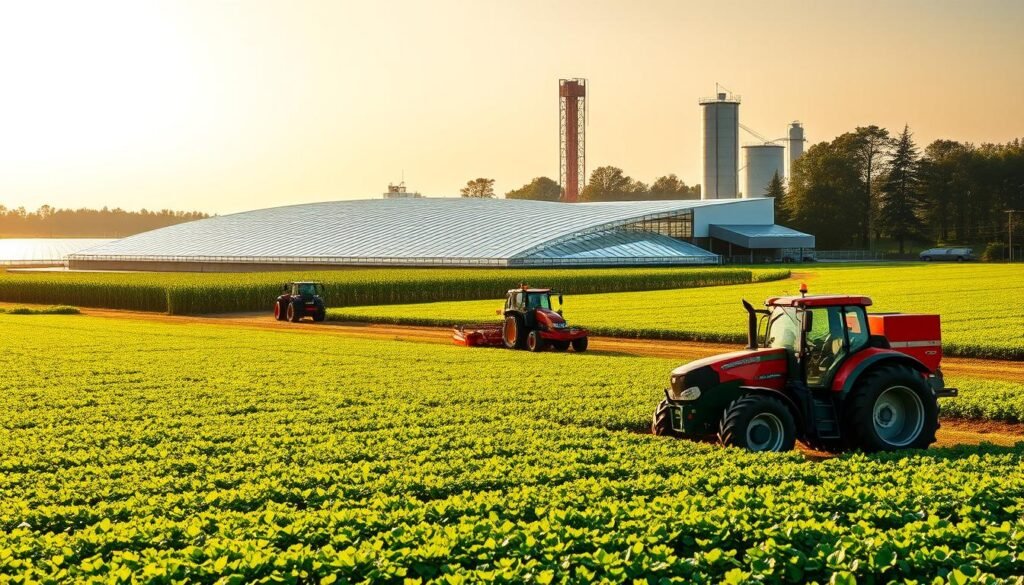
Innovations have changed Indian fields and rural life. The Green Revolution brought high-yielding crops and more machines. Research groups like the Indian Council of Agricultural Research (ICAR) and CGIAR have worked with states to improve farming.
Advancements in Agricultural Technology
New crop varieties, like Borlaug’s wheat, have increased yields. These crops need good water, fertilizer, and tractors to grow well.
Machines have made farming easier and faster. Better irrigation and tools have also helped. Agrochemicals and new farming tools have changed how we farm.
Now, we use technology to make farming smarter. We link sensors, satellite data, and weather to help farmers make better choices. This technology is key to precision farming.
Sustainable Practices Emerging from the Green Revolution
We’re now focusing on keeping yields up while being kinder to the environment. Practices like conservation agriculture and integrated pest management are becoming more popular.
Research is also looking at old crops like millets. These crops need less water and fewer chemicals, helping farmers deal with climate change.
Technology like variable-rate fertilization helps use water and nutrients better. Precision farming reduces pesticide use by targeting specific areas.
We’re working on a bigger picture. We want to design irrigation systems, improve supply chains, and create tools for farmers. This way, we can make farming more productive and sustainable.
- Key tools: hybrid seeds, tractors, pumps, sensors, decision-support apps.
- Key practices: crop diversification, conservation tillage, integrated pest management.
- Institutional role: ICAR, CGIAR and state research centers driving continuous improvement.
The Effects on Rural Economies
The Green Revolution changed rural India’s economy. It made farmers’ incomes rise and food prices fall. This led to more jobs and better markets in rural areas.
Economic Growth in Rural Areas
High-yielding crops and better irrigation boosted farm incomes. This growth led to more demand for local goods and services. Small shops and repair services grew, along with agri-business firms like Tata and Mahindra.
Investments in roads and electricity helped rural areas grow. They cut down on transport costs and reduced food waste. Urban areas also benefited from cheaper food, thanks to better farming.
Employment Opportunities Created by Agriculture
More farming and use of machines changed work patterns. There was more need for labor during planting and harvest times. This created jobs for landless workers.
Commercial farming brought new jobs like in transportation and cold storage. These jobs helped support families when farm income was low. Agri-business growth also led to more jobs in logistics and quality control.
But, some groups lost access to traditional ways of making a living. This hurt families that relied on grazing or forest products. To be resilient, rural areas need to diversify, support farmers, and invest in new skills.
Food Security and Nutrition
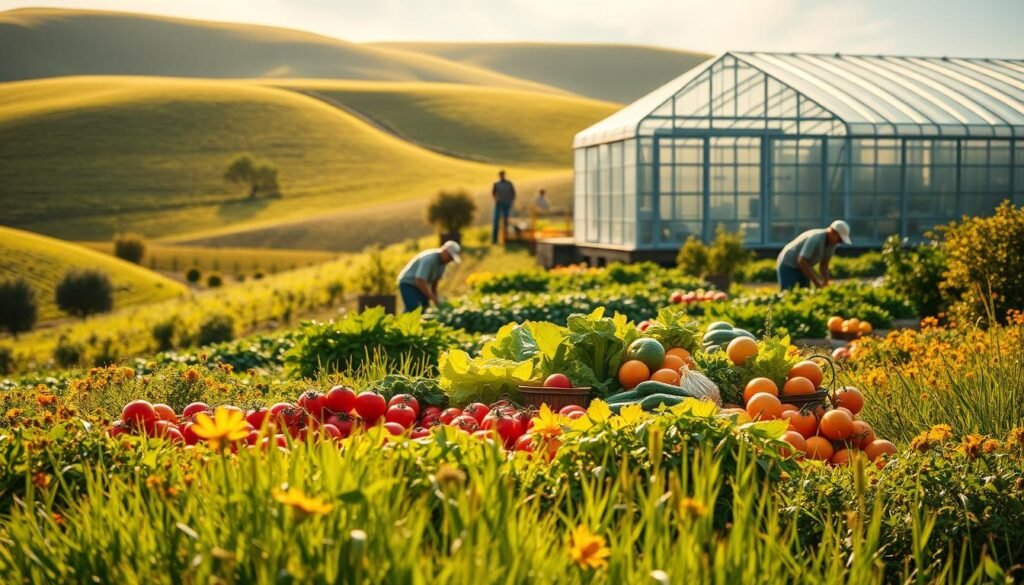
The Green Revolution changed how people in rural India got food and what they ate. It made more cereal available, which helped keep food prices stable and prevented famines. But, the story of food supply doesn’t tell the whole story of health.
Green Revolution’s Contribution to Food Availability
Wheat and rice production soared, making more calories available. Studies say without these gains, calorie supply would have dropped by 11–13%. This shift helped India become more self-sufficient in staple grains.
More food security meant fewer times of acute hunger. It also made national food systems stronger, like public distribution networks. Better logistics and storage cut down on food losses from farm to table.
Balancing Yield with Nutritional Quality
More cereal meant less diverse diets. Crops like millets and pulses were pushed aside. This reduced the variety of foods and micronutrients in villages.
We face a big challenge: choosing between more food and better nutrition. Focusing on calories led to more health problems in some areas.
Soil and water pollution from chemicals is a big worry. Pesticides and heavy metals can harm food safety and long-term health. Farmers often don’t have the right gear or training to handle these safely.
We need to move towards sustainable diets. We should promote millets, pulses, and biofortified foods. We also need to use integrated pest management. Incentives for diverse diets and on-farm biodiversity can help balance food production with nutrition.
Environmental Implications of the Green Revolution
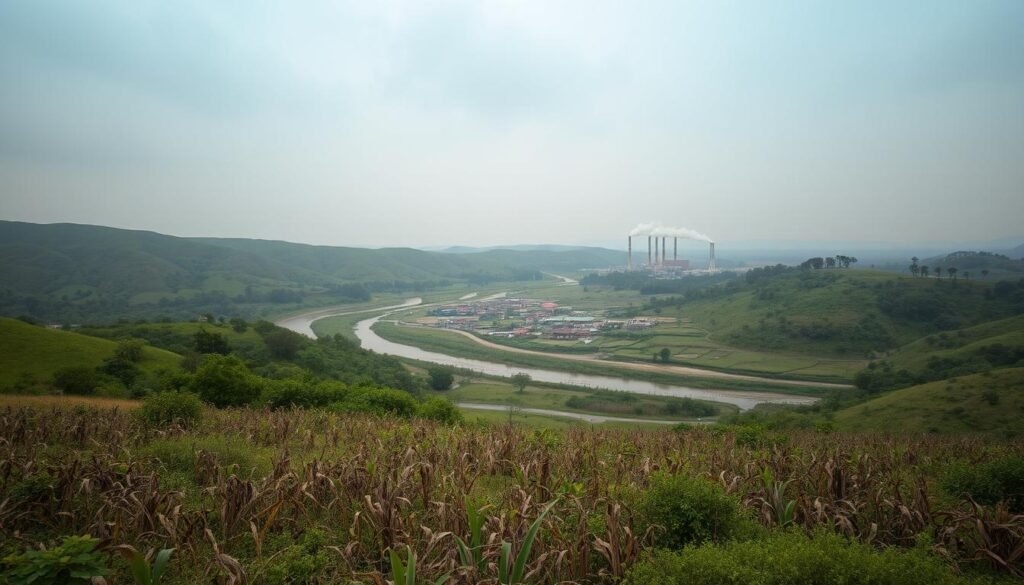
We look at how high-yield farming changed landscapes in Punjab and other places. It increased food production but also brought serious environmental problems. These issues need our immediate attention.
Agricultural Sustainability Concerns
Intensive cereal farming changed water use: in India, farming uses a lot of water. This increases water use and puts pressure on underground water sources.
Using a lot of synthetic pesticides led to water pollution. These chemicals harm fish and other water life, and also reduce bees and other pollinators.
Planting the same crop over and over and removing crop waste sped up soil damage. Farmers noticed less organic matter, nutrient imbalances, pH changes, and heavy metal buildup in some areas.
Yield plateaus in key crops show the limits of high-input farming. As environmental costs grow, so does the challenge to keep producing food.
Strategies for Reducing Environmental Impact
We suggest growing more diverse crops like millets and pulses. They use less water and help control pests. Diverse farming builds up soil and reduces the need for inputs over time.
Using water-saving irrigation like drip systems and alternate wetting and drying for rice cuts down water use. Precision irrigation uses data to match water supply with crop needs.
Integrated pest management lowers pesticide use by using natural controls, targeted spraying, and monitoring. Practices like conservation agriculture and keeping crop waste on the soil help keep the soil healthy and prevent erosion.
Changing policies is key: adjusting prices and subsidies can guide farmers towards more sustainable farming. Investing in crops that can handle stress helps farmers grow food with fewer resources.
Engineering solutions like precision farming, IoT sensors, and supply chain improvements need to work with education and market changes. This holistic approach makes sustainable farming possible on a large scale.
Case Studies in Rural Transformation
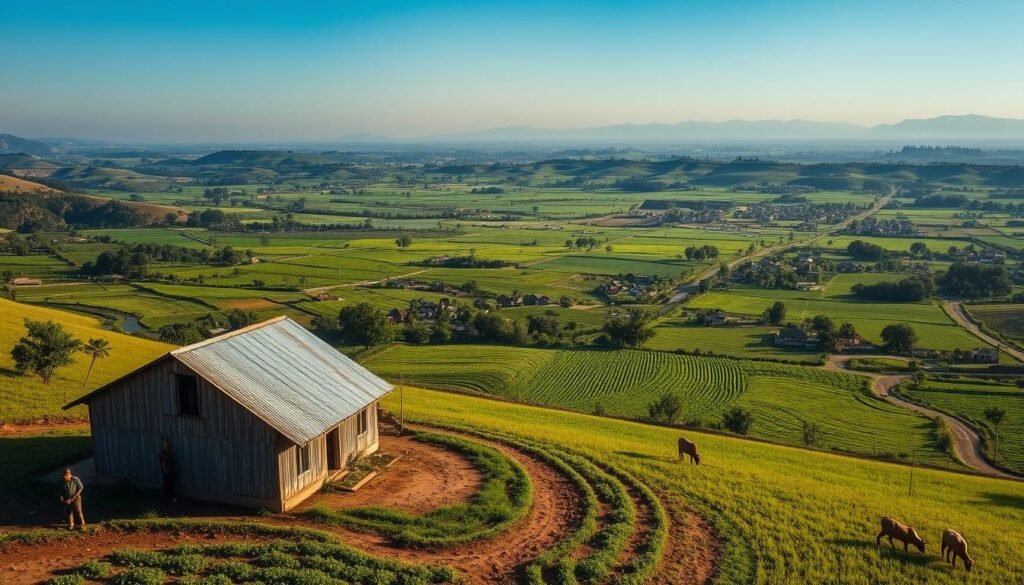
We share real-life examples of how policy, science, and local efforts change rural lives. These stories show how research turns into real change on the ground. They offer clear examples of how policies work in the real world.
First, we look at successes like Mexico’s CIMMYT wheat program and India’s early Green Revolution in Punjab. They used better genetics, irrigation, and policy to boost food production. IRRI’s IR8 rice in the Philippines also greatly increased rice yields across Asia.
In Malawi, the Agricultural Input Subsidy Program (2005) gave vouchers for fertilizer and seed. This led to a big increase in maize production. It shows how timely inputs can help small farmers.
Rajasthan shows a different side of change. Land reforms and new crops moved many to farming. This improved some incomes but also harmed grazing lands and led to migration.
China’s work on hybrid rice, led by Yuan Longping, greatly increased yields. But, it also caused groundwater problems and more fertilizer use. These issues are common in many successful farm reforms.
We learn a lot from these examples. Technology must protect the environment and respect local ways. Support for small farmers, like credit and research, is key. Growing just a few crops can harm the environment and our health.
How policies are made matters a lot. Bad subsidies or buying practices can harm more than help. Policies that adapt to local needs work better than one-size-fits-all plans. Keeping an eye on how things go and training farmers helps avoid big problems.
Getting these changes to work depends on many things. Things like roads, help for farmers, and strong government are important. In Africa, problems like insecurity and poor roads make it hard to spread good ideas.
| Case | Core Intervention | Short-term Outcome | Long-term Challenge | Key lesson |
|---|---|---|---|---|
| Mexico — CIMMYT | High-yield wheat varieties, seed systems | Rapid yield increases, food security | Soil depletion in some regions | Combine genetics with soil management |
| Punjab, India | HYV wheat, irrigation expansion, MSP support | Food self-sufficiency, rural incomes rose | Water table decline, monoculture risks | Balance productivity with resource safeguards |
| Philippines — IRRI | IR8 rice variety dissemination | Major rice yield gains across Asia | Fertilizer dependence, local adaptation gaps | Contextualize seed use and extension |
| Malawi (2005) | Input subsidy vouchers for fertilizer/seed | Sharp maize yield increases | Question of fiscal sustainability | Target subsidies and plan exit strategies |
| Rajasthan, India | Land reform, crop adoption, irrigation projects | Shift toward crop agriculture, income shifts | Grazing commons degradation, migration | Manage commons and diversify livelihoods |
| China — hybrid rice | High-yield hybrids, wide adoption | Sustained yield growth | Groundwater stress, emissions rise | Monitor environmental limits with scale-up |
The Future of Agriculture in the U.S.
The future of agriculture is changing fast, thanks to new tech and smart policies. Farms in the U.S. are becoming more data-driven, with better supply chains and less waste. These changes are important for people working in tech, education, and policy, helping farmers around the world.
New tools like drones and sensors are helping farmers use resources better. Robotics and biotechnology are also making farming more efficient. Digital markets are making it easier for farmers to sell their products.
Using precision agriculture with smart policies can reduce waste and emissions. For example, Minnesota’s work on green ammonia is creating jobs and boosting local economies: Minnesota’s green ammonia initiative.
Trends Shaping the Future of Farming
Farms are now using data to improve yields and cut costs. Sensors and machine learning help farmers apply inputs just right. These changes show a shift towards more efficient and resilient farming in the U.S.
More farmers are adopting regenerative practices and climate-smart agriculture. Techniques like cover crops and reduced tillage help the soil and save water. Policies that reward these practices can encourage more adoption.
Policy Directions for Sustainable Agriculture
We suggest policies that reward farmers for taking care of the environment. This includes payments for services like clean water and soil, and support for research and extension services. Working together with private companies can speed up the adoption of new technologies.
Agri-reform should be tailored to different farm sizes. What works for big farms in the U.S. might not fit small farms in India. Collaboration and technology sharing can make sustainable farming work for all types of farms.
| Focus | U.S. Emphasis | Transferable Benefit |
|---|---|---|
| Precision agriculture | High investment in sensors, drones and analytics | Low-cost sensor kits and training for smallholders |
| Climate-smart agriculture | Incentives for carbon and water stewardship | Payment models that reward soil health improvements |
| Agri-reform | Regulatory modernization and market integration | Policy frameworks tailored to fragmented landholdings |
| Research & extension | Public-private labs and digital extension platforms | Localized extension networks supported by mobile tech |
| Input supply | Investment in low-carbon inputs and local production | Reduced dependency on imports and rural job creation |
We urge engineers, educators, and policymakers to work together. They should create affordable, effective tools and policies for sustainable farming. This will help make farming better for the planet, no matter the size or location of the farm.
Investment in Agricultural Research
We see strong investment as key for strong food systems. Funding from governments, international groups, and private companies turns ideas into real agri-technology. This helps small farmers in India a lot.
Public money from places like ICAR and CGIAR helps a lot. It supports open germplasm, long-term studies, and agroecology. This shared knowledge helps improve crops and helps farmers.
Private R&D adds to this by making seeds, biotech, and digital tools available faster. When public and private work together, new things reach the market quicker and help everyone equally.
We suggest funding that mixes basic science with practical use. Long-term field tests, research led by farmers, and careful pilots lead to useful innovations. Also, investing in training and extension helps farmers use these innovations well.
Important innovations include crops that can handle drought and heat, smart irrigation, and low-cost sensors. Also, managing pests and nutrients well, using biocontrols, and improving soil health are key. These areas offer big benefits for both productivity and sustainability.
To really make a difference, we need to fund teams that work across different fields. We should also strengthen connections between universities, CGIAR centers, philanthropy, and industry labs. This way, small gains become big wins for rural areas.
Here’s how to fund better: support growing proven ideas, give grants to extension services, include checks in project plans, and share data openly. This way, we keep improving and keep small farmers at the heart of it all.
Conclusion
We look back at the Green Revolution’s impact. It brought big gains in food production and security. Yet, it also caused environmental harm, lost crop diversity, and uneven benefits for farmers.
Farm reforms and MSP policies greatly influenced these outcomes. They guided what crops were grown, how much was used, and who could sell them. This affected both the good and bad sides for farmers.
Recap of key points
The Green Revolution’s success came with a cost. It led to pollution from pesticides, wasted water, and damaged soil. Policies like MSP and subsidies pushed for growing the same crops over and over again.
But, these policies also helped many small farmers. They made sure food was available and gave more people a chance to sell their crops.
Vision for a sustainable rural economy
We suggest a new way forward. Reform MSP to encourage growing different crops and using resources wisely. Invest in research for crops that are better for the soil and can handle stress.
Use new technology to reduce the need for harmful chemicals and water. Bring back shared land management to help farmers grow more than one crop. This will help farmers and ensure food for everyone.
We, as educators, engineers, students, and policymakers in India, are ready to work together. We will use our knowledge and creativity to make farming better. For more information or to join us, email info@indiavibes.today.