



Did you know India is huge, covering almost 3.3 million square kilometers? It has 28 states and 8 union territories. Each place has its own look and way of being governed.
We start with a map of India’s political parts. Engineers and teachers need this. The States Reorganisation Act of 1956 made most state borders based on language. Later, changes made Chhattisgarh, Uttarakhand, Jharkhand, and Telangana.
Then, the Jammu and Kashmir Reorganisation Act, 2019 split Jammu & Kashmir into two union territories. This was Jammu & Kashmir and Ladakh.
Knowing about states and union territories is key for planners. States have their own governments and laws. But most union territories are run by the center. Delhi and Puducherry are exceptions because they have their own elected bodies.
In this guide, we’ll use the Indian map and talk about big areas. We’ll connect geography to people and weather. Our goal is to help with learning, planning, and talking about policy.
For questions or to talk about this guide, email info@indiavibes.today.
Overview of India’s Geography
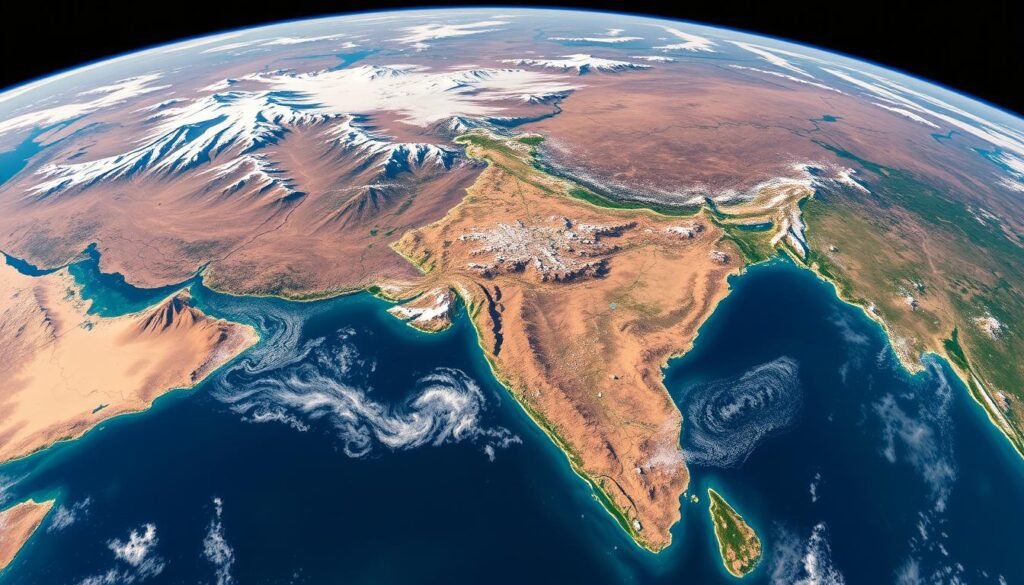
We explore India’s geography by looking at its landforms, rivers, and climate. India is huge, covering about 3.2 million km². It has a long border of nearly 15,200 km, touching many countries.
The mountains in the north, like the Himalayas, block cold air. The Indo-Gangetic plains are fertile and fed by rivers. The peninsular plateau is in the middle. Coastal plains and islands add to the variety.
Major Geographical Features
Rivers like the Ganges and Brahmaputra make fertile plains. These rivers help grow crops. Mountains create water power and control water flow.
Plateaus and escarpments shape roads and railways. Coastal areas need strong defenses and ports.
Climate Zones
India’s climate changes from cold in the Himalayas to hot on the coasts. The monsoon brings most of the rain in a few months. This rain is vital for the country.
Places in the middle and by the sea stay warm all year. The Western Ghats get a lot of rain, but the other side is dry. The monsoon’s start and end affect farming and water use.
Importance of Geography in Culture
Geography shapes language, religion, food, and festivals. River life is big in India. The Himalayas keep old traditions alive.
Coastal areas love seafood and trade. These traditions help plan schools and buildings.
| Feature | Representative Examples | Implications for Planning |
|---|---|---|
| Northern Mountains | Himalayas, alpine valleys | Seismic design, slope stabilization, mountain hydropower |
| Indo-Gangetic Plains | Ganges-Brahmaputra floodplains | Large-scale irrigation, flood management, dense settlements |
| Peninsular Plateau | Deccan Plateau, basalt uplands | Mineral extraction planning, watershed management |
| Coastal Plains & Islands | Konkan coast, Coromandel, Andaman & Nicobar, Lakshadweep | Coastal erosion control, port infrastructure, cyclone resilience |
| Monsoon System | Southwest monsoon, seasonal rainfall | Reservoir design, agricultural scheduling, urban drainage |
Indian States: An Introduction
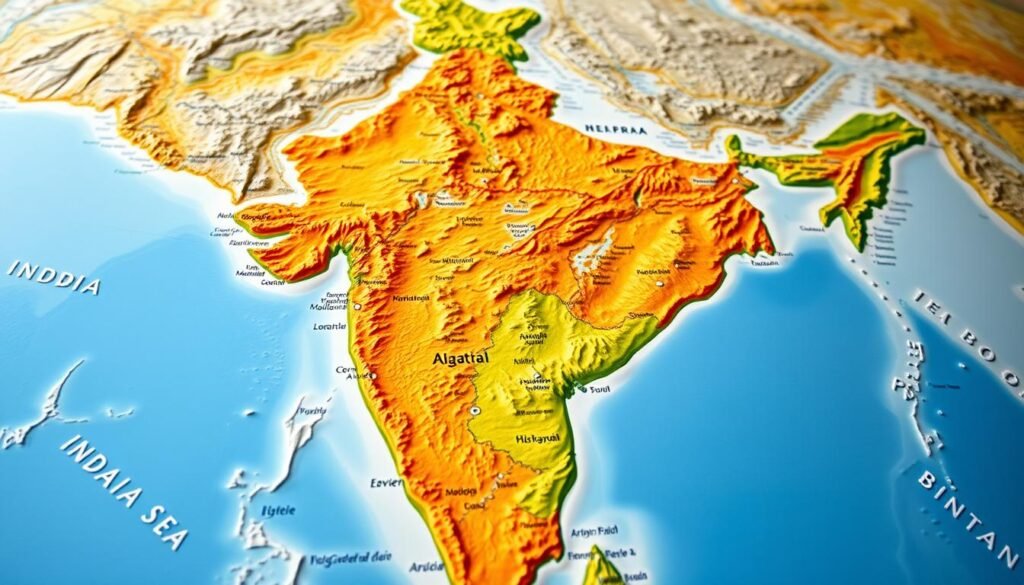
India has 28 states and local governments. They shape life, development, and governance. The map of India shows how different areas and people are.
The Diversity of States
States in India are very different. Uttar Pradesh has almost 200 million people. Sikkim has less than a million.
Maharashtra is big and has cities like Mumbai. Kerala is known for high literacy. These differences affect planning and education.
Urban areas need good transport and homes. Rural areas need help with farming and basic services. We plan based on these needs.
Cultural Significance
Languages and festivals show what makes each state special. Bengali, Telugu, and others are important. Festivals like Bihu and Ganesh Chaturthi are big events.
Arts like Kathak and Bharatanatyam are worth keeping. We teach about languages and culture in school. This helps people use new technologies better.
Political Importance
States have a lot of power. They decide on taxes and spending. This affects public projects and services.
States like Maharashtra and Tamil Nadu are leaders in industry. Punjab and Haryana are important for food. Changes in states show how they adapt to needs.
We use maps and studies to show how states make policies. Population, laws, and the map all play a part.
Map of India: A Visual Guide
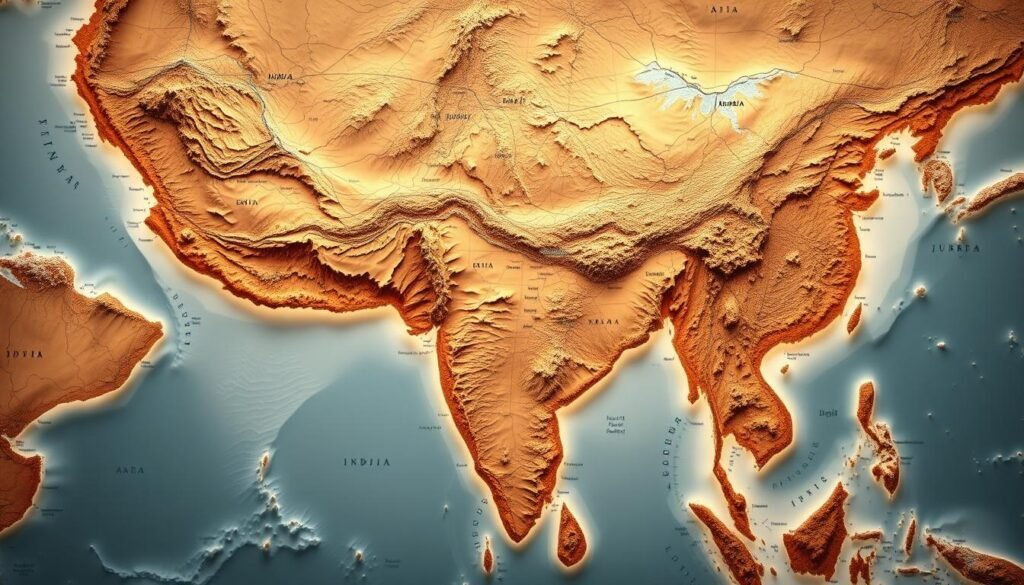
We have a simple guide for engineers, planners, and students. It helps them understand the Indian map better. It shows terrain, transport, and people’s places for planning.
Understanding the Indian Map
The map shows big differences in land. The Himalayas are in the north. The Indo-Gangetic plain and the Deccan plateau are in the middle.
The Western and Eastern Ghats are on the sides. Coastal plains are by the Arabian Sea and the Bay of Bengal. Islands like the Andaman and Nicobar and Lakshadweep are off the coast.
We add rivers, climate, and people’s density for planning. This shows where floods might happen and where to build roads and railways.
Key Landmarks and Regions
Landmarks make places special and bring in tourists. The Taj Mahal in Agra and the Ajanta and Ellora caves in Maharashtra are famous. The Sundarbans mangroves in West Bengal and Kaziranga in Assam are also important.
These places are key for saving nature and growing regions. Engineers need to think about these places when building roads, railways, and utilities.
Major Cities Highlighted
Big cities are centers for transport, work, and learning. New Delhi is the political center. Mumbai is big for finance and ports. Bengaluru is a leader in software and research.
Chennai, Hyderabad, and Kolkata are important in their areas. National highways and railways connect these cities. This helps plan for growth and strength in states.
We give tips for using maps. Add hazard maps, mark cities, and show state lines. These help with planning for floods, choosing sites, and planning for the future in India’s different areas.
Northern India: The Himalayan Region
We look at how the Himalayas shape Northern India. This mountain range creates different weather and rivers. It also affects where people live.
Geography and Climate
The Himalayas act as a barrier. Moist winds rise here, making rain on the lower slopes. Rivers like the Ganges get water from snowmelt and monsoon rains.
Places high up have glaciers and cold deserts. These areas are very different from the warm plains below.
Major States: Punjab and Uttarakhand
Punjab is known for its fertile plains. These plains are great for growing crops. Cities like Ludhiana are important for business.
Uttarakhand is full of mountains and valleys. Dehradun is a key city. The state is home to the Ganga’s source and many forests.
Cultural Highlights
In Uttarakhand, people follow old traditions. They visit sacred places during certain times. Mountain towns have temples and monasteries.
Punjab celebrates community life. They have Gurudwaras and festivals. Buildings in the hills are made of stone, while the plains use brick and mortar.
Western India: The Desert and Coast
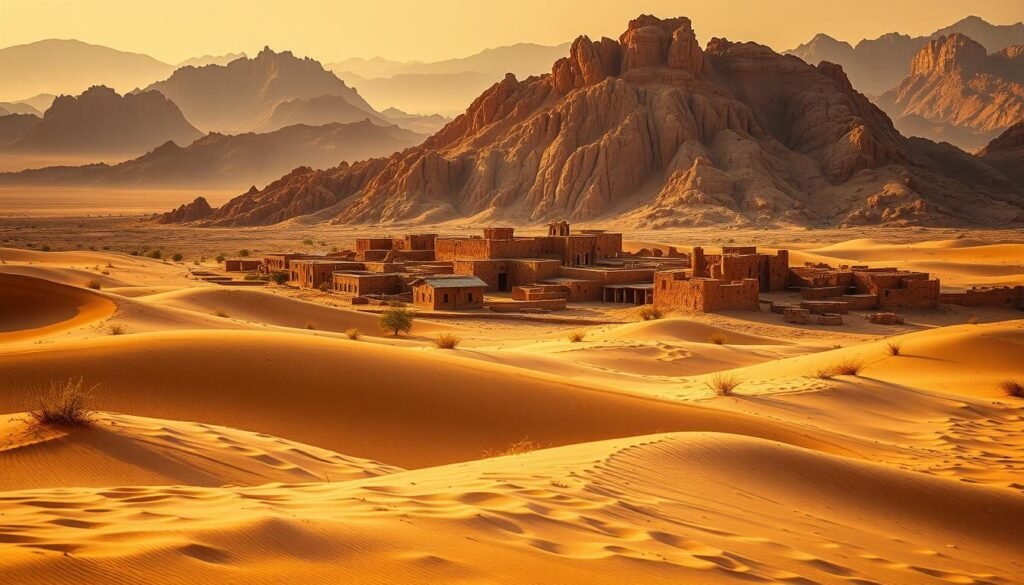
We look at Western India, where you find very different landscapes. This area has dry deserts and busy ports. We see how nature and people work together in Rajasthan, Gujarat, and Maharashtra.
Rajasthan is big, with about 342,239 km². It’s mostly desert, like the Thar Desert. Cities like Jaipur, Jodhpur, and Udaipur are famous for their history. Finding water is very important for the future.
Gujarat is smaller, with about 196,244 km². It has big ports and a long history. Ahmedabad and Surat are big for making things. The coast and Rann of Kutch need special care for salt and animals.
Maharashtra is huge, with about 307,713 km². Mumbai is its financial center. Pune and Nagpur are important for work and growth. The coast gets a lot of rain, but the land gets less.
This area has amazing views like desert dunes and beaches. Forts and palaces draw visitors. Places near the coast are good for fishing and ports. We need to plan for the future and protect the coast.
There are lessons from local projects. For example, collecting rainwater in villages and farming in salty areas. These show how complex Western India is.
| State | Area (km²) | Key Cities | Primary Challenges |
|---|---|---|---|
| Rajasthan | 342,239 | Jaipur, Jodhpur, Udaipur | Water scarcity, heritage conservation, desert irrigation |
| Gujarat | 196,244 | Ahmedabad, Surat | Salt management, coastal plains conservation, port infrastructure |
| Maharashtra | 307,713 | Mumbai, Pune, Nagpur | Urban planning, transport networks, Western Ghats conservation |
Eastern India: The Land of Rivers
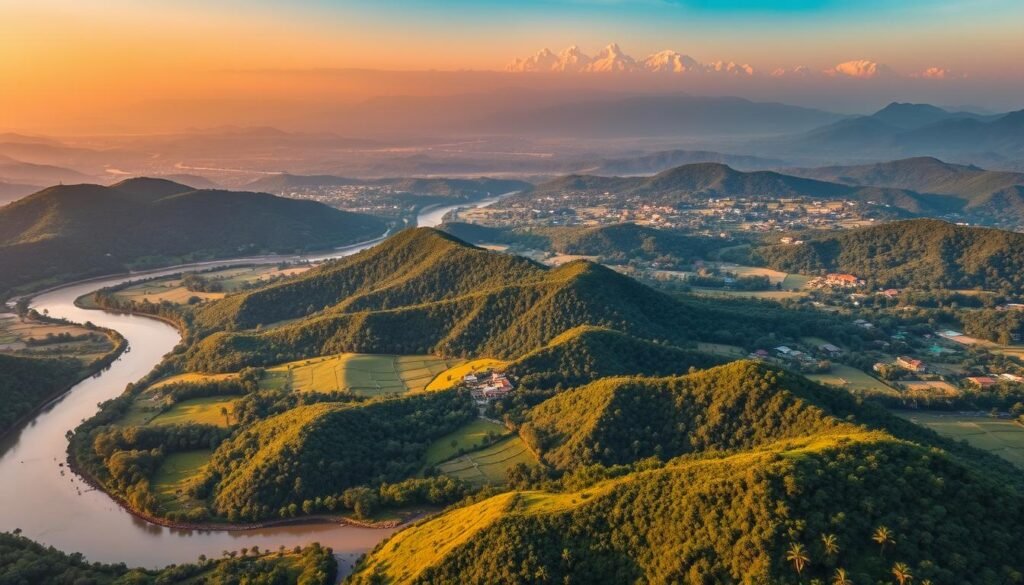
Rivers shape the land and lives in Eastern India. This area has many rivers, coastal plains, and a rich culture. We look at how to plan, engineer, and protect this changing landscape.
States Overview: West Bengal and Odisha
West Bengal is home to about 91.3 million people. It has a big delta with rivers and cities. Kolkata, the capital, is a key port.
Odisha has a capital in Bhubaneswar. It’s big, with 155,707 km². The state has coastlines and mineral-rich lands. Bhubaneswar is growing as a center for learning and tech.
Natural Resources and Climate
The plains in Eastern India are great for farming rice and jute. The Sundarbans mangroves protect the coast and wildlife.
Odisha is rich in minerals like iron ore and bauxite. Mining and coastal industries need to be managed well to protect the environment.
The climate in Eastern India is wet and has cyclones. Building cyclone shelters and early warning systems is important. This helps keep the coast safe.
Rich Heritage and Festivals
Durga Puja in West Bengal and Rath Yatra in Odisha are big events. They need special planning for power, sanitation, and crowd control. Planners must think about festivals when designing cities.
The Sundarbans, temples in Puri, and Kolkata’s history are important. Planning must balance industry and mining with protecting nature and culture.
Key considerations:
- Integrate flood and cyclone risk into transport and port design.
- Prioritize mangrove conservation alongside coastal development.
- Coordinate urban services to support major festivals and seasonal population shifts.
- Balance extractive industry with long-term ecosystem health.
Southern India: The Cultural Haven
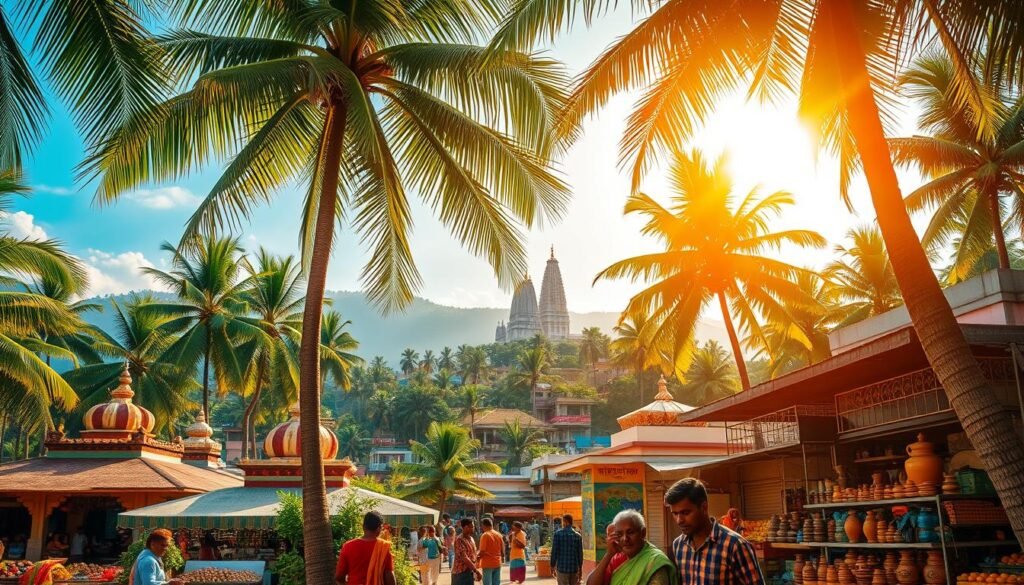
We look at Southern India as a place where nature and culture meet. The area from the coast to the Western Ghats has different ways of life. Each part of the region has its own economy, transport, and traditions.
Tamil Nadu and Kerala are two key states in the south. Each has its own special features that help in planning. Tamil Nadu is known for Chennai and its long coastline with ports and temples.
Kerala is famous for its narrow coast and the Western Ghats. This area gets a lot of rain, has lots of plants and animals, and is home to the backwaters.
The States of Tamil Nadu and Kerala
Tamil Nadu is a big industrial center. Cities like Chennai and Coimbatore are key for making things and services. The state’s coast is good for fishing, ports, and farming.
Kerala is known for its people’s well-being, education, and economy helped by money sent from abroad. Thiruvananthapuram is the heart of the state’s culture. Kerala’s climate is perfect for fishing, growing rubber, and spices.
Geographical Features: Coasts and Mountains
The Western Ghats bring a lot of rain, making the slopes green and important for water. These mountains are full of life and give water to the plains.
The coastal plains run along the Bay of Bengal and the Arabian Sea. They are key for trade, homes, and managing risks like heat and storms. It’s important to grow ports but also protect wetlands and backwaters.
Culinary Diversity and Traditions
The food in this area is rich and varied. Kerala loves coconut, seafood, and spices. Tamil Nadu prefers rice, lentils, and fermented foods like sambar and dosa.
The culture here is vibrant, with Bharatanatyam dance, Carnatic music, and temple festivals. These events need careful planning for crowds, keeping traditions alive, and supporting infrastructure. They help define the region’s identity and guide tourism and learning.
For a deeper look at the region, we use sources like South India. This helps in planning projects that cover nature, culture, and economy.
Union Territories of India: An Overview
We explain how union territories fit into India’s political setup. They are important for governance and local identity. These areas range from big cities to small islands and high places.
What is a Union Territory?
Union territories are areas run by the Central Government. Some, like Delhi, have their own elected leaders. Others have administrators chosen by the center.
They were often created for defense, trade, or to protect minorities. This shows their historical and practical importance.
Key Union Territories Explained
We look at some union territories to show their differences. Delhi is the capital with over 16 million people. Lakshadweep is small, while Ladakh is huge and high up.
Andaman and Nicobar Islands are a group of islands with a special culture. Jammu and Kashmir became a union territory in 2019. Dadra and Nagar Haveli and Daman and Diu are coastal and inland areas together.
For more info, check out this resource: states and union territories of India.
Their Role in Indian Governance
Union territories often have important places like military bases. The central government oversees them to keep laws the same everywhere. In Delhi, there’s a balance between central and local powers.
Places like Andaman and Nicobar Islands and Ladakh need special care. Union territories offer a way to manage these areas without being full states.
| Union Territory | Notable Feature | Approx. Population | Area (km²) |
|---|---|---|---|
| Delhi | National capital; dense urban economy | 16,787,941 | 1,484 |
| Jammu and Kashmir | Two capitals: Srinagar and Jammu; reclaimed UT in 2019 | Varies by district | ~42,241 |
| Ladakh | High-altitude region; strategic border zone | Sparse population | 59,146 |
| Andaman and Nicobar Islands | Archipelago with Port Blair; maritime security role | ~380,581 | 8,249 |
| Lakshadweep | Smallest UT by area and population | 64,473 | 30–32 |
| Chandigarh | Planned city; capital for Punjab and Haryana | ~1,055,450 | 114 |
| Puducherry | Former French enclaves; mixed coastal territories | Moderate population; high literacy | ~490 |
| Dadra & Nagar Haveli and Daman & Diu | Merged coastal and inland enclaves | Mixed tribal and urban communities | ~603 |
Regions of India: Cultural and Geographical Divisions
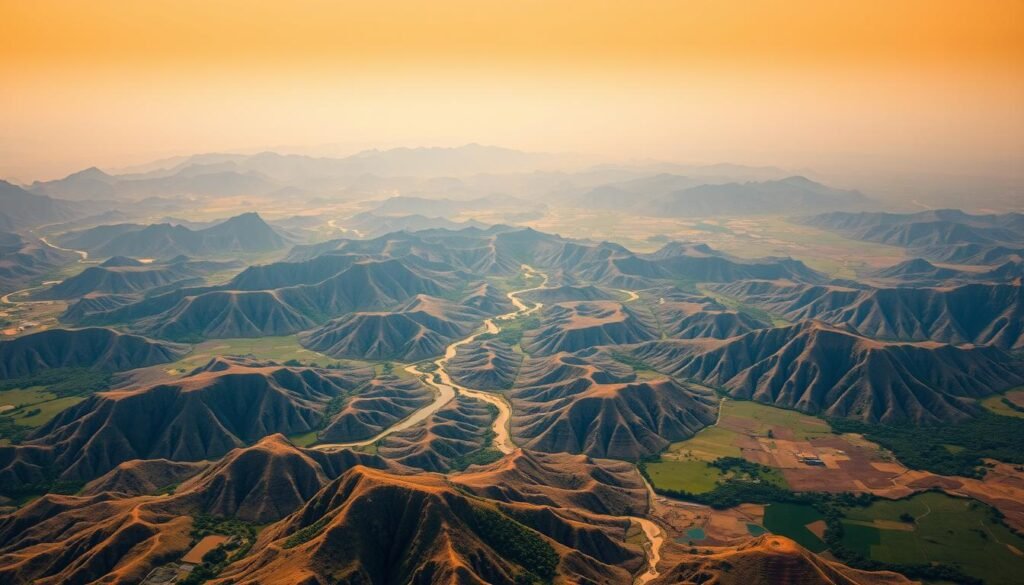
We look at the main parts of India to see how land shapes culture, economy, and planning. The Indian map shows both differences and similarities. Mountains, plains, coasts, and deserts all play a role.
North vs. South
The Indo-Gangetic plains and the Himalayas are in the north. The south has the peninsular plateau and the Western and Eastern Ghats. Language families vary: Hindi and Punjabi in the north, Tamil, Telugu, Kannada, and Malayalam in the south.
Climate affects homes and food: cold homes in the north, heat- and monsoon-adapted in the south. Agriculture is big in the north. The south leads in IT, manufacturing, and exports.
East vs. West
The east is rich in rivers and minerals. West Bengal, Odisha, and Bihar rely on rivers and mining. The west has arid areas and busy ports: Gujarat and Maharashtra are key for industry and trade.
Economic models vary between east and west. The west has port-led growth and diverse industries. The east needs better infrastructure and strong designs.
Connecting Factors Across Regions
Common institutions like Parliament and universities unite the country. Transport links remote areas to big cities. Migration changes urban cultures.
Energy, water, and disaster-resilient projects need national planning. Festivals, food, and cinema bring people together. The Indian map shows diversity and unity.
Policies must consider climate, resources, and population differences. Integrated water management, coastal defenses, and education programs are key for balanced growth.
Conclusion: Appreciating India’s Geography
We have looked at India’s landscape, from the Himalayas to the coast. We see how the map shapes the economy, culture, and engineering. The different areas of India have their own unique ecosystems and economic spots.
For teachers and engineers, this means making buildings that can stand up to the weather. They also need to manage resources wisely and teach in ways that fit each place.
The future of studying geography will use new tools like remote sensing and GIS mapping. These tools help us understand the climate and how people live together. With data from the whole country, we can plan cities better and make them safer.
Learning by doing is key. Students can go on field trips, help with coastal projects, or work on city plans. They can also study how people live in different parts of India.
Next steps include using data from the Government of India and reports from the World Bank and UN. Working with local engineering groups is also important. For more information, email info@indiavibes.today.
By studying India’s geography, we can make better plans for the future. This way, learning about the map can change things for the better.