



Did you know? India now makes about 2.6% of the world’s goods, ranking sixth globally. This shows how fast India’s industry has grown, surprising many just a few years ago.
The growth of India’s industry is more than just numbers. With a nominal GDP of nearly $4.13 trillion and GDP growth over 6%, the industry’s progress is clear.
Industry makes up about 27.6% of India’s GDP. Manufacturing is at the core of this change. With over 610 million young workers, we face the challenge of creating better jobs.
India’s industrial journey began long ago. It started with skilled artisans in the Mughal era. Then, after 1947, the government pushed growth. The 1991 reforms brought in private and foreign investment. Today, big companies like Tata and Reliance, along with global firms, lead the way.
Macroeconomic policies and support from the World Bank and IMF help India’s manufacturing grow. As we aim for Viksit Bharat 2047, working together is key to spreading this growth across society.
For more information, email info@indiavibes.today.
Overview of India’s Manufacturing Sector
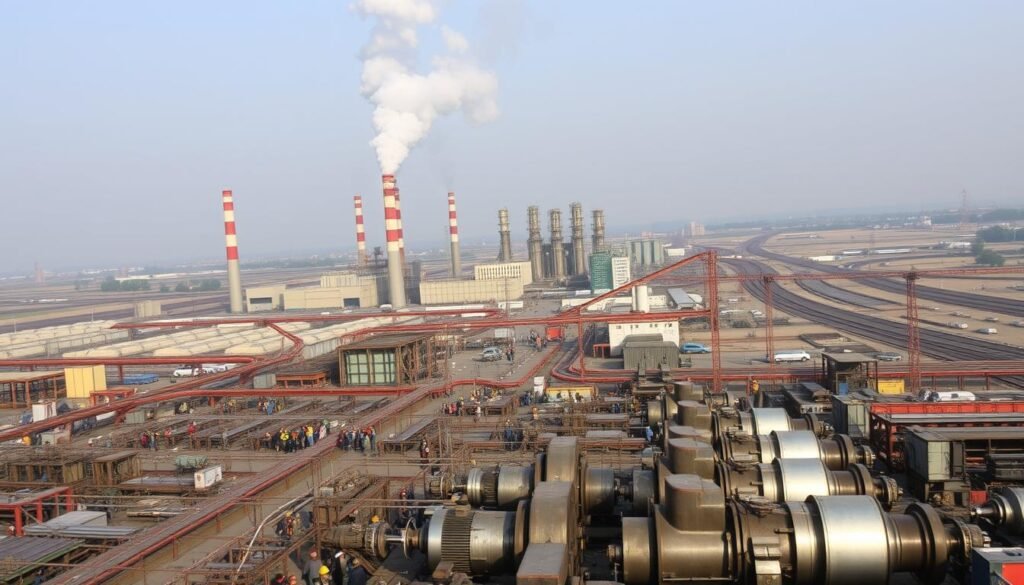
We look at how the manufacturing sector impacts India’s economy. It includes big companies, state-run businesses, global firms, and small and medium enterprises (MSMEs). These groups work together, thanks to policy changes and outside funding.
Right now, things are looking up. The Manufacturing PMI was 58.3 in June 2024. This shows strong activity in many areas like textiles and machinery. Also, 70.7% of India’s exports came from manufacturing in FY2024–25.
India is a big player in global trade. It exported $824.9 billion and imported $915.19 billion in FY2024–25. This shows how important manufacturing is for connecting with the world.
Big companies like Tata and Reliance lead in investment and research. State-run businesses and multinationals also play key roles. Thousands of MSMEs provide parts and services.
Manufacturing is key for India’s growth. It now makes up 27.6% of GDP. This growth helps create jobs and boosts productivity. It also supports the growth of capital.
External help is important too. Groups like the World Bank Group and the IMF provide funding and advice. The International Finance Corporation (IFC) helps bring in private money for projects.
Policy changes help the sector grow. Reforms like GST and digital infrastructure make things easier. Trade policies and incentives also affect investment and growth.
The Role of Public Sector Undertakings (PSUs)
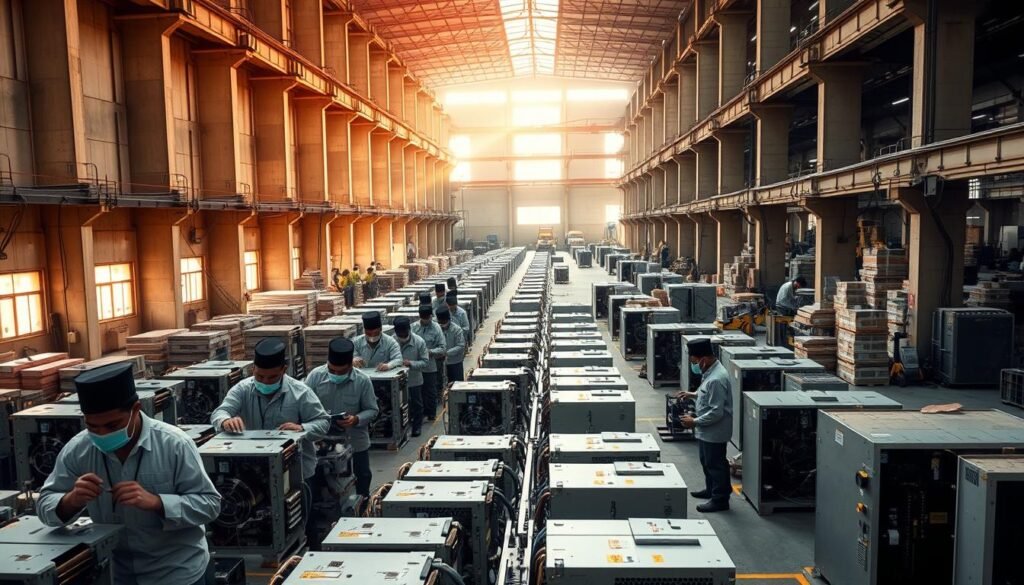
We look at how PSUs shape India’s industrial scene. PSUs have been key in starting big projects like rail freight, ports, and power plants. They also lead in strategic tech ventures. Their size and government support are key for steady growth and reaching all parts of the country.
Definition and Importance of PSUs
PSUs are government-owned companies in key sectors. India has about 1,900 such companies. The government controls the railways and has a big say in banking, insurance, airports, fertilizers, and utilities. These companies provide essential services, keep strategic capacity, and help achieve social goals.
Contribution of PSUs to Industrial Growth
PSUs have been vital for India’s growth after independence. They built key infrastructure, ensured stable power, and funded long-term transport projects. Their investment helped private companies grow their manufacturing and exports.
Manufacturing PSUs work in areas that needed big investments. They made it easier for suppliers to enter, helped train workers, and provided steady demand for local suppliers.
Challenges Facing PSUs in India
PSUs face several big challenges. They struggle with old ways of working and staffing that slow them down. The rise of global and private players makes it hard to keep profits and market share.
Debt is another big issue. High government debt affects investment choices and pushes for reforms from groups like the IMF and World Bank. PSUs need new money and better management to keep up with modern needs like automation and supply chain integration. Fixing these problems is key for ongoing growth and the role of PSUs in today’s economy.
Shift Towards Privatization in Manufacturing
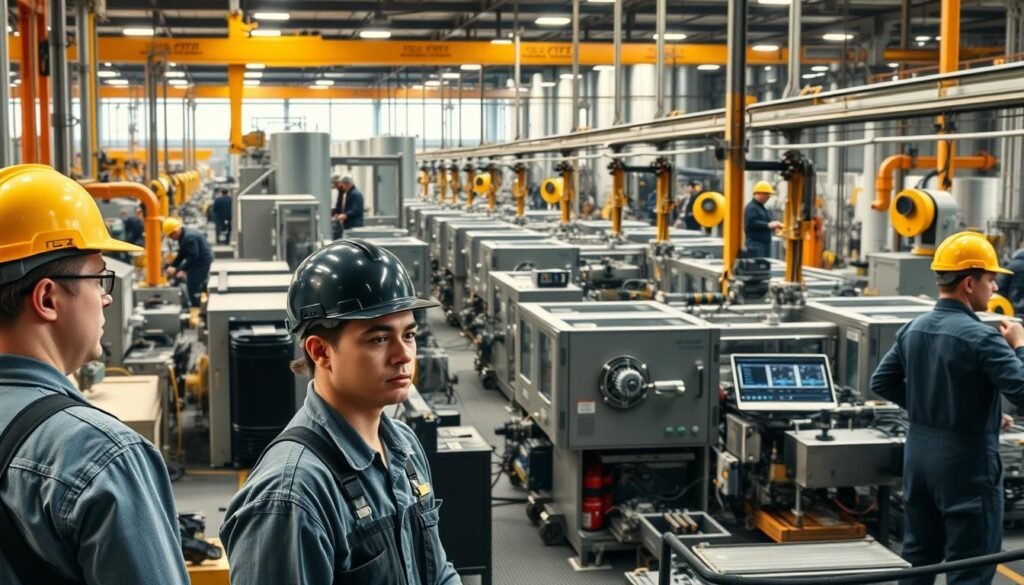
We see a shift towards privatization as a way to deal with financial problems and boost productivity. After 1991, the government made it easier for private companies to grow in manufacturing. This change was to bring in more money, adopt new technology, and grow industries.
Historical context
After 1991, the Licence Raj was cut down, and markets opened up to the world. The state kept key areas but let private companies handle other parts. The World Bank and IFC helped show how to use private money for growth.
Impact on public firms
PSUs privatization changed how they work. By selling parts, making deals, and hiring managers, they saved money and got new tech. This helped in areas like auto parts and electronics, where private companies brought in better supply chains and focus on exports.
Case studies and lessons
Telecom and some manufacturing units show how private money can help. They saw better productivity, faster products, and more exports in textiles and electronics. Private companies often bring in new tech and push for better results. But, there are risks like losing jobs and assets being stripped without rules.
We learn four key points for the future. We need good rules, careful privatization, training for workers, and contracts that help both public and private interests.
Advantages of Privatization for the Economy

Privatization is a key way to improve how industries work. It brings in new money, makes management better, and encourages cleaner production. These changes help make manufacturing more efficient and boost the whole industrial scene.
Here are the main ways private involvement can help. It can increase output, spark new ideas, and draw in the investment needed to grow manufacturing in India.
Boosting productivity and cost control:
- Private companies focus on being lean, offer pay based on performance, and make decisions quickly. This makes them more efficient and cuts costs.
- They invest in new projects and modern technology. This helps them serve global markets better.
Encouraging technology adoption and market-driven R&D:
- Competition pushes companies to invest in research and new technologies. This improves their products and how they respond to the market.
- Companies that adopt new technologies can move up in the value chain. This helps them earn more from their work.
Attracting international capital and partnerships:
- Clear rules and stable regulations attract foreign investors. This includes big companies from around the world.
- Foreign investment brings in new technology, global connections, and access to more markets. This helps local companies and suppliers grow.
We can see these benefits by looking at how companies perform. We can look at how productive they are, how much they export, and how much they spend on new technology. Past reforms show that private involvement leads to better use of resources and more exports over time.
To show the difference, we compare what happens in different types of companies.
| Metric | State-Owned Enterprise | Privatized/Private Firm |
|---|---|---|
| Decision Speed | Slower approvals; multilayered oversight | Faster, market-led decisions enabling quick upgrades |
| Investment in Automation | Conservative; budget-tied cycles | Higher CAPEX for Industry 4.0 and robotics |
| R&D and Product Upgrades | Limited, compliance-driven | Continuous, market-oriented innovation manufacturing |
| Ability to attract capital | Depends on sovereign backing and policy | Stronger ability to attract FDI and institutional funds |
| Operational Efficiency | Often lower due to legacy practices | Higher manufacturing efficiency via process reengineering |
We suggest policies that balance public needs with private benefits. We need clear rules, support for workers during changes, and contracts based on performance. This way, we can get the most from privatization and make India’s industry stronger.
Challenges of Privatization in the Manufacturing Sector

When governments sell off manufacturing assets to private companies, they hope for better efficiency and more money. But, this move can also cause problems in the labor market, with rules and supply chains.
Concerns Over Job Losses
Privatization often leads to changes in the workforce. This can mean more job losses in the short term as new owners try to make things more efficient. It’s important to have programs to help workers get new skills.
In India, the big informal sector makes things harder. We need to make sure workers get help to find new jobs. Working with private companies on training can help smooth out the transition.
Balancing Public Interest with Profit Motives
Some industries, like energy and defense, have big responsibilities. When these are privatized, we have to make sure they stay affordable and serve everyone. It’s all about finding a balance between making money and doing good.
We think it’s key to have clear rules and contracts. This ensures services keep being available and national security is protected. Also, making sure assets are valued correctly and bidding is fair helps everyone.
Regulatory Hurdles and Compliance Issues
Too many rules can scare off investors. There are many barriers, like slow courts, too many permits, and unclear rules for making things.
Things like trade policies and getting credit can also make it hard. Experts say making courts faster and opening up markets can bring in more private money.
Having strong checks and balances, fighting corruption, and clear rules helps everyone. We suggest making rules easier to follow but keeping safety and fair labor standards.
- Mitigation: phased privatization with social clauses and retraining funds;
- Mitigation: binding service agreements for strategic sectors;
- Mitigation: streamlined approvals and clear manufacturing compliance roadmaps.
The Future of Indian Manufacturing

India’s industrial scene is on the cusp of a transformation. The country’s GDP growth, increasing domestic spending, and policy changes are creating a favorable environment. Companies that align with global trends and tap into local strengths will thrive.
The industry is moving towards higher productivity and broader market reach. Multinational companies are setting up shop in India, thanks to nearshoring. Trade agreements with ASEAN and other countries are opening up new export opportunities. These developments favor companies that can scale up their quality and delivery.
Technology and automation will be key to success. Industry 4.0 technologies like AI, robotics, and cloud platforms are helping factories move up the value chain. Automation will increase output and change job roles, with a focus on skilled maintenance and programming. Public digital infrastructure will also help smaller manufacturers.
Financing and investment are critical for growth. Private capital, pension funds, and organizations like the IFC are investing in projects. Government programs offer incentives to attract more private investment, helping companies upgrade their facilities.
Human capital is essential for realizing these opportunities. Vocational training, reskilling, and increasing female participation in the workforce are key. We need to pair technology adoption with clear upskilling paths to ensure workers can move into better roles.
Manufacturing in emerging markets offers a chance for export-led growth. India’s large domestic market provides a testing ground for new products. Integration into global value chains will help manufacturers capture higher margins and serve both domestic and international markets.
Below we compare core drivers that will influence outcomes across the next decade:
| Driver | What Changes | Implication for Manufacturers |
|---|---|---|
| Domestic Consumption | Higher household spending and urbanization | Local demand supports scale-up and product innovation |
| Manufacturing Trends | Shift to higher-value goods and services | Pressure to upgrade processes and design capability |
| Automation in Manufacturing | Adoption of AI, robotics, and predictive maintenance | Productivity gains, new skill needs, and capex requirements |
| Emerging Markets Manufacturing | Access to regional supply chains and export markets | Opportunity for scale, diversification, and nearshoring wins |
| Investment & Finance | More long-term capital and targeted incentives | Faster modernization and capacity expansion |
| Human Capital | Reskilling, vocational training, and inclusion | Higher-quality jobs and improved operational resilience |
Government Initiatives Supporting Manufacturing Growth
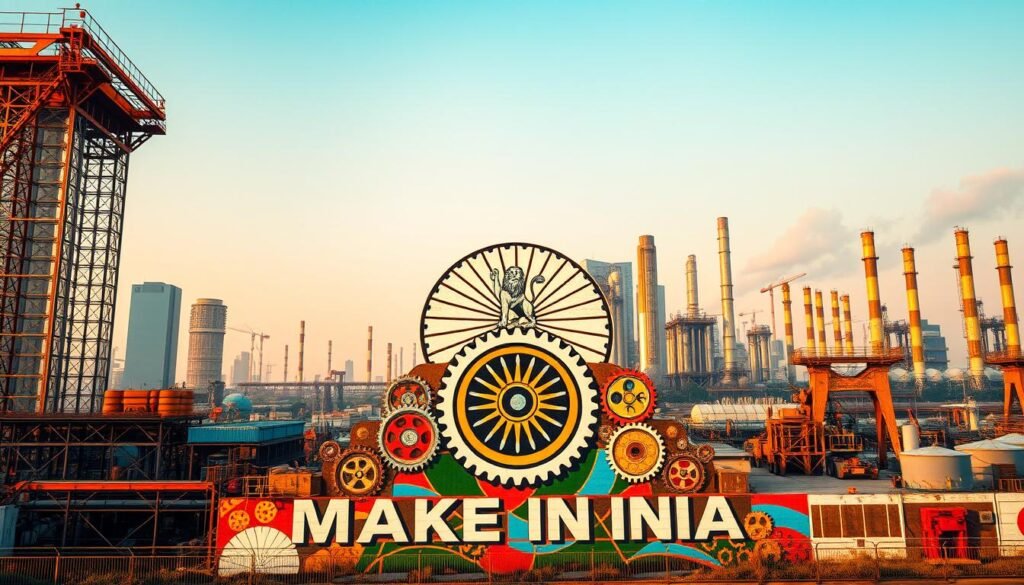
We explore the key policies driving India’s industrial growth. Public initiatives focus on improving supply, using fiscal tools, and changing rules. These efforts aim to boost jobs, strengthen supply chains, and enhance exports.
Make in India Program
Make in India is a big push for industrial change. It aims to make it easier to invest, simplify permits, and upgrade facilities. Companies like Tata Motors and Larsen & Toubro benefit from these changes.
The program also offers incentives to speed up project returns. This makes India more attractive to global manufacturers looking for diverse sources.
Production-Linked Incentive (PLI) Scheme
The PLI scheme rewards firms for more production and local value. It covers key sectors like electronics, pharmaceuticals, and auto parts. Companies like Foxconn and Dr. Reddy’s are investing more because of these incentives.
PLI boosts exports by making them more competitive. It helps local suppliers grow in global markets.
Labor and Trade Reforms
Labor reforms make hiring easier while keeping worker rights strong. They simplify rules for factories and link training to jobs.
Trade reforms aim to make tariffs fairer and customs faster. This helps bring in goods and send out products. Together, these reforms cut manufacturing costs in India.
The World Bank Group and IFC support these efforts with guarantees. They help with infrastructure and energy, making things cheaper. These supports work alongside domestic policies, not instead of them.
Make in India, the PLI scheme, labor, trade reforms, and incentives form a strong policy mix. This mix encourages private investment and helps India meet its manufacturing goals by 2050.
Case Studies of Successful Indian Manufacturers
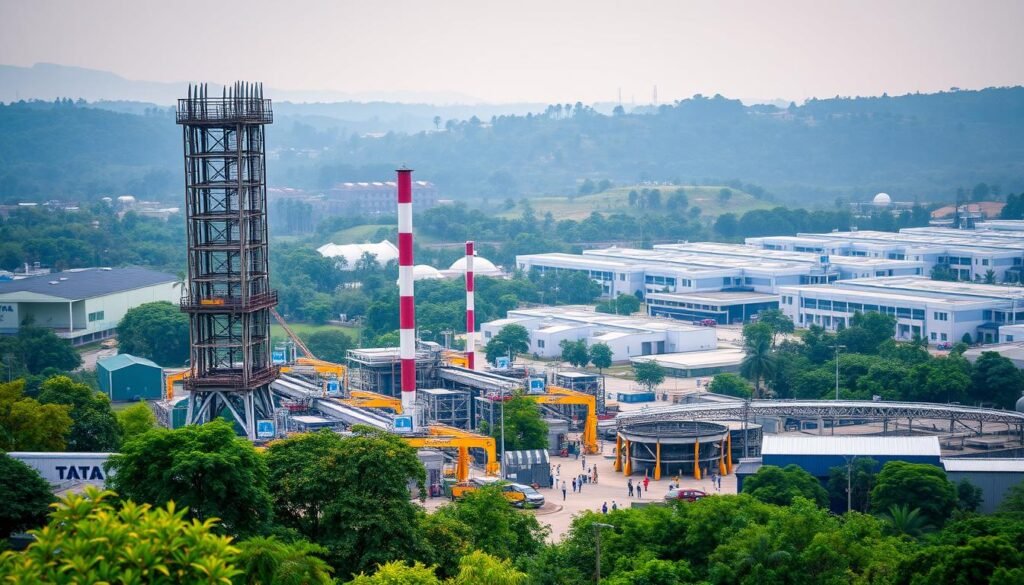
We look at how big companies and private firms have made a big impact in India. They used different strategies like improving supply chains, investing a lot of money, and reaching out to rural areas. These examples teach us important lessons for those who want to grow their businesses.
Tata Group’s Diversified Approach
Tata Group mixes steel, cars, chemicals, and heavy engineering into one big network. They invest in research and make smart buys abroad. This helps them sell more products and cut costs.
Good management and long-term plans help Tata grow. They open new plants and use new tech. This helps suppliers and workers in the area get better.
Reliance’s Vertical Integration and Scale
Reliance Industries started with petrochemicals and then got into refining, retail, telecom, and clean energy. They use a lot of money and connect different parts of their business to make a strong system.
Big investments let Reliance grow big in things like polymers and clean energy. This growth helps them get parts faster and improve suppliers.
Mahindra’s Focus on Rural and Industrial Reach
Mahindra focuses on making vehicles, farm equipment, and industrial machinery. They invest in research and reach out to rural areas to bring new tech to farming.
They also work on exports and local production to create jobs and spread skills. This helps small suppliers get better and join modern supply chains.
These examples teach us about the importance of matching investments with incentives, building skills, and good management. For more success stories and lessons, check out this Make in India case collection.
| Company | Core Manufacturing Areas | Key Strength | Measured Impact |
|---|---|---|---|
| Tata Group | Steel, Automotive, Chemicals, Heavy Engineering | Integrated supply chains, R&D, global acquisitions | Higher export volumes, supplier modernization, sustained capital investment |
| Reliance Industries | Petrochemicals, Refining, Retail, New-energy manufacturing | Vertical integration, scale investments, ecosystem building | Large domestic component sourcing, accelerated industrial projects, market creation |
| Mahindra Group | Automotive, Farm Equipment, Industrial Machinery | R&D for rural markets, export orientation, dealer networks | Manufacturing-driven employment, tech transfer to rural suppliers, export growth |
Key themes: long-term capital, good management that supports innovation, and partnerships that link industry with national programs. These elements explain many examples of Indian manufacturers success and suggest pathways other firms can follow.
Conclusion: The Path Ahead for Indian Industry
We are at a critical point for India’s industrial growth. To achieve Viksit Bharat by 2047, we need to increase manufacturing and modernize. We must also attract private capital and keep GDP growth steady.
By focusing on making manufacturing private, we can improve efficiency. This will free up resources for innovation.
Embracing Change and Modernization
Using automation, cloud platforms, and smart factories will boost productivity. Investing in skills and labor reforms will help workers move to better roles. Remote and hybrid work tools are changing how we work.
For more on remote work trends and tools, see this analysis: remote work trends.
The Importance of Collaboration Between Sectors
Working together across sectors is key. Public-private partnerships and support from groups like the World Bank Group are vital. They help bring in capital and build infrastructure.
Good collaboration strategies protect social outcomes and help small businesses get credit and access markets.
A Vision for Sustainable Industrial Growth
We aim for industrial growth that’s inclusive and climate-resilient. Focusing on gender inclusion, green tech, and sustainable practices is important. This will help India use its demographic dividend well.
Reforms in trade, justice, and labor will boost investor confidence. A mix of privatization and public investment in skills will drive sustainable growth. For collaboration inquiries, contact info@indiavibes.today.