



Mumbai plastic barriers are being installed to prevent millions of kilograms of plastic waste from flowing into the Arabian Sea every year. As one of India’s largest coastal cities, Mumbai faces a severe marine pollution crisis. The new Mumbai plastic barriers initiative marks a major environmental step toward protecting marine ecosystems, coastal communities, and public health.http://Sustainable Waste Management in Indian Cities
According to global research by organisations like The Ocean Cleanup, river-based plastic interception is one of the most effective ways to stop ocean pollution at its source. This torrid crisis not only mars the city’s scenic coastline but also threatens marine biodiversity, coastal livelihoods, and global environmental health. Recognising the gravity of this issue, the city is now taking a bold step: installing plastic-trapping barriers in key waterways to prevent waste from ever reaching the ocean.
The Scale of the Problem
Mumbai, India’s financial capital and one of the world’s most densely populated metros, struggles with high volumes of waste generation every day. Despite ongoing waste management programmes, a significant portion of plastic — from single-use packaging to bottle caps and other debris — still ends up in the water system.
According to research carried out by the Netherlands-based non-profit The Ocean Cleanup, the city currently releases around 5 million kilograms (5 million kg) of plastic waste into the Arabian Sea each year. To visualise that, 5 million kg of plastic is equivalent to the weight of nearly 1,000 full-size elephants! Much of this waste travels through urban drains, stormwater channels, and rivers into the marine environment.
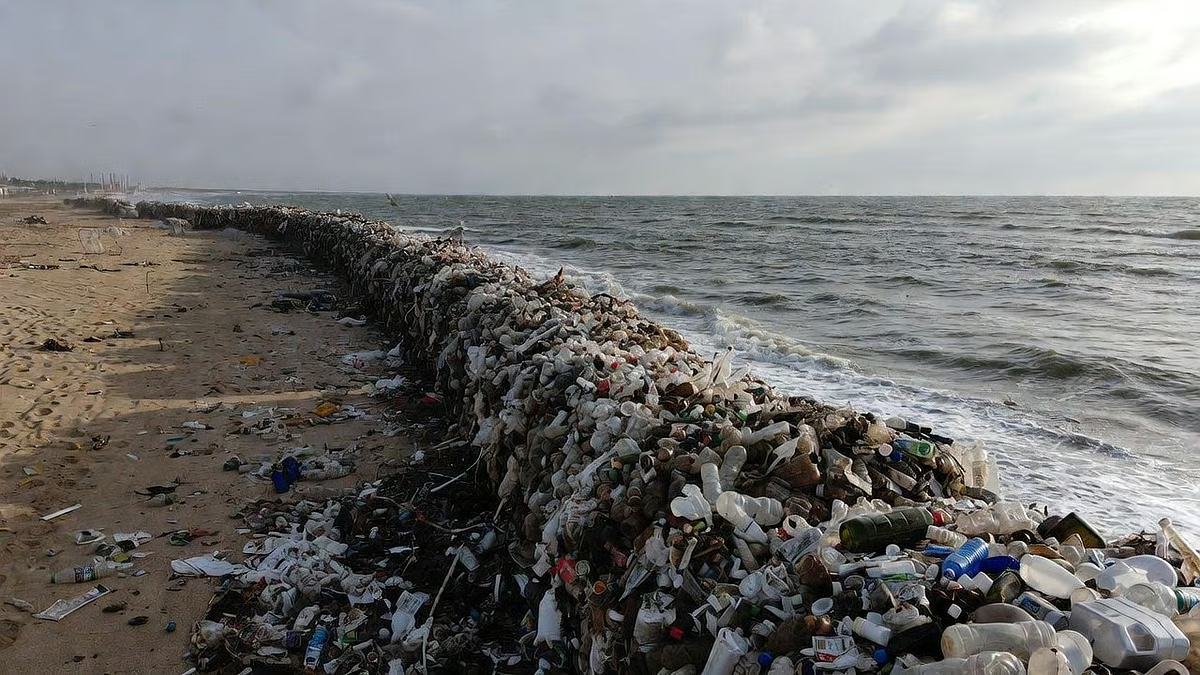
Impacts of this unchecked pollution include:
- Polluted beaches and degraded coastal areas, reducing their aesthetic and recreational value.
- Disrupted marine habitats, including the intricate ecosystems around mangroves and coral reefs.
- Threats to more than 100 protected species, which can ingest or become entangled in plastic debris.
- Harm to livelihoods that depend on healthy coastal ecosystems — including fishing, tourism, and related industries.
What Are Plastic Barriers?
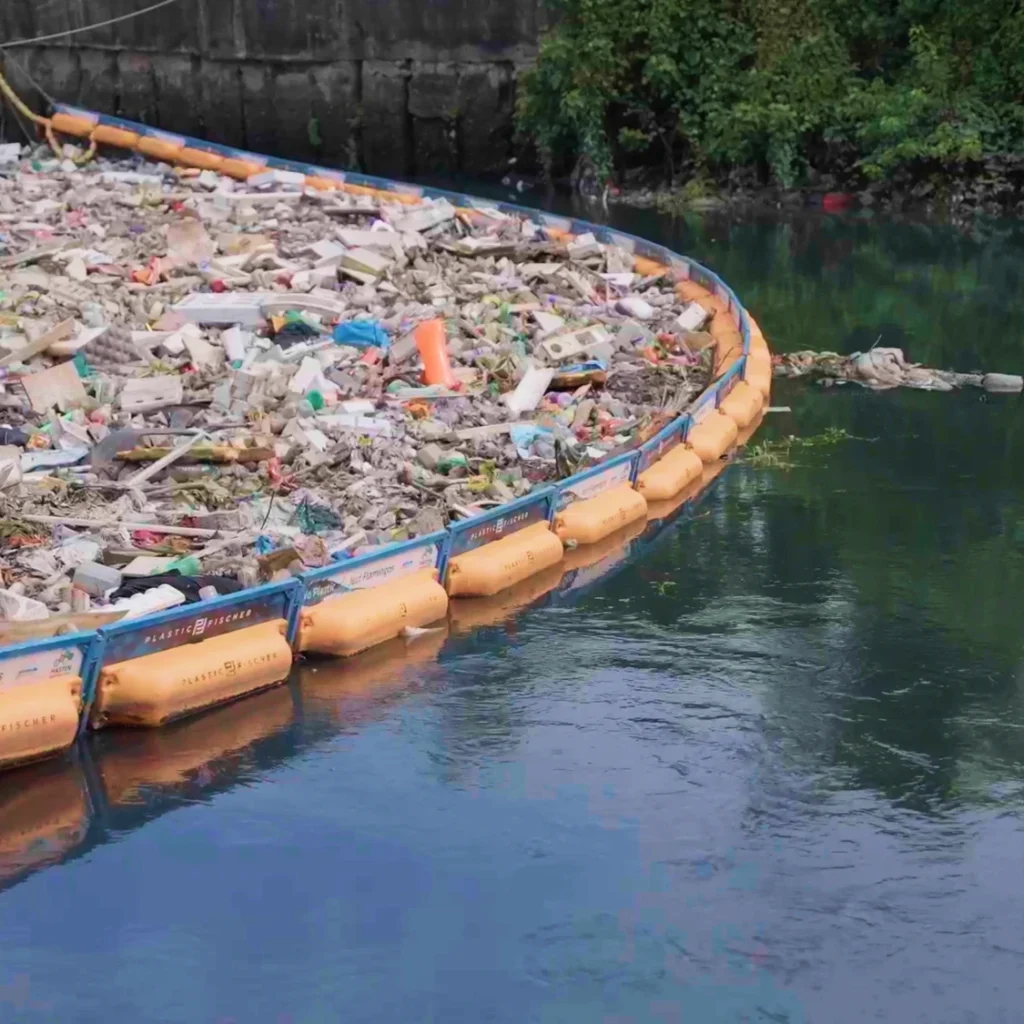
Plastic barriers—also known as debris booms, floating barriers, or interceptor barriers—are engineered structures placed across waterways to intercept floating plastic waste before it enters larger bodies of water like the ocean.
Typically made from durable, buoyant materials, these barriers can:
- Capture plastics carried by currents without stopping the natural flow of water.
- Concentrate waste in specific zones, making collection and removal much easier.
- Be adapted to different water levels and flow conditions.
Such systems have been used successfully in rivers and canals around the world to minimise plastic leakage into seas. For example, the international Interceptor systems developed by The Ocean Cleanup have been deployed in other urban waterways to collect tonnes of riverine plastic before it reaches the oceans.
The Mumbai Barrier Project: Key Facts
The upcoming Mumbai project is a collaborative effort involving:
- The Ocean Cleanup is an international non-profit focused on innovations to stop global plastic pollution.
- Municipal Corporation of Greater Mumbai (MCGM) — the local civic authority.
- Maharashtra Pollution Control Board (MPCB)—the regulatory body overseeing pollution control in the state of Maharashtra. https://www.unep.org
Here’s what the initiative aims to achieve:
Strategic Locations
The first phase will focus on two important waterways:
- Trombay Waterway
- Malad Waterway
These were identified through data-driven analysis as major contributors of plastic waste flowing towards the sea.
Expected Impact
Once operational, the barriers are expected to recover between 61 and 92 tonnes of plastic annually (61,000–92,000 kg), depending on performance and seasonal variations — a significant reduction in the flow of waste into the Arabian Sea.
Timeline
Deployment is scheduled to begin in 2026, with preparatory work starting before the monsoon season. The project will be implemented in phases to ensure safety and effectiveness.
Why This Matters for Mumbai and the World
Environmental Protection
Mumbai’s coastline stretches over 220 kilometres, and its diverse ecosystems, including beaches, estuaries, and mangroves, directly support millions of marine and terrestrial species. Continuous plastic pollution can cause:http://How River Cleanup Technologies Prevent Ocean Pollution
- Habitat loss
- Food chain disruption
- Toxic contamination from microplastics
Carbon emissions aside, plastic pollution has emerged as one of the foremost environmental challenges of the 21st century. Experts estimate that by 2050, there could be more plastic than fish in many global waters if current trends continue.
Health and Livelihoods
For communities dependent on fishing, aquaculture, and tourism, cleaner waters equate to healthier fish stocks, safer livelihoods, and better socioeconomic outcomes.
Barriers help tackle the “end of the line” problem — stopping pollution before it reaches places that are much harder to clean.
Global Leadership
Mumbai joining cities worldwide in adopting preventive measures sets an example for other coastal metros across India and Asia. By focusing on source reduction and early interception, cities can multiply their impact over time.
What Happens to the Collected Plastic?
Captured plastics will need safe handling:
- Waste collected by the barrier systems is typically sorted, rinsed, and transported.
- Recyclable plastics can be directed to recycling facilities.
- Non-recyclable materials must be disposed of safely to prevent re-entry into water systems.
Effective management after capture is as important as barrier installation itself.
Challenges and Continuous Efforts
Although barriers help significantly, they are not a stand-alone solution. Other supporting actions required include:
1. Stronger Waste Management at Source
Reducing single-use plastics, improving segregation, and encouraging reuse can dramatically reduce the waste flowing into rivers in the first place.
2. Public Awareness and Behaviour Change
Awareness campaigns and community participation — from schools and businesses to resident welfare associations — play a vital role in reducing littering and dumping.
3. Policy and Enforcement
Mumbai has earlier adopted plastic bans and fines to discourage single-use plastics — though stricter enforcement is needed to make such laws effective.
4. Partnerships with NGOs and Private Sector
Collaborations with organisations working on coastal clean-ups and recycling initiatives can further amplify impact.
A Step Towards Cleaner Oceans
Mumbai’s initiative to install barriers in key waterways marks an ambitious and inspiring effort against marine plastic pollution. While retrieval and capture technologies won’t solve the problem overnight, they represent a proactive shift toward preventing waste from ever reaching the sea—a crucial milestone in protecting marine ecosystems and preserving coastal beauty for future generations.
Ocean conservation challenges are global, but city-level interventions like these show that localised actions can make a world of difference.