



The changing landscapes along India’s shores highlight why Coastal Erosion India has become a critical environmental concern. Climate change is no longer a distant threat—it is actively reshaping coastlines today. Rising sea levels, stronger storm surges, and increasingly intense cyclones are accelerating coastal land loss and damaging fragile marine ecosystems.
Across coastal regions, communities face habitat destruction, economic instability, and shrinking natural resources. The growing impact of Coastal Erosion India demands immediate attention from policymakers, scientists, and local populations alike.
The Impact of Climate Change on Coastal Erosion
Climate change poses a significant threat to coastal regions, leading to severe coastal erosion in India. Rising global temperatures are a major contributor to this issue. The melting of polar ice caps is a key factor, directly linked to sea level rise. As ice melts, the volume of water increases, putting more pressure on coastlines.
Seawater thermal expansion also plays a role, further raising sea levels. These changes create unstable coastal conditions, leading to more frequent and intense storm surges. These surges can cause rapid erosion, often faster than local efforts to adapt can keep up.
The impact of climate change on coastal erosion varies, but vulnerable communities bear the most burden. In India, coastal zones are eroding at alarming rates. This highlights the urgent need for effective management strategies to tackle this growing crisis.
Understanding Coastal Erosion in India
Coastal erosion in India is a complex issue, influenced by both natural and human factors. Grasping the causes of erosion is critical to tackling this problem. Geological formations significantly impact erosion, with softer sedimentary rocks being more susceptible than harder ones.
Human activities also play a major role in exacerbating erosion. Construction along coastlines disrupts natural sediment flow, making areas more vulnerable. Deforestation near the coast destabilizes shorelines, intensifying erosion’s effects. These changes have a significant geographical impact, harming local ecosystems and communities that rely on these areas.
The Role of Sea Level Rise in Coastal Erosion
Sea level rise significantly contributes to the escalating rates of coastal erosion in India. As global temperatures rise, glaciers and polar ice caps melt, causing ocean levels to increase. This impacts coastal communities, making them more vulnerable to flooding and erosion.
Scientific forecasts suggest a sea level rise of over one meter by 2100 if current trends continue. This poses a dire threat to cities like Mumbai and Chennai, already facing coastal erosion challenges. Rising waters increase erosion event frequencies, weakening coastal resilience.
Coastal erosion in India, fueled by sea level rise, affects not just infrastructure but also biodiversity and natural resources. Grasping the link between sea level rise and coastal erosion is essential. It guides the development of effective strategies to protect vulnerable areas.
Coastal Erosion India: What’s Happening?
It’s essential to grasp the coastal erosion situation in India. Recent studies show alarming trends. About 60% of India’s coastline is experiencing erosion. States like Andhra Pradesh and Odisha are losing land at a rapid rate.
The Geological Survey of India reports these areas as among the fastest eroding. Local communities face displacement and loss of livelihoods. This highlights the human impact of these statistics.
Consequences of Erosion on Marine Ecosystems
Coastal erosion in India poses a grave threat, affecting both human settlements and marine ecosystems. As shorelines retreat, habitats for marine species deteriorate, leading to rapid biodiversity loss. These ecosystems, vital for supporting life, including fish populations, are being irreparably altered.
Coral reefs, known for their protective role, are now at high risk. They act as nurseries for many fish, providing shelter and sustenance. Studies show a clear link between erosion and declining fish populations, underscoring the need for action.
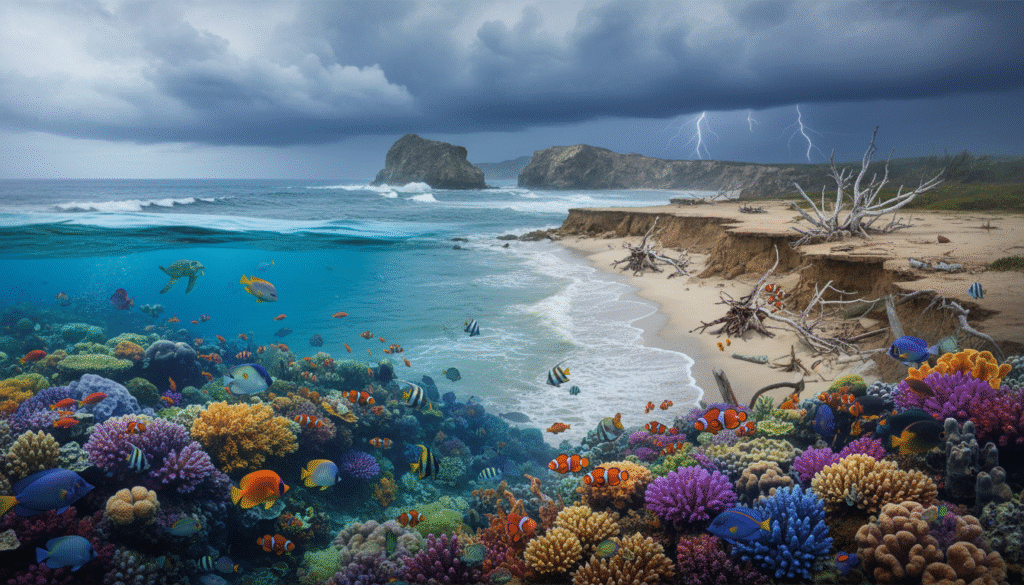
Without swift action against coastal erosion, we risk permanent damage to ecosystems that support local economies. The balance of marine biodiversity is under threat from habitat loss, disrupting species interdependencies.
How Climate Change Affects Weather Patterns
Climate change in India is causing significant shifts in weather patterns, impacting our coastlines deeply. As the planet warms, we see changes in precipitation, temperature, and wind patterns. These changes make storms more intense and frequent, raising the risk of coastal impacts.
Studies show that changes in monsoon timing and increased cyclone activity threaten coastal stability. The eastern coast of India, in particular, is becoming more vulnerable. It’s essential to grasp these evolving weather patterns to develop effective coastal management strategies. These strategies aim to reduce erosion and protect ecosystems.
Prevalence of Cyclones and Their Impact on Coastlines
Cyclones have become a major force shaping India’s coastlines. Their rising frequency is tied to climate change, worsening the coastal erosion crisis. The India Meteorological Department’s data reveal a sharp increase in cyclone activity, signaling a dire situation for coastal communities.
Each cyclone intensifies its impact. The powerful winds and torrential rains displace large amounts of sediment, worsening erosion. This not only disrupts natural habitats but also puts the livelihoods of coastal residents at risk.
The cyclical nature of cyclones hints at a grim future. Intensifying storms could accelerate coastal erosion, necessitating urgent adaptation and resilience measures. Grasping the relationship between cyclones and coastal erosion is essential as we confront climate change’s challenges together.
The Economic Implications of Coastal Erosion
The economic impacts of coastal erosion in India are significant and require immediate attention. Coastal communities, essential for both livelihood and regional stability, face severe challenges as their environments change. These areas often rely on fishing and tourism, sectors that depend heavily on healthy coastlines. Continued erosion threatens these industries, leading to substantial livelihood loss.
Studies suggest that the financial consequences could reach billions annually. The National Council of Applied Economic Research has highlighted the urgency of addressing coastal erosion in India. This is critical as it affects local economies, which depend on stable and sustainable marine environments. Protecting these coastal zones is vital for safeguarding the income and futures of countless families.
Community Resilience and Adaptation Strategies
Building community resilience is key to tackling coastal erosion in India. Collective efforts help develop effective strategies that empower locals to face environmental changes. By engaging communities in planning, we create solutions that meet local needs, boosting resilience.
The National Disaster Management Authority champions community-led coastal management. These programs bring together residents, local governments, and experts, ensuring everyone’s voice is heard. Successful examples show how community involvement enhances adaptive capacity, addressing coastal erosion in India.
In Kerala, we see how local insights improve erosion mitigation. These efforts combine traditional knowledge with modern science. This approach yields strong strategies that fit the unique landscape and cultural context.
Coastal Protection Measures: What Works?
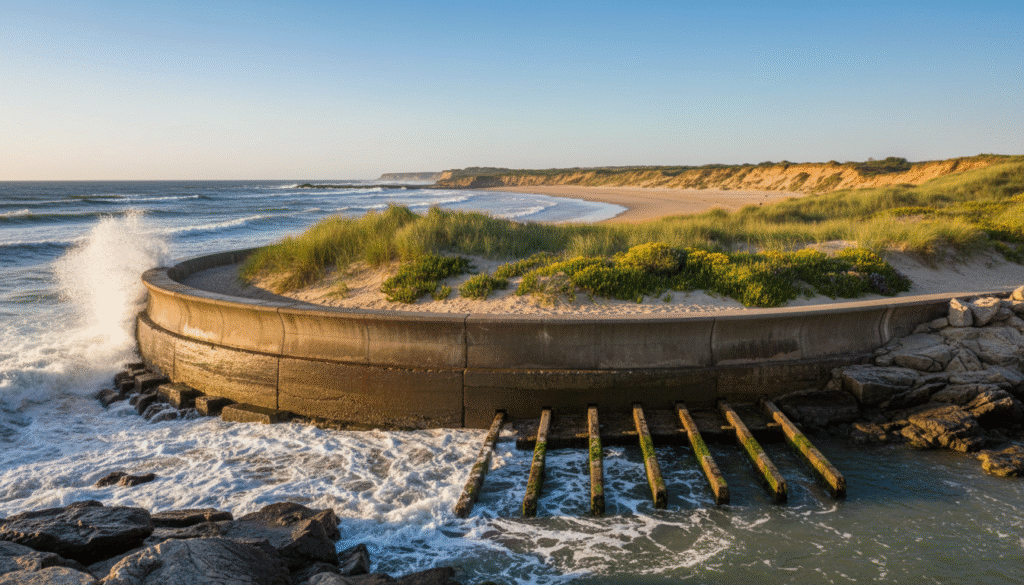
Addressing coastal erosion in India requires exploring various effective measures. Coastal protection strategies include traditional seawalls and innovative methods like beach nourishment and mangrove restoration. Each method has its own advantages and challenges, necessitating a customized approach for each region.
A combination of structural and natural defenses often yields the best results. Seawalls offer immediate protection but can harm natural sediment flow and ecosystems. In contrast, mangrove conservation not only shields coastlines but also boosts biodiversity.
These efforts highlight the need for combining scientific research with local knowledge. This integration is key to developing sustainable, long-term solutions against coastal erosion in India.
Government Initiatives for Coastal Management
Coastal erosion in India demands strong government actions for effective coastal management. Various programs aim to restore and protect coastlines. Their success, though, hinges on local context and how well they are implemented. The Coastal Regulation Zone (CRZ) notification is key, setting legal standards to protect coastal areas from environmental harm.
The Ministry of Environment, Forest and Climate Change now pushes for an integrated coastal management approach. This involves working together with policymakers, scientists, and local communities. By combining local insights with scientific research, these efforts become more effective. This approach fosters a deeper understanding of coastal ecosystems.
The Importance of Public Awareness and Education
Public awareness and education are key to tackling coastal erosion in India. By teaching communities about climate change and coastal movements, we encourage a proactive stance on conservation. Educational programs give people the tools to grasp their environment and the value of sustainable actions.
Government campaigns, led by the Ministry of Earth Sciences, are vital in spreading the word about coastal erosion. These efforts help locals understand coastal dynamics better. Schools can also play a part by teaching younger generations about coastal protection. This education can inspire a community-wide effort to protect coastal areas.
By boosting public awareness and education, we empower people to join the fight against coastal erosion in India. This approach helps build communities that value and protect their coastal ecosystems.
Collaborative Efforts in Coastal Conservation
In India, the success of coastal conservation hinges on collaborative efforts among diverse stakeholders. The partnership between government, non-governmental organizations, and local communities is key. Together, they can tackle major issues like coastal erosion and habitat loss more effectively.
Effective partnerships showcase the power of collective action. For example, the Marine Conservation Society has collaborated with local governments to enhance coastal management. These efforts not only preserve marine habitats but also bolster community resilience.
Exchanging best practices across states bolsters regional coastal management strategies. As more communities join these efforts, a unified front forms. This unity amplifies the impact on coastal conservation in India. It fosters a sense of stewardship, vital for preserving natural resources and protecting coastlines for generations to come.
Innovative Solutions for Coastal Protection
Addressing coastal erosion in India highlights the importance of innovation in coastal protection. Technologies like biomimicry and eco-engineering are leading the way. They offer new methods to fight erosion, thanks to research by coastal engineering experts. These nature-inspired designs promise more effective and sustainable defenses.
Our commitment to environmental issues is evident in these solutions. They aim to build resilience in communities affected by erosion. This approach is key to a sustainable future.
India’s coast is seeing the fruits of our proactive efforts. Pilot projects are creating structures that boost resilience against erosion. These projects merge modern engineering with ecological wisdom.
We must keep exploring innovative solutions. These should not only protect our coastlines but also respect the ecosystem. This way, we ensure a sustainable future for all.
The Role of Technology in Monitoring Coastal Changes
In recent years, technology has revolutionized our understanding of coastal erosion in India. Tools like remote sensing, geographic information systems (GIS), and drones have streamlined data collection. This allows us to track erosion patterns and other coastal dynamics more effectively.
The Indian Space Research Organisation (ISRO) is at the forefront of using satellite imagery to monitor shoreline changes. This technology offers a clear view of erosion impacts across various regions. It provides insights that were once hard to get. These tools help us respond quickly to threats, enabling better coastal management and planning.
These advancements go beyond just collecting data. They mark a significant leap in the adaptability of coastal management strategies. The combination of technology and environmental science creates strong frameworks for monitoring. This enables us to tackle coastal erosion issues proactively, promoting healthier ecosystems along our coastlines.
Future Projections for Coastal Areas in India
As we look to the future, the impact of climate change on India’s coastal areas is a pressing concern. Modeling studies suggest that if we continue on our current path, erosion rates could skyrocket. This could result in the displacement of entire communities and significant property loss. Cities like Mumbai and Chennai are at risk of losing substantial land by mid-century.
These projections highlight the urgent need for action against climate change in India. Implementing adaptive measures that address local needs and vulnerabilities is essential. Investing in infrastructure and engaging with communities are key to a proactive strategy.
From Erosion to Resilience
Reflecting on coastal erosion in India, we see a clear link to climate change. The effects we face highlight the need for community action. By combining our knowledge, we can create strategies to reduce erosion’s impact on our coasts.
Empowering local communities is essential for coastal resilience. Using technology and improving education can boost our adaptation to climate change. Together, we can adopt sustainable practices, protecting our coasts and deepening our understanding of coastal management.
Our collective effort and cooperation are critical in tackling coastal erosion in India. Focusing on resilience and innovation, we can safeguard our coastlines and preserve vital ecosystems. It’s time to act, and together, we can ensure our coastal areas flourish despite future challenges.