



India’s Economy / Industry shows signs of modest expansion in November, driven by steady growth in the manufacturing sector. This development highlights the evolving dynamics shaping the country’s industrial landscape and economic trajectory.
The performance of the manufacturing sector provides a critical lens into India’s broader Economy / Industry, offering insights into future growth prospects and competitiveness in global markets. By examining sectoral contributions—from raw material extraction to advanced production chains—we can better understand the forces driving industrial progress and sustainable development.
This article explores these trends in detail, translating complex data into actionable insights for professionals, students, and policymakers. Understanding these patterns is key to grasping how India’s Economy / Industry is evolving and what this modest expansion means for the nation’s journey forward.
Overview of November’s Manufacturing Performance
As we analyze November’s manufacturing metrics, we uncover a story of gradual but significant sectoral advancement. This measured expansion reveals important patterns in how different segments contribute to overall progress.
Key Expansion Metrics
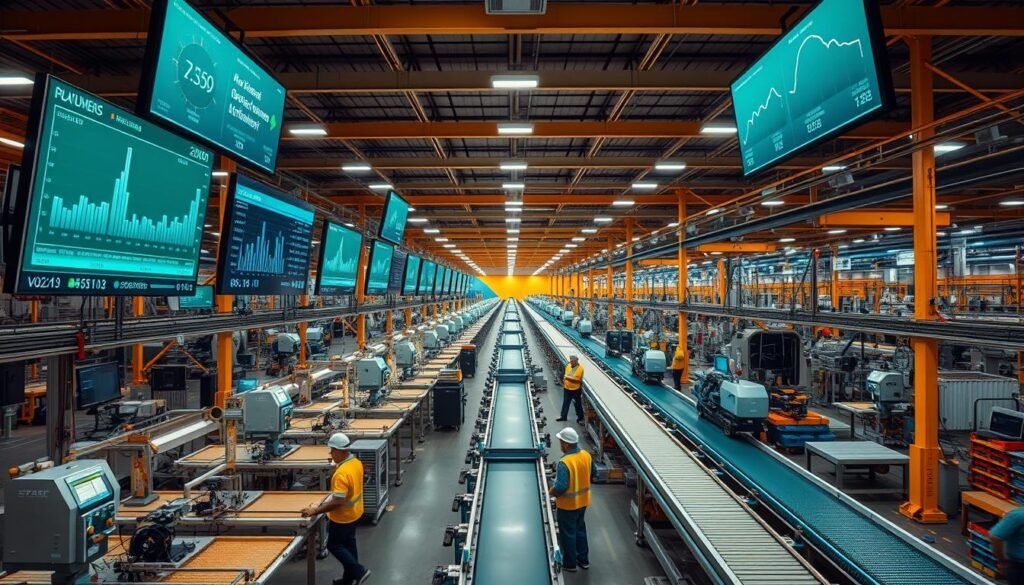
November’s data shows promising movement across several critical indicators. Production levels demonstrated steady improvement, while capacity utilization rates edged upward. These metrics suggest companies are optimizing their operations effectively.
The manufacturing sector’s resilience shines through in these numbers. Companies have adapted to supply chain challenges and shifting consumer demands. This adaptability fuels sustainable growth across various production segments.
Contextual Economic Indicators
When positioned against historical trends, November’s performance gains deeper meaning. The modest expansion appears more substantial when viewed alongside seasonal patterns and year-over-year comparisons.
This growth connects directly to broader economic momentum. Employment generation and investment flows show positive correlation with manufacturing expansion. Such interconnectedness highlights how sector performance influences national development.
Our analysis reveals that this expansion represents more than a temporary fluctuation. It points toward sustained growth potential across manufacturing sub-sectors. Each contributes uniquely to India’s economic growth story.
Understanding the Role of Economy / Industry in National Growth
India’s growth story is written across distinct yet interconnected domains of business activity. Each plays a vital role in our nation’s development. These domains help us analyze performance patterns and develop targeted strategies.
Defining Economic Sectors
We categorize business activity into sectors—broad parts of our national framework. This classification reveals which areas are expanding or contracting. It provides a powerful analytical lens for understanding our progress.
The primary sector forms the foundation through extraction and harvesting. Agriculture and mining are clear examples. They provide essential raw materials for more complex processes.
Next comes the secondary sector, which transforms these materials into finished goods. Manufacturing and construction represent this critical link. They connect resource extraction to consumer markets.
The tertiary sector encompasses service providers from retail to finance. This domain has emerged as a dominant force in developed nations. It drives modern economic activity through knowledge and service delivery.
“Sectoral analysis helps us see the forest through the trees—revealing how individual business activities combine to create national economic momentum.”
The Interplay Between Manufacturing and Service Sectors
November’s manufacturing expansion occurs within a complex web of sector relationships. Services contribute over 55% of India’s GDP. This highlights the dynamic interplay between different business domains.
These sectors support, complement, and sometimes compete for resources. Understanding their interactions helps policymakers make informed decisions. It enables strategic planning for sustainable development.
| Sector Type | Core Activity | Key Examples | Contribution to Growth |
|---|---|---|---|
| Primary | Resource extraction | Agriculture, mining | Foundation for production |
| Secondary | Goods manufacturing | Automobile production, construction | Value addition to raw materials |
| Tertiary | Service provision | Banking, healthcare, retail | Knowledge and service delivery |
This sectoral framework helps us contextualize manufacturing performance. It shows how different business activities combine to drive national advancement. Each sector contributes uniquely to India’s growth narrative.
Breakdown of Raw Materials and Production Processes
Understanding manufacturing expansion requires tracing the complete lifecycle from natural resource to finished consumer product. This journey reveals how raw materials transform through complex processes that drive sector performance.
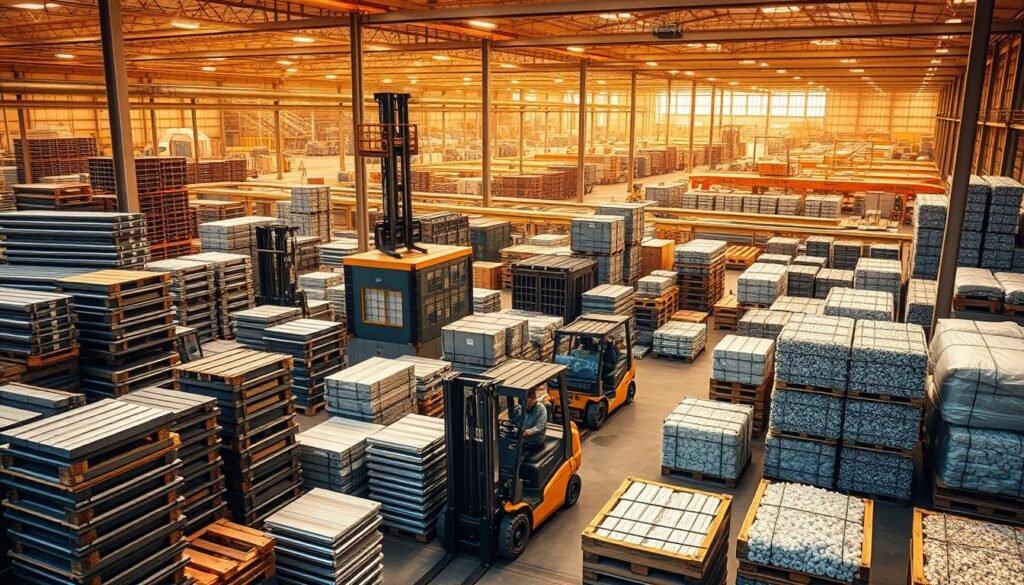
Each manufactured item begins with Earth’s basic building blocks. Metals, minerals, and agricultural products form the foundation of our production systems.
Supply Chain Dynamics
Natural resources flow from extraction points through sophisticated networks. Primary sector businesses harvest these essential materials, feeding secondary sector operations.
Transformation occurs through specialized processes like refining and fabrication. Each step adds value while requiring significant technological investment.
Supply chain resilience has become critical for manufacturing stability. Companies now focus on diversifying suppliers and optimizing logistics infrastructure.
This intricate web connects industries across the sector. Automotive needs steel, construction requires cement, creating powerful interdependencies.
By mapping these resources and production pathways, we appreciate the complexity behind November’s manufacturing gains.
Sectoral Analysis: Primary, Secondary, Tertiary, and Beyond
Our analysis of India’s sectoral framework uncovers dynamic patterns of growth across different business activities. This examination reveals how each sector contributes uniquely to national development.
Insights from the Primary and Secondary Sectors
The primary sector remains foundational to India’s progress. In FY 2024-25, it contributed 19.7% to nominal GDP with 4.4% growth. Agriculture and related activities engage over 40% of our workforce.
The secondary sector represents 25.3% of GDP with 6.1% growth. This domain transforms raw materials into finished goods through manufacturing and construction. These activities form our industrial backbone.

Growth in Tertiary, Quaternary, and Quinary Sectors
The tertiary sector dominates with 55% GDP contribution and 7.2% growth. Services from retail to healthcare define India’s competitive advantages. This sector has expanded dramatically since the 1970s.
Beyond traditional classifications, the quaternary sector drives innovation through intellectual activities. Technology and research services position India as a global knowledge leader.
The quinary sector encompasses top-level decision-making across education and policy. These high-level activities shape strategic direction for sustainable development across all sectors.
Industry Report Insights: Trends and Comparative Analysis
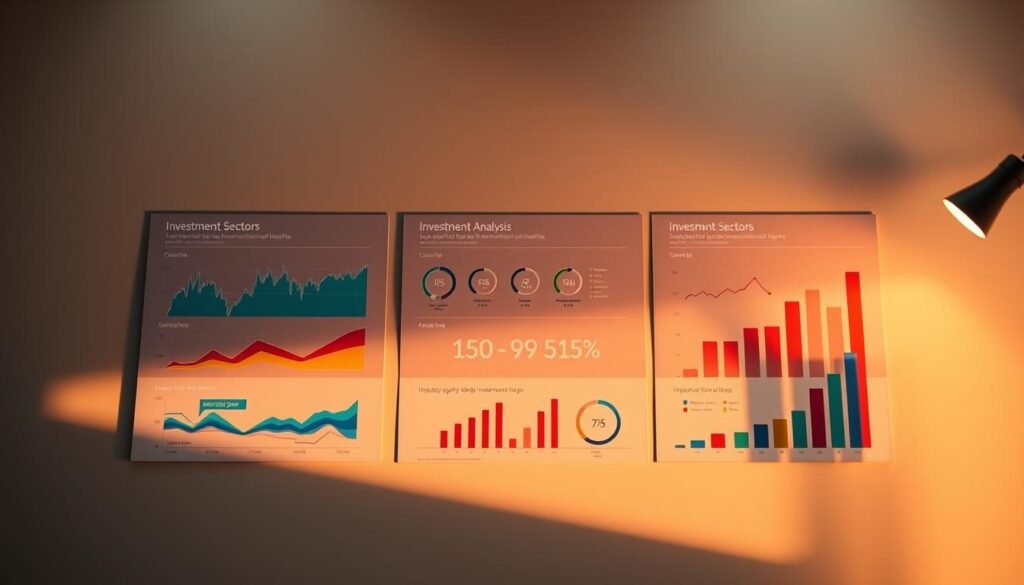
By examining investment sectors, we can decode the deeper narrative behind India’s recent manufacturing performance. These sectors group companies with similar business activities, providing a refined analytical framework.
This approach moves beyond broad classifications. It allows for precise measurement of how different parts of our sector economy are performing.
Recent Market Shifts
Financial markets use sector performance as a vital gauge of economic activity. A surge in raw material purchases often signals expansion. This typically boosts industrials and manufacturing.
Consumer confidence directly influences specific sectors. High confidence drives spending on non-essential goods. This benefits consumer discretionary companies.
Conversely, expectations of a slowdown shift spending toward essentials. This creates predictable patterns that guide investment strategies across different business domains.
The table below illustrates how key investment sectors react to economic signals:
| Investment Sector | Business Focus | Economic Indicator | Performance Driver |
|---|---|---|---|
| Industrials | Manufacturing, Construction | Raw Material Demand | Economic Expansion |
| Consumer Discretionary | Non-essential Goods | Consumer Confidence | High Disposable Income |
| Consumer Staples | Essential Goods | Economic Uncertainty | Stable Demand |
| Materials | Raw Resource Extraction | Industrial Production | Early-cycle Growth |
| Technology | Digital Solutions & Innovation | Business Investment | Digital Transformation |
Understanding these dynamics helps us contextualize November’s data. It reveals whether growth is a temporary fluctuation or part of a longer-term trend.
Impact on Key Business Sectors and Resource Allocation
The ripple effects of November’s manufacturing expansion extend far beyond factory floors, touching vital business sectors that power our nation’s development. We see particularly strong movements in automobile production, construction, and mining—three domains that serve as economic bellwethers.
Automobile, Construction, and Mining Developments
The automobile sector demonstrates remarkable complexity in its supply chains. Vehicle production integrates multiple industries—from steel and plastics to electronics. This makes it a comprehensive health indicator for manufacturing.
Construction activity reveals confidence levels about future prospects. Infrastructure projects drive demand for raw materials while creating substantial employment opportunities. Residential and commercial building reflects both business and consumer optimism.
Despite employing only 1.8% of the US workforce today—down from half the population in 1880—mining remains foundational. Natural resources extraction provides essential materials that enable other sectors to function effectively.
Strategic companies across these domains face critical resource allocation decisions. They balance investments in capacity expansion, technology upgrades, and workforce development. These choices determine long-term competitiveness in a dynamic global landscape.
The interdependencies become clear when we trace material flows. Mining provides raw materials for construction, while building products require inputs from multiple industries. This creates powerful multiplier effects throughout our economy.
Understanding these patterns helps us assess whether November’s expansion can catalyze broader growth. Constraints in key areas—raw materials availability, skilled labor shortages—may limit future manufacturing performance despite current positive indicators.
Emerging Innovations and Governmental Strategies
Quaternary sector activities are becoming the invisible engine powering India’s manufacturing evolution. These intellectual pursuits—research, information technology, and consulting services—create the innovation foundation for sustainable growth.
We see this transformation accelerating as technology becomes central to manufacturing excellence. The service sector’s contribution to GVA grew from 50.6% in FY14 to 55.3% in FY25, demonstrating this shift.
Focus on Technological Advancements
Artificial intelligence and IoT are revolutionizing production processes. These technological advancements enable smarter factories that optimize resource use while enhancing quality.
Digital platforms provide real-time information that transforms decision-making. This innovation creates tangible benefits—predictive maintenance reduces downtime while data analytics streamline supply chains.
Policy and Investment Implications
The government plays a crucial role in fostering this innovation ecosystem. Strategic investments in research infrastructure and education systems develop the technical skills manufacturers need.
Effective policies must balance support between leading service sectors and manufacturing. Incentive structures should reward companies adopting advanced technology while maintaining growth across domains.
Partnerships between government, universities, and businesses create powerful research collaborations. These relationships develop breakthrough technologies that can transform manufacturing capabilities.
Information technology firms within the quaternary sector provide essential services that drive this progress. Their work exemplifies how intellectual activities translate into practical manufacturing improvements.
Conclusion
India’s developmental mosaic emerges from the harmonious interplay between primary, secondary, and tertiary economic activities. Each sector contributes uniquely to our national progress, with November’s manufacturing expansion reflecting this complex synergy. The modest growth we’ve analyzed demonstrates how different stages of economic activity collectively drive advancement.
Our exploration reveals practical applications for this sectoral understanding. Investors and policymakers use sector performance to guide decisions, while companies benchmark against peers. The United States example—where 61.9% of workers are in services—shows the trajectory India may follow as our tertiary sector continues expanding.
Looking ahead, balanced development across all sectors remains crucial for sustainable growth. This comprehensive analysis equips professionals with frameworks to navigate India’s evolving economic landscape. Together, we can leverage these insights to shape strategic decisions that propel our nation forward.