



India stands at a pivotal crossroads in its energy journey. As the world’s most populous nation and one of its fastest-growing economies, the country faces the dual challenge of meeting escalating energy demands while addressing the urgent need for climate action. This balancing act involves navigating the complexities of phasing out coal, scaling up renewable energy, and ensuring energy equity for its vast and diverse population.
The Energy Landscape: A Nation in Transition
Rising Demand and Economic Growth
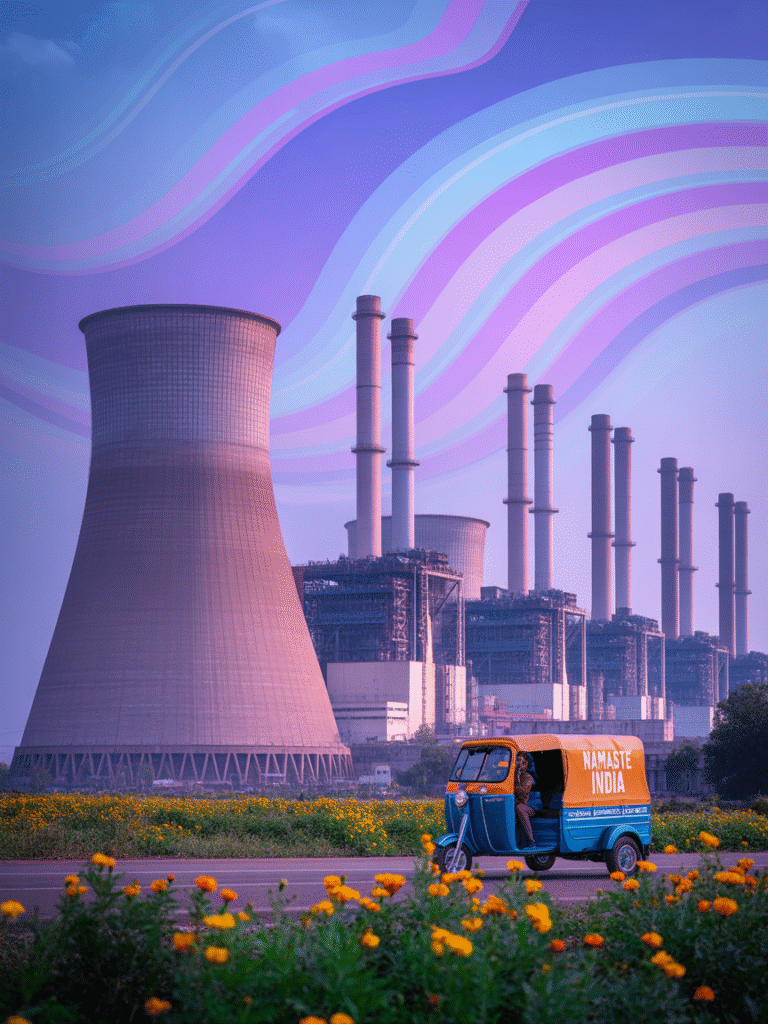
India’s energy consumption has been on an upward trajectory, driven by rapid urbanization, industrialization, and a burgeoning middle class. In 2025, the country’s power demand is projected to peak at 370 gigawatts, marking an 8% increase from the previous year BloombergNEF. This surge underscores the necessity for a reliable and scalable energy infrastructure.
The Coal Conundrum
Coal remains the cornerstone of India’s electricity generation, accounting for approximately 75% of the national output EHN. Despite global shifts towards cleaner energy sources, India continues to invest in coal, with 12.8 GW of new coal power plants commissioned in the first half of 2025 alone Down To Earth. This reliance poses significant challenges in the context of climate commitments and environmental sustainability.
The Push for Renewable Energy
Ambitious Targets and Progress
India has set an ambitious target to achieve 500 GW of non-fossil fuel-based energy capacity by 2030. As of early 2025, the country has installed over 220 GW of renewable energy capacity, primarily from solar and wind sources crfindia.org. The integration of these renewable sources is seen as pivotal in reducing carbon emissions and mitigating climate change impacts.
Policy Initiatives and Investments
The Indian government has introduced several policy measures to accelerate the adoption of renewable energy. These include the Renewable Portfolio Standards (RPS), Time-of-Day (ToD) Tariffs, and the Green Energy Open Access policy, which aims to democratize access to clean energy perspectives.se.com. Additionally, substantial investments, amounting to $62 billion, have been directed towards renewable energy, electric vehicles, and green hydrogen projects EY.
Challenges on the Path to Clean Energy
Infrastructure and Grid Integration
One of the primary hurdles in India’s energy transition is the integration of intermittent renewable energy sources into the national grid. The existing infrastructure, primarily designed for coal-based generation, requires significant upgrades to accommodate the variable nature of solar and wind power.
Financial and Regulatory Barriers
Despite favorable policies, the renewable energy sector faces financial and regulatory challenges. Issues such as land acquisition delays, financing constraints, and policy inconsistencies at the state level impede the swift deployment of renewable projects IEEFA.
Socio-Economic Considerations
The transition from coal to renewable energy has socio-economic implications, particularly for communities dependent on coal mining and related industries. Ensuring a just transition that provides alternative livelihoods and retraining opportunities is crucial to avoid exacerbating regional inequalities.
The Role of Coal in the Transition
Energy Security and Reliability
Coal continues to play a vital role in ensuring energy security and grid stability. Given the current limitations in renewable energy storage and the need for base-load power, coal-fired plants remain essential in meeting peak demand periods.
Balancing Act
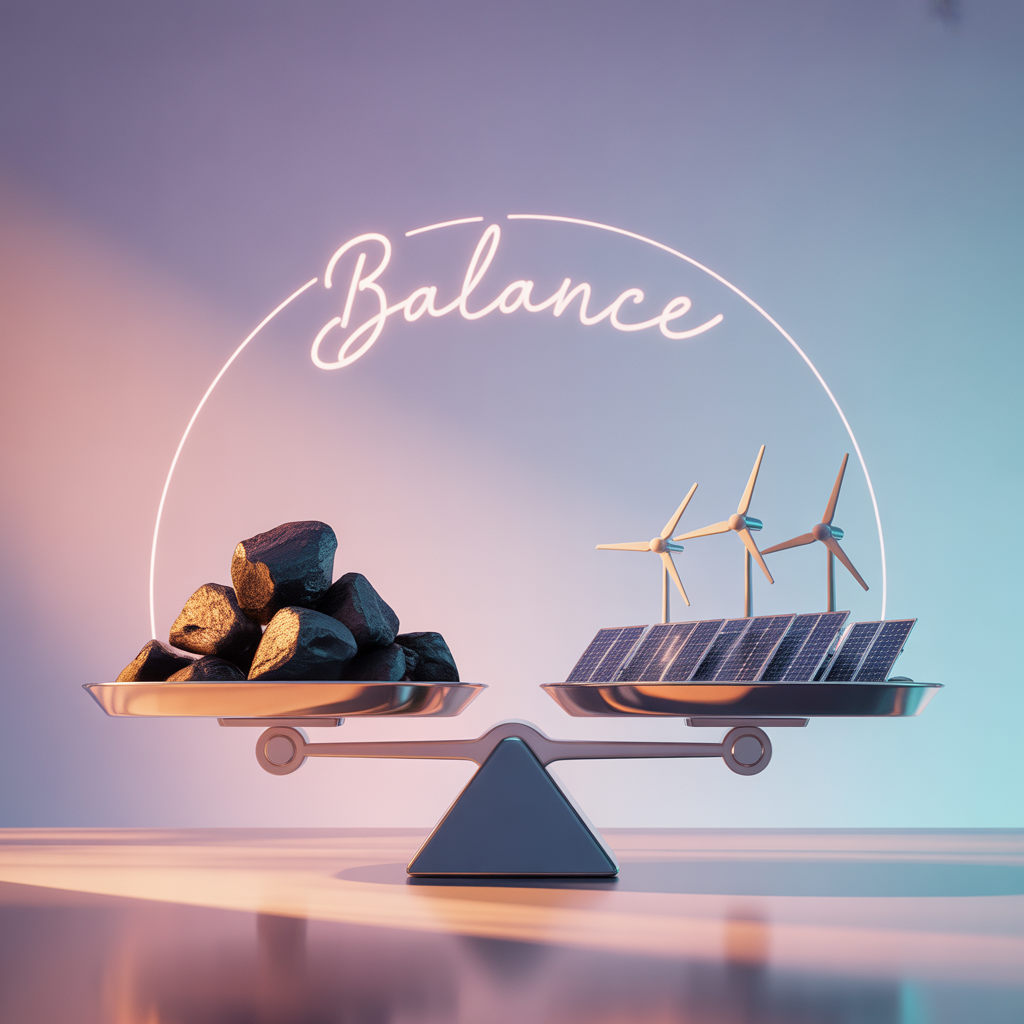
The challenge lies in balancing the phased reduction of coal dependency with the accelerated deployment of renewable energy. While the long-term goal is to decrease reliance on coal, the short-term reality necessitates a more gradual transition to maintain energy reliability.
Climate Commitments and Global Expectations
International Obligations
India has committed to achieving net-zero emissions by 2070, aligning with the global climate agenda. However, the simultaneous expansion of coal-based power generation raises questions about the feasibility of these commitments Harvard Business School.
Domestic Implications
Domestically, the environmental impacts of coal combustion, including air pollution and health-related issues, are significant. Transitioning to cleaner energy sources is imperative not only for climate goals but also for public health and environmental sustainability.
Strategic Pathways Forward
Accelerating Renewable Deployment
To meet its renewable energy targets, India must expedite the development of solar and wind projects, enhance grid infrastructure, and invest in energy storage solutions to address intermittency issues.
Policy Coherence and Implementation
A coherent policy framework that aligns national and state-level regulations is essential to streamline the approval processes and reduce bureaucratic hurdles that delay project implementation.
Community Engagement and Support
Engaging with communities affected by the energy transition and providing support through retraining programs and alternative employment opportunities will facilitate a smoother and more equitable transition.
Conclusion
India’s energy transition is a complex and multifaceted endeavor that requires careful planning, robust policy frameworks, and inclusive strategies. While the path forward is fraught with challenges, the country’s commitment to expanding renewable energy and reducing coal dependence signals a positive trajectory towards a sustainable and resilient energy future. Balancing the immediate need for energy security with long-term climate goals will be crucial in ensuring that India not only meets its energy demands but also contributes meaningfully to global climate mitigation efforts.