



Nearly 70% of new consumer decisions in India now consider the environment. This shift makes green startups not just good for the planet but also very profitable.
India is at a unique moment. We have fast growth in the green economy, a young population, and widespread digital use. These factors make it perfect for businesses focused on the environment, like renewable energy, AgriTech, waste management, and sustainable products.
Government support is also helping. Programs like Startup India and MSME credit support make it easier to get funding. They also reduce the hurdles for starting a business. Entrepreneurs can now focus on sustainable ideas like EV charging, biodegradable packaging, and recycling waste.
Choosing the right idea is key. It’s about matching your skills with what the market wants. Use tools like Google Trends, government reports, and green technology investment guides to check if your idea is good. You can also estimate costs and future profits.
We help tech-savvy entrepreneurs turn their ideas into real change. We guide them in planning, finding funding, and growing their business. For more information, call us at +91 342 2662201 or email info@indiavibes.today.
Understanding Green Startup Opportunities in 2025
We show how founders and students can start ventures that reduce emissions and create jobs. Green startups include clean tech firms and circular marketplaces. Examples are solar installers, e-waste recyclers, and sustainable packaging makers.

What Constitutes a Green Startup?
A green startup aims to lessen environmental harm. It can offer products like solar panels or services like e-waste recycling. These businesses use new materials and software, and they focus on reuse and leasing.
Measuring impact is key. Look at lifecycle emissions and resource use. Certifications like NABCEP for solar installers help prove claims and gain trust.
The Importance of Sustainability in Business
Sustainability is now a must for businesses. It builds trust, cuts costs, and meets regulations. Research shows people prefer brands that share their values.
Being sustainable also saves money and reduces legal risks. It boosts brand reputation and opens doors to green funding.
Key Trends Driving Green Startups
Policy and finance changes are helping green startups. Programs like Startup India and MSME credit schemes offer funding. Impact investors and green bonds provide more options. For tech insights, see Deloitte’s renewable energy industry outlook.
- Technology adoption: IoT sensors and AI make systems efficient and scalable.
- Consumer behavior: Eco-awareness drives brands to be transparent and sustainable.
- Sector momentum: Renewables and circular economy projects create jobs and demand.
Start by checking unit economics and market demand. Test with pilots and get certifications. Align with local policies and financing to boost your venture’s chances.
Renewable Energy Solutions for Growing Markets
We look at ways to grow renewable energy in Indian markets. This includes rooftop solar for homes, small wind arrays near towns, and bioenergy systems on farms. These solutions meet local needs, ease grid pressure, and open up green opportunities for communities and businesses.
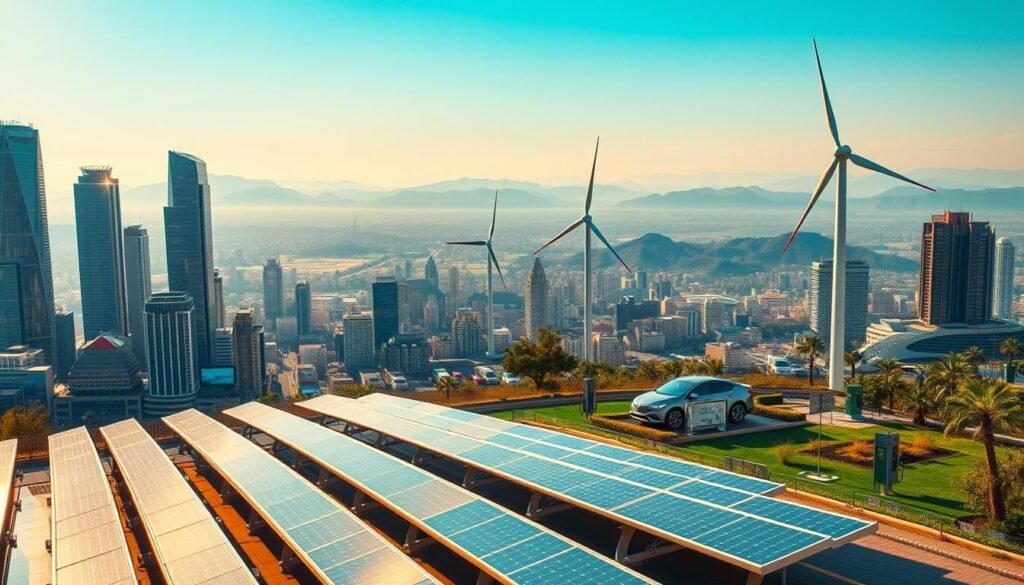
Solar is a quick way to start green projects. Installing solar panels on rooftops for apartments and schools is a simple process. It involves assessing the site, designing the system, buying parts, installing them, and maintaining them.
Solar systems with storage and microgrids add more value. They help manage energy supply and offer subscription or pay-per-use options for housing societies and small industries.
Government schemes and incentives help with costs. Engineers should get NABCEP-style training or work with certified installers. They should plan costs, subsidies, and payback periods before seeking eco-friendly investments or impact funds.
Wind power is great for bigger projects, but small wind turbines and hybrid systems are good for cities. Developers can sell power directly to factories or work with utilities for grid access. This creates ongoing income for technicians and startups.
Bioenergy turns waste into power. It includes biomass-to-power plants, farm-scale biogas digesters, and biogas systems for restaurants. These projects link to agriculture and food chains, turning waste into heat, electricity, or fuel. They support circularity and can earn money through carbon credits and local contracts.
Using software with deployment boosts returns. Energy-monitoring platforms help with predictive maintenance, performance tracking, and billing for subscriptions. Companies like Appinventiv show how integrating energy software increases project clarity and investor trust.
Here’s a checklist for engineers and founders:
- Certify technical skills or partner with qualified installers.
- Model cash flows including subsidies, PPAs, and subscription revenue.
- Select technology mix: solar, wind, storage, or bioenergy based on site data.
- Plan community engagement to secure early adopters and off-take agreements.
| Solution | Typical Customers | Key Activities | Funding/Revenue Models |
|---|---|---|---|
| Rooftop Solar (Residential & Schools) | Housing societies, schools, small offices | Site surveys, design, installation, maintenance | Government incentives, subscriptions, ECO-friendly investments, OPEX models |
| Solar Farms & Microgrids | Communities, small industries | Land acquisition, panel procurement, grid integration | PPAs, community subscriptions, corporate off-take |
| Small-Scale Wind & Hybrid Systems | Peri-urban businesses, rural clusters | Site wind studies, turbine installation, O&M | PPAs, partnerships, blended finance |
| Bioenergy (Biogas & Waste-to-Energy) | Farms, restaurants, municipalities | Feedstock sourcing, digester engineering, energy dispatch | Carbon credits, municipal contracts, energy sales |
| Energy Software & Monitoring | All project types | Telemetry, analytics, billing, predictive maintenance | SaaS subscriptions, service contracts |
Sustainable Agriculture: Feeding the Future
Sustainable agriculture is a key area for engineers, entrepreneurs, and educators to make a difference. It combines green practices with profitable business models. This way, teams can meet growing demand and improve rural life.
Organic Farming: Practices and Benefits
Organic farming uses fewer chemicals and improves soil health. It involves crop rotation, composting, and natural pest control. Urban shoppers are ready to pay more for organic food, creating opportunities for products like spices and oils.
Startups should match production with demand and get FSSAI labels for growth. Good traceability and packaging help increase profits and build trust.
Technology in Sustainable Agriculture
Modern tools like soil sensors and AI forecasts help farmers use less and produce more. Startups can offer software, IoT services, and logistics to reduce waste. These tools are key for success.
Grants and programs support AgriTech projects. We suggest starting small to measure success. This data attracts bigger customers and grows businesses.
Urban Farming: Redefining Food Production
Indoor farms and rooftop gardens bring fresh food to cities. This approach cuts down on emissions and boosts food security.
Starting small with microgreens or herbs can be affordable. Selling to restaurants and online can create steady income. This approach is key for sustainable ventures.
Using smart irrigation and organic methods can give businesses an edge. Mapping supply chains to demand centers is also important. These steps help sustainable agriculture thrive in the green economy.
Eco-Friendly Product Innovations
We look at products that are good for the planet and profitable. These items cut down on waste, avoid harmful chemicals, and attract eco-aware buyers. Startups in India can benefit from eco-friendly investments and sustainable business models. They can focus on traceable supply chains, clear certifications, and digital sales.
In fashion, materials like recycled polyester and organic cotton are key. They reduce environmental impact and costs over time. Brands like Fabindia and Anita Dongre show that being transparent builds trust. Digital platforms and resale markets also help extend product life and create new business opportunities.
Packaging is changing fast, thanks to laws and consumer demand. Now, we see compostable trays, molded fiber, and water-soluble films. Startups can offer materials, equipment, or consulting to help companies meet sustainability goals and cut costs.
Plant-based personal care and household items are in demand. Companies like Delphis Eco show there’s a market for green cleaners. Environmental entrepreneurship in this field rewards clear labels, third-party certifications, and regenerative farming.
Founders need to get FSSAI approvals for food products and eco-certifications for trust. They should use local suppliers, AI for marketplaces, and optimize sourcing. This helps match products with customers while reducing inventory risks.
Here’s a quick guide to help founders choose the right path and technology.
| Product Focus | Key Materials/Tech | Primary Customers | Revenue Models |
|---|---|---|---|
| Sustainable Apparel | Recycled fibers, organic cotton, upcycling, AI fit/recommendation engines | Young urban consumers, ethical boutiques, export buyers | D2C, subscription repairs, resale marketplace commissions |
| Biodegradable Packaging | Compostable PLA, molded pulp, paper coatings, biodegradable films | FMCG brands, e-commerce sellers, food services | Material sales, conversion services, consulting retainers |
| Health & Wellness Products | Plant extracts, natural surfactants, biodegradable formulations | Health-conscious households, organic stores, wellness spas | Retail D2C, subscription replenishment, B2B bulk supply |
Waste Management and Recycling Startups
Entrepreneurship is booming, turning waste into something valuable. In India, new policies and consumer choices are opening up opportunities. Startups that use technology and focus on safety can find success while being green.
The Circular Economy: Reducing Waste
Designing for reuse is key. Repair shops, upcycling centers, and material exchanges reduce the need for new materials. Sites like SOJO for repairs and Back Market for refurbished electronics show people want quality second-hand items.
AI and apps help match reusable parts with those who need them. This cuts down on transport costs and makes sorting more efficient. A strong logistics system and clear safety rules are essential for growth in a circular economy.
E-Waste Recycling: Opportunities and Challenges
India’s e-waste is full of valuable metals and parts. Startups offer door-to-door collection, certified dismantling, and facilities to extract value.
They must follow e-waste rules, keep workers safe, and have traceable supply chains. Platforms that manage pickups and routes with IoT offer strong services. Formal recyclers get contracts from manufacturers and governments.
Composting Solutions for Homes and Businesses
Composting is for everyone, from home bins to commercial digesters. Vermicomposting fits in small spaces, and aerobic digesters work for restaurants and markets.
Connecting compost services to organic buyers or municipal programs brings in steady income. Apps for scheduling and educating customers help keep the process clean and efficient.
Startups need to follow rules, train workers, and handle materials safely. The right technology depends on the size of the operation. This approach attracts eco-friendly investors and long-term contracts.
| Opportunity | Typical Model | Key Advantage | Primary Challenge |
|---|---|---|---|
| Repair & Refurbishment | Marketplace connecting repairers and customers | Extends product life, reduces raw material demand | Quality assurance and certification |
| E-waste Collection & Recycling | Collection network + certified dismantling | Recovers precious metals, meets compliance needs | Traceability and safe material handling |
| Upcycling Hubs | Design-led conversion of waste into products | Creates premium niche products for retailers | Scaling production while sourcing consistent feedstock |
| Household Composting | Compact vermicompost kits with pickup service | Low entry cost, high consumer appeal | Contamination and customer education |
| Commercial Composting | On-site digesters for hotels and markets | Diverts large organic volumes, yields compost/fuel | Capital cost and operational expertise |
| Material Exchange Platform | Digital marketplace for surplus and scrap | Matches sellers and buyers, reduces landfill | Building critical mass and trust |
Green Transportation: The Future of Mobility
Transport is a big area for green startups in India. Cities are getting more crowded, and electric vehicles are getting more support. Startups can create businesses that help the environment and save money.
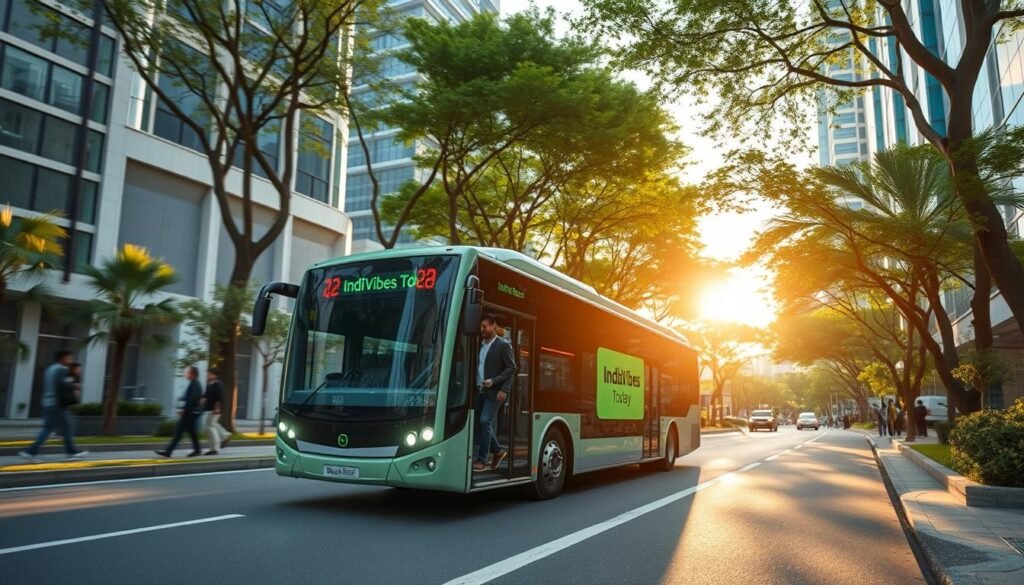
Electric vehicle infrastructure is a good place for startups to start. Setting up charging stations can be profitable if you pick the right spots and work with the grid.
Look into battery-swapping hubs, electric fleets for last-mile delivery, and systems that manage when to charge. These ideas can save money for companies and make money for startups.
Bike sharing and e-bike courier services are great for cities. They need little money to start and can grow fast. Using apps and subscription plans can help you grow.
Adding tracking and zero-emission reports can attract big companies and win city programs. Focus on big cities and smaller ones to make more money.
Public transit innovations can really cut down on emissions. Platforms, software, and electric shuttles can reduce the need for private cars.
Work with city transport and companies to test electric buses and shuttles. This can lead to steady income for startups.
Startups should think about the cost of fleets, subsidies, charging, and maintenance. Working with logistics and app companies can help you get started and find your place in the market.
| Opportunity | Primary Revenue Model | Key Partners | Ideal Pilot City |
|---|---|---|---|
| EV Charging Network | Pay-per-charge, subscription for fleets | Discoms, malls, fleet operators | Bengaluru |
| Battery-Swapping Hubs | Swap fees, battery-as-service | Two-wheeler OEMs, delivery fleets | Delhi NCR |
| E-bike Courier Service | Per-delivery contracts, subscriptions | Logistics firms, restaurants | Mumbai |
| Bike Sharing Platform | Rides, memberships, sponsorships | Municipalities, tech platforms | Pune |
| MaaS & Route Optimization | Licensing, SaaS | Public transit agencies, employers | Hyderabad |
We see these ideas as ways to make money while helping the planet. By linking charging and fleet services to green energy, startups can attract investors and be part of the green economy.
Water Conservation Technologies
We look at ways to save water that engineers and entrepreneurs can make into businesses. We focus on systems that save water, money, and open up opportunities in cities and rural areas of India.
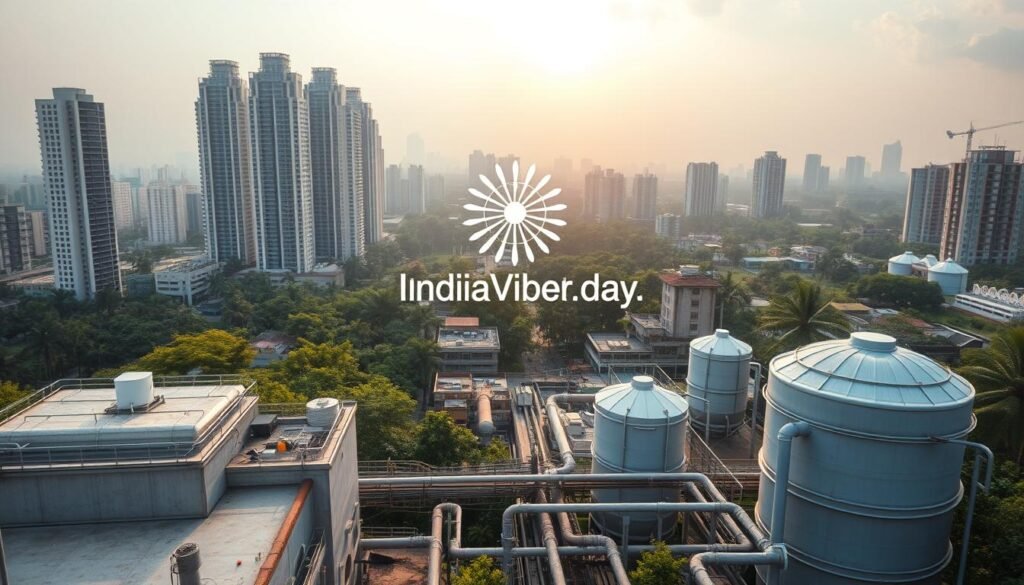
Rainwater Harvesting Systems
Rooftop and community-level collection helps reduce the need for municipal water. Companies can offer designs, installations, and maintenance for homes, schools, and factories.
Startups can add storage and treatment to the systems. This way, they can provide water for toilets, gardens, and cooling towers. This mix can bring in steady income and attract investors who care about the environment.
Smart Irrigation Solutions
IoT soil moisture sensors, drip systems, and AI schedules help farmers use less water. We suggest combining sensor hardware with software dashboards for farmers and landscapers.
This approach can lower costs and support businesses that focus on sustainability. Companies can offer different services, like installation, analytics, and advice, to grow their business.
Desalination: Addressing Water Scarcity
Decentralized desalination uses solar power and compact units for coastal towns and industries. Innovations that use less energy create opportunities for green energy projects.
Using renewables with desalination can lower costs and attract investors who want to make a difference. Projects can be designed to fit small communities and off-grid areas.
Examples of practical tech include closed-loop water systems and on-site reuse. Adding AI for leak detection and demand forecasting can improve system efficiency and reduce waste.
| Solution | Primary Market | Revenue Streams | Key Tech |
|---|---|---|---|
| Rooftop Harvesting + Treatment | Residential societies, schools, factories | Design/installation, maintenance contracts, retrofit fees | Filtration, storage tanks, UV/pH treatment |
| Smart Irrigation as a Service | Smallholder farms, landscaping firms | Hardware sales, SaaS subscriptions, advisory services | Soil sensors, drip systems, AI scheduling |
| Modular Desalination Units | Coastal communities, industries | Unit sales, leasing, energy service agreements | RO membranes, solar PV, energy recovery devices |
| Closed-Loop Reuse Systems | Hotels, manufacturing sites | System integration, performance contracts, monitoring | Greywater treatment, sensors, AI leak detection |
For engineers, focus on the cost over the whole life of the system. Designing smartly with IoT and AI can improve performance and attract investors who care about the environment.
These strategies can lead to sustainable businesses and support green energy projects. When they grow, they help the environment and the economy in India.
Green Building and Sustainable Construction
We believe green building and sustainable construction are key for startups in India. Using low-carbon materials and retrofit services offers a path to success. It combines engineering skills with practical delivery.

Eco-friendly materials and techniques create new revenue streams. Startups can produce restructured wood, recycled concrete, and low-VOC paints. They can also make prefabricated green components.
Retrofit contracting is another opportunity. It replaces old HVAC, glazing, and insulation with new, sustainable ones. This works for both new and old buildings owned by commercial landlords.
Energy efficiency in buildings is a big chance for services. Startups can offer building energy audits, HVAC optimization, and LED retrofits. They can also install building management systems.
Measurement & verification (M&V) and performance benchmarking show savings. This boosts credibility. Lower operating costs attract corporate tenants and institutional clients.
LEED certification gives a competitive edge. Becoming a LEED Green Associate or helping clients get certified can win contracts. It shows design intent and boosts trust with professionals.
Business models vary from consulting to integrated design-build services. Combining energy audits, retrofit contracting, and M&V creates steady income. Partnerships with big contractors or local firms help projects move faster and meet rules.
Success depends on knowing local codes and energy standards. Green economy growth in India is driven by policy and demand. By focusing on efficiency and value, startups can grow in the sustainable business world.
Community-Based Renewable Energy Projects
We look into how local efforts turn renewable energy into a community asset. Small projects can power homes, create jobs, and support businesses that care for the planet.
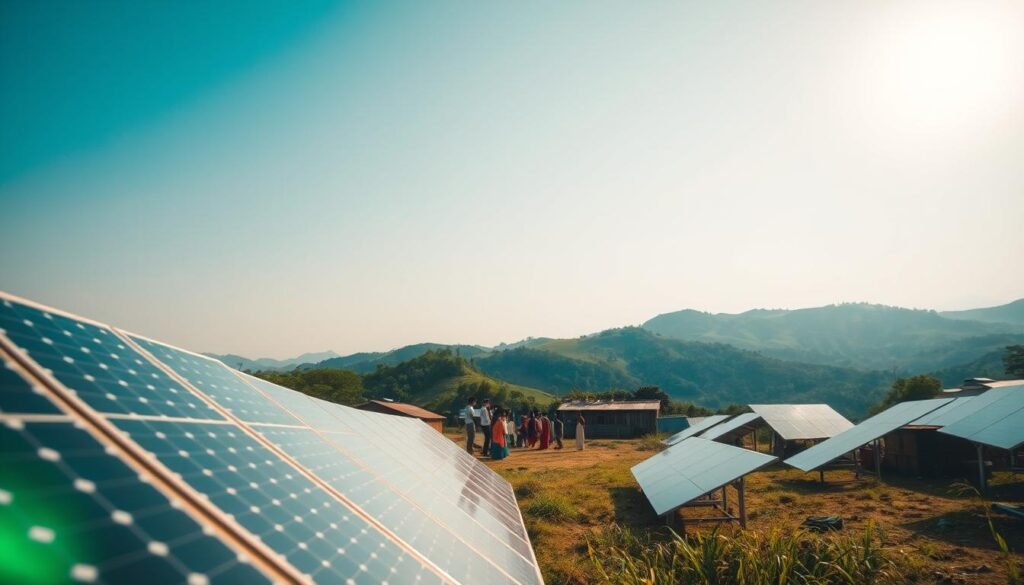
Projects like community solar farms and microgrids cut down on energy loss. They also make power more reliable and create jobs. This way, people can own a part of the project, making them more likely to support it.
Localized Energy Production: Benefits and Challenges
These projects save money on energy distribution and give communities control over their power. Microgrids can keep power on during outages and use storage to balance supply and demand.
But, there are hurdles like finding land, getting approval to connect to the grid, and managing the project. It’s important to plan ahead for these steps.
Crowdfunding for Energy Projects
Crowdfunding and cooperative finance help small towns and neighborhoods go green. People can invest in a way that’s easy on their wallets.
Platforms for impact investing and green mutual funds can also help. Being open about how much energy is produced and carbon saved keeps investors happy.
Case Studies of Successful Community Initiatives
Financing models like Clearloop can kickstart projects by bringing together money for construction. Community solar programs work by combining technical and financial partners.
Successful projects have a clear plan: figure out demand, get permits, set up financing, and share results. This approach helps projects run smoothly and attracts more investors.
For the technical side: plan out energy production, storage, and income before starting. Use online tools to track and bill, cutting costs and improving clarity.
- Assess local demand and site feasibility
- Secure permits and interconnection agreements
- Design subscription or PPA structures
- Implement transparent impact reporting
Community energy projects are a great chance for clean tech and green economy growth. They offer real ways for entrepreneurs and businesses to go green.
Funding and Support for Green Startups
We see a clear pathway for green startup opportunities in India. This includes policy support, private capital, and strong networks. Government schemes like Startup India and MSME credit support help lower entry barriers.
State-level renewable subsidies and rooftop-solar schemes reduce upfront costs. FSSAI and similar certifications ensure market access for food and consumer products.
Government Programs and Incentives
Startups should align their proposals with available public programs. This can secure concessional finance and grants. To do this, prepare concise business models and robust financial projections.
Also, have pilot plans for schools, residential societies, or restaurants. This shows traction. For more information, check out this sector summary at emerging high-growth sectors in India.
Impact Investors and Philanthropic Support
Impact investors like Newday focus on measurable environmental returns. They use funding vehicles like green mutual funds and green bonds. These investors add strategic value by providing ESG reporting frameworks and impact metrics.
They also introduce startups to corporate offtakers. This makes eco-friendly investments more scalable.
Networking Opportunities in the Green Sector
Build networks through cleantech incubators and AgriTech accelerators. Industry associations and conferences are also great places to connect. Collaborate with energy-software developers and technical institutes to unlock digital capabilities and R&D.
We recommend tapping incubators for mentoring. Partner with universities to access talent for clean tech ventures and environmental entrepreneurship.
For hands-on guidance, reach out to our team at +91 342 2662201 or info@indiavibes.today. We help translate engineering expertise into scalable, sustainable business models. We also attract impact investors for lasting eco-conscious business growth.