



Nearly 40% of distribution losses in some regions could be cut with smarter grid control—an impact that would reshape power availability for millions across India.
We are at a turning point in electrical engineering. The old Edison- and Tesla-era grids are giving way to new, data-rich systems. Digitalization and automation are leading this change, making power systems more efficient and responsive.
Electrical Systems Engineering and AI are working together. AI helps with automated fault detection, better demand management, predictive maintenance, and integrating electric vehicles. These advancements cut down on energy loss and improve efficiency.
New tools like Digital Twin models, the Internet of Energy, and vehicle-to-grid systems add more control and resilience. For Indian engineers and students, these technologies are essential for meeting national energy goals. They are not just ideas; they are critical for the future.
We are looking into how power systems change with the help of machine learning and control theory. Organizations like Consac (https://www.consac.com) support this shift. They offer consulting, training, and engineering solutions that help us achieve our goal of transforming education through creativity and innovation.
What is Electrical Systems Engineering?
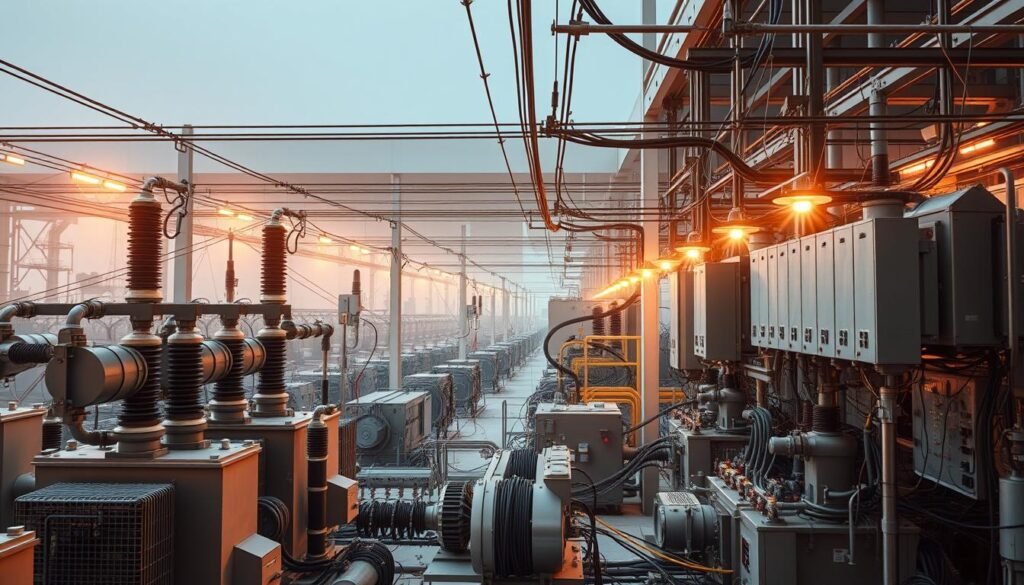
We explore how electrical systems engineering shapes modern power delivery and device design. This field blends theory and practice. It manages generation-transmission-distribution networks and controls electronics. Engineers work across scales, from circuit design to planning a structured power system for cities and industries.
Defining the Discipline
Electrical engineering studies and applies electricity, electromagnetism, and electronics. It traces back to Michael Faraday’s induction experiments and Alessandro Volta’s battery. The debates over AC and DC led to wide-area transmission.
Early grids like the Pearl Street plant and the Niagara Falls project showed AC and multiphase systems work for urban power. At its core, the discipline handles generation, high-voltage transmission, and low-voltage distribution. Professionals design protection schemes and control strategies to ensure reliability.
Key Components and Techniques
Generation includes thermal, hydro, nuclear, and renewables. Each source needs unique planning and interface electronics. Transmission moves bulk power at high voltages; distribution delivers usable energy to homes and factories.
Common techniques include circuit design and power-electronics design for converters and inverters. Engineers use circuit analysis, control systems, and SCADA for real-time monitoring. Simulation tools like MATLAB and Simulink enable dynamic studies and design optimization.
Modern challenges require systems-level thinking. Microgrids, energy storage, and electric vehicles add bidirectional flows and variability. We bridge hardware with software: control algorithms and communication protocols that coordinate the grid.
| Domain | Main Tasks | Typical Tools |
|---|---|---|
| Generation | Capacity planning, turbine/inverter control, emissions and stability studies | Simulink, PSS®E, PSCAD |
| Transmission | Grid planning, protection coordination, high-voltage insulation design | Power flow solvers, relay test sets, EMTP |
| Distribution | Network automation, load forecasting, demand response integration | SCADA, DERMS, GIS mapping tools |
| Circuit and Power-Electronics Design | Converter topology, thermal design, PCB layout and protection | SPICE, Altium, MATLAB |
| Control and Monitoring | Real-time control, stability analysis, predictive maintenance | SCADA, PMUs, machine learning toolkits |
Educational foundations include power systems analysis, control theory, signal processing, and programming. We find interdisciplinary training—combining traditional electrical engineering with data science—essential for meeting evolving industry needs in India and beyond.
The Role of Artificial Intelligence in Engineering
We explore how artificial intelligence changes electrical systems engineering. It goes from making models to controlling them in real-time. This brief introduction sets the stage for practical tools, learning methods, and benefits. We aim to show engineers and educators what’s important when using AI in circuits, controls, and grids.
Understanding AI Technologies
We use supervised and unsupervised learning for tasks like classification and finding anomalies in sensor data. Reinforcement learning helps improve controllers and adaptive protection schemes. Neural networks are key in many models, like convolutional nets for waveform classification and recurrent nets for time series.
Classical machine learning, like support vector machines and random forests, is useful for smaller datasets and models that are easy to understand. Genetic algorithms help in finding circuit parameters and topology quickly. Developers often use TensorFlow and PyTorch to build models, then test them in MATLAB and Simulink for control design and digital twins.
Operational platforms connect models to real systems: SCADA enhanced with AI offers near real-time monitoring and predictive analytics. We use these platforms with cloud compute for scalable training and on-edge inference for fast control.
Benefits of AI Integration
Automation quickly brings efficiency gains by optimizing layout, routing, and component selection. Machine learning reduces energy loss and improves power factor through tuned control loops.
Predictive maintenance cuts outages by forecasting failures from sensors. For example, wind-turbine vibration analysis and transformer oil-insulation monitoring can spot deterioration before faults happen.
Automation and control get better with AI-driven controllers and collaborative robots. These systems increase throughput and lower setup time on manufacturing lines and testing benches.
Decision support becomes data-driven: utilities use demand-response optimization and energy management tools to balance supply and load. This leads to smarter dispatch, lower peak demand, and better integration of renewables.
Resilience and security get a boost from anomaly detection that spots cyber-physical intrusions and operational faults. Yet, vulnerabilities remain and need layered defenses, secure model pipelines, and regular audits.
Collaboration and Skills
Interdisciplinary work is key: electrical engineers need data-science literacy, and AI specialists must understand power-system constraints. Joint teams create viable, deployable solutions that meet safety, latency, and reliability needs.
We encourage hands-on practice with TensorFlow, PyTorch, MATLAB, and SCADA testbeds. This builds expertise that spans both domains.
| Area | AI Methods | Typical Tools | Primary Benefit |
|---|---|---|---|
| Control and Automation | Reinforcement learning, neural networks | MATLAB/Simulink, TensorFlow | Adaptive performance, reduced tuning time |
| Fault Detection | Supervised learning, anomaly detection | PyTorch, SCADA analytics | Early warnings, less downtime |
| Design Optimization | Genetic algorithms, machine learning | Python toolchains, TensorFlow | Faster iteration, better efficiency |
| Energy Management | Time-series forecasting, neural networks | PyTorch, MATLAB | Demand-response, lowered peaks |
| Cyber-Physical Security | Anomaly detection, unsupervised learning | SCADA platforms, TensorFlow | Improved detection, risk reduction |
How AI Transforms Circuit Design
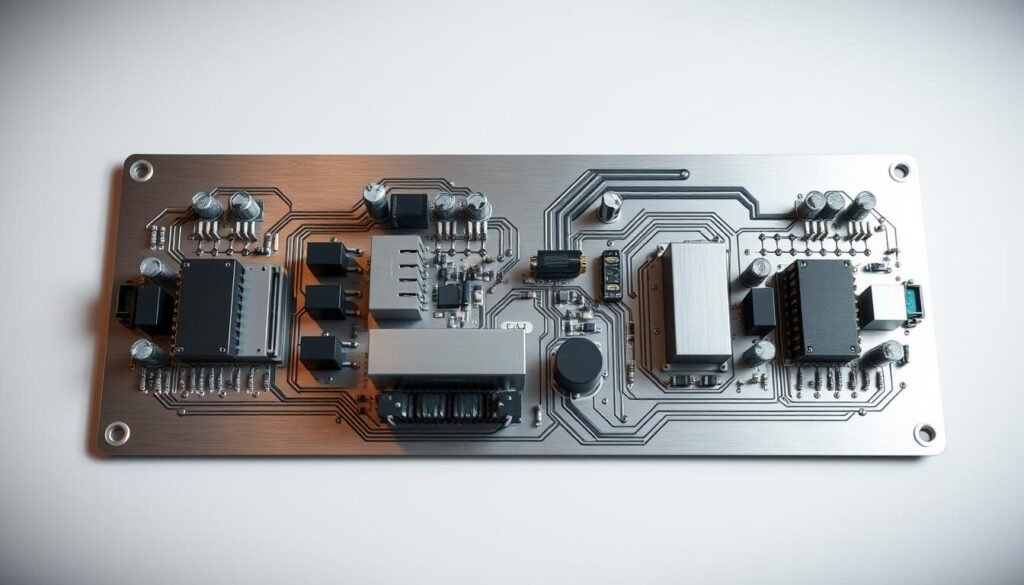
We look at how artificial intelligence changes circuit design for engineers and students worldwide. AI makes design faster, more reliable, and opens new learning paths in electrical engineering. It focuses on tools that improve power electronics and PCB projects.
Automated layout and smart placement reduce manual work. AI tools and algorithms optimize PCB and power-electronics designs. They keep in mind thermal and electromagnetic rules. Designers see fewer board changes and better manufacturing rules.
Working with MATLAB and Simulink speeds up simulation cycles. Digital Twin methods simulate circuit behavior under different conditions. They spot issues like thermal hotspots and EMI problems early.
Machine learning helps pick the right components. It looks at test data and sensor logs to predict aging and stress. This helps choose designs that last longer in industrial motors and robotics.
Genetic algorithms and neural networks help with design optimization. They fine-tune converter and filter settings for better efficiency and cost. This makes finding the right design faster than manual methods.
Examples include AI in power-converter tuning and design workflows from Texas Instruments and Siemens. These workflows cut down development time and boost performance in complex systems.
We suggest adding hands-on modules to curricula. These should mix circuit simulation with machine learning. This way, students learn to use automated layout with predictive models. It prepares them for today’s electrical engineering jobs.
Smart Grids: The Next Frontier
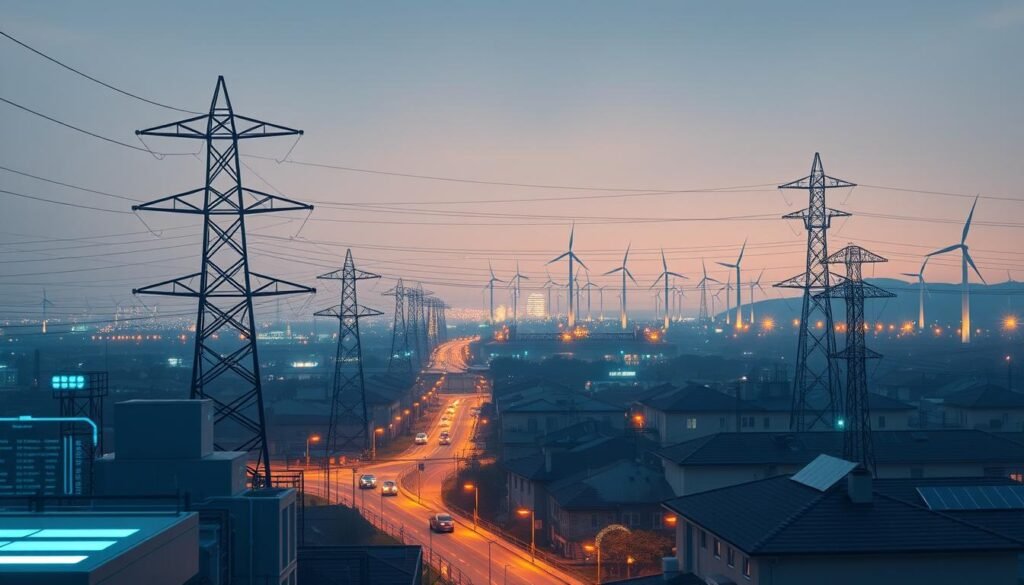
We look at how power lines are changing into interactive systems. These systems can sense, communicate, and act. A smart grid connects advanced meters, energy sources, storage, and control layers to balance energy needs in real time.
This change opens new opportunities for utilities, manufacturers, and researchers in India and worldwide.
What is a Smart Grid?
A smart grid is a network that manages electricity flow using sensors, communications, and analytics. It includes advanced meters, solar and wind power, batteries, and ICT platforms. These elements work together to improve performance and resilience.
Advantages of Smart Grids
Smart grids make electricity delivery more reliable and cut down on losses by finding and fixing problems quickly. They also improve power quality, reducing downtime for important services and industries. This lets consumers join local energy markets and see price changes.
Using more renewable energy becomes easier because smart grids manage energy use better. Services like using electric vehicles to help the grid and EV integration create new ways to make money for fleet owners and charging stations.
AI’s Role in Grid Management
Machine learning helps manage energy use and predict demand by learning from past data. This allows for quick adjustments to reduce peak demand and save money. Fault detection finds problems fast, helping the grid heal itself.
Digital Twin models simulate grid conditions for planning and control, allowing for testing before action. The Internet of Energy and IoE help manage energy flows across different players, making the grid smarter.
But, more connections mean more cybersecurity risks. It’s vital to protect the grid and have clear roles for humans and machines. Automation must work with trained operators to keep the grid safe and reliable.
Predictive Maintenance in Electrical Systems
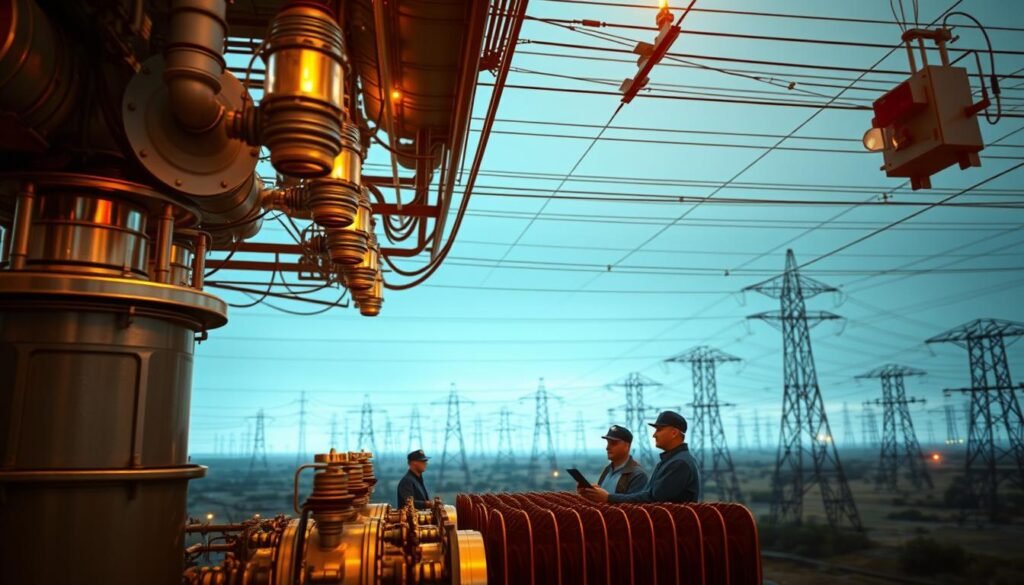
We’re at a crossroads in how utilities and industrial plants manage equipment. Predictive maintenance is changing the game from fixed schedules to data-driven care. This shift cuts downtime, lowers repair costs, and extends the life of key assets like transformers and wind turbines.
The Need for Predictive Analytics
Traditional reactive maintenance leads to emergency repairs and high costs. Scheduled maintenance can be a waste when equipment is fine. Predictive analytics predicts faults early, allowing for timely interventions.
High-value assets like transformers and turbines are at high risk. A failure means expensive downtime. By analyzing data, we reduce unexpected outages and boost availability in substations and networks.
AI Solutions for Equipment Monitoring
Modern monitoring uses dense sensor networks. Sensors track vibration, temperature, and more, feeding AI models. These models detect early signs of wear, not just obvious faults.
AI-integrated SCADA systems send real-time alerts and support maintenance scheduling. Field crews get specific tasks, improving efficiency.
Starting with pilots on key assets is practical. We test models, refine them, and then scale up. Challenges include data quality, costs, and the need for skilled people to train and interpret models.
Done right, predictive maintenance offers big benefits: fewer interruptions, lower costs, and more uptime. A step-by-step approach helps manage risk and builds confidence.
Energy Management Systems and AI
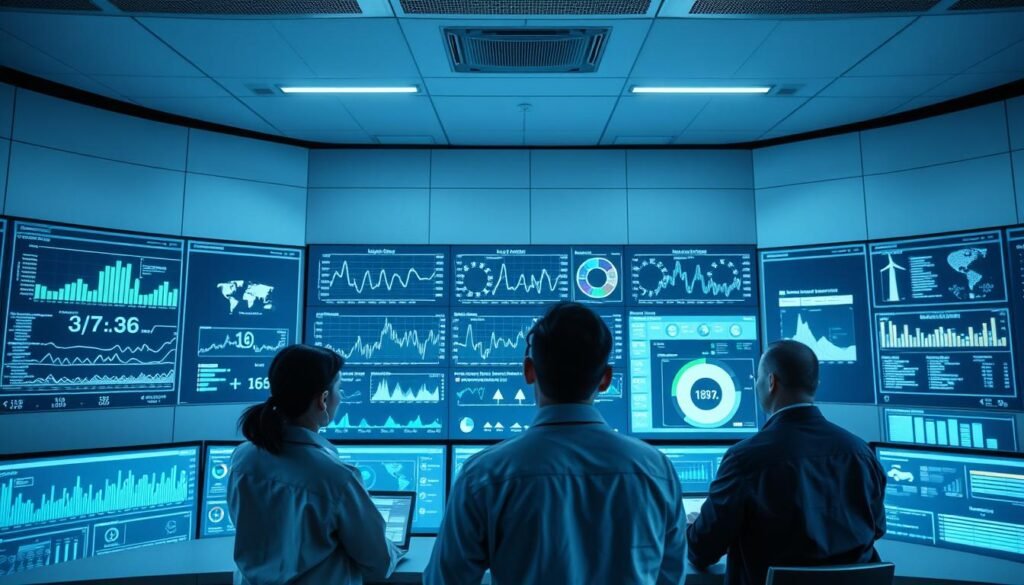
We look at how AI, grid controls, and engineering come together to save money and cut emissions. Smart EMS platforms use real-time data and machine learning to make decisions automatically. This change is changing how buildings, industrial plants, and utilities work in India.
Optimizing energy consumption
AI-driven systems analyze past and current data to manage energy use. They schedule energy resources, batteries, and flexible loads. This way, they can reduce energy use during peak times.
Utilities like Tata Power and Schneider Electric use similar methods. They aim to lower peak charges and emissions.
We create strategies that balance comfort and goals. In offices, AI adjusts lighting and HVAC based on people and weather. In factories, it schedules production to match energy prices, improving efficiency without losing output.
Real-time data processing benefits
AI quickly adjusts to changes in energy supply. It controls frequency, voltage, and balances energy use instantly. Edge computing runs models locally to act fast and save bandwidth.
Real-time data helps operators stay informed. If solar output drops, the system can quickly adjust. This keeps systems stable and reduces the need for manual fixes.
Keeping systems running smoothly is key. Data integrity, security, and compliance are essential. Companies like Consac help with integration, testing, and training to ensure systems work well.
| Use Case | AI Role | Primary Benefit |
|---|---|---|
| Commercial buildings | Predictive HVAC scheduling using load forecasting and occupancy models | Lower energy bills and improved energy efficiency |
| Industrial facilities | Process sequencing tied to market prices and on-site storage dispatch | Reduced peak demand charges and higher asset utilization |
| Distributed energy hubs | Real-time orchestration of solar, batteries, and EV chargers | Enhanced grid stability and optimized renewable yield |
| Utility demand response | Automated consumer incentives and load control based on forecasts | Smoother peaks and deferred capacity investments |
AI in Renewable Energy Integration
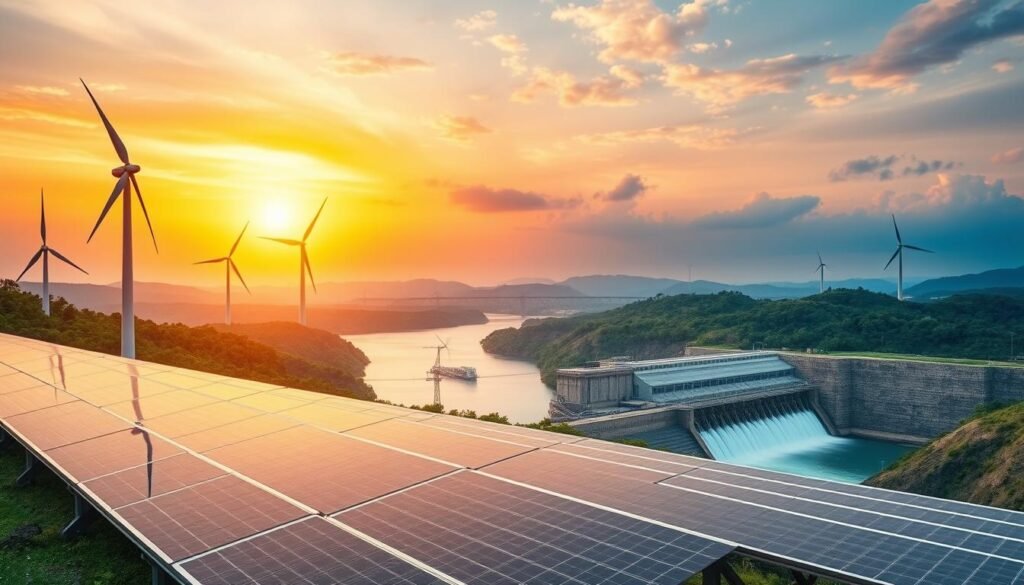
Renewable energy is growing fast in India and globally. Grids need to handle the ups and downs of wind and solar power. AI helps by improving forecasts, control, and storage, making planning easier.
Challenges in Integrating Renewables
Wind and solar power are not steady, which can make grids unstable. When more energy comes from these sources, it can stress the system. This includes transformers and networks.
Forecasting errors make things worse. If wind or solar predictions are off, it can lead to power shortages. Not enough storage and poor planning make it hard to fix these issues.
Old grids need updates to handle new energy sources. Smart systems are key for a mix of traditional and new power sources.
AI’s Role in Balancing Supply and Demand
AI uses advanced models to improve wind and solar forecasts. It combines weather data, satellite images, and local sensors. This leads to better planning and lower costs.
AI also optimizes energy storage. It schedules battery use to last longer and save money. This makes batteries work harder and cost less over time.
AI helps manage EVs as energy storage. It controls charging and discharging to balance supply and demand. This makes the grid more stable.
Digital twins and Internet of Energy frameworks test scenarios. They help plan for more renewable energy. This way, operators can fine-tune their strategies before making changes.
AI is key for meeting renewable goals and keeping the grid reliable. In India, it’s being used at local levels to manage energy better.
| Challenge | AI Solution | Expected Benefit |
|---|---|---|
| Variability of wind and solar | Hybrid ML models for short-term forecasting | Reduced reserve needs; improved dispatch accuracy |
| Poor forecasting accuracy | Satellite data fusion and local sensor calibration | Better wind forecasting and solar prediction; lower forecast errors |
| Storage underuse and degradation | Predictive control for charge cycles | Energy storage optimization; longer battery life |
| Grid instability with DERs | Adaptive control and digital twins | Faster supply-demand balancing; safer integration of distributed generation |
| Peak load pressures | AI-driven demand response and V2G coordination | Smoothed peaks; more flexible system operation |
The Future of Autonomous Electrical Systems
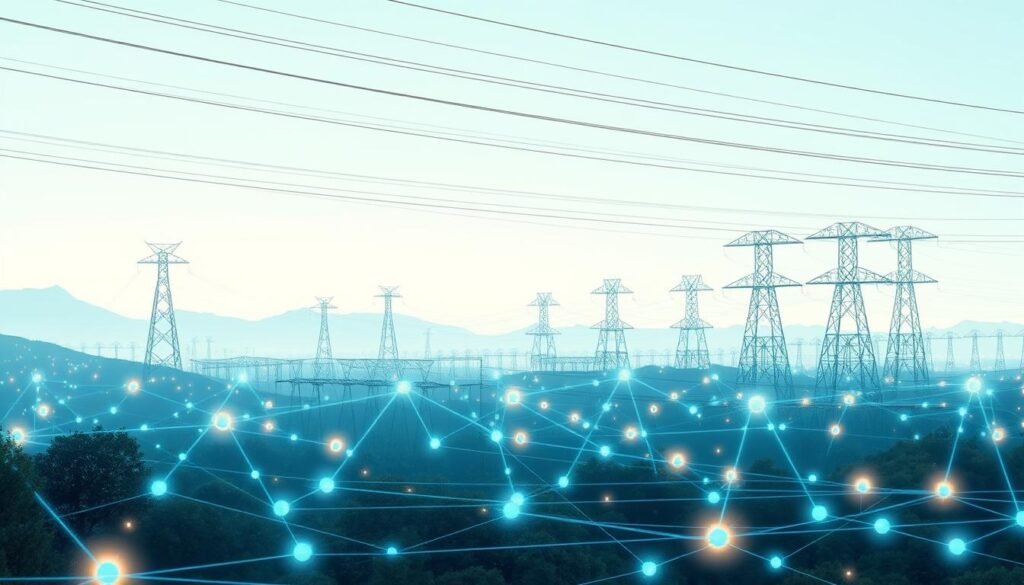
We look at how smart systems change power delivery. From smart grids to microgrids, these systems use AI and edge computing. They work with little human help, making responses quicker and opening up new ways for utilities and businesses.
Self-Operating Networks
Autonomous grid parts can sense and act on their own. They use Digital Twins to check their actions. Internet of Everything sensors give them the data they need.
AI helps manage these systems. It works with solar power, storage, and other resources. This way, microgrids can switch on and off quickly, reducing power outages.
Safety and Reliability Improvements
Self-healing grids can find and fix problems on their own. This makes power delivery more reliable. AI also helps predict when equipment might fail, so repairs can be done before it happens.
But AI also brings new security risks. We need strong security and clear AI decisions. Humans and machines work together, with humans making sure everything runs smoothly.
Rules and standards for these systems are needed. Working together, we can make sure these technologies are safe and effective.
Ethical Considerations of AI in Engineering
AI is changing electrical engineering, raising ethical questions. We must think about data privacy and cybersecurity. This ensures trust in smart grids and predictive systems.
Our teams need to innovate while protecting consumers and infrastructure. This balance is key.
Addressing biased outcomes
Data-driven models reflect their training sets. If these sets are biased, so are the models. We focus on making datasets diverse and fair.
We also check for bias and use domain constraints. This helps avoid unfair outcomes.
Cross-validation and scenario testing are used to ensure fairness. We add validation steps to catch errors before deployment.
Explainability and operational clarity
Grid operators need to understand AI decisions. We use explainable AI to make model logic clear. This builds trust and supports regulatory checks.
Audit trails and model versioning help with accountability. We set governance practices for each stage of AI use.
Protecting consumer data and systems
Energy data can reveal personal habits. We protect this data with strong privacy measures. This includes encryption and access controls.
AI also brings new cybersecurity challenges. We must defend against threats with robust security measures.
Socioeconomic and workforce impacts
Automation will change jobs in utilities and engineering. We plan for retraining and upskilling. This helps technicians move to new roles.
Inclusive strategies are key for a fair transition. They ensure social equity.
Practical checklist for teams
- Curate representative datasets and document provenance to support bias mitigation.
- Run XAI techniques for key models to improve transparency for operators.
- Maintain audit logs and clear accountability for model changes.
- Apply strict data privacy controls for consumer energy information.
- Integrate cybersecurity best practices at design and deployment stages.
- Plan reskilling initiatives to address workforce impacts.
AI ethics should be a core part of engineering. By focusing on bias, transparency, accountability, privacy, and security, we build systems that serve people well.
Case Studies: AI Impact on Engineering Projects
We share case studies that highlight AI’s impact on projects in utilities, renewables, and grid operations. These examples focus on pilot projects, their benefits, and lessons for teams in India and worldwide.
Successful Implementations
In Europe, a utility used machine learning for demand-response pilots. They forecast peak loads and optimized dispatch. This reduced peak demand and lowered costs while maintaining quality.
Wind farms used predictive maintenance models. These models analyzed data from wind turbines. As a result, there were fewer unplanned outages and longer component life.
Smart-grid pilots in cities used automated fault detection and network reconfiguration. They also used Digital Twin simulations. This improved reliability before the projects were rolled out.
Lessons Learned from Real-World Applications
Data readiness was a common challenge: projects stalled without complete or labeled data. Having good data pipelines is key for model training and upkeep.
Start small: pilots on high-value assets or constrained feeders are easier to validate. They help measure return on investment and refine procedures before scaling.
Interdisciplinary teams worked best. Power engineers and data scientists ensured AI respected physical and operational limits.
Cybersecurity and explainability must be addressed early. Regulatory compliance should also be included in plans for smooth transition to production.
In India, successful collaborations between state utilities and engineering consultancies were key. Local expertise and partnerships with experienced integrators sped up adoption.
Practical Checklist for Pilot Projects
- Define clear KPIs for reliability, cost, and downtime reduction.
- Secure continuous, labeled data streams from assets like transformers and wind turbines.
- Run a Digital Twin or simulation before live trials.
- Form cross-functional teams with field engineers and data scientists.
- Plan cybersecurity, explainability, and regulatory reviews from day one.
Career Opportunities in Electrical Systems Engineering and AI
Engineering careers are changing as power networks get smarter. Many fields need people who know both electrical engineering and data science. This includes utilities, consultancies, research labs, and startups.
Emerging Job Roles
New jobs are popping up fast. Companies are looking for power systems data scientists, AI systems engineers, and smart-grid architects. They also need digital-twin specialists, EV-grid integration engineers, and cyber-physical security analysts.
Jobs in R&D require a mix of power-electronics and machine learning. Consultants help utilities use AI and make distribution networks better.
Skills Required for the Future Workforce
Technical skills are key: you need to know power-systems analysis and control theory. Plus, power electronics and signal processing are important. You should also be good with tools like MATLAB/Simulink, TensorFlow, PyTorch, and SCADA platforms.
Data skills are just as vital: you should know supervised and unsupervised learning. Time-series forecasting, anomaly detection, model validation, and deployment pipelines are also important. Hands-on projects that link models to real-world systems are a must.
Soft skills are important too: systems thinking, knowing the rules, working with others, and explaining tech stuff clearly. These skills help teams turn ideas into real systems.
We recommend keeping up with new skills through workshops, online courses, and certifications. Schools should include practical ML projects in power systems and digital twin exercises. This will prepare students for the future and changing job roles.
Conclusion: Embracing the Future of Engineering
We are at a turning point where AI is changing engineering. It’s affecting areas like circuit design, predictive maintenance, and smart grids. These changes bring more efficiency, better resilience, and big energy savings.
It’s time to rethink how we teach engineering and do projects in India and worldwide. This shift is necessary for the future.
Staying up-to-date is key. Engineers should learn AI skills with tools like MATLAB and TensorFlow. They should also gain practical experience through projects and internships.
This way, they can turn theory into real skills. It also keeps innovation going.
Working together with AI is the future. We need human-AI teams that use AI wisely. This ensures AI helps, not hinders, human skills.
When we mix human insight with AI’s power, we get better systems. These systems are safer, fairer, and more adaptable.
By combining human wisdom with AI’s creativity, we can make education drive sustainable energy. Together, we can achieve a smarter, cleaner energy future. This future will benefit communities and industries alike.