



Did you know that in just five years, over 300 million bank accounts were opened under the Pradhan Mantri Jan-Dhan Yojana? This made it one of the fastest banking expansions in history.
PMJDY is India’s key financial inclusion program. It aims to give everyone access to banking services. The goal is to open bank accounts for all, with simple rules and no need for a lot of paperwork.
Let’s compare PMJDY with bank promotions from Scotiabank and TD Canada Trust. These banks offer up to CAD $700 in bonuses for new accounts. They want people to use their accounts regularly.
But PMJDY is different. It focuses on making banking available to everyone, not just on getting people to use their accounts. Both ways show that using your account is key to getting the most out of it.
Introduction to Pradhan Mantri Jan-Dhan Yojana
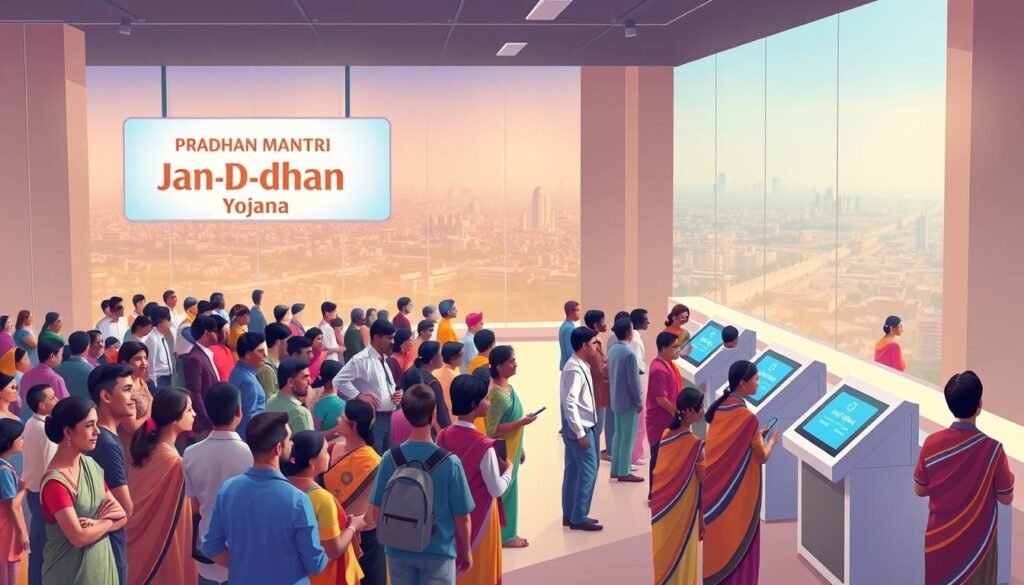
The Pradhan Mantri Jan-Dhan Yojana is a key program by the Indian government. It aims to bring formal banking to millions of homes. We explore what it offers, how it works, and its importance for everyone to have banking access.
Overview of the Scheme
At its core, PMJDY focuses on making basic financial services available to all. It includes opening no-frills accounts with no minimum balance, Rupay debit cards, and accidental insurance. Eligible account holders can also get overdraft for short-term loans.
Opening accounts is made easy with relaxed rules at camps and branches. The goal is to reach those not using formal banking. We see these steps as essential for a successful financial inclusion plan.
Importance of Financial Inclusion
Financial inclusion is the main reason for PMJDY. It aims to help low-income families save, receive government benefits, and access small loans and insurance. This move helps prevent money loss and boosts financial stability for these families.
Like retail banks, PMJDY uses strategies to encourage account use. This includes making accounts active, promoting regular transactions, and rewarding long-term customers. These tactics help keep people engaged with their accounts over time.
Key Features of the Scheme

We explain the main points of PMJDY. It makes it easier for people to start using bank accounts. This helps more people in both cities and rural areas to get into banking.
Zero Balance Account
PMJDY offers a zero balance account. This means you can start saving without needing to put in any money first. It’s like a no-frills account, where you don’t have to worry about high fees.
We look at how it compares to other bank accounts. Some banks require you to keep a certain amount or make a certain number of transactions to avoid fees. But PMJDY is different. It doesn’t have these rules to keep things simple.
There are small ways to keep your account active without spending money. For example, you can set up automatic deposits, get government benefits, or use a RuPay card for shopping. These actions help keep your account from becoming inactive and support your financial health over time.
Accessible Banking Services
PMJDY provides easy banking services. You can deposit, withdraw, transfer money, get government benefits, and get a RuPay debit card. These services help people use their accounts and connect with the financial world.
How these services work is important. Automatic deposits and pre-authorized debits can help keep your account active. We suggest encouraging these activities to help people become more engaged with their accounts.
The scheme also offers small overdrafts and accidental insurance. Banks check a few things before approving overdrafts. This ensures they help customers while also being responsible with lending.
Benefits of Pradhan Mantri Jan-Dhan Yojana
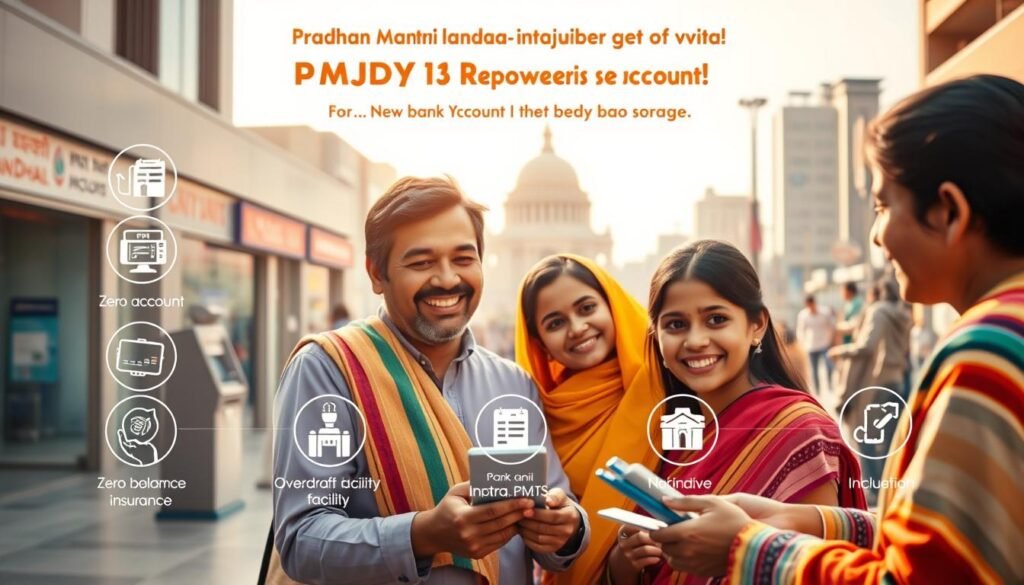
We explain how the scheme makes a real difference in people’s lives. It’s not just about opening accounts. It helps with saving, getting credit, insurance, and regular money transfers. This boosts financial stability.
Financial Security for Low-Income Families
For many, a Jan-Dhan account is a safe spot for small savings. It also keeps a record of transactions. This record is useful for getting microcredit, insurance, or pensions.
Having a bank account lowers the risk of handling cash. It also helps in building up savings over time.
We compare PMJDY advantages with what private banks offer. Banks like State Bank of India and HDFC Bank give rewards for direct deposits and keeping balances. These incentives encourage people to use their accounts more, improving their financial future.
Direct Benefit Transfers
Jan-Dhan accounts are key for Direct Benefit Transfers. They ensure subsidies, pensions, and welfare payments go straight to those who need them. This method reduces waste and increases transparency.
Rules for account use are important. If accounts are active and in good standing, transfers work smoothly. Banks like Scotiabank and TD use similar rules for bonuses. This means people who keep their accounts active get payments on time.
We see banking for all as a key goal. By linking PMJDY benefits with clear rules, we create a steady flow of government support. This leads to better monitoring, faster access to funds, and more reasons to use banking services.
Eligibility Criteria for Participants
We explain the main rules for joining the Pradhan Mantri Jan-Dhan Yojana. These rules make it easier for banks to run fair campaigns. They also help applicants know what to bring before visiting a branch or using online services.
Who Can Apply?
PMJDY is open to many: adults without bank accounts are the main focus. It aims to help low-income families, rural people, women, and those who are often left behind. Banks also have rules to stop people from opening too many accounts.
When checking if you can get a Jan-Dhan account, banks might not accept you if you’ve had similar accounts before. They usually don’t let you apply if you’ve closed a similar account in the last few months. This is to prevent misuse of offers.
Required Documentation
The scheme makes it easier to start by simplifying the KYC process. You can use an Aadhaar card or a mix of government ID and address documents. This makes it quicker for many people to start using their accounts.
Banks might ask for more proof for special deals. They might want to see you’ve never had a bank account before, or details about your previous account. These steps help keep things safe and fair for everyone.
It’s a good idea to bring an Aadhaar card, PAN or voter ID, and a recent bill or ration card. Having these ready makes it clear you’re eligible and saves you from having to go back.
How to Open a Jan-Dhan Account
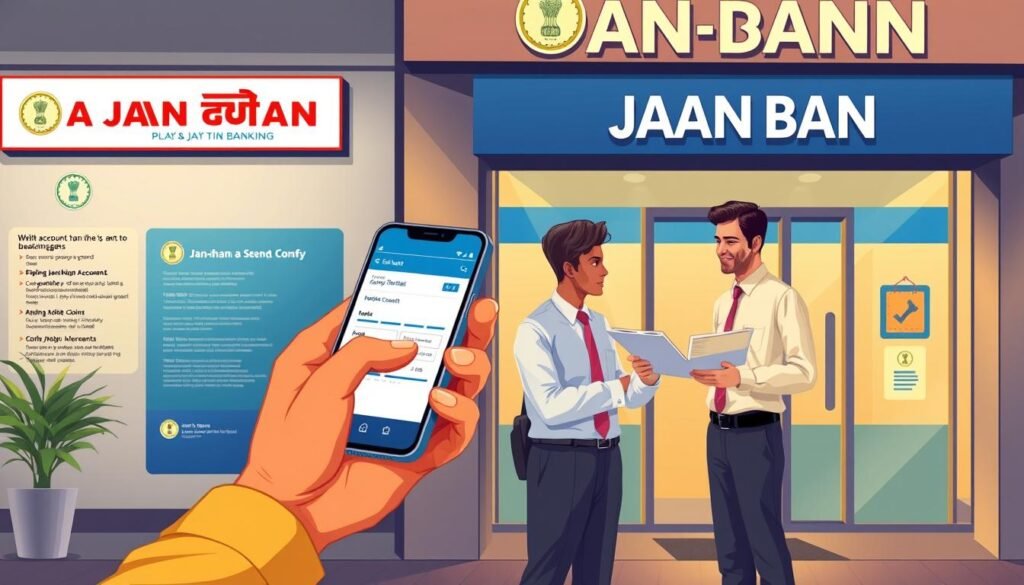
We’ll show you how to open a PMJDY account in simple steps. You can choose between online or visiting a bank branch. The goal is to make it easy and accessible for everyone.
Online Application Process
Many banks let you open a PMJDY account online. You can use Aadhaar or other ID proofs. They might even activate your account instantly with e-KYC.
To start online, set up direct deposit and allow recurring transactions. Also, complete the required transactions within 30–60 days. This follows the same steps as opening a regular bank account.
Visiting a Local Bank Branch
In rural areas or where literacy is low, visiting a bank is best. Bank staff can do KYC quickly and give you a RuPay card and passbook right away. This method builds trust and avoids mistakes.
Remember, keep your account active by avoiding overdrafts. Also, check with staff about fee waivers and service limits. Regular contact helps you understand any rules or benefits.
Financial Literacy and Awareness

We think clear, easy-to-follow advice helps people feel confident with Jan-Dhan accounts. Good financial knowledge leads to better saving, smart use of overdrafts, and wise choices about insurance linked to accounts.
Importance of Financial Education
For engineers, students, and teachers, clear explanations of banking terms like recurring direct deposit, pre-authorized debit, and good standing make banking easier. Financial education through PMJDY helps people understand when money is added, how savings grow, and when they can get overdrafts.
Clear rules and timelines build trust. Banks like Scotiabank, TD Bank, and CIBC show how clear rules and timelines help avoid misunderstandings. We apply these lessons to make PMJDY awareness practical and effective.
Resources for Understanding the Scheme
We suggest using a variety of resources: government PMJDY websites, in-branch advisors, and local modules. Banking education includes apps, checklists, and reminders that encourage regular activities and check eligibility.
Useful tools for Jan-Dhan include easy guides, transaction calendars, and FAQs. These resources help by explaining when rewards or benefits are processed. Timelines range from weeks to a year.
We suggest combining classroom learning with app-based learning. This method boosts financial literacy and provides lasting resources for understanding Jan-Dhan and supporting banking education in communities.
Impact on Society and the Economy

We look at how mass banking changes society and the economy. The Pradhan Mantri Jan Dhan Yojana (PMJDY) has made a big difference. It has helped millions get a formal banking account.
This has made it easier to send money directly to people. It has also cut down on lost money and made banking services available to everyone.
We use account activity as a way to measure success. We look at how many accounts are active, how often money is deposited, and how much money is kept in accounts.
Scotiabank and TD’s offers are like examples for PMJDY. They use special times to deposit money and deadlines to get things done. This can help more people use their accounts.
Enhancing financial inclusion means turning inactive accounts into active ones. By giving rewards for regular deposits and small transactions, we can encourage more use. This makes banking services more useful for everyone.
When people use electronic payments instead of cash, it helps the local economy. It lets people save money safely and get small loans. It also helps small businesses reach more customers and cuts down on cash-based transactions.
We suggest ways for banks and governments to help. Automatic savings, rewards for keeping a minimum balance, and checks to see if people are eligible can keep accounts active. These steps show the real impact of financial inclusion.
We compare different ways to improve and track results. This helps guide how to make PMJDY work better and keep it effective.
| Operational Lever | How It Works | Expected KPI | Local Economic Effect |
|---|---|---|---|
| Automatic Recurring Deposits | Scheduled micro-deposits from wages or transfers | Share of accounts with monthly deposits | Higher local liquidity, more predictable cash flows |
| Minimum-Balance Incentives | Rewards for maintaining defined balances | Average balance per active account | Stronger savings, easier collateral for microloans |
| Direct Benefit Transfer Integration | Routing subsidies and pensions into bank accounts | Percentage of transfers received via accounts | Reduced leakage, increased spending power locally |
| Behavioral Nudges | Prompts, SMS reminders, and product bundles | Account reactivation and transaction frequency | Higher adoption of digital payments by vendors |
| Eligibility & Fulfillment Schedules | Time-bound criteria for rewards and offers | Retention rate after reward periods | Sustained engagement, long-term deposit mobilization |
Frequently Asked Questions
We’ve collected the most common questions to make banking easier. This PMJDY FAQ answers concerns and explains Jan-Dhan features simply.
Will there be fees? PMJDY accounts have no balance fees. But, banks like State Bank of India and HDFC might charge for some services. Always check the fees when you open your account.
How do beneficiaries get Direct Benefit Transfers? Link your Aadhaar to your Jan-Dhan account. Then, confirm DBT enrollment with your bank or India Post Payments Bank. This ensures government transfers reach you without delay.
What if the account becomes inactive? An inactive account can block transfers. To keep it active, make small transactions regularly. Banks follow rules similar to Scotiabank and TD, requiring accounts to be active for benefits.
Clarifications on eligibility and features
Who is eligible? Adults without a bank account, marginalized groups, and those wanting basic banking services qualify. The scheme aims to include everyone in the financial system.
What identification is required? Aadhaar is the main ID for KYC. But, banks also accept other IDs and address proofs for those without Aadhaar.
Why keep the account open and active? Benefits like insurance, overdraft, and DBT payments depend on it. Commercial examples show that actions must happen within 30–60 days. This helps set realistic expectations for receiving benefits.
Where can we get more details? Visit your local branch for personalized banking advice. Bank staff can help with account statements, service charges, and DBT and insurance enrollment.
This PMJDY FAQ and the eligibility clarifications aim to simplify Jan-Dhan features. They aim to reduce uncertainty for new account holders.
Conclusion
We conclude that Pradhan Mantri Jan-Dhan Yojana has changed how people access basic banking. It offers no-frills accounts, RuPay debit cards, and micro-insurance. It also helps with direct benefit transfers and brings households into formal financial systems.
This scheme’s success is similar to private banking. It works well with regular transactions, digital onboarding, and keeping accounts active. These actions lead to long-term benefits.
Recap of the Scheme’s Importance
The core of Pradhan Mantri Jan-Dhan Yojana is to make banking accessible to all. Active accounts, with regular deposits or debits, become useful tools. We look at Scotiabank, TD, and CIBC to suggest realistic timelines for benefits.
Allow several months for digital KYC, regular transactions, and government payments. This way, accounts can show real benefits.
Encouraging Participation and Awareness
To get more people involved, we need to promote account opening and digital KYC. Teach regular usage habits. Link government payments, set up recurring savings, and use financial literacy materials.
A true call to action for banking for all is to keep accounts active. Initial enrollment is just the start. Sustained activity unlocks the scheme’s full benefits.
Be clear about who can join and how to keep accounts active. Banks, schools, and community groups should work together. Education, clear timelines, and measurable goals will make the scheme real for millions.