



Ayushman Bharat (PM-JAY) aims to protect about 12.34 crore families. This is roughly 55 crore people. They will get up to Rs. 5 lakh per family per year for hospital coverage.
This guide is here to help you understand Ayushman Bharat (PM-JAY). We cover official facts, program design, recent changes, and how to apply. Our aim is to make it easy for everyone to understand.
PMJAY started on September 23, 2018. It’s also known as Pradhan Mantri Jan Arogya Yojana. It offers secondary and tertiary care to many people.
Recently, it was decided to cover all seniors aged 70+. This will help about 4.5 crore families and 6 crore senior citizens.
This guide will explain who can get help under Ayushman Bharat. We’ll talk about how people are chosen (SECC-2011 and occupation lists). We’ll also cover the IT and anti-fraud systems that keep the program running.
What is Ayushman Bharat (PM-JAY)?
Ayushman Bharat is India’s major health program. It offers cashless care to families in need. Families get up to Rs. 5 lakh per year at public and private hospitals.
Overview of the Scheme
Ayushman Bharat Pradhan Mantri Jan Arogya Yojana is a paperless program. It gives an Ayushman e-card for easy transactions. It covers over 1,350 medical packages in key areas like cardiology and pediatrics.
The program offers benefits before and after hospital stays. It helps the bottom 40% of the population. Now, it covers about 12 crore families.
Millions have used the scheme, showing its wide reach. The digital system makes it easy to access care. This is thanks to the National Health Authority and State Health Agencies.
Objectives of PM-JAY
The main goals are to protect families from high medical costs. It aims to increase access to quality care for the needy. These goals shape the program’s design and operations.
Another aim is to create a digital system for managing beneficiaries and providers. The National Health Authority helps with training and certification. This builds capacity.
Transparency and integrity are key. The program has anti-fraud measures and a helpline. Clear guidelines help families check if they qualify for Ayushman Bharat (PM-JAY) Eligibility.
Understanding PM-JAY Eligibility Criteria
We explain how Ayushman Bharat eligibility criteria are determined. We also talk about what families must meet to enroll. Our goal is to make the SECC-2011 basis, recent policy updates, and state checks clear.
Income Thresholds for Eligibility
The scheme uses the Socio-Economic and Caste Census 2011, not a single income cut-off. SECC-2011 flags households by dwelling type, occupation, landholdings, and lack of able-bodied adults. These markers are key to Ayushman Bharat health insurance eligibility.
States also use asset and income filters for beneficiary lists. They exclude those with motorized vehicles, mechanized farming equipment, large landholdings, government jobs, and certain durable goods. These criteria help refine PMJAY eligibility at the state level.
Policy updates have made seniors eligible: citizens aged 70 and above get benefits, regardless of SECC status. This senior entitlement adds a top-up benefit for qualifying elders in enrolled families.
Eligible Family Types
Rural eligibility focuses on vulnerability indicators. These include Scheduled Castes and Scheduled Tribes, landless manual labour households, primitive tribal groups, families with no adult aged 16–59, and households in one-room makeshift dwellings. Households with disabled members and no able-bodied adult are also prioritized under Ayushman Bharat eligibility criteria.
Urban eligibility is based on occupation in SECC-2011. Domestic workers, street vendors, sanitation workers, construction labourers, transport workers, tailors, hawkers, washermen, and mechanics are examples. Cities use these lists to identify vulnerable urban families for PMJAY eligibility.
States and Union Territories combine central SECC lists with local verification. Many integrate with the National Health Authority portal or use state platforms that connect via API. The final Ayushman Bharat health insurance eligibility outcome depends on this verification step and the state’s chosen operational rules.
Health Coverage Offered Under PM-JAY
We explain what care is available to eligible families under Ayushman Bharat. This section talks about what services patients can get. It also covers how claims are processed and what makes PMJAY different from other programs. We use examples to help engineers, educators, and students understand the details.
Types of Healthcare Services Covered
PM-JAY pays for secondary and tertiary hospital care. This includes consultations, investigations, surgery, and more. It also covers ICU and non-ICU care, medications, and implants.
It supports complex care without upfront payment at empanelled facilities. This makes getting care easier.
Coverage is based on packages with over 1,350 procedures. These include oncology, cardiology, and more. This design makes billing simpler and care consistent across hospitals.
Daycare procedures are also covered. There’s no waiting period for pre-existing conditions. COVID-19 related hospitalization and diagnostic tests are covered too.
Benefits for Enrolled Families
The scheme offers up to Rs. 5 lakh per family per year. This is a cashless benefit. The family floater design lets the sum be shared among family members.
Seniors aged 70 and above may get an extra top-up. This depends on the family’s status.
A multi-surgery rule applies to claims. Full payment for the most expensive procedure, then 50% for the second, and 25% for the third. Pre-hospitalisation and post-hospitalisation costs are included for many packages.
Transport and ambulance reimbursement or rehabilitation services may be included in some packages. But, some services are not covered. These include routine OPD visits and cosmetic procedures.
Cashless access is available at empanelled hospitals with Ayushman cards. Arogya Mitras help with verification and pre-authorisation. This makes getting care faster and reduces financial stress for families.
| Feature | Details | Impact on Families |
|---|---|---|
| Annual Cover | Up to Rs. 5 lakh per family per year; seniors 70+ get top-up options | Reduces catastrophic health expenditure for high-cost care |
| Package-Based Procedures | 1,350+ procedures across major specialties; standardised pricing | Predictable billing; easier hospital empanelment and audit |
| Pre-existing Conditions | Covered from day one; no waiting period | Immediate protection for chronic patients |
| Pre/Post Hospitalisation | Pre: up to 3 days. Post: up to 15 days for many packages | Covers diagnostic follow-up and interim care costs |
| Multi-surgery Rule | 100% for highest-cost surgery, 50% and 25% for 2nd and 3rd | Manages fund allocation across multiple procedures in a year |
| Operational Access | Ayushman cards, Arogya Mitras, kiosk verification, pre-auth | Fast cashless admission at empanelled hospitals |
| Not Typically Covered | OPD, cosmetic, fertility, many organ transplants, some diagnostics | Patients may need alternative coverage or out-of-pocket payment |
Understanding Ayushman Bharat PMJAY coverage criteria helps families see what they’re eligible for. It helps them plan care around PMJAY benefits. We suggest checking entitlements at empanelled hospitals before admission.
How to Apply for Ayushman Bharat
We help families apply for Ayushman Bharat to get care fast. The process includes online checks, local verification, and help at health facilities. Follow these steps to apply with confidence.
Application Process Explained
Start with the online check on the official portal. Use the “Am I Eligible” tool with your mobile number or ration/Aadhaar details. Generate an OTP and verify to see if you’re eligible.
If you’re eligible, ask for an e-card. You can verify at PMJAY kiosks or hospitals. Staff will check your Aadhaar or ration card and give you an AB-PMJAY e-card.
Ayushman Mitras at hospitals help with verification and card issuance. States trained thousands of Arogya Mitras to assist at care points.
Required Documentation
Bring important documents for verification: Aadhaar card, ration card, SECC family lists, and ID proofs for family members. Present RSBY cards if you have them.
When admitted to a hospital, show your Ayushman e-card or ID. Claims are processed online with secure systems.
States might ask for more local verification. State software integrates with NHA systems for data sharing.
Need help? Call 14555 or 1800-111-565 for application support, grievances, and language help. Kiosks and Ayushman Mitras offer in-person assistance.
Key Features of Ayushman Bharat (PM-JAY)
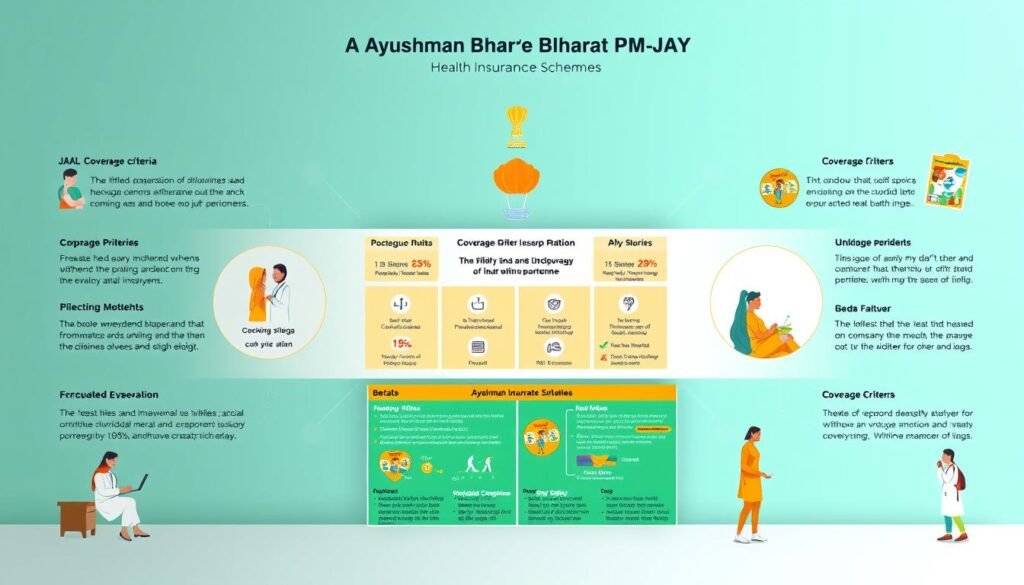
We explain the main points of Ayushman Bharat (PM-JAY) to help you understand it better. It uses technology, scale, and processes to make healthcare affordable and accessible for eligible families.
Cashless admission is a key feature: patients in empanelled hospitals get treatment without paying first. Online pre-authorisation and claim processing make approvals quicker and reduce costs for patients.
Package-based tariffs cover specific procedures and services. This approach prevents overcharging and makes billing easier for both providers and patients. The rates are updated regularly to reflect current costs and practices.
Strong IT controls manage every transaction. These controls include role-based access, pre-authorisation dashboards, and audit trails. They ensure transparency and help verify if patients qualify for PMJAY benefits.
Empanelment includes public and private hospitals across India. Hospitals register online, overseen by health officials. This process helps grow the network while maintaining quality standards.
Portability lets beneficiaries get care at any empanelled hospital in the country. Dashboards track claims by specialty, procedure, age, and gender. This data helps improve policy and operations.
Scale is a key aspect: thousands of hospitals are involved, and reporting tools track various metrics. This data helps manage capacity and improve the program.
Arogya Mitras at kiosks help with enrollment and benefits navigation. An evolving e-learning platform trains these aides. This improves service quality and the user experience for those checking eligibility.
The national helpline 14555 offers 24/7 support in many languages. Agents and feedback calls help solve problems and guide users. This builds trust and clarity on PMJAY coverage.
We suggest checking PMJAY benefits eligibility through official channels before admission. Clear documentation and verification reduce delays. This ensures beneficiaries can claim all their entitlements under the program.
Special Considerations for Vulnerable Populations
Ayushman Bharat (PM-JAY) focuses on helping those most at risk. It aims to remove barriers to care for mothers, children, seniors, and people with disabilities. The program includes practical supports and safeguards to ensure everyone can access care fairly.
Coverage for women and children
PMJAY includes maternal and pediatric procedures in its package list. This means families can get the care they need without worrying about the cost. Obstetrics, neonatal care, and pediatric interventions are covered, ensuring timely treatment.
The scheme offers cashless access and waives waiting periods for pre-existing conditions. This reduces delays in care, which is critical for pregnant women and young children. It also helps sick kids recover faster.
Women are a big part of the beneficiaries under Ayushman Bharat (PM-JAY). This shows the program’s focus on including them. It helps clinics plan services better for maternal and child health.
Support for elderly and disabled individuals
Now, all senior citizens aged 70 and above are covered with a Rs. 5 lakh entitlement. This applies whether they have a separate card or are part of a family benefit. It strengthens financial protection for their care needs.
Households with a disabled member and no able-bodied adult were given priority in rural SECC-based criteria. This recognizes their dependency and aligns PMJAY with social vulnerability.
Operational supports like Arogya Mitras, a 24×7 helpline, and formal grievance redressal help those who face challenges. These measures reduce barriers and speed up access to care for mobility-challenged or less literate beneficiaries.
Equity and prioritization safeguards
The scheme has built-in mechanisms like district and state grievance committees, a national oversight panel, and whistleblower provisions. These structures provide ways for vulnerable groups to report issues and get help.
We see these safeguards as key to keeping trust. They ensure Ayushman Bharat (PM-JAY) Eligibility leads to real access for those who need it most.
How PM-JAY Compares to Other Health Insurance
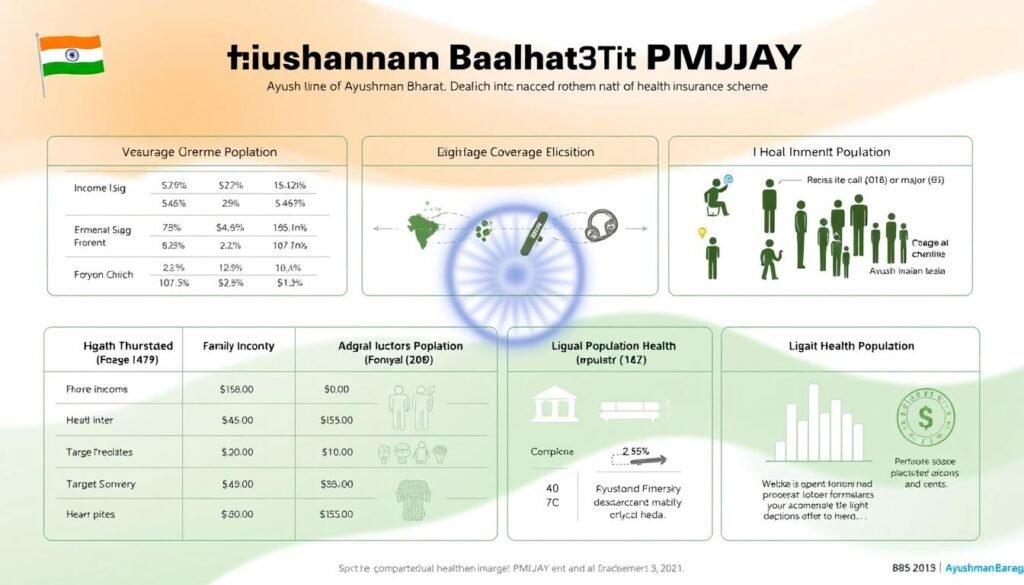
We highlight the main differences to help you decide. We focus on who gets help, what’s covered, and how claims are handled. This information is key for engineers, students, and policymakers to compare Ayushman Bharat PMJAY with other plans.
Differences from Private Health Insurance
PM-JAY helps families who are struggling financially. It offers a Rs. 5 lakh family floater benefit. Private insurance, on the other hand, may offer more money, extra benefits, and rewards for loyalty. You pay for private insurance yourself.
PM-JAY covers pre-existing conditions right away for many treatments. Private insurance often has waiting periods and exclusions for certain illnesses. This means patients with chronic conditions might face delays in getting care.
Both PM-JAY and private insurance use hospitals for cashless care. PM-JAY also offers national portability and a biometric e-card. Private insurance networks vary by company and area, with different claim processes and customer service.
Benefits Over State Programs
PM-JAY has a national IT platform for easy monitoring. States can run their own plans or join the national one. This mix lets states customize while keeping a national eye on things.
PM-JAY makes it easier to move between states and have standard procedures for claims. This makes it simpler for families to get care in different places and for hospitals to join the program.
PM-JAY works with the World Bank and WHO to improve. These partnerships help update the plan based on real data. This ensures the coverage and rules keep up with what’s needed.
| Feature | PM-JAY (Public) | Private Insurance | State Schemes |
|---|---|---|---|
| Target Population | Economically vulnerable families per Ayushman Bharat PMJAY scheme eligibility | Open market customers, varied segments | State residents, criteria vary by state |
| Sum Insured | Rs. 5 lakh family floater standard | Wide range from modest to high limits | Varies; sometimes lower than national plan |
| Premiums | Funded by government for eligible households | Paid by policyholder, depends on risk profile | State-funded or co-funded models |
| Pre-existing Conditions | Covered for many packages from day one | Usually subject to waiting periods | Varies; integration with PMJAY eligibility guidelines may apply |
| Portability | National portability via e-card and IT platform | Depends on insurer network; limited portability | Often limited; improved when integrated with national systems |
| Claim Process | Standardized pre-auth and national dashboards | Insurer-specific processes and timelines | State-specific processes; some use NHA APIs |
| Evidence & Evaluation | Regular studies and partnerships to refine Ayushman Bharat PMJAY coverage criteria | Market-driven audits and internal reviews | Variable; benefits when aligned with national monitoring |
| Choice Considerations | Beneficiaries with CGHS, ECHS, CAPF must choose between schemes in many cases | Can be used alongside public schemes subject to rules | May require coordination with national scheme enrollment |
Addressing Common Concerns and Misconceptions
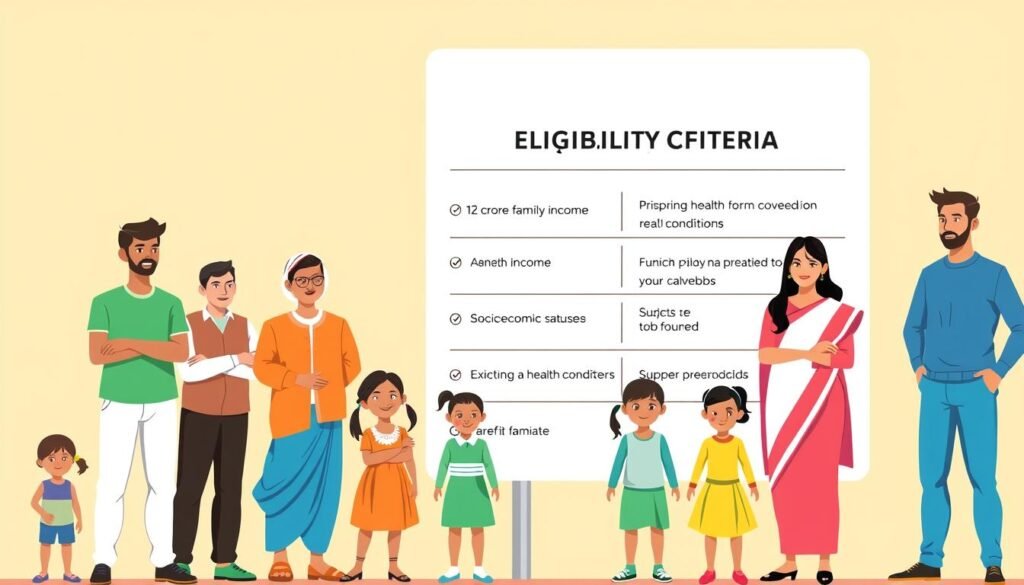
We clear up common questions about Ayushman Bharat. We explain how it protects those who get help. Our goal is to make it easy for everyone to understand PMJAY eligibility guidelines and Ayushman Bharat (PM-JAY) Eligibility.
Is Ayushman Bharat just for the poor?
PM-JAY was made for the most vulnerable and poor families. It uses SECC-2011 and urban occupation lists to find who needs help. It mainly helps the poorest in both rural and urban areas.
But, the program has grown. Now, it also helps senior citizens over 70, and certain workers like health activists and Anganwadi workers. This shows the program can help more people if policies change.
Privacy and data security in PM-JAY
The scheme has strong IT security. It uses special logins and checks to protect personal info. Every treatment claim is checked before it’s approved.
It also has systems to watch important data and spot any problems. This helps catch fraud and misuse. States work with the central server safely, keeping control and protecting data.
There are also ways for people to report issues, like data misuse. Clear rules about what data is needed and how it’s kept safe help applicants.
Impact of Ayushman Bharat on Public Health
Ayushman Bharat is changing how healthcare is delivered and making it more affordable. It aims to fill gaps in healthcare access and financial protection. This is done by linking cashless hospital care to a wide range of people.
Reducing financial burden for families
PM-JAY limits out-of-pocket spending to Rs. 5 lakh per family. Studies with the World Health Organization and others track how this affects healthcare use and costs. These studies help improve the program.
Public data shows families are avoiding debt for medical care. Cashless treatment at approved hospitals is a safer option than loans. This helps keep vulnerable families stable and guides who can get benefits.
Statistics on healthcare access
About 55 crore people are covered by the program. It has helped over 7.37 crore people get hospital care. More than Rs. 1 lakh crore has been spent on benefits.
States like Andhra Pradesh and Uttar Pradesh have seen a lot of card generation. This helps plan and build capacity locally. A national helpline has handled over 4.2 million calls, helping in many languages.
There are dashboards that show important data like how many people are covered and how many hospitals are part of the program. These tools help compare states and guide evaluations.
We keep improving the program based on ongoing studies. This helps target benefits better and protect families from financial shocks. Regular monitoring helps make timely changes and build capacity.
Future of Ayushman Bharat and Expansion Plans
We’re looking at how Ayushman Bharat can become a stronger, more inclusive health system. There are plans to make it cover more people, improve package rates, and add new groups. These changes aim to meet the growing needs and build on recent updates like more benefits for seniors.
Improvements focus on training and systems. There will be online learning for Arogya Mitras, networks of master trainers, and special training for state staff. This will help meet PMJAY eligibility and keep care quality high in both public and private sectors.
Potential Improvements and Amendments
We’re looking at updating package rates to better match costs and patient needs. New procedures might be added, and reimbursement rates could be adjusted to lower costs for patients. Changes could also make it clearer who can get help under Ayushman Bharat, like more workers and retired people.
There will be stronger anti-fraud efforts with new tools and apps. This will help keep the program safe and trustworthy for those who rely on it for health care.
Integration with Other Health Initiatives
Digital integration is key. It will link health records and Health and Wellness Centres, making care smoother. This will help doctors check if someone is eligible and manage referrals better.
Working together with other health programs is also a focus. This includes linking systems through APIs and common data standards. It will make it easier for people to get the care they need without extra paperwork.
Research partnerships with global and Indian organizations will guide future changes. We expect policies that strengthen the system while also expanding benefits to meet the needs of more people.
Conclusion: Empowering Families Through Ayushman Bharat
Ayushman Bharat (PM-JAY) connects policy with action. It uses SECC-2011 lists and urban job categories. States issue e-cards through kiosks and Arogya Mitras.
Senior citizens aged 70 and above get universal eligibility. They have their own card rules. For those looking into PMJAY eligibility guidelines or application requirements, the steps are clear.
The scheme offers up to Rs. 5 lakh per family per year. It covers a wide range of secondary and tertiary care. Many packages don’t have waiting periods for pre-existing conditions.
The National Health Authority’s MIS and anti-fraud units keep the system honest. There are also grievance redressal mechanisms and multilingual helplines (14555 / 1800-111-565). These ensure trust and quality service.
PM-JAY is a real-life example for engineering and academic communities. It shows how to manage large digital systems. It has pre-authorization workflows, real-time claims dashboards, and fraud detection.
For those looking to apply, check the “Am I Eligible” tool. Review the application requirements. Call the helpline or talk to state SHAs and Arogya Mitras for help.
PM-JAY is a mix of technology and social policy. It aims to make medical care affordable for millions. As educators and practitioners, we can learn from it. We can build better systems for public health and education.



 Eligibility to secure health insurance benefits for over 12 crore households across India.)