



Tamil Nadu temples are a testament to the region’s rich culture. They show a beautiful mix of architecture and symbolism. This mix tells us a lot about the spiritual beliefs of Tamil society.
Exploring Dravidian architecture and the grand Chola temples, we see the deep symbolic meanings in every carving and layout. Each temple is more than a place of worship. It’s a work of art that shows the deep connection of a civilization to its traditions.
The Significance of Tamil Nadu Temples
Tamil Nadu temples are very important for the state. They show the rich heritage and lively traditions of the area. These places are more than just places to pray; they are key spots for religious practices and community events.
Every temple is a small window into local culture. It reflects the values, art, and history of Tamil society.
During festivals, temples become bustling with activity. People from all over come to join in rituals that have been passed down for generations. These events bring people together, creating a strong sense of community.
These gatherings help strengthen social bonds. They show that people share a common identity, beyond their individual differences.
Also, temples keep traditions alive. They hold knowledge and practices that might disappear without them. The architecture, art, and rituals show the religious practices that shape Tamil Nadu’s culture. In short, Tamil Nadu temples are key for both spiritual and cultural reasons.
Understanding Dravidian Architecture
Dravidian architecture is known for its grandeur and detailed designs. It features a unique temple style with impressive structural elements. The vimanas, or temple spires, stand tall above the sanctum. They symbolize the connection between earth and the divine.
The mandapams are another key feature, acting as large halls for worship and gatherings. These halls have carved pillars that tell stories from Hindu mythology. The gopurams, or gateway towers, welcome visitors with colorful sculptures and detailed designs. They mark the shift from the everyday to the sacred.
Dravidian architecture’s historical value goes beyond its beauty. It reflects the culture and spiritual beliefs of the time. Each part of the temple represents faith and devotion, showing the beliefs of the devotees.
Historical Evolution of Tamil Nadu Temples
Looking into the history of Tamil Nadu temples shows us how politics, culture, and religion are linked. The Chola, Pandya, and Nayak dynasties each left their mark. They brought new styles and ideas to these sacred places.
The architecture of Tamil Nadu temples changed over time. Each era had its own style, showing what people valued then. For example, the Chola period is famous for its big stone buildings and detailed carvings.
As society changed, so did the temples. They kept up with new trends and ideas. This shows how these temples have stayed important for centuries. Knowing their history helps us see their spiritual and cultural value today.
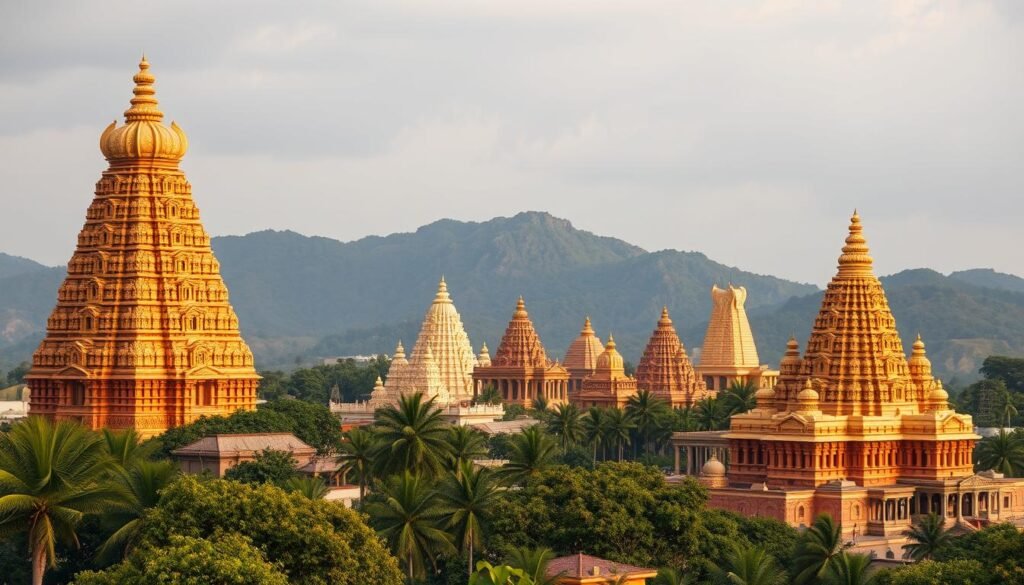
Chola Temples: A Glimpse into Grandeur
The Chola temples show the art and culture of the Chola dynasty. They were not just places of worship. They also showed the dynasty’s power and cultural growth.
Their design and symbols give us a peek into the bond between faith and art in the Chola era.
Architectural Features of Chola Temples
Chola temples are famous for their amazing architecture. The tall vimanas, or temple towers, stand out. They show the Chola’s skill and ambition in building.
The stone sculptures add to the temples’ beauty. Each sculpture has its own story, adding to the temple’s spiritual value. The detail and size show the Chola dynasty’s talent in design.
Symbolism in Chola Temple Designs
Chola temples are full of symbols. Their layout mirrors the universe’s structure. This shows the temple’s spiritual importance.
The carvings tell stories of the divine. Each part of the design has a meaning. It shows the connection between the sacred and the Chola dynasty’s architectural skill.
Prominent Temples in Tamil Nadu
Tamil Nadu is home to many famous temples that show off its temple architecture. The Brihadeeswarar Temple in Thanjavur is a standout. It has a huge gopuram and detailed carvings. This UNESCO World Heritage site is a symbol of the Chola dynasty’s grandeur.
The Meenakshi Temple in Madurai is also famous. It’s known for its beautiful sculptures and lively festivals. Many people visit this temple, adding to its spiritual vibe.
These temples are more than just beautiful buildings. They are key pilgrimage sites for those seeking blessings and spiritual growth. Each temple tells a story of history, art, and devotion. They are important to the community and faith in Tamil Nadu.
The Role of Mythology in Temple Architecture
Mythology is key in Tamil Nadu’s temple architecture. These stories shape the look and feel of temples. They also capture the spiritual heart of these places. This mix of myth and design makes temples places for deep thought and prayer.
Myths that Inspire Structural Designs
Many myths have shaped temple designs. Each temple tells a story of moral lessons, divine help, and the universe’s secrets. These stories add to the temples’ spiritual value.
- Creation Myths: These are shown in detailed carvings, giving us clues about the universe’s start and gods’ roles.
- Heroic Tales: Stories of gods and goddesses link to the temple’s features, showing their victories in symbolic ways.
- Transformational Stories: These myths show gods’ changes, seen in temple wall sculptures, telling of growth and change.
Divine Representations in Sculpture
Sculptures of gods and goddesses are vital in temple design. Each figure shares a part of a bigger story, making visitors feel awe. These sculptures help connect the altar to the people, making the spiritual journey richer.
- Iconographic Symbols: Each deity’s image is carefully made to show their virtues and stories, linking the physical to the spiritual.
- Mythical Beasts: Carvings of creatures have two roles: as protectors and as symbols of divine qualities.
- Narrative Friezes: Stories on temple walls encourage group thinking and deepen myth understanding.
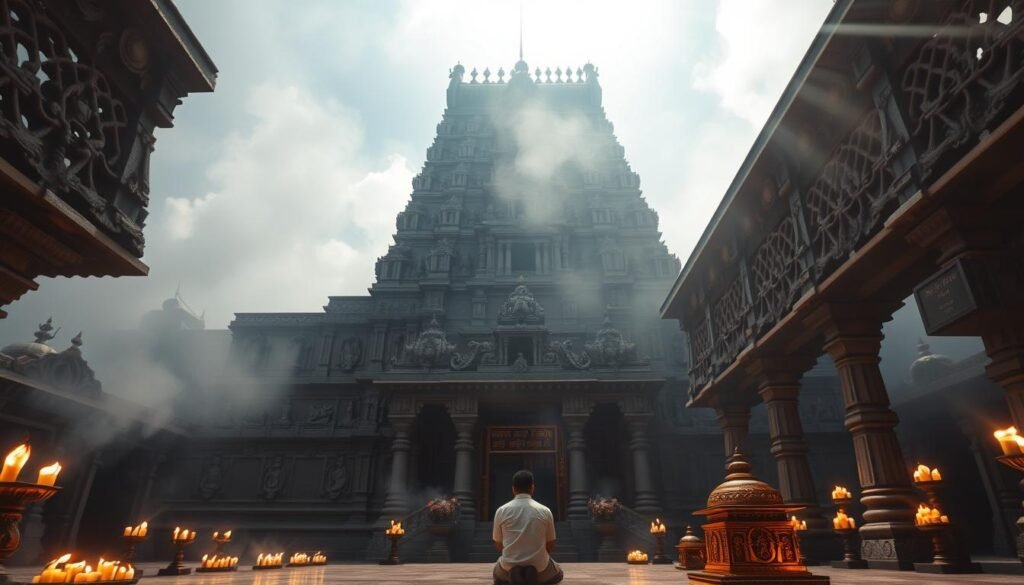
Tamil Nadu Temples: Artistic Representations
Tamil Nadu temples are alive with art, showing off the area’s rich culture. Inside, you’ll find detailed murals, frescoes, and sculptures. These tell stories of gods and the universe.
These artworks do more than just look good. They share important teachings and beliefs. They help us understand the divine in a deeper way.
Each piece of art has its own story to tell. Together, they create a powerful experience. This experience honors the long history of these temples.
The Intricacies of Temple Carvings
Temple carvings are a mix of complexity and beauty. They show amazing artistic skill that has grown over time. These carvings are not just for looks; they tell stories and hold deep meanings.
Learning about the carving techniques and symbols in these artworks helps us understand Tamil Nadu’s culture and spirituality. It’s like unlocking a treasure trove of history and beliefs.
Different Techniques Used in Carving
Artisans use many techniques to create these carvings. Relief carving makes figures pop out from the background, creating a three-dimensional effect. This technique is truly impressive.
In-the-round sculptures can be seen from all sides, showing the artist’s skill. They bring deities and mythological scenes to life. The carvings also feature detailed patterns and motifs, showing the artist’s technical skill.
Symbolism of Different Carvings
Each carving has its own story to tell. Many sculptures show deities, representing different spiritual aspects. They also tell stories of myths, passing down values and traditions.
Auspicious symbols are woven into the designs, adding to the temple’s sacred feel. These elements together tell a bigger story of Tamil Nadu’s culture.
Festivals and Rituals: A Cultural Perspective
Festivals are a big part of life around Tamil Nadu temples. They are lively celebrations of faith and culture. Events like Pongal and Navaratri unite communities, showing their cultural significance and shared beliefs.
Rituals are key during these festivals. They mark the rhythm of life and devotion in temples. People take part in traditional practices, from prayers to dances that honor the deities. These activities boost the spiritual experience and strengthen community bonds.
Temples are the heart of these gatherings. They show how spirituality and community life are connected. Through festivals, Tamil Nadu temples become centers of cultural expression. They bridge generations and create a sense of belonging.
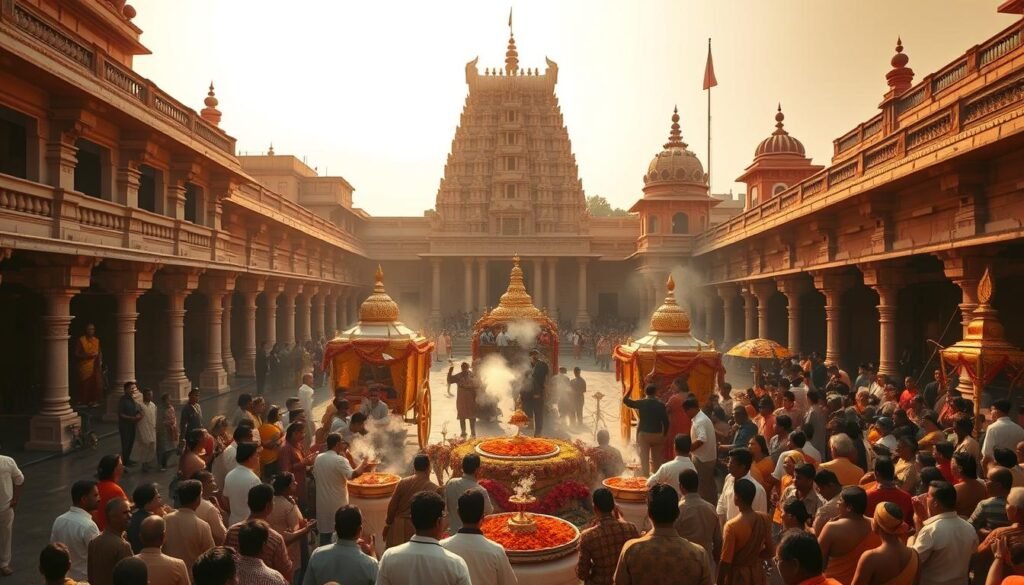
Architectural Styles: Beyond Dravidian Influence
In Tamil Nadu, we find that Dravidian architecture is just the start. Many other influences add to the beauty of temple construction. These styles show how different cultures have shaped the region’s architecture over time.
Looking at temple design, we see a mix of influences. For example, spires and pilasters might come from the north or Southeast Asia. This mix shows the lively nature of Tamil Nadu’s architecture.
The regional diversity is clear when we look at different styles. We see influences from Indo-Islamic, Gothic, and modern styles. Each adds a unique touch to Tamil temples, making them more than just beautiful buildings.
Exploring these architectural styles helps us appreciate the history behind them. We see how influences have blended over the years. This creates a heritage that is both fascinating and worth studying.
Impact of Geography on Temple Architecture
Geography greatly influences temple architecture in Tamil Nadu. Different landscapes and climates shape how these buildings are made. For example, coastal temples might use different stones than those in mountains.
Adapting to local geography is key. In green areas, temples often feature natural designs. This shows how architecture and nature can work together. In dry places, temples use strong materials to fight off harsh weather.
Looking at Tamil Nadu’s temples shows their deep connection to the land. Each temple is more than a spiritual site. It’s a proof of how geography guides architecture to meet ecological needs.
Preservation of Temples as Cultural Heritage
Preserving temples in Tamil Nadu is key to keeping our cultural heritage alive. These structures are more than just places of worship. They are living reminders of our shared history and identity.
Conserving temples is a tough task. It faces challenges like environmental damage, urban growth, and centuries of wear. Governments and NGOs work together to protect these sites. Their hard work shows how vital preservation is to honor our past.
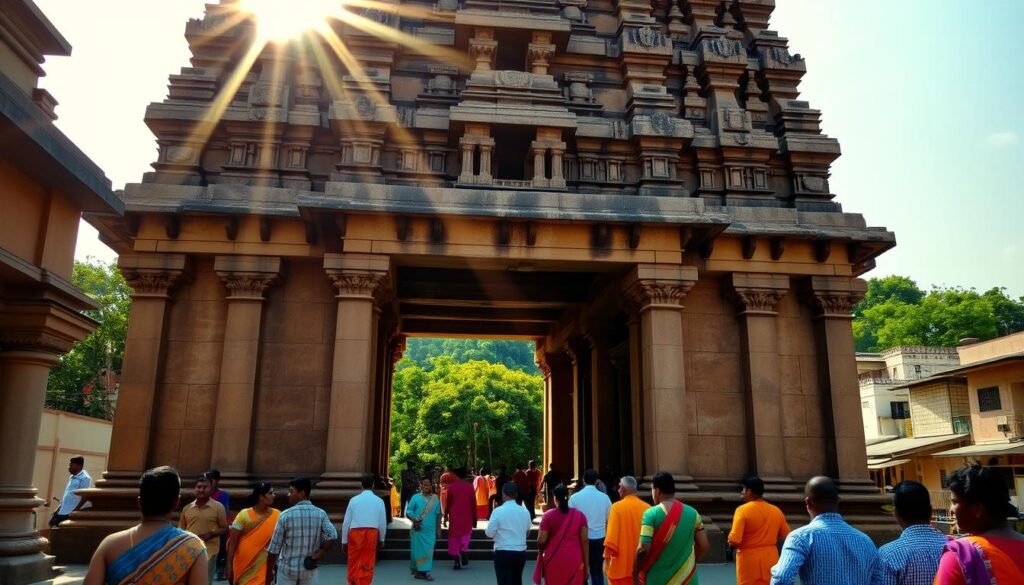
Education and community programs highlight the need to save Tamil Nadu’s temples. By involving locals, we teach them to care for their heritage. This effort keeps these treasures shining in Tamil Nadu’s spiritual and cultural scene.
Community and Spirituality in Tamil Nadu Temples
Tamil Nadu temples are alive with spirituality and community. They are places where people come together, not just to pray. Here, everyone finds a sense of belonging.
When people gather for rituals, they feel a strong bond. This bond strengthens their shared identity. It’s a powerful experience.
Communal worship lets people share their beliefs. It brings them closer, creating a shared spiritual path. Temples are also where important life events happen, like weddings. They become key places for social gatherings.
Every day, temples are buzzing with activity. Festivals bring even more joy and color, drawing in big crowds. These events show how spirituality and community are deeply connected in Tamil Nadu temples.
The Future of Tamil Nadu Temples
Looking ahead, Tamil Nadu temples face a mix of challenges and chances. They must blend modern changes with their deep history. This balance is key to keeping their cultural importance alive.
Modernization in temple design and rituals can make these places more meaningful today. New technologies and designs can make worship easier and more welcoming. Adding modern comforts can also bring the community closer to these sacred sites.
Yet, it’s important to keep the true spirit of Tamil Nadu temples alive. By staying true to their roots, these temples can continue to showcase their rich heritage. Future developments might also include eco-friendly practices, ensuring these temples thrive for generations to come.
Conclusion
The architecture and symbolism of Tamil Nadu temples are truly special. They tell stories of culture and spirituality. These temples are more than places of worship; they hold history, art, and community identity.
Each temple shows the growth of architecture over time. It’s not just about building; it’s about preserving culture.
We’ve looked into the deep meanings behind Tamil Nadu temples’ designs. They connect past, present, and future. This connection goes beyond just buildings; it’s about community.
It’s important to celebrate and protect these treasures of Tamil Nadu. By understanding and valuing their history and culture, we keep them alive. This way, they will continue to be important parts of our society.