



Did you know? The positional decimal system from ancient India made calculations much faster. This was key for large-scale thinking in computing and AI.
Let’s start with a simple idea: ancient India’s innovations laid the groundwork for today’s AI. The invention of zero and place-value notation by Brahmagupta and Aryabhata helped create modern algorithms.
But it’s not just about numbers. Ayurveda, metallurgy, water management, and astronomy show a culture of precision and testing. These are the same principles driving AI advancements in India today.
We’ll look at ten inventions to find design principles. These include abstraction, standardization, and resource optimization. We’ll connect these to India’s AI landscape, using history and industry data.
This introduction promises a blend of ancient wisdom and modern data. We’ll use sources like Charaka Samhita and studies by Georges Ifrah. Our goal is to show how the past influences India’s tech future.
The Indispensable Concept of Zero

A small symbol changed the way we do math and science. Old finds and texts show how we moved from simple marks to complex ideas. This journey connects the past to today’s math and tech education, and India’s role in AI.
Birth of the Zero
Old texts and inscriptions show zero’s start in India, between the 5th and 7th centuries. Mathematicians like Āryabhaṭa and Brahmagupta made rules for using zero. They turned counting tokens into symbolic algebra.
Impact on Mathematics
Zero made math easier and faster. It led to big changes in how we do math by hand or with machines. The work of Indian mathematicians helped create new ways of solving problems, used in schools and research centers.
Modern Applications
Today’s tech, like computers, uses the same idea of zero. It’s key for digital systems and for making data safe. This shows how old ideas are used in new tech, linking ancient to modern.
India’s strong math education connects the past to today’s tech. It’s important for India’s future in AI and for training experts in algorithms and machine learning.
Ayurveda: The Science of Life

Ayurveda is seen as an early form of systems medicine. It uses careful observation and individualized care. Works like Charaka Samhita and Sushruta Samhita offer detailed diagnostic methods and treatments.
It focuses on dosha-based assessments and pharmacognosy. Herbal remedies and standards are ready for digitization. This makes them perfect for analysis.
Holistic Healing Approaches
Ayurvedic practice is all about personalized care. It includes diet, lifestyle, herbal therapy, and more. This approach is similar to today’s precision medicine.
In India, efforts are underway to use AI with Ayurveda. Natural language processing is being used to understand ancient texts. Small firms and teams are applying machine learning to traditional knowledge.
Influence on Modern Medicine
Research is combining Ayurveda with clinical data to create tools. These tools aim to personalize treatments while ensuring safety and standardization.
But, there are challenges like regulatory hurdles and data quality. It’s important to find ways to make ancient knowledge work in today’s world.
Ayurveda’s focus on observation and individual care is perfect for AI. This could lead to big advancements in India’s health sector.
The Art of Navigation
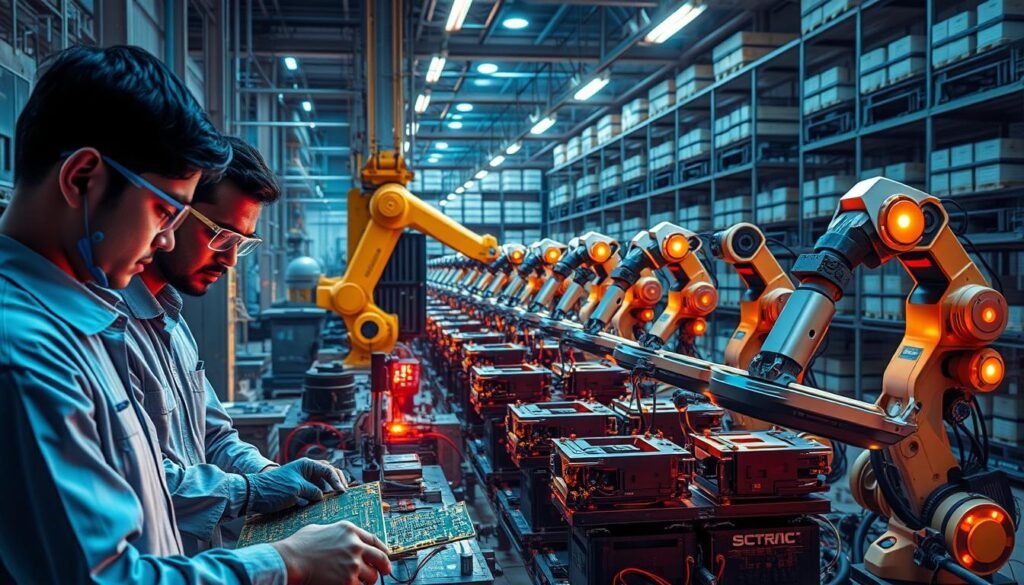
We connect ancient shipyards on the Indian coast to today’s navigation systems. Early sailors used hull design and watched wind and waves closely. This led to strong trade links with Southeast Asia, Arabia, and East Africa.
The construction of sewn-plank ships and adapted hulls is mentioned in Sangam literature and the Periplus of the Erythraean Sea. Archaeological finds show advanced timber joining and keel forms. These show a focus on improving designs for routes and cargo.
Ancient Maritime Technology
Shipwrights made flexible hulls using local timber, fiber stitching, and caulking. Ports like Muziris and Lothal were key in a network that planned for seasons and monsoons. This network thinking is similar to today’s logistics and systems engineering.
Today, we see similarities in coastal surveillance and port automation. Indian Institutes of Technology and startups in Chennai and Bengaluru work on autonomous hull monitoring and sensor fusion. These efforts reflect the old focus on integrated systems and planning routes.
The Use of Stars for Navigation
Mariners used stars, rising points, and monsoon calendars for navigation. They developed practical star charts and rules for navigation. This allowed for reliable long-distance voyages without landmarks.
Today, we see parallels in autonomy: path planning, sensor fusion, and real-time corrections guide vessels. AI startups in India and researchers on maritime robotics apply these principles. They use machine learning for safer routing with echo-sounder and radar data.
| Aspect | Ancient Practice | Modern Parallel |
|---|---|---|
| Hull design | Sewn-plank construction, flexible keels | Composite hulls, structural health monitoring |
| Navigation method | Stellar fixes, monsoon calendars | GNSS, sensor fusion, AI-based path planning |
| Network optimization | Seasonal port schedules, trade routes | Port automation, logistics AI |
| Systems thinking | Integrated ship, crew, and route practices | Autonomous vessels, coastal surveillance systems |
| Innovation drivers | Empirical observation, craft knowledge | Research labs, AI startups in India, industry partnerships |
This maritime legacy is linked to current policy and industry efforts. Coastal projects and research support India’s AI strategy. They blend domain knowledge with data-driven automation. Collaboration between ports, academia, and the AI industry fuels practical tests.
India’s future in AI includes maritime robotics, efficient port logistics, and improved coastal security. Practical pilots by academic labs and AI startups in India are turning seafaring wisdom into tests for autonomy and resilience.
The Resilience of Cotton
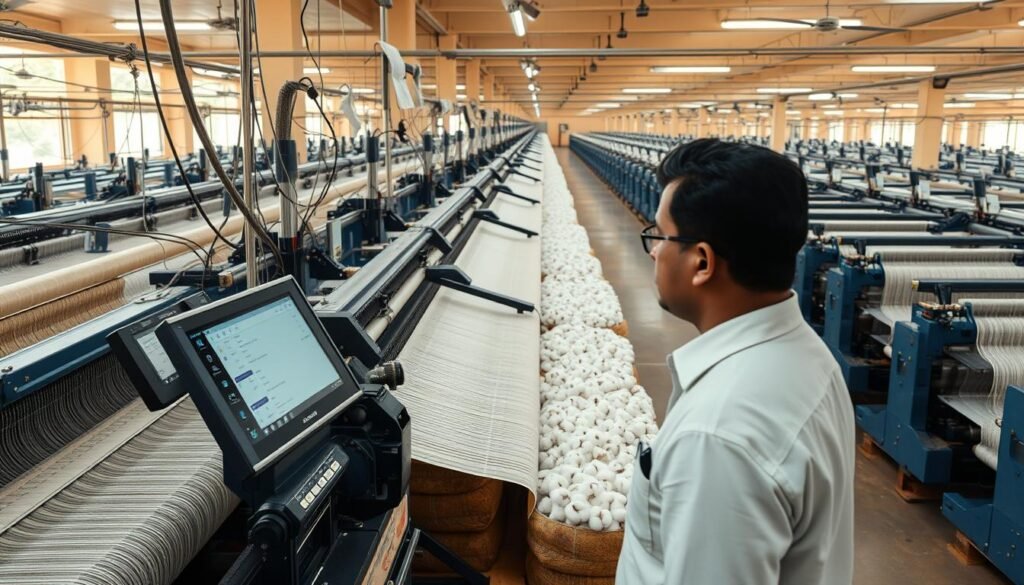
Cotton’s journey started in the Indus Valley and reached modern mills. Archaeologists found tools like spindle whorls and dyed fragments. These show early spinning and weaving skills.
Early Cotton Cultivation
In ancient India, farmers picked strong cotton varieties. They used irrigation and crop rotation for good yields. Dyeing and patterns were passed down through generations.
Places like Mohenjo-daro and Gujarat became textile centers. They traded fine cotton to Mesopotamia and Rome. This made textiles a key part of the economy.
Impact on Textiles Today
Today, India mixes old skills with new production. The textile sector is a big employer and exporter. Heritage techniques influence both fashion and everyday clothes.
New technologies offer chances for growth. Tools like predictive demand systems and quality checks improve efficiency. Startups and researchers use AI to update handloom clusters and mills.
We think combining old crafts with AI will help artisans. It will also create more valuable products. Smart fabrics and forecasting show India’s AI future, blending tradition with economic growth.
Advanced Architecture: The Stepwells
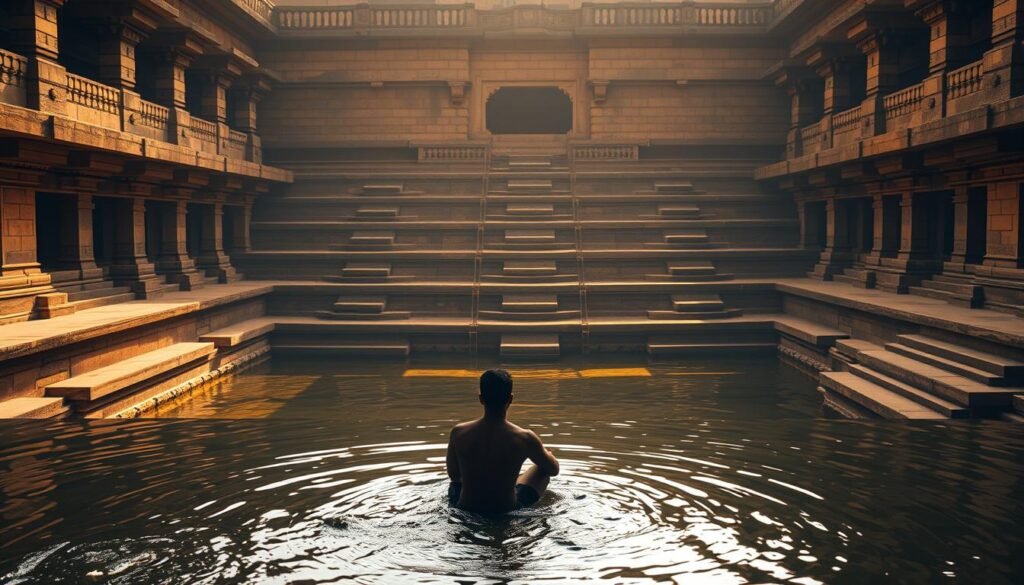
We look at stepwells, or baolis and vavs, as complex systems in Gujarat, Rajasthan, and more. They mixed geometry, materials, and social areas to manage water and cool spaces. Rani ki Vav and Adalaj ni Vav show how design and function came together.
Historical records and field studies reveal their design and materials. Stone masonry and stepped terraces created cool, shaded areas. These areas helped reduce evaporation and recharge groundwater.
Historical Significance
Stepwells were more than just wells; they were temples, markets, and meeting places. They were key for daily life and rituals. Rulers and merchants supported these spaces, seeing them as civic assets.
Innovations in Water Conservation
They used passive methods to conserve water, like seasonal storage and slow-release chambers. This boosted groundwater levels. Engineers used local materials and site conditions to manage water without pumps.
Today, we’re seeing modern projects that revive these ideas. They use sensors and analytics to create efficient water systems. In Indian cities, IoT sensors and machine learning help predict water needs.
This mix of old and new is part of India’s growing tech and heritage. Stepwells teach us about sustainable design. AI helps make water management more efficient in water-stressed areas.
The Science of Yoga
We see yoga as a science that focuses on the body and mind. It uses postures, breathwork, and meditation to improve health. Old texts like Patanjali’s Yoga Sutras guide us in these practices.
Yoga started in ancient times, blending practice and theory. Scholars like Mark Singleton have studied how these ideas evolved. Today, we link yoga to brain health and overall well-being.
Origins and Evolution
Yoga’s history shows how postures and breathing techniques grew. Patanjali outlined eight limbs to guide us. Hatha Yoga focused on the body and how to use yoga for specific goals.
Over time, yoga changed to include health and performance. This change has given us data to study and improve yoga.
Benefits in Modern Wellness
Studies show yoga reduces stress and improves mood. At places like All India Institute of Medical Sciences, yoga has been shown to affect heart rate and stress hormones.
In India, yoga is used in hospitals to help with chronic pain and mental health. These programs show yoga’s effectiveness and how it can be studied on a large scale.
Now, we can track yoga’s effects with technology. Indian startups are creating tools that help make yoga more effective for everyone.
Data, AI and Scaling Practice
Yoga’s structure makes it easy to study with data. Machine learning can make yoga plans that fit each person’s needs.
This mix of old knowledge and new tech is exciting for AI in India. It helps grow AI by needing more data and studies.
AI can help yoga reach more people. It can make yoga better for health, helping prevent problems and improve work performance.
| Aspect | Traditional Basis | Modern Measurement | AI-enabled Application |
|---|---|---|---|
| Posture Taxonomy | Patanjali limbs; Hatha sequences | Motion capture; IMU sensors | Real-time form correction and personalized routines |
| Breathwork | Pranayama techniques | Respiratory rate; HRV metrics | Adaptive breathing coaching for stress reduction |
| Meditation | Focused attention and awareness practices | EEG proxies; behavioral markers | Personalized attention training and relapse prevention |
| Clinical Use | Rehabilitation and preventive routines | Patient-reported outcomes; physiological signals | Remote monitoring, tele-yoga therapy programs |
Brick-Making: A Testament of Engineering
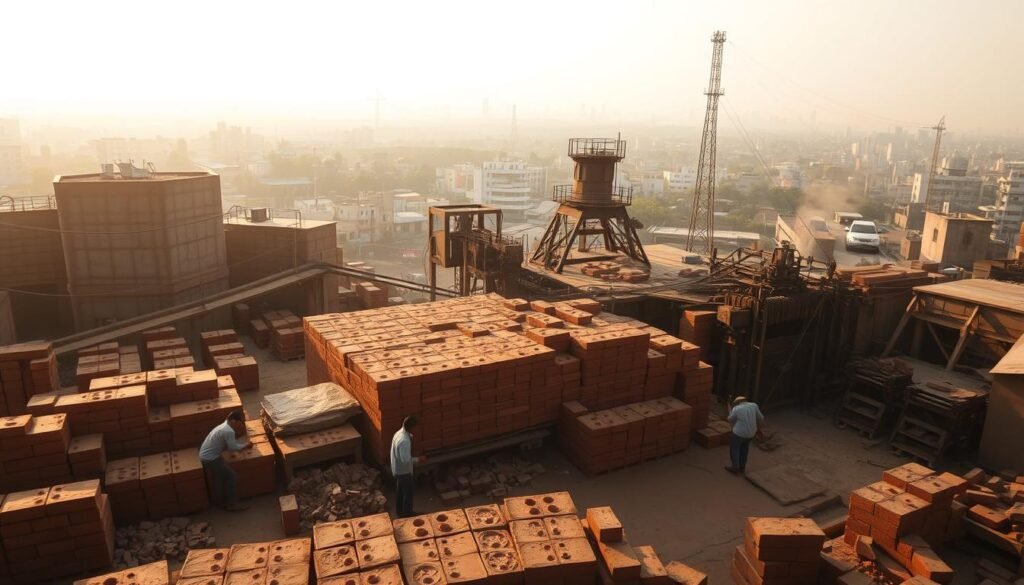
We explore how brick-making evolved from ancient streets to modern forts. Archaeology shows us uniform bricks and precise dimensions. These signs point to ancient urban planning’s success.
Ancient Techniques
At Mohenjo-daro and Dholavira, we find standardized bricks and repeatable molds. Craftsmen used clay and controlled firing for durability. Kilns varied by region, showing different techniques.
Mortar recipes mixed lime, sand, and organic binders for strength. These recipes were passed down through guilds and workshops. This focus on repetition helped create parts that fit together well.
Influence on Modern Construction
Today’s masonry builds on these standards. Local knowledge guides modern materials and sustainable practices. We see a link from ancient bricks to modern panels and reinforced masonry in cities.
AI in India is changing the brick industry. Tech firms use AI to improve mix proportions and firing cycles. This speeds up quality checks and reduces waste.
AI also supports predictive maintenance and structural health monitoring. Sensors and machine learning flag early signs of damage. Robotic systems use data to build like ancient times.
We compare traditional and modern elements in a table.
| Traditional Practice | Ancient Benefit | Modern Parallel |
|---|---|---|
| Standardized brick sizes | Interchangeability and speed | Prefabrication and modular construction |
| Controlled kiln firing | Durability and uniform strength | Automated kiln control with sensors |
| Mortar formulations with additives | Improved bonding and longevity | Engineered mortars and admixtures |
| Guild-based craft transmission | Consistent workmanship | Knowledge transfer via digital training and AI tools |
Standardization in brick-making paved the way for large-scale infrastructure. AI in India is now scaling this legacy while keeping traditional wisdom alive. We believe combining ancient knowledge with AI will shape the future of building.
Metallurgy: Wootz Steel
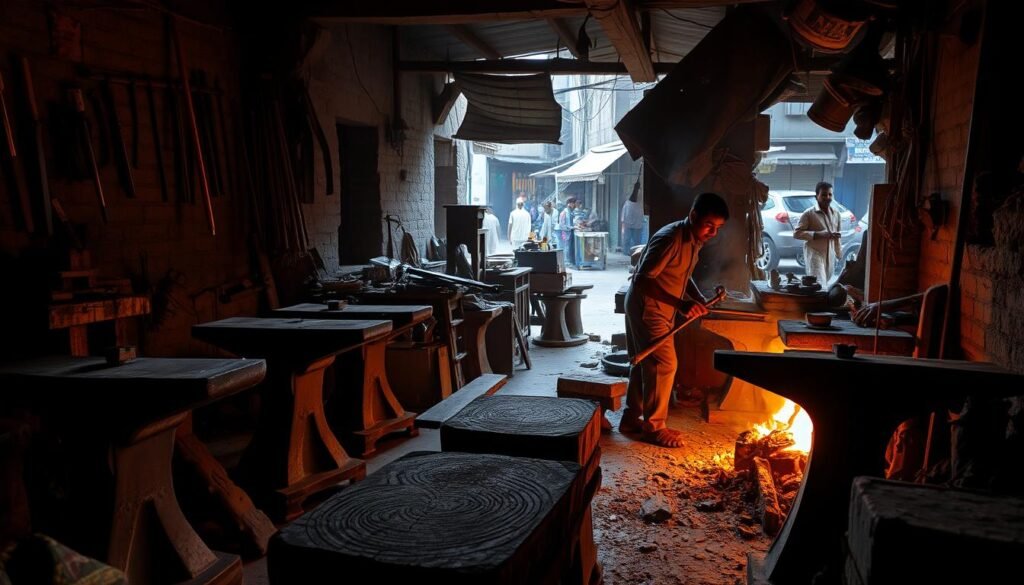
Wootz steel originated in South India and spread across the world. It was known for its unique pattern and strength. Studies show it was made by controlling carbon, forging, and heating it repeatedly.
The making process was a mix of skill and method. It started with iron and added carbon-rich materials in sealed crucibles. The cooling process created fine carbides, as seen in ancient artifacts.
Today, scientists study wootz steel to improve alloys. They learn about tempering, grain size, and carbide engineering. This knowledge helps in making new steels and using 3D printing.
The Making of Wootz Steel
Archaeologists and metallurgists have figured out how wootz steel was made. It involved smelting, adding carbon, slow cooling, and forging. These steps created the steel’s unique pattern and strength.
Research centers in India have linked ancient wootz steel to modern science. They’ve found connections between historical samples and current heat-treatment models. This shows ancient wisdom was ahead of its time.
Its Modern Relevance
Wootz steel teaches us about making new alloys and sustainable manufacturing. Machine learning helps in this area by predicting steel properties and improving tempering. This work is done by startups and research labs.
There’s a clear link between ancient metalwork and modern engineering. This connection makes India a leader in advanced materials. India’s AI efforts help in predicting steel structures and creating new alloys.
AI in India is driving partnerships between universities, foundries, and startups. This leads to faster alloy design, benefiting industries like defense and renewable energy. It shows AI’s positive impact on India’s economy, including more exports and jobs.
By combining traditional knowledge with AI, we’re exploring new areas in metals research. Wootz steel is a symbol of how old techniques can lead to new discoveries. It shows how heritage technology can guide today’s industrial strategies.
The Ingenious Water System

We follow a path from the Kallanai dam on the Kaveri to village tanks and stepwells. Ancient engineers built channels and schedules for the monsoon. Communities managed water with rotation, repair duties, and shared rules.
These physical works were paired with local institutions. Sangam literature and inscriptions show canal maintenance and sluice control. They also mention caste-neutral water committees.
Ancient irrigation techniques
Kallanai is a hydraulic case study: a durable weir for irrigation without complex machinery. Stepwells and tanks stored excess monsoon water for dry months. Small field channels carried water to paddies with minimal loss.
Governance matched the engineering. Farmers rotated turns, repaired breaches, and set crop calendars around water availability. These customs reduced conflict and improved resilience against variable rainfall.
Lessons for today’s water management
Modern tools layer onto old wisdom: remote sensing pinpoints crop stress, acoustic sensing finds leaks, and machine learning predicts demand. Startups and research labs in India test systems that blend institutional rules with sensors and models.
We argue for coupling community governance with AI growth in India to scale solutions. An AI strategy for the future should embed local schedules and repair norms into algorithms. This step keeps equity at the core while improving efficiency.
Policymakers must consider India Future in AI as a chance to protect smallholders. Thoughtful deployment can reduce waste, raise yields, and strengthen social oversight. These gains shape how AI impact on India’s economy will unfold in rural regions.
The Complexity of Ancient Indian Astronomy
We follow a path from ancient skywatching in India to today’s advanced astronomy. Early scholars mixed keen observation with precise math. Their work is similar to today’s computer methods.
Aryabhata, Varahamihira, and others made star catalogs and models of planets. They also created rules for eclipses using trigonometry and algorithms. They used tools like gnomons, water clocks, and devices similar to armillary spheres to measure time and positions accurately.
Early Observations of Celestial Bodies
They recorded the paths of planets and the phases of the moon in a systematic way. They used sine tables to change angular measures into values we can use. This made predictions that could be tested and repeated.
Gnomons measured the sun’s altitude. Water clocks timed events by steady flow. Early sextant-like devices improved the accuracy of angular readings for stars and planets. These methods created datasets similar to today’s time-series observations.
Contributions to Modern Astronomy
Classical texts showed analytical models that foreshadowed today’s computational methods. They used compact formulae for motion, interpolation, and error estimates. These ideas are similar to algorithms used today in signal processing and model fitting.
Today, places like the Indian Space Research Organisation and the Indian Institute of Astrophysics run big surveys and radio facilities like the Giant Metrewave Radio Telescope. They use AI to sort through vast data, classify signals, and find unusual things.
This shows a link from careful observation to algorithm-driven discovery. The future of AI research in India connects this past to new tools for recognizing patterns and automated analysis. India’s AI innovation landscape supports projects that mix domain knowledge with machine learning for astronomy.
| Aspect | Ancient Practice | Modern Parallel |
|---|---|---|
| Data collection | Star catalogs, timed observations with water clocks | Sky surveys, time-stamped digital telemetry |
| Computation | Sine tables, interpolation algorithms | Numerical modeling, signal processing |
| Instruments | Gnomons, sextant-like devices | Optical telescopes, radio arrays |
| Analysis | Predictive eclipse calculations | AI-assisted anomaly detection, classification |
| Institutions | Monastic and royal observatories | ISRO, Indian Institute of Astrophysics, GMRT |
The Legacy of Indian Numerals
We follow a path from ancient times to today’s computers. Indian numerals and the decimal system spread through scholars like Al-Khwarizmi. They reached Europe, changing math, trade, and science.
Transition to the Decimal System
Early Indian texts created a positional system for easy math. Arabic scholars translated these works, making math simpler. This led to faster and more accurate calculations, key for science and finance.
Global Impact
The decimal system was key in the Renaissance and Industrial Revolution. It also helped in creating digital technology. Today, it’s used in software and research in India.
In India, this legacy is seen in schools and universities. It supports tech firms and research, driving AI innovation. Institutes like the Indian Institutes of Technology and companies like Infosys and Tata Consultancy Services benefit from it.
Looking at India’s AI future, we see a link from ancient to modern. Efficient number systems lead to faster algorithms and better data. This makes India a center for AI and data science talent.
Conclusion: Lessons from Ancient India
We’ve looked at ten inventions that show a pattern. They include abstraction, systems thinking, and materials innovation. These principles are key in modern engineering and AI.
Institutions like the Indian Institutes of Technology and ISRO carry on this tradition. They train talent and use interdisciplinary methods.
AI startups in India are using knowledge from health and agriculture to create solutions. The country’s AI strategy aims to grow these efforts. It combines old wisdom with new data and education.
To make AI progress last, we suggest a few steps. Invest in data, work together with schools and industries, and create fair rules. This will help AI help India’s economy and give more people chances.
India’s past wisdom guides its AI future. By using old knowledge in new AI, we can make solutions that work for everyone. This will make India a leader in AI.