


Nearly one thousand festivals are observed across India each year. This includes village fairs and local rites. It turns calendars into living tapestries.
Indian Festivals are seen as overlapping cycles. They include Vedic rites, Dravidian harvest customs, and Buddhist and Jain observances. Islamic and Christian commemorations, Sikh gurpurabs, and tribal ceremonies also layer across millennia. This explains why cultural events in India appear so dense and varied.
Festivals serve clear social purposes. They mark life stages and seasonal shifts. They create rituals for redistribution and solidarity. They also perform collective memory, turning festive occasions into social infrastructure that strengthens communities and clarifies identity.
Geography and language multiply traditions. With 29 states and 8 union territories, many traditional holidays are local. Village deities, craft guild anniversaries, and harvest-specific rites are examples. Multiple calendrical systems — Hindu Panchang, Islamic Hijri, Sikh Nanakshahi, and regional lunisolar variants — further spread dates and practices. This increases the perceived frequency of celebrations.
For engineers and educators, this is familiar territory. Viewing festivals as periodic processes helps planners. It anticipates demand in transport, energy, and retail. It guides culturally informed design of curricula, products, and public services.
The Significance of Festivals in Indian Culture
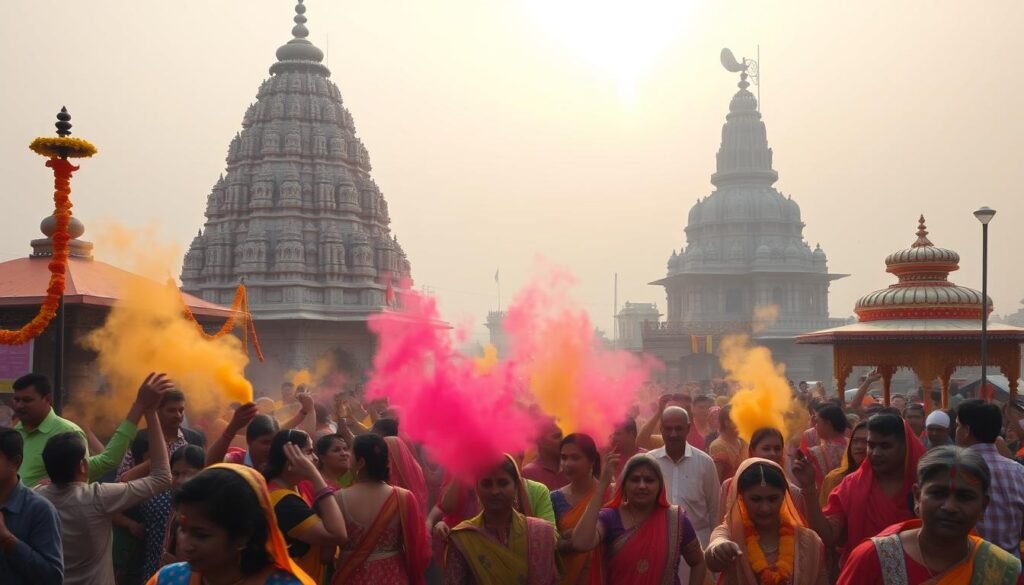
Festivals are like living maps of society, showing history, ecology, and identity. Indian Festivals mark important times like harvests and migrations. They are filled with songs, foods, and processions that carry deep meanings.
Festivals as a Reflection of Diversity
Local festivals like Pongal in Tamil Nadu and Lohri in Punjab show how communities adapt. They celebrate rice harvests and river worship. These events highlight the diversity of language, caste, and ethnicity.
Public processions and music let groups show their identity while connecting with others. This helps reduce social friction by allowing for differences. It’s like a model for social systems that can grow and connect.
The Spiritual Essence of Celebrations
Many festivals come from devotion and cycles of the universe. Diwali celebrates the return of Rama and light over darkness. Navratri honors the divine feminine, and Eid al-Fitr ends Ramadan with prayer and charity.
Rituals like fasting and pilgrimage strengthen ethical norms. They create a sense of safety through shared stories and ceremonies. This builds cohesion across generations.
These spiritual and social functions are like resilience mechanisms. They ensure festivals meet social needs and adapt to change. This approach helps in designing solutions that respect local practices while scaling up.
Major Indian Festivals: An Overview
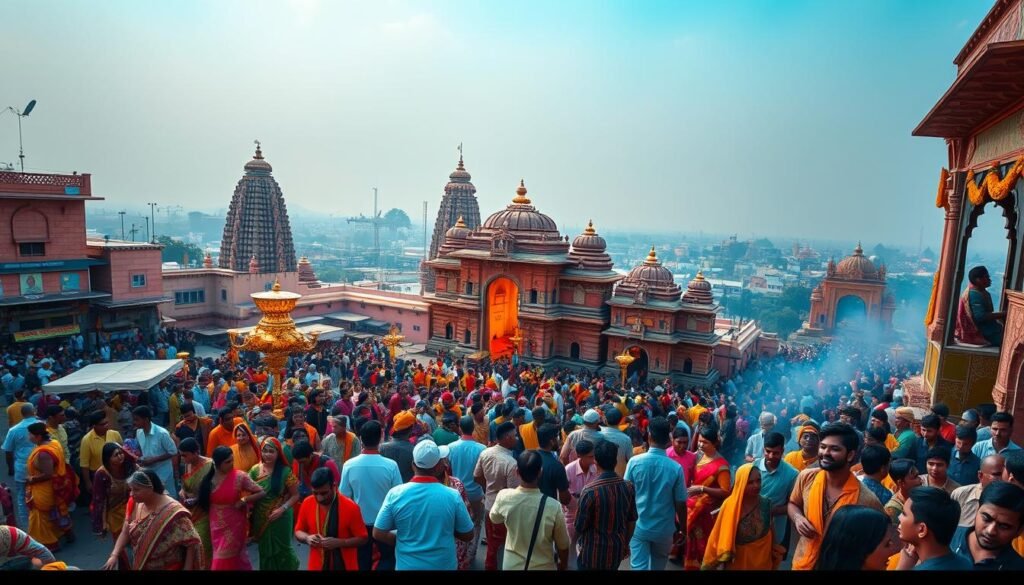
We look at three big festivals in India that change how people live, what policies are made, and what goods are sold. These festivals are great examples for those who plan events, teach, or design systems for managing crowds and supplies during these times.
Diwali: The Festival of Lights
Diwali is celebrated by Hindus, Sikhs, and Jains. It involves lighting lamps, doing Lakshmi puja, and refreshing homes and clothes. Fireworks add to the fun, boosting sales of jewelry, lights, gadgets, and sweets.
In Delhi and Mumbai, cities try to cut down pollution from fireworks. This shows how festivals need both government and business to keep traditions alive while protecting health.
Holi: The Celebration of Colors
Holi welcomes spring with colors, water fights, and bonfires. It’s rooted in stories like Prahlad and Holika and is linked to Krishna and Radha in places like Vrindavan.
Local governments must prepare for water and sanitation during Holi. Different Holi celebrations, like Lathmar Holi in Barsana and Phoolon wali Holi in Vrindavan, show how festivals reflect local culture while creating consistent needs for services.
Eid al-Fitr: A Time for Community and Gratitude
Eid al-Fitr ends Ramadan with prayers, charity, and family meals. In many cities, people from different faiths exchange sweets and greetings.
These moments of togetherness highlight how festivals can build stronger communities. For those studying crowd management, market trends, and inclusive planning, Eid is a valuable lesson in community design.
The Calendar of Indian Festivals
Seasonal cycles, agricultural rhythms, and lunisolar calculations shape India’s festival calendar. This helps engineers, planners, and educators understand patterns. These patterns affect transport, energy, and public services during peak times.
Seasonal Festivals and Their Importance
Harvest and monsoon rhythms define many Indian Festivals. Events like Makar Sankranti, Pongal, Baisakhi, and Onam mark post-harvest abundance. These traditional holidays trigger feasts, weddings, and the redistribution of food and labor.
Pre-monsoon rituals—such as Teej—seek protection for crops and people. Planners must treat these periods as predictable peaks in demand for transport and supplies. Mapping the festival calendar into logistics models improves resilience and reduces bottlenecks.
Regional Festivals: Local Flavors and Traditions
Regional specificity gives cultural events in India their unique character. The Meenakshi Tirukalyanam in Madurai, the Pushkar Fair in Rajasthan, and the rotating Kumbh Mela attract localized crowds and specialized services. Local cultural capital becomes economic capital through tourism and trade.
Overlaps in timing—Navratri, Durga Puja, and Dussehra in autumn—create compounded demand across regions. Professionals must plan for simultaneous peaks across rail, road, and lodging networks. Academic curricula and professional training benefit when festival calendar mapping is used in seasonal demand forecasting exercises.
Unique Festivals in Different States
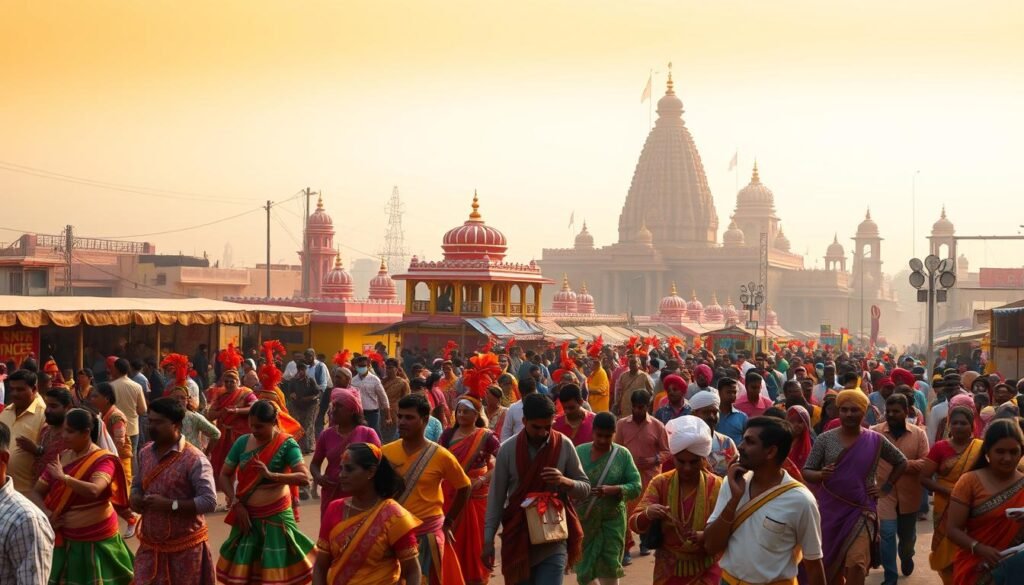
We explore India to see how unique celebrations shape local life. These festivals show the rich diversity of traditions and cultural events across the country. We focus on three examples where community, economy, and engineering come together.
Navratri: A Dance of Devotion in Gujarat
Navratri honors the goddess Durga over nine nights. In Gujarat, Garba and Dandiya Raas fill public spaces. Dancers wear handmade costumes, and community pandals host performances.
Local demand for textiles and handicrafts increases during Navratri. This helps artisans and small businesses. Music and sound-system providers also see a rise in demand.
Large gatherings require careful planning for power, safety, and crowd flow. Engineers and event managers play a key role in solving these challenges.
Onam: The Harvest Festival of Kerala
Onam celebrates King Mahabali’s return and a bountiful harvest. It lasts ten days and focuses on the Onam Sadhya, a vegetarian feast on banana leaves. Floral rangoli, boat races, and classical arts like Kathakali add to the festivities.
Onam boosts tourism and strengthens diaspora links to Kerala. Cultural events like Onam create seasonal travel patterns. This supports hotels, transport, and local guides.
Bihu: Celebrating Agriculture in Assam
Bihu has three celebrations: Rongali (spring and planting), Kongali (sowing), and Bhogali (harvest). Rongali Bihu is the most lively. It features Bihu dance, dhol and pepa music, and community feasts.
Bihu aligns with agricultural cycles. It’s a great time for outreach by extension services and technology programs. Seasonal festivals offer a chance to introduce irrigation improvements, mobile connectivity, and farmer education.
These state festivals show how Indian Festivals and regional festivals can drive sustainable tourism and rural development. By respecting festive traditions, we can design infrastructure that supports culture. This improves safety, access, and economic benefit.
The Role of Religion in Indian Festivals
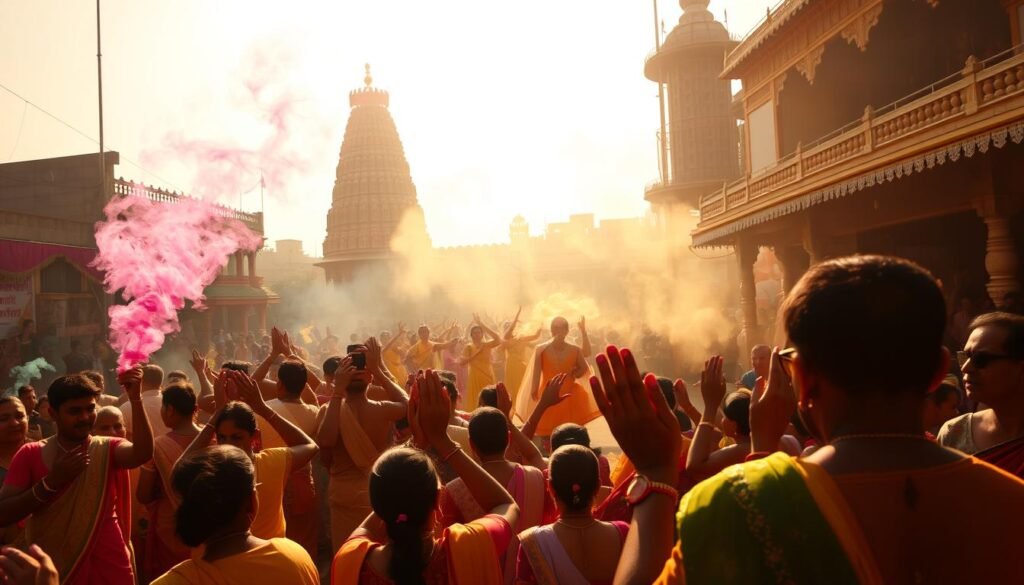
We look at how faith shapes public life through rituals, stories, and gatherings. Religion gives shape to many Indian Festivals. It supplies narrative frameworks, ritual technologies, and institutions that organize communal life. For technical educators, these events offer models of information transfer.
Religious celebrations act as living curricula. A myth becomes a lesson; a procession becomes a protocol. These cultural events in India embed memory, ethics, and skills in ways that are both symbolic and practical.
Hindu Festivals: Myths and Rituals
Hindu festivals draw on the Mahabharata, Ramayana, and Puranic tales. Rituals such as puja, aarti, and yajna are procedural. They use repeated steps to transfer meaning across generations. Pilgrimages to Varanasi, Tirupati, and Puri reinforce local economies and shared identity.
Muslim Celebrations: A Brothers’ Bond
Eid al-Fitr and Eid al-Adha focus on prayer, charity, and family. Community prayer at mosques and open grounds creates coordinated action. Sufi traditions in places like Ajmer and Hyderabad broaden participation through Urs festivals, drawing pilgrims across faith lines.
Sikh Festivals: The Teachings of Guru Nanak
Sikh observances such as Gurpurabs and Vaisakhi center on scripture, service, and communal kitchens. Practices like Akhand Path and langar demonstrate equality and social justice in action. Nagar Kirtan processions make teachings visible in public space.
| Religious Tradition | Core Rituals | Learning Mechanisms | Representative Sites/Events |
|---|---|---|---|
| Hindu | Puja, Aarti, Yajna, Pilgrimage | Mythic narratives, embodied repetition, temple schooling | Varanasi, Tirupati, Diwali, Holi |
| Muslim | Congregational prayer, Zakat, Eid feasts, Urs | Communal rituals, charitable drives, Sufi oral traditions | Ajmer Urs, Eid al-Fitr, Eid al-Adha, Hyderabad |
| Sikh | Akhand Path, Langar, Nagar Kirtan, Vaisakhi | Scripture recitation, service protocols, collective memory | Golden Temple, Guru Nanak Jayanti, Amritsar |
Across traditions, festive rituals function as social algorithms. They channel belief into action and scale local practices into national culture. These religious celebrations and cultural events in India make public values visible while sustaining networks of care.
The Influence of Festivals on Everyday Life
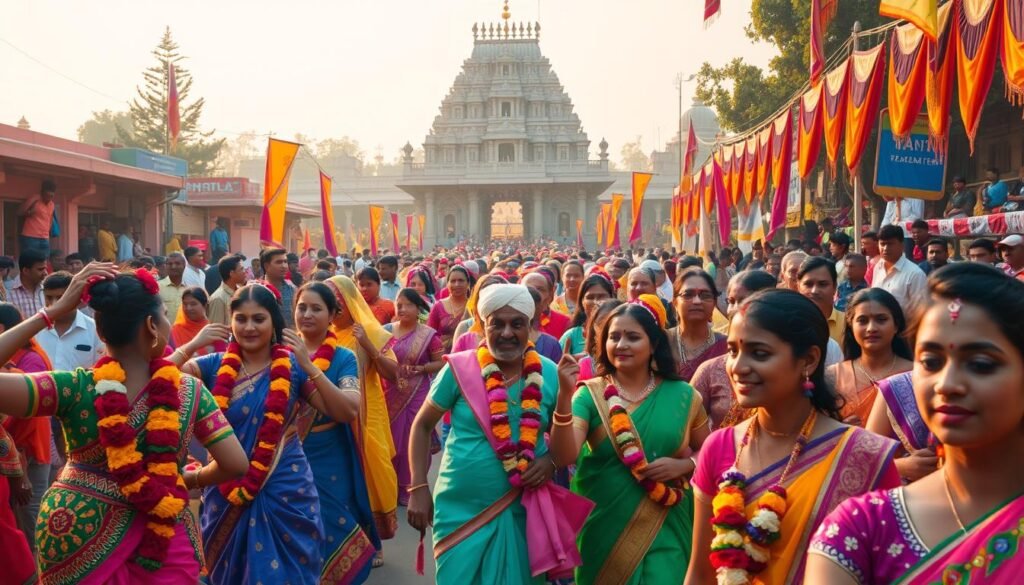
Indian Festivals shape our work, commerce, and community life. They do more than just add color to our calendars. They change how we spend money, affect labor needs, and shift public service priorities. These changes are seen every year, helping planners to better serve us.
Economic Impact: Boosting Local Economies
Retail giants like Reliance Retail and Tanishq see huge sales during Diwali and Dussehra. Local markets buzz with demand for clothes, jewelry, sweets, and home decor. Small businesses, street vendors, and artisans get a big chunk of their income from these festivals.
Travel and hospitality boom as families come together. Onam boosts Kerala’s hotels and houseboats, while Holi tourism lifts rural stays in Uttar Pradesh and Rajasthan. Seasonal jobs in logistics and events provide work for those who rely on these periods.
Social Bonding: Strengthening Community Ties
Festivals act as a social glue. They help families stay connected through visits and gifts, fixing strained bonds. Community events like processions, rangoli-making, and feasts foster cooperation and shared duties.
Places like gurdwaras and temples offer langar and communal kitchens. These acts of kindness build trust networks that last beyond the festival season. They help communities stay strong during tough times.
Operational and Policy Implications
Public services in cities like Mumbai and Chennai face high demand for transport, sanitation, power, and emergency care during festivals. Urban planners must plan for these times. Social programs should also account for the seasonal nature of jobs tied to festivals.
Organizations and schools can do better by aligning their plans with festival calendars. Simple adjustments can reduce absences, boost participation, and honor cultural traditions.
Practical steps
- Map festival calendars to staffing plans for retail and logistics teams.
- Coordinate public transport extras with municipal sanitation schedules.
- Design social programs that cushion seasonal workers between festival-driven peaks.
- Schedule academic deadlines with awareness of major festive occasions to minimize conflicts.
Customs and Traditions Surrounding Festivals
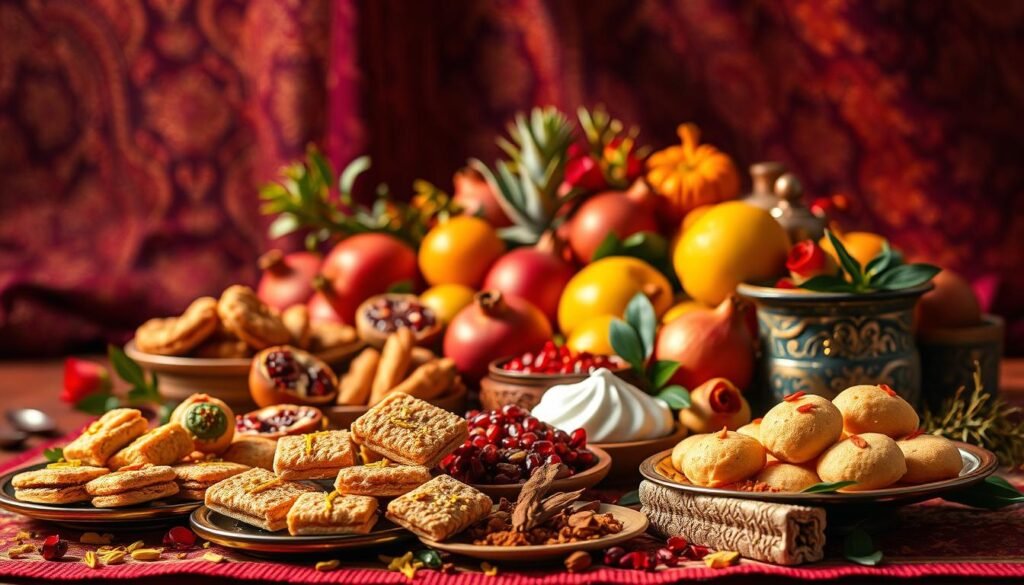
We look into how rituals and local foods shape India’s public celebrations. Customs help us remember, teach values, and guide us in traditional holidays.
Festive Foods: Culinary Delights
Indian Festivals are flavored by regional recipes: mithai at Diwali, modak in Maharashtra, payasam in Kerala, and sheer khurma for Eid. These dishes tell stories of agriculture, trade, and spice traditions.
Food demand boosts dairies, sugar mills, spice vendors, and cottage producers during festivals. This surge tests supply chains and food safety, making cold storage, hygiene, and traceability key.
Rituals and Practices: Meaning Behind the Actions
Rituals follow a pattern: preparation, main act, and sharing. This pattern shares cultural knowledge and standardizes practices in communities.
Designs like rangoli or pookalam, lighting diyas, and processions have many roles. They add beauty, ward off bad luck, and teach children about myths and ethics.
Festivals are designed to engage our senses. Sight, sound, smell, and touch create lasting memories and teach cultural lessons. This knowledge helps in creating inclusive programs and products.
When planning events, we suggest using local foods and explaining rituals. This approach enhances engagement and honors the traditions that make many holidays special.
Celebrating Festivals in a Global Context
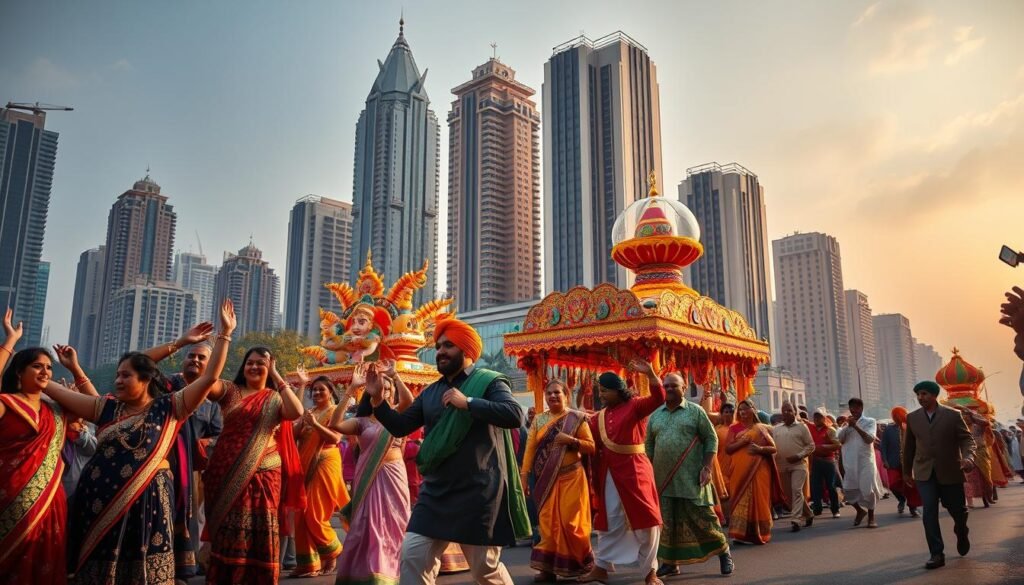
Indian Festivals are celebrated around the world, enriching global cultural exchange. In places like the United States, United Kingdom, United Arab Emirates, Canada, and Australia, communities hold public events. These events help keep traditions alive for second-generation families and welcome locals to join in.
Large public events serve as cultural ambassadors. Festivals like Diwali in Trafalgar Square and Holi in New York or Toronto attract tourists. They help strengthen ties between countries. Governments, cultural institutions, and companies often partner with community organizers to host these events.
Technology has made it easier to participate in festivals. Live streams, virtual pujas, and social media allow people to attend from anywhere. During the COVID-19 pandemic, many temples and gurdwaras streamed ceremonies, reaching viewers worldwide.
Cross-cultural celebrations create new traditions. Events like multicultural runs during Diwali and Indo-Western music collaborations blend different cultures. These events increase understanding but also raise questions about authenticity and the commercialization of rituals.
We present a concise comparison to help event planners, educators, and technologists weigh models for global festival programming.
| Aspect | Community Events | Large Public Festivals | Digital/Hybrid Models |
|---|---|---|---|
| Typical Venues | Temples, gurdwaras, community centers | Public squares, parks, city stages | Streaming platforms, virtual halls, apps |
| Audience | Local diaspora and families | Local public, tourists, diplomatic guests | Global viewers, remote participants |
| Main Benefits | Preserves Indian cultural festivities, teaches youth | Promotes tourism and soft power | Expands reach, offers access across time zones |
| Technical Needs | Basic AV, volunteer coordination | Event management, security, permits | Robust streaming, CDN, UX for multilingual audiences |
| Cultural Risks | Insular practices limiting outreach | Commodification and staged authenticity | Loss of tactile ritual meaning; monetization concerns |
| Best Use Case | Local cultural literacy and youth education | Diplomatic outreach and large-scale visibility | Inclusive participation when travel is limited |
For engineering educators, diaspora festivals offer practical examples. They show how scale, latency, and user design affect cultural engagement. By studying Indian Festivals abroad, we can design systems that honor ritual nuance while enabling worldwide participation.
Cross-cultural celebrations shape new traditions. They present opportunities to learn, to connect, and to build systems that sustain meaningful exchange.
The Future of Festivals in India
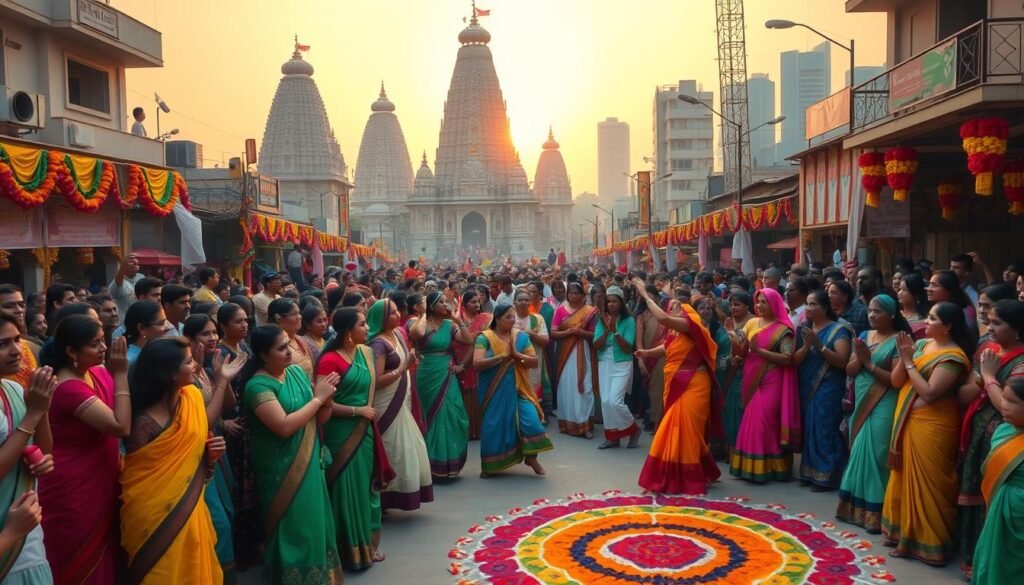
Indian Festivals are at a turning point, blending old traditions with new tech. Urban life and migration change how we celebrate. We look at ways to keep festivals alive and sustainable.
Now, festivals use digital tools to plan and share events. Ticketing and event software make things easier. Live streaming lets families far away join in.
Apps and online shops bring new ways to buy festive items. This connects buyers and makers in exciting ways.
Mobile payments like UPI make giving and buying faster. They cut down on cash and make things clearer for charities. This helps organizers plan better.
Green fireworks and rules about noise help the environment. These steps protect our air and health. Efforts to manage waste also help keep our planet clean.
Creating sustainable festivals is a new field. It combines tech, planning, and culture. Using green tech saves money and protects our planet.
It’s important to save our traditions before they disappear. Places like the Indira Gandhi National Centre for the Arts help by recording them. Workshops teach young people about these traditions.
Teaching festival studies in schools helps students understand their meaning. Digital archives help researchers and teachers. This keeps traditions alive for future generations.
How we celebrate is changing, with more community events and corporate sponsorships. Inviting local people to help plan festivals keeps things real. This way, we honor our traditions while moving forward.
We need everyone to work together: tech experts, policymakers, teachers, and culture keepers. We should focus on digital archives, green tech, and teaching about festivals and culture.
Here’s a quick look at new practices and their benefits for keeping festivals alive and sustainable.
| Practice | What It Does | Benefits |
|---|---|---|
| Digital ticketing & event platforms | Automates bookings, capacity limits, and payments | Improves safety, revenue tracking, and access for remote audiences |
| Live streaming & AR experiences | Delivers rituals and interactive elements to online viewers | Expands reach, supports diaspora participation, and boosts artisan sales |
| Green fireworks & waste management | Reduces air and noise pollution; manages festival waste | Protects public health and environment; aligns with national cleanliness goals |
| Digital archives & educational programs | Documents rituals, songs, and craft techniques | Ensures knowledge transfer, supports research, and aids cultural policy |
| Community-led participatory design | Engages locals in planning and adaptation | Maintains authenticity while embracing modern celebrations |
Conclusion: Embracing the Spirit of Indian Festivals
Indian Festivals are more than just celebrations. They are where religion, nature, economy, and feelings come together. These events bring people together, boost local businesses, and share knowledge from one generation to the next.
With about 1,000 festivals each year, India’s festivals show both national and local traditions. From big Diwali celebrations in cities to harvest festivals in villages, each one is unique.
We encourage engineers, teachers, and students to explore these festivals with curiosity. Look at how people move, energy use, and logistics as real-life examples. By documenting rituals and designing better solutions, we can make these festivals more sustainable.
Festivals strengthen community ties and inspire new ideas. By studying festivals in our education and joining in local events, we can preserve traditions while embracing new technologies. Let’s work together to keep the joy of festivals alive, supporting both tradition and innovation in India.