



Did you know that data center construction drove 94% of nonresidential construction growth in 2024? This has sparked a big need for MEP expertise in digital projects.
We are at a critical moment for MEP engineering jobs. Artificial intelligence is changing the game by moving routine tasks to more important work. As companies in India and around the world move to digital workflows, the future of MEP engineering will favor those who know both core skills and AI.
Our goal is to change how we learn and grow in technical careers. We will show how automation, predictive maintenance, and energy optimization are creating new roles. We will also give you practical advice on how to get ready for careers in MEP Engineering and AI.
Look for a detailed guide on new job types, training, certifications, and examples of AI working with humans. We write for engineers, students, and teachers who want to build strong careers in a fast-changing AEC world.
Understanding MEP Engineering: An Overview
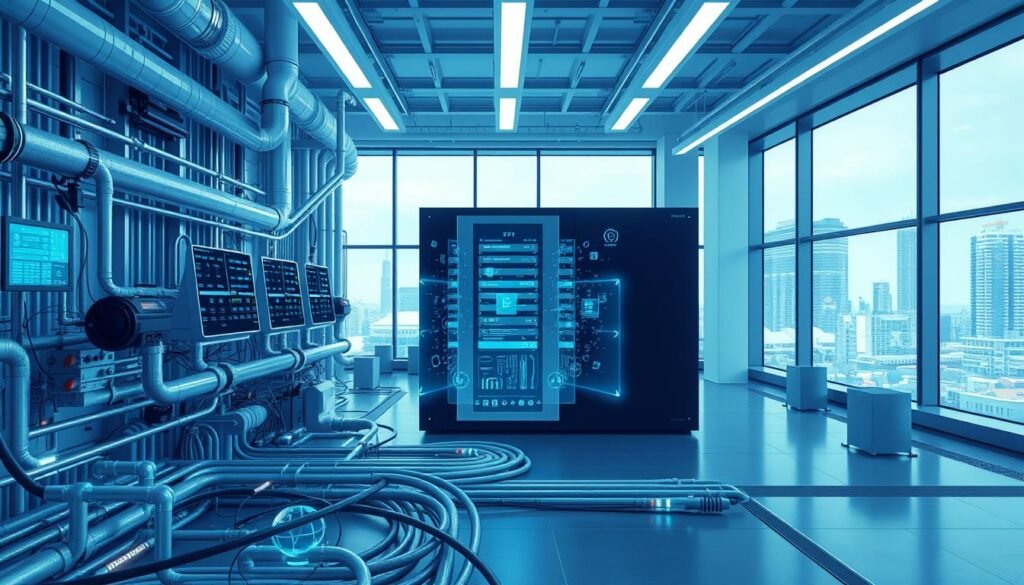
We dive into how mechanical, electrical, and plumbing systems work together in buildings. This overview covers the main roles, tools, and why they’re important. It also talks about how MEP engineering technology impacts design and creates new career paths.
What is MEP Engineering?
MEP stands for mechanical, electrical, and plumbing. These areas provide essential services in buildings. Mechanical handles HVAC systems and moves air and water for comfort. Electrical deals with power, lighting, and control systems for safety and function.
Plumbing focuses on water supply, drainage, and fire protection. These systems keep people and assets safe.
MEP work is both practical and technical. Designers plan and engineers check systems to meet codes and needs. This work connects construction teams and facilities managers.
The Importance of MEP in Construction
MEP systems are key to a building’s function and cost over time. They require careful planning, like routing ducts and pipes. In data centers, MEP systems set the project’s schedule and budget.
Collaboration among architects, MEP engineers, and project managers is vital. This teamwork reduces errors, speeds up projects, and boosts energy efficiency. Good MEP work saves money and supports green goals.
Key Disciplines Within MEP
MEP includes HVAC, power systems, lighting, electrical protection, plumbing, drainage, fire protection, and building automation. Each area has its own tools and standards. But, they all work together through digital models and shared data.
Building Information Modeling (BIM) is a key digital tool. It helps with clash detection, quantity takeoff, and sequencing. BIM also leads to AI-driven workflows that improve simulations and system optimization.
Traditional roles are evolving. HVAC designers use simulation automation, electrical engineers forecast loads with AI, and plumbing or fire-protection engineers use sensor data for predictive models. This change opens up more jobs and career paths in MEP engineering.
The Role of AI in MEP Engineering
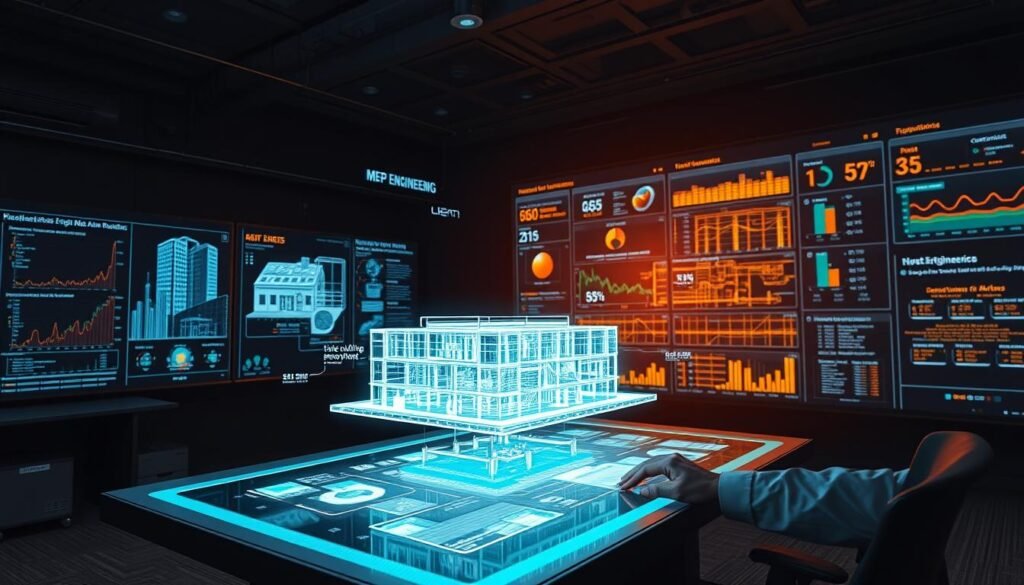
Artificial intelligence is now a part of MEP engineering, moving from lab tests to daily use. Small teams and big consultancies use tools that make work faster, reduce mistakes, and offer better value to clients. Starting to use new technology requires data work and change, but it can change how we work and save time.
Automation in Design and Drafting
Generative AI and machine learning speed up design and cut down on repetitive tasks. Autodesk has added AI to platforms like Forma to quickly come up with different design options. Nvidia’s work in 3D modeling makes it easier to check designs and find problems early.
This leads to quicker planning, following local rules, and fewer changes. Firms can move from billing by time to billing by value as they deliver more predictable results.
AI for Predictive Maintenance
Sensors and IoT send data to ML models to predict when things might break in HVAC, pumps, and more. This means less unexpected downtime and lower maintenance costs.
Big clients like Microsoft and AWS need reliable power and cooling. Teams working on these projects can stand out by using predictive maintenance.
Optimizing Energy Efficiency with AI
AI helps control energy use by balancing loads, responding to demand, and adjusting systems in real-time. Talks at Minds and Machines showed how AI can improve MEP and structural systems.
These improvements lead to lower costs, better sustainability, and stronger pitches for green building certifications. AI is a key selling point for MEP engineering projects.
Adopters need to plan for data, model development, and training. Using a lump-sum model can cover these costs, allowing teams to use technology that saves money and improves performance over time.
How AI is Transforming MEP Career Paths

MEP Engineering Careers and AI are changing fast. Roles that used to focus on drawings now need data skills. This change opens up new paths for engineers who can work with both hands and computers.
Emerging job roles show this big change. Companies want MEP design engineers who use AI, BIM/AI specialists, and more. They need people who can analyze building performance, work on data-center systems, and predict maintenance needs.
Jobs in data centers are in high demand. Employers look for people who know both the field and digital tools. This mix helps win big projects and do them well.
The need for tech-savvy engineers is growing fast. Hiring managers want people who know BIM, cloud platforms, and data tools. They also need basic machine learning and digital teamwork skills.
Recruiters like Actalent look for resumes that show both field and software skills. This makes it easier to find jobs in data centers and other areas of MEP engineering.
Adaptability in the workforce is key. Engineers who can travel, learn new tools fast, and work with others get more work. This adaptability is a big plus.
Being able to move around and work on projects anywhere is an advantage. Companies that can find talent anywhere do better than those stuck in one place. This opens up more opportunities for engineers in the AI era.
To succeed, you need to mix trade skills, leadership, and digital skills. This mix helps win projects, meet deadlines, and do great work. It’s all about being versatile and skilled in today’s projects.
Education and Training for MEP Engineers
We show you how to get ready for today’s building services. Training mixes basic engineering with digital tools. This way, both new and experienced engineers can find jobs in MEP engineering in India and worldwide.
Essential Skills in the Age of AI
It’s important to have both technical and soft skills. Learn HVAC, electrical, and plumbing well to be trusted on projects.
Get good at BIM and Revit for jobs that need coordinated models. Also, learn data analytics and basic machine learning to understand sensor data and improve systems.
Know about control systems, SCADA, and cloud platforms. Python is useful for automating tasks and integrating technology into work.
Good communication is key for working with different teams. Keep learning with short courses, workshops, and on-the-job training to stay up-to-date.
Top Programs for MEP Engineering
Combine accredited degrees with certificate courses. In India, study mechanical or electrical engineering at places like IITs, NITs, or private universities with building services courses.
Take platform courses like Autodesk for Revit and BIM, and Coursera or edX for data and ML. Also, learn from Siemens or Schneider Electric on building automation.
Go to events like Minds and Machines to see AI in action. Short courses in building performance simulation prepare you for MEP engineering technology roles.
Certifications to Boost Your Career
We list certifications that make you stand out. Autodesk Revit and BIM certificates show you can model well.
Certified Energy Manager (CEM) and Building Performance Institute credentials show you know about energy efficiency. Vendor certifications from Siemens and Schneider Electric prove your skills in building automation.
Data and cloud certifications from IBM or Google Cloud are great for data-center roles and analytics-driven jobs. These certifications are valuable for employers who focus on efficiency.
We summarize key pathways in the table below so teams can compare options and plan training investments.
| Learning Path | Core Components | Best For |
|---|---|---|
| Formal Degree + Electives | BTech/BE in Mechanical or Electrical, electives in building services, project work | Entry-level MEP engineering jobs at consultancies and contractors |
| BIM and Design Courses | Autodesk Revit, clash detection, BIM execution planning | Modeling roles, coordination leads, small‑to‑large project teams |
| Automation & Controls | SCADA, PLCs, vendor training (Siemens, Schneider Electric) | Building automation engineers and facility managers |
| Data & AI Short Courses | Python, data analytics, ML basics, cloud platforms (IBM/Google) | Performance analysts, smart building roles, advanced MEP engineering technology positions |
| Energy & Performance Certifications | CEM, BPI or equivalent, building simulation tools | Energy auditors, sustainability leads, bid teams for high‑performance projects |
The Impact of AI on Job Security in MEP
We look at how artificial intelligence changes work in mechanical, electrical, and plumbing fields in India. Routine tasks like drafting and design checks can now be automated. Yet, new technical roles and projects are creating more demand. Our goal is to give engineers the insight they need to move forward confidently.
Job Displacement vs. Job Creation
AI takes over tasks like drafting and design checks. Studies show up to a third of design tasks can be automated. This means fewer jobs for tasks that are now automated.
But, there’s a flip side. Companies are now hiring for roles like data analysts and digital twin engineers. The growth in data centers and energy retrofit projects is also creating new job opportunities. This changes the job landscape in MEP engineering, not eliminating it.
How AI Complements Human Workers
AI frees up time for tasks that require human skills. Engineers can focus on complex problem-solving and client interaction. They can also oversee autonomous systems and coordinate across disciplines.
Business models play a role too. ACEC research shows that hourly billing can hurt firm revenue when efficiency increases. On the other hand, value-based contracts reward innovation and encourage the use of tools that enhance staff capabilities. This dynamic is driving the adoption of AI in MEP engineering careers.
Future-Proofing Your Career
To stay relevant, learn digital design tools and improve your data skills. Consider earning certifications and gaining experience in areas like data centers and energy-efficient buildings.
Network with specialist recruiters and join teams that use digital twins. Developing mobility and interdisciplinary skills can open up more opportunities. Companies need to re-skill their staff and adopt incentive-based delivery to benefit their employees.
| Area | Risk or Opportunity | Action |
|---|---|---|
| Drafting and Repetition | Risk: automation reduces manual tasks | Upskill in parametric design and BIM management |
| Digital Twin and Analytics | Opportunity: new specialist roles | Learn sensor data analysis and digital twin platforms |
| Project Delivery Models | Opportunity: value-based contracts reward innovation | Advocate for lump-sum or performance contracts internally |
| High-Demand Sectors | Opportunity: data centers, retrofits, sustainability | Gain experience on energy-efficient and mission-critical projects |
| Career Resilience | Both: changing skills mix | Pursue certifications, continuous learning and cross-discipline work |
Networking Opportunities in MEP Engineering

We need networks to find jobs in engineering. Good connections lead us to MEP engineering jobs and show us AI uses in MEP engineering. Being active helps us find jobs in MEP engineering in India and worldwide.
Being part of a professional group has many benefits. You get access to standards, training, and job listings. Groups like ASHRAE and ISHRAE are great. They offer mentorship, education, and recruiter contacts.
Practical tip: Keep your profile updated and join committees. This makes you visible for project roles and jobs.
Conferences and workshops are where tools meet practice. Autodesk, Siemens, and Schneider events show AI in MEP engineering. You can learn about design automation, energy saving, and construction robots.
Plan your visits to sessions and booths. Short sessions and clinics give you practical skills for your resume and projects.
Online groups and podcasts are also useful. LinkedIn groups and engineering podcasts share job leads and strategies. GitHub has scripts and tools for AI in MEP engineering.
Staffing partners and recruiters help find jobs. Companies like Actalent connect you to teams for data-center and campus projects. This increases your chances of finding flexible jobs in MEP engineering.
| Channel | What to Expect | How It Helps Your Career |
|---|---|---|
| Professional Associations (ASHRAE, ISHRAE) | Standards, certifications, local chapters, mentoring | Access to vetted MEP engineering jobs and continuing education |
| Conferences & Vendor Events (Autodesk, Siemens) | Product demos, AI workshops, networking lounges | Hands-on exposure to AI applications in MEP engineering and recruiter contacts |
| Online Groups & GitHub | Case studies, code, peer review, discussion threads | Practical examples for resumes; faster skill adoption for career opportunities in MEP engineering |
| Podcasts & Webinars | Interviews, project retrospectives, career advice | Insights into evolving job roles and interview talking points for MEP engineering jobs |
| Recruiters & Staffing Partners (Actalent) | Project placement, contract roles, talent pools | Pathway to field assignments and travel-ready positions that build experience |
Try to attend one event every quarter, join two associations, and work on one online project. This keeps your skills sharp, expands your network, and shows your skills with AI in MEP engineering. This way, more job opportunities in MEP engineering will be within reach.
Case Studies: AI in Real-World MEP Projects

We share short stories that show AI’s move from labs to daily MEP work. These stories highlight gains, challenges, and future directions for MEP engineering.
Successful implementations of AI
Autodesk Forma helps with early planning to create site and massing options quickly. Teams in India and abroad saw faster client approvals and better coordination with architects.
NVIDIA’s 3D modeling research sped up clash detection and cut rework in complex rooms. Teams saw better schedules on high-rise and data center projects.
AI systems cut energy use in buildings by tuning sequences and setpoints. Data centers used predictive maintenance to lower outages and extend equipment life.
Lessons learned from AI integration
Good data and reliable sensors are key for success. Projects without them saw little gain, even with advanced algorithms.
Working together is vital. Architects, MEP engineers, BIM managers, and project managers must collaborate. Where they did, AI tools showed real value.
Clear contracts and funding for tech are needed. Teams that rolled out AI in phases and set clear goals avoided problems.
Future trends in project design
Digital twins are coming for lifecycle management. They link sensor data with simulations to predict system behavior.
Generative design will change layouts for HVAC, plumbing, and electrical. It will save materials and improve performance.
AI will make proposal generation and project management easier. Robotics and autonomous tools will handle site tasks, improving safety and speed.
| Case | AI Focus | Key Benefit | Implementation Note |
|---|---|---|---|
| Autodesk Forma trials | Early-stage massing and option generation | Faster client decisions, better scheme comparison | Works best with architect plus MEP input from day one |
| NVIDIA 3D modeling R&D | Automated 3D modeling and clash detection | Reduced rework, improved schedule adherence | Requires consistent BIM standards and templates |
| Energy optimization systems | Sequence tuning and dynamic setpoints | Lower operational energy use and costs | Sensor density influences outcome; retrofit may need staged upgrades |
| Predictive maintenance in data centers | Fault prediction and service scheduling | Fewer unplanned outages, longer equipment life | Best with historical performance data and vendor collaboration |
Choosing projects and contract types affects AI funding and use. Complex projects might need custom models, not just lump-sum contracts.
These stories show AI’s role in MEP engineering and its growth. They guide us toward shaping the future of MEP engineering.
Industry Challenges with AI Integration
Bringing AI into mechanical, electrical, and plumbing work comes with cultural, technical, and ethical hurdles. Legacy practices and fee models can slow down adoption. ACEC research shows that time-based billing can be a barrier, as teams have less incentive to automate.
Firms that switch to value-based contracting have more room to experiment and invest in new tools.
Resistance to Change in Traditional Practices
Many engineering offices stick to familiar processes and paper-to-digital workflows. Senior leaders might be hesitant to change these habits. Without clear incentives, adoption can stall.
We suggest leaders start with bundled, lump-sum projects to test AI-driven design. This helps align client expectations with efficiencies.
Skills Gap in the Current Workforce
There’s a notable skills gap in MEP engineering. Firms need professionals who know both hands-on trade skills and BIM, cloud platforms, machine learning, and data analytics. This shortage is sharp in data-center hubs, where demand for travel-ready, digitally fluent engineers outstrips supply.
Companies without national talent strategies struggle to staff remote sites and meet schedules. Practical steps include investing in training partnerships, creating workforce dashboards, and working with specialist recruiters.
Addressing Ethical Considerations
AI systems handle sensitive building data and control networks for HVAC, lighting, and security. We must build robust cybersecurity for IoT sensors and management systems to protect privacy and safety. Automation reshapes job classifications and project pricing; firms should plan transparent workforce transitions and retraining pathways.
| Challenge | Immediate Risk | Action We Recommend |
|---|---|---|
| Legacy fee structures | Incentivizes hourly work; slows AI adoption | Shift to value-based contracts and pilot lump-sum projects |
| skills gap in MEP engineering | Staff shortages at remote and high-demand sites | Build training pipelines, use workforce dashboards, partner with recruiters |
| Cybersecurity and privacy | Data breaches, operational risk | Harden IoT, encrypt telemetry, adopt secure cloud practices |
| Workforce displacement concerns | Lower morale, legal and social impacts | Create retraining programs and transparent role transition plans |
| Vendor lock-in and interoperability | Reduced flexibility, higher costs long-term | Favor open standards, require data portability in contracts |
We support ethical AI in construction by embedding governance into procurement and design. Clear policies, privacy impact assessments, and security requirements protect clients and workers. Combining value-based contracts with targeted training shrinks the skills gap in MEP engineering. This creates sustainable careers that serve firms, clients, and communities.
The Future of Collaboration in MEP Teams

We’re moving from separate tasks to a team effort in MEP. This change relies on new MEP engineering technology. It makes models that everyone can work on and update together.
Cross-Disciplinary Collaboration
Now, architects, civil teams, and MEP designers work together on the same project. When changes are made, like to the HVAC system, the whole team sees updates right away. This is key for complex projects like data centers.
It’s important to catch problems early. Teams that work together and use common standards can avoid mistakes and finish projects faster.
Remote Collaboration Tools and AI
Cloud platforms from Autodesk and others help teams work together from anywhere. AI tools help find problems, suggest improvements, and keep track of work.
These tools make it easier to solve issues and try new ideas. They help teams work faster and with more confidence.
Building Resilient Team Dynamics
Great teams mix people with field experience and those who are good with data. Leaders need to encourage open communication and training. They should also find consultants who are ready to travel.
Teams that work well together can handle projects from anywhere. They achieve better results, work faster, and adapt to new technology and AI.
Incentives for Embracing AI in MEP Engineering
Adopting AI in MEP engineering is a smart move for teams and firms. Small tests lead to big changes when they show real benefits. These include faster work, fewer mistakes, and clearer goals for being green.
Cost Savings and Efficiency Gains
AI automates simple tasks, saving time and reducing mistakes. It also makes designs better and checks them for errors. Plus, it predicts when systems might fail, avoiding big problems.
A study by the American Council of Engineering Companies shows a shift to value-based contracts. This change makes investing in tools that boost productivity more appealing. It proves that using AI can save money when results are tracked.
Enhanced Project Outcomes
AI helps projects run smoother by reducing conflicts and speeding up reviews. For urgent projects like data centers, this means less delay and better timing.
Happy clients are more likely when projects meet their expectations. AI helps teams work better together, leading to better results and stronger bids.
Sustainability Benefits
AI optimizes energy use and models a building’s life cycle. This reduces energy costs and carbon emissions. It helps meet green goals without losing performance.
Long-term, energy savings boost a building’s value. When these savings are measured, investing in AI and training is easier to justify. Being green becomes a way to win more profitable work.
The Global Perspective on MEP and AI
We look at how AI changes MEP practices worldwide and its impact on careers in India. We explore adoption rates, workforce differences, and the global competition in MEP jobs. This information helps you align your skills and your firm’s strategy with international demands.
Trends in Other Countries
In North America and parts of Europe, AI is quickly becoming part of MEP design. Companies like Autodesk and Nvidia lead the way with new software and hardware. Countries investing in cloud and data centers adopt AI faster.
Every market has its own approach to AI. Some firms start with predictive maintenance and generative design. Large contractors test new digital delivery models. These examples guide others.
Comparing the U.S. Workforce Landscape
The U.S. has a well-established AI ecosystem. It’s home to thousands of AI startups and strong vendor support. ACEC research and conference reports show advanced AI use and new contract terms.
This maturity means a high demand for engineers skilled in BIM, cloud platforms, and collaboration. The U.S. sees early adoption of automation and high expectations for technical skills.
How Global Competition Affects Careers
Global competition in MEP jobs pushes for better technical skills and role flexibility. Engineers in India who learn AI, BIM, and cloud collaboration can get remote design jobs. They can work on projects worldwide.
Firms that focus on digital capabilities attract work from data centers and global clients. Adopting international training, contracts, and collaboration practices helps professionals and firms compete for top projects. This trend links MEP Engineering Careers and AI to a global market where skills, speed, and interoperability matter.
Preparing for the Future: Steps to Take Now
The future of MEP engineering is changing quickly. Taking action now can help build strong careers. Start by making a learning plan. Take courses in BIM/Revit, energy modeling, and Python for engineers.
Also, get certifications like Autodesk Certified Professional and Certified Energy Manager (CEM). Gain experience in data-center or power-intensive projects. This will help you become an expert in your field.
Stay updated with technology trends and vendor news. Follow Autodesk and Nvidia, and go to conferences like Minds and Machines. Listen to podcasts like Engineering Management Institute. Also, subscribe to market analytics and workforce dashboards.
This will help you understand changes in MEP engineering jobs and salaries in India and worldwide.
Building a strong professional identity is key. Share your projects and skills on LinkedIn. Publish summaries of your AI-enabled MEP work. Join open-source toolsets or communities.
Network with recruiters for data-center roles. Companies like Actalent can help you find jobs that mix field and digital work.
Here’s a checklist for you: adopt value-driven delivery, learn across disciplines, be ready to move for data-center jobs, and mix field and digital skills. These steps will help you succeed in MEP Engineering Careers and AI. You’ll find better jobs and shape the future of MEP engineering with confidence.