

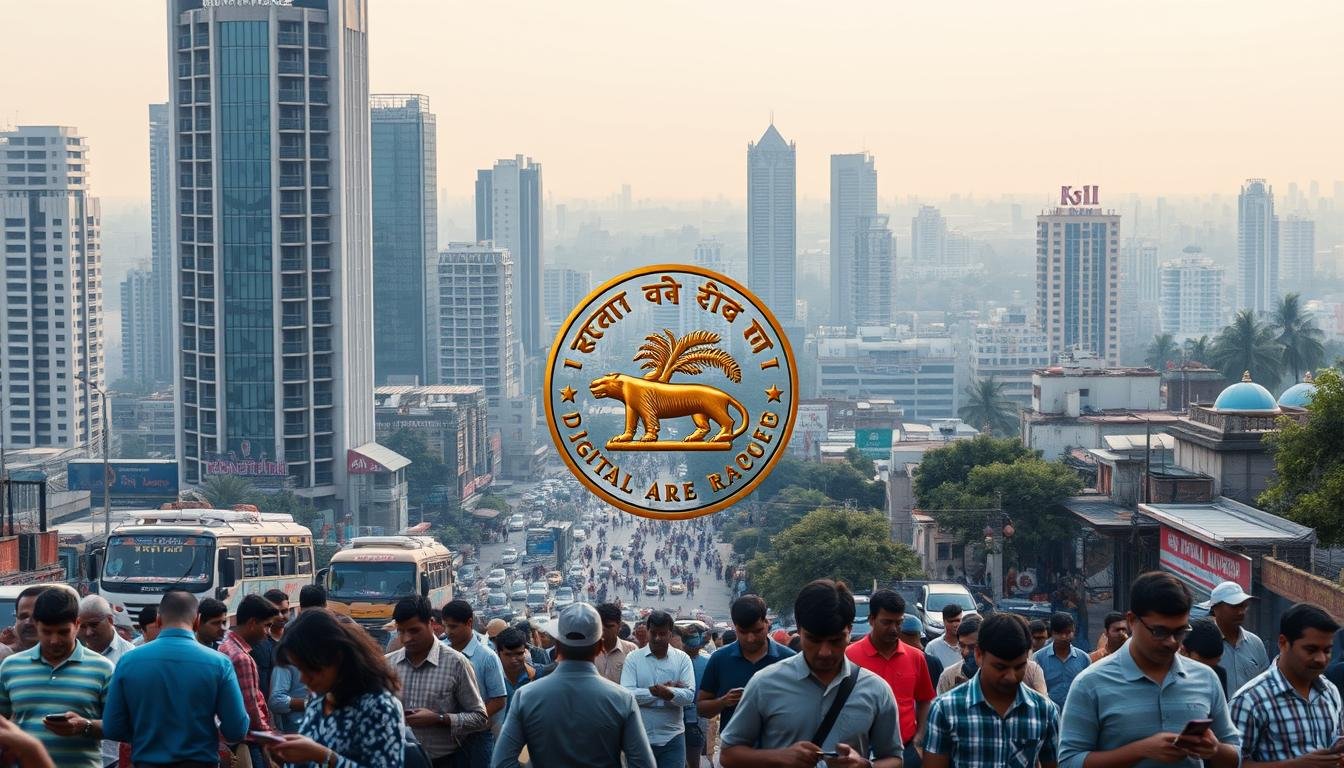
Did you know nearly 80% of Indian consumers use digital payments? This shows how ready India is for the RBI Digital Rupee Expansion, which has now reached 10 new cities. The RBI has launched the Digital Rupee in ten new cities. This is more than just an expansion; it’s a big change in how we use money.
This move fits perfectly with our plans for fintech in 2025. We want cashless transactions to be a big part of our economy.
The RBI Digital Rupee is a big moment for India. It’s where old money meets new tech. This move could make our economy more efficient and easy to use.
It will also help more people use digital payments. This change will make our financial world better, making it easier for everyone to go cashless.
Introduction to the RBI Digital Rupee
The RBI digital rupee is India’s official Central Bank Digital Currency (CBDC). It’s not just a digital version of the Rupee. It’s managed by the Reserve Bank of India, making it secure and stable.
Unlike cryptocurrencies, the Digital Rupee is backed by the government. This builds trust among users.
This digital currency aims to change the financial world. It makes transactions smoother and helps more people access money. We’ll look at how the RBI digital rupee works in India and fits into global trends.
Using the RBI digital rupee could change how we pay for things. It could make payments faster and more accessible for everyone. This technology is a step towards a more innovative and efficient economy.
Reasons Behind RBI’s Expansion of Digital Rupee
The RBI digital rupee is now in more cities. This move is to make digital payments better in India. It aims to solve problems with old cash systems.
It wants to cut down on fake money and the cost of handling cash. This is a big goal for the RBI.
Financial inclusion is key here. The RBI digital rupee makes banking and digital payments easier for all. It helps people who were left out before.
It makes it easier for everyone to join the financial world. This is a big step forward.
New tech is driving this change to digital currency. New payment systems and tech make transactions smoother. People want the ease and safety of digital payments more and more.
In short, using digital currency puts India at the forefront of fintech. It helps the economy grow and makes financial work more efficient.

RBI Digital Rupee Expansion: Key Features and Benefits
The RBI digital rupee brings new features and benefits to India. It offers better security and a better user experience. These changes will greatly improve our financial system.
Security Enhancements for Transactions
The RBI digital rupee has top-notch security for transactions. It uses advanced tech like blockchain to keep data safe. This makes users feel secure and stops fraud.
This secure system helps make digital payments reliable. It’s good for both people and businesses.
User Experience Improvements
The RBI digital rupee focuses on making it easy to use. It has simple interfaces that are easy to understand. This lets everyone use it, no matter their tech skills.
It also works well with other financial systems. This makes it easy to start using it in daily life.
Impact on Digital Payments in India
The RBI Digital Rupee is set to change digital payments in India. It aims to make transactions faster and cheaper. This will likely lead to more people using electronic payments in different areas.
Businesses of all sizes will benefit from this financial technology innovation. They will save money on handling cash. This means they can focus more on improving customer service.
People will want to use faster and safer ways to pay. The impact of digital currency will be huge. It will change many industries.
Businesses that quickly adapt to this change will lead India’s economic growth. They will be at the forefront of the new digital payment era.

10 New Cities Welcoming the Digital Rupee
The RBI digital rupee is now in ten new cities. This is a big step for digital payments in India. These cities were chosen for their strong economy and tech. They will see big changes in their money systems.
Highlights of Each City
| City | Economic Significance | Technological Readiness | Projected Impact on Digital Payments |
|---|---|---|---|
| Bangalore | Tech Hub | High | Increased digital adoption |
| Pune | Industrial Center | Moderate | Stimulated growth in e-commerce |
| Hyderabad | IT Capital | Very High | Enhanced payment security |
| Chennai | Manufacturing Hub | High | Broader marketplace for services |
| Ahmedabad | Commercial Center | Moderate | Increased consumer confidence |
| Delhi | National Capital | High | Boost in financial inclusiveness |
| Kolkata | Cultural Metropolis | Moderate | Tradition meets technology |
| Jaipur | Tourism Hub | Low/Moderate | Innovation in tourist transactions |
| Surat | Trade City | Moderate | Advancement in local commerce |
| Nashik | Wine Capital | Low | Local businesses transition to digital |
Cultural Fit for Digital Currency
Each city has its own feelings about the RBI digital rupee. This is because of local government support and tech. Digital solutions help communities use money better and keep up with the times.
As cities start using the RBI digital rupee, they’re setting up for a bright future in digital payments.
Future of Fintech in India Post-Expansion
The RBI’s Digital Rupee is a big step for fintech in India 2025. It will change how we do business. Companies will use digital currency to make new ways of working.
This change will help create new business ideas. These ideas will fit well with the future of digital payments.
Many areas will get better, including:
- Smart Contracts: These use blockchain to make deals safer and faster.
- AI-Driven Financial Services: AI will help give customers what they need, making money choices better.
- Enhanced Payment Gateways: The Digital Rupee will make paying easier and safer, making everyone happier.
These new techs will make services better and make customers happier. As fintech grows, India will lead in finance.

Challenges Facing the Digital Rupee Adoption
The journey to make the Digital Rupee widely accepted is tough. We face two big hurdles: the need for better technology and more education about digital money.
Technological Infrastructure Issues
Good technology is key for the Digital Rupee to work well. But, many places in India don’t have fast internet or modern devices. This makes using digital money hard and annoying for people.
To fix this, we need to spend a lot on updating technology. Working together with private companies can help speed up these upgrades. This will make digital payments strong and reliable.
Public Awareness and Education
Many people don’t know how the Digital Rupee works or why it’s good. This lack of knowledge makes it hard for them to use digital payments. We need to teach more about digital money to build trust.
Creating a society that understands digital money is important. We must help people get ready for these new ways of paying.
Comparing RBI Digital Rupee with Other Digital Currencies
The world of digital money is changing fast. It’s important to compare digital currencies to see how the RBI Digital Rupee stacks up against Bitcoin and Ethereum. The RBI digital rupee has its own rules, use, and tech.
The RBI Digital Rupee follows Indian laws closely. This is different from Bitcoin and Ethereum, which don’t have one rule to follow. The RBI Digital Rupee is made for safety and stability, fitting India’s economic needs.
The RBI Digital Rupee is designed to work well with current financial systems. This makes it key for India’s digital payment plans. On the other hand, Bitcoin and Ethereum are more for investing or for direct person-to-person deals. This shows how the RBI Digital Rupee meets India’s money needs.
| Aspect | RBI Digital Rupee | Bitcoin | Ethereum |
|---|---|---|---|
| Regulatory Framework | Government-backed | Decentralized | Decentralized |
| Tecnology | Stable and secure | Blockchain-based | Smart contracts enabled |
| Usage Scenario | Everyday transactions | Speculation | Decentralized applications |
| Volatility | Low | High | Moderate |
| Integration with Existing Systems | Seamless | Challenging | Moderate |
This look at RBI digital rupee vs. cryptocurrencies shows their unique benefits. Knowing these differences is key for everyone in the digital money world.
How the Digital Rupee Aligns with Fintech India 2025
The Digital Rupee marks a big step for India’s finance. It fits right into the fintech India 2025 plan. This digital money makes transactions faster and helps more people get financial services.
The Digital Rupee aims to make payments easy for everyone. It helps both city folks and those in rural areas. This makes it a big help for digital payments to grow and cut down on cash use.
The Digital Rupee is key to India’s goal of becoming a $5 trillion economy. It also boosts fintech innovation. The Reserve Bank of India and fintech companies working together will lead to better and safer digital payments.
The Digital Rupee is part of a big plan to change how we pay. It shows a strong partnership between rules and tech companies. This partnership is helping India aim to be a fintech leader by 2025.
What This Means for Consumers and Businesses
The RBI Digital Rupee is changing things for people and companies in India. Digital money is getting more popular, showing its benefits in many areas. People will see the good sides of quicker, safer money moves.
Businesses, like online shops and stores, will get better with new tech from this change.
Opportunities for E-Commerce and Retail
The Digital Rupee opens big chances for online shopping and stores. As more people use digital money, shops can make payments smoother. This makes shopping better and safer.
With new features like digital wallets, stores can keep customers coming back.
Benefits for Small and Medium Enterprises
Small and medium businesses (SMEs) will really gain from digital money. The Digital Rupee means lower fees than banks. This helps SMEs manage money better and work more efficiently.

| Aspect | Benefits for Consumers | Benefits for Businesses |
|---|---|---|
| Transaction Speed | Instant payment processing, improving user experience | Faster cash flow, better sales cycle |
| Cost Efficiency | Less fees on transactions | Lower costs, higher profits |
| Security | Strong encryption, less fraud risk | More trust and safety for customers |
| Loyalty Programs | Special offers and rewards | Keep customers, increase sales |
The Regulatory Framework Surrounding Digital Rupee
The rules around the Digital Rupee are key for its success. It’s not just about the RBI’s policies. It’s also about the laws that affect everyone involved. These rules help keep transactions safe and stop bad use while encouraging new ideas.
The RBI has strict rules for digital money. Companies wanting to use the digital rupee must follow these rules. They focus on stopping money laundering and protecting users, making sure everything is safe.
The rules also affect the whole economy. They change how banks and people deal with digital money. The RBI tries to balance new ideas with keeping things safe, helping fintech grow.
| Aspect | Description |
|---|---|
| Compliance Requirements | Businesses must follow strict AML and KYC policies to use the digital rupee. |
| Consumer Protections | The rules include ways to protect users and keep transactions safe. |
| Economic Impact | Rules shape how banks and digital money interact, affecting the market. |
The Global Perspective on Central Bank Digital Currencies (CBDCs)
Looking at the RBI Digital Rupee, it’s key to know about global CBDC trends. Countries like China, the European Union, and the United States are leading in digital currency projects. China’s digital yuan is in its pilot phase, showing us how to do it right.
These global efforts teach us a lot about making the digital rupee work. They show us the need for strong tech and rules to face challenges. Seeing how others solve problems helps us learn about managing risks and keeping users happy.
Seeing the RBI Digital Rupee in a global light helps us understand better. It also makes India a stronger player in world finance. By using these lessons, we can make digital currency better and keep India leading in finance.