



We often think of Rama and Krishna, Arjuna and Sita. But Indian Mythology is full of quieter figures. They make big choices that shape stories.
Just like in engineering, the small parts are key. They handle stress and keep things working. In the Mahabharata and Ramayana, characters like Urmila and Vikarna play these roles. They show us the importance of sacrifice and duty.
We want to highlight these lesser-known characters. We’ll look at their stories with the same care as engineering reviews. We’ll explore their roles and how they fit into the bigger picture.
By learning about these characters, we gain a deeper understanding of stories. We find lessons on leadership and staying strong. For more information, email info@indiavibes.today.
Introduction to Indian Mythology
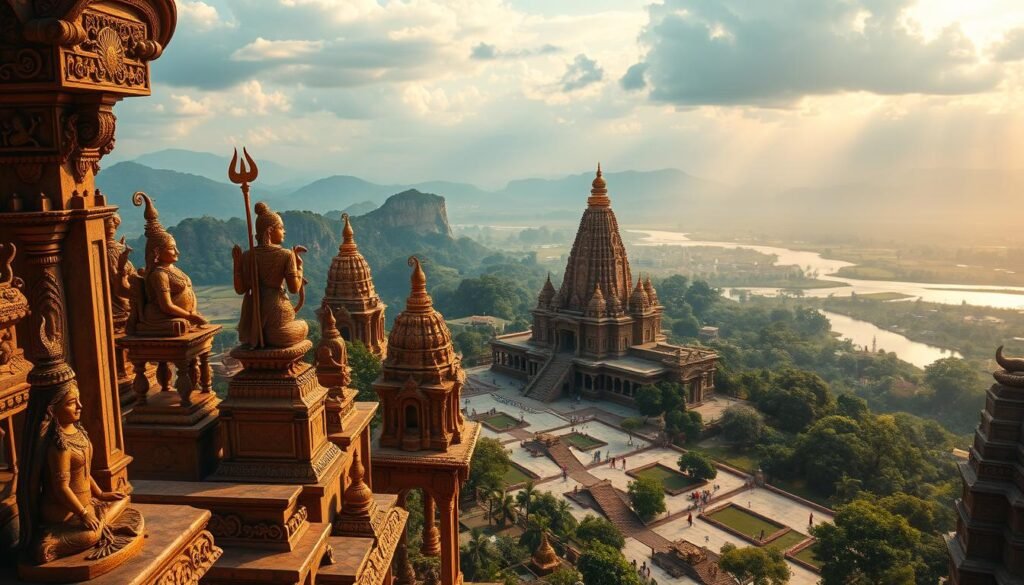
Indian Mythology is a living treasure that creates meaning over time. It includes ritual texts, epic poems, and philosophical discussions. These layers help us understand ethics and society.
The Rich Tapestry of Stories
Vedic Literature is the foundation. It contains hymns, rituals, and the universe’s creation. These texts influence the Indian Epics.
The Ramayana and Mahabharata are filled with stories. They have big themes and many characters. These characters teach us about right and wrong.
Ancient Indian Tales blend stories and wisdom. They teach us about duty and choice. These tales are useful for teaching and storytelling.
Importance in Indian Culture
Mythological Stories guide rituals, theater, and values. They teach us about leadership, duty, and moral questions. They are used in schools and communities.
Studies on Vedic Literature show women like Gargi debating philosophy. This changes how we see history. It helps us create better learning materials.
For teachers and creators, Ancient Indian Tales are guides. They show how stories teach us about society. They help us understand norms and conflict.
| Source Layer | Primary Content | Typical Use |
|---|---|---|
| Vedic Literature | Hymns, rituals, early cosmology | Religious practice, foundational cosmology |
| Itihasas (Ramayana, Mahabharata) | Epic narratives, hero cycles, legal and ethical dilemmas | Moral instruction, narrative case studies |
| Puranas & Folklore | Local legends, genealogies, devotional tales | Cultural cohesion, regional performance arts |
| Scholarly Interpretation | Historical context, gender studies, comparative analysis | Curriculum design, interdisciplinary research |
The Concept of Unsung Heroes

We look at how unknown figures change big outcomes. In Indian Mythology, many Mythological Characters and Deities work quietly to help big moments happen. They show us the value of duty, sacrifice, and leadership that often gets overlooked.
Definitions and Examples
Unsung Heroes are those who help through support, advice, or making tough choices. They keep stories going and help the main characters shine.
In Indian Mythology, Urmila kept watch for Lakshmana from home. Vikarna stood out as the only Kaurava who spoke for justice. Yuyutsu chose right over family in the Kurukshetra war. Vrishaketu kept family ties alive after the war. Kripacharya lived to guide the next generation.
Women like Sabari, Mandodari, and Hidimbi also show strength, but their stories are often left out.
Importance of Recognizing Unsung Figures
By recognizing these characters, we break down simple hero-villain lines. They show us the complexity of right and wrong and the support systems that let heroes shine. These stories are like the hidden parts of a building that keep it stable.
Learning from these examples teaches us about sacrifice, resilience, and standing up for what’s right. They help us see the importance of teamwork and moral courage. We can use these lessons in education, storytelling, and teaching ethics to show the value of working together and doing what’s right.
Ghatotkacha: The Mighty Son of Bhima

We dive into a key figure in Mythological Characters who shifts the balance in the Mahabharata. Ghatotkacha blends brute strength with clever tactics, standing out in Indian Epics and Mythological Stories. We aim to highlight his role and the qualities that make his story vital for understanding the Kurukshetra War.
His Role in the Mahabharata
Ghatotkacha, the son of Bhima and Hidimbi, fought for the Pandavas in the war. He was a master of night battles, using surprise and magic to disrupt the Kaurava lines. His tactics drew Karna’s attention, changing the enemy’s plans during critical nights.
Unique Abilities and Traits
Ghatotkacha could change his size and shape, perfect for night warfare. He combined superhuman strength with quick thinking: creating illusions, growing suddenly, and striking stealthily. These skills made Karna use the Vasava Shakti, a powerful celestial missile, to defeat him.
This battle had a big impact on the Pandavas in the Mahabharata. By making Karna use his last powerful weapon on Ghatotkacha, the Pandavas got a significant advantage. This shows how a lesser-known figure in Mythological Stories can greatly help his allies.
We see Ghatotkacha as a lesson in tactical sacrifice in Indian Epics. His story encourages us to think about bravery, duty, and the complex decisions of war among Mythological Characters.
Savitri: The Daring Wife

We take a closer look at a story that has shaped values in Indian Mythology. Savitri is known for her reason, courage, and steady actions. Her choices are compared to leadership and negotiation strategies in engineering and education.
Her story starts with a prophecy: Satyavan would die young. Savitri married him despite this warning. She didn’t accept fate as unchangeable. Instead, she prepared, learned, and stayed with him, showing unwavering resolve.
The Story of Her Perseverance
Savitri followed Satyavan into the forest on the day of his death. When Yama, the god of death, arrived, she talked to him. Her approach was polite argument, moral reasoning, and strategic requests.
She won Yama’s respect through persistence and clarity. Each boon she asked for had a purpose: to secure Satyavan’s lineage, honor her family, and restore his life. Her tactic shows how steady persuasion can change high-stakes outcomes.
Significance in Indian Folklore
Savitri’s narrative is key in Ancient Indian Tales and Hindu Mythology. It shows female agency. Folklore uses her story to teach resilience and eloquence as tools of change. Communities invoke her name during rites and discussions about duty and moral courage.
For educators and technologists, her story offers a practical analogy. Systems recovery relies on persistent, well-framed interventions, not brute force. Savitri models negotiation under constraints—a useful lesson for design, conflict resolution, and policy work.
| Aspect | What Savitri Demonstrates | Modern Analogy |
|---|---|---|
| Perseverance | Refused to accept her husband’s death without reasoned appeal | Iterative problem solving with stakeholder buy-in |
| Eloquence | Used dialogue to alter divine judgment | Effective technical communication to influence decision-makers |
| Agency | Acted autonomously within social constraints | Leadership in teams where constraints limit options |
| Cultural Role | Symbol in Mythological Stories and Ancient Indian Tales | Case study in ethics courses and leadership training |
| Legacy | Embedded in Hindu Mythology as a moral exemplar | Inspiration for resilience frameworks in education and tech |
Karna: The Tragic Hero

Karna is a complex figure in Indian Mythology. His life is a mix of duty, identity, and loss. His story in the Mahabharata shows both kindness and tough choices.
People from engineering and leadership fields see parallels in his struggles. He faced dilemmas about loyalty and doing what’s right.
His Loyalty and Generosity
Karna was deeply loyal to Duryodhana. He accepted their friendship and kingship, despite being shunned by society. This loyalty led to difficult decisions that shaped his legacy.
He was also known for his generosity. Karna often gave away valuable things and favors. He even gave away his divine armor and earrings to keep a promise.
This generosity made him both admired and vulnerable. His noble qualities, like loyalty and charity, were tied to a flawed alliance. His secret birth as Kunti’s son added to the moral complexity of his story.
Contributions to the Kurukshetra War
Karna was an unmatched archer and strategist on the battlefield. His skills made the war more intense, forcing the Pandavas to change their tactics. His actions greatly influenced the Mahabharata.
His death was a turning point, helping the Pandavas gain the upper hand. After the war, his son Vrishaketu lived under Arjuna’s care. This showed a path to reconciliation and keeping family ties alive.
Karna’s story raises important questions for leaders and system designers. It asks when loyalty becomes a problem and how to balance personal relationships with broader responsibilities. These themes are as relevant today as they were in ancient times.
For a deeper look into Karna’s life and significance, check out this detailed article on Karna in the Mahabharata.
Ekalavya: The Devoted Student
We look at a key part of the Mahabharata that shows devotion, exclusion, and the price of being a master. Ekalavya is a character in Mythological Characters who shows us the deep cost of focusing too much on one thing. This makes us think about how we teach and learn.
His Sacrifice for Knowledge
Ekalavya was a tribal archer who couldn’t get formal lessons from Dronacharya. He made a clay figure of Drona and practiced hard every day. This self-teaching made him a top archer, even without official approval.
When Drona asked for guru dakshina, Ekalavya gave up his right thumb. This move took away his main skill. It also made people in Indian Mythology think about who gets to teach and who learns.
Legacy in Teaching and Learning
Ekalavya’s story is important for teachers and learners. It makes us think about who gets to learn and how we know if someone is good at something. It shows that learning outside of school can also lead to great skills.
This story makes us ask big questions. How do we know if someone is really good at something? What stops people from different backgrounds from showing their talents? What’s fair when someone asks a lot from a learner? These questions are important in today’s teaching and learning world.
We learn important lessons from Ekalavya. We should value real skills, make learning paths open to everyone, and rethink how we judge people. Ekalavya reminds us to look for talent in all kinds of places.
Draupadi: The Resilient Queen

Draupadi’s story in Indian Mythology is more than just a tale. It raises big questions about honor, power, and law. Her role in the Mahabharata changes the story’s moral focus.
Her journey is not just about personal loss. It’s a test of society and authority. One person challenges a system, sparking change on battlefields and in councils.
Her Role in the Mahabharata
Draupadi is a key figure in the Mahabharata. Married to the Pandavas, she speaks up in court and during exile. Her public shame in the Kaurava hall sets off the war at Kurukshetra.
She influences the Pandavas’ decisions and moral debates. Her fight for justice affects not just her but society. This shapes the epic’s direction.
Symbol of Strength and Justice
Draupadi is a symbol of strength and wisdom. She navigates a tough world, demanding accountability from leaders and wise men. Her voice guides her family and readers of Indian Mythology.
Compared to Mythological Deities, Draupadi is human yet powerful. She embodies Strength and Justice through her courage and actions. This prompts us to think about how systems handle injustice.
Vibhishana: The Righteous Brother

We look at a key figure from Indian Mythology who changed a kingdom and moral views. Vibhishana is Ravana’s brother in the Ramayana. He stands out as a voice of reason in chaos. His story makes us question what loyalty and duty really mean.
Vibhishana chose to leave his family for what he believed was right. He tried to warn Ravana about wrong actions, asking for compassion and Sita’s return. When his advice was ignored, he joined Rama. This choice lost him respect in Lanka but brought him closer to justice and Dharma.
His story is like that of modern whistleblowers. They face similar challenges when they speak out against wrongdoings. Vibhishana’s journey shows that standing up to power can be hard but is sometimes necessary to restore honor.
His Choice Between Family and Dharma
Vibhishana had to choose between family loyalty and doing what was morally right. He chose Dharma. He left Ravana’s court, joined Rama, and helped during the war. His actions turned the conflict into a fight between good and evil, not just a family feud.
Insights into Goodness and Morality
Vibhishana’s story teaches us more than just one lesson. After Lanka fell, he became king and helped his kingdom heal. This shows the importance of ethical leadership and how to fix problems. His role in the Ramayana teaches us about the power of moral clarity in leading change.
For professionals like engineers, teachers, and leaders, Vibhishana’s story is very relevant. It teaches us that ethics are key in making decisions and designing solutions. Vibhishana reminds us that sometimes, we must go against the norm to stay true to our values.
Rani Padmini: The Iconic Warrior Queen

We dive into the legend of Rani Padmini and her role in Ancient Indian Tales. Her story combines local tales, ballads, and later retellings. These have created a powerful image: a Warrior Queen who stood for honor and collective resolve.
The Legend of Courage and Honor
The story of Rani Padmini revolves around Chittor and its siege by Alauddin Khalji. It’s about the choices a community makes when threatened. The tales show a leader who embodies the Rajput ethos: loyalty, sacrifice, and preferring death over defeat.
These stories are not just history. They are moral dramas that teach us about honor and duty. Through oral ballads and chronicles, the tale has lived on for generations. Literary works highlight Padmini’s bravery while questioning the strictness of social codes.
Her Influence on Indian Literature
Rani Padmini holds a special place in Indian Literature. Poets, historians, and filmmakers keep returning to her story. They explore themes of gender, war, and memory through her.
Her image has inspired many works, from verse to modern fiction. These stories rework Ancient Indian Tales for today’s readers. Writers use Padmini’s legend to ponder how societies remember heroes and the role of women in war.
As a cultural icon, the Warrior Queen motif sparks debates on ethics and honor. It influences both literary studies and popular culture.
We see Rani Padmini as a part of a living tradition of Mythological Stories. Her legend continues to shape views in India and worldwide. It reflects past values and invites new interpretations in today’s Indian Literature.
Conclusion: Embracing the Stories of Unsung Heroes
We’ve explored how lesser-known figures in Indian Mythology play big roles. They show us what it means to live with honor and integrity. By looking at Ghatotkacha, Savitri, and others, we gain deeper understanding of ancient stories.
The Importance of Remembering Their Tales
These characters keep the stories of gods and goddesses alive. Their actions show how small steps can lead to big changes. We believe Urmila and others are key to understanding complex moral issues.
For more inspiring stories, check out inspirational stories from the Ramayan.
Encouraging New Perspectives in Indian Mythology
We encourage teachers and leaders to include these stories in their work. Myths can teach us about systems and teamwork. By studying women like Gargi, we learn about their power and roles.
Let’s build on stories of Vishpala and others to understand today’s challenges. For more info or to help, email info@indiavibes.today.