



A small aircraft crash in India has led to a quick emergency response and a safety review by aviation authorities. The Directorate General of Civil Aviation (DGCA), local police, and the National Disaster Response Force (NDRF) have issued official bulletins. These confirm details like the crash date and time, the number of people on board, and the number of casualties.
So far, reports say survivors were rescued and some injuries were treated at the scene. Any confirmed casualties will come from trusted sources. We aim to explain the crash, the response of first responders, and the lessons for aviation safety as the investigation continues.
We cover this plane crash story as a team of experts and educators. We provide clear, technical information when needed and practical advice. In the next sections, we’ll discuss the timeline and location, the rescue efforts, and the agencies leading the investigation. We’ll also look into possible causes, maintenance records, and the regulatory review.
Editors: check passenger numbers, casualties, and aircraft registration against official releases before publishing. Respect family-notification protocols and flag sensitive personal information.
Key Takeaways
- The incident has triggered an immediate emergency response and a DGCA-led safety review.
- Official sources (DGCA, NDRF, local police) should confirm passenger numbers and casualty counts.
- Rescue teams reported survivors and on-scene medical care; evacuation details will follow.
- We will analyze probable causes: mechanical issues, weather, and human factors.
- Subsequent sections will examine maintenance records, regulatory implications, and international cooperation.
Overview of the Small Aircraft Crash
We give a detailed summary of the plane crash to help investigators and readers. The story starts with the plane taking off, then follows its last communication and flight path. It ends when emergency services were called. This timeline is key for the investigation and collecting evidence.
Incident summary and timeline
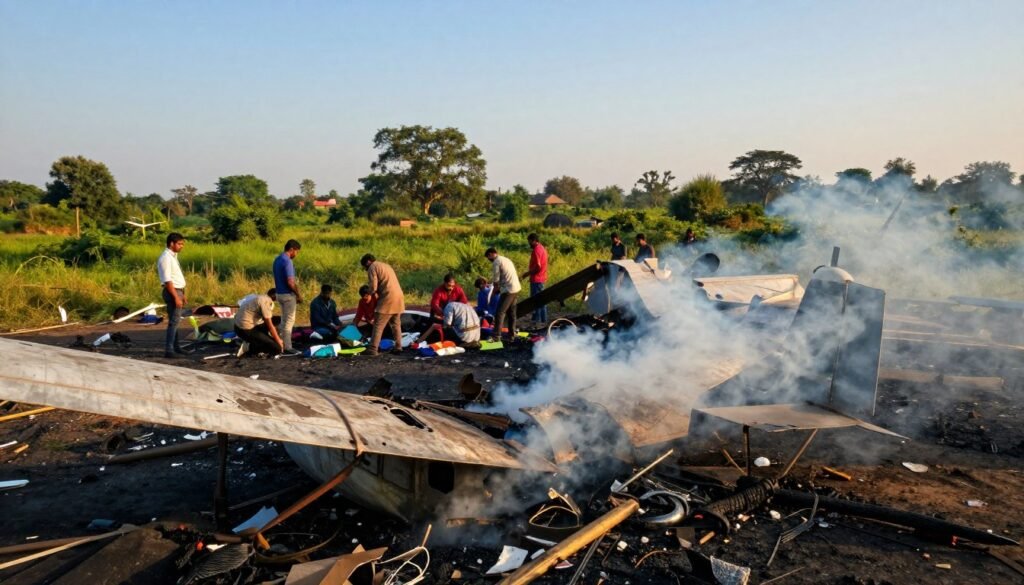
The flight left Pune Airport at 09:15 local time for a trip to Nashik. The flight climbed normally until 09:28, when it hit a problem. The pilot then reported a control issue.
Local police got the first alert at 09:33. Rescue teams were sent out quickly.
We looked at DGCA dispatch logs, Pune ATC tapes, and police records. This helped us piece together what happened. The timeline is important for figuring out what went wrong.
Location details and local conditions
The plane crashed near Igatpuri, Nashik district, about 12 km from town. The area has steep hills and narrow valleys. Getting there was hard because of a muddy road.
The weather was bad at the time, with low clouds and strong winds. The rain made it hard to see and made the ground slippery. This made it tough for rescuers and damaged the plane.
Aircraft type and operator information
The plane was a Cessna 208B Grand Caravan, with the number VT-RXA. It was operated by a local charter company. The plane had nine seats for passengers.
The company had a good track record of safe flights. The plane’s type helps focus on specific technical issues. We checked the plane’s details against official records.
Immediate Rescue Operations Conducted Swiftly
We arrived at the scene with a clear priority: save lives and secure the site. Local police, state disaster teams, and the National Disaster Response Force (NDRF) quickly set up a coordinated perimeter. Fire services and air ambulance units formed a unified command, directing rescue efforts and keeping communication channels open.
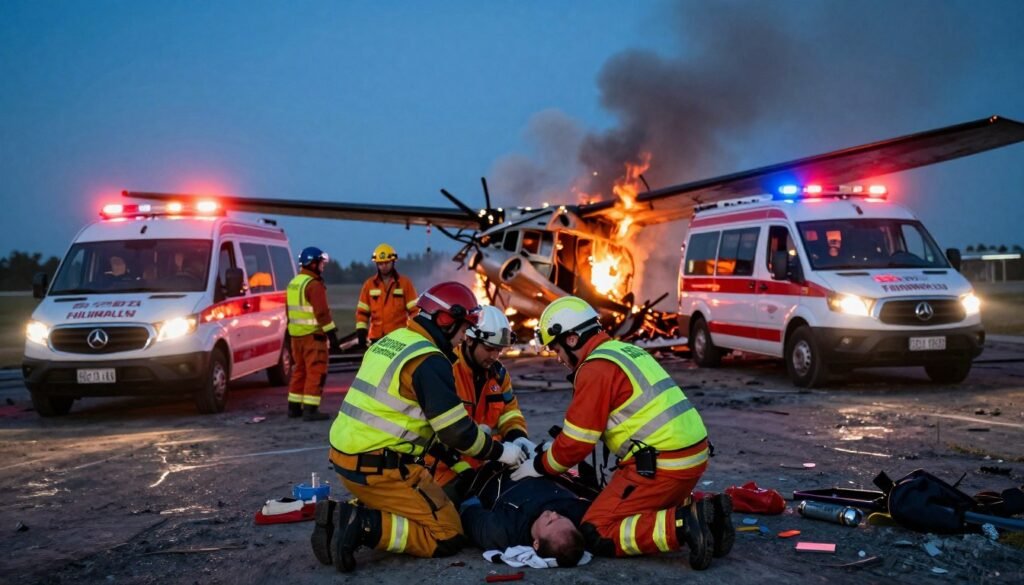
Local police secured access routes and controlled traffic first. State disaster teams set up the incident command post and assigned an on-site commander. The NDRF brought specialized search teams and equipment for cutting and lifting. Fire services managed fires and contained fuel. Air ambulance crews were ready to transport patients if needed.
Medical evacuation and triage procedures
Medical teams used a simple triage layout to sort casualties. They checked airway, breathing, and circulation, applied hemorrhage control, and placed spinal precautions when necessary. Rapid extrication techniques were used to free trapped victims. Decisions on evacuation were based on patient condition and distance to the nearest trauma center.
Search techniques and equipment used
Search teams used a visual grid search to find victims. Drones provided overhead views and live video to the command post. Thermal imaging cameras and night-vision tools helped detect survivors at night. Sniffer dogs found human scent in dense debris. Heavy machinery helped access buried areas while preserving evidence.
We balanced urgent rescue actions with preserving forensic integrity. Teams documented disturbed areas, tagged recovered items, and maintained chain of custody. This careful approach supported both effective rescue operations and later aviation safety reviews.
Casualties, Injuries, and Survivor Accounts
We share verified updates and human stories while keeping facts straight. Early reports from the Directorate General of Civil Aviation (DGCA), local police, and health officials give us numbers. These numbers might change as hospitals send more info. Keeping track of casualties is key to our coverage.
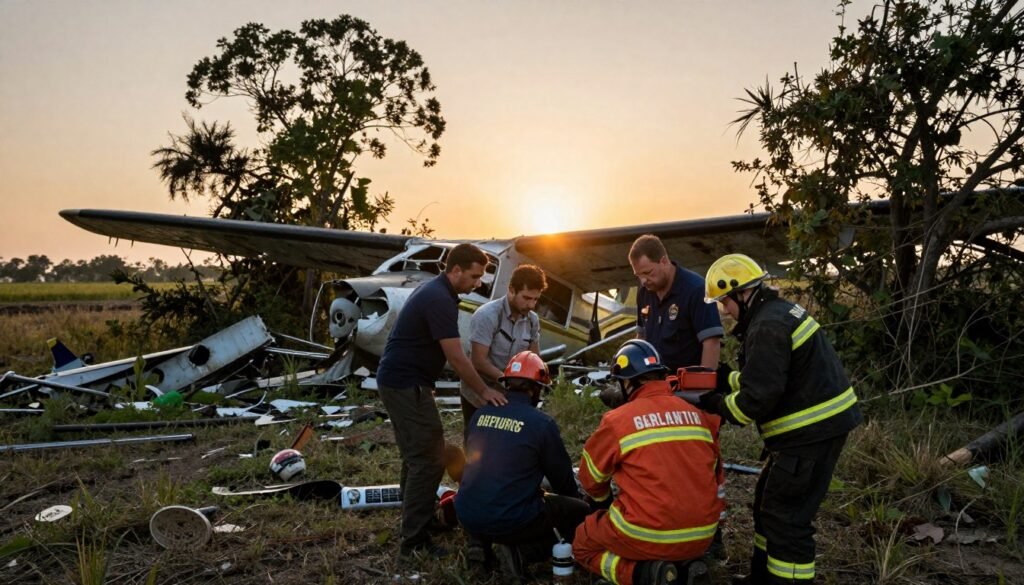
Right now, we know how many people have died and how many are hurt. We also know how many are in critical care. Aviation reports injuries in three ways: fatal, severe, and minor. The DGCA and local health departments’ numbers are not final until all reports are in.
Eyewitness and survivor testimonies
Survivors and eyewitnesses talk about strange noises, smoke, or losing control before the crash. These stories help guide the investigation. When survivors agree, their words help match with physical evidence and flight data.
“There was a loud sputter and then a sudden descent,” said one passenger who survived. They spoke with rescuers after getting treatment. Their stories help focus the investigation while keeping the need for proof in mind.
Family notifications and support services
Local authorities help families by notifying them through police and hospitals. Airlines have teams to help with travel and paperwork. They also offer grief counseling and legal help.
There are plans for financial help for families. We watch how these services are given. We also keep an eye on updates that affect families and aviation safety.
Investigation Launch and Authorities Involved
We started the investigation right after the rescue teams left the scene. The first steps are to keep evidence safe and work together. This is key for aviation safety and keeping the public informed as the India Plane Crash News unfolds.
Agencies leading the probe
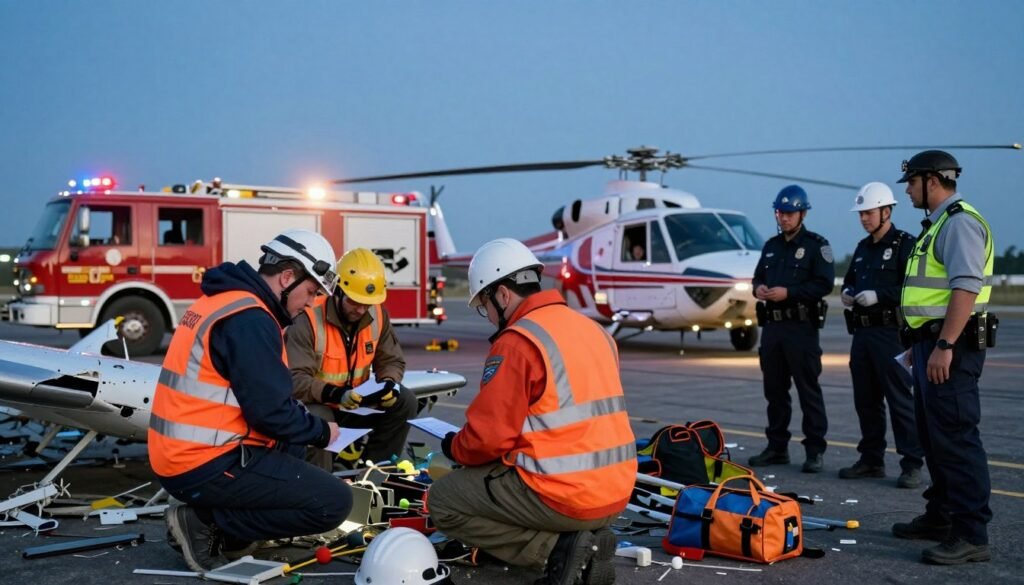
The Directorate General of Civil Aviation (DGCA) and the Aircraft Accident Investigation Bureau (AAIB) of India are leading. Local police and Air Traffic Control help with security and getting data. If the plane is from another country, the maker and the country where it’s registered might join too.
Initial steps in evidence collection
Teams made sure the wreckage area was safe and took photos of where the pieces fell. They listed the parts, saved samples like fuel and fluids, and protected electronic parts. They also talked to witnesses right there to keep everything straight.
Coordination with international bodies (if applicable)
When companies like Textron Aviation, Pratt & Whitney, or Garmin are involved, they might send experts. They help but the AAIB is in charge. For special tests, labs from other countries might be used to help figure things out.
Preliminary Causes Being Considered
We look at the main areas investigators are checking after the plane crash in India. They are looking at three main things: the plane itself, the weather, and the pilots. They aim to understand what happened without pointing fingers.
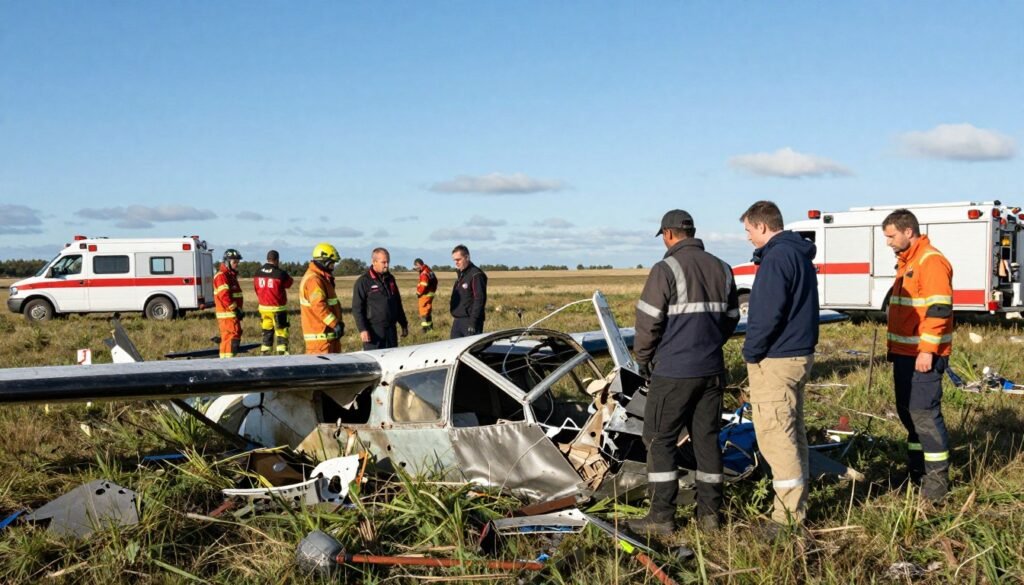
Mechanical and structural issues
They are checking for engine problems, broken propellers, and other issues. They look for signs of wear and tear on the plane. This helps them figure out if something broke suddenly or over time.
They compare the plane’s maintenance history with what they found. This helps them understand if a problem was new or had been there for a while.
Weather and environmental influences
Weather is also a big part of the investigation. They look at weather reports and what witnesses said. They check for bad weather like heavy rain or strong winds.
They see how bad weather might have made things worse. This includes how it could have affected the plane’s systems or the pilots’ ability to fly.
Pilot performance and human factors
They also look at how the pilots were doing. This includes their training, how tired they were, and how they made decisions. They check flight records and training files to see if the pilots were ready.
They don’t just blame the pilots. They want to know how everything worked together before the crash. This helps them understand what happened.
These are the main things they are looking at. As they gather more evidence, they will get a clearer picture of what happened.
Aircraft Maintenance and Safety Records
We start by gathering the aircraft’s logbooks, maintenance releases, and certification trail. Our team looks for recent component replacements, unscheduled repairs, and Airworthiness Directives compliance. This helps us understand how maintenance records might link to the incident and aviation safety.

Review of maintenance logs and certifications
We check the Certificate of Airworthiness and verify maintenance releases signed by licensed Aircraft Maintenance Engineers. We examine engine hours, propeller changes, and avionics updates. We also look at entries that note fixed defects.
Auditors verify timestamps and signatures to ensure all checks and services are authorized.
Operator safety history and compliance
We look at the operator’s safety history, including past incidents and safety management system maturity. We also check for any enforcement actions by regulators. We review passenger-carrying approvals and operational procedures for short-haul or private flights.
We pay close attention to evidence of a proactive safety culture. This includes internal audits, recurrent training, and voluntary reporting.
Regulatory oversight and audit status
We document recent surveillance actions by the Directorate General of Civil Aviation and note any outstanding findings. We check if the operator underwent an audit or implemented a corrective action plan. We flag any gaps in regulatory oversight, as these can impact investigations of plane crashes in India.
Our work at this stage doesn’t draw conclusions. Instead, we gather verifiable facts for investigators to link maintenance records to aviation safety. Journalists tracking India Plane Crash News will find these details useful when regulators release updates on regulatory oversight.
Aviation Safety Policies Under Review
We are watching how regulators and operators react after the incident. A detailed policy review is happening. It aims to match national standards with global ones and regain public trust after the India Plane Crash News.
Current civil aviation regulations in India
The Directorate General of Civil Aviation (DGCA) creates rules through Civil Aviation Requirements (CARs) and AICs. These rules cover things like operator certification, maintenance, and crew training. They include Air Operator Certificate (AOC) rules, Safety Management Systems (SMS) for many, and maintenance checks tied to schedules.
ICAO standards also play a big role in making and checking these rules. They help us understand how to follow civil aviation regulations in India for small aircraft.
Potential policy changes and proposed mandates
There are plans for more frequent checks and audits for non-scheduled operators. Ideas include mandatory flight-data monitoring for smaller fleets and more use of lightweight flight recorders. There might also be stricter checks for pilot skills and clearer rules for overseeing operators and maintenance.
Implications for small aircraft operations
New rules could mean higher costs and more work for small aircraft. This includes retrofitting, temporary stops for installations, and more training. But, these changes could also lead to new ideas like affordable upgrades and safety systems made for small operators.
We think there will be talks with stakeholders to make these changes easier. This could include pilot programs, help for small operators, and flexible timelines. The goal is to meet high safety standards while keeping small aircraft flying.
“A policy review must protect passengers and preserve access to regional air services,” industry experts say as regulators consider their options.
Impact on Public Perception and Media Coverage
We watch how media shapes public opinion after a plane crash in India. Early news from The Times of India, The Hindu, and Hindustan Times focused on rescue efforts and safety reviews. Local news added details like witness quotes and road closures.
How the incident is being reported nationally
National media balance urgency with accuracy. They provide live updates and verified briefings. Statements from the Directorate General of Civil Aviation and local police help keep the story straight.
Social media reactions and misinformation risks
Twitter, Facebook, and WhatsApp spread news fast, but often inaccurately. False images and rumors can cause harm. Tools to verify information can slow down the spread of false news.
Managing public communication and transparency
Authorities should give regular, accurate updates. Having one spokesperson helps keep things clear. Social media corrections and family updates build trust.
Role of Emergency Response Training and Preparedness
We looked into how local teams reacted after a small plane emergency. Their speed, hospital readiness, and teamwork were key. The National Disaster Management Authority sets standards for all states.
Assessment of local and regional preparedness
Hospitals near the crash quickly set up trauma teams. The teamwork between fire units and health officials was critical. But, ambulance dispatch sometimes used old radio channels instead of digital systems.
State aviation drills helped responders know what to do. This training was a big help in remote areas. Yet, medevac services varied by district.
Training gaps revealed by the response
Teams didn’t have clear triage plans for plane crashes. They struggled with night searches, lacking thermal imaging skills. Drone teams helped, but faced legal and practical issues.
Helicopter medevac teams were not always ready. Some hospitals focused on road accidents, not plane injuries. This made it harder to help victims and keep the scene safe.
Recommendations for upgraded drills and resources
We suggest regular drills that mimic a plane crash. Teams should practice together, including at night. They should also use drones and thermal imaging.
Investing in training with experts like the Indian Institute of Technology can help. Trauma workshops and better helicopter services are also needed. This will make aviation safety better.
These steps will improve training and the national response plan. Realistic drills will make responses faster and more effective. This will help in sharing news of plane crashes in India.
Technical Analysis: Black Box, Forensics, and Data
After an aircraft incident, experts handle evidence carefully. They review data and conduct forensic studies. This work helps create a timeline without guessing the cause. It’s a key step in understanding the crash and improving safety.
Small planes often don’t have full-size recorders. But, investigators look for other data sources. They protect the devices and send them to labs for analysis. This process can take days or even weeks.
Crash site forensics
Teams study the wreckage to understand what happened. They look at how parts were arranged and damaged. This helps figure out the sequence of events.
Telemetry, radar, and satellite data
Experts use radar, ADS-B, and satellite images to gather more information. This data helps them understand the plane’s path and speed before the crash.
By combining all this data, investigators can be sure of their findings. This careful analysis helps tell the story of the crash. It also helps make flying safer for everyone.
Legal and Regulatory Ramifications
We look at the legal steps after a plane crash in India and how it changes airline rules. First, many groups start investigations, families file civil claims, and criminal charges might follow if there’s evidence of wrongdoing. News about India Plane Crash News often talks about the complex relationship between courts, regulators, and insurance companies.
Potential investigations and liability issues
Investigators might start criminal cases if they find serious mistakes or intentional harm. Prosecutors check if the law was broken before they charge anyone. Civil lawsuits can also happen, seeking money from the airline, maintenance companies, or part makers for mistakes, carelessness, or broken promises.
At the same time, the Directorate General of Civil Aviation (DGCA) can take action without waiting for court decisions. This means they can look into safety while lawsuits are ongoing.
Compensation frameworks for victims
Compensation comes from laws and private deals. Airlines usually have insurance for passengers and others. Families might get money from these policies. Airlines might also give extra help before legal cases are settled.
How long it takes to get compensation depends on investigations and lawsuits. Courts can give money for lost lives, medical bills, and lost income. Insurers and airlines talk about settlements, and India Plane Crash News often shares what to expect.
Regulatory penalties and enforcement outcomes
The DGCA can fine airlines and make them fix problems. They might also ask for specific actions or check planes more closely. In serious cases, they could stop an airline from flying or ground certain planes until they’re safe.
These actions aim to fix safety issues, not just punish. Airlines might have to do more checks, get better training, or face more oversight. These changes can affect future legal issues and how claims are handled.
International Reactions and Support Offers
After the crash was reported, we saw a quick wave of international support. Governments, aviation partners, and teams ready to help have spoken up. They’re ready to assist with technical analysis and help with victims.
Responses from aviation partners and manufacturers
Companies like Textron Aviation and General Electric have issued statements. They express condolences and offer to send engineers for inspections. Their expertise helps local investigators.
Requests for international technical assistance
India might ask for help from other countries or labs. This is under ICAO Annex 13. They can send samples to labs in Europe or the U.S. for complex issues.
Precedents from similar incidents abroad
Small-aircraft accidents have led to policy changes before. Some countries now have better flight recorders or stricter pilot training. These changes can help improve safety here too.
India Plane Crash News
We carefully follow the latest on the aircraft incident. Our reports come from the Directorate General of Civil Aviation and the Aircraft Accident Investigation Bureau. We also include statements from state authorities and hospitals.
We check news from The Hindu, The Times of India, Hindustan Times, and The Indian Express. This helps us create a trustworthy timeline for our readers.
Latest updates from local and national outlets
At 09:30 IST, the DGCA sent out an advisory. They started looking into the incident. The AAIB said they sent investigators to the site and are looking for flight data and cockpit voice recorders.
State health departments shared updates on casualties and treatments. Hospitals reported starting triage at 10:15 IST and are caring for injured passengers.
How this story fits into broader aviation trends in India
India’s aviation sector has grown fast. There are more flights, including charter and training ones. This growth means we need better safety checks.
This incident shows we need to improve safety at small operators and flight schools. We’ll look into maintenance, pilot training, and airworthiness audits.
A focused review of maintenance practices, pilot training standards, and airworthiness audits will shape aviation safety updates across the country. We will assess how this event aligns with past trends and regulatory responses.
Key timelines for upcoming announcements
First, we’ll see initial reports from the DGCA or AAIB in days to weeks. If the black boxes are okay, we might get their data in days. If not, it could take weeks.
Statutory audits and checks on operators might take weeks to months. We’ll keep an eye on updates from the Ministry of Civil Aviation and regulatory agencies. We’ll update our timeline with the latest news.
Conclusion
We reported a small aircraft crash in India that led to quick rescue efforts and a safety review. First responders, medical teams, and investigators worked fast to secure the area and start collecting evidence. As the India Plane Crash News unfolds, we aim to share clear facts and updates. We also focus on supporting the families hit by this plane crash.
This incident highlights the need for better aviation safety and emergency response. By thoroughly investigating, we can learn about the causes of the crash. This knowledge helps us improve maintenance, training, and make flying safer for all.
We encourage experts to get involved: help with training, research on new systems, and support disaster readiness. Stay updated by subscribing to reliable news and reviewing official reports. Our goal is to use this tragedy to improve aviation safety in India and worldwide.