



In a classroom in Mysore, a grandmother taught children a folk song in Kannada. The song included farming terms and weather lore. It even had a joke about the monsoon.
This moment showed us the importance of language diversity. Native languages carry practical knowledge and social ties. Modern education often misses these.
India is home to many languages, including endangered ones. Losing a language means losing wisdom, folktales, and community identity. Revitalizing languages requires policy, community action, and technology working together.
Efforts like the People’s Linguistic Survey of India document local voices. University centres and initiatives inspired by the New Education Policy 2020 promote mother-tongue instruction. Local textbooks, teacher training, and digital projects help multilingual communities use regional languages.
In the pages that follow, we explore practical examples and lessons. We draw on comparative reflections from The Cambridge Handbook of Language Policy. This helps us understand how to keep native languages alive.
Contact: info@indiavibes.today
National language revival movements
Introduction to India’s Linguistic Diversity

India’s languages are a vibrant web that covers the country’s vast lands. This web includes indigenous languages, regional languages, traditional languages, and native languages. Each plays a key role in the lives of people, creating rich identities and knowledge systems.
We explore this linguistic tapestry with great care. Our team documents languages that are often overlooked. Projects like PLSI, started in 2013, hold workshops, publish books, and host festivals to highlight these languages.
Importance of Regional Languages
Regional languages are full of local wisdom. They carry knowledge of farming, medicine, and history. Stories from languages like Mundari, Kurukh, and Santali share important lessons and values.
Learning in one’s native language helps kids do better in school. It keeps cultural traditions alive and boosts community involvement. Media in regional languages also helps voices from rural areas be heard.
Challenges Faced by Minority Languages
Many minority languages are at risk, as noted by UNESCO. People moving to cities often switch to more widely spoken languages. Global trends push English as the preferred language for business, making it harder for native tongues to be used.
There’s a lack of support for these languages. Schools, libraries, and government offices rarely offer services in minority languages. This scarcity of resources makes it tough to document and save these languages.
Shifting to more dominant languages is often seen as a step up. Media and technology platforms also favor major languages, making it hard for minority languages to be seen and heard.
| Area | Role of Language | Primary Challenge | Practical Response |
|---|---|---|---|
| Education | Early learning in native languages boosts comprehension | Curricula and materials lacking for regional languages | Create mother-tongue textbooks and teacher training programs |
| Culture | Traditional languages carry rituals, songs, and folktales | Oral forms at risk when younger speakers shift | Record oral histories and support local festivals |
| Economy | Local knowledge informs resource use and craft industries | Market access favors dominant-language producers | Promote regional-language labeling and e-marketplaces |
| Technology | Digital tools can archive and teach minority languages | Limited Unicode support, keyboards, and NLP resources | Develop open-source fonts, input tools, and corpora |
| Policy | Official recognition enables rights and funding | Many languages lack representation in law and planning | Advocate for legal recognition and community-led policy |
Historical Context of Regional Languages in India
We explore India’s language history from colonial times to today. The British introduced English and main regional scripts, creating a hierarchy. This pushed many minority languages to the side.
During the British rule, English became key for jobs and status. Schools and governments focused on a few regional languages. This left many local languages without support in print, schools, and official records.
We examine how these patterns affected multilingual communities. Migration, city growth, and economic changes added new language interactions. In cities, people mixed languages, while in rural areas, oral traditions kept alive.
Evolution through colonial rule
Choices in administration set long-term goals. Elites learned English for jobs in government, law, and education. Publishers focused on popular scripts, expanding some languages but shrinking others.
Language activism started before India gained freedom. Groups fought to protect scripts and textbooks in the late 19th and early 20th centuries. They saw language as a way to control public life.
Post-independence language policies
After 1947, leaders had to balance diversity and unity. The constitution recognized many languages and protected culture. States were redrawn based on language, changing politics and administration.
Policy documents listed official languages and pushed for regional languages in schools and government. Sanskrit kept its cultural value, while Hindi and English were used for wider roles. Language debates influenced elections and state movements for years.
Recent changes focus on teaching in mother tongues or regional languages until Grade 5. This is a big step towards recognizing the need to revive minority languages.
Studies by scholars like Joseph Lo Bianco show revival works with policy, institutions, and community support. We see that working together in schools, media, and culture can help languages recover in multilingual areas.
Successful Revitalization Efforts
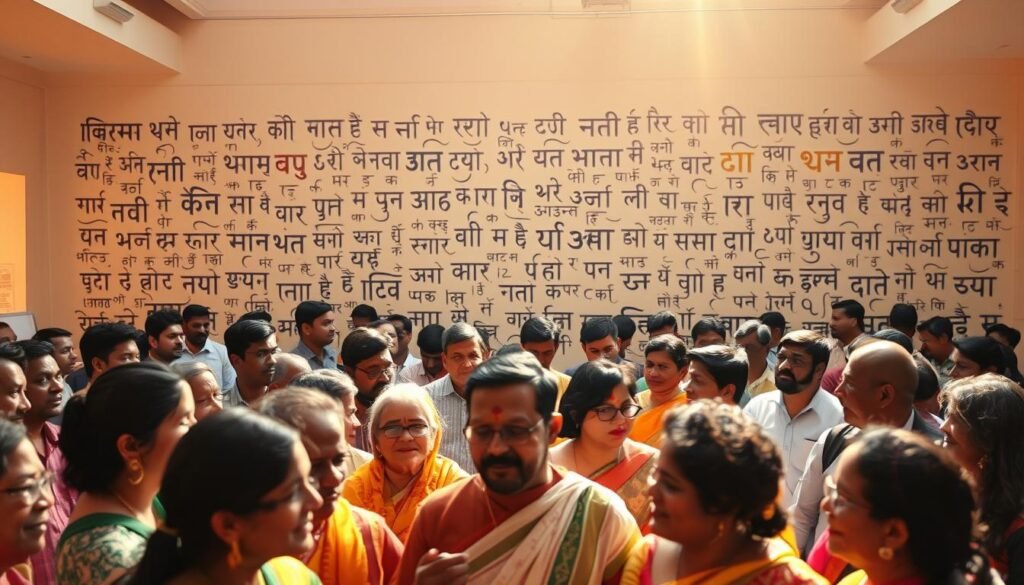
We look at examples where cultural efforts and policy support boosted native languages. These stories show how language revival succeeds when schools, media, and community groups work together.
Case Study: The Kannada Language Movement
In Karnataka, a long fight for Kannada changed public life. Literary groups like the Kannada Sahitya Parishat promoted the language through festivals and awards.
Thanks to public pressure, the government started using Kannada more in administration. Schools also made changes to teach more Kannada. Local media added more Kannada content, making it more visible.
Education reforms put Kannada in primary schools. Teachers learned to teach in their mother tongue. This mix of cultural efforts, legal support, and classroom practice helped native languages thrive.
Educational Initiatives in Punjab
Punjab shows how education can revive a language. The state created Punjabi textbooks and trained teachers in bilingual teaching. It also supported schools that teach in Punjabi and English.
These efforts made Punjabi stronger and improved literacy. Publishers and cultural groups worked together to create materials that reflect local traditions.
At the same time, schools found ways to balance traditional languages with modern education. This allowed students to succeed in both their native language and English.
In both regions, we see similar trends. The creation of dictionaries, revival of scripts, and media content all help make regional languages more common. When festivals, publishers, and education policies come together, language revival becomes more likely.
The Role of Technology in Language Preservation

We look at how new tools change language documentation and teaching. Technology helps us record stories, build searchable collections, and share learning materials far and wide. This is key for languages with few written texts.
Digital archives at schools and cultural centers save fragile materials like manuscripts and stories. They create open spaces for scholars and teachers to make lesson plans. This makes it easier to compare different dialects.
Digital tools help document languages on a big scale. They offer high-quality recordings, automated transcriptions, and aligned collections for research. Seeing their language preserved motivates communities to teach it to the next generation.
Digital Archives and Resources
We support creating archives that respect cultural rules and get speaker approval. Archives should work together: use standard formats, clear rules, and languages for everyone. This helps teachers make lessons from real sources.
Open-source tools cut costs. They include OCR models for Indian scripts and text-to-speech engines for learners. This makes old texts and materials accessible to all.
Language Apps and Learning Tools
Language apps offer short lessons and spaced repetition on phones. In India, using local radio and offline packages reaches more people. AI tutors give feedback and adjust to each learner’s speed.
For rare languages, funding and shared development help avoid duplication. Community-made keyboards, fonts, and TTS models let speakers create content. These tools help in classrooms and for self-study.
We see the need for better infrastructure and digital skills: training, internet, and long-term funding are vital. Success comes when tech experts work with elders, teachers, and local groups. Together, they create solutions that honor culture and meet needs.
Government Initiatives Supporting Regional Languages

We explore key policies and funding paths to boost regional languages and protect linguistic heritage. The National Education Policy 2020 supports teaching in mother tongues and multilingual education. States are creating textbooks and training teachers in native languages to match policy goals.
We outline major language promotion schemes and funding models. We also highlight program partners, delivery methods, and cultural institutions that use grants to benefit communities.
Schemes for Language Promotion
SPPEL—the Scheme for Protection and Preservation of Endangered Languages—works with universities and research centers to document endangered languages. It supports fieldwork, digital archives, and training for local scholars.
NEP 2020 encourages states to develop curricula in regional languages. Kerala, Karnataka, and Punjab have started using textbooks and digital modules in early grades.
Grants for Cultural Preservation
Government grants fund projects to document and preserve languages. The Centre for Endangered Languages at Tezpur University receives funds for research and archives. The Adivasi Academy in Tejgadh gets support for educational materials and cultural events.
Effective grant models combine central, state, and local funds. We emphasize transparent evaluation and community involvement. Projects with local speakers, educators, and elders are more successful and lasting.
| Program | Primary Focus | Partners | Typical Outputs |
|---|---|---|---|
| Scheme for Protection and Preservation of Endangered Languages (SPPEL) | Documentation and archiving of endangered tongues | Universities, language research institutes | Corpora, audio-visual archives, language databases |
| NEP 2020 Implementation Grants | Mother-tongue instruction and multilingual curriculum | State education departments, textbook boards | Textbooks, teacher guides, digital learning modules |
| Academic Research Support (e.g., CFEL at Tezpur University) | Scholarly research and capacity building | Central ministries, academic institutions | Research reports, training workshops, publications |
| Cultural Institution Grants (e.g., Adivasi Academy) | Community outreach and cultural programming | State cultural departments, NGOs | Festivals, teaching materials, community archives |
We suggest combining central grants with state and local funding to reach more communities. Long-term support and local care are key to preserving native languages and linguistic heritage.
Community Involvement and Grassroots Movements

We look at how local energy helps bring back languages in towns and villages in India. Community groups connect elders, schools, and media. They make regional languages useful for everyday life.
Grassroots movements shape school curricula, host festivals, and create places for multilingual communities to share stories and songs.
Role of Non-Profits and NGOs
Organizations like Adivasi Academy in Tejgadh document and teach local languages. They train teachers and create materials for classrooms. Volunteer groups run storytelling and festivals to boost pride in indigenous languages.
Collaborative Community Projects
Projects succeed when elders teach youth about languages. For example, they’ve made dictionaries for Gondi and revived Meitei Mayek. Schools and communities work together to make learning local and relevant.
Community archives and oral-history labs store recordings for future learners. Low-cost tech helps reach remote areas. Training local broadcasters and cultural mediators builds lasting impact.
When non-profits work with village councils and teachers, communities get the support they need. This approach—documentation, teaching, and media—helps indigenous languages thrive for generations.
Literature and Art as a Revival Tool

We see literature and art as key to bringing back regional languages. Creative events like festivals, theatre, and film show off native speech. This helps build pride in traditional languages and keeps our shared heritage alive.
Regional Literature Festivals
Regional literature festivals bring together readers, publishers, and educators. Events in places like Bengaluru and Guwahati showcase books in local languages. Panels on translation and children’s books help more people discover regional literature.
Fairs and readings help connect the young and old. Oral storytelling sessions share folk songs, proverbs, and knowledge about nature. This keeps language alive and strengthens family bonds.
Promoting Local Writers and Artists
We support local writers with grants, residencies, and translation programs. Organizations like Sahitya Akademi and state cultural departments help fund authors and translators. This effort helps more people enjoy works in regional languages.
Theatre and filmmaking offer creative ways to revive languages. Projects like Meitei Mayek in Manipur and independent Gondi films show the power of art. Working with visual artists and sign-language practitioners makes language more engaging.
Publishing houses and community presses are essential. Local editors create anthologies, bilingual editions, and platforms for new voices. Their work protects our linguistic heritage and keeps regional literature alive.
The Impact of Social Media on Language Use

Social media is changing how we talk in India. Short videos, local-language channels, and threaded posts are making dialects cool among young people. YouTube and Instagram help spread new words and ways of speaking fast.
Language Trends on Digital Platforms
We look at how many people watch, share, and comment to decide what content to make. This tells us which local languages are getting popular. Using short videos, captions, and audio clips helps more people see and hear minority languages.
But, algorithms often show more of the most popular languages. To fight this, creators make content that truly reflects their culture. For example, videos in Malayalam or Tamil reach people who speak these languages and those who want to learn.
Online Communities for Language Exchange
Forums, WhatsApp groups, and special channels are creating online places for language exchange. These spaces bring together people who speak the language, those learning, and those from other countries. Sites for language exchange and community pages give everyone a chance to practice every day.
Real-life examples show how effective this can be. Local channels teach writing and speaking skills. Crowdsourced dictionaries and feedback from others help make local languages more common online. Seeing more followers and comments shows that these efforts are working.
We face challenges, like platform bias, but we can overcome them. By using data and creativity from the community, social media can help keep our languages alive.
Regional Languages in Education
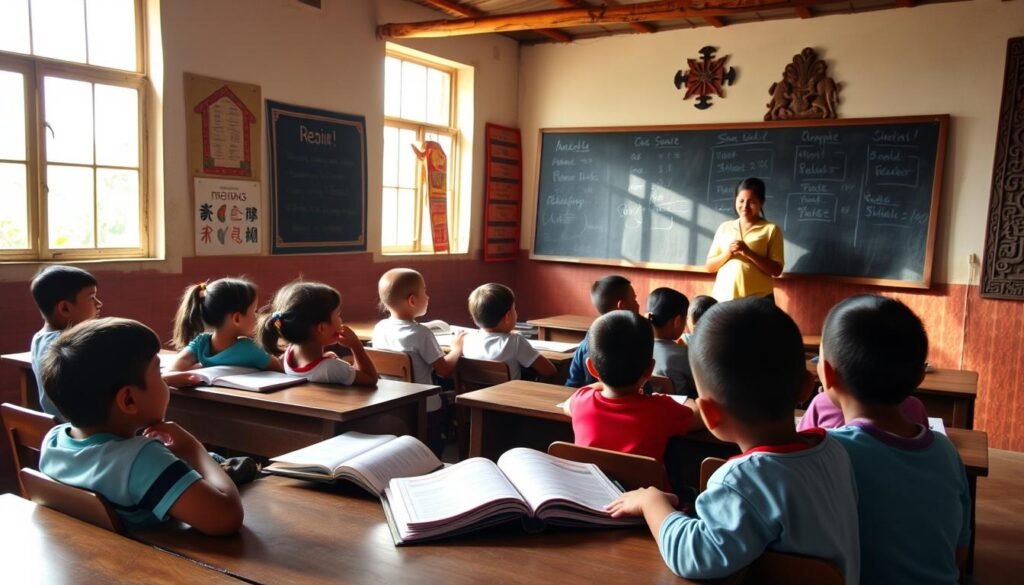
We focus on making classrooms better by adding regional languages. The NEP 2020 suggests starting with the mother tongue in early grades. This helps students understand better and stay in school longer.
We suggest steps to make it happen: using age-right textbooks, training teachers, and creating tests in native languages. We also recommend digital lessons. Places like Kerala and Karnataka have made special materials for this. These help teachers and get families involved.
Integrating mother tongue instruction
We talk about a step-by-step plan. First, teach in the child’s native language. Then, slowly add the state language and English. Studies show learning new languages is easier when you know your mother tongue first.
Successful bilingual models
We look at how to mix local languages with English. In Tamil Nadu and Maharashtra, students learn to read in their local language and then English. This keeps their culture strong while opening up new chances.
We suggest training teachers and getting the community involved to keep changes going. Efforts to bring back languages like Gondi and Meitei have made dictionaries and scripts. These help in making school materials and boost students’ pride.
| Component | Action | Outcome |
|---|---|---|
| Textbooks | Develop age-appropriate books in native tongues | Higher comprehension and retention |
| Teacher Training | Programs in bilingual pedagogy and assessment | Improved classroom delivery and confidence |
| Assessment Tools | Create formative and summative tests in regional languages | Fairer measurement of student learning |
| Digital Lessons | Local-language multimedia and lesson plans | Greater access and engagement |
| Community Engagement | Involve parents, elders, and local NGOs | Sustained use of indigenous languages outside school |
Cross-Cultural Influence and Hybridity
In cities like Mumbai, Bengaluru, and Kolkata, languages blend together. Hindi, English, and regional languages create a vibrant mix. This mix shapes how we speak, watch media, and learn in these urban areas.
Code-Switching in Urban Areas
Every day, we see people switching between languages. A shopkeeper might speak Marathi, then English, and then a local dialect in one conversation. This shows who they are, what they need, and what they want to achieve.
Young professionals switch languages at work and in cafes. They do this to fit in and connect with different groups. Their language mixing creates new words and ways of speaking that spread online.
Influence of English on Regional Languages
English is changing how we talk and write in many areas. It’s used in law, tech, and business. This can make traditional languages seem less important, but it also brings in new words that fill gaps in meaning.
Hybridity is seen as a strength. Bilingual education and using languages in specific areas keeps regional languages alive. Media, ads, and books that mix languages are popular with the young. They help keep local dialects alive and connected to our culture.
How we make policies matters a lot. Approaches that let multilingual communities meet modern needs and keep their culture tend to work well. The aim is to be multilingual in a way that supports progress without losing our heritage.
Future Prospects of Regional Languages
We plan a path for regional languages that combines policy, technology, and community efforts. Small steps today, like budgets, training, and monitoring, will shape the future of linguistic heritage in India.
Language Policy Reforms
We back the push for NEP 2020 to become real with budgets and deadlines. Strong language policy reforms need to fund teacher training, create new curricula, and produce local textbooks.
Programs like SPPEL need ongoing funding and better partnerships between schools and communities. We should track how well these programs work in classrooms and schools.
Forecasting Language Survival
We use UNESCO categories to predict which languages will thrive. Languages with support from families and institutions have the best chance. Factors like migration, urban growth, media, and school programs also matter.
Supporting documentation, education, and digital resources helps minority languages survive. Working together across sectors, including government, NGOs, research, and festivals, is key. Innovation, like AI in education, can also help.
We believe in the power of teamwork between places like the Central Institute of Indian Languages and local groups. This will keep our linguistic heritage at the heart of policy.
| Area of Action | Key Measures | Short-Term Impact | Long-Term Outcome |
|---|---|---|---|
| Policy and Funding | Actionable budgets, teacher training, monitoring frameworks | Improved classroom materials and trained staff | Stable institutional support for regional languages |
| Education | Mother-tongue curricula, bilingual programs, school inclusion | Higher retention and engagement among students | Continued intergenerational transmission |
| Technology | Digital archives, language apps, AI tutors, offline tools | Broader access to learning resources | Enhanced documentation and daily use of minority languages |
| Community & Culture | Grants for festivals, community media, cultural programming | Increased visibility and pride in linguistic heritage | Sustainable grassroots ecosystems supporting regional languages |
| Research & Partnerships | Academic studies, NGO coordination, public-private models | Evidence-based interventions and pilot projects | Scalable models for forecasting language survival |
Conclusion: Embracing Linguistic Diversity
India’s linguistic heritage is under pressure, but there’s hope. When policy, community, academia, and technology join forces, revival is possible. Programs like NEP 2020 and Bultoo Radio show how to support local languages.
Universities, NGOs, and local groups can make a big difference. They can document and teach languages effectively. This teamwork creates lasting paths for language preservation.
We urge language advocates to take action. Support education in mother tongues, fund documentation, and create digital tools. Encourage local media and engage youth through festivals and literature.
Every level, from state governments to local groups, plays a part. Together, we can celebrate and protect India’s diverse languages.
Celebrating our multilingual identity is vital. It keeps our ecological knowledge, social memory, and cultural strength alive. By seeing multilingualism as a national asset, we foster inclusion and innovation.
To collaborate, find resources, or share your projects, email info@indiavibes.today. Join us in protecting and promoting India’s rich language heritage.