



The Reserve Bank of India has shared minutes that suggest a possible RBI rate cut in India. This is because inflation trends are showing signs of easing. This moment is key for our monetary policy shifts.
It’s a good time for both borrowers and investors to think about the bigger picture. The RBI’s updates are important for understanding the future of our economy. They help us see how inflation stabilization could lead to changes in interest rates.
This could impact different parts of the economy. Reports and analyses will help us understand these changes better.
Understanding the RBI’s Role in Monetary Policy
The Reserve Bank of India (RBI) is key in shaping the country’s monetary landscape. As the central bank, it focuses on economic stability and growth. It regulates interest rates, affecting borrowing costs for everyone.
The RBI does more than just set interest rates. It oversees banks and manages currency, ensuring financial stability. This trust is vital for the economy’s growth. The RBI must balance keeping prices stable and promoting economic growth.
Knowing how the RBI works is important. Its decisions can greatly affect the economy. This includes how much people spend and inflation rates. So, understanding the RBI helps everyone, from investors to the public, better navigate the economy.
Current Inflation Trends in India
Recent news from India shows a change in its economy. The current inflation rates are easing. The Consumer Price Index (CPI) is a key indicator that shows how prices and supply chains affect inflation.
Looking at both state and national data helps us understand inflation better. These changes affect how much money people have to spend. This, in turn, influences how people behave and the stability of the economy.
Government reports and research from trusted sources are key. They help us see the full picture of India’s inflation story.
The mix of these elements creates a lively economic scene. Keeping an eye on these trends is important for everyone. It helps us predict what’s coming next in the economy and how it will impact our daily lives.
Impact of Inflation on Economic Growth
Inflation and economic growth are closely linked, with many factors at play. Rising inflation can greatly reduce how much money people can spend. This makes them buy less, which hurts economic growth.
Businesses also worry about inflation. They might not want to spend more money on things like materials and labor. This can stop them from growing or hiring more people, affecting GDP trends.
Studies show that some areas like consumer goods are hit hard by inflation. But, real estate might do differently based on the market. Knowing how inflation affects economic growth helps the Reserve Bank of India make better choices. This can lead to a stronger economy and better growth.

RBI Rate Cut India: What It Could Mean for Borrowers
An RBI rate cut in India could change things for borrowers a lot. Lower borrowing costs mean good news for people and businesses. It makes getting loans for homes, cars, and more easier and cheaper.
With lower interest rates, more people might buy big things. This includes homes, cars, and other big purchases. It’s a chance for people to achieve their dreams that seemed too expensive before.
Experts think a rate cut could boost the economy. More spending on things like homes and cars can help the economy grow. Looking at financial data and expert views, we can guess how these changes might affect loans soon.
Historical Context of RBI Rate Cuts
Looking into the history of RBI rate cuts gives us key insights into India’s monetary policy. The Reserve Bank of India (RBI) has made many important decisions during big economic events. For example, in 2008, they cut rates aggressively to help the economy.
This move was critical in softening the economic downturn’s impact. The COVID-19 pandemic brought a new challenge. The RBI cut rates again to boost spending and investment, showing their dedication to recovery.
These rate cuts show the complex nature of India’s economy, influenced by both local and global factors. Each decision was made with both short-term needs and long-term growth in mind. By studying these moments, we can better understand the current talks about interest rate changes.
The Relationship Between Interest Rates and Spending
Interest rates play a big role in how much people spend and the overall economy. When the Reserve Bank of India changes these rates, it affects everyone financially. Lower rates mean cheaper borrowing, which encourages spending on big items like homes and cars.
But, higher rates make loans more expensive. This can slow down the economy as people spend less.
When interest rates go down, more credit becomes available. This makes people more confident and ready to make big purchases or grow their businesses. But, when rates rise, people are more careful with their money. They think twice before spending.
This shows how interest rates can change how we act financially. Knowing this helps us understand the bigger picture of economic growth. It’s important to keep an eye on future changes in interest rates.

Expert Opinions on Potential Rate Cuts
As we move through the changing economic world, expert opinions are key. Many economists share their thoughts on the Reserve Bank of India’s expected rate cuts. Their views show the possible effects on the economy.
Top financial analysts see both sides of the rate cut predictions. They say lower rates could boost spending and investment, helping the economy grow. But, they also worry about inflation, which might not match the RBI’s goals.
Recently, experts agreed on a cautious optimism. They think the RBI will make rate changes slowly, as inflation is stabilizing. The forecasts suggest short-term gains, but long-term effects need careful thought.
| Expert | Opinion | Impact Assessment |
|---|---|---|
| Dr. Ramesh Kumar | Advocates for rate cuts to boost employment and consumer spending | Positive short-term economic revitalization |
| Suchita Sinha | Suggests caution due to inflation risks | Potential long-term inflationary effects |
| Rajiv Sharma | Supports gradual cuts with a flexible approach | Balanced short and long-term growth prospects |
These expert opinions help us understand the RBI’s rate cut plans better. By looking at different views, we see the complexity of changing monetary policies.
How Rate Cuts Affect Different Sectors of the Economy
Rate cuts by the Reserve Bank of India can impact different sectors in various ways. For instance, the real estate sector often sees benefits from lower borrowing costs. This encourages home buyers to invest and stimulates new constructions.
This boost in business investments can create jobs and enhance growth in related industries. It leads to a ripple effect throughout the economy.
The manufacturing sector also sees changes. With lower interest rates, companies face reduced financing costs. This allows them to buy new equipment or expand production.
Such developments can make companies more competitive. This might lead to a stronger market position for them.
In the services sector, the impact of rate cuts depends on customer spending. Lower interest rates can boost consumer confidence. This leads to higher spending on services, vacations, and luxury items.
As a result, businesses in this sector may see improved performance. This can positively affect the overall economic health.
Understanding these dynamics shows how monetary policy affects sectoral performance. Each sector has its own unique characteristics. Analyzing their responses to rate adjustments is key for investors and policymakers.
International Reactions to India’s Inflation Easing
India’s inflation easing has caught the eye of the world. It’s part of a bigger picture in global economics. Countries and investors watch India’s economic signs closely. These signs can change how money moves and trade happens.
Foreign investors, mainly from rich countries, see India’s inflation as key. A drop in inflation might make investing in India more appealing. This could make the Indian currency more stable, drawing more investors.
Global financial groups also keep an eye on India’s inflation moves. The effects of India’s inflation can ripple across the region. This is true for countries that trade a lot with India.
To show how India’s inflation easing affects the world, let’s look at some examples. The table below shows inflation rates and economic growth in different countries. It shows how India’s moves fit into the global picture.
| Country | Inflation Rate (%) | Year | Economic Growth Rate (%) |
|---|---|---|---|
| India | 4.5 | 2023 | 6.0 |
| USA | 3.0 | 2023 | 2.5 |
| Germany | 2.7 | 2023 | 1.8 |
| Japan | 2.0 | 2023 | 1.2 |
Looking at these numbers shows how India’s inflation affects the world. It influences choices by investors and leaders everywhere.
Future Predictions for RBI Monetary Policy
The economic outlook is changing, affecting our views on RBI decisions. It seems the Reserve Bank of India might focus on controlling inflation while also promoting growth. Looking at inflation forecasts, there are signs the RBI could tweak its monetary policy to keep things stable.
Experts say global economic trends are key to our monetary policy predictions. For example, changes in international markets and commodity prices can greatly influence the RBI’s plans. Understanding these shifts helps us prepare for their financial effects.
Also, growth forecasts in domestic sectors offer clues about the RBI’s future actions. By examining economic indicators, we can guess if the Reserve Bank will adjust interest rates or stick with its current policy. This analysis sheds light on the complex factors that will shape RBI decisions.
The Role of the Reserve Bank of India in Stabilizing the Economy
The Reserve Bank of India is key in keeping the economy stable. It uses monetary policy to control markets, fight inflation, and boost growth. Knowing the RBI functions shows its big role in India’s economy.
The RBI has stepped in many times to ease economic troubles. It changes interest rates, adjusts reserve needs, or does open market operations. These moves show the RBI’s dedication to keeping prices stable and supporting growth.
The RBI must always watch the market and act quickly. Good communication helps its policies work better. As it deals with tough economic times, its quick and smart actions are essential for a strong economy.
| Intervention Type | Purpose | Recent Examples |
|---|---|---|
| Interest Rate Adjustments | Control inflation and encourage borrowing | Rate cut in response to declining inflation rates |
| Open Market Operations | Manage liquidity in the financial system | Purchase or sale of government securities |
| Reserve Requirements | Ensure solvency of banks and regulate credit | Modification of Cash Reserve Ratio |
RBI’s Communication Strategy and Its Importance
The Reserve Bank of India (RBI) uses effective communication to shape market expectations. Its clear and consistent messages build trust with investors and the public. This trust is key to its credibility as a central bank.
The RBI shares its policy intentions through various channels. This ensures that everyone understands the reasons behind its monetary policy decisions. This clarity is vital for investors and the public.
Transparency in policymaking is a big part of the RBI’s communication. When it openly talks about its goals and the economy, it boosts confidence. This confidence helps align expectations between the RBI and financial institutions.
This alignment is important for a stable economy. It shows how the RBI’s communication strategies affect more than just the market. They also influence consumer behavior and investment choices.

Implications for Investors on Anticipated Rate Cuts
When the Reserve Bank of India talks about cutting interest rates, investors take notice. They often buy more stocks because lower rates mean cheaper loans. This makes businesses more profitable, drawing in more investors.
Looking at stock market data, we see how investors react to rate cut news. When rates go down, stock prices tend to go up. This is because people think the economy will grow. Sectors like real estate and consumer finance feel this effect the most.
| Market Response Type | Impact on Stock Prices | Example Sectors |
|---|---|---|
| Positive Investor Sentiment | Increase | Real Estate, Consumer Goods |
| Negative Investor Sentiment | Decrease | Utilities, Financials |
| Stable Interest Rates | Neutral | Manufacturing, Technology |
The relationship between investor mood and interest rates is key in the market. Investors need to stay alert and flexible. This is because market trends can change fast with RBI moves and economic outlooks. Knowing this helps investors make smart choices and adjust their portfolios for rate changes.
The Social Impact of Possible Rate Cuts
Rate cuts have big social effects. They make it easier for people to get credit. This helps those who are often left behind to get ahead.
Lower rates help small businesses grow. They can borrow money at better rates. This means more jobs and more money for families.
This change helps everyone in the economy. It shows how important the Reserve Bank of India’s decisions are.
| Impact Area | Description |
|---|---|
| Access to Credit | Lower rates enhance borrowing opportunities for underrepresented groups. |
| Small Business Growth | Reduced interest rates lead to increased borrowing and expansion possibilities. |
| Economic Mobility | Accessible finance translates into improved job opportunities for local populations. |
| Social Equity | Empowering marginalized communities fosters an inclusive economic landscape. |
Public Sentiment Regarding RBI Rate Adjustments
Public opinion is key in shaping India’s economy. Recent surveys show what people think about the Reserve Bank of India (RBI) changing interest rates. These monetary policy discussions reveal mixed views on if rate cuts will boost the economy.
People’s views on rate changes show their immediate worries and future spending plans. When people feel more confident, they spend more, which helps certain sectors. Job security, personal debt, and the economy’s health are big factors in these views.
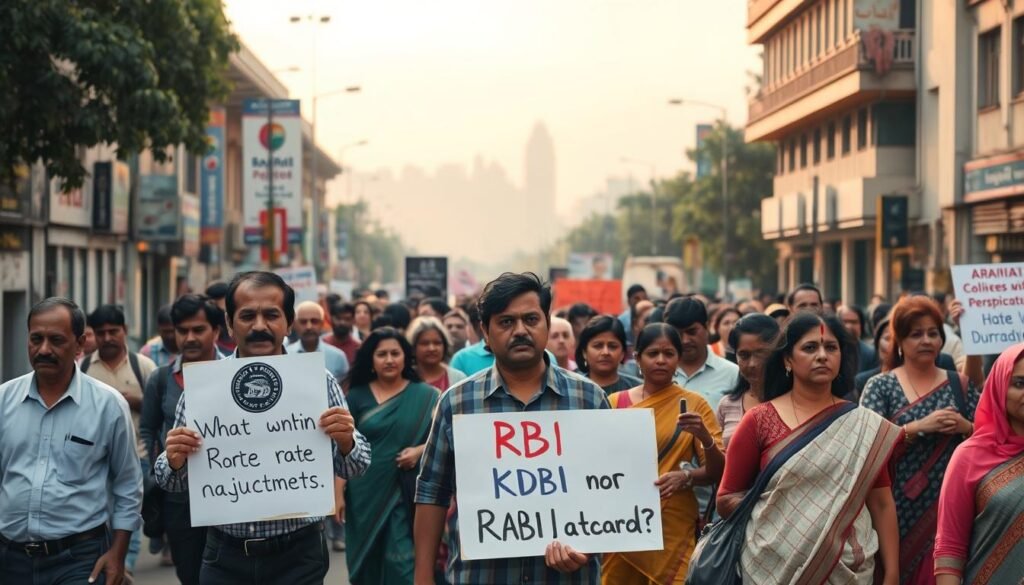
Surveys show people are hopeful but careful about the RBI’s plans. Many want lower interest rates to help the economy grow. As opinions change, it’s important to see how these feelings affect consumer confidence and the economy.
The Importance of Transparent Monetary Policy
Transparency is key for any central bank’s success. The Reserve Bank of India (RBI) shows this well. It keeps its communication clear, building trust and making sure everyone gets its message.
Without clear talk, confusion can spread. This can shake up financial markets and hurt the bank’s reputation.
Central banks must be open to keep trust high. When the RBI shares its views and plans, it wins people’s confidence. This open talk lets everyone join in on big decisions that touch their lives.
Being open also means sharing updates and reports freely. This helps build trust with the public. People learn more about money policies, helping keep the economy stable.
| Aspect | Importance | Example |
|---|---|---|
| Clear Communication | Reduces misunderstandings | Regular press releases by RBI |
| Public Engagement | Builds confidence and trust | Public forums by RBI |
| Regular Reporting | Informs stakeholders | Monthly inflation reports |
Conclusion
We’ve looked closely at how the Reserve Bank of India (RBI) impacts the country’s money policy. The chance for rate cuts is big news for those who borrow money, businesses, and the whole economy. Our summary shows how inflation trends affect the RBI’s plans, giving us a clear view of India’s economic future.
By linking inflation trends to the RBI’s actions, we see how rate changes can touch our daily lives. It’s important to understand these details to see how the RBI’s decisions might change things for us.
This article aims to keep the conversation going about these important topics. We want everyone to stay informed as the RBI makes its money policy moves. The future will be shaped by the choices we make and talk about today.