



India produces about 9.3 million tonnes of plastic waste yearly. Yet, around 67 million tonnes of food never get eaten. This shows a huge problem and a big chance for change.
We see India’s circular economy as a big move. It’s moving away from the old “take-make-dispose” way. Now, we aim to make waste into something valuable.
This change is about technology, money, and people. It needs engineers, teachers, students, and business leaders. They must work together to make things go round again, not just throw them away.
India was the third-biggest in e-waste in 2019, with over 3.2 million tonnes. Plastic and food waste harm the environment and cost money. But, India’s circular economy can help a lot.
It can cut down on raw-material imports and create new jobs. It also opens up chances for exports and makes supply chains stronger.
Green startups like Banyan Nation and Attero Recycling are leading the way. So are policy efforts and groups like Social Alpha and the H&M Foundation. Technology like AI and blockchain helps by making sorting and tracking better.
As we dive into India’s Circular Economy, we want to give people useful tips. We also want to help teachers with lesson plans. For more info or to work together, email info@indiavibes.today.
Understanding Circular Economy Principles

A circular economy is an economic model that aims to reduce waste. It keeps products and materials in use and regenerates natural systems. This means designing products for repair, reuse, and recyclability.
What is a Circular Economy?
A circular system is like an industrial ecosystem. Outputs become inputs for other processes. This changes the way businesses operate, moving from a take-make-dispose model to cycles of use.
We have three main loops: technical, biological, and service. Technical loops are for durable goods, biological loops for food and biomass, and service loops for sharing or leasing.
Key Components of Circular Economics
Durable design and product longevity reduce material turnover. Maintenance, repair, refurbishment, and remanufacturing loops keep products in use longer.
Material recovery uses recycling to reclaim materials. Fibre-sorting technologies help in textile recycling, reducing the need for virgin fibre.
Resource-efficient supply chains and product-as-a-service schemes help retain materials. Extended Producer Responsibility (EPR) makes producers responsible for end-of-life management, driving design changes.
Benefits of Circular Economy in India
Adopting circular economy practices in India boosts resource efficiency. It reduces the need to import raw materials, saving foreign exchange and stabilizing supply chains.
New jobs emerge in recycling, repair, and remanufacturing. Formalizing and upskilling waste pickers improves their incomes and working conditions.
Lower pollution and reduced greenhouse gas emissions support India’s Net Zero by 2070 goal. Markets for recycled materials and sustainable products grow as demand increases.
| Component | Practical Example | Primary Benefit |
|---|---|---|
| Durable Design | Modular smartphones and appliances | Longer product life, less material demand |
| Repair & Refurbishment | Refurbished electronics programs by major retailers | Jobs, reduced e‑waste, cost savings for consumers |
| Material Recovery | Fibre-sorting for textile recycling | Textile-to-textile loops, lower virgin fibre use |
| Biochemical Loops | Food waste to biogas and biochar | Renewable energy, soil health, lower methane |
| Policy: EPR | Producer take-back schemes for packaging | Design incentives, accountable end-of-life handling |
| Business Models | Product-as-a-service and subscription leasing | Steady revenue, higher asset utilization |
We encourage educators and engineers to include circular design, materials science, and systems thinking in curricula. This aligns innovation with practice, scaling circular economy benefits in India through a skilled workforce and improved technologies.
Current State of Waste Management in India

We look at how cities in India deal with waste. Fast growth and more stuff to throw away have led to a lot of waste. Cities face big challenges with waste, full landfills, and not enough places to put it.
Overview of Waste Generation in Urban Areas
Urban India makes a lot of waste. Every year, it’s about 9.3 million tonnes of plastic and 3.2 million tonnes of e-waste. Food waste adds up to about 67 million tonnes each year.
Big cities like Mumbai, Delhi, Bengaluru, and Chennai have a lot of waste. This waste comes from markets, hotels, and homes without proper waste systems.
Challenges in Waste Management Systems
Collecting and sorting waste is hard. Many places don’t have good systems for picking up waste. People often don’t sort their waste properly.
The informal sector plays a big role in recycling. Waste pickers sort and reuse materials but face many challenges. Programs aim to help them work in a safer, more organized way.
There’s a lack of good places to sort and process waste. New technologies need money and skilled people to work. This makes it hard for startups to grow.
Rules for handling waste are confusing. Different states have different rules, making it hard for companies to follow them. Clear rules would help businesses grow.
It’s hard to find money for green projects. Investors want quick returns, but these projects take time. This limits the growth of recycling efforts in India.
The Role of Recycling in India’s Circular Economy

We look at how recycling connects policy, industry, and communities. It turns old materials into new ones. This section shows how new technologies are changing supply chains and real projects that make waste valuable.
Recycling Technologies in India
Plastic recycling in India mainly uses mechanical methods. This includes shredding, washing, and remelting to make pellets. Companies like Banyan Nation focus on quality and data to supply recycled polymers to brands.
Chemical and chemo-mechanical methods tackle hard-to-recycle plastics. For example, Flaxloop from Canvaloop turns agricultural residues into textile fibres. Attero and Recycle Karo extract metals from waste and batteries, making resources more efficient.
Biological methods also play a role. MicroHues creates microbial dyes for textiles, reducing chemical use. Billion Carbon and Amanat Green turn food waste into biochar and biogas, benefiting soil and communities.
New sorting tools improve recycling quality. FibreSENSE from KOSHA.ai quickly identifies textile blends, leading to better separation and recovery. Accurate sorting increases material value and opens up new markets for recycled content.
Upcycling creates durable products and jobs. Companies like Angirus make construction blocks from industrial waste. EcoAd turns plastic into furniture and signs, showing design-led reuse can be profitable and reduce landfill waste.
Case Studies of Successful Recycling Initiatives
Banyan Nation uses data and collection networks to improve recycling. They produce consistent recycled polymers for packaging and consumer goods. This shows how digital systems can enhance material quality.
Attero Recycling leads in e-waste management, extracting metals and treating hazardous waste safely. Their success proves that recycling can be profitable and environmentally friendly.
Respun and Circ work on textile recycling, closing fabric loops. They combine urban collection with rural manufacturing, creating jobs and reducing virgin fibre use.
Billion Carbon and Amanat Green turn food waste into biochar and biogas. This improves soil health and provides energy to communities, showing waste can be turned into wealth.
Social-impact innovators like Canvaloop, Banofi, Sunbird Straws, NovoEarth, MicroHues, and Wricks promote inclusive circularity. They offer jobs to marginalized communities and sustainable inputs to industries.
- Technical outcomes: higher material recovery rates and closed-loop supply chains for textiles and packaging.
- Co-benefits: reduced open burning, improved soil carbon through biochar, and decentralized energy.
- Scalability factors: quality sorting, digital traceability, and partnerships between cities, brands, and waste workers.
Green Startups Leading the Charge

India is seeing a new wave of entrepreneurs leading the green economy. These teams mix engineering skills with practical ideas. They focus on recycling, logistics, material innovation, and social inclusion.
Here are some notable players and their innovations. Each example shows how they solve waste, supply-chain, and traceability problems. They use corporate partnerships, EPR programs, and tech services to grow.
Notable green startups in India
- Banyan Nation (Hyderabad): data-driven plastic recycling that produces food-grade recycled polymers for brand use.
- Lucre: collects flexible plastics, performs segregation and recycling, then creates sustainable products.
- Attero Recycling (Noida): processes e-waste and recovers critical metals at scale.
- Recycle Karo: specializes in lithium-ion battery recycling, extracting cobalt and nickel for the EV value chain.
- Respun, Circ, Muddle Art: textile collection and recycling; Circ has a partnership with Aditya Birla Group for wider reach.
- Waste Link, No Food Waste: food rescue and upcycling models that reduce landfill pressure.
- Billion Carbon: converts food waste into biochar to improve soil health and carbon sequestration.
- Saahas Zero Waste (Bengaluru), Kabadiwala Connect (Chennai), ScrapUncle (Delhi), PomPom (Delhi), EnCashea (Bengaluru), Greenworms (Kochi), EcoAd (Pune): platform and field operations for collection and segregation.
- Techtonic alumni and social-innovation ventures: Canvaloop/Flaxloop, Banofi, KOSHA.ai (FibreSENSE), Microbeworks (MicroHues), NovoEarth, Angirus (Wricks), Sunbird Straws, Bintix, Go Do Good — all advancing niche circular solutions.
Key innovations from Indian green entrepreneurs
- Platform and logistics: app-driven scrap pickup, dynamic routing, and last-mile aggregation that raise efficiency for informal collectors.
- Circular product manufacturing: upcycled furniture, construction inputs, vegan leather from agricultural waste, and biodegradable polymers used by brands.
- Sorting and traceability tech: sensor-based segregation and blockchain-enabled provenance that improve price realization for recycled streams.
- Social inclusion models: formal contracts, training, and safer work for informal sector workers, boosting incomes and dignity.
- Corporate and government linkages: pilots with FMCG firms and EPR compliance mechanisms that help circular economy startups India scale operations.
| Startup | Focus Area | Innovation | Scaling Route |
|---|---|---|---|
| Banyan Nation | Plastic recycling | Data-driven quality control for recycled polymers | Brand partnerships, supply contracts |
| Attero Recycling | E-waste | Metal recovery and safe processing | Industrial contracts, compliance services |
| Recycle Karo | Battery recycling | Hydrometallurgical recovery of cobalt and nickel | EV supply-chain integration |
| Respun / Circ | Textiles | Collection-to-fiber recycling; corporate alliances | Partnerships with Aditya Birla Group and brands |
| ScrapUncle / PomPom / EnCashea | Logistics & aggregation | App-based pickup and route optimization | Franchise models, municipal tie-ups |
| Billion Carbon | Organics | Food-waste to biochar for soil health | Agritech and municipal programs |
| Banofi / NovoEarth / Bintix | Material innovation | Biodegradable polymers, vegan leather, traceability tools | Licensing, B2B supply to brands |
These efforts show the practical side of India’s green economy. Green startups in India are making circular models profitable and inclusive. Their work creates an ecosystem where circular economy startups India work with industry, government, and communities.
Government Policies Supporting Circular Economy

We look at how national and state actions shape the circular economy market. Rules, procurement choices, and financial support guide entrepreneurs and businesses toward reuse and recycling. This is key for growing the circular economy in India and creating supply chains that value recycled materials.
National policies, like EPR India, make producers responsible for their products’ end-of-life. This has boosted demand for recycling and collection services. The Circular Economy Cell at NITI Aayog works on plans and research to link industry and policy.
Startup India and green financing offer financial help for ventures focused on circular design. India’s goal to be carbon neutral by 2070 and its emissions targets for 2030 encourage low-carbon and recycled products.
States and cities turn national policies into action with pilots and procurement choices. Programs like Smart Cities and Swachh Bharat missions fund waste management and recycling projects. These efforts help startups test and grow their models.
Clear rules and incentives help recycling businesses. Government buying and partnerships with private companies create a steady market for recycled materials. This makes it easier for companies to invest in circular design.
But, there are challenges. Unclear or unevenly enforced rules can slow down new technologies. Startups often face bureaucratic hurdles when trying to get approvals for advanced recycling systems.
To solve these issues, we suggest harmonizing state rules and making hazardous-waste handling clearer. We also recommend more R&D incentives and support for local recycling equipment manufacturing. This will make circular supply chains stronger.
To help policymakers and practitioners, we suggest three steps:
- Standardize enforcement across states and publish clear compliance pathways for producers subject to EPR India obligations.
- Create matched grants for pilot projects that pair municipal waste streams with recycling startups and equipment makers.
- Set recycled-content targets in public purchasing to provide predictable volume for recyclers and to nurture new markets.
Community Involvement in Waste Management

We believe communities are key to big changes. Local groups, from waste pickers to self-help teams, turn trash into treasure. Their efforts link tech solutions with social benefits, improving lives and recycling rates.
Grassroots actions show how simple tools and rewards can change areas. Basic segregation, composting spots, and apps help reduce waste. These efforts prove effective in both cities and villages, showing the power of the Circular economy in India.
Grassroots Movements and Their Impact
Informal workers play a big role in recycling. Programs like Saamuhika Shakti and Social Alpha’s Techtonic awardees focus on safe jobs and fair pay. This leads to more recycling and better quality materials.
NGOs like Saahas Zero Waste and Greenworms run local drives and composting projects. Their work shows how campaigns can increase participation and reduce contamination.
Rural projects turn waste into valuable products. Old sarees become bags, and cow dung fuels biogas units. These projects create jobs and keep value chains local.
Educational Programs Promoting Sustainability
We focus on learning at all levels. School and college programs teach segregation and repair. Groups like PomPom and Saahas offer hands-on lessons that make complex ideas simple.
Vocational training helps informal workers get tech jobs. Startups like KOSHA.ai and Microbeworks teach sorting, equipment use, and materials science. Trained workers improve recycling and earn more.
Good education combines clear goals with easy tools. When cities and NGOs work together, more people participate. Data show that simple, consistent programs lead to lasting change and more opportunities in India.
We suggest building community programs on three key points: respecting informal workers, teaching practical skills, and using easy tech. This approach boosts local involvement and speeds up the adoption of the Circular economy in India.
International Collaboration for Better Practices
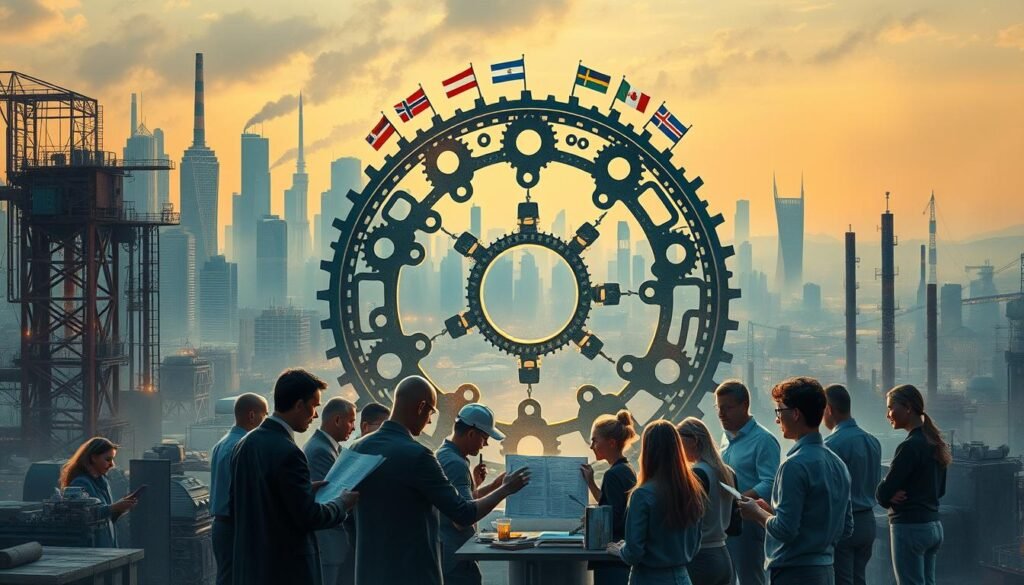
We welcome partnerships that bring global knowledge to local action. By linking Indian innovators with international funders and technical partners, we speed up adoption of proven models. This unlocks new waste-to-wealth opportunities in India.
We work with foundations, multilaterals, and corporations to scale solutions. Programs like Social Alpha with the H&M Foundation’s Techtonic challenge help startups grow. These alliances show how support can turn informal value chains into formal, living-wage cooperatives.
We look at tools that can be used here: blockchain traceability that meets EU Green Deal standards, Extended Producer Responsibility frameworks, and battery-recycling best practices. Each tool makes exports ready and builds trust while expanding Circular economy benefits in India.
We focus on inclusive design. Partnerships with Saamuhika Shakti and similar initiatives help waste pickers join formal systems. This improves their livelihoods and collection efficiency. Replicating these templates reduces leakage, raises incomes, and enhances social equity in the circular transition.
We support technology transfer. International bodies like ESCAP back biochar and soil-health projects and support battery and e-waste pilots. Access to chemical-recycling methods and bio-based polymer prototypes accelerates industrial uptake and widens waste-to-wealth opportunities in India.
We track outcomes for startups and policymakers. Cross-border collaborations offer funding, technical training, and market linkages for innovators. These links create clearer pathways from lab to market.
We suggest benchmarking and phased adoption. Learning from countries with strict EPR enforcement helps streamline India’s rules. This pragmatic approach boosts compliance and strengthens the incentives that deliver Circular economy benefits in India.
We create multi-stakeholder platforms that tie research institutions, industry leaders, and civil society into joint ventures. Doing so speeds diffusion of best practices and unlocks scalable models. These models convert municipal and industrial waste into measurable economic value.
Future Trends in India’s Circular Economy

We’re looking at big changes in how we deal with waste. New technologies in India will help us recover more materials and design better products. These changes will make a big difference in waste management over the next ten years.
Emerging Technologies and Their Potential
AI, IoT, and robotics are making waste sorting more accurate. Companies like Banyan Nation use data to improve material quality. Bintix uses tags to track materials back to their source.
These systems make it faster to turn waste into useful materials. Advanced recycling and fibre-regeneration will also play a big role. They’ll help us reuse plastics and textiles.
Bio-based materials and biodegradable plastics are becoming more common. Startups are creating sustainable alternatives to leather and plastic films. Community-scale anaerobic digesters and biochar systems will also improve soil health.
Predictions for Waste Management Improvements
Clear policies and enforcement are key. States need to work together and enforce Extended Producer Responsibility (EPR) rules. This will create a steady demand for recyclers and verified materials.
Integrating waste pickers into formal logistics will improve their lives. Upskilling programs will help them use digital tools better. This will increase efficiency and quality.
Investors will start to focus more on circular startups. This is because of growing ESG demands and rising raw material costs. Indian companies will lead in textile regeneration and recycling technologies.
In the next five to ten years, we’ll see big improvements. Recycling rates for plastics and e-waste will go up. More organic waste will be processed locally. Companies will adopt circular procurement policies more widely.
For a detailed look at circular initiatives in India, check out this overview: circular economy in Indian industries.
How Individuals Can Contribute to Circular Economy
We can help India’s circular economy by taking simple steps. Start by sorting waste at home: keep organics, recyclables, and e-waste separate. This action boosts recycling rates and cuts down on waste for processors.
Choose durable products and support brands that use recycled materials. Return batteries and electronics to places like Attero and Recycle Karo. Composting at home or in your community helps too, and can even provide energy and improve soil.
Joining local recycling efforts can make a big difference. Work with groups like Saahas Zero Waste or Greenworms. Use apps like ScrapUncle and EnCashea to schedule pickups and learn more about recycling.
Teaching others is also key. Organize workshops in schools and colleges. Encourage circular design in education and support student entrepreneurs. Advocate for better waste management and recycling policies in your area. For help or to get involved, email us at info@indiavibes.today.