



In Indore, a parent-teacher meeting highlighted a student’s project. They designed a rainwater-harvesting model for a community park. It started in class and became a local effort.
This story shows how ICSE connects school learning to real-world problems. ICSE schools teach critical thinking, English skills, and practical abilities. These skills prepare students for the future.
The ICSE board was founded in 1958 and is recognized globally. It offers a challenging curriculum with many subjects. This prepares students for higher education and careers.
This article looks at how ICSE prepares students for the future. It uses examples from ICSE schools and parents’ views on long-term growth. For more information, email info@indiavibes.today.
Understanding the ICSE Curriculum Framework
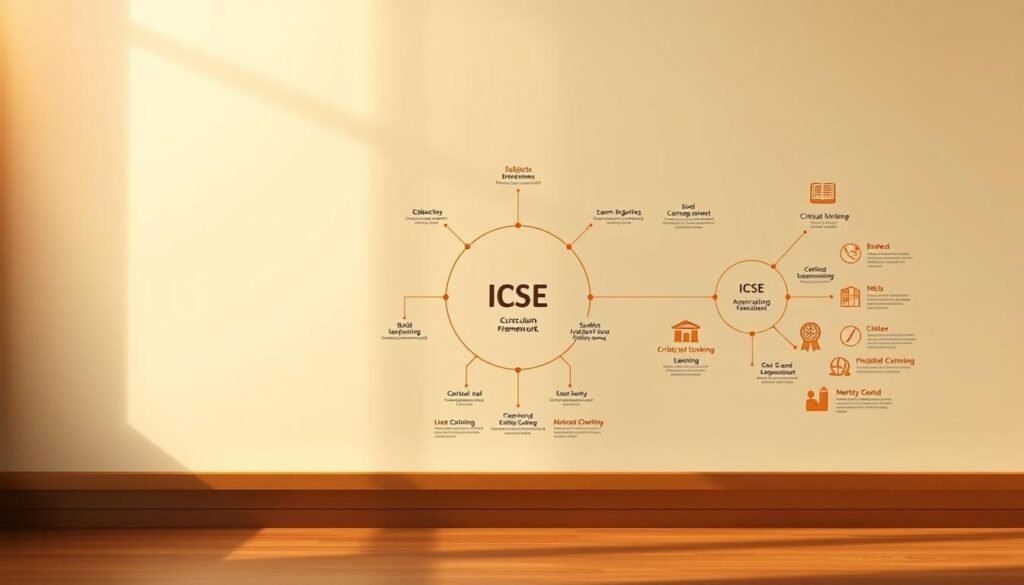
The ICSE curriculum is a structured path that mixes deep subject knowledge with practical skills. It helps students go beyond just memorizing facts. This approach prepares them well for technical studies and universities worldwide.
Core Components of the ICSE Curriculum
The ICSE curriculum focuses on clear concepts, lab work, projects, and a variety of subjects. It uses both internal assessments and exams to show how students are doing. Schools also do regular projects and practicals to help students apply what they learn.
Assessment isn’t just about one big exam at the end. It’s a mix of internal marks and external scores. This approach helps students think critically and prepares them for careers in engineering and technology.
Importance of a Well-Rounded Education
We believe in a balanced curriculum that includes academics, arts, sports, and extracurricular activities. This mix helps students develop teamwork, leadership, communication, and problem-solving skills.
Holistic learning is key. It helps students think across different subjects and solve complex problems. The curriculum also lets students choose subjects early, making it easier to move to international universities.
| Element | Classroom Practice | Student Outcome |
|---|---|---|
| In-depth Subject Study | Extended syllabi, focused lessons, practical labs | Strong conceptual foundations |
| Continuous Assessment | Periodic tests, internal projects, teacher feedback | Clear progress tracking and targeted improvement |
| Project Work | Individual and group projects tied to theory | Hands-on skills and collaborative experience |
| Extracurricular Integration | Arts, sports, clubs, and community activities | Leadership, communication, resilience |
| Flexible Subject Choices | Electives and early specialization options | Smoother path to technical degrees and global study |
Holistic Learning: More Than Just Academics
We think education should do more than just test scores. ICSE schools focus on the whole child, covering mind, heart, and body. This way, students are ready for any challenge, not just school.
Integrating Life Skills into Education
Life skills are part of everyday learning. Students do projects, help in the community, and work in labs. They also learn about values and how to work together.
Through projects and internships, students get real-world experience. They learn to solve problems and share their findings. This is in line with new education reforms that focus on skills.
Simple routines in class help students grow. They keep journals, help each other, and do community work. These activities help students think clearly and grow over time.
Encouraging Emotional Intelligence
Emotional smarts are just as important as book smarts. Schools offer counseling, mindfulness, and stress management. This helps students handle their feelings and make good choices.
Yoga, meditation, and acting out roles help students understand others. These activities improve focus and help students adapt to tough situations.
- Self-awareness: reflection activities and feedback cycles.
- Self-regulation: breathing techniques and time-management drills.
- Social skills: collaborative projects and service learning.
When schools teach life skills and emotional smarts, students grow in a real way. They become confident and ready for life’s ups and downs.
Fostering Critical Thinking in Students

The ICSE curriculum lays a strong foundation for critical thinking and problem-solving. It equips young learners with the skills to evaluate evidence and make informed decisions. These skills are essential for tackling complex challenges in both technical fields and everyday life.
Here are some practical ways to make critical thinking visible and active in the classroom and at home. Each method helps develop skills that go beyond the classroom.
Activities That Promote Analytical Skills
Inquiry-based science labs encourage students to form hypotheses and test variables. They draw conclusions based on evidence. This approach reflects the ICSE curriculum’s focus on understanding concepts over memorization.
Math tasks that tackle real-world problems require analytical thinking. Project-based learning involves researching, designing experiments, and presenting findings. This helps students develop problem-solving skills.
Debates and structured discussions in English and Social Studies improve argumentation. Students learn to make clear claims, provide evidence, and respond respectfully to opposing views.
Encouraging Questioning and Curiosity
Teachers can foster a culture of questioning with open-ended tasks. Asking “why” and “how” encourages students to think deeply. This is vital for future engineers and technical specialists.
Case studies replace rote exercises, adding depth and context. At home, parents can spark curiosity by discussing current events and simple problem-solving scenarios.
It’s important to value evidence-based reasoning. Reward students for their curiosity and for showing their thought process. This aligns with the ICSE curriculum’s goal of lifelong learning and supports skills beyond the classroom.
The Role of Extracurricular Activities

We see extracurricular activities as a link between school lessons and real-world skills. In ICSE schools, these activities add value by teaching teamwork, time management, and creativity. These are skills that textbooks often miss but employers love.
By joining activities outside regular classes, students learn to manage their time and meet deadlines. This skill is vital for future professionals who will handle many tasks at once. Schools that focus on these activities help students grow in important soft skills.
Benefits of Sports and Arts Participation
Sports and arts offer unique benefits. Sports improve physical health, strategic thinking, and leadership skills. They also teach teamwork and coordination.
Arts, like music, drama, and visual arts, boost creativity and confidence. ICSE schools often hold competitions and showcases. These experiences help students improve their communication and problem-solving skills.
Building Leadership Through Clubs and Teams
Clubs and student councils give students real-world roles. They learn to plan, budget, and solve conflicts. These activities help students develop leadership skills in practical ways.
Being part of clubs also teaches civic responsibility and ethical decision-making. Students take on different roles, mentor others, and manage projects. This process helps them become accountable and adaptable leaders.
- Teamwork: Project-style collaboration mirrors workplace teams.
- Resilience: Losses and setbacks teach recovery and iteration.
- Time management: Balancing practice and study creates discipline.
- Communication: Presentations and performances sharpen clarity.
For educators and engineering professionals, the benefits are clear. Extracurricular activities provide a space for essential skills. In ICSE schools, these programs help students grow and prepare for complex challenges.
Emphasis on Communication Skills

We focus a lot on communication skills because engineers need to explain ideas well. They must defend their designs and document their solutions. The ICSE curriculum helps a lot with this by focusing on English.
Classrooms become places where students practice speaking and writing. They learn to make clear presentations and write detailed reports.
Verbal fluency through active classroom practice
We improve verbal communication with special activities. Debates and presentations help students speak fluently and persuasively. Role-plays and group discussions help with listening and responding.
Teachers give students short speaking tasks often. This helps them feel confident without feeling overwhelmed. It’s like real-life situations like team meetings and client pitches.
Structured approaches to written clarity
We work on writing skills step by step. We start with grammar, then vocabulary, and then analyzing literature. Students also do open-ended assignments to organize their thoughts and support their ideas with evidence.
Project reports mix research, technical details, and clear writing. This prepares students for writing proposals and technical reports in their future careers.
Integrated tasks that mirror real workflows
We give students tasks that involve both speaking and writing. They plan, write, revise, and present their work. This is like real-world projects.
- Short presentations to sharpen delivery and timing
- Peer review to improve clarity and precision in writing
- Report templates to teach structured technical documentation
The ICSE curriculum’s focus on English helps students grow. They become more confident and clear in their communication. They can explain complex ideas well.
Cultivating a Global Perspective

We think education should go beyond local areas to foster global awareness. ICSE schools mix learning with real-world projects. This helps students understand big issues like climate change and human rights.
This way, they’re ready for working in multicultural teams and tackling global engineering challenges.
Understanding Diversity and Inclusion
In ICSE schools, classroom talks bring together different views from India and around the world. Teachers use multicultural books, case studies, and role plays to show how people interact. Schools also have clear rules for being inclusive, like giving extra time for exams and special support for students with needs.
These steps help students understand and respect differences in language, religion, and ability. This respect is key when working in teams with people from different backgrounds.
Teaching Global Citizenship
We teach students to take action on global issues through hands-on activities. They participate in international exchange programs, model United Nations events, and projects on sustainability. These projects have a big impact locally but are also relevant globally.
Learning languages and working on projects together improves communication skills. These skills are essential for working in multinational teams. The projects focus on topics like renewable energy and water management, linking classroom learning to real-world issues.
Students gain cultural understanding, empathy, and the ability to adapt to international careers. These skills are what global employers look for. They help create stronger, more diverse teams around the world.
Collaboration and Teamwork: Building Blocks of Success
We see teamwork as key for students in engineering and tech. In ICSE classrooms, students work in groups like real teams. They plan, make prototypes, test, and report, learning skills beyond school.
Group projects help students manage time and plan. They take turns being researcher, designer, tester, and presenter. This way, everyone learns different parts of a project.
After each task, teams reflect on what worked and what didn’t. They set goals for the next project. This is like how companies like Tata Consultancy Services and Infosys work.
When biology, physics, and computer science students work together, they share ideas. Mixed groups teach students to use their strengths and talk across differences.
Teachers help solve conflicts and make sure everyone does their part. They focus on how students work together, not just their grades. This teaches students to be accountable in teams.
Here are some tips for schools:
- Change team roles every week to give everyone a chance to learn.
- Use short meetings to check on progress and solve problems.
- Have students give feedback that is specific and actionable.
We check if students are improving by looking at their presentations and reports. We also see how well they work with each other. This shows they’re ready for the real world.
| Activity | Skills Practiced | Classroom Tip |
|---|---|---|
| Design sprint | Project planning, prototyping, time management | Set a 48-hour deadline and assign roles |
| Cross-subject project | Communication, interdisciplinary problem solving | Pair students from different streams and brief on outcomes |
| Peer review cycle | Feedback delivery, accountability, reflection | Use structured forms and rotate reviewers |
| Retrospective meeting | Conflict resolution, continuous improvement | Limit to 20 minutes and record action items |
Technology Integration in Learning

We see technology as a tool to help students learn and prepare for their future careers. In ICSE classrooms, devices are not just for fun. They help students explore, create, and learn about ethics. We focus on short activities to show how tools help achieve learning goals.
Digital Literacy as a Core Competency
Digital literacy is key for us. It helps students learn to research, analyze data, and understand online ethics. We teach them to evaluate sources, cite evidence, and spot fake news.
Students learn about cyber safety and privacy. They learn to make strong passwords, use two-factor authentication, and talk about sharing content. These skills are important in engineering and college.
Using EdTech Tools to Enhance Learning
We use EdTech tools like simulation software and cloud apps to make learning hands-on. Labs go beyond just watching. Students do simulations, collect data, and improve their designs.
Students become creators through project-based tasks. They make presentations, code simple models, and share their work online. This prepares them for college and the job market.
| Focus Area | Classroom Example | Skill Outcome |
|---|---|---|
| Research and Evaluation | Guided web hunts using library databases and Google Scholar | Source validation, citation practice, critical reading |
| Data Analysis | Spreadsheet labs and simple Python scripts for plotting results | Quantitative reasoning, visualization, reproducibility |
| Simulation and Modeling | Physics and chemistry virtual labs with parameter control | Hypothesis testing, systems thinking, design iteration |
| Collaboration | Cloud-based group projects with shared documents and version history | Team coordination, digital project management, communication |
| Creative Production | Multimedia presentations and student-created videos | Storytelling, technical communication, digital content skills |
Preparing Students for Future Careers
We think education should connect school and work. ICSE schools teach both subject knowledge and practical skills. This helps students get ready for their future careers.
Skills mapping helps plan lessons. The 4 Cs—Critical Thinking, Creativity, Collaboration, Communication—are key for today’s jobs. Teachers also teach digital skills, adaptability, and resilience.
We start career guidance early. Counselors help find strengths and suggest subjects for different careers. They also offer mentorship and help with exams.
Linking education to real-world jobs is important. Internships and talks with companies help students try out their choices. This hands-on learning is key for a smooth transition into the workforce.
Teachers get feedback to improve teaching. Regular reviews help tailor support to each student. This improves both technical skills and soft skills, making graduates ready for jobs.
Our goal is clear: students know their career paths, schools have strong records, and employers get skilled workers. This makes education and work better aligned.
Here’s a quick look at how schools can make students career-ready.
| Practical Step | What It Builds | Expected Outcome |
|---|---|---|
| Skills-focused curriculum with project work | Critical thinking, creativity, problem solving | Students able to tackle open-ended technical tasks |
| Structured career guidance and mentorship | Clarity in subject choice and career paths | Higher confidence in applying to universities and internships |
| Industry interactions and internships | Practical workplace skills, networking | Smoother transition to college or employment |
| Digital literacy and coding modules | Technical competence relevant to modern roles | Better preparedness for STEM and tech careers |
| Continuous assessment with personalised feedback | Self-awareness, resilience, targeted improvement | Students develop adaptiveness and sustained growth |
Encouragement of Creativity and Innovation
The ICSE curriculum puts creative thinking at its core. Students tackle tough problems and complete open-ended tasks. They make short films, build prototypes, and explore graphic narratives.
This mix of arts and science boosts creativity and innovation. It teaches students to solve engineering challenges in new ways.
Hands-On Learning Experiences
We believe in learning by doing. Science labs, maker spaces, and mixed assignments help students go from idea to prototype. These settings encourage them to keep trying and improving, just like in real product development.
Local partnerships and top-notch equipment help turn classroom learning into real-world skills. Smart collaborations with companies give students a chance to use tools used in research and development. For example, Samsung is training 20,000 Indian students in AI and Big Data. You can learn more about this program here.
Innovation Competitions and Fairs
We encourage students to join science fairs, inter-school contests, and innovation competitions. These events help them share their ideas, get feedback, and improve under tight deadlines. They also learn to communicate their inventions effectively.
It’s not just about winning. Teams learn about planning, testing, and basic business skills. Regularly participating in these events keeps students curious and fosters a culture of inquiry within the ICSE curriculum. It opens doors to research, entrepreneurship, and technical careers.
Assessment Methods: Moving Beyond Exams
We see assessment methods as tools to track learning journeys, not just check points. The ICSE evaluation system combines ongoing internal checks with project work and exams. This mix helps students see their strengths clearly and reduces stress.
Formative vs. Summative Assessments
Formative assessments give timely feedback: quizzes, class tasks, lab reports, and short projects. They show where a learner is each week. This lets teachers adjust lessons and students improve their work.
Summative assessments measure what students have learned over time through exams and tests. By balancing these, students gain deep knowledge without feeling overwhelmed by exams.
The Value of Feedback in Student Development
We value feedback as a key teaching practice. Detailed, quick comments on projects and presentations help students improve. They learn to think about their own learning.
Feedback that points out strengths and areas for improvement makes learning a cycle. For teachers, clear guidelines and regular checks help them improve lessons like agile development.
Practical tip: Have short, regular formative assessments with clear rubrics. Use the results to adjust lessons and support each student under the ICSE evaluation system.
Conclusion: The ICSE Impact on Student Futures
Graduates with ICSE education show strong English skills and deep subject knowledge. They also think analytically. This is thanks to the curriculum’s focus on continuous assessment and project work.
For more on how schools apply these ideas, check out Ekya’s curriculum approach here.
Lifelong Learning Mindset
The ICSE curriculum boosts reasoning, curiosity, and adaptability. These skills are key for careers in engineering and tech. Students learn to explore and solve problems on their own.
This prepares them well for college and the workforce.
Confidence and Resilience in Students
ICSE programs focus on emotional intelligence, sports, arts, and fair assessments. These help build confidence and resilience. Students become more self-assured and ready for challenges.
This goes beyond just grades. It helps students grow emotionally and practically.
We encourage educators, parents, and professionals to work together. Let’s focus on lifelong learning, confidence, and personal growth. For more on curriculum innovation, email info@indiavibes.today.