



Today, one in ten Indians is a senior, about 81 million people. This number could grow many times by 2050 if trends continue.
Will the growth of seniors be a blessing or a burden? India has a huge youth population, around 440 million under 25. But the time to turn this into jobs is running out. If we don’t act, we’ll face more pressure on healthcare and other services.
This issue is not just about seniors. It’s a big challenge for many areas like healthcare, pensions, and technology. We need to change these systems together to make sure aging is a positive time, not a burden.
We want to work together to solve this problem. We invite experts from all fields to join us. Email us at info@indiavibes.today. Let’s use data and ideas to find solutions for India’s aging challenges.
Understanding the Aging Population in India

India is at a turning point, where the aging and youthful populations meet. This section explains key terms, shares important statistics, and highlights shifts in demographics. Our aim is to help engineers, planners, and educators plan for the next 10 to 30 years.
Defining the cohort
Researchers often use the 60+ or 65+ age groups to define an aging population. We discuss three important metrics: median age, life expectancy, and the old-age dependency ratio. The old-age dependency ratio shows the number of nonworking older adults per 100 working-age adults. This helps planners plan for pensions and care services.
Current statistics and trends
India’s median age is under 30, but this will change as the population ages. The United Nations predicts India will have about 324 million senior citizens by 2050. Right now, India adds over one million workers to the labor force each month. This slows down the aging process but hides long-term changes.
Competing lifecycle burdens
India faces uneven needs across ages. It has about 20% of global preterm births, putting pressure on resources at both ends of life. Engineers and health system designers must balance neonatal care with geriatric services when planning capacity and budgets.
Key factors driving change
Falling fertility and rising longevity are key drivers of senior population growth. Lessons from East Asia and UN DESA analyses show how these changes affect age structures over decades. Economic migration and urbanization add complexity, with youth moving to cities and elders staying in rural areas, creating care gaps.
Behavioral and economic feedbacks
Employment issues among young adults can delay household formation and reduce savings. These changes affect family support systems for elders and increase demand for public pensions and health insurance. We must consider these effects when forecasting elderly demographics and designing infrastructure.
Implications for planners
Professionals should test systems for 10–30 year horizons. Use demographic shifts and elderly population statistics to plan for hospitals, housing, and transport. Scenario models should include different fertility, migration, and employment scenarios to capture aging trends.
| Measure | What it shows | Practical use for planners |
|---|---|---|
| Median age | Central tendency of population age | Signals timing of peak demand for geriatric services |
| Old-age dependency ratio | Number of older nonworkers per 100 working-age adults | Informs pension funding and eldercare staffing needs |
| Life expectancy | Average years expected at birth or later ages | Shapes long-term healthcare and housing design |
| Labor force growth | Net monthly additions to working-age population | Guides education, training, and job-creation policies |
| Preterm birth share | Proportion of global preterm births from India | Highlights competing health priorities across life stages |
Societal Impacts of an Aging Demographic
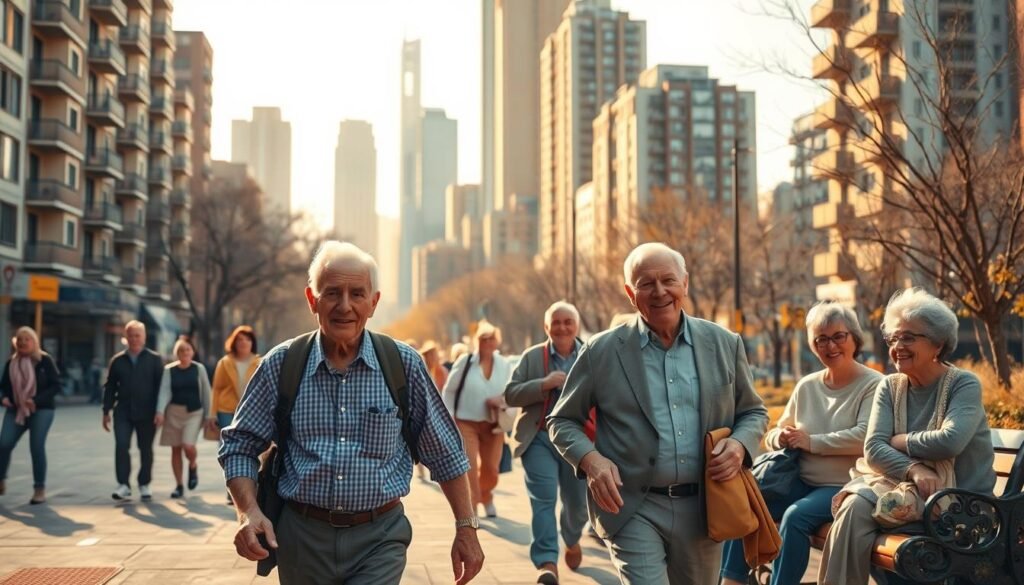
Demographic shifts are changing daily life in cities and villages. As more seniors live longer, family structures are evolving. This change affects families, communities, workplaces, and public services.
Changes in Family Structures
Internal migration and overseas work have led to migrant-split families. Many elders are left in rural areas as younger adults seek work elsewhere. Mathew Cherian of HelpAge India and P. H. Vaishnav of the Chandigarh Senior Citizens Association highlight this issue.
Recent census data show 11% of seniors over 60 live alone. About 8.5 million elderly people live alone or with other seniors. This points to growing social isolation.
Surveys reveal emotional strain: 37% of seniors feel lonely. A 500-person survey in Delhi and Mumbai found 12% experienced extreme indifference from their children. Reports of abuse and neglect affect roughly 30% of elders, showing gaps in social protection and law enforcement.
Effects on Workforce Participation
Workforce patterns reflect broader aging population challenges. Labor force participation among older adults is shrinking. India adds many new entrants to the labor market each month. The ILO notes more than 80% of the workforce is informal, so most workers lack pension coverage.
Historically, over 90% of senior citizens worked in the unorganized sector without formal pensions. Many continue to seek work late into life; examples include seniors pursuing jobs in Bangalore to meet basic needs.
Intergenerational economic pressure rises as youth face precarious incomes. CMIE data for 2025 shows youth unemployment above 20%, which reduces households’ capacity to support elders. These pressures deepen aging population challenges across households.
For engineers, educators, and planners, these trends suggest practical responses. Community design for affordable co-living, modular homes that adapt to changing family sizes, and workplace policies that use seniors’ skills through part-time or mentorship roles are needed. Thoughtful social engineering can ease strain from senior population growth while preserving dignity and purpose for older adults.
Economic Challenges of an Aging Population

We are seeing big changes as more seniors join our communities. This shift affects how we spend money on public services and personal choices. It’s a challenge for planners and engineers to find ways to meet these needs without breaking the bank.
As people get older, they often face more health issues. This includes problems with vision, hearing, and depression. Hospitals and clinics are working hard to serve everyone, from new babies to seniors.
There’s a shortage of doctors trained to care for seniors. Reports show that many efforts are being made, but there’s a long way to go. We need to focus on training more doctors and building clinics that can handle age-related health problems.
Healthcare Costs and Resources
Preventive care can save money in the long run. But, treating health problems late on can cost a lot. By studying these patterns, we can find ways to spend less on healthcare.
The law also plays a big role in how we spend money on healthcare. Laws protect vulnerable groups, including seniors. These laws help decide how to allocate funds and ensure care is provided with dignity.
Pension Systems and Financial Security
In India, many seniors don’t have access to pensions. This is because they worked in informal sectors without benefits. State pensions only cover a small part of their needs, leaving many without a steady income.
Without a steady income, seniors face poverty. This can lead to more people relying on family for support. We need pension systems that are fair and sustainable for the future.
To solve these problems, we need to plan carefully. We should use technology to make healthcare more affordable. At the same time, we must find ways to make sure seniors have financial security without overloading the system.
| Challenge | Current State | Practical Response |
|---|---|---|
| Rising healthcare demand | More chronic disease and mental health needs among elders | Scale geriatric training; expand primary care with telehealth |
| Resource competition | Maternal and neonatal care share finite budgets | Integrated lifecycle budgeting and priority-based allocation |
| Pension coverage gaps | Majority of senior workers lack formal pensions | Introduce portable schemes and contributory micro-pensions |
| Fiscal sustainability | Risk if formal employment and tax base do not expand | Actuarial modeling, phased reforms, and mixed funding |
| Legal and ethical duties | Courts increasingly assign responsibility for vulnerable groups | Embed elder safeguards in statutes and procurement rules |
The Role of Healthcare in Supporting Seniors

We see healthcare as key to keeping older adults’ dignity. With more seniors and changing needs, we need to update services. We aim to close access gaps, grow effective services, and train the workforce.
Geriatric care gaps are clear across states. Dr. S.K. Sharma in Haryana supports clinics and day-care centers. But, these services are not available everywhere, showing a big need.
Rural areas often have only primary clinics. Tertiary hospitals in cities face too many patients. This shows a big problem in healthcare access.
Geriatric care is vital to the health system, not just an extra service. We need to fix the system to help seniors better.
Availability of Healthcare Services
Primary care should handle common health issues in seniors. We suggest models that include geriatric screenings and referrals to specialists.
Community-based care helps hospitals. Day-care centers, mobile clinics, and volunteers from HelpAge India help a lot. They keep care going and support seniors socially.
Innovations in Elderly Care
New ideas in care need clear geriatric plans and chronic disease management. Training in gerontology and rehabilitation helps doctors spot problems early.
Services mix home and institutional care. Volunteer programs and community health workers are part of a bigger network. We must make sure old-age homes offer care and social activities.
Technology and education can change things. Telemedicine, standard procedures, and training in geriatric care make a big difference. Laws require better care, which means following rules to improve care quality.
| Priority | Intervention | Expected Benefit |
|---|---|---|
| Workforce Training | Geriatric certification, elder-abuse modules, rehabilitation skills | Better diagnosis, reduced hospital readmissions, safer care |
| Primary Care Scaling | Telemedicine nodes, chronic disease protocols, mobile clinics | Greater access in rural areas, timely interventions, cost containment |
| Community Services | Day-care centers, volunteer engagement, senior citizen services hubs | Improved social support, reduced isolation, smoother care transitions |
| Clinical Protocols | Integrated geriatric pathways, mental health interventions | Standardized care, earlier detection of frailty, better outcomes |
| Assistive Technologies | Low-cost mobility aids, remote monitoring, sensor-based safety | Increased independence, fewer falls, longer community living |
| Policy & SOPs | National geriatric standards, legal care pathways, monitoring frameworks | Accountability, reduced negligence risk, equitable services |
Technology and the Aging Population
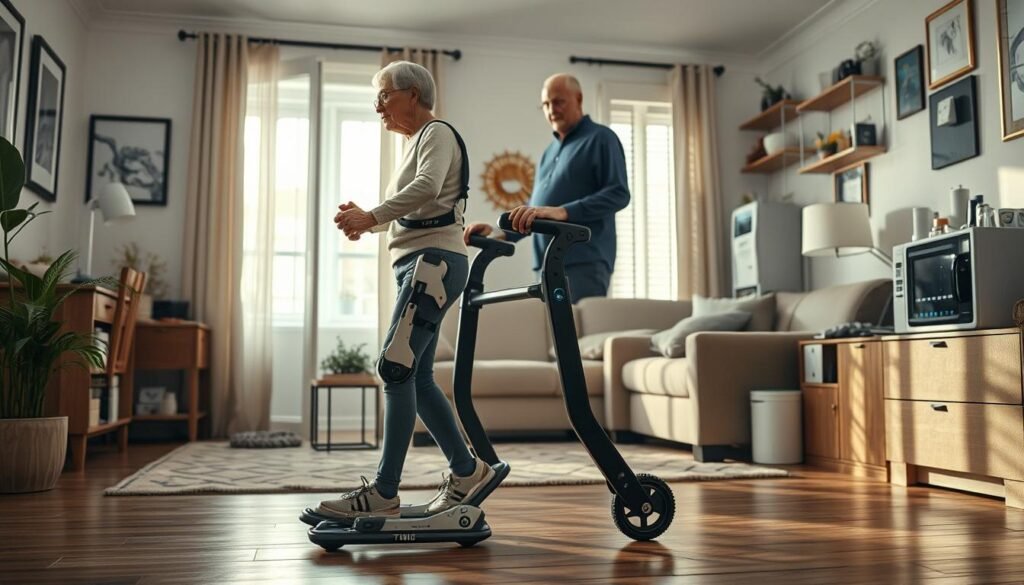
Technology is changing how older adults live, connect, and get care. As India’s aging population grows, we need engineers, healthcare providers, and community leaders to work together. They must create devices and services that are useful, affordable, and fit local needs.
Assistive Technologies for Independence
There are many solutions to help older adults stay mobile and dignified. Mobility aids and smart walking frames help with balance. Devices for hearing and vision improve daily communication and safety.
Medication reminders, simple apps, and voice prompts help avoid missed doses. Remote sensors and smart-home adaptations alert caregivers to falls or unusual patterns.
Designs should be affordable, durable, and use little power. They should also work offline in areas with limited internet. Rural elders need solutions that work on low-bandwidth networks and with intermittent electricity.
We encourage seniors to be creators, not just users. Maker spaces where students, engineers, and elders work together are great. This approach sparks innovations based on real-life experiences.
Telehealth: A Lifeline for Seniors
Telehealth connects rural elders to specialists when local ones are scarce. It reduces travel and speeds up advice.
Clear protocols are key: telemedicine needs standard procedures, documentation, and informed consent. This protects patients and clinicians.
Video counselling, virtual groups, and digital literacy programs help with mental health and social connections. These services lower loneliness and help monitor depression or abuse.
Technical implementation must focus on interoperability, data privacy, and user-friendly interfaces. Low-cost hardware, edge AI for fall detection, and low-bandwidth telemedicine platforms are essential.
Training for healthcare workers and volunteers is critical. They need to support remote devices and triage effectively. For engineering students and professionals, projects in human-centered design and edge-AI offer valuable opportunities to serve elder healthcare needs.
We invite collaboration to strengthen services for senior citizens and address the growing elderly population with tech. Reach out to discuss projects that combine empathy, engineering, and practical deployment: info@indiavibes.today.
Government Policies Addressing Aging Issues
India is tackling aging population challenges through laws, health plans, and social schemes. Clear policies shape services for seniors and protect them as the population ages. We look at current efforts and suggest reforms to improve service delivery and accountability.
Current Initiatives in India
The Maintenance and Welfare of Parents and Senior Citizens Act offers legal help for neglected elders. But, many say it’s not used enough due to poor implementation.
State and central pension schemes help many, but the money is small and not everyone gets it. Elderly population statistics show where benefits miss the most vulnerable.
Nonprofits like HelpAge India and state pilots in Haryana have started day-care centers and senior clubs. These local programs offer real help and fight loneliness among seniors.
Geriatric care lacks national guidelines. Public health focuses more on mothers and children, leaving geriatric care uneven.
Proposed Reforms for the Future
We suggest updating social security by mixing contributory and noncontributory pensions. More jobs will help more people get pensions, making the system stronger.
Legal reforms should make the Maintenance and Welfare Act work better. This includes fully functional tribunals, quicker complaint handling, and training for police on elder protection.
Health system changes should include national geriatric guidelines and geriatric education for doctors. Funding community clinics will make care better and reduce hospital visits.
It’s important to plan together: linking youth jobs and eldercare funding to avoid economic problems from aging. Using metrics like poverty and hospital rates will help improve services.
We suggest testing new ideas with data to see how they help seniors. This will guide better policies for an aging population.
Cultural Perspectives on Aging in India
We look at how aging views shape life, policy, and roles in India. This topic links faith, family, and modern life. Changes in aging trends and demographics are key.
Older traditions and today’s life are different. Elders once led in rituals and decisions. They were seen as moral guides and knowledge keepers.
Now, urban life and smaller homes change care. Some seniors live in assisted-living or get paid care. Yet, many families keep close ties despite challenges.
H3: Traditional vs. Modern Views
Respect for elders, like “matru devo bhava,” is strong. They hold authority in ceremonies and family stories. This helps younger people adjust.
Economic changes and mobility affect daily life. Young workers face long commutes and unstable jobs. This makes caregiving harder, even when families want to help.
H3: The Role of Elders in Society
Elders share local knowledge, like crafts and history. They mentor youth in community centers and cultural groups. Their involvement boosts social bonds and learning.
Public programs can use this resource. Mentoring, civic roles, and volunteer projects are good. Designing spaces and curricula that use elder experience is key.
But risks like stigma and abuse limit their role. Reports show mistreatment is common. This harms trust and wellbeing. We need cultural shifts and protection services.
We suggest policies that honor tradition but also adapt to aging changes. Including seniors in skill-sharing and community projects strengthens bonds. Designing with value and education makes elders’ roles valuable for the future.
Education and Awareness about Aging
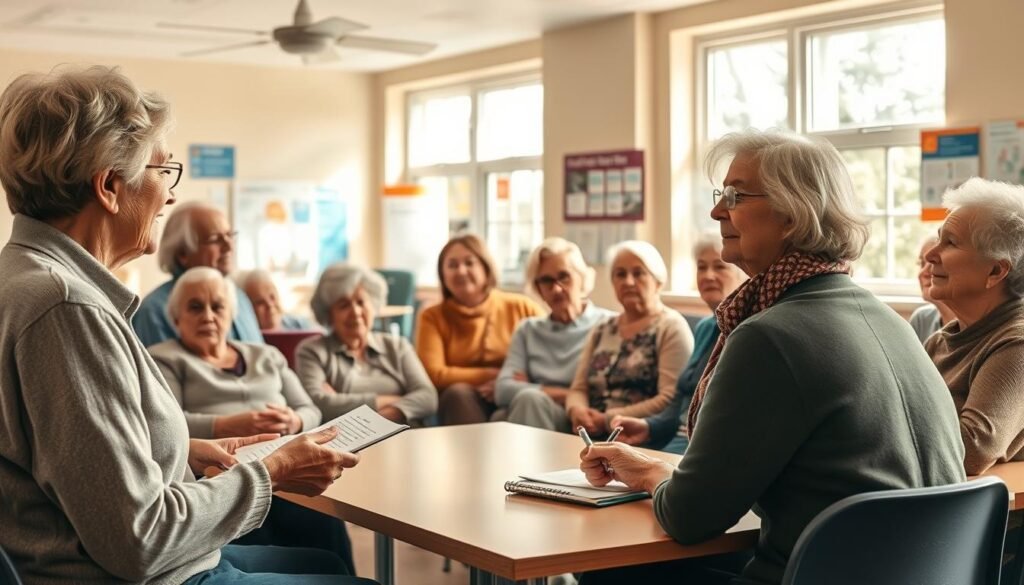
We think education and community involvement are key to caring for our elders. Teaching young people to respect older adults and training professionals in geriatric care can help. Public campaigns can also raise awareness about elderly healthcare needs and make services more accessible.
Importance of Elderly Care Education
We support teaching about elder issues in schools, following HelpAge India’s model. This early education helps prevent neglect and builds empathy between generations.
We advocate for professional training in geriatric care. This includes specializations, caregiver training, and eldercare modules in medical and social work programs. It strengthens the workforce that meets elderly healthcare needs.
We push for public awareness campaigns. These should highlight elder abuse, legal rights, and social entitlements. Training police, municipal staff, and health workers in elder-sensitive approaches improves protections and access to services.
Community Engagement Programs
We support day-care centers, senior clubs, and volunteer-led cultural programs. These are practical responses to aging challenges. Local examples show they reduce isolation and improve well-being.
We encourage peer-support networks like senior self-help groups and village elder committees. These efforts extend the reach of formal services where younger members have migrated.
We back intergenerational initiatives that pair schools with elder groups. These programs boost social capital and make community engagement rewarding for all.
We suggest measuring program impact with simple metrics. These include participation rates, volunteer hours, loneliness indices, and care outcomes. Data guides scaling and secures funding for effective projects.
We recommend academia-industry partnerships to prototype scalable modules and digital literacy training for elders. Combining research with practical design speeds adoption and improves healthcare needs coverage.
| Program Type | Primary Goal | Key Metric | Example Partner |
|---|---|---|---|
| School Value Education | Build empathy and reduce future neglect | Number of schools adopting module | HelpAge India |
| Geriatric Training | Professionalize eldercare workforce | Certified caregivers trained | All India Institute of Medical Sciences |
| Day-care & Clubs | Reduce isolation; provide daily support | Participation rate; satisfaction score | Local NGOs and Rotary Clubs |
| Intergenerational Programs | Knowledge transfer; social bonding | Sessions held; youth engagement level | Schools and cultural groups such as SPICMACAY |
| Peer Support Networks | Community-led coordination of care | Active groups; reduction in emergency visits | Village elder committees |
Case Studies of Successful Aging Initiatives
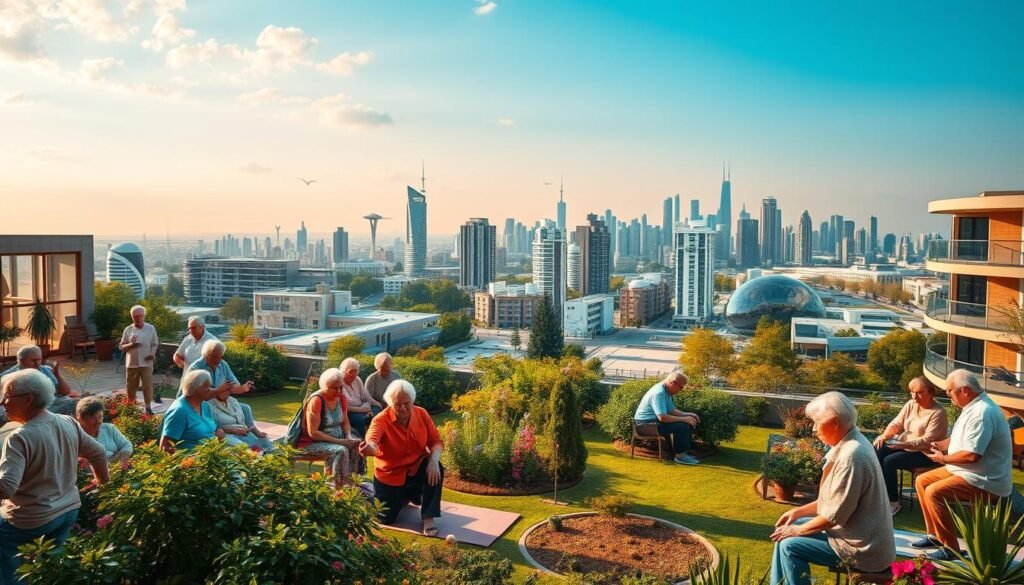
We look at models that face aging challenges and show how to grow. These examples compare policies, services, and health innovations. They help us learn for Indian programs and services for seniors.
International examples to learn from
East Asian countries turned demographic changes into stable care systems. They formalized jobs and introduced broad pensions. Japan has a national policy that offers clear care paths and standards for elderly healthcare.
OECD best practices suggest formalizing labor markets and reforming pensions to reduce costs. These reforms work well with more senior services: day-care, home nursing, and geriatric teams.
Local success stories in India
HelpAge India helps over a million people through outreach and advocacy. This shows NGOs can fill care gaps in rural and urban areas. State pilots in Haryana and Himachal Pradesh show how community care boosts social inclusion and meets basic healthcare needs.
Where the Maintenance and Welfare of Parents and Senior Citizens Act is enforced, elder protection improves. Community clinics and telemedicine pilots help rural elders and manage chronic conditions.
Lessons and transferability
We suggest scaling with evidence: design programs, monitor, and analyze costs before expanding. Teams of experts are key to adapting international lessons for local needs.
Getting professionals involved makes pilots stronger. We invite experts to work together and improve services for seniors. This way, we can tackle real aging challenges and meet changing healthcare needs.
Financial Planning for Aging Individuals
We face a clear challenge: an aging population demands practical steps in personal finance and public policy. Good financial planning for aging begins early and adapts as work patterns and health needs change. Small, steady choices pay off over decades.
Saving for retirement starts with three simple practices: consistent contributions, diversified instruments, and an emergency buffer. For formal workers, employer schemes and the National Pension System offer structured routes. For informal workers, micro-savings and micro-pension products matter most because many older cohorts worked without a provident fund.
We recommend a mix of public provident fund allocations, market-linked mutual funds, and safe debt instruments to balance growth and security. Keep 3–6 months of expenses in a liquid account to protect against income shocks. Portability of benefits and contributory pensions help reduce later vulnerability and limit the fiscal pressure on state pension systems.
Saving for Retirement
Early start beats perfect timing: compounding rewards even modest contributions. Use goal-based saving to match time horizon with risk. For short horizons choose low-volatility instruments, for long horizons favor equities and blended funds. Encourage informal sector pilots that bundle savings with affordable insurance.
Importance of Financial Literacy
Financial literacy creates agency. Teaching budgeting, insurance basics, healthcare cost planning, and legal entitlements reduces exploitation and raises uptake of pension systems. We must simplify products so low-literacy users can understand fees, risks, and benefits.
Fintech solutions, cooperative banking and community outreach can bridge gaps. Embed financial literacy modules into vocational courses and college curricula. Partner with banks and fintech firms to design elder-friendly interfaces and transparent disclosures.
Families need clear discussions about long-term care costs and consent for major financial decisions. Risk disclosure mirrors clinical counseling practices: honest, simple, and repeated at key life stages.
| Objective | Practical Steps | Target Group |
|---|---|---|
| Build retirement corpus | Start early, use NPS and PPF, diversify with mutual funds | Formal and informal workers |
| Maintain liquidity | Emergency fund of 3–6 months in low-risk accounts | All households |
| Expand coverage | Portability rules, micro-pension pilots, contributory schemes | Informal sector |
| Raise capability | Financial literacy curricula, community workshops, fintech tools | Youth and older adults |
| Protect rights | Transparent terms, consent processes, clear risk disclosure | Low-literacy users and caregivers |
We link practical guidance and policy by highlighting elderly population statistics to guide resource allocation. For further reading on literacy and schemes, explore this overview on financial literacy and government support.
financial literacy and government support
Strengthening Community Support Systems
We think strong community support makes aging better. Small changes in design, education, and action help elders connect with life. These efforts meet their healthcare needs and boost civic pride.
Intergenerational relationships can grow through school programs. Students and seniors can learn from each other in workshops. Urban planners should design places that bring people together, reducing isolation.
Encouraging Intergenerational Relationships
Collaborations between colleges and elder-care centers are key. Students can teach elders about smartphones, while elders share their skills. These exchanges strengthen social bonds and help with daily tasks.
Volunteer Programs and Social Support
Volunteer programs, led by NGOs like HelpAge India, show the power of community. They help seniors with basic needs and protect them from abuse. Training and clear reporting systems are essential.
Peer support groups help elders with recreation and mutual aid. These groups boost dignity and provide practical help. They lead to better health and happiness.
- Operational metrics: track loneliness reduction, healthcare adherence and quality-of-life indices.
- Funding mix: blend government grants, CSR funds, philanthropy and small local contributions for sustainability.
- Capacity building: offer training in eldercare, abuse recognition and community outreach to volunteers.
We suggest starting pilots with clear goals and funding. Investing in senior services and intergenerational bonds benefits everyone. It meets healthcare needs and builds social capital.
Future Projections and What They Mean
India’s median age is going up, and the number of older adults will increase a lot by mid-century. The UN and other studies say this change will affect healthcare, jobs, and social services. As the world ages, we must tackle these challenges together.
Anticipated Demographic Shifts
This change brings both chances and challenges. More people living longer means more healthcare needs and chronic diseases. Yet, India also faces big issues in newborn and mother health, like preterm births.
So, we need to plan for all stages of life. For more information on aging, check out this WHO fact sheet on ageing and health.
Preparing for the Next Generations
We need to work on policies for jobs, health, pensions, education, and technology together. Investing in young people’s skills for AI and green jobs can help. This can lead to more stable jobs and less financial stress in the future.
We also need to improve care for older adults. This includes better community clinics and affordable technology. By working together, we can make aging in India a positive experience, not a burden.
As students, engineers, and educators, we should create solutions that help. This includes low-cost telehealth, assistive devices, and training for older adults. We should test these ideas, share results, and keep talking about them. You can reach out and join the conversation at info@indiavibes.today. Together, we can make a difference and ensure a healthy, productive aging process in India.