



At the Indian Institute of Technology, a debate turned into a lesson on civic power. Two students debated if a college rule broke free speech. A professor led them to the Constitution, changing their view from opinion to law.
This moment shows why knowing Indian Constitution Rights is important. These rights are not just ideas; they are real tools that protect our dignity, equality, and freedom.
In this article, we explore the main rights citizens have under the Constitution. We explain how these rights act as strong protections. Our goal is to provide clear, easy-to-understand information.
We also look at lessons from other countries, like Canada, to understand limits and enforcement. This helps us see the balance between personal freedom and the public’s interest. Read on for a guide that helps you know your rights and act with confidence.
Overview of the Indian Constitution
The Constitution is the top law in India. It sets up the government, limits its power, and protects people’s rights. It organizes institutions, assigns duties, and safeguards citizens through constitutional safeguards.
Understanding the Constitution’s Purpose
The main goal of a constitution is to define how the government works and what it can do. In India, the Constitution divides power among Parliament, the executive, and the judiciary.
It includes clear guarantees like basic freedoms, judicial review, and ways to challenge state actions. We compare this to the Canadian Charter to show how rights become real when courts can stop laws that go against them.
But, rights aren’t without limits. Courts use tests like proportionality and reasonableness when the government claims restrictions for public order, morality, or security. This balance keeps rights relevant while allowing the state to meet social needs.
Importance of Fundamental Rights
Fundamental rights protect against unfair power and encourage people to get involved in civic life. They ensure everyone is treated equally and allows for voting, speaking, and innovation.
For engineers, educators, and students, these rights create a space for scientific research and open discussions. They foster innovation and protect academic freedom. The Constitution’s structure supports affirmative action when equality requires specific steps.
Enforcement is key: constitutional safeguards and remedies make rights enforceable. Judicial review and writ jurisdiction, like the right to file petitions before the Supreme Court under Article 32, turn abstract rights into real protections.
The Significance of Fundamental Rights
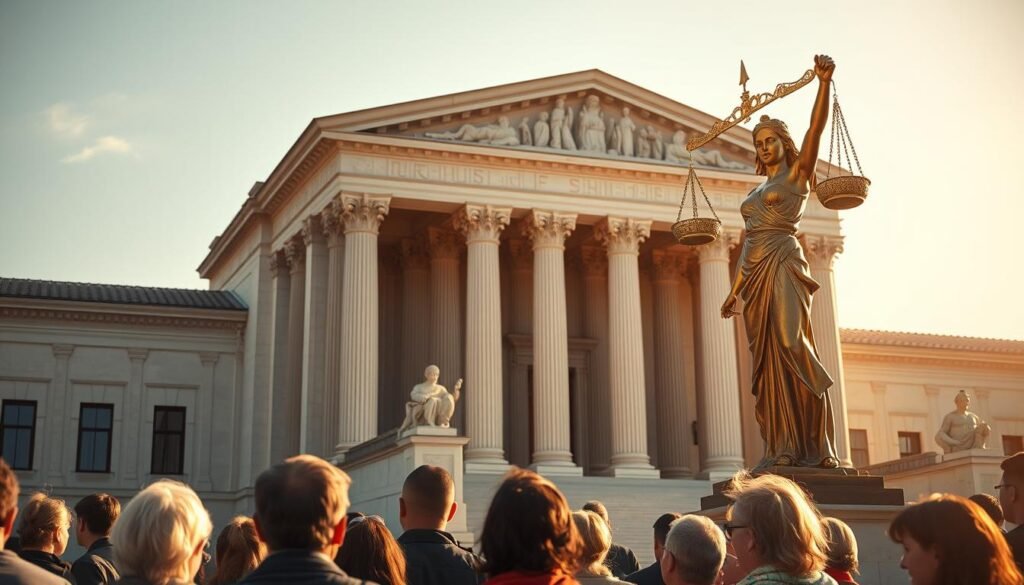
Fundamental rights are key to a good society. They help people engage in civic life, protect their dignity, and limit government power. They make it clear what the government owes to citizens and what citizens owe to each other.
Empowering Citizens
Fundamental freedoms give people the right to speak, gather, and join groups without fear. This freedom sparks creativity in schools, labs, and community groups.
Equal treatment under the law opens doors to education and jobs. Students and workers in India know their rights, helping them face exams, admissions, and job searches fairly.
Political rights give people real power: the right to vote and run for office shows how the Indian Constitution works in practice.
Protecting Against Abuse
Rights limit how police and courts can act: they protect against unfair arrest, searches, and treatment. Courts use rules like reasonableness and proportionality when rights and needs conflict.
Independent courts in India offer ways to challenge abuses. These legal paths are part of the Constitution’s safeguards, helping citizens fight against government overreach.
When people understand their rights, they can use legal options to hold institutions accountable. Talking about rights helps strengthen them and keeps the Constitution relevant to society’s needs.
Categories of Fundamental Rights
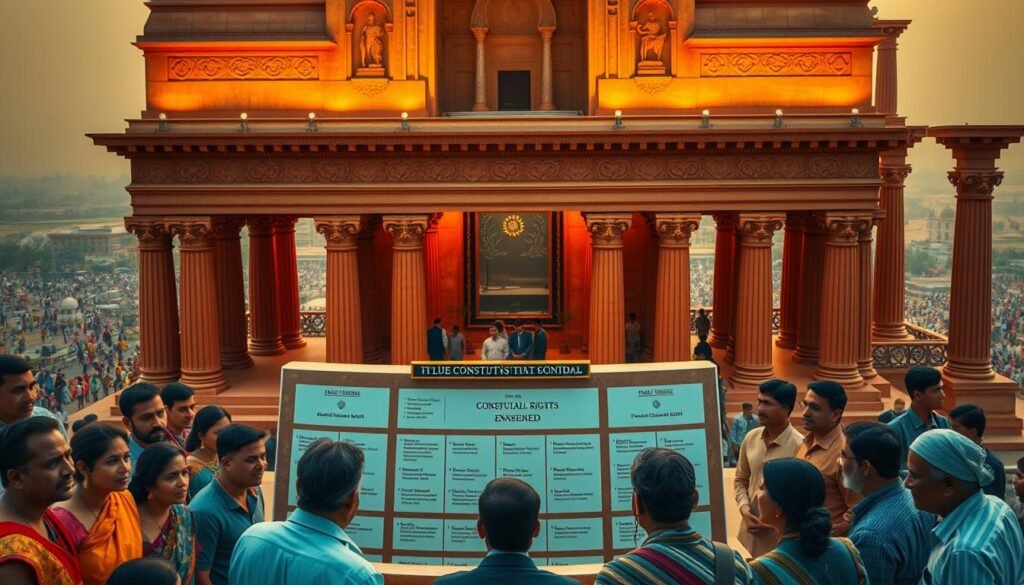
We outline the main categories of Indian Constitution Rights. These group protections for citizens. This helps engineers, educators, and students understand where legal safeguards apply in daily life and work.
Right to Equality
The right to equality ensures equal treatment under the law. It aims to stop discrimination based on caste, religion, or gender. Articles 14–18 and related laws are key to this right.
Affirmative actions can help disadvantaged groups. Courts check if these actions are constitutional and serve a public purpose.
Right to Freedom
Freedoms include speech, assembly, association, movement, and residence. These are vital for open inquiry and professional exchange. They allow for academic debate, technical critique, and collaboration.
There are reasonable restrictions, though. The test is proportionality and necessity under Indian laws. Courts balance individual liberty with public order and security.
Right against Exploitation
This category bans forced labor, human trafficking, and child labor. Laws and public interest litigation enforce these bans. This strengthens the enforcement of fundamental rights in the Indian Constitution.
For practitioners, this right intersects with workplace compliance, safety standards, and ethical design. It shows where Indian Constitution Rights and policy meet.
Comparative note: The taxonomy mirrors elements of the Canadian Charter. Grouping rights clarifies their scope and aids in legal interpretation. This mapping helps us navigate constitutional safeguards and assess limits and remedies.
Detailed Look at the Right to Equality
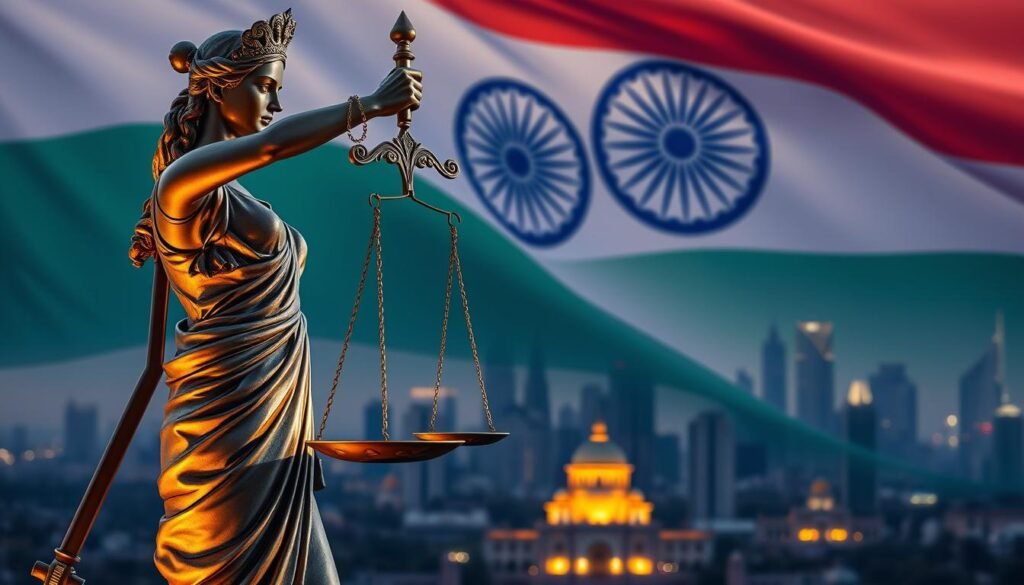
We look at how equality before law affects our daily lives and public places. The Indian Constitution promises fairness: the state must treat everyone equally. Courts have made sure this fairness works for everyone, even those who have been unfairly treated before.
Equality Before Law
Equality before law means everyone is treated the same under the law. This rule stops the government from treating people unfairly. Courts check if laws are fair and if they have a good reason for being different.
Judges use the Constitution to decide if laws are fair. They ask if the law treats people the same who are in the same situation. They also check if the law has a clear reason for being different.
Looking at other countries helps us understand. Canada has laws that allow for special programs to help certain groups. Indian courts use these examples to guide their decisions on fairness.
Prohibition of Discrimination
The Constitution bans unfair treatment based on many things like race, religion, and sex. Articles 15–18 in the Constitution protect people from being treated unfairly. They also stop practices like untouchability.
Courts allow for special help for groups that have been treated unfairly. They check if this help is fair and if it really helps. This way, the Constitution’s promises are kept while also helping those who need it.
People can go to court to fight unfair laws. This helps make sure everyone is treated fairly. For example, there are rules against unfair treatment in work and school, and government programs that help certain groups.
| Aspect | What it Protects | Relevant Indian Constitution Articles | Practical Example |
|---|---|---|---|
| Formal Equality | Equal treatment by the state | Article 14 | Uniform application of criminal law |
| Anti-Discrimination | Protection against bias based on identity | Articles 15–18 | Prohibition of caste-based exclusion in public spaces |
| Affirmative Action | Targeted uplift for disadvantaged groups | Interpretation under Articles 15(4), 16(4) | Reservation in education and public employment |
| Judicial Oversight | Review of classifications and proportionality | Article 32 enforcement of rights | Writ petitions for discriminatory statutes |
Exploring the Right to Freedom
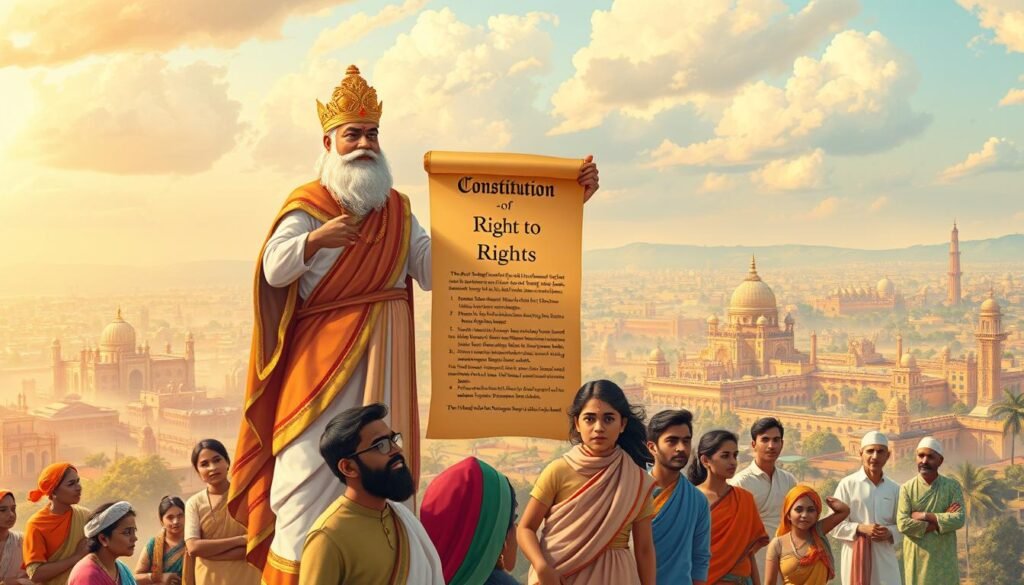
We look into how the Indian Constitution shapes our lives and work. The right to freedom is key among the Constitution’s rights. It allows for open debate, creative work, and group action. But, it also has limits to keep order and respect individual dignity.
We focus on two main areas: free speech and the right to gather. These are important for professionals, teachers, and students to know. Courts make sure these rights are balanced with safety.
Freedom of Speech and Expression
Free speech lets us share ideas, protect the press, and discuss in schools. It drives innovation and critical thinking in universities and companies.
But, there are rules for public safety, defamation, obscenity, and national security. Courts check if these rules are fair. They make sure our rights are protected while keeping us safe.
For engineers and teachers, it’s important to know where rules end and rights start. This includes how we publish, review, and speak at work. It must follow the Constitution and legal rules.
Freedom of Assembly and Association
Peaceful gatherings let us protest, organize, and meet. They help share ideas and hold people accountable. The right to join groups protects unions and professional bodies.
Authorities can set rules for when and where we meet, but can’t stop us without a good reason. Courts check if these reasons are fair. They make sure our rights are respected.
| Aspect | What it Enables | Typical Limits |
|---|---|---|
| Speech and Expression | Academic publications, press reporting, technical critique | Public order, defamation, obscenity, national security |
| Assembly | Peaceful protests, student rallies, professional meetings | Time, place and manner restrictions; court oversight of bans |
| Association | Trade unions, societies, research consortia | Regulation to prevent unlawful activity; protections for collective bargaining |
Knowing these freedoms helps us understand our rights and follow the Constitution. Good policies, based on the Constitution and laws, support innovation and safety.
The Right against Exploitation Explained
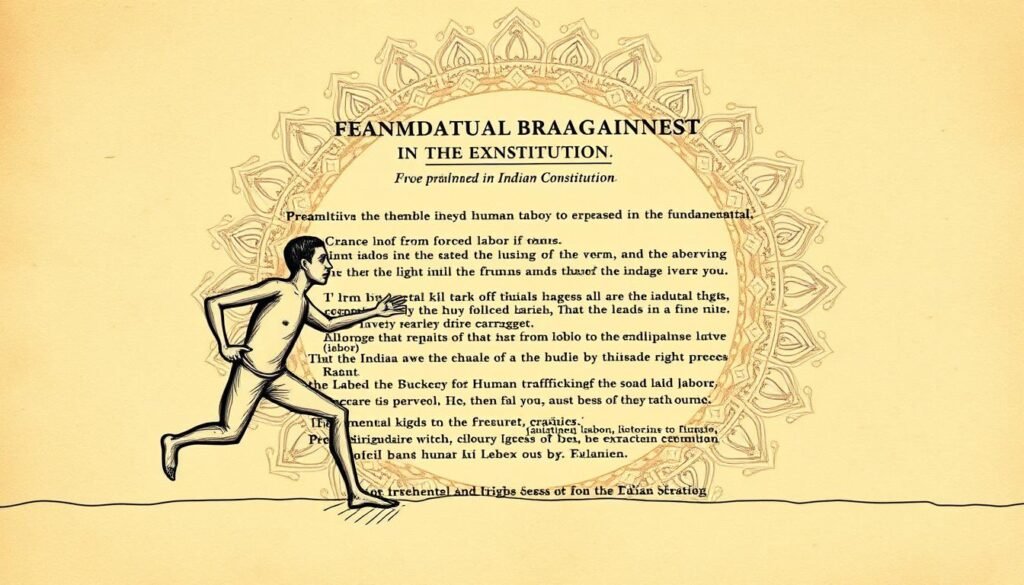
We explain how the Indian Constitution protects against exploitation. It shapes laws and actions against forced labor, bonded labor, and human trafficking. These efforts aim to safeguard human dignity and uphold the Constitution’s principles.
Combining criminal law and civil remedies, the system fights exploitation. Police, special agencies, and courts handle complaints. Public interest litigation has expanded help for victims, pushing for better protection.
Prohibition of Human Trafficking
Laws against trafficking stem from the Constitution. Courts use these rights to guide anti-trafficking laws. This ensures judges can order actions to stop trafficking.
Enforcement involves investigation, prosecution, and helping victims. Courts push for better teamwork among police, child welfare groups, and NGOs. This strengthens the Constitution’s protections and improves victim care.
Child Labor Laws
Rules against child labor are based on dignity and development. The Child and Adolescent Labour (Prohibition and Regulation) Act makes these rules clear. It bans certain jobs and sets penalties.
Courts have called for better checks and support for rescued kids. Schools and support programs are key to enforcing these laws. Protecting children from work links to education and cultural rights, supporting many legal rights in India.
| Aspect | Constitutional Basis | Statutory Mechanism | Enforcement Actors |
|---|---|---|---|
| Prohibition of Forced Labour | Fundamental rights in Indian Constitution: dignity and liberty | Criminal provisions penalizing forced and bonded labour | Police, courts, Labour Commissioners |
| Anti-Trafficking Measures | Indian Constitution Rights interpreted to prevent inhuman treatment | Anti-trafficking statutes and victim protection schemes | Special task forces, NGOs, judiciary |
| Child Labour Prohibition | Constitutional protection of child’s development and dignity | Child and Adolescent Labour (Prohibition and Regulation) Act; education laws | Labour inspectors, Child Welfare Committees, schools |
| Remedies and Rehabilitation | Right to constitutional remedies and fair procedure | Rescue, rehabilitation, compensation schemes | Court orders, state welfare departments, NGOs |
The Right to Religious Freedom
We look at how the Indian Constitution protects belief, practice, and faith expression. This article connects the Indian Constitution Rights to daily duties for groups and individuals. It shows how these rights shape public life and policy for engineers, educators, and students.
Freedom of Practice and Propagation
The Constitution gives the right to practice and spread religion. This right supports personal beliefs and community rituals. It also sets limits on these rights by law.
Courts balance religious freedom with public order, health, and morality. Practices that harm others or break laws may be regulated. India’s courts use reasonable restrictions to protect diversity.
Secularism in India
India follows a secular model that keeps the state neutral among religions. It also protects minorities. The Constitution ensures equal treatment and allows policies to help disadvantaged groups.
Secularism guides rules for religious institutions, personal laws, and state schools. It requires respect for constitutional rights while embracing diversity. We urge professionals to consider these duties in policy, campus rules, and workplace designs.
| Aspect | What the Law Provides | Practical Effect |
|---|---|---|
| Freedom to Practice | Right to profess, practice and propagate religion under fundamental rights in Indian Constitution | Permits worship, rituals and faith-based education within legal limits |
| Reasonable Restrictions | Limits for public order, health, morality and protection of others under Indian Constitution provisions | Courts adjudicate conflicts; harmful practices can be curtailed |
| State Neutrality | Secularism: state treats all religions equally as part of Indian Constitution Rights | Policies aim to avoid favoritism and protect minority rights |
| Institutional Obligations | Legal and policy duties to uphold constitutional safeguards and cultural rights | Guides university rules, public administration and engineering projects to respect diversity |
The Cultural and Educational Rights

We look at how the Indian Constitution protects the culture and education of minority groups. These rights shape policies, campus life, and classroom settings. They are based on specific articles in the Constitution that balance personal freedom with group protection.
Rights of Minorities
The Constitution lets minorities keep their culture and start their own schools. Courts, like the Supreme Court of India, make sure these rights are respected. They ensure that minorities can control what is taught and how schools are run.
These rights lead to policies like reservations and minority colleges. Teachers and lab workers need to know these rules. They help keep cultural values while meeting academic standards.
Preservation of Language and Culture
Specific articles in the Constitution protect language rights. They allow teaching in mother tongues when enough people speak it. This supports teaching in many languages, using local languages for documents, and creating curricula that fit the culture.
Looking at other countries, like Canada, shows how these rights work. It helps us understand how to design systems and materials that meet legal standards and promote inclusion.
| Area | Constitutional Basis | Practical Measures |
|---|---|---|
| Minority Educational Autonomy | Provisions protecting rights to establish and administer institutions in Indian Constitution articles | Minority-run universities, governance charters, legal defense of administrative decisions |
| Language Instruction | Articles ensuring mother-tongue education and cultural preservation under constitutional laws in India | Multilingual textbooks, local-language documentation, teacher training in regional languages |
| Judicial Safeguards | Judicial enforcement of Indian Constitution Rights through review and remedies | Litigation to protect institutional autonomy, precedent-setting judgments, compliance audits |
| Policy and Planning | Legislative measures consistent with Indian Constitution Rights preservation | Reservation policies, funding for minority institutions, inclusive curriculum standards |
The Right to Constitutional Remedies
We explain how constitutional safeguards protect citizens. The Indian Constitution Rights include Article 32. This lets people go straight to the Supreme Court for help when their rights are broken.
Courts use writs to quickly fix rights issues. They also use injunctions and declaratory relief for more flexibility. Judges can tailor relief to fit each case without skipping due process.
Judicial tools also cover evidence exclusion and procedural safeguards. Courts check if evidence is allowed to stop state abuse. This keeps the justice system trustworthy. These steps strengthen legal rights in India.
Role of the Supreme Court
The Supreme Court is the Constitution’s protector. It explains rights, balances claims, and strikes down laws that don’t fit. Its decisions, like proportionality, guide other courts.
Public interest litigation helps those who are often left out. The Court’s active role has made constitutional promises real for many. Changes in the Constitution have also helped balance state power and individual freedom.
We urge readers to see constitutional safeguards as active tools. They need ongoing litigation, good procedure, and clear reasoning. Knowing these helps citizens defend their rights and push for change.
Conclusion: The Importance of Awareness
We’ve seen how laws in India shape our daily lives and public places. Knowing about Indian Constitution Rights helps us design better systems and teach students. It also guides how we build public spaces.
When we understand legal rights in India, we can make things better. We can improve access, fairness, and accountability. This knowledge empowers us to make a difference.
We encourage everyone to think about rights in their work and studies. Engineers, teachers, and students should aim for inclusivity. They should design better spaces, teach openly, and support public goods.
Together, we can make a big impact. We can fight for what’s right, join important discussions, or help legal clinics. This way, we can truly make a difference in our democracy.
To stay informed, we need simple habits. Follow the Supreme Court, read legal news, and check government websites. This keeps us up-to-date with changes and new laws.
Learning about constitutional rights is key. By using this knowledge, we can build a better future. We can make our democracy stronger and more inclusive.