



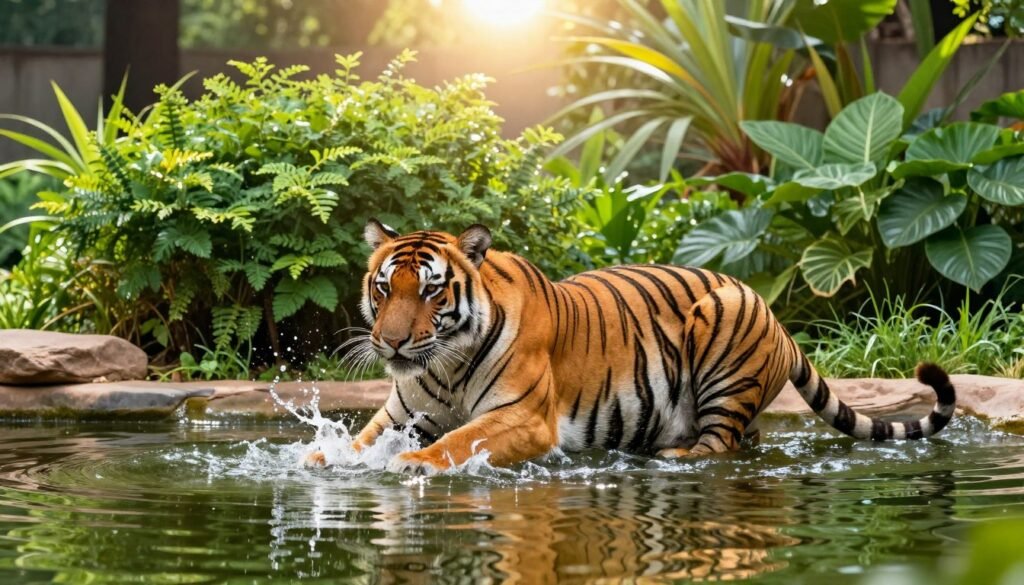
The intense summer heat has everyone looking for ways to cool down. At the Kanpur Zoo, a majestic tiger was seen cooling off in a water pond. This scene is not just beautiful but also shows how animals behave in hot weather.
Watching the tiger cool off gives us a peek into their survival strategies. It makes us curious about how they handle the summer heat.
Introduction to the Kanpur Zoo
The Kanpur Zoo is a key spot for wildlife in India. It has many species in a green space. It started in 1971 and covers 76 acres.
It draws people with its plants and animals. The zoo teaches about endangered species and their homes.
Visiting the zoo, we see many animals. It has special exhibits and signs that teach us about animals. This helps us understand their struggles.
It makes us care more about animals and nature. The Kanpur Zoo is important for teaching us about wildlife.
Overview of the Current Heatwave in India
The recent heatwave in India has caught everyone’s attention. Temperatures have hit over 45°C (113°F) in many states. This high summer temperature affects people and animals alike.
Extreme heat is causing power demand to go up and water to run low. It’s making life hard for many.
Reports show that more people, who are already vulnerable, are dying. We need to act fast to deal with these climate challenges. It’s important to know how these high temperatures are affecting us.
Communities must find ways to cope with these extreme conditions. We can all help by taking steps to reduce the impact of high summer temperatures.
Wildlife, including animals in zoos, is also suffering. They need special care and changes in their homes to stay safe. Together, we can help animals and people deal with the heat.
Tiger Cooling Off: A Common Behavior During Summer
In the hot summer, we see many animals trying to stay cool. Tigers are a great example. They find water to cool down. This shows they know how to keep their body temperature right.
Understanding Animal Behavior in Extreme Heat
When it gets really hot, animals like tigers have special ways to survive. Knowing these behaviors helps zoo workers take care of them better. Tigers love water because it cools them down and lets them play. This is good for their mind and body.
Physical Adaptations of Tigers to High Temperatures
Tigers have special features to deal with the heat. Their big size helps keep heat in, but they have ways to stay cool. By playing in water, tigers stay cool and social. This shows how important it is to have natural homes for them.
| Adaptation | Description | Impact on Behavior |
|---|---|---|
| Water Seeking | Tigers look for ponds or lakes to immerse themselves in. | Helps regulate body temperature and offers a playful environment. |
| Shade Utilization | Tigers often rest under trees or large rocks during peak heat. | Minimizes sun exposure, conserving energy and maintaining hydration. |
| Nocturnal Activity | In extreme heat, tigers may become more active during cooler night hours. | Ensures hunting and movement occur during optimal temperature conditions. |
Highlights from Kanpur Zoo’s Summer Management
Kanpur Zoo is working hard to keep its animals cool during the hot summer. They use special care and fun water features to make sure everyone is happy and healthy.
Innovative Strategies for Animal Care
We give our animals special food to help them stay cool and full of energy. They have cool places to rest and misting systems to keep them comfortable.
Water Features and Their Importance for Zoo Animals
Water features are key for our animals in the summer. They help animals drink and play, which keeps them active and happy. Animals like tigers love to swim and splash, which is great for them.
Kanpur Zoo Tiger Summer Heat: The Scene Unfolds
Visitors at the Kanpur Zoo see a special sight as summer gets hotter. The tiger becomes the main attraction, cooling off in its pond. This shows how these amazing animals act and the zoo’s work to keep them safe from the heat.
People watching see the tiger play in the water. This creates a beautiful scene that teaches us about the zoo’s role. It shows how water helps animals stay cool and connects us with nature.
The Kanpur Zoo teaches us about taking care of animals. Watching the tiger shows the zoo’s love for nature. It encourages people to help protect wildlife, making the future brighter for tigers and their homes.
The Role of Zoos in Wildlife Conservation
Kanpur Zoo is key in saving wildlife. It’s a safe place for many endangered animals. We also teach people about the importance of all living things.
Zoos let people get close to animals. This helps people understand and care for wildlife. We have special programs to teach everyone about saving animals.
Kanpur Zoo shows how zoos help with saving animals and teaching. We have fun and learning activities. These help kids and adults learn to love and protect nature.
Health and Well-Being of Zoo Animals During Heatwaves
When it’s really hot, taking care of zoo animals is very important. Zookeepers watch how animals act to find any signs of heat stress. They look for changes in behavior and physical signs to keep animals safe and happy.
Monitoring Animal Behavior
Zookeepers notice if animals seem tired or eat differently. They write down these changes to catch any problems early. This helps them keep animals cool and healthy, even when it’s very hot.
Hydration Strategies for Tigers
Keeping tigers hydrated is key when it’s hot. They need cool water to drink. Zookeepers use special ice treats to make sure tigers drink enough water. This helps keep tigers healthy and happy.
Visitor Experience and Summer Attractions at Kanpur Zoo
At Kanpur Zoo, we make the most of summer. We know hot weather is tough for everyone. So, we have special programs to show how animals handle the heat.
We also have cool spots and misting stations. They help keep you and the animals comfortable.
Engaging Educational Activities for Guests
Educational activities are key in summer. We have daily talks and interactive shows. They teach how animals deal with the heat.
These shows are fun for everyone. You can learn by watching and doing. It helps you care more about animals and nature.
Interaction Opportunities with Zoo Animals
At Kanpur Zoo, you can meet the animals up close. We have feeding sessions and special animal encounters. It’s a great way to connect with them.
These moments are unforgettable. They teach us to care for animals. We hope to inspire you to protect wildlife.
The Importance of Water Ponds in Zoos
Water ponds are key in modern zoos. They add beauty and help animals. For example, tigers can cool off in them during hot summers.
These ponds help animals act naturally. Many species show social behaviors around water. It keeps them active and happy.
Water ponds also help keep zoos diverse. They support many plants and animals. This makes the zoo a lively place for all its residents.
How Summer Temperatures Affect Zoo Operations
Summer heat brings big challenges for zoos, like in India where it’s very hot. We must change our ways to keep animals and staff safe. Kanpur Zoo shows how important planning and training are to handle the heat.
Staff Training and Preparedness for Heatwaves
Training staff well is key during heatwaves. It helps them spot when animals are stressed by the heat. They learn to change their work to help animals and themselves stay cool.
Staff also learn how to keep animals hydrated. They make sure animals have fresh water and cool places to rest. This helps zoos run smoothly even when it’s very hot. It shows how much zoos care about animals and their workers.
Wildlife News: Global Trends in Zoo Animal Care
The world of Animal Care in zoos is always changing. Wildlife News shows new global trends. These trends focus on better animal care and teaching visitors.
Zoos around the world are now caring for animals in a new way. They focus on the animals’ physical, mental, and social needs. This is a big change.
One big change is better food for animals. Studies show that different foods can really help animals stay healthy. Zoos are now using more sustainable food sources for their animals.
Another trend is enrichment programs. These programs use toys and habitats that feel like the animals’ natural homes. They help animals stay happy and healthy. They also make zoos more interesting for visitors.
Kanpur Zoo is following these global trends. They are working on better food and fun activities for animals. This helps animals and makes visits more meaningful for everyone.
Community Awareness on Animal Welfare
Fostering community awareness on animal welfare is key to ensuring wildlife well-being. The Kanpur Zoo works hard to promote public engagement. They do this through educational campaigns that stress the need to protect animals, even in tough weather.
By sharing the challenges faced by zoo animals, we invite visitors to join in on important discussions. This helps raise awareness about animal welfare.
These efforts reach out to local communities and inspire them to protect wildlife. Programs like interactive workshops, school visits, and awareness events connect people with animal welfare basics. Our goal is to create a community that cares for and protects its wildlife.
| Initiative | Description | Target Audience |
|---|---|---|
| Interactive Workshops | Hands-on activities that educate participants about animal needs and conservation. | Families and school groups |
| School Visits | Guided tours for students to learn about the zoo’s role in wildlife protection. | Students |
| Awareness Events | Community gatherings focused on discussions about animal care and welfare. | General public |
The Impact of Climate Change on Wildlife
Climate change is a big problem for wildlife worldwide. Rising temperatures and changing weather patterns put a lot of pressure on their homes. This makes it hard for them to survive, leading to a big wildlife impact.
Predators and prey must find new ways to live together. This can mess up food chains and habitats.
Many animals are changing how they migrate. They look for better climates or food. This shows how hard it is for them to survive.
For example, polar bears travel far to find sea ice. Many bird species arrive at their breeding grounds early.
Studies show a link between climate change and endangered species. We need to act fast to save wildlife. Knowing how climate change affects them helps us find ways to help.
Tiger Conservation Efforts: A Broader Perspective
Tiger conservation is key to protecting biodiversity worldwide, not just in India. It needs new ideas and plans to balance human needs and tiger survival. Many conservation efforts work to keep tiger numbers up.
Groups like environmental organizations and zoos help teach about tigers. Saving their homes is also vital. Programs work to fix habitats and stop cities from growing too big.
Lessening conflicts between humans and tigers is also important. This includes teaching local people how to live with wildlife. When communities understand tiger conservation, they help protect these animals.
Our approach to tiger conservation is all-encompassing. It tackles habitat issues, education, and community involvement. This way, we aim for a future where tigers can thrive. The value of looking at the big picture is clear.
Photography Opportunities at the Kanpur Zoo
The Kanpur Zoo is a great place for all photography lovers. You can take amazing pictures of the wildlife here. It’s perfect for both pros and beginners.
Being patient is key when you’re here. Watch how the animals act naturally. Sometimes, the best photos are when they’re just being themselves.
Try to take pictures that tell a story. Show how the animals live and what they do. Good photos can help people care more about saving animals.
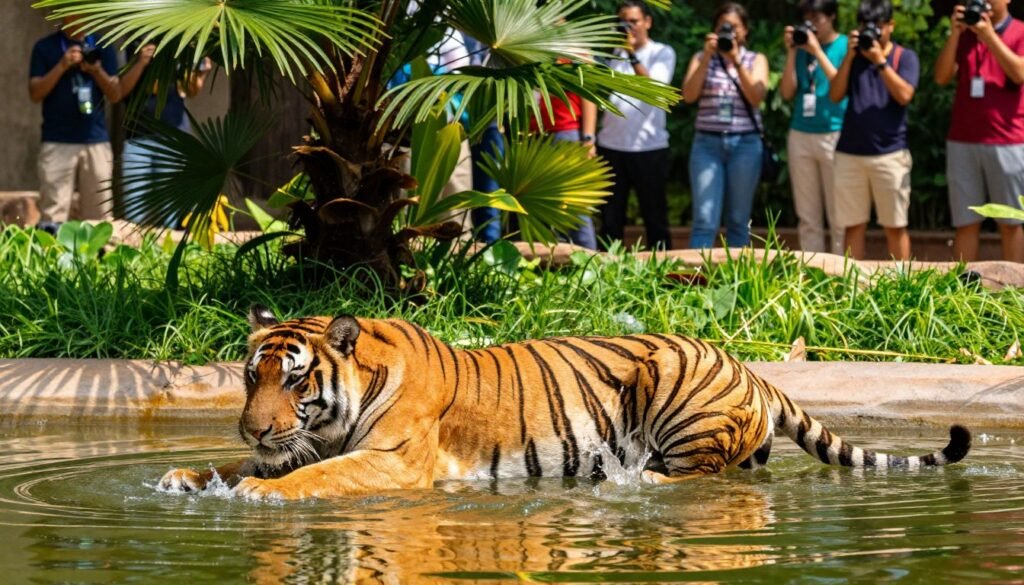
Try different angles and lights to make your photos stand out. Play with focus to show off the animals’ details. Each photo can be a work of art.
The Kanpur Zoo is more than fun. It’s a chance to take amazing wildlife photos. So, grab your camera and start capturing moments that matter.
Conclusion
The Kanpur Zoo is key for wildlife care and teaching people. It shows how animals act in hot weather. This helps us learn more about animals and why we should protect them.
By helping zoos like Kanpur Zoo, we learn to love wildlife more. We can help keep their homes safe. When we visit the zoo, we should think about helping animals too.
Visiting the zoo teaches us about caring for animals. We can all help make sure animals and people live well together. Every visit to Kanpur Zoo is a chance to learn and grow.