


This guide is for engineers, students, and teachers. It helps them understand the first quarter of 2026. We cover the big events in India and how they affect work, research, and school.
We use news from The Hindu, The Indian Express, Times of India, and The Economic Times. We also look at reports from the Reserve Bank of India and other ministries. Plus, we check out BSE/NSE filings and news from IISc, IITs, and ISRO. Reuters and Bloomberg give us global news to balance our coverage.
The article focuses on important areas like politics, economy, tech, health, and more. We link these facts to their impact on work and innovation.
We aim to give quick updates, point to deeper reading, and offer takeaways. We want to help professionals and teachers adjust to the latest news. This way, they can plan for the future.
India News 2026 Recap January to March
We start by looking at big ideas that kept everyone talking. The budget focused on saving money, AI started to grow in companies, and green energy got more attention. India also kept busy in the Indo-Pacific area.
This summary shows how these ideas mixed with new rules and teamwork between government and businesses.
Overview of key themes across the quarter
Four big ideas stood out: the budget, AI, green energy, and Indo-Pacific actions. These ideas were linked to training for new jobs in Industry 4.0.
Important messages came from the Ministry of Finance and the Department for Promotion of Industry and Internal Trade. Big companies like Reliance and Tata Group also shared their plans.
How January–March shaped national headlines
Big decisions from the cabinet and court wins set the stage. The markets were busy, with new IPOs and mergers. Startups, mainly in fintech and AI, got more funding.
Extreme weather caused floods in some parts of India. This led to warnings from the NDMA and help from states. Festivals and sports also kept people interested.
Where to find ongoing updates and live coverage
For the latest, check out the Press Information Bureau, Ministry websites, RBI circulars, and official gazettes. Also, watch the NSE and BSE for company news.
NDMA and trusted news sources offer live updates. RSS feeds and newsletters from known outlets help you stay informed. This way, you can follow India’s news without relying on social media.
Political Developments and Government Decisions
We look at the big political moves from January to March. These moves shaped policy and set priorities. The quarter saw money for roads and schools, rules for new tech, and busy times in Parliament.
Major policy announcements and legislative activity
The Union Budget brought new money for roads, trains, and schools. The Ministry of Electronics and Information Technology talked about AI rules. These rules aim to keep things safe while letting tech grow.
Parliament worked on laws for jobs and farm insurance. They also looked at reports from committees.
We watch what the Finance Ministry, Ministry of Education, and MEIT say. They talk about money and laws moving forward. Engineers and project leaders should know about new rules for land.
State-level political shifts and important elections
Many state assemblies changed leaders and had by-elections. Maharashtra and Karnataka gave tax breaks for factories and data centers. Tamil Nadu focused on green energy, Uttar Pradesh on health, and West Bengal on land for factories.
These changes affect how national programs work. Different rules and incentives mean companies choose where to build. This affects how fast projects start.
Impact on governance, public services, and federal relations
Central grants and changes to big schemes like Jal Jeevan Mission were key. Talks between the Centre and states focused on money and when it would come.
These talks changed how things work. There were delays in some places and faster action in others. This is important for those watching India’s trends and public services.
Economic Indicators and Business Highlights
We start with a quick look at the economy. The Q1 2026 India major events in economics showed steady growth. Services led, while manufacturing had mixed results. Both CPI and WPI stayed in a narrow range, easing costs for businesses and people.

Monetary policy signals from the Reserve Bank of India were cautiously neutral. They talked about inflation risks and supporting growth. The fiscal deficit stayed close to budget targets, leaving little room for extra stimulus but keeping capital projects going.
Now, let’s look at corporate performance and market action. Earnings season had surprises: big firms beat estimates, but some cyclical names missed. New listings caught the eye of big investors. Sensex and Nifty showed strong gains, thanks to tech and financials.
Deal activity was interesting, with strategic M&A and private-equity investments in manufacturing and software services. These deals showed Indian companies want to grow and integrate vertically. IPOs in Q1 drew interest from domestic and foreign investors, showing faith in India’s growth.
External factors shaped export chances for engineering and IT firms. Trade balances changed with commodity prices and global demand. India quarterly news recap 2026 showed growth in IT services, pharmaceuticals, and engineering goods, despite slower commodity shipments.
Foreign direct investment came into key sectors like technology, renewable energy, and electronics manufacturing. Investments came from the U.S., UAE, and Singapore. Policy progress on Production Linked Incentive schemes made local sourcing more attractive for component makers.
We explain some technical terms here: CPI measures household inflation. WPI tracks wholesale goods prices. Fiscal deficit is the gap between government spending and revenue, affecting public investment and borrowing needs.
This section maps macro signals, market returns, and trade flows for engineers, investors, and strategists. We watch these indicators to guide spending, hiring, and procurement decisions for the rest of the year.
For readers tracking broad patterns, the India quarterly news recap 2026 and the Q1 2026 India major events in business offer a compact lens on where risks and opportunities cluster across finance, trade, and corporate strategy.
Technology and Innovation News in India
We follow fast changes in funding, public programs, and new product launches. These changes shaped India news from January to March 2026. The quarter saw a big focus on AI and clean tech. There were also clear plans for digital infrastructure from both local and national governments.
Many new devices and business solutions were launched. These moves helped grow use in making things and in healthcare.
Startups and funding rounds
Startups were very active, with big investments from Accel and Sequoia India in AI and health tech. Tiger Global and Temasek kept funding platform businesses. Crunchbase and Tracxn showed new unicorns in software and clean tech.
But, some companies faced lower valuations. This shows the ups and downs in funding.
Focus areas included AI for business, clean tech for energy, and telemedicine in smaller cities. This made it important to hire engineers and product managers.
Government programs and digital infrastructure
There were big plans for data centers and clear rules for using local tech. Niti Aayog updates showed progress in AI and ethics for government use.
BharatNet upgrades and plans for better internet in rural areas were also announced. These moves aim to improve internet speed and help startups work with the government.
Product launches and sector adoption
New smartphones and enterprise software were launched. International companies teamed up with Indian partners to offer better tech.
More use was seen in making things, farming, and healthcare. This led to more jobs for engineers and training needs for workers.
Investments, policies, and new products changed the tech scene in India. This is important for jobs, buying, and learning in the future.
Public Health and Healthcare Developments
We look at public health news from January to March. We focus on watching, budgets, and updates. Our goal is to give quick updates for professionals and show big trends in India news summary 2026 and India current affairs Q1 2026.
Infectious disease monitoring:
The Ministry of Health and Family Welfare and ICMR kept an eye on SARS-CoV-2 variants and seasonal flu. They noticed dengue outbreaks in Kerala and Maharashtra in late February and March. They also reminded people to get vaccinated and updated advice for high-risk groups.
Vaccination campaigns and advisories:
Health departments worked hard to get more people vaccinated, including moms and kids. They used health centers and teams in cities to reach more people. They also told the public to control mosquitoes and seek help early if they have a fever.
Policy changes and funding moves:
In Q1, budgets showed more money for basic care and telehealth tests. The central budget also supported working with private groups to improve hospitals. CDSCO made rules that helped speed up clinical trials and drug approvals.
Program rollouts and models:
Telemedicine and care for moms and kids were big focuses. States worked with private hospitals to grow ICU and neonatal care. This was to make care faster and better.
Healthcare technology and capacity:
Hospitals like Apollo and Fortis planned to add more ICU beds and improve emergency care. Digital health got a boost through Ayushman Bharat Digital Mission pilots. These aimed to make health records work together better.
Startups and platforms:
Practo and PharmEasy made their platforms better for teleconsultations and pharmacy services. Rules for medical devices changed, helping hospitals get what they need faster.
Operational impacts:
There were efforts to make healthcare work better with digital records and telemedicine. Hospitals focused on training staff and keeping supplies ready as they grew their critical care.
Environment, Climate Events, and Energy Policy
We look at the quarter’s climate and energy news closely. We see how climate affects our buildings and projects. We also see new renewable energy goals and stricter environmental rules.
Extreme weather events and regional climate impacts
The India Meteorological Department warned of heavy rains and heatwaves in Q1. They also talked about flooding in Assam. The National Disaster Management Authority reported on transport issues and damaged irrigation systems.
Crops were lost in some areas, so states changed their planting plans. Cities like Mumbai and Chennai are working on their drainage systems. They need to make them stronger.
Renewable energy projects and energy transition news
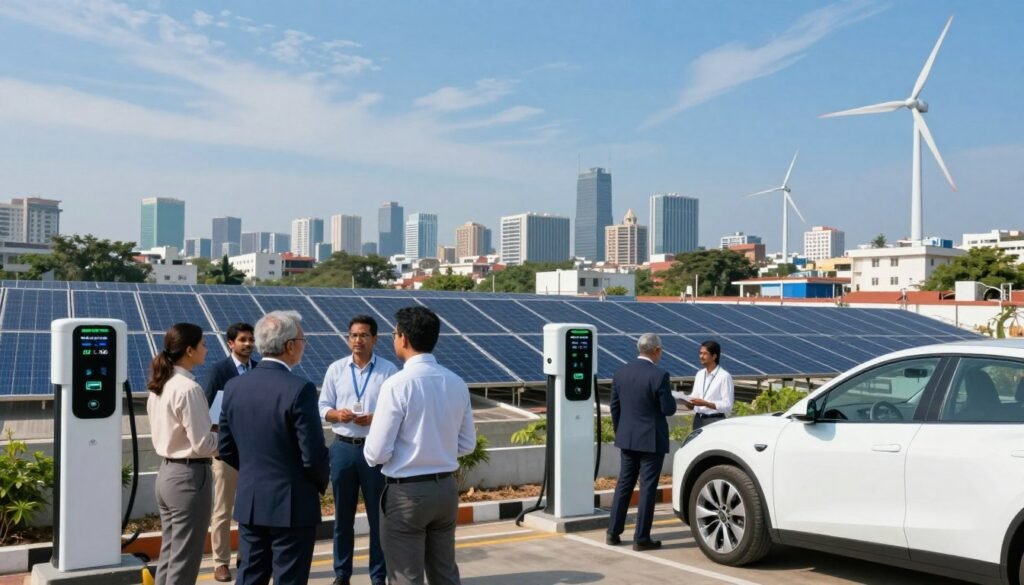
Big auctions were held for solar and wind projects. Companies like Adani and Tata Power made deals for wind-solar hybrids. The Ministry of New and Renewable Energy talked about green hydrogen for industry use.
Engineers are working fast to connect new energy sources to the grid. They are upgrading the grid and testing new storage systems. This is all part of the big changes happening in India’s energy sector.
Environmental policy decisions and conservation efforts
The Ministry of Environment, Forest and Climate Change made new rules for projects near nature reserves. States banned single-use plastics and made plans to clean the air in cities like Delhi.
New rules for building and industry projects were announced. Programs to protect watersheds and coastlines got more money. This shows the focus on protecting the environment in India’s news.
We will keep watching how these changes affect engineering, buying, and teaching about sustainability.
Foreign Relations and Strategic Partnerships
We follow diplomatic efforts from January to March. We see high-level visits, summit follow-ups, and agreements. These shape India’s current affairs in Q1 2026. We focus on tech transfer, trade, and research collaborations.
Bilateral and multilateral visits, agreements, and summits
Prime Minister Narendra Modi met with Australia and France. He also visited the UK for G20 talks. In Q1, India signed deals with Japan on semiconductors and with Germany on renewable energy.
There were also agreements with the US on academic exchanges. The Ministry of External Affairs shared news on research and digital governance.
Defense cooperation and regional security developments
Defense deals moved forward with Larsen & Toubro and Hindustan Aeronautics Limited. India joined forces with the US, Japan, and Australia for exercises. This boosted Indo-Pacific cooperation.
The Ministry of Defence talked about logistics and tech sharing with partners.
Trade diplomacy and international economic ties
Trade talks focused on tariffs and rules for textiles, pharma, and IT. The commerce ministry said talks were making progress. This could help Indian exporters.
Bilateral investment deals and supply-chain partnerships drew global firms. This will impact foreign investment and India’s economy.
For the latest, check official communiqués and ministry briefings. Our coverage links diplomacy to its impact on India’s industries, security, and tech.
Legal and Judicial Milestones
We look at the quarter’s key court actions. We focus on policy, compliance, and business risk. Our goal is to highlight rulings that changed regulatory landscapes. We also note ongoing cases important to engineers, legal teams, and leaders.
In Q1, the Supreme Court and high courts made important decisions. They talked about labor laws, environmental clearances, and data privacy. These rulings helped clarify how agencies and companies follow the law.
Reports from The Hindu and The Indian Express showed courts setting higher standards. They made it clearer how to assess environmental impact and classify workers in the gig economy.
Challenges to statutes and executive actions
There was more legal uncertainty in Q1 due to court challenges. Some rules were kept, while others were sent back for changes. This affects how companies plan and get permits.
We follow these cases to see which ones are settled and which are ongoing. This helps us understand the current legal landscape.
Legal reform initiatives and practical implications
The government has been working on new laws for companies and insolvency. They also started talking about a new data protection law. These changes aim to help startups and protect personal data.
For engineers, these updates mean new contract terms and vendor checks. They also need to focus more on keeping records.
What professionals should watch
Businesses should keep an eye on new rules and when they will start. Universities and research centers need to watch changes in data rules. We will keep tracking court decisions and new laws to help you stay ahead.
Infrastructure Projects and Urban Development
We follow the progress of transport, smart cities, and rural networks. This shows how built systems change our daily lives. This quarter, we saw big steps forward in metro lines, highways, airports, and rural broadband.
Transport milestones
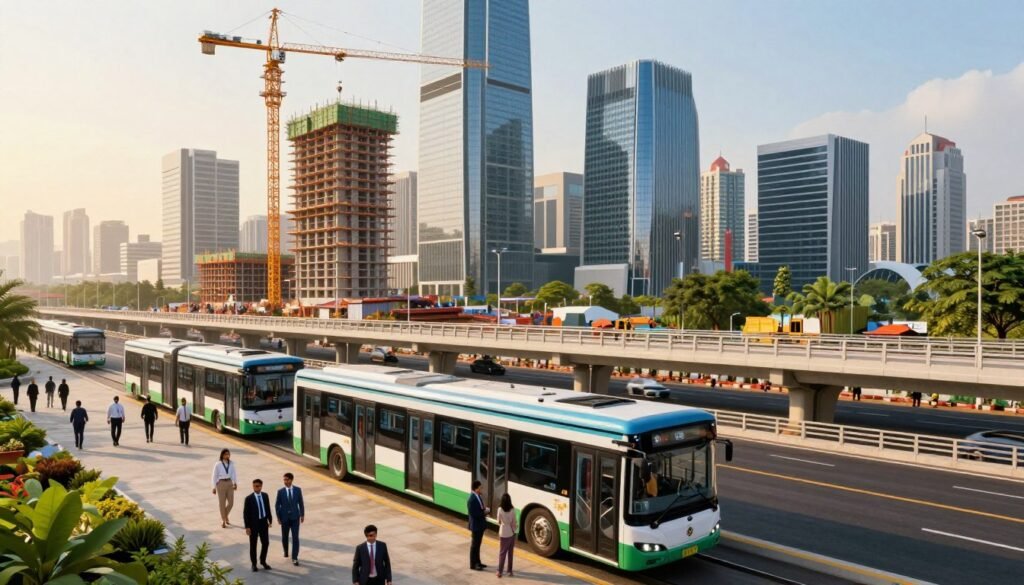
In Bengaluru and Pune, new metro lines opened. They made traveling easier and tested new signals. The Ministry of Road Transport & Highways finished parts of highways near Chennai and Varanasi.
Airports got bigger and better with new aprons and a cargo terminal. This means they can handle more flights and cargo.
Urban systems and smart pilots
Cities started new smart-city projects for traffic and waste. The All-India Smart Cities Mission gave money for sensors and control centers. Cities also looked at buying new tech from Tata Consultancy Services and Siemens India.
Rural connectivity and last-mile logistics
PMGSY built roads to remote villages in many states. This made it easier for construction teams and doctors to get there. BharatNet brought broadband to more villages, helping with digital services and project monitoring.
Implications for practitioners
These updates mean new projects for engineers and planners. They can work on new projects, maintenance, and tech integration. Design teams need to plan for phased openings and follow central agency standards.
Where this fits in the larger narrative
These updates are part of the bigger story of India in January, February, and March 2026. Transport, smart cities, and rural networks are key themes. We keep an eye on central ministries and local news to see what’s next.
Social Movements, Protests, and Civic Issues
We followed many civic actions in India’s first quarter of 2026. There were protests from labor strikes to student rallies. The Hindu and local papers covered marches and campaigns for better wages, education, and local issues.
Key protests and grassroots campaigns this quarter
Workers in Maharashtra and Tamil Nadu went on strike for better contracts and security. Students in Delhi and Kolkata held rallies for exam changes and more scholarships. Environmental efforts to clean rivers in Uttar Pradesh and Kerala also got attention.
Government responses and policy follow-ups
State governments talked with union leaders. Some set up teams to look at labor laws. The Education Ministry made statements after student protests at schools.
Police actions were rare, but courts in Mumbai and Chennai saw cases about protests.
Broader social trends and public sentiment indicators
Surveys and social media showed people worried about living costs, jobs, and education. These worries affected business plans and community groups. News from January to March 2026 showed these issues were widespread.
These updates help experts and teachers understand upcoming changes in public focus and policy.
Science, Education, and Research Achievements
We look at big changes in education policy, research wins, and skills programs. These changes shaped science education and innovation in the first quarter. They connect policy moves to research and workforce readiness, as seen in India news summary 2026 and India current affairs Q1 2026.
Academic policy shifts and exam season highlights
The University Grants Commission updated rules for credit mobility and online proctoring. They changed degree validation and transcript workflows. Board and university exam calendars also changed, affecting CBSE, CISCE, and state boards.
Universities made it easier to solve exam problems and gave more credits for internships. These changes aimed to cut down delays and make things clearer for students and schools.
Notable research breakthroughs and scientific collaborations
ISRO made progress on satellite missions, catching the eye of scientists everywhere. The Indian Institute of Science and IITs published studies on materials and renewable energy.
AIIMS and CSIR labs made big strides in biomedical research. They shared updates on clinical trials and papers on diagnostics. Their goal was to turn lab findings into useful healthcare tools.
Education reforms and skill-development initiatives
Government skilling programs teamed up with edtech firms and industry leaders. They offered apprenticeships in engineering and data sciences. National programs aimed to improve workers’ skills for semiconductors and clean energy.
Curriculum makers and recruiters updated course goals. They added project-based tests and micro-credentials. These changes aimed to match graduates with real-world needs, as reported in India news summary 2026.
Through these efforts, we see a strong link between policy, research, and jobs. India current affairs Q1 2026 showed how teamwork can boost innovation and improve science education in India 2026.
Business Technology Updates India 2026
We follow how IT and fintech changed in the first quarter. This short review connects real company plans, rules, and security trends. It links to bigger tech news in India and the latest news recap for the quarter.
Enterprise digital transformation:
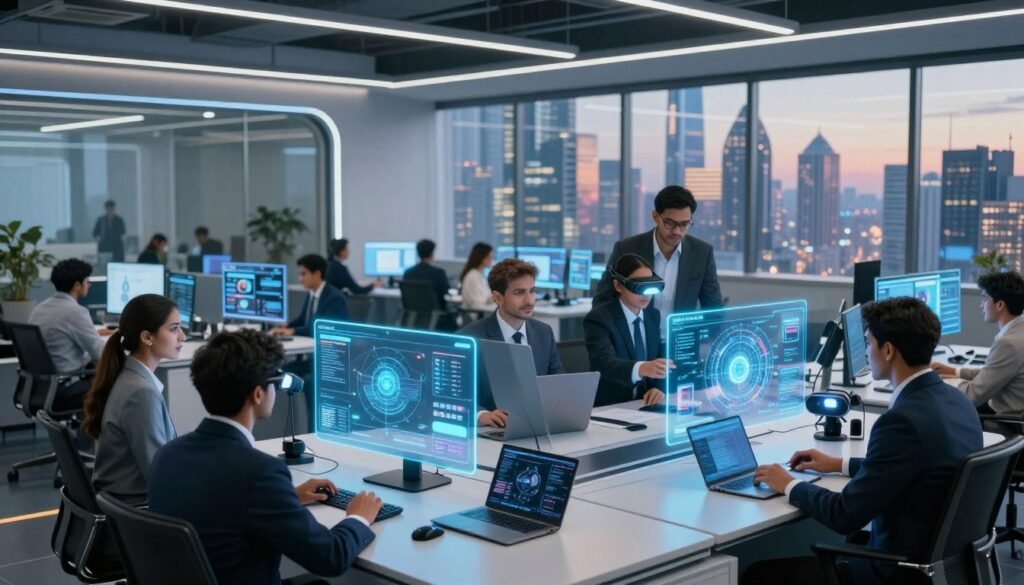
Tata Steel, Mahindra Group, and Larsen & Toubro updated their ERPs and started Industry 4.0 pilots. These moves cut down lead times and boosted asset uptime. Deloitte and KPMG analysts talked about cloud moves that saved money and sped up reports.
Studies show a step-by-step approach: start small, grow, and then measure. This method shows clear benefits from automating shops and tracking supply chains.
Fintech and payments:
RBI rules on payment banks and NPCI tips on UPI limits led to changes at Paytm, PhonePe, and Google Pay India. Banks also started working together more for sending money across borders. Big fintech deals kept happening.
More people used contactless and QR payments in Q1. This shows they feel safe using these methods.
Cybersecurity and data protection:
Many companies faced phishing and ransomware attacks. This led to CERT-In warnings and stricter access rules. Draft data protection rules made boards at HDFC Bank and Infosys think more about risks.
Companies started using zero-trust networks, multi-factor authentication, and encrypted backups. They did this for labs in schools and universities.
For more context, check out the wider tech news in India. It includes how rules affect product plans and how tech wins help in quarterly news. This news is important for investors and policy makers.
Culture, Sports, and Entertainment Headlines
We looked at the big cultural and sports moments of India news January February March 2026. Our team followed movie premieres, music releases, festival dates, and big sports games. We saw how people and platforms reacted all quarter.
Major film, music, and cultural events
Bollywood movies and regional premieres were big at the box office and on streaming. Hits from Dharma Productions, Yash Raj, and Tamil and Telugu studios topped the weekend box office. Netflix, Amazon Prime, and Disney+ Hotstar also expanded their offerings, changing how we watch.
Music events included film soundtracks and singles on Spotify and JioSaavn. Art festivals in Kolkata and Jaipur drew artists and collectors. The national awards season also highlighted new filmmakers. These events were often at the top of India trending topics 2026 and in the latest India headlines 2026.
Sports milestones and tournament highlights
Cricket was key: domestic and international games drew big crowds and BCCI updates set the schedule. Indian athletes won medals in athletics and wrestling, leading to updates and broadcast interest.
Football and badminton also had standout moments, sparking conversations. Coverage of these games was a big part of daily India news January February March 2026. It also influenced sponsorship talks for teams and leagues.
Shifts in media consumption and pop-culture trends
Short videos and content in local languages became very popular. Platforms worked on better delivery networks and cloud systems to handle the demand. Ad spending moved to digital, with analytics and engines key to making money.
For tech experts and media folks, these changes mean a need for scalable streaming, fast CDN routing, and better metadata. Insights on what people like kept showing up in the latest India headlines 2026 and in summaries of India trending topics 2026.
India Current Affairs Q1 2026: Regional Breakdowns
We look at the quarter through different areas to see how local actions help the country grow. This India quarterly news recap 2026 talks about new roads, policy changes, and how states handled crises. It gives quick, useful updates for engineers, planners, and policy experts working in various states.
North: politics, agriculture, and industrial signals
In Uttar Pradesh and Punjab, talks about farming made big news and changed plans for supply chains. New rules for workers and how to buy goods affected tech tests and cold storage projects near Ludhiana and Kanpur. This part of our India news January February March 2026 review shows how state politics changed plans for making things.
South: tech ecosystems and operational realities
Karnataka and Telangana led in startup funding and IT jobs. Bengaluru and Hyderabad saw new investments in R&D and talks about semiconductors. Engineers found different ways to get things done: Telangana made it easier, while Karnataka focused on hiring locals. These differences are seen in our India current affairs Q1 2026 coverage.
East: resilience, disaster response, and development
Odisha and West Bengal worked on strong transport and coastal protection after storms. Teams and private groups ran drills that could help the whole country. These local efforts are part of the India news January February March 2026 story as examples for making places safer.
West: manufacturing hubs and infrastructure launches
Gujarat and Maharashtra saw big plant openings and port upgrades. Car parts makers near Pune and green energy projects in Gujarat moved forward. This India quarterly news recap 2026 section talks about rules that helped projects start faster and what engineers need to know for working across states.
Comparing state economies and policy choices
We look at what states offer for making things, labor laws, and what they focus on. Plans for semiconductors, car parts, and textiles differ by state. These differences affect who gets to work on projects, when, and how safe it is.
Local events with national relevance
Many tech tests and new plants showed they could grow fast. Programs in the East helped shape national plans for disaster prevention. Engineers and project managers should reach out to state departments and groups like CII or FICCI for more info and to work together.
For those keeping up, this breakdown adds to the bigger India quarterly news recap 2026 and gives a closer look at our India current affairs Q1 2026 reports.
Conclusion
This India News 2026 Recap January to March shows steady economic growth. But, there are also ongoing inflation worries. Technology is advancing fast, thanks to new rules.
Renewable energy projects are growing, and India is making new friends diplomatically. These things set the stage for Q1 2026. They show why these events are important, not just for now but for the future.
For engineers, students, and teachers, there’s a lot to focus on. The news highlights the need to improve in AI/ML and cybersecurity. Renewable-energy engineering and data governance are also key areas.
Healthtech and advanced manufacturing are getting more funding. Policy watchers need to keep an eye on data protection, infrastructure, and R&D incentives. These will shape projects and jobs.
What’s next? Stay updated by subscribing to official channels. Watch for changes in the central budget and Reserve Bank news. Follow MeitY and MNRE for updates on their sectors.
Join industry groups like CII, FICCI, and NASSCOM for chances to work together. We’ll keep sharing news and tips. Stay tuned for more in-depth looks at different areas.