



In India, people often say “just take a pill” when women talk about period pain. This simple comment ignores the deep emotional and physical challenges women face every month. It’s important to talk about menstrual health in India and understand the pain women go through.
A study by The Lancet shows many women suffer from severe pain. This pain can stop them from doing their daily tasks. By sharing these stories, we can create a space for empathy and understanding. This helps us tackle women’s health issues in India better.
Understanding Menstrual Health in India
In India, menstrual health is key to women’s wellbeing. Yet, menstruation is shrouded in deep stigma and menstrual taboo. Women face many barriers to talk openly about their health.
This leads to women health issues that could be solved with education and awareness.
Studies show a big gap in knowing about menstrual hygiene among women. Many women don’t have the info to keep their reproductive health in check. This lack of knowledge causes problems that can hurt their life quality.
It’s vital to raise awareness about menstrual health in India. Teaching women can change how people think and stop the spread of wrong info. These efforts help create a better space for talking about and handling women health issues in India.
The Impact of Period Pain on Daily Life
Period pain, or dysmenorrhea, greatly affects many women in India. It can make it hard to work or go to school. About 60-80% of women say it hurts their work and life quality.
This pain also brings stress and anxiety. These are big parts of women health issues India that need more focus.
More period pain awareness is key to solving this problem. Knowing about menstrual pain helps women find ways to manage it better. Schools and workplaces can help by talking openly about PMS awareness.

Common Misconceptions About Menstruation
In India, many people believe that menstrual blood is “impure.” This belief leads to stigma and unfair treatment. It makes talking about menstrual health a taboo, which hurts menstrual health awareness India.
Women often feel shy to talk about their periods. This is because of cultural rules that keep them quiet. These myths make it hard for women to find help or learn about their health. Learning the truth is key to changing these views.
There are efforts to fight the menstrual taboo India. These campaigns aim to show the truth behind these myths. As more people learn, we can all help women feel free to talk about their health.
Breaking the Silence: Women’s Experiences
In India, *women health issues* often stay hidden, mainly about menstruation. Many women quietly suffer through their periods, carrying the weight of discomfort and shame. Their stories show how menstrual health deeply affects their daily lives.
Many are afraid to talk about their experiences because of fear of judgment. This silence leads to wrong beliefs about menstruation and overlooks the importance of understanding period pain. By sharing their stories, women can fight these stigmas and create a space for open talks.

Sharing their experiences is key to improving menstrual health awareness in India. As more women speak up, we see the need for better education and understanding. It’s important to support each other, making every woman feel heard and understood during her period.
Period Pain Awareness among Indian Women
In recent years, talking about period pain has become key in India. Many women face severe menstrual cramps that disrupt their lives. But, they often don’t share their pain with others.
This silence can make it hard for women to find ways to manage their pain. Many campaigns now aim to change this by sharing important health info. They want to help women know about treatments that can ease their symptoms.
It’s important to keep talking about this issue and offer help. By teaching more about period pain and how to manage it, we can improve women’s health in India. Together, we can reduce the shame around menstrual issues and create a supportive environment.
Menstrual Health Awareness India
It’s important to raise awareness about menstrual health in India. Education helps change how society views menstruation. Programs focused on menstrual health are key to improving knowledge and access to sanitary products.
By tackling stigma and myths, we create a space where women can talk openly about their menstrual health. This empowers them to seek help when needed.
Importance of Education and Information
Many areas in India lack access to menstrual health information. Educational programs teach women and girls about their bodies, hygiene, and resources. This knowledge is vital for good menstrual care and a healthy lifestyle.
Such awareness helps women manage their periods with confidence and comfort. It’s a step towards a healthier life.
Community Initiatives and Campaigns
Community efforts are key to improving menstrual health awareness in India. Programs in rural areas bring education and resources to those who need them most. Working with local groups helps create messages that connect with different communities.
These campaigns offer practical solutions and build a supportive network. They improve women’s wellbeing in all areas of their lives.
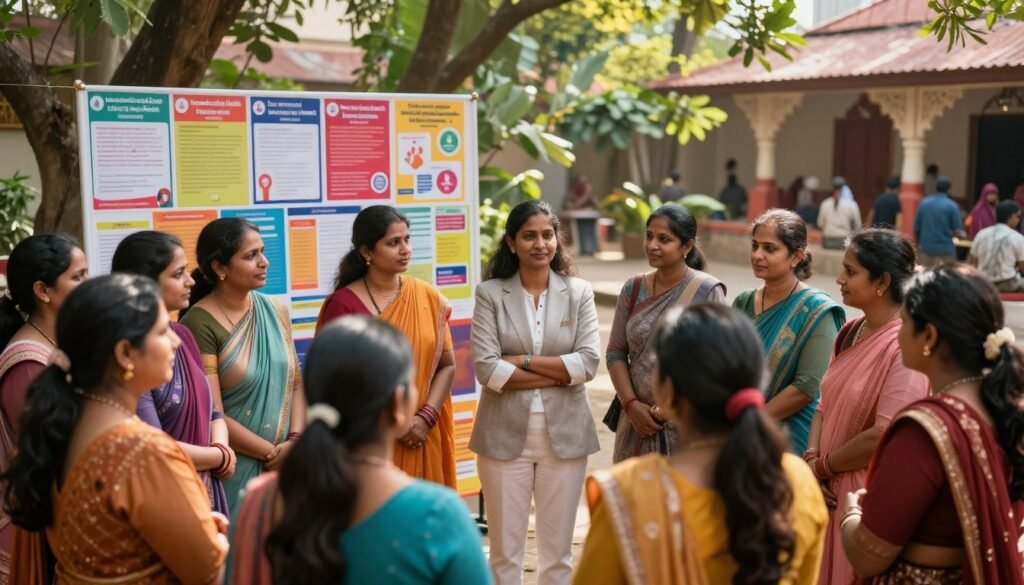
Workplace Menstrual Stigma: Challenges Women Face
Workplace menstrual stigma is a big problem for many women at work. Places of work often don’t have the right support for talking about menstruation. This makes it hard for women to share their period pain awareness or ask for time off when needed.
A study by the International Journal of Workplace Health Management shows women are scared to ask for time off because of menstrual pain. The fear of being judged keeps them quiet about women health issues India. This can hurt both work performance and mental health.
By talking openly and having supportive work rules, companies can fight workplace menstrual stigma. Making a space where women can talk about menstrual health makes them feel important and heard. This helps create a healthier work place.
PMS Awareness: Understanding the Psychological Effects
Premenstrual syndrome (PMS) affects many women, causing emotional and physical problems. It’s important to understand PMS to tackle women health issues India. Symptoms include mood swings and anxiety, linked to hormone changes.
PMS can make daily life hard, affecting work and personal life. Talking about period pain helps women get support. We can create a supportive space by sharing our stories.
Learning about PMS helps women manage their symptoms better. It’s key to tackle both mind and body issues. Recognizing PMS as a real problem improves mental health support and resources.
Women’s Wellbeing in India: A Holistic Approach
When we talk about women wellbeing in India, we must look at it all. This means physical, emotional, and social health. Often, we only talk about physical health, ignoring the mind and social parts.
Groups like the World Health Organization say we should mix menstrual health with overall health plans. Seeing menstrual health as part of overall wellbeing helps support women at all life stages. Having the right info, resources, and support is key for better health and a better life for women.
Helping women take charge of their health is good for them and helps break the silence on menstrual health. Talking openly and teaching more can make spaces safer for women to grow. Focusing on all aspects of wellbeing can change society, making menstrual health better understood and managed in India.
The Role of Family and Society in Period Experiences
Family and society play big roles in how women feel about their periods in India. When family members are supportive, it makes women feel better. It helps reduce the anxiety and shame that often comes with menstruation.
Open talks about menstrual health in families create a caring space. It makes this natural part of life seem normal.
But, strict cultural rules and the menstrual taboo India stop open talks. This can make women feel alone and misunderstood during their periods. By starting conversations in families and communities, we can break these barriers. This helps make talking about menstruation more accepted.
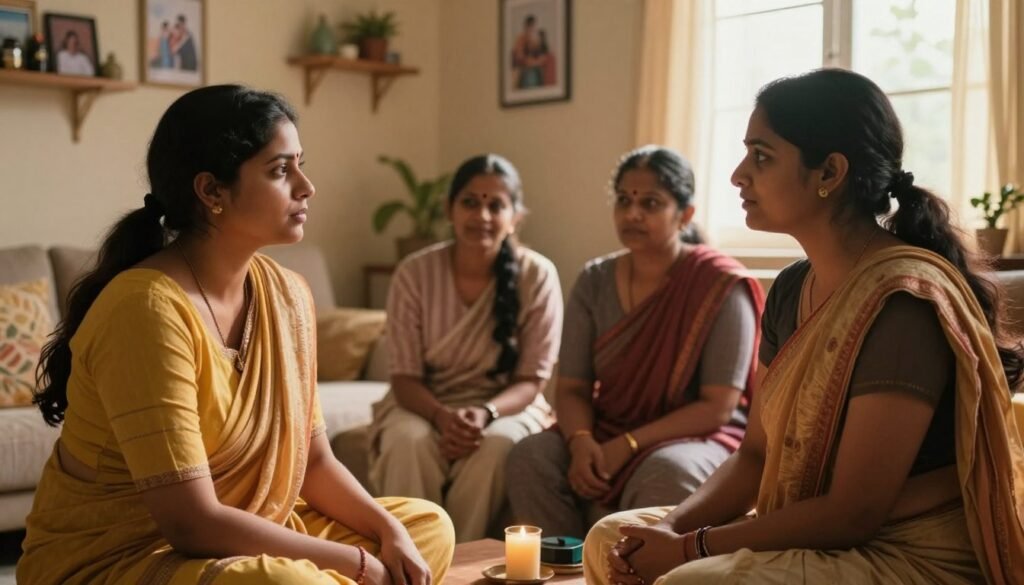
Addressing Menstrual Taboo in India
The menstrual taboo in India is a big problem for women’s health. It makes talking about periods hard. We need to make people understand that periods are normal.
Learning about periods is key to breaking these taboos. Programs that teach people help women talk about their periods freely. This tackles many women health issues in India.
To beat the menstrual taboo in India, we must all work together. We need to make a place where women feel safe and respected. This way, their health needs are met without shame.
Modern Solutions for Period Pain Management
Improving menstrual health in India is key. Women are looking for ways to ease period pain. Modern solutions have come to help.
Over-the-counter medicines like NSAIDs offer quick relief. But, there are more ways to feel better.
Yoga and meditation are becoming popular. They help with both body and mind. These practices reduce pain and stress.
Herbal remedies and good food also play a part. They help manage pain in a big way.
Knowing about these options empowers women. Many don’t know what’s out there. Sharing this info can change lives.
Influence of Cultural Norms on Menstruation
Cultural norms shape how people see and act towards menstruation in India. These norms affect how we feel and interact with others. Many old beliefs about menstruation cause misunderstandings that hurt menstrual health awareness in India.
In many places, rules about menstruation block access to important resources and info. This makes the tough situation of women health issues in India even harder.
The cultural impact on menstruation shows in how people think and act. Programs that respect cultural values help understand and talk about menstruation. They teach women to find and use information, helping them stand up for their health and rights.
It’s key to tackle these cultural barriers. This way, every woman can manage her menstruation well and with confidence.
Conclusion
Talking about menstrual health in India is key to empowering women. It helps break down old stigmas. By sharing women’s health stories, we show their experiences matter.
Everyone, from family to bosses, can help change how society views women. This change is long overdue.
We need to keep working on education, community involvement, and better healthcare. These steps will help make society more informed and caring. This way, we ensure menstrual health meets women’s needs in India.
When we work together, we support women’s health journeys. This makes their health a big part of our conversations.
By talking openly about menstrual health, we honor women’s voices. This opens the door to big changes. Together, we can create a future where women are respected and understood in India.