



A strong tornado hit Mayurbhanj district in Odisha early today. It killed two people and injured over 30. Hospitals are treating many trauma cases.
Search-and-rescue teams are working hard. They are updating the number of injured and those in hospitals. These numbers might go up as they finish their work.
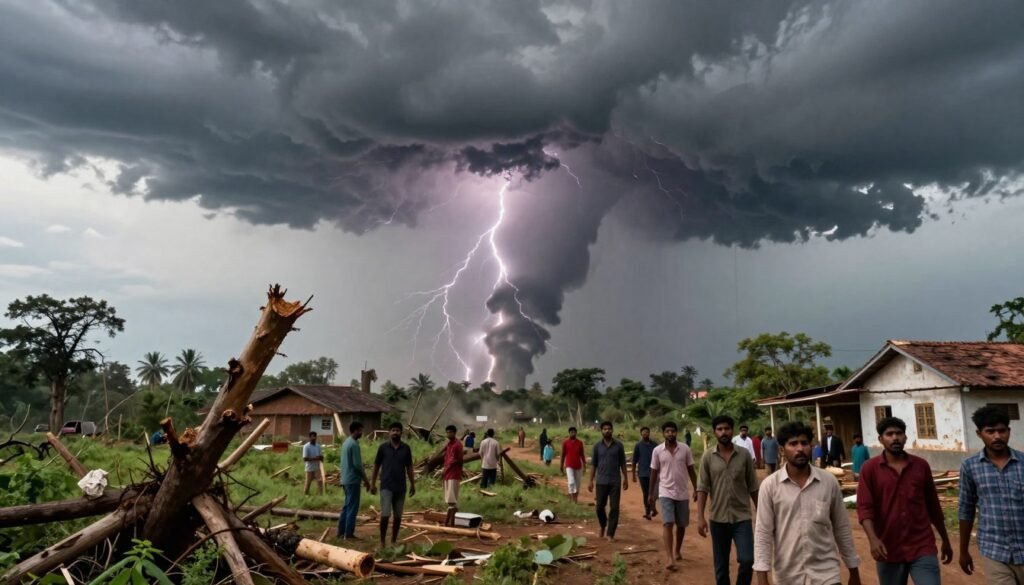
Images from the ground show a lot of damage. Thatched huts, tin-roofed homes, and new buildings were destroyed. The homes in Mayurbhanj were made of mud walls and light roofing.
These homes were not strong enough against the storm. They were easily damaged.
Emergency teams quickly responded. They included local volunteers and the Odisha State Disaster Management Authority. The National Disaster Response Force also came to help.
They are searching for people, rescuing them, and giving medical help. We will keep you updated on this story. We will tell you about the rescue efforts, the number of injured, and the damage.
Breaking Update on the Mayurbhanj Tornado
We are tracking fast-developing reports from Mayurbhanj as responders work to secure the hardest-hit areas. This update summarizes what field teams observed, how the storm unfolded, and the initial orders issued by authorities. Our goal is to give a clear, factual picture so readers understand the sequence and the immediate response.
Immediate reports from the ground
Field correspondents and staff at local health centers reported multiple injuries from flying debris and collapsed roofs. Ambulances transported critical cases to district hospitals in Baripada and surrounding towns. Police set up cordons around the hardest-hit villages to allow rescue teams to work without obstruction.
Timeline of the storm as it developed
Witness accounts and weather logs show rapid buildup of cumulonimbus clouds in the late afternoon, followed by abrupt wind intensification. Observers described a sudden gust front and a narrow damage path consistent with a brief tornadic vortex that lasted several minutes.
We can break the chronology into clear steps: storm initiation, sudden wind intensification, immediate damage reports, and rapid mobilization of rescue units. This sequence aligns with radar signatures and on-the-ground timestamps collected by local stations.
Authorities’ initial statements and rescue alerts
Odisha government officials and the Odisha State Disaster Management Authority issued emergency alerts and public hotlines for affected residents. The National Disaster Response Force and state disaster teams received notifications and moved to coordinate with district administrations. Public advisories stressed evacuation from unstable structures and directed people to designated medical points.
Odisha Tornado News
We are tracking the Mayurbhanj tornado. It has moved from a local emergency to national attention. The event is getting attention because of the human toll and damage.
Why this event is being covered as top news
The number of fatalities and injuries is high. Rural Mayurbhanj is vulnerable. Damage to homes, schools, and crops is causing immediate relief needs.
Reporting on tornado damage Odisha shows gaps in preparedness. It also calls for stronger disaster planning.
How national and regional outlets are reporting
National papers like The Hindu and Times of India are updating fast. They share casualty figures and official statements. Regional outlets like Sambad and Prameya have photo essays and local interviews.
Broadcast channels are showing live feeds from affected villages. Newspapers are checking updates from Odisha State Disaster Management Authority and IMD.
Social media reaction and verified accounts
Verified accounts from IMD and OSDMA are posting advisories and safety tips. Journalists and NGOs are sharing photos and reports. This helps first responders.
We should check updates and images to avoid misinformation. Media attention is important. It helps with relief, alerts policymakers, and pushes for action.
Impact on Local Communities in Mayurbhanj
We visited hamlets hit by the Mayurbhanj storm. We documented the damage to people and buildings. Our reports help engineers and relief teams know what to do.
Casualties and injury details
Two people died when roofs and walls fell during the Odisha tornado. Many were hurt: cuts, broken bones, and head injuries from debris. Hospitals were full, so people were sent to bigger hospitals for care.
Doctors focused on the most urgent cases first. They treated bleeding, head injuries, then other serious injuries. This helps them know what supplies they need, like stitches and pain medicine.
Homes, schools, and community infrastructure affected
Damage varied from missing roof sheets to total collapse. Schools lost roofs and windows. Community buildings had cracks and water damage from rain.
Power lines broke in many places, leaving villages without electricity. Water lines and handpumps were also damaged. This made fixing water and sanitation urgent.
Personal stories and eyewitness accounts
People talked about strong winds that lifted roofs and threw things around. Families hid in safe places until the winds stopped. One family lost their roof and a lot of food, affecting their home and work.
These stories show how the tornado affected daily life. Homes were damaged, schools were closed, crops were lost, and people lost money. These stories help plan how to help and rebuild.
We present comparative data below to help planners weigh immediate needs against recovery goals.
| Category | Typical Damage Observed | Immediate Response Needed |
|---|---|---|
| Housing | Missing roofs, broken windows, partial wall collapse | Temporary roofing kits, tarpaulins, structural safety checks |
| Health | Lacerations, fractures, head injuries; overloaded clinics | Emergency transfers, surgical supplies, triage training |
| Education | Damaged classrooms, water ingress, unsafe structures | Temporary learning spaces, material replacement, safety inspections |
| Utilities | Downed power lines, disrupted water points | Restoration crews, portable water sources, generator support |
| Agriculture | Flattened standing crops, damaged storage | Seed relief, crop loss assessments, short‑term cash support |
Extent of Tornado Damage in Odisha
We looked at the damage in Mayurbhanj and nearby areas. We wanted to help planners and engineers understand the situation. The damage varied from light roof damage to some buildings collapsing.
Agricultural areas had flattened crops and broken trees. This affected people’s jobs and homes.
Damage to buildings, crops, and utilities
Fixing roofs is a big task. We need to replace roofing sheets, rafters, and trusses fast. Buildings need checks to make sure they are safe.
Water systems were also hit. Handpumps, wells, and small water lines were damaged. Power lines were broken, causing power outages.
Assessment by local disaster management teams
OSDMA teams worked with district engineers and local staff. They used surveys, photos, and GPS to assess the damage. They focused on fixing things that are most important for safety.
Estimated economic loss and reconstruction needs
We estimated the costs of repairs, replacing crops, and lost income. We used a simple method to figure out these costs. We will update these numbers as we get more information.
We broke down the repairs into different areas. This helps us plan better. It helps us know where to use resources to help people recover faster.
Nor’wester India and Severe Weather Patterns
We study the weather behind sudden storms in eastern India. Our goal is to help engineers and teachers understand these storms. We want to give them practical knowledge about the weather setup.
Nor’westers, or Kalbaishakhi, are fast storms that happen before the monsoon. Warm, moist air from the Bay of Bengal meets cooler air above. This creates strong updrafts and a twisting motion.
When these updrafts twist, they can form a funnel cloud. This is how a nor’wester can become an Odisha tornado. We explain this to design teams: think of shear as a force that makes air rotate.
Recent studies show these storms are getting stronger in eastern India. There are more severe gusts and tornadoes. This information helps plan for weather disasters in India.
Engineers need to design buildings for strong gusts and sudden pressure changes. Teachers can use these storms to teach about weather. They can explain how instability, moisture, and shear increase tornado risk.
We provide data below to help quickly assess risks and make design choices for affected areas.
| Parameter | Typical Nor’wester Range | Implication for Design |
|---|---|---|
| Low-level moisture (mixing ratio) | 15–22 g/kg | Increase ventilation and drainage capacity; expect heavy local rainfall. |
| Convective Available PotentiaL (CAPE) | 1000–2500 J/kg | Design for strong updraft-induced loads on tall, lightweight structures. |
| Vertical wind shear (0–6 km) | 20–40 m/s | Include torsional resistance and secure roof ties for sudden rotational forces. |
| Observed peak gusts | 30–90 km/h (localized >110 km/h) | Use higher safety factors for cladding, glazing, and temporary shelters. |
| Frequency (recent seasons) | Increased reports of severe gusts and small-scale tornadoes | Prioritize site-specific hazard assessments and early-warning drills. |
We suggest working together: meteorologists, engineers, planners, and teachers. They should use these patterns to improve safety and emergency plans. Knowing about nor’westers in India helps prepare for tornadoes and other weather disasters.
Mayurbhanj Storm: Meteorological Analysis
We look at the weather data for the Mayurbhanj storm. This helps engineers and planners make informed decisions. We focus on weather station data, radar signs, and expert opinions.
Weather data from IMD and local stations
We used synoptic charts and IMD advisories. We also looked at weather station logs from Baripada and nearby. The data showed a drop in pressure and a rise in dew point before the storm.
Surface wind vectors changed a lot before the storm hit. This change shows strong winds were coming.
Wind speeds, pressure readings, and radar imagery
Wind gusts were very strong, like in tornadoes. Pressure sensors saw quick drops that matched the wind reports. Radar showed high-velocity signs and possible hooks in the storm’s center.
We matched radar with ground damage to find the storm’s path.
Expert commentary from meteorologists
IMD experts and severe-weather researchers talked about the storm’s energy and wind changes. They said sea-breeze or outflow boundaries helped start the storm’s rotation. CAPE and shear are important for storm strength.
| Parameter | Observed Record | Interpretation |
|---|---|---|
| Surface pressure | Drop of 3–5 hPa within 30–60 minutes at proximate stations | Indicative of intense updrafts and mesocyclone presence near core |
| Peak gusts | Recorded gusts 90–140 km/h at AWS locations adjacent to damage swaths | Aligns with tornadic-strength winds in narrow, concentrated paths |
| Radar signatures | High reflectivity, velocity couplets, and hook-like echoes in mesoscale cores | Supports tornadic hypothesis when combined with surface damage |
| CAPE & shear | CAPE 1000–2000 J/kg; low-level shear >20 m/s in 0–1 km layer | Environment capable of supporting supercellular storms or strong rotating convection |
| Temperature / dew point | Rapid warming and moistening prior to convective initiation | Enhanced instability and lower cloud bases favorable for tornadogenesis |
We put IMD advisories and station logs at the center of our analysis. This gives a solid base for engineering and hazard mapping. It also helps review tornado news objectively.
Emergency Response and Rescue Operations
We worked together with many groups after the Mayurbhanj storm. Our goal was to reach villages fast. We focused on finding people, giving medical help, and fixing basic services.
Teams deployed and their roles
NDRF teams joined forces with the Odisha Fire Service and others. They worked together to search, clear debris, and help with medical needs. They also talked to health facilities.
Search, rescue, and first-aid operations
Teams used a grid search to find people trapped. They set up first-aid points in villages. They checked for airway, breathing, and circulation before moving people to hospitals.
Logistics for shelters, medical camps, and relief
Shelters in schools and halls gave people beds, water, and food. Medical camps treated injuries and gave medicine. NGOs helped with blankets, water, and food.
Engineers and planners looked at how well we responded. They checked how resources moved and how shelters were used. This helps us get ready for future storms in Odisha.
| Operational Element | Lead Agencies | Primary Tasks |
|---|---|---|
| Search & Rescue | NDRF, SDRF, Odisha Fire Service | Grid search, extrication, debris clearing |
| Medical Triage | District Health Dept., Mobile Medical Teams | Field triage, wound care, stabilization, referrals |
| Temporary Shelters | District Administration, Local NGOs | Housing, food distribution, sanitation facilities |
| Relief Logistics | Indian Red Cross, local NGOs, Civil Supplies | Supply chain for rations, water purification, blankets |
| Coordination & Communications | District Control Room, Media Liaisons | Situation reporting, helplines, updates for Odisha Tornado News |
Government Statements and Official Actions
We summarize official steps after the storm. This helps residents, NGOs, and coordinators with aid. It covers state helplines, support, and how to apply for relief after tornado damage in Odisha.
State advisories and helpline contacts
The Government of Odisha gave district advisories with helplines for missing persons and emergency relief. To register claims, call the district control room, show identity documents, and report damage. Then, you can get cash help from the state.
Central support and resource mobilization
The Ministry of Home Affairs worked with the National Disaster Response Force. They provided logistics, medical help, and shelters when needed. They follow the Disaster Management Act for requests.
Compensation policy and application steps
Odisha has a plan for disaster compensation. You need a death or injury certificate, a beneficiary ID, and a relief form. We explain how to apply and what happens next after submitting your application.
Keep copies of your documents and check with district social welfare offices for updates. NGOs and coordinators can call helplines for more information and help.
Road Closures, Power Outages, and Disruption
We looked at the Mayurbhanj storm’s effects and the tornado damage in Odisha. We want to help people move safely. The goal is to clear roads and fix services.
Major transport interruptions and affected routes
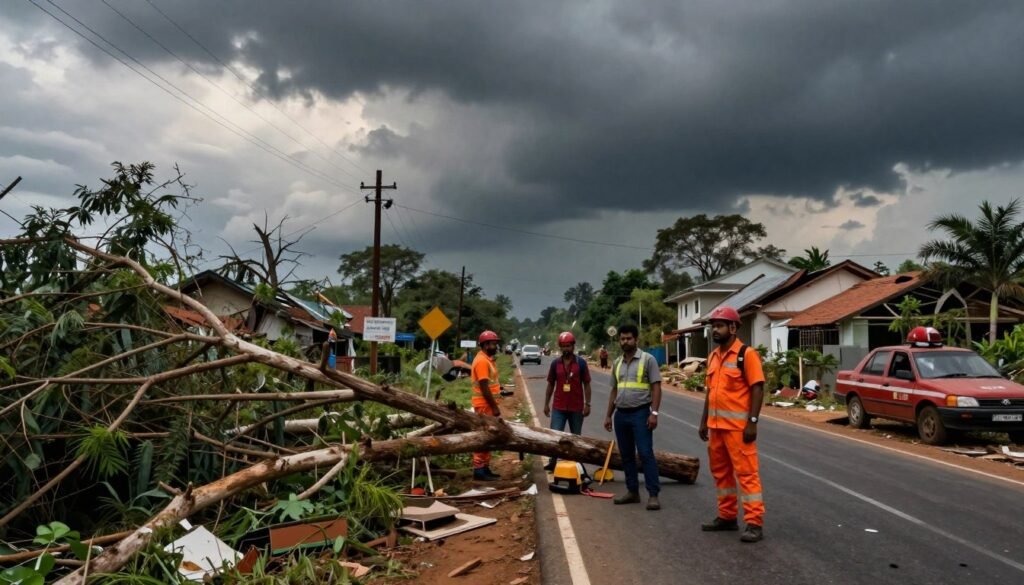
Many rural roads are blocked by trees and debris. Roads to Baripada, Bhubaneswar Road, and near NH are closed. This is for clearance operations.
Relief and ambulance movement is now on cleared paths. Check with local police and the district administration before you travel. Use alternative routes and plan for extra time.
Electricity and telecommunications impact
Uprooted poles and damaged transformers caused power outages. Power Grid Corporation and local utilities are working hard. They are focusing on hospitals and relief centers.
Mobile networks are down in some areas. Telecom providers are setting up diesel backup and mobile cell sites. Expect services to be restored in 24–72 hours.
Advice for commuters and residents
- Avoid downed power lines: treat every fallen line as live and keep a safe distance.
- Follow official road-closure notices from the Mayurbhanj district administration and Odisha police before planning trips.
- Conserve phone battery: use power only for essential calls and SMS to stay reachable by rescue teams.
- When driving, reduce speed and watch for debris and weakened trees; do not park under damaged poles.
- If you must travel, inform a contact of your route and expected arrival time; carry a charged power bank and basic first-aid kit.
Here’s a quick guide to help everyone during the Odisha tornado aftermath.
| Priority | Issue | Immediate Action | Responsible Body |
|---|---|---|---|
| 1 | Blocked district connectors to Baripada | Clear debris, open one-lane traffic for ambulances | Mayurbhanj District Administration, Public Works Department |
| 2 | Power outages in village clusters | Restore feeders supplying hospitals and shelters first | Tata Power, Odisha DISCOM teams |
| 3 | Mobile signal degradation near tower sites | Deploy mobile cell on wheels and temporary power | Bharti Airtel, Reliance Jio, Vodafone Idea field teams |
| 4 | Debris on secondary roads | Coordinate local volunteers with rescue units for safe clearing | State Disaster Response Force, local panchayats |
| 5 | Public information gap | Issue regular bulletins on route status and restoration timelines | District Control Room, Odisha State Emergency Operations |
How to Help: Donations and Volunteer Information
We are setting up steps for those who want to help after the Mayurbhanj storm. This guide helps volunteers and donors act safely and effectively. It’s for the weather disaster India is facing.
Send money through trusted places: the Odisha State Disaster Management Authority (OSDMA) and the Indian Red Cross Society in Odisha. Also, national NGOs like Goonj and PRADAN have local teams. Make sure to check their details and bank accounts before sending money. Cash sent through banks or UPI is the fastest and safest.
Where to volunteer safely and legally
Volunteers should sign up with the Mayurbhanj district administration or registered NGOs. This ensures you get a job, ID, and legal protection. You’ll get a briefing on safety, your tasks, and who to contact.
Guidelines for donating material aid versus funds
Money donations are quick and help local businesses. Material donations are good if they match what’s needed: food, water, and blankets. Check with OSDMA or district centers before sending items to avoid waste.
- Make sure the NGO is registered and legal before donating.
- Ask for digital receipts and transaction details for clear records.
- Coordinate with district centers for material deliveries to help logistics.
- Give cash for medical needs, transport, and shelter.
- Volunteer only after a background check and safety briefing.
We keep an eye on Odisha Tornado News and suggest following official updates. When donating for the Mayurbhanj storm, use verified channels and volunteer wisely. This helps the most during India’s weather disaster.
Health and Safety Advisory for Affected Areas
We focus on urgent health and safety needs for areas hit by the Mayurbhanj storm. Our advice covers common injuries, mental health care, and ways to avoid waterborne and infection illnesses after the Odisha tornado. These steps aim to protect responders, families, and kids in the first days and weeks.
Immediate priorities: stop bleeding, immobilize suspected fractures, clean wounds, and arrange rapid transport for severe cases. Field teams should use sterile dressings and ensure tetanus prophylaxis is available. Open wounds left untreated increase the risk of secondary infections and sepsis after tornado damage Odisha.
Protective equipment reduces injury risk during debris clearance. We recommend heavy gloves, sturdy boots, eye protection, and dust masks for everyone handling wreckage. Keep children and untrained volunteers away from unstable structures and fallen power lines.
Mental health support: psychological first aid stabilizes people in crisis. Trained counselors, district mental health programs, and NGOs can set up brief, repeated contacts to reduce acute stress. Early outreach for children and first responders lowers long-term trauma risk after the Odisha tornado.
Use local helplines and established services for referrals. Community groups can host peer-support sessions and share coping techniques: controlled breathing, grounding exercises, and clear routines. Encourage brief, safe conversations instead of pushing for detailed recounting of the event.
Water and sanitation: boil or chemically disinfect drinking water until public supplies are verified safe. Unsafe water raises the chance of diarrheal disease and cholera-like illness following the Mayurbhanj storm. Provide oral rehydration solutions and zinc for children with diarrhea.
Food safety is critical: discard perishable items exposed to floodwater or that show unusual odor or color. Use clean containers for storage and reheating. Vector control—covering stagnant water and using insect repellents—reduces the spread of mosquito-borne disease amid tornado damage Odisha.
Vaccination and medical checks: review tetanus vaccination status for all who sustained cuts or crush injuries. Mobile clinics should perform wound cleaning, antibiotics when indicated, and basic screenings for hypothermia and dehydration. Keep clear records of treatments and referrals.
Community protocols for first responders:
- Assign a medical focal point for triage and supply requests.
- Follow infection-control steps: hand hygiene, wound dressing, and safe waste disposal.
- Rotate teams to limit fatigue and reduce error rates during prolonged relief operations.
When to seek urgent care: immediate transfer is required for heavy bleeding, breathing difficulty, altered consciousness, suspected spinal injury, and signs of systemic infection. Local hospitals and NDRF-first-aid posts can coordinate referrals during relief efforts for the Mayurbhanj storm.
| Risk | Immediate Action | Follow-up |
|---|---|---|
| Lacerations and puncture wounds | Clean, dress, assess for tetanus shot | Monitor for infection; antibiotic course if indicated |
| Crush injuries and fractures | Immobilize, pain control, urgent hospital transfer | Orthopedic review and rehabilitation plan |
| Waterborne disease | Use boiled/disinfected water; give ORS for dehydration | Sanitation interventions and water-quality testing |
| Mental health trauma | Provide psychological first aid and safe listening | Referral to counselors; community support groups |
| Vector-borne illness | Remove stagnant water; use nets and repellents | Surveillance and community vector-control drives |
Reconstruction and Long-term Recovery Plans
We have steps to help Odisha recover from the tornado. First, we focus on fixing basic services fast. Then, we aim to make buildings safer to avoid damage from future storms.
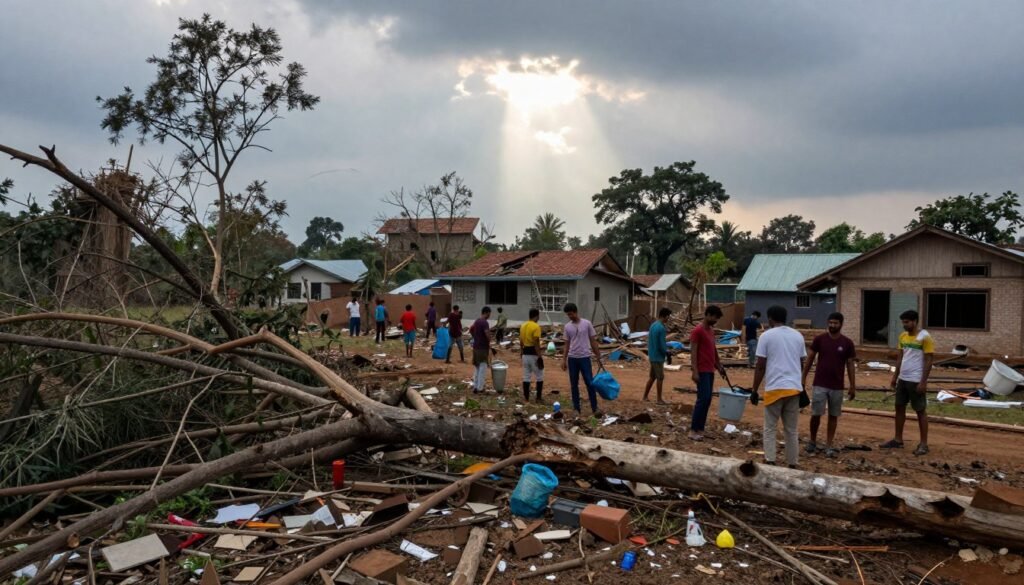
Our main goal is to keep people safe. We provide temporary shelters, clean water, and power for schools and hospitals. We use quick-fix kits and local materials to fix homes quickly.
Local experts and community builders work together. They learn simple fixes to prevent damage from aftershocks.
Long-term resilience and safer housing initiatives
We push for stronger buildings. We use special roof ties, braced frames, and strong anchors for homes. We also plan tornado shelters near schools and community centers.
Technical schools like IIT Bhubaneswar help adapt building codes to local needs.
Funding sources and NGO participation
We suggest using different funding sources. This includes state funds, national schemes, and help from international donors and NGOs. Groups like Save the Children and Oxfam often help in disaster recovery in India.
We propose clear roles for everyone. The state plans and allocates land, NGOs mobilize communities, and engineering schools provide design and training. This ensures money goes to building strong, not just quick fixes.
| Priority | Action | Lead Partners | Expected Timeline |
|---|---|---|---|
| Life-safety services | Restore potable water, power to clinics, and temporary shelters | State agencies, NDRF, local NGOs | 0–30 days |
| Rapid housing stabilization | Provide repair kits, train masons, secure roofs | Local panchayats, engineering colleges, community groups | 1–3 months |
| Resilient reconstruction | Rebuild homes with reinforced connections and braced frames | Central schemes, state reconstruction fund, donor NGOs | 3–24 months |
| Community shelters & mitigation | Construct tornado-safe shelters and retrofit schools | Municipal bodies, UNICEF/NGOs, technical institutes | 6–18 months |
| Capacity building | Train local engineers and masons; publish guidelines | IIT Bhubaneswar, state engineering departments | Ongoing |
We aim to make buildings stronger to face future storms. By acting fast, getting technical help, and using the right funding, we can rebuild Odisha stronger.
Tornado Damage Odisha: Historical Context
We look at the Mayurbhanj event in the context of many storms in eastern India. This helps engineers, planners, and teachers understand risks better. Past storms teach us how to prepare for future disasters.
Past tornadoes and severe storms in the region
Odisha has seen many destructive storms over the years. In 1999, severe winds hit during the Super Cyclone. In 2013, strong gusts were seen in coastal areas.
These storms often happen in April–June and September–October. They are caused by hot weather and moisture from the Bay of Bengal. This leads to Nor’wester India systems that can create brief, intense storms.
Comparisons of scale and impact
When we compare the Mayurbhanj tornado to other events, we look at damage and loss of life. The Super Cyclone of 1999 was very destructive. But smaller tornadoes can cause severe damage in a small area.
Different types of buildings are affected differently. Older homes are more damaged than newer ones. The timing of storms is also important. Pre-monsoon storms can hit when crops are vulnerable.
Lessons learned and improvements in disaster response
Previous responses have led to changes. The National Disaster Response Force (NDRF) now responds faster. The India Meteorological Department gives clearer warnings.
There is more to do. Building codes need to be followed better. Early warning systems for tornadoes need to be improved. Schools should teach about designing buildings to withstand wind.
| Aspect | Historical Examples | Implication for Policy and Engineering |
|---|---|---|
| Event timing | Pre-monsoon Nor’wester India outbreaks (April–June); post-monsoon squalls (Sept–Oct) | Design seasonal readiness plans; schedule drills before high-risk months |
| Casualties and scale | 1999 Super Cyclone (large-scale), localized tornadoes (high-intensity, small footprint) | Allocate resources for both mass evacuation and targeted rapid-response units |
| Infrastructure damage | Rural paancha/fibre roofs torn off; transmission line faults; crop loss documented in multiple events | Promote resilient roofing, underground utilities where feasible, and crop insurance schemes |
| Early warning and response | Improved IMD alerts and NDRF rapid mobilization in the 2000s | Invest in hyperlocal warning networks and integrate alerts with community leaders |
| Capacity building | Local disaster management committees and community drills in Odisha districts | Embed wind-resistant construction modules in civil engineering and polytechnic curricula |
Weather Forecast and What to Expect Next
We watch the short-term forecast from the India Meteorological Department and local stations. We give clear, actionable guidance after the Mayurbhanj storm. Expect lingering convective activity across Mayurbhanj and adjoining districts with pockets of heavy rain and gusty winds over the next 24–48 hours. We urge everyone to follow IMD bulletins and district administration updates for hourly changes.
Short-term forecast for Mayurbhanj and nearby districts
Scattered thunderstorms and squally winds are likely during the evening and overnight. Rainfall totals will vary by locality: some areas may see short, intense downpours while others receive lighter showers. Wind advisories are in effect: sustained winds could rise and produce localized damage to weak structures and fallen trees.
Warnings and advisories for farmers and fishermen
Farmers should secure standing crops where possible and avoid fieldwork during high-wind warnings. Harvested produce left in open yards should be covered or moved to sheltered areas. Fishermen must heed marine advisories: small craft should stay ashore until seas calm and coastal warnings are lifted. Local fisheries departments and district bulletins will publish time-sensitive guidance.
How residents should prepare for possible follow-up storms
Check and temporarily fasten loose roofing sheets, shutters, and outdoor equipment. Assemble a compact emergency kit with water, essential medicines, copies of ID, and some cash. Identify the nearest safe shelter and a family rendezvous point in case evacuation becomes necessary.
Keep communication plans simple: a primary contact, a backup contact, and a meeting place. Charge mobile devices and keep power banks ready. We recommend monitoring verified Odisha Tornado News updates and regional weather feeds for new advisories related to Nor’wester India patterns that can trigger brief, intense systems.
| Area | Expected Conditions (24–48 hrs) | Immediate Actions |
|---|---|---|
| Mayurbhanj (rural) | Scattered thunderstorms, gusty winds, brief heavy rain | Secure crops, shelter livestock, avoid outdoor work |
| Coastal and Inland Fisheries | Rough inland waters, choppy coastal seas | Delay small-boat outings, follow marine advisories |
| Urban towns (Baripada and nearby) | Showers, possible localized flooding, strong gusts | Fasten loose roofing, prepare emergency kit, stay informed |
We will continue to track developments and share steps that reduce vulnerability to follow-up convective events linked to Nor’wester India conditions. For timely situational awareness, follow official channels and credible Odisha Tornado News reports.
Media Coverage and How to Verify Reports
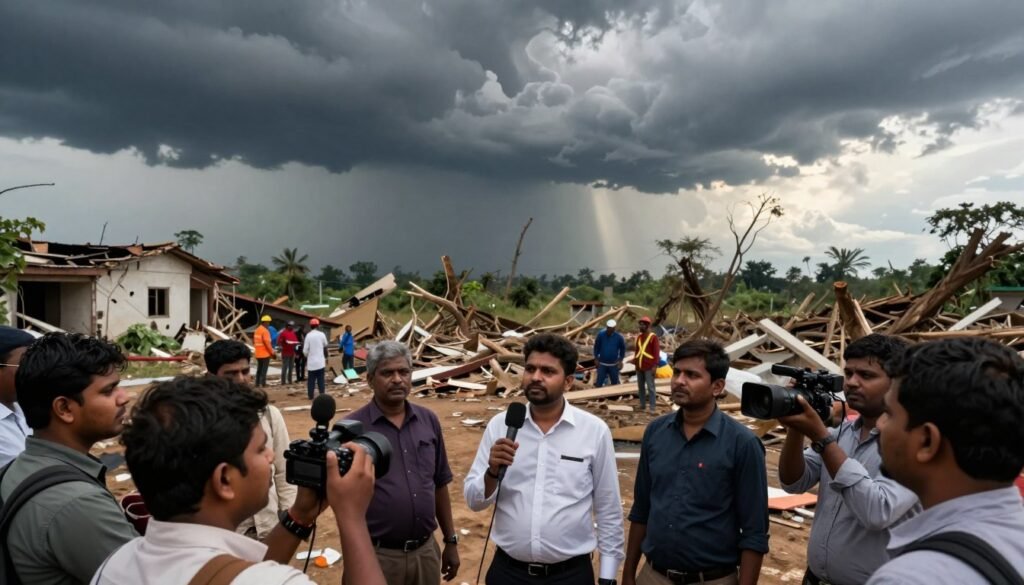
We carefully watch Odisha Tornado News updates. We only trust verified sources and official channels for making decisions. Clear verification is key during a weather disaster in India. It helps reduce harm and ensures aid reaches those who need it most.
Trusted sources to follow
- India Meteorological Department (IMD): real-time advisories and bulletins for forecasts and warnings.
- Odisha State Disaster Management Authority (OSDMA) and district administration handles: official rescue instructions and helplines.
- National outlets such as The Hindu, The Indian Express, and The Times of India: verified reporting and on-ground fact checks.
- Reputable NGOs and verified relief organizations for updates on shelter, aid distribution, and volunteer coordination.
How to spot misinformation and deepfakes
- Run reverse-image searches to see if photos date from a different time or place.
- Check timestamps and metadata when available; mismatched dates often indicate reuse of old material.
- Corroborate dramatic claims with at least two independent, trusted sources before accepting them.
- Watch for common manipulation signs: inconsistent shadows, warped backgrounds, or abrupt audio cuts in video.
- Be wary of sensational headlines that lack attribution to named officials or agencies; they often aim to drive clicks.
Tips for responsibly sharing updates
- Share only verified information and credit the original, authoritative source.
- Prioritize official advisories and practical details: evacuation routes, shelter locations, helpline numbers.
- Avoid reposting unverified casualty counts or graphic material that may distress readers and hamper rescue efforts.
- When forwarding eyewitness content, note the time and locale and ask followers to confirm before retweeting or reposting.
- Use social platforms to connect volunteers to coordination points, not to spread speculation about tornado damage Odisha.
We encourage readers to verify every piece of news labeled as Odisha Tornado News. Clear, verified communication is vital during a weather disaster in India. It strengthens relief efforts and protects communities.
Conclusion
The Mayurbhanj storm caused a lot of damage. Homes, schools, and utilities were hit hard. Lives were lost, and many were left without shelter.
Early reports and on-the-ground data show why this event is so important. It’s why quick action was needed. Now, we must focus on rebuilding carefully and efficiently.
Fixing the damage in Odisha needs everyone’s help. Engineers, teachers, students, and leaders must work together. They should focus on building strong and safe structures.
Our goal is to teach local teams how to rebuild better. We need to give them the skills and tools they need. It’s also important to have clear ways to help and organize volunteers.
The Mayurbhanj storm shows we need better warning systems. We also need stronger homes and better prepared communities. News outlets should give accurate and helpful information.
We must all work together to rebuild. By using our knowledge and supporting each other, we can make our communities safer. This way, we can face future storms better.