



The Srinagar Tulip Garden is now open for the 2026 season. It’s Asia’s largest tulip garden. The Jammu & Kashmir Tourism Department and Srinagar municipal authorities made the announcement together.
The opening marks the start of the Kashmir tourism season. It adds to the Indira Gandhi Memorial Tulip Garden. This makes Srinagar’s tulip garden offerings even better in 2026.
This garden is more than just flowers. Landscape engineers and horticulture specialists worked hard. They made sure the garden can bloom on a big scale.
Students and educators will find this garden interesting. It’s a great example of systems design and ecological planning.
The Srinagar Tulip Garden aims to boost tourism. It will help hotels, transport, and local vendors. We’ll share updates on the opening day and what visitors think.
Opening day highlights at the new tulip garden
We got there early to feel the buzz. The garden was full of colors. People were everywhere, taking photos of the first flowers.
Big names from the Jammu & Kashmir Tourism Department cut the ribbon. Local leaders and horticulture experts were there too. They talked about the garden’s design and plans for the future.
Ribbon-cutting ceremony and dignitaries present
- The chief guest talked about teaching horticulture all year and how many visitors they aim for.
- Tourism officers shared how they got funding and worked with local farmers.
- Landscape architects explained how the design helps people move around and keeps plants safe.
First impressions from visitors and media
Big names in media came to cover it. They sent out live reports and videos. Social media was buzzing with photos and clips.
- People from all walks of life came to see it.
- Everyone loved how easy it was to get around and how clear the signs were.
- The media saw it as a big deal for Kashmir tourism.
Special events and cultural programs during opening
There was a lot to see and do all day. There was music, dance, and a craft fair. Experts showed how to plant and care for tulips.
- There were talks on how to garden at home and in schools.
- The performances showed off local traditions and culture.
- Stalls sold local crafts and fresh produce.
Staff worked hard to keep things running smoothly. They managed tickets and signs. There were also security and extra facilities for visitors.
News and social media kept talking about the garden. It showed how the Indira Gandhi Memorial Tulip Garden opening events were part of bigger plans for Kashmir tourism.
Srinagar Tulip Garden
We look at how this place changed from simple green spaces to a big flower show. The Jammu & Kashmir Horticulture Department and private firms helped change it. They worked on drainage, terracing, and more bulb beds for bigger plants and more visitors.
History and evolution of the garden site
It started as simple lawns and small flower beds. In the 2000s, it became a bigger park, known as the Indira Gandhi Memorial Tulip Garden. Now, it has more plants and special soil for tulips.
Teams put in drainage and frost protection to stop water and cold damage. These steps show the garden’s practical side while keeping its cultural value.
Floral varieties planted and layout design
This year, we planted Darwin hybrids, Triumph tulips, Parrot types, and Fosteriana cultivars. We picked these for their colors, growth, and timing. The goal is to have beautiful colors and longer blooms.
We chose colors and shapes to make stunning views. We also made terraced beds and walkways for better views and flow. We mixed local and imported bulbs for variety and adaptability.
How this garden compares to former seasons
This year, the garden is bigger and has more bulbs than before. It has more types of plants and better water systems. This helps plants bloom longer.
Improvements like drainage and special soil help plants last longer. These changes make this year’s garden better than before.
Significance for Kashmir tourism news and economy
The opening of the garden is a big boost for tourism in the region. Early reports show a lot of interest from visitors. The garden’s size and activities have made Srinagar a popular destination again.

Visitor numbers for spring 2026 are expected to be high. Daily visitors could be 8,000 to 12,000 on regular days. During busy times, up to 35,000 people might visit each day.
About 70% of visitors will be from within the country. The other 30% will come from abroad. This will affect hotels and travel services a lot.
Hotels near Dal Lake and in Srinagar will be very busy. Prices for rooms will go up a lot. People are booking rooms well in advance.
Transport services like taxis and shuttles will make more money. Restaurants will be busier, too. Street vendors and temporary stalls can sell more to tourists.
The garden will help the local economy in many ways. It will bring in money from tickets, hotels, food, and shopping. Small businesses and new entrepreneurs can sell souvenirs and offer tours.
- Direct employment: garden maintenance crews, ticketing staff, security, horticulturists, and guides.
- Indirect employment: hotel staff, drivers, food vendors, craft makers, and tour coordinators.
- Seasonal apprenticeships: partnerships with Sher-e-Kashmir University of Agricultural Sciences and Technology and local polytechnics can provide short-term training.
We suggest steps to make sure the garden’s success lasts. Local vendors should get licenses and share profits fairly. Working with the tourism department and travel boards can help more people know about it.
Training in customer service and gardening can help people find jobs. With careful planning, the garden can bring lasting benefits to the community. It will also make Kashmir’s tourism news more positive.
Locations and access: reaching the tulip garden in Srinagar
We provide easy-to-follow routes and tips for visitors. This helps plan travel confidently. We cover travel times, parking, and mobility options for both new and returning visitors.
Nearest airport and main roads
Sheikh-ul-Alam Airport is the closest airport. It’s about 25–35 minutes to Lal Chowk. From Lal Chowk, the garden is 20–30 minutes away via NH44.
Travel from Sonamarg takes 60–75 minutes, depending on weather and road conditions.
Public transport and last-mile options
- City buses and shuttle services run to the garden. Your hotel might offer shuttle services.
- Radio taxis and app-based cabs like Ola are available for door-to-gate trips. Shared cabs are cheaper during peak times.
- Tour operators offer group transfers. Check the Srinagar tulip garden 2026 transport options before you go.
Parking, entrances and on-site wayfinding
There are designated parking zones. Follow signs to the main gate and ticket kiosks. Marshals and maps help guide visitors.
- Bus parking is separate from car zones to manage visitor flow.
- Main ticket counters are near the main gate. More counters open during busy times.
- Clear signs and staff help with directions on busy days.
Accessibility provisions
The garden has ramps and tactile paving. There are reserved parking spots and accessible restrooms near main areas.
For mobility aid rentals or special assistance, contact the garden office. They can help with arrangements for limited mobility or escorts.
Best time to visit during the 2026 bloom
We tell you when to go to see the tulips at their best. Knowing when tulips bloom in Kashmir helps plan your trip. This info is great for those looking for the best time to visit Srinagar Tulip Garden in 2026.
Tulips start to show in early spring. Leaves come out in March, and flowers bloom from late March to mid-April. For the 2026 bloom in Srinagar, expect the best time to be late March to early April.
Week one will have early tulips in bloom. Week two will have more colors. Week three is the peak. Week four, the petals will start to fall.
Weather considerations and what to pack
Srinagar in spring is cool in the mornings and mild in the afternoons. Daytime highs are around 12–18°C, and mornings are 3–8°C. It might rain, so pack layers: a light top, a warm middle layer, and a rain jacket. Wear good shoes for walking on grass.
Don’t forget sun protection: a hat, sunglasses, and sunscreen for sunny afternoons.
Timing recommendations for photographers and families
Photographers should go early in the morning. The light is soft, and there are fewer people. Late afternoon is great for golden-hour shots.
Families will enjoy the midday for cultural events and easy access to food and drinks. Engineers and horticulture students should visit in the mid-morning. This is when the garden is most active.
Contingency planning and live updates
Weather changes or slower growth might move the bloom date. Always check the garden’s website and local reports before you go. Booking for two to three days around the peak date increases your chances of seeing the tulips.
For the latest on when to visit, follow the garden’s updates and local tourism news.
Ticketing, hours, and visitor guidelines
We tell you what to expect before you go. This includes ticket types, daily hours, and rules. This info helps everyone plan a great visit during the peak bloom.
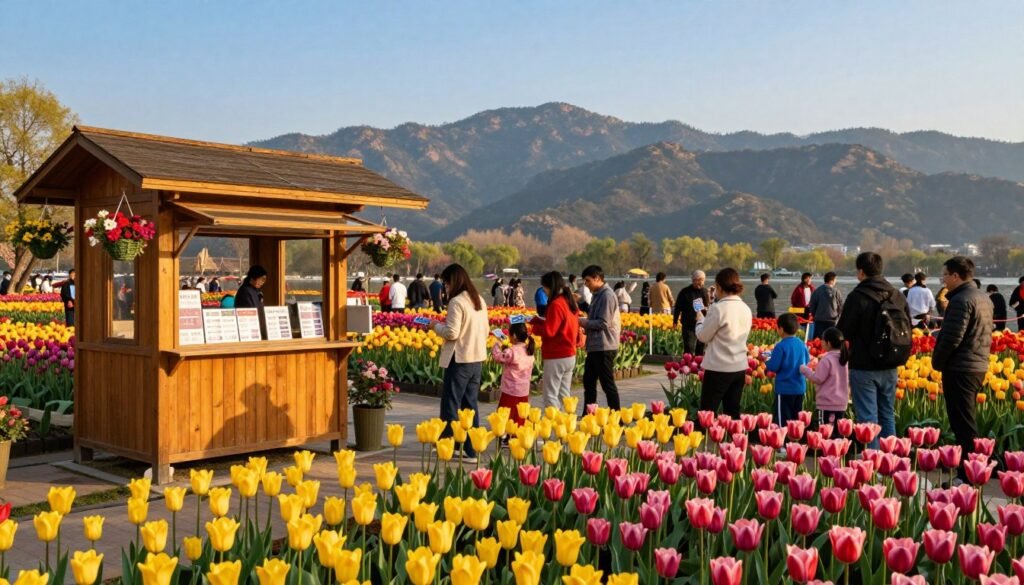
Ticket structure: The garden has different ticket prices. Adults pay one price, students and seniors get a discount. Kids under a certain age pay even less. Schools and tour groups get a discount too. For big groups, book in advance through official sites. You can buy tickets online or at the gate.
Online and walk-up booking: Booking online is best to get a time slot. But, you can buy tickets at the gate on quiet days. Prices might go up on busy days like weekends and festivals.
Opening schedule: The garden opens early and closes at dusk. Hours might change for special events. Check the site weekly for updates. Try to get there early to avoid crowds.
Crowd management: The garden limits how many people can come each day. There are systems to help you get in fast. If it’s too busy, there are other places to see the tulips.
- Timed tickets: staggered half-hour slots for smoother flow.
- Group check-in: separate counters to speed entry.
- Capacity alerts: online updates when slots sell out.
Behavioral rules: Only service animals are allowed. There are special areas for small dogs. Picnics are only in certain spots to protect the garden.
Drone policy: You can’t fly drones for fun without a special permit. Professional drone use needs a permit too. Breaking these rules can lead to fines and losing your drone.
Enforcement and fines: Park staff will warn you for small mistakes. But, serious problems like flying drones or littering can get you fined. There are signs and staff to help you follow the rules.
Check the official site before you go. It has the latest on tickets, hours, and booking for 2026. This way, you can visit the garden respectfully and at the right time.
Photography tips for capturing the tulip displays
We want to help all photographers get amazing shots of the tulips. Plan your shots to use high spots, straight paths, and colorful areas. This way, you won’t hurt the plants. The right light, view, and care for nature can turn a simple photo into a masterpiece.
Best vantage points and golden hour advice
Begin your day at dawn for soft light and dew. The terraces offer wide views of the city and mountains. Straight paths are great for big photos.
In the late afternoon, the colors are rich and shadows add depth. Golden hour is perfect for people photos in the flower beds. Arrive early to find the best spots and avoid the crowds.
Recommended equipment and camera settings
Bring a wide-angle lens for big views and a 90–105mm macro for close-ups. A strong tripod is key for low light and focus stacking.
Use a low ISO (100–200) and f/8–f/11 for wide shots. For close-ups, open to f/2.8–f/5.6. Adjust your shutter speed for moving subjects.
Smartphone users, use grid lines for better photos. Turn on HDR for balanced light. Try portrait and macro modes. Always shoot in RAW for better editing later.
Permits and restrictions for professional shoots
Commercial teams need permits from Srinagar’s city or garden offices. There’s a fee, insurance proof, and rules on big equipment in flower beds.
There are special areas for tripods, lights, and sets. No props that could harm the plants or soil. Always listen to the on-site guides to protect the garden and others.
Floral science: varieties and cultivation techniques
We look at how horticulture makes the Indira Gandhi Memorial Tulip Garden bloom in spring. This guide talks about the main types of tulips, soil and water care for bulbs, and how to keep flowers bright all season.
Popular cultivars and bloom timing
- Darwin hybrids: tall, big, and strong. They are the main show and last long.
- Triumph varieties: small but colorful. They fill the middle weeks with bright colors.
- Parrot tulips: have unique, wavy petals. They add special touches to the garden.
- Fosteriana group: bloom early. They start the season and do well in cool spots.
Soil composition and irrigation engineering
The soil mix is sandy-loam with organic matter for nutrients and drainage. Drainage lines keep water away during spring. Watering is short and often at first, then less as flowers grow.
Climate adaptations for Kashmir
- Frost protection: covers and frames keep shoots safe from cold.
- Mulching: straw or compost keeps soil warm and moist.
- Planting at different times: makes blooms last longer in Srinagar’s garden.
Maintenance practices that ensure vivid blooms
Bulbs come from trusted sources and are checked for diseases. Fertilize with a balanced mix at planting, then more phosphorus when shoots appear. Use natural pest control and chemicals only when needed.
After flowers fade, some bulbs are lifted and replanted. Others are left to grow again. Both methods help the garden stay beautiful for visitors.
Events and festivals around the tulip garden
We have a special program for visitors and planners during the tulip bloom. The calendar has free public shows and ticketed events. This way, everyone can enjoy the garden smoothly.
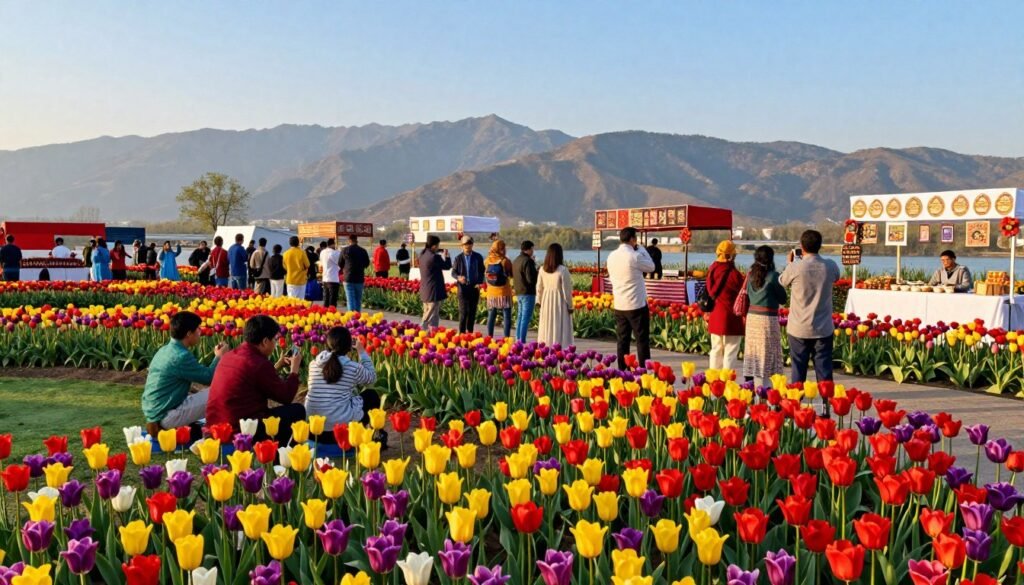
Cultural programs, music, and local art showcases
Daily stages feature Kashmiri Sufi singers and folk groups from Srinagar and Budgam. They perform short sets to avoid crowds. Local art shows and sculpture displays are also part of the program.
Food festivals, markets, and souvenir stalls
Food events offer wazwan tasters, kebab stalls, and Kashmiri street food. Artisan markets sell pashmina shawls, walnutwood crafts, and tulip-themed items. All vendors meet high standards for safety and quality.
Workshops, guided tours, and educational activities
- Hands-on bulb-planting workshops for school groups and enthusiasts led by horticulture staff.
- Guided tours explaining planting design, soil care, and irrigation practices used in the garden.
- Photography masterclasses and private evening tours offered as limited ticketed sessions to avoid crowding.
School outreach programs run weekday mornings with lessons on botany and conservation. We stagger workshop start times to avoid peak visitor routes. Ticketed masterclasses and private experiences are capped and scheduled between public hours to keep the general visitor experience uninterrupted.
Press updates will list daily highlights and special-ticket availability as part of broader Kashmir tourism news festivals coverage. These arrangements aim to make the tulip festival Srinagar 2026 engaging and manageable for families, photographers, and professionals alike.
Safety and health guidelines for visitors
We make sure everyone has a safe and healthy time at the tulip garden. We have clear rules and trained staff to handle any issues. This way, you can enjoy the beautiful flowers without worry.
- First-aid stations at main entry, central plaza, and north viewing deck staffed during open hours.
- Designated emergency response teams are on call; look for staff in marked vests for immediate help.
- Local hospital contacts and ambulance services are posted at kiosks and on the official notice boards for rapid access.
- Evacuation routes and assembly points are signed across pathways; follow staff directions in an emergency.
Health advisories, crowd safety, and seasonal risks:
- We run crowd-control plans at peak times to avoid congestion along main promenades and viewing platforms.
- Staff are trained in basic lifesaving, crowd management, and child-reunification procedures to reduce response times.
- Visitors should prepare for temperature swings: layered clothing for cold mornings and sun protection for midday sun.
- Lost-and-found protocols and child-safety stations are available near the central information desk.
Public health protocols and travel-health advice:
- Masking is recommended in busy indoor spaces and at crowded ticketing points; hand-sanitizer stations are placed across the site.
- We maintain the ability to reinstate stricter measures based on local public-health advisories.
- International visitors should check vaccination and travel-health requirements before arrival and carry proof if needed.
- Food vendors follow licensing and routine inspections to meet hygiene standards and reduce foodborne illness risk.
The garden’s guidance on Srinagar Tulip Garden safety and visitor health guidelines Srinagar tulip garden 2026 reflects the Indira Gandhi Memorial Tulip Garden safety measures adopted this season. We update signage and staff briefings daily to keep information current and easy to follow.
Nearby attractions to include in your Kashmir itinerary
We plan routes and day trips that mix tulips with Srinagar’s best spots. A morning at the garden, an afternoon on the lake, and evenings at heritage sites work well. Making small choices saves time and leads to deeper experiences.
Dal Lake Shikara rides offer a calm contrast to the tulips. A shikara ride gives you sunrise views, floating gardens, and great photo spots. Staying in a houseboat adds to the experience. Book early to get a spot on the lake.
Plan a half-day at the tulip garden and then a 60–90 minute shikara ride. This saves time and lets you enjoy evening markets and dinner by the ghats.
Mughal gardens and heritage sites are close for easy visits. Nishat Bagh and Shalimar Bagh are must-sees. Hazratbal Shrine offers cultural insight and peaceful views. Visit the gardens in mid-morning for the best light and fewer people.
- Half-day: Tulip garden + Dal Lake Shikara rides for sunrise or sunset.
- Full-day: Tulip garden, Nishat Bagh, Shalimar Bagh, and the local handicraft market in Lal Chowk.
- Multi-day: Add Gulmarg or Sonamarg for alpine views and outdoor activities.
Short trips to historic sites in Srinagar are rewarding. Old city lanes show papier-mâché, pashmina, and woodcraft. Visit these places after noon for a slower shopping experience.
Travel tips: the tulip garden is 20–30 minutes from Srinagar’s center. Tuk-tuks and cars are good for quick trips. For groups, vans are better. Book houseboats and tours early for the 2026 tulip season.
We have two sample itineraries for most travelers and photographers. They include travel times and transport options to help plan your trip.
Local community involvement and sustainability efforts
We see the garden as a shared asset. It supports livelihoods and protects the landscape. Our approach blends economic inclusion with environmental action. This way, the Indira Gandhi Memorial Tulip Garden local impact reaches both residents and ecosystems.
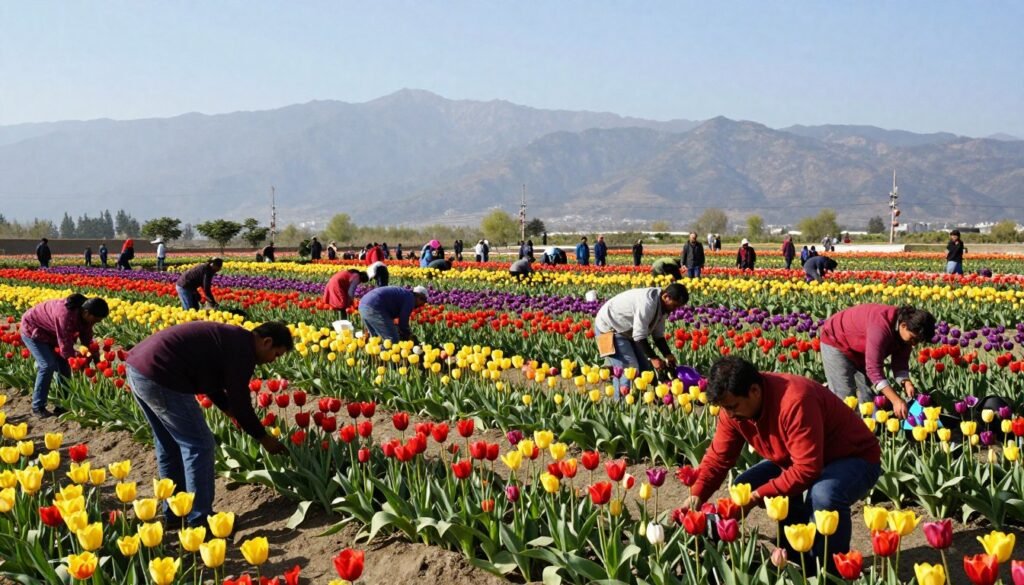
How local growers and artisans benefit
We choose Kashmiri suppliers and floriculturists for vendors. We partner with growers around Srinagar to supply bulbs, seedlings, and seasonal produce.
Artisans from Srinagar and nearby villages get priority for stalls. They sell handicrafts, pashmina goods, and traditional food. This creates steady income for weavers, potters, and street vendors during peak tourism weeks.
Eco-friendly initiatives and waste management plans
Waste systems start with segregation at source. Organic, recyclable, and hazardous streams are separated on-site. Green waste goes to composting units that turn cuttings into soil amendments for beds and community gardens.
Water conservation uses recycled irrigation flows and rainwater harvesting. This lowers fresh-water demand. Low-energy LED fixtures and pilot solar arrays reduce power draw across visitor facilities.
Volunteer programs and community outreach efforts
We recruit volunteers from the University of Kashmir and local NGOs. They help with garden maintenance and visitor services. Internships teach horticulture, irrigation management, and visitor engagement skills.
Outreach workshops focus on sustainable floriculture and small-business skills. These programs help diversify incomes. They empower youth to shape the sustainability Srinagar tulip garden 2026 agenda.
- Monitoring and reporting: Trackable metrics include waste-diversion rates, water usage per acre, and community-employment statistics.
- Transparency: Regular public reports let residents review progress and suggest course corrections.
- Scaling impact: Data-driven practices enable expansion of successful models to nearby parks and farms.
We are committed to continuous improvement. We assess the Indira Gandhi Memorial Tulip Garden local impact. We refine vendor policies and publish sustainability Srinagar tulip garden 2026 metrics. This way, the Srinagar Tulip Garden community sees clear, lasting benefits.
Travel planning tips for international and domestic tourists
We help travelers plan a smooth visit to Srinagar’s tulip displays. Use this checklist for easy documentation, packing, bookings, and local etiquette. This way, your trip will focus on the blooms and culture.
Visa guidance and entry essentials. International visitors need an Indian e-Visa from the official portal or consulates. Carry your visa, passport, and return ticket. Also, get travel insurance for medical, trip cancellation, and baggage loss.
Seasonal packing and currency basics. Pack warm clothes for mornings, mild for afternoons, cool for evenings. Don’t forget waterproof gear and sturdy shoes. Bring power banks and a universal adapter for your devices. Exchange some money to Indian rupees before you go; ATMs and cards are common in Srinagar, but cash is preferred by small vendors.
Booking strategies for peak bloom. Book flights and hotels early for tulip season to get good rates. Compare prices on Booking.com and MakeMyTrip. Also, check direct hotel offers for loyalty perks. Choose certified local operators for tours to ensure safety and reliable transport.
Local safety, etiquette, and photography. Dress modestly at religious sites and ask before taking photos. Solo travelers should share itineraries and use registered taxis. Families should have a meeting point and emergency numbers ready.
- Documents: passport, visa, travel insurance, ID copies.
- Packing: layers, rain jacket, walking shoes, power bank.
- Money: some INR on hand, cards for hotels and big vendors.
- Booking tip: reserve 4–8 weeks ahead for the Srinagar tulip garden 2026 travel planning peak.
We follow Kashmir tourism news travel advice for timing and safety. Keep an eye on local announcements and airline updates as you plan your trip to Srinagar Tulip Garden.
Media coverage and public reaction to the opening
We watched as news from all over shared the garden’s opening. It was seen as a big deal for tourism and the local economy. People talked about its size, cultural events, and how it could help local shops.
News outlets like The Times of India and The Indian Express covered it. So did local papers like Greater Kashmir and Rising Kashmir. They shared facts from the Indira Gandhi Memorial Tulip Garden, like how big it is and what to see.
On social media, people shared photos and talked about the garden. Travel writers and influencers helped build excitement. Local people shared tips on getting there and when to go.
- Trending topics: large photo clusters, peak-bloom alerts, and ticketing updates.
- Sentiment pattern: mainly positive excitement, occasional logistical complaints.
- User-generated content: helped set realistic visitor plans and highlighted crowd hotspots.
We heard from experts and visitors to get a real feel. A tourism official talked about the garden’s impact on tourism. A horticulturist shared how they kept the flowers alive. Visitors shared their amazement at the colors and size.
“The scale is beyond what many expected. We designed plantings for long bloom windows and varied viewing points,” said Dr. Rakesh Sharma, lead horticulturist.
“Tourism capacity planning must match this interest. Accurate bloom reports will steer visitor flows and protect the experience,” stated a Jammu & Kashmir Tourism Department representative.
Looking at the media and public reaction shows how stories and pictures affect demand. The Indira Gandhi Memorial Tulip Garden press materials were key for journalists and social media users.
There are lessons for media strategy. Keeping up with bloom updates, ticketing, and transport is key. This helps manage expectations for those planning visits after seeing the news or photos.
Conclusion
The opening of Asia’s largest tulip garden is a big deal. It mixes new ideas in gardening, careful planning, and community help. This makes it a key spot for tourists.
This garden changes how people visit, helps local jobs, and sets new standards for parks in Kashmir. It’s a big win for everyone involved.
The future looks bright for the Srinagar tulip garden by 2026. It will be a place where people learn and grow. From gardening tips to crowd control, it’s a place for everyone to learn.
We hope people will study and share what they learn. This way, the garden can inspire others to create similar spots.
For those planning to visit, keep an eye on Jammu & Kashmir tourism news. It will have updates on blooms and how to book. Try to visit in a way that doesn’t harm the environment.
Follow the garden’s progress on how it impacts the community. The garden is more than just pretty flowers. It brings together design, nature, and culture to inspire new ideas and learning.