



In today’s fast-paced digital world, creating amazing digital environments is key. We know that immersive experiences are vital for engaging films and games. Let’s dive into the world of massive digital environments.
This world combines art and science to create interactive worlds. We’ll see how new techniques and tools help us make these worlds come alive. Together, we’ll make sure audiences are part of the story, not just watching it.
Introduction to Digital Environments
Digital environments are key in today’s creative world. They are like virtual canvases where dreams come to life. Artists and designers use them to make worlds in movies and games.
Understanding introduction to environment design shows how creators make these worlds. They use special skills to make these places feel real.
With new tech, making creative digital landscapes gets even better. Designers add cool details and things that move. This makes the experience more fun and real.
This journey into digital environments is just the start. We want to talk more about what makes this field so interesting. We hope to create stories and experiences that make you think and feel.
The Importance of Environment Design
In film and game making, environment design is key. It’s not just about looks. A good environment can make the viewer feel more involved and interested. Environments are like the secret heroes of stories, helping us understand characters and plots.
Looking at hits like “Blade Runner 2049” and “The Last of Us,” we see how environments tell stories. They don’t just look pretty; they make us feel and get the story. These settings are part of the story, not just the background.
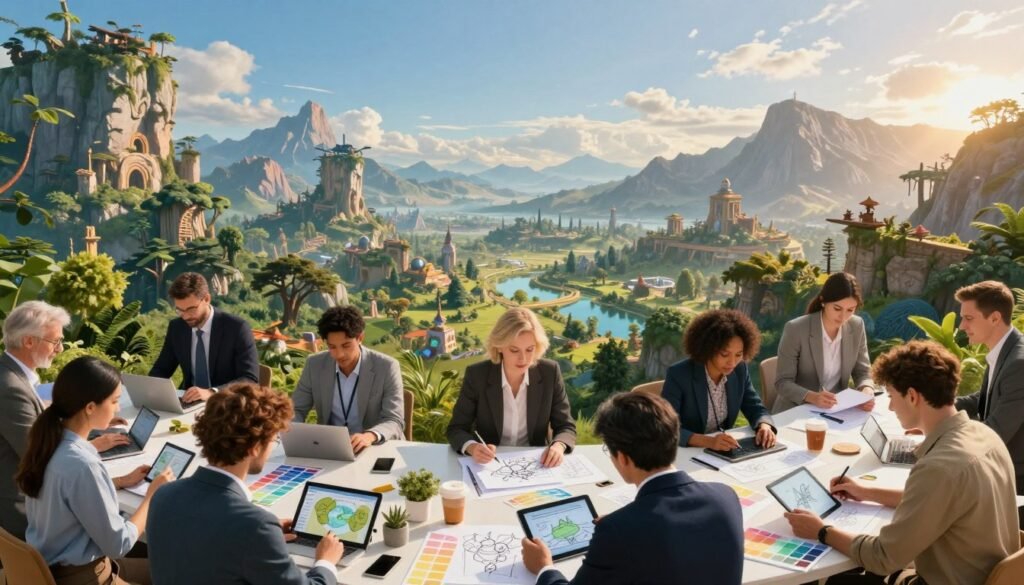
Good environment design turns simple scenes into exciting places. When we explore these worlds, we feel more than just a viewer. We connect with the story, making it unforgettable. So, environment design is a big deal in media, shaping how we see and feel stories.
Understanding Landscape Modeling
Landscape modeling is key in digital world creation. It makes films and games look great and feel real. Knowing the right techniques and tools is vital for artists.
Key Techniques in Landscape Modeling
Many techniques are important in landscape modeling. They help artists create the look and feel of digital worlds. Here are some main techniques:
- Terrain Generation: This method makes landforms like mountains and valleys look real using algorithms.
- Sculpting: Artists shape digital meshes to add depth and detail to landscapes.
- Texturing: Adding surface textures makes things look real. Artists use different materials to create natural looks, like rocky areas or grassy fields.
Tools for Effective Landscape Design
The tools you choose affect how well you can model landscapes. Here are some top tools for designing environments:
| Tool Name | Key Features | Best For |
|---|---|---|
| Blender | Free, versatile with a strong community support | Beginners and advanced users looking for a complete modeling tool |
| Maya | Industry standard, powerful for animation and modeling | Professional artists working on big projects |
| ZBrush | Advanced sculpting, handles detailed meshes well | Artists who focus on detailed character and environment work |
The Role of Digital Matte Painting (DMP)
Digital Matte Painting (DMP) is key in making backgrounds that pull you into the story. It lets artists build detailed scenes that mix well with live-action and 3D. This way, DMP artists make amazing landscapes that make stories better and grab your attention.
DMP is very flexible. It lets us see big scenes and detailed settings that are hard to do with just practical effects. For instance, *The Lord of the Rings* and *The Last of Us* use Digital Matte Paintings. They make scenes feel real and huge.
Artists work hard to make sure DMP fits perfectly with the rest of the scene. They pay close attention to lighting, perspective, and colors. This makes sure everything looks right together, keeping the story real and engaging.
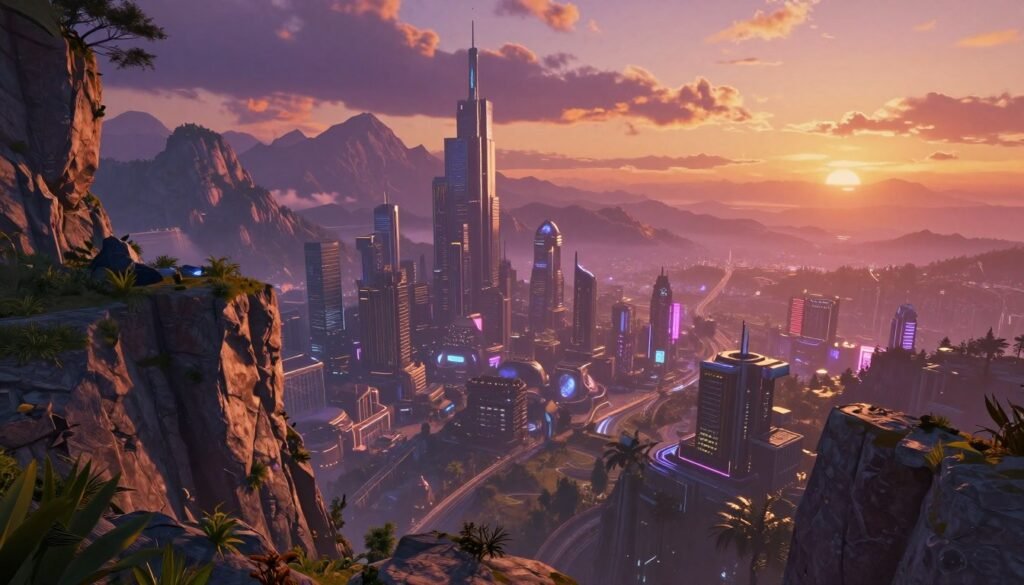
As digital tech gets better, DMP’s role grows bigger. New tools and software let artists be more precise and creative. Learning DMP helps artists make a big impact in visual effects for movies and games.
World Building: Creating Immersive Experiences
World building is about making detailed environments that pull people into stories. It includes many parts, each important for a believable and fun setting. Knowing these parts helps create experiences where people can dive into the world.
Elements of Effective World Building
To make great world building, you need to mix a few key things:
- Lore: A deep history that tells how the world came to be.
- Geography: Designed landscapes with different terrains and life.
- Culture: Unique customs, languages, and ways of life that make the world special.
- Interaction: Ways for characters and players to really connect with their world.
Case Studies in Successful World Building
Looking at examples shows us how to do world building well. Here are a few:
- The Lord of the Rings: J.R.R. Tolkien’s detailed history and geography make a world full of stories.
- Mass Effect: This series has a world with many races and complex politics.
These examples show how good world building makes stories more engaging. They let people dive into the world. By learning from these, we can make our own worlds that touch people’s hearts.
Incorporating Realism into Digital Environments
Realism is key in making digital spaces feel real to users. It helps people connect deeply with virtual worlds. To get realism right, we focus on details like references and mixing fantasy with reality. This part talks about how to make digital spaces feel real and true to life.
Gathering References for Authenticity
To get realism, we look to nature and cities for ideas. Collecting visual references boosts our designs’ authenticity. Here are ways to get those references:
- Photography: Take pictures of landscapes, buildings, and textures.
- Field Studies: Watch real places to learn about light, color, and space.
- Historical Research: Study old designs to get cultural details right.
| Reference Source | Benefit |
|---|---|
| Photography | Shows real colors and textures. |
| Field Studies | Teaches about how environments work. |
| Historical Research | Makes cultural parts of design accurate. |
Balancing Fantasy with Believability
We need to mix fantasy with believable parts. People like amazing worlds that make sense. Here’s how to do it:
- Establishing Rules: Create rules for your world’s logic.
- Subtlety in Fantasy: Make sure fantasy fits with the design.
- User Feedback: Ask viewers what they think of your mix of fantasy and reality.
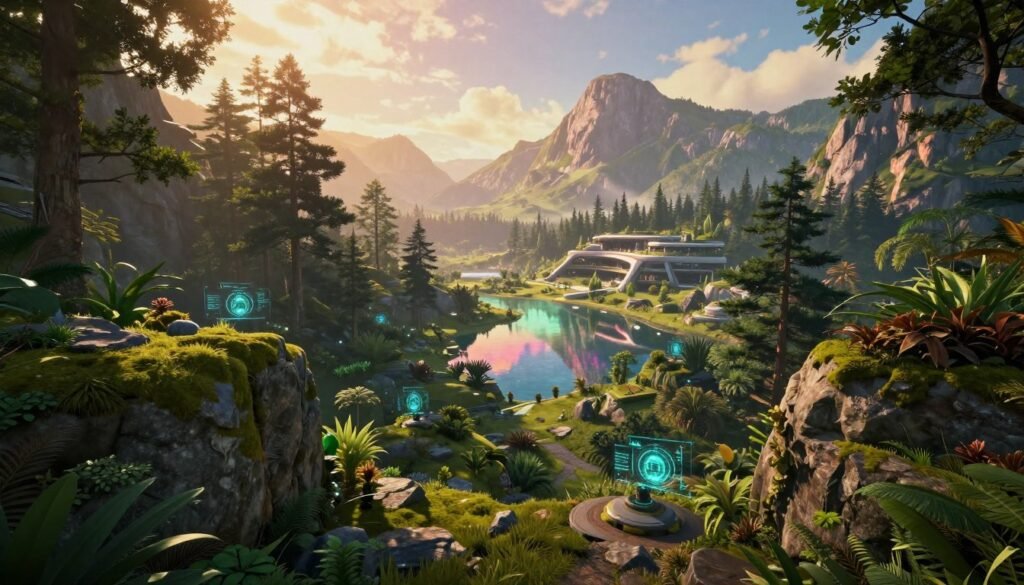
Best Practices for Collaboration in Digital Projects
Collaboration in digital projects needs good teamwork strategies. Digital projects need many skills. So, team members must talk well and share ideas.
Using team software helps a lot. Tools like Trello and Slack make sharing ideas easy. Meetings should let everyone speak up, so everyone feels included.
Getting feedback is key in digital design. Regular team talks help share ideas and improve the project. This makes the team work better together.
| Best Practices | Description |
|---|---|
| Use Collaborative Software | Implement tools like Trello or Slack for real-time updates and task management. |
| Structured Meetings | Conduct meetings that encourage input from all team members, ensuring diverse perspectives. |
| Feedback Integration | Regularly solicit and incorporate team feedback to enhance project quality. |
| Clear Roles | Define specific roles and responsibilities to avoid overlap and confusion. |
Exploring Different Genres and Their Environment Needs
Creating digital worlds needs a deep understanding of each genre’s needs. Genres like fantasy, sci-fi, horror, and historical each have their own environmental design needs. For example, fantasy worlds are full of mythical creatures and lush landscapes. Sci-fi worlds, on the other hand, focus on advanced tech and futuristic looks.
When we think about genre-specific design, we see how these traits guide our choices. Each genre shapes not just the visuals but also the story and how users feel. Let’s look at how different genres handle environmental design:
| Genre | Environmental Design Needs | Genre-Specific Considerations |
|---|---|---|
| Fantasy | Rich landscapes, intricately designed buildings, magical elements | Creating mythical lore and vast worlds |
| Sci-Fi | Futuristic buildings, advanced tech, alien settings | Combining speculative science with creative visuals |
| Horror | Dark, eerie settings, unsettling details | Using light and sound to create fear |
| Historical | Details from the time, settings from the past | Staying true to the time and culture |
As we explore digital environments by genre, we see that each needs a special approach. Knowing these details helps us innovate and improve the user experience.
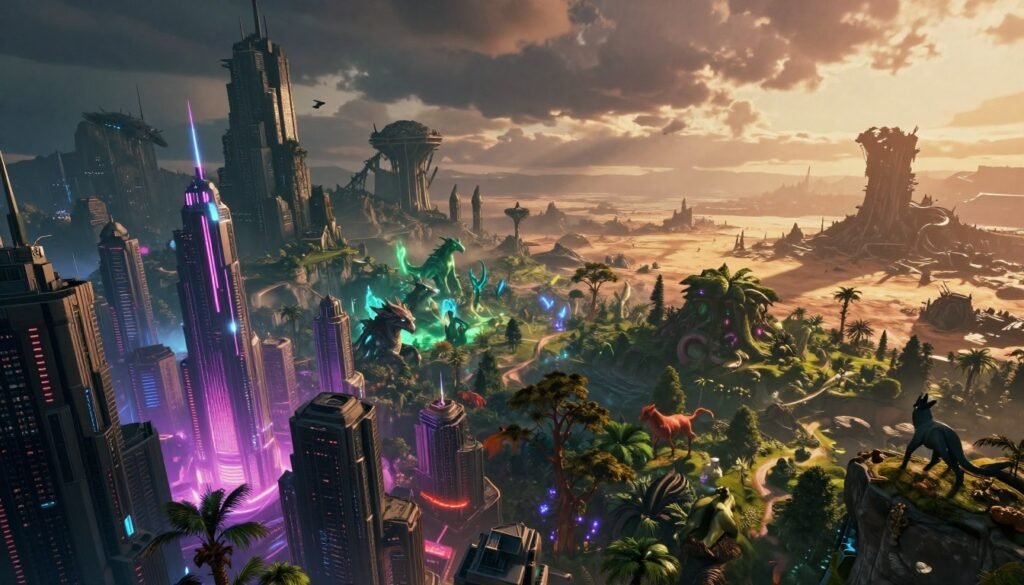
The Impact of Technology on Digital Environment Creation
Technology is changing how we create digital environments. New tools and software are making it easier to design and interact with virtual spaces. Let’s look at the latest tech that’s changing this field.
Current Technologies Transforming the Industry
Several key technologies are changing digital environment creation:
- Real-Time Rendering: This lets creators see scenes right away. It helps make changes faster and boosts creativity.
- Virtual Reality (VR) and Augmented Reality (AR) Integration: These technologies pull users into digital worlds. They make experiences more engaging and interactive.
- AI-Assisted Design: Artificial intelligence helps create landscapes and environments. It makes design faster and offers new ideas.
Using these advanced technologies in our work cuts costs and improves visuals. Innovation in digital environment creation sparks creativity. It lets us explore new ideas and boundaries.
Challenges in Building Massive Digital Environments
Creating huge digital worlds is tough. It can slow down your creative work and make projects late. Problems like scope creep happen when the project gets too big. This can use up all your resources and make things even slower.
Not having enough people or tools is another big problem. It makes everything less efficient. This can really slow down your work.
There are also technical issues to deal with. These can be about hardware, software, or how well tools work together. To solve these, you need to plan well and check in often. This keeps your team on track and ready for any surprises.
Tools and Software for Creating Digital Environments
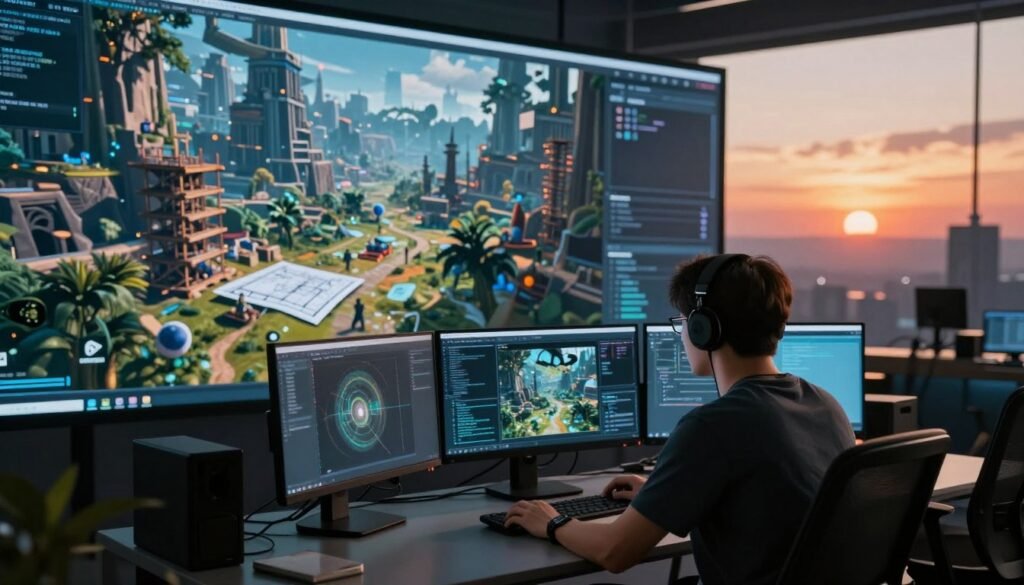
Creating stunning digital environments needs the right software. Many top tools are out there, each for different designer needs. Finding the right software is key for better workflow and creativity. Let’s look at some leading software.
Top Software Options Available Today
Here are some top software for making digital environments:
| Software | Key Features | Best For |
|---|---|---|
| Unreal Engine | Real-time rendering, high-fidelity graphics, extensive asset library | Game development, architectural visualization |
| Unity | Cross-platform capabilities, user-friendly interface, asset store | Indie game development, interactive experiences |
| SketchUp | Intuitive design tools, 3D modeling, major marketplace | Architects, interior designers, urban planners |
| Autodesk Maya | Advanced animation, modeling tools, simulation capabilities | Character animation, film and game production |
Each software has its own strengths for digital environment creation. Choosing the right software can greatly improve our creative work. It helps us bring our ideas to life.
Optimizing Workflows for Efficiency
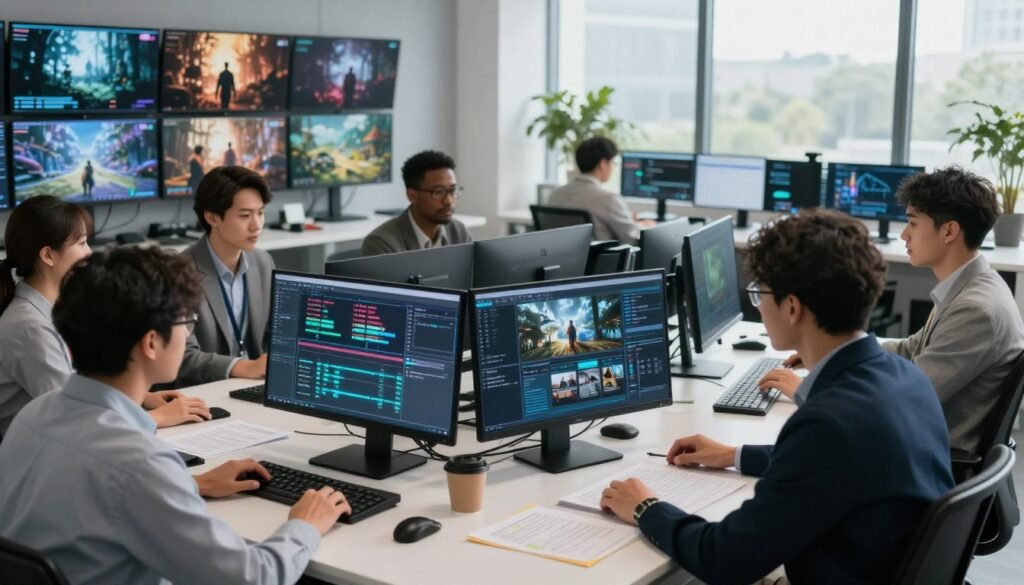
In the world of digital environment creation, optimizing workflows is key to success. It helps teams work better and faster. This way, they can finish projects on time and keep their creativity alive.
Setting clear project timelines is very important. It helps team members focus on their tasks better. This makes the environment creation process smoother.
Using asset libraries is also smart. It lets designers quickly find and use digital assets. This saves time and lets them focus on new ideas.
Version control is another great tool. It helps teams work together without losing their work. This boosts efficiency in design and lets everyone try new things safely.
| Workflow Optimization Techniques | Benefits |
|---|---|
| Establishing Clear Timelines | Improves task management and accountability. |
| Utilizing Asset Libraries | Reduces time spent on asset creation and fosters innovation. |
| Implementing Version Control | Facilitates collaboration and maintains project integrity. |
By using these methods, we make the environment creation process better. Teams can then focus on making amazing digital worlds.
Artistic Techniques for Enhanced Aesthetics
Artistic techniques make digital environments look better. By learning these techniques, we can make spaces that grab people’s attention. Understanding color theory is key to making these spaces look great.
Color Theory and Its Application in Environment Design
Color theory helps us use colors right in digital spaces. Colors can make us feel certain ways and change how we see things. Using colors wisely can set the mood, tell a story, and guide the viewer.
To get better at using color theory, try these tips:
- Warm colors (like reds and yellows) make things feel energetic or urgent.
- Cool colors (such as blues and greens) make things calm or peaceful.
- Contrast makes important things stand out, catching our eye.
- Colors that go well together make things look better overall.
By choosing colors carefully, we can make our digital spaces more beautiful. Using these artistic techniques, we create experiences that pull people in and make stories come alive.
The Future of Digital Environments in Media
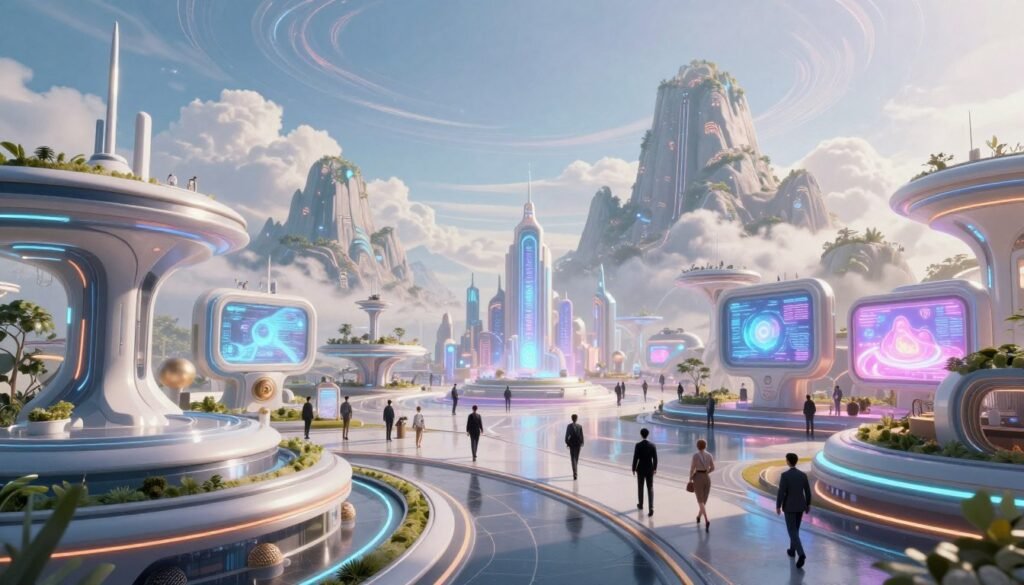
The world of digital environments is changing fast. We’re seeing new ways and tools come into play. These changes will shape how we create these spaces in the future.
Trends to Watch in Digital Environment Creation
It’s important to keep up with new trends in digital media. Here are some big changes we can expect:
- Procedural generation: This method uses algorithms to make big, detailed spaces on its own. It’s a time-saver and makes designs more varied.
- Immersive storytelling: Mixing interactive stories with digital worlds makes experiences more engaging and deep.
- Advancements in AI-driven content creation: AI and machine learning will make design work easier and faster. This means better quality and more work done in less time.
Being ready for the future is key for designers. By diving into these trends, we’ll see more teamwork and creativity in digital environments.
Marketing Your Digital Environment Skills
For those in digital environments, marketing your skills is key. A good portfolio shows your work and skills. It’s a way to prove your worth to clients or employers.
Social media is important for your brand. Share trends, insights, and your work. Sites like LinkedIn, Instagram, and Twitter help you meet others and get noticed.
Networking is vital. Join workshops, conferences, or webinars. This helps you meet others and get projects or referrals.
Online groups are great for sharing and learning. They let you exchange ideas and grow your skills. It’s about sharing and learning together, not just promoting yourself.
| Strategy | Description | Benefit |
|---|---|---|
| Portfolio Development | Showcase completed projects and skills. | Demonstrates expertise to clients. |
| Social Media Engagement | Share insights and projects on platforms. | Increases visibility in the industry. |
| Networking | Connect with other professionals and participate in events. | Creates opportunities for collaboration and referrals. |
| Online Communities | Engage in discussions and share knowledge. | Enhances personal branding and learning. |
Conclusion
We’ve looked into the world of digital environments in films and games. We’ve seen how important it is to create detailed landscapes and build worlds. These skills are key to making experiences that pull you in.
Learning never stops, and using new tech is vital. Working together with others is also important. As we move forward, staying open to new ideas is key. This way, we can keep growing and inspiring others.
The world of digital environments keeps getting better because of our creativity and hard work. They’re not just backgrounds; they’re a big part of the story. They make stories come alive and touch our hearts.