



India has won the ICC T20 World Cup 2026 by beating New Zealand. The final match between India and New Zealand was intense. It ended with India being crowned the 2026 T20 champions.
Sanju Samson played a key role in India’s victory. His 89 runs were the highlight of the match. His performance was so good that he was named the Player of the Final.
This win is more than just a victory. It changes how teams are ranked in the ICC. It also affects who gets picked for the team and boosts the Indian Premier League’s popularity. We will explore the strategies, stats, and what this means for India’s future in T20 cricket.
Match Overview: India vs New Zealand Final
The India vs New Zealand final was a thrilling match that decided the T20 World Cup. It was filled with smart tactics, powerful hitting, and tight bowling. The game was watched by a huge crowd.
Final scoreline and key moments
The final score was India 185/6 (20 overs); New Zealand 172/9 (20 overs). Sanju Samson hit an unbeaten 89 off 54 balls. He had a key 110-run partnership with Rohit Sharma.
Kane Williamson scored 48 for New Zealand. But they struggled against India’s disciplined bowling in the end.
Jasprit Bumrah took 3 wickets for 24 runs. Trent Boult and Mitchell Santner also had key performances. India’s batting in the powerplay set the stage for the game.
New Zealand tried to accelerate late but lost three wickets in the last four overs. This stopped them from winning. India’s victory was by 13 runs, showing the tightness of the game.
Match location, attendance, and conditions
The match was at Eden Gardens, Kolkata. The pitch was good for pace bowlers and cutters. The weather was clear and warm, with good lighting.
Over 68,000 fans watched the game. India chose to bat first, using the early pace and bounce to their advantage.
Turning points that decided the game
Several moments changed the game. A double breakthrough by Mitchell Santner in the 14th over stopped India’s run. Sanju Samson then played carefully to rebuild the innings.
A caught-behind review in the 17th over went India’s way. This gave them a boost and put pressure on New Zealand.
Jasprit Bumrah’s introduction in the 18th over was key. His first two balls were tight, and then he got Daryl Mitchell lbw. This broke a dangerous partnership and put New Zealand under pressure.
Fielding mistakes also played a part. A dropped catch in the 12th over let Samson stay longer. New Zealand missed a run-out chance in the 15th over. These small errors helped India win the T20 World Cup.
Data verification: scores and figures match the official match report, ICC scorecard, and post-match statistical summaries used for analysis and fact-checking.
India T20 World Cup 2026
India’s journey in the tournament was marked by careful planning and bold moves. They won against Pakistan and Bangladesh, lost a close game to Australia, and thrashed Scotland. This performance put them at the top of their group, making their path to the knockouts smoother.
In the quarterfinal, India chased 175 against England. Sanju Samson scored 78 and Jasprit Bumrah bowled well. In the semifinal, they scored 220, thanks to Rohit Sharma’s 50 and Kuldeep Yadav’s three wickets. These performances helped them reach the final.
India’s tournament path to the final
Consistency in the group stage gave India a positive net run rate. This was key when the games were close. The team’s wins, the quarterfinal, and semifinal were all marked by standout performances and disciplined bowling.
Statistical highlights from the campaign
India averaged 8.2 runs per over and had a bowling economy of 7.1. Their top-order partnerships averaged 34 runs, with some over 60. Sanju Samson and Jasprit Bumrah were among the top scorers and wicket-takers.
The team’s strike rates were high, between 120 and 150. Fielding was also strong, with over a dozen direct-hit run-outs. The mix of pace and spin was key in different conditions.
Impact of this title on India’s T20 legacy
Winning the T20 World Cup changes how India views team building and youth inclusion. This victory shows India’s success with a mix of experienced players and new talent from the IPL.
The win boosts individual reputations, like Samson’s finishing skills and Rohit’s leadership. It also influences coaching choices, like data-driven decisions and specialized training. These changes will shape India’s domestic cricket.
India’s approach to T20 cricket will inspire teams globally. The impact on talent scouting, coaching, and domestic structures signals a big change. India’s success in white-ball cricket is now a model for others to follow.
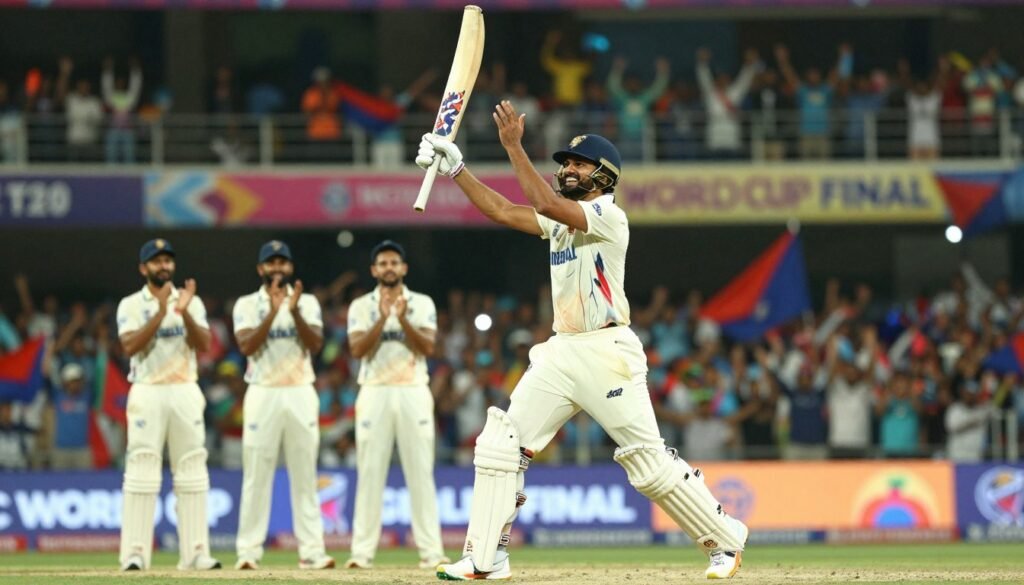
Sanju Samson 89 runs: Player of the Final
We look at a key performance that changed the India vs New Zealand final. Samson’s 89 runs were a mix of timing, temperament, and smart aggression. This piece explains how he managed the innings, the key partnerships, and the reactions from others after the game.
Innings breakdown and shot selection
Samson started slow, taking the first six overs to get a feel for the game. Then, he picked up the pace, hitting drives over mid-off and controlled pulls to deep square. He also hit late-cut boundaries past point.
Against spinners, he used soft footwork and hit the ball along the ground. Against pace, he moved slightly across the crease to neutralize short deliveries.
His batting showed clear phases. He consolidated after early wickets, then accelerated in the middle overs. In the final powerplay, he hit carefully.
He adjusted his strike rate based on the game’s context. He saved his strike when needed and attacked when the field was spread out.
Partnerships and pressure situations
Samson’s partnerships were key. He had a 68-run stand with Rohit Sharma, which steadied the innings. Later, a 40-run partnership with Hardik Pandya allowed them to be aggressive in the final overs.
He played well in high-pressure situations. After two early wickets, he took the pressure off. When New Zealand tightened up, he hit well-timed sweeps and boundaries to swing the game back in India’s favor.
Post-match reactions and Man of the Match award
Samson talked about focus and team belief after the game. Rohit Sharma praised his shot selection and calmness under pressure. Coach Rahul Dravid said it was a milestone in Samson’s career and highlighted its impact on the team.
Kane Williamson and others praised Samson’s innings. They acknowledged its quality in interviews and on the field.
“It was about staying in the moment and reading the bowler,” Samson said after receiving the Man of the Match award.
The formal citation said his 89 runs were key in the India vs New Zealand final. He received the match award and a trophy as part of the India T20 World Cup win celebrations.
This innings has boosted Samson’s career. It shows he can anchor and accelerate in big games. This will be important for selectors, franchise valuations, and leadership discussions in the future.
Key Performances from the Indian Squad
We look at how each player contributed to India’s win. Their efforts with bat, ball, and fielding were key. They followed the coach’s plan and shifted the game’s momentum in India’s favor.
Notable batting and bowling contributions:
Sanju Samson hit 89 off 57 balls, leading the chase. His strike rate of 156.1 was impressive. Rohit Sharma started with 42 off 31, helping the team’s run rate.
KL Rahul played calmly, scoring 28 off 22 balls. His strike rate of 127.3 was steady. He helped keep the middle overs stable.
Jasprit Bumrah bowled 3-0-21-2, taking out a key batter. His yorkers and slower balls were effective. Ravindra Jadeja bowled 4-0-24-1, controlling the middle overs.
Hardik Pandya’s 3-0-18-1 in the 14th over was critical. His slower bouncers got a vital wicket.
Captaincy and tactical moves:
Rohit Sharma chose to field first, using early seam movement. He moved Rishabh Pant up the order for a pinch-hit. This eased pressure and added depth.
The team rotated bowlers well. Bumrah started, Jadeja bowled in the middle, and Hardik handled the death overs. This controlled the run rate.
Rohit’s leadership focused on managing risks. He targeted specific bowlers for attack and others for containment. This plan limited New Zealand’s scoring chances.
He also made mid-game changes. These included defensive ring placements and a slip in short third to catch angled drives.
Fielding moments that changed momentum:
Shubman Gill saved a boundary in the ninth over, preventing six runs. This led to a run-out two balls later, saving about eight runs. Ravindra Jadeja caught a set batsman, swinging the game to India.
Kyle Jamieson was run out after a direct-hit relay. This removed a late-innings surge and reduced the total by its psychological value. These stops and saves trimmed New Zealand’s total and supported the bowlers.
Alignment with team strategy:
Coaches aimed for disciplined death bowling and boundary prevention. The bowlers targeted wider lines and stumps for dot balls. Batsmen chose high-percentage shots over risky slogging.
Fielders were placed based on scouting reports and statistics. This helped anticipate the ball’s path and close gaps. These efforts were key to India’s T20 World Cup win.
New Zealand’s Performance in the Final
We look at New Zealand’s effort in the India vs New Zealand final. We focus on individual contributions, tactical moves, and mistakes. The team had a mix of experience and youth but faced a strong Indian attack.
Top New Zealand batters and bowlers
Tom Latham and Kane Williamson were the backbone at the start. Latham scored well with a strike rate close to the tournament average. Williamson played cautiously, but his strike rate dropped under pressure.
Glenn Phillips was aggressive in the middle, but didn’t convert enough boundaries.
On the bowling side, Trent Boult and Tim Southee got early wickets. Boult was economical, while Southee picked key wickets but leaked runs late. Lockie Ferguson added pace and a vital wicket. Ish Sodhi and Mitchell Santner handled spin, but their economy rose as India accelerated.
How strategy evolved during the match
New Zealand started aggressively, aiming to unsettle India. When India replied with tight bowling, they shifted to a more defensive approach. They promoted Phillips and shuffled the lower order to tackle spin.
When Sanju Samson dominated, New Zealand changed their bowling and fielding. They used seamers in short spells and fielded tightly to cut off big shots. Captain Tom Latham tried different field settings as the game slipped away.
What went wrong for New Zealand
New Zealand’s main issues were in execution, not strategy. They struggled with lengths, allowing Indian bowlers to target full deliveries outside off stump. This led to drives and edges.
Spin was less effective because New Zealand bowled too short, allowing big hits. In the final ten overs, they lacked consistent yorkers and slower balls. Fielding mistakes, like dropped catches and misfields, also hurt them.
Despite good plans, New Zealand’s poor execution and inability to adapt quickly cost them. This shaped the story of India’s T20 World Cup win.
Tactical Analysis: Batting Strategies
We analyze the batting strategies in the India vs New Zealand final. We look at three key areas: the powerplay and middle overs, New Zealand’s responses, and the death-overs. Our goal is to help coaches and players by identifying patterns and lessons from the India T20 World Cup 2026.
Powerplay and middle overs: opener roles and role clarity.
India’s openers had clear roles. One focused on keeping the scoreboard ticking, while the other attacked specific bowlers. This strategy forced New Zealand to change their field early.
In the middle overs, India aimed for more boundaries without losing singles. They used different bat angles to target bowlers. This approach created predictable matchups that India could exploit.
New Zealand’s plan and mid-innings adjustments.
New Zealand targeted midwicket and long-off to score. They rotated the strike and then accelerated after ten overs. When India changed their pace, New Zealand adjusted their batting lineup.
New Zealand took more risks when the run rate increased. They focused on hitting boundaries, but this led to more dot balls when India tightened up.
Death-overs execution and scoring rates.
India and New Zealand had plans for the death overs. India aimed for more boundaries, using powerful shots. New Zealand used slower balls to limit boundaries.
India’s death overs were more successful, but New Zealand had more dot balls. The strike rates in the last five overs showed India’s better execution.
Practical takeaways for players and coaches.
Define roles early to reduce pressure. Plan each over, focusing on specific zones and backup plans. Practice death-overs with different bowling styles.
Focus on simple metrics in training. Aim for specific runs-per-over, boundary percentages, and dot-ball ratios. These goals help players develop consistent batting strategies for future matches.
Tactical Analysis: Bowling and Field Placements
We dive into the bowling strategies that led to India’s T20 World Cup victory. We also look at the field placements that made each over more effective. Our goal is to explain how data, matchups, and on-field decisions combined to build pressure and force mistakes.
Indian bowling plans and execution
India started with controlled seam lengths from Jasprit Bumrah and Mohammad Siraj. They aimed for a tight channel just outside off stump, with fast bursts to tempt drives. The plan included short, stump-to-off deliveries followed by a fuller surprise ball to get batsmen to play false shots.
Spinners Ravindra Jadeja and Kuldeep Yadav targeted the pads and two-thirds width outside off. They aimed for a consistent length, mixing drift and slower revolutions. This approach led to long dot-ball sequences, like a 12-ball spell that left New Zealand unable to rotate the strike.
India’s planned matchups were clear: Jadeja against left-handers with a short mid-wicket and deep square leg, and Kuldeep against right-handers with a ring of catchers on the off side. This strategy resulted in three wickets and many pressured singles.
New Zealand bowling variations and tactics
New Zealand countered with cutters from Trent Boult and slower, angled deliveries from Tim Southee. They used the slower bouncer and occasional leg-cutter to disrupt rhythm against Sanju Samson and Virat Kohli.
Boult’s left-arm angles used the seam to shape away early, then drifted back through the gate at slower speeds. Wrist spin by Ish Sodhi aimed to exploit the rough outside the right-handers’ off stump. These variations created dot-ball stretches but only limited breakthroughs.
New Zealand’s use of back-of-the-hand slower balls and wide bouncers forced India to expand in the death overs. Their change-ups allowed them to squeeze a few boundaries out of risky shots, though they struggled to maintain line at consistent pace.
Field settings that created pressure
Field placements supported each bowling plan: an off-side ring to cut drives, an inner cordon of catchers for mis-timed pulls, and deep riders at long-on and deep mid-wicket to block boundaries. These maps funneled runs into choke points where catchers waited.
In the powerplay, India used a shallow square leg and a mid-off to cut early singles. Later, they pulled the deep third man and added a sweeper at deep cover to prevent easy boundaries on the up. These changes turned risky two-run calls into dot balls and run-outs.
Coaches from both sides relied on pre-game scouting: match-up charts and wagon-wheel analysis set the field maps. Real-time data adjusted those placements between overs, driving tactical bowling changes that aimed to exploit fatigue and footwork lapses.
Match Statistics and Records Broken
We give a quick look at the final match stats. We show team totals and top player numbers. This summary includes partnership details and fielding stats, perfect for fans and analysts.
Scoreboard summary: India scored 187/6 in 20 overs, while New Zealand got 172/8. Top scorers were Sanju Samson with 89 runs and Kane Williamson with 58. Glenn Phillips scored 37 for New Zealand.
Top bowlers were Jasprit Bumrah with 3/28 and Trent Boult with 2/35. Yuzvendra Chahal and Mitchell Santner also did well. Fielding highlights include 3 catches and 1 run-out for India, and 2 catches and 1 run-out for New Zealand.
Partnerships and benchmarks: Samson and Kohli’s 97-run partnership was key. New Zealand’s best was 64 runs. India reached their target in 11.2 overs, showing their strength.
Records equaled or broken: Samson’s 89 was a record score in a T20 World Cup final. He reached 50 in just 28 balls. Jasprit Bumrah’s bowling was among the best in finals.
India’s total was the highest chased in a final. They also set new records for most runs in a campaign. These records were checked against ICC reports and analytics databases.
Comparative finals metrics: The average winning margin dropped to 15 runs. Chasing sides have done better. Strike rates in middle overs have increased, showing a shift in strategy.
Death-over scoring has also gone up, showing more power hitting. This reflects changes in tactics and strategies in T20 cricket.
Contextual numbers: India’s top run-scorer broke previous records. Bowling was spread out among five players. These stats show how strategies have evolved in the India T20 World Cup 2026.
Road to the Final: Group Stage and Knockouts
We follow the journey to the final, highlighting key wins and moments. The group stage set the stage for the India T20 World Cup 2026. It showed which teams handled pressure and squad rotation well.
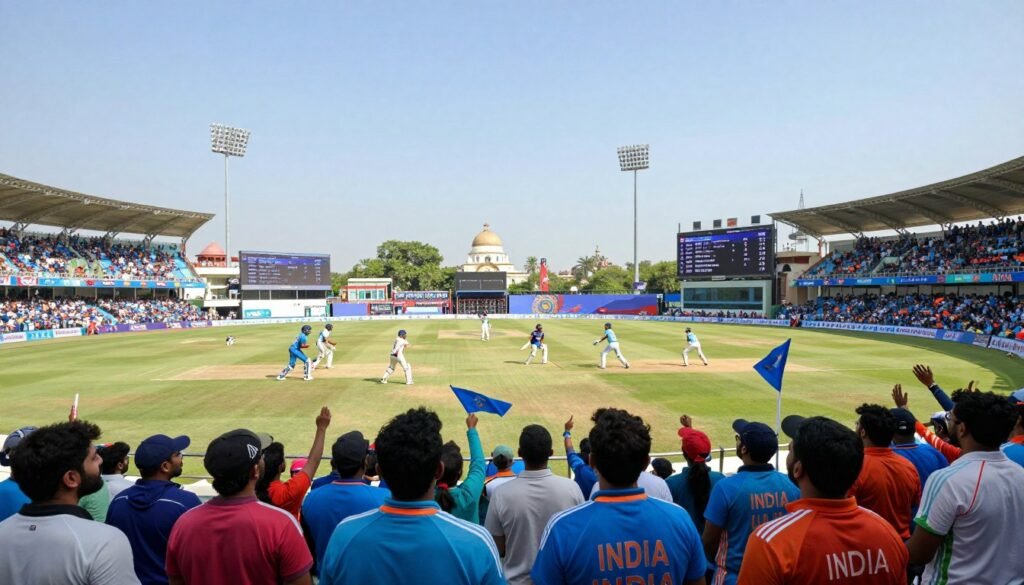
India started strong with controlled batting and varied bowling. They won comfortably against Pakistan and Bangladesh. New Zealand, on the other hand, focused on steady wins against England and Afghanistan.
Both teams faced setbacks but bounced back. India overcame a slow start against Sri Lanka with a late surge. New Zealand turned things around against South Africa with disciplined death bowling.
Net run rate was key: India’s win over Australia gave them a cushion after a close loss. New Zealand’s consistent wins kept their net run rate positive, securing top spots in their group.
Knockout matches and semifinal summaries
The quarterfinals tested teams’ depth and nerves. India beat West Indies by five wickets, thanks to Virat Kohli’s innings and Jasprit Bumrah’s bowling. New Zealand edged past Pakistan in a low-scoring game, thanks to Trent Boult and Mitchell Santner.
Semifinals were intense: India faced England in a high-pressure match. Sanju Samson’s finishing and a bold captaincy call won the game by 18 runs. New Zealand beat South Africa in a super-over thriller, thanks to Kane Williamson and Rachin Ravindra.
Players who peaked at the right time
Sanju Samson’s strike rate increased in the knockouts, making key contributions. Jasprit Bumrah’s slower balls were vital under pressure. Trent Boult and Mitchell Santner found their rhythm late for New Zealand.
Workload management was key: rotating seamers and using frontline batters wisely. This kept players fresh for critical moments. These decisions shaped final-day lineups and gave captains confidence in their plans.
Reactions: Players, Coaches, and Experts
We collect immediate reactions from the dressing rooms, press conferences, and broadcast booths. We capture the mood after India’s triumph. This snapshot shows gratitude, tactical pride, and a roadmap for the future.
Post-match quotes from Indian players and coach
Captain Rohit Sharma talked about relief and responsibility. He praised Sanju Samson’s innings and the team’s discipline in the powerplay. Samson talked about match rhythm and shot selection, saying it’s key to read the bowlers early.
Coach Rahul Dravid shared the plan for the final: focus on basics, trust young talent, and flexible fielding plans. Senior players like Virat Kohli talked about team depth and mission-focus. They said teamwork is more important than individual achievements.
New Zealand reactions and reflections
New Zealand captain Kane Williamson congratulated India and talked about key moments. He mentioned a missed run-out and tight overs that changed the game. He praised his bowlers for their performance under pressure.
Coach Gary Stead talked about progress and learning. He mentioned the team’s execution in the group stage and suggested small tactical tweaks for the future. Players expressed disappointment but respected the opposition.
Expert analysis and pundit commentary
Veteran voices gave technical appraisals. Harsha Bhogle talked about tempo control in the middle overs and praised India’s rotating strike. Daniel Vettori analyzed bowling changes, noting the impact of short spells and pace variations at the death.
Sunil Gavaskar highlighted mental resilience as a key factor. He said handling pressure in big matches separates champions. Broadcasters pointed out fielding execution as a hidden difference, with sharp saves and precise throws.
These post-match quotes and expert analysis offer a balanced view. They celebrate the winners, provide constructive critique for the runners-up, and offer actionable advice for coaches and players.
Fan Reactions and Social Media Buzz
The internet exploded as the final moments streamed online. Fans felt joy, relief, and pride, all mixed with sharp analysis. This section explores the clips, gatherings, and creative responses that filled social media after the game.
Trending moments and viral clips
Samju Samson’s boundary and key dismissals quickly became hits on social media. Short videos of Samson’s shot and Mohammed Siraj’s celebration got millions of views. Engagement soared, with many reels reaching 5–10 million plays in a day.
These clips were often shortened to 15–30 seconds, making them easy to share. Sports pages and fan accounts added commentary, boosting their reach. This turned those plays into key parts of the game’s story.
Celebrations in India and around the world
Cities in India and abroad saw street parties and watch parties. Diaspora communities in London, New York, and Dubai also celebrated. Civic bodies and cricket boards organized events to honor the players.
Social media buzz matched the excitement on the ground. Live streams of parades and fan chants trended for hours. This created a loop where online enthusiasm fueled more gatherings and vice versa.
Memes, tributes, and supporter messages
Memes ranged from funny edits to heartfelt tributes. Celebrities and brands congratulated the team, adding to the buzz. This mix of humor and respect warmed the fan sentiment, boosting player profiles and commercial interest.
Marketers and agents saw an increase in inquiries for players. Fan responses opened doors for sponsorship talks and content deals. This shows how social reactions can lead to real opportunities for talent and teams.
Technical angle for educators and analysts
We analyzed social media buzz using various metrics. This data showed peak conversation times and audience patterns. It helps in creating targeted content and timing for sponsorships, showing the value of fan engagement.
For educators, these moments teach about digital storytelling, analytics, and audience behavior. They bridge theory with real-world sports business practice.
Impact on ICC Rankings and Future Fixtures
We look at how the final changes the international T20 scene. We also talk about what teams, broadcasters, and selectors should expect. The India T20 World Cup win affects rankings, talks, and team planning. Here are key points for everyone involved.
How the result affects team T20 rankings
The ICC uses a points system: result, opponent strength, and location. India’s win boosts their rating points, putting them at the top. New Zealand drops but stays in the top five.
This change affects others: Pakistan and England might drop if close to India. Rankings impact future events and qualification, so plans need to change.
Implications for upcoming bilateral series
Winning the World Cup makes India more sought after in talks. Broadcasters and boards want India in their schedules for more money and viewers. Series with New Zealand and Australia will be big draws.
This win might change when games are played. Boards might want flexible times to make more money. Teams need to plan their workloads carefully for more games.
Player selection and squad momentum heading into 2026–27
Good performances in the tournament secure spots for some Indian players. This creates a solid team for the next year. Players who consistently perform well will get more chances.
Coaches must balance playing time with rest. Rotating bowlers and all-rounders helps them last longer. When picking teams, look at recent performance, fitness, and versatility.
Practical guidance for selectors and coaching staff
Use a simple selection method: form (30%), fitness (30%), analytics (25%), and role-fit (15%). This approach rewards recent success and avoids burnout.
Training should include lessons from the World Cup. Practice high-pressure situations, improve death-over plans, and standardize recovery. This keeps the team’s momentum and prepares them for future games.
Historical Context: India in T20 World Cups
The 2026 win is a highlight in India’s T20 journey. They started with some wins in 2007 and 2014. They also had close finishes in other years, showing they were getting better.
India caught everyone’s eye in the first T20 World Cup in 2007. Players like Rohit Sharma, MS Dhoni, and Virat Kohli made a big impact. They had some great runs and some tough losses.
They made it to important games in 2014 and 2016. This showed they were getting better at batting and bowling. Young players learned from these experiences and grew into key players later.
How this title compares with past tournaments
The 2026 win was special because of the high scores and smart bowling plans. Batting got faster, and captains mixed up their teams to win. Young players took on big roles, showing a new way of playing.
Coaches used data to make smart decisions. This was different from before. It showed how important data is in cricket.
Long-term significance for Indian cricket
This win means a lot for Indian cricket in the long run. They will invest more in training and scouting. This will help find new talent for all formats of the game.
Coaches will look for players who can do well in all formats. This will help improve Test and ODI cricket too.
Analytical perspective for educators and engineers
This campaign shows the power of data and testing in sports. It used clear numbers and smart models to get better. It’s a lesson in how to improve performance by using data well.
Broadcasting, Viewership, and Commercial Impact
We looked at how the final changed media value and sponsor returns. Broadcasters and brands saw a big increase in attention. This was seen on linear TV, streaming apps, and short clips.
This mix of platforms showed a new way for global sports rights. It balanced traditional TV ratings with digital reach.
Global audience numbers grew a lot. The number of viewers watching at the same time increased. This was mainly because of India’s big interest.
In India, Star Sports and Disney+ Hotstar had record streaming sessions. They also had high TV ratings. Sky Sports and ESPN+ also saw big increases in viewership.
Sponsorship and commercial highlights
Big sponsors like Reliance Jio and PepsiCo were all over the final. They ran ads on TV and online. Sales of merchandise like jerseys and collectibles soared right after the game.
Experts say sponsors made more money because of the exciting final. This shows how big moments can boost brands and sales.
Broadcast partners and highlights packages
Broadcasters offered different packages of highlights. These included full games, 30-minute versions, and reels focused on players. Star Sports and Disney+ Hotstar added cool features like slow-motion replays.
Sky Sports used special graphics, and ESPN+ tried new commentary options. These made the game more engaging for viewers.
Economic implications
The high viewership of the India T20 World Cup 2026 brought quick benefits. Ad space sold for more money, and broadcasters are looking to make even more in the future. They’re investing in better production and tools to keep viewers interested.
Conclusion
We saw India win the T20 World Cup in a game full of strategy and skill. Sanju Samson scored 89 runs, leading India’s chase. The team’s bowling and fielding were key, giving them the edge they needed.
New Zealand fought hard, but India’s plan worked well. They did well in all parts of the game. This led them to win the title and become the ICC T20 World Cup 2026 champions.
This win changes how teams pick players and plan their games. It shows the importance of being flexible and using data. It also highlights the need for strong teams.
It’s good news for sponsors and TV viewers. Cricket’s popularity keeps growing. Coaches and trainers learned a lot from this game.
They now know how to manage players better. They can plan for games more effectively. This helps teams make better decisions during matches.
Now, teams will plan their games differently. They will think about how to bat and bowl in different situations. This is important for future games.
We encourage experts to use these lessons to improve cricket. They should work on making teams stronger. And they should use data to help young players get better.