



In a significant move reaffirming regional partnership and infrastructure cooperation, India has commenced restoration work on Sri Lanka’s Northern Railway line—a critical transport artery severely damaged by Cyclone Ditwah last year. The reconstruction initiative, launched with a US $5 million grant from the Government of India, aims to rebuild and modernise the railway track between Mahawa Junction and Omanthai, helping restore connectivity, support economic revival and enhance resilience against future natural disasters.
The Cyclone Ditwah Devastation: Sri Lanka’s Infrastructure on the Frontline
In late November 2025, Cyclone Ditwah struck Sri Lanka with unprecedented force, unleashing heavy rains, floods and landslides across multiple districts. The disaster caused widespread destruction of homes, roads, bridges and railway tracks, particularly in the Northern and Central provinces. More than 600 lives were lost, and essential transport networks were left crippled, disrupting mobility and economic activity across the island nation.
Transport infrastructure—especially railways—bore the brunt of the cyclone’s fury. Centuries-old rail tracks were eroded or washed away, signal systems were crippled, and bridges were either severely damaged or collapsed. Among the hardest hit was the Northern Railway Line, a strategic 370‑kilometer rail corridor once developed with Indian assistance and crucial for passenger and freight movement in the northern provinces.http://India–Sri Lanka Disaster Cooperation 2026
India’s Strategic Response: Operation Sagar Bandhu
With immediate concerns for public safety and infrastructure recovery, India launched Operation Sagar Bandhu on November 28, 2025—an integrated relief, recovery, and reconstruction initiative. The operation has delivered critical supplies, medical assistance, rescue personnel, and engineering support to affected regions in Sri Lanka.
Under this framework, New Delhi responded swiftly to assist its neighbor in rehabilitating key infrastructure, ensuring that emergency connectivity and essential services could be restored within months rather than years. India’s commitment reflects deeper historical ties, longstanding cooperation in disaster response, and a shared vision of regional stability.
The $5 Million Railway Restoration Initiative
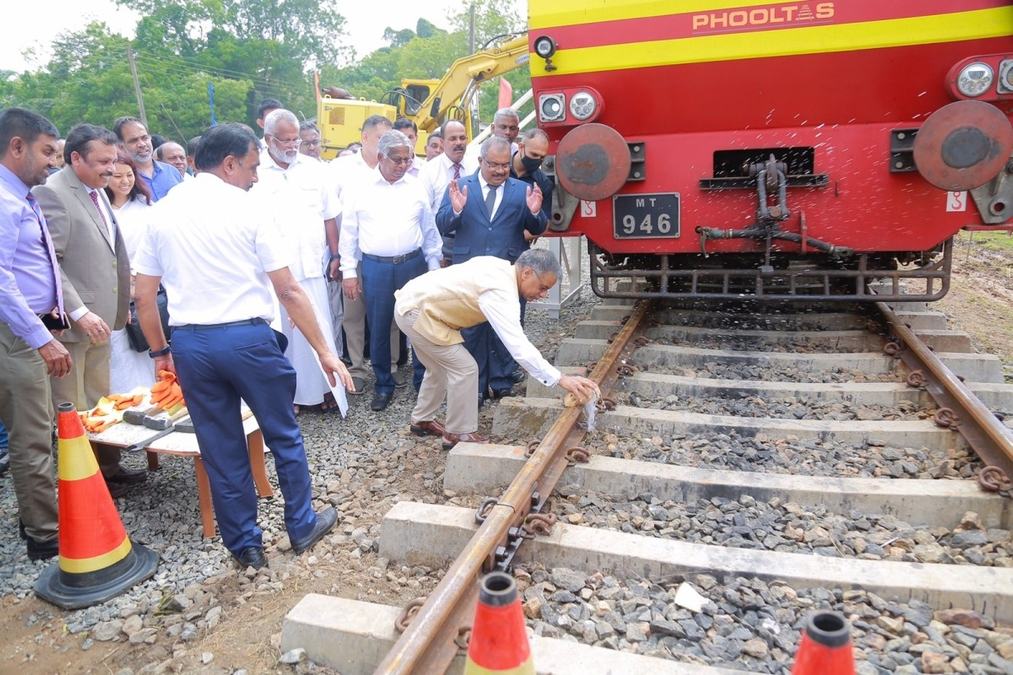
On January 11, 2026, restoration work began at Mahawa Junction with the formal laying of groundwork under the US $5 million Indian grant—part of a wider US $450 million reconstruction package announced by New Delhi during External Affairs Minister S. Jaishankar’s visit to Colombo.
Key features of the railway restoration include:
- Rebuilding the cyclone‑damaged section from Mahawa Junction to Omanthai.
- Modernizing tracks to improve safety and reliability for passenger and freight trains.
- Integration of a modern signalling network to enhance train speeds and operational efficiency.
- Construction of wildlife corridors, including elephant underpasses and bridges, to ensure ecological coexistence and reduce animal–train collisions.
- Deployment of Indian technical expertise, specialist equipment and engineering practices for high‑quality execution.
The work is expected to be fully completed and operational before the Sinhala and Tamil New Year on April 14, an important festive period when travel and economic activity surge.
Expertise and Execution: IRCON International at the Helm
The restoration project is being executed by IRCON International Limited, a premier Indian engineering and construction company with decades of experience in international railway projects. IRCON has a long history of working in Sri Lanka, having previously collaborated on the modernization and expansion of several railway segments in the island nation.
Alongside track restoration, the project also includes upgrades:
- Strengthening of embankments to withstand future weather extremes.
- Replacement of weakened sleepers and rails.
- Reinforcement of bridges and culverts.
- Installation of modern control and communication systems.
This approach blends Indian engineering competence with local requirements, ensuring the reconstructed infrastructure meets global standards while addressing ground realities on the island.
A Broader Reconstruction Framework
The US $5 million railway grant is one element of India’s comprehensive reconstruction support to Sri Lanka after Cyclone Ditwah. The total US $450 million assistance package includes:
- **US $350 million in concessional Lines of Credit (LoC) to fund long‑term rebuilding of infrastructure.
- US $100 million in grants for immediate restoration of transport, health, housing, and disaster‑resilient services.
These funds are allocated across sectors:
Roads and bridges: Repairing and rebuilding vital links that connect remote areas.
Housing: Support for families whose homes were destroyed or damaged.
Healthcare and education: Renovation of medical facilities and schools impacted by floods.
Agriculture: Assisting farmers to recover lost crops and rebuild livelihoods.
Disaster preparedness: Strengthening early‑warning systems and emergency response capabilities.
India is also supporting temporary water purification systems and other essentials to improve living conditions in the aftermath of the cyclone.
Diplomacy and Regional Partnership
The restoration initiative reinforces the India–Sri Lanka partnership. Through this engagement:
- India demonstrates Neighborhood First and Sagar (Ocean)-centered diplomacy—policies focusing on deepening ties with regional neighbors.
- Collaborative task forces coordinate reconstruction activities, showcasing mutual respect and operational synergy.
- The project promotes regional stability, economic continuity, and shared prosperity in the Indian Ocean region.
Sri Lankan officials have appreciated India’s rapid response and sustained engagement, noting that such cooperation not only rebuilds infrastructure but also strengthens people‑to‑people bonds and institutional trust.
Impact and Future Prospects
Once completed, the restored Northern Railway will:
- Reconnect communities across the Northern and North Central provinces—vital for daily commuters and economic transit.
- Boost freight movement, supporting trade, agriculture, and tourism.
- Improve logistics resilience for future climate events.
- Enhance safety standards throughout the railway network.
In addition to immediate repairs, India and Sri Lanka are exploring further connectivity projects, including enhanced land transport and integrated logistics corridors, signaling a long‑term vision for regional integration.
Conclusion
The restoration of Sri Lanka’s cyclone‑damaged Northern Railway with India’s US $5 million grant marks a powerful step forward in rebuilding critical infrastructure and reinforcing bilateral cooperation. Through strategic planning, technical expertise, and deep diplomatic engagement, the joint effort not only restores a railway line but also rebuilds hope, strengthens connectivity, and sets the stage for resilient development in a climate‑vulnerable era.
This initiative exemplifies how neighborly solidarity and pragmatic collaboration can overcome adversity and chart a path toward shared progress.