



Travelers were left stranded as more than 200 flights were cancelled across India. This happened over several days. The reasons were technical system failures and a lack of crew.
Flights were cancelled on both domestic and international routes. This caused big disruptions in the network.
Big airlines like IndiGo and Air India faced many cancellations. Airports had long lines and services were sometimes stopped. This showed the need for quick fixes.
For those who work in engineering and aviation, this is a big problem. It involves failing technology and not enough people to run it. We will look at how to fix these issues next.
Overview of the Mass Flight Cancellations Across India
We look at how a series of problems caused big disruptions in the country. Technical issues and crew shortages led to over 200 flights cancelled and many more delayed. Passengers had to deal with long waits, crowded areas, and missed connections.
Summary of the incident and immediate impacts
First, automated systems noticed some problems in the early morning. As the day went on, these issues got worse. This caused problems with baggage, cargo, and made passengers very upset at big airports.
Airlines and airports affected
Big airlines like IndiGo and Air India had big problems. So did many smaller ones. Airports in Delhi, Mumbai, Bengaluru, Hyderabad, and Chennai were hit hard. They faced issues that made it hard to get things back to normal.
Timeline of cancellations and delays
- Early morning: detection of the initial system anomaly; patch attempts begin.
- Late morning: growing latency on booking and check-in tools; crew rostering conflicts surface.
- Midday: cascading operational strain as crew shortages force reassignments; on-ground delays increase.
- Afternoon peak: highest concentration of India flight cancellations and network delays; rolling advisories issued by carriers and airports.
- Evening: phased recovery as manual workarounds and temporary crew standbys reduce the backlog.
At the worst point, over 200 flights were cancelled and hundreds delayed. It all started with a tech problem, then got worse with crew issues, leading to many cancellations.
Root Causes: Technical Glitches and Crew Shortages
We look into why airports across several cities faced delays. We focus on system failures, staff shortages, and how they cause big problems. These issues led to major disruptions in India’s airports recently.
Explanation of reported technical system failures
Airline systems, like flight planning and departure control, had problems. Carriers said software issues and vendor outages were the main causes. These issues made things like check-in and boarding take longer.
Airport systems also had trouble managing gates and equipment. Network problems and data center overload made things worse. These issues caused delays that put more pressure on staff.
How crew shortages compound operational problems
Not enough staff and crew issues make things tough even on a normal day. Rules and unexpected absences make things worse. When systems fail, doing things manually takes a lot of time.
This slow work means planes can’t fly or have too few crew. So, flights get cancelled, making India’s flight cancellations even higher.
Interplay between technology and human resources in aviation
The airport system works like a body: IT is the brain, and crew are the muscles. If both are not working right, things stop moving. A system failure makes operations teams work harder, which can lead to mistakes.
On the other hand, not enough crew means relying more on software to manage staff. If that software is down, things get really tough. This shows how a small tech problem can cause big problems in India’s airports.
Engineering lesson: to avoid big problems, we need backup systems and enough staff. We must fix IT and staffing issues to prevent airport and flight problems.
India Airport Disruptions
We looked into how tech issues affected India’s big airports. We wanted to see where problems started and how they spread. We focused on real-life examples of service failures, how teams on the ground adapted, and what travelers went through when things stopped working.
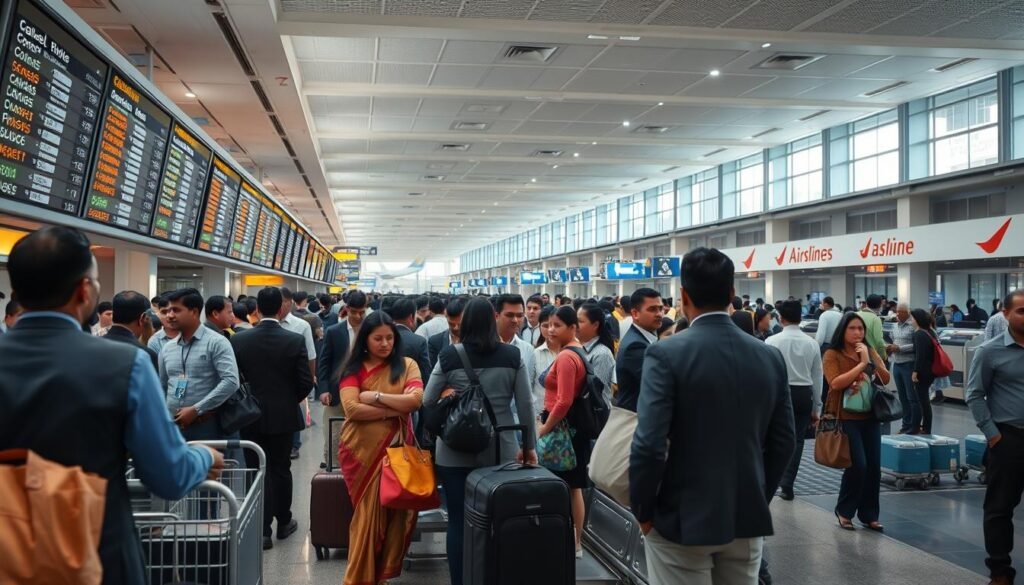
- Indira Gandhi International Airport Delhi: issues with gate information displays, boarding-pass scanners and some self-service kiosks were reported.
- Chhatrapati Shivaji Maharaj International Mumbai: baggage reconciliation updates delayed and intermittent problems with flight information systems.
- Kempegowda Bengaluru: intermittent outages in departure control systems affected check-in and boarding operations.
- Rajiv Gandhi Hyderabad: challenges with API integrations caused mismatches between manifests and gate lists.
- Chennai International: passenger-facing mobile notifications were delayed and some screens at transfer desks went blank.
Ground operations affected by system outages
- Baggage reconciliation failures created missing-tag flags and held many bags at sorting belts.
- Boarding pass scanning problems slowed queue flow and required manual checks by ground staff.
- Fuel uplift coordination delays pushed turnaround times beyond planned windows.
- Ground-crew scheduling systems lost synchronization, leaving some stands short-staffed during peak waves.
- Automated check-in kiosks and gate information displays went offline intermittently, forcing staff to process passengers manually.
Passenger flow and terminal congestion issues
When flights were delayed or canceled, lines at security and check-in grew. This made waiting times longer and added stress for families and the elderly.
Customer service desks were overwhelmed with people needing help with rebooking and refunds. Services for people with disabilities and medical escorts were slower because systems that helped prioritize them were down.
Crowd-management teams faced extra challenges: blocked paths, crowded areas, and often had to reroute passengers. These issues made it hard to keep people apart and move those who needed help quickly.
Operational insight
Airports rely on many systems working together. A problem in one area can quickly spread to other parts, affecting how passengers experience the airport. This is why tech issues at airports can lead to big disruptions, as seen in India.
Impact on Passengers: Rights and Immediate Remedies
Travelers get upset when flights are cancelled or airports are disrupted in India. We explain what passengers can expect under Indian rules. We also share practical steps to help you at the airport.
The Directorate General of Civil Aviation (DGCA) makes sure airlines communicate well. They must tell passengers about delays or cancellations. If a flight is cancelled, airlines offer a new flight or a refund.
They also provide meals or refreshments and hotel stays if needed. This is based on how long the delay is.
Compensation, rebooking, and accommodation policies
Airlines like IndiGo, Air India, and Vistara have their own rules. They offer rebooking, refunds, meal vouchers, or hotel stays. But, what you get depends on the reason for the delay.
Keep your receipts for any extra costs. Airlines might pay you back for these expenses.
Practical steps passengers can take at the airport
- Visit the airline help desk quickly and ask for a written confirmation of the delay or cancellation.
- Use the airline app and social media for updates and rebooking offers.
- Save your boarding passes, receipts, and screenshots of notifications for claims.
- Ask about other airlines and possible routes before leaving the airport.
- If you’re not happy with the solution, contact the DGCA or a consumer forum.
Engineering-oriented tip for reducing uncertainty
For tech-savvy travelers, watch the airport boards and airline apps. Also, check NOTAMs for updates. This way, you can guess what’s coming next at the gate.
Stay updated with aviation news India. This will help you know about any changes in policies or airline updates.
Responses from Major Airlines
We looked at how IndiGo, Air India, and others reacted to recent flight issues. They all apologized and explained the problems, like technical issues and not enough staff. They promised to look into it and help customers.
They used press releases and social media to talk about safety and fixing the problems. They also told passengers what to do next.
Official statements and advisories
- IndiGo said there was a technical glitch and teams were fixing it. They kept customers updated with app and SMS alerts.
- Air India talked about the delays, how they were moving crew around, and how to rebook or get refunds.
- Smaller airlines used Twitter/X and WhatsApp to reach people near airports.
Operational adjustments and contingency measures
- Airlines canceled some flights to keep things running smoothly and avoid more delays.
- They moved crew around within rules and used extra help to speed things up.
- When tech failed, they used manual checks to get people on planes.
How airlines are communicating with customers
- They used SMS, email, app alerts, airport announcements, and social media.
- They did a good job with quick alerts and app updates for flight changes.
- But, call centers and help desks got too busy, and some messages were unclear.
There’s a lesson here for engineers: be open about what’s happening. Clear updates help everyone, from engineers to customer teams. This way, they can act quickly when there are problems like the ones with IndiGo and Air India.
Airport Authority and Government Reaction
We looked at what the Airports Authority of India, the Directorate General of Civil Aviation, and major airport operators said after big airport problems across India. They sound very serious. They say they know there’s a problem, they’re working hard to fix it, and they promise to find out why it happened so it doesn’t happen again.
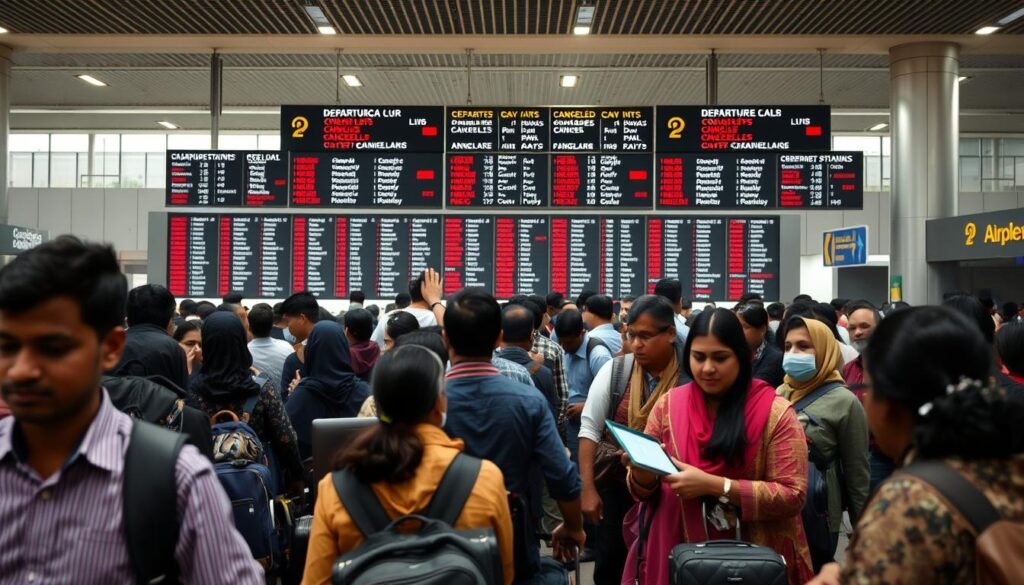
Statements from airport operators and regulatory bodies
AAI told passengers to check their flight status online and listen to instructions at the airport. Airport operators in Delhi, Mumbai, and Bangalore talked about how they’re handling things. They said they’re using extra staff and doing things manually to help people move through the airport.
DGCA said it’s watching how airlines respond and will ask for detailed reports from those affected.
Investigations launched and immediate directives
Regulators asked IT companies and airlines to find out what went wrong and to report back soon. They also told airports to check their contracts with vendors and to make sure they have plans in place for emergencies. They also want to see how airports handled things when systems went down.
They told airports to use temporary rules for checking in and handling bags to help move people through faster. They warned that not following these rules could lead to fines or other penalties.
Now, the government is talking about making airports more secure. They want to make sure airports can handle problems better and are ready for anything. This could mean airports have to meet higher standards and be watched more closely in the future.
Case Study: IndiGo and Air India Operational Disruptions
We look at how recent problems affected two big airlines in India. These issues caused delays and changes in flight plans. This affected passengers and tested how airlines handle such situations.
IndiGo schedule impacts and passenger experience.
IndiGo had many cancellations and delays, mostly during busy times. Passengers had to deal with last-minute changes and long lines. They also faced problems with mobile services and long waits on the phone.
Staff tried to fix the issues by changing planes and crews. They focused on keeping main routes running. But, this left some travelers stuck for hours.
Air India delays and cancellations explained.
Air India had delays on both domestic and international flights. Crew limits caused problems with long flights. Moving crew around took a lot of time.
Passengers on long flights faced many changes and limited options during delays. The airline tried to keep some international flights running to keep revenue up. This meant canceling some shorter flights and swapping planes.
Comparative analysis of responses.
- IndiGo focused on keeping main routes running by cutting long flights. Air India kept key international flights going by canceling some shorter ones.
- IndiGo used quick alerts and announcements, but had trouble with refunds. Air India relied on agents for rebooking, which was slower but more detailed.
- Help at airports was better for premium and alliance passengers. Economy passengers waited longer at both airlines.
Learning from this, we see the importance of network structure. Airlines need to plan for flexibility in their schedules and crew. This helps them deal with unexpected problems.
The choices made by the airlines influenced how people reacted and what the news said. It shows how specific plans can reduce the impact of delays and cancellations.
Technical Insights: What Goes Wrong in Airport Systems
We look into the technical issues that cause delays. Clear terms help teams fix problems quickly. We explore the main reasons behind airport disruptions in India.
- Flight info systems and departure control can fail due to database issues or message blockages.
- Baggage and crew management apps need smooth data flow. Authentication problems or queue jams can stop them.
- API links with airlines often fail. A small error can spread to all partners.
Role of network outages and data centers:
- Network issues or DNS problems can cut off airline servers from airport systems. This makes displays and check-in areas go dark.
- Data-center power or cooling problems can cause single-site failures. Cloud setups aim to avoid this by relying on internet paths.
- If cloud access fails, having on-premise backups is key. Without them, disruptions in India can spread fast.
Vulnerabilities in legacy systems and integrations:
- Old systems often lack clear logs and traces. This makes finding the cause of problems slow and hard.
- Custom interfaces without standard APIs make error handling weak. One faulty link can cause big outages.
- Custom scripts and patchwork middleware increase the risk of updates causing problems. This leads to more disruptions in India.
Engineering recommendations:
- Use observability tools to combine logs, traces, and metrics. This helps teams spot issues early.
- Put circuit breakers on key integrations. This stops outages from getting worse and allows for smooth slowdowns.
- Plan for graceful degradation. Keep essential services running at lower levels during outages. This makes recovery smoother.
We suggest regular chaos testing and runbooks. These help reduce the number and impact of tech glitches. They also limit disruptions in India and speed up recovery for everyone.
Crew Management Challenges in Indian Aviation
We look into how crew planning affects airlines and airports in India. Rules on duty time, long rosters, and flights to many cities make changes hard. This can lead to a chain of delays and cancellations.
Scheduling, fatigue rules, and resource constraints
Rules on pilot and crew duty times are strict to ensure safety. These rules mean less staff on busy days. Crews must be placed across cities like Delhi and Mumbai, making quick changes hard.
When automated systems fail, manual changes cause delays. This tightens schedules and increases the chance of flight cancellations during busy times.
Recruitment and retention pressures on airlines
Airlines worldwide compete for pilots and crew. In India, growth outpaces hiring, stretching resources. Wages, lifestyle, and job opportunities abroad make keeping staff a big challenge.
IndiGo and Air India face operational pressure during growth. Staffing gaps lead to delays and uneven service when demand is high.
How illness and last-minute unavailability create gaps
Sudden illness or travel issues can leave flights short-staffed. Standby pools are often small, making it hard to cover. Technical issues and last-minute absences can quickly cause airport disruptions.
Without tools to predict absences, airlines rely on manual calls to fill shifts. This is slow and prone to errors, raising operational risks and passenger frustration.
Practical resilience measures
- Maintain a buffer of trained standby crew across major hubs to absorb shortfalls.
- Invest in cross-base rostering so staff can cover neighboring stations under duty rules.
- Deploy predictive analytics to flag likely absences and trigger early reassignments.
- Standardize rapid-response protocols for manual overrides when automated systems are down.
We suggest these steps to ease crew pressure, reduce delays, and lower cancellations during big incidents.
Economic and Supply Chain Effects of Mass Cancellations
We look at how big problems spread beyond airlines to hotels, cargo, and local businesses. Short-term money losses are clear, but the long-term damage is harder to see. We focus on the costs and how they affect supply chains.
When many flights stop, airlines lose a lot of money from ticket sales. They also have to pay for crew stays, move planes around, and adjust schedules. Airports lose money from shops, parking, and handling services while fixing problems.
Ripple effects on tourism, hospitality, and cargo
Travel plans get canceled, hurting hotels and tour companies. They lose money from no-shows and last-minute cancellations. Fresh food, seafood, and medicines spoil, causing delays and fines.
Logistics companies and exporters find new ways to get goods moving. But these solutions cost more and change delivery times for businesses that need things right away.
Longer-term confidence and booking trends
Big problems make people choose safer airlines and routes. They want to book flights that can be changed easily and buy travel insurance. This makes airlines with a bad reputation lose money.
Bad news hurts airlines’ image even more. To fix this, they need to be open about how they’re getting better and invest in being more reliable.
- Quantified pressure points: ticket refunds, crew lodging, retail revenue loss, cargo spoilage costs.
- Sectoral impact: hospitality cancellations, supply chain rerouting, increased freight premiums.
- Behavioral shifts: preference for flexible fares, higher insurance uptake, migration to reliable carriers.
Travel Planning Tips During Large-Scale Disruptions
We help travelers get ready for the unexpected by focusing on simple steps. These steps make dealing with flight cancellations or airport issues easier. Here are some tips for engineers, students, and frequent flyers to stay prepared.
Use official airline apps from IndiGo, Air India, and Vistara and turn on push notifications. Sign up for SMS alerts at booking and follow airport handles like Delhi and Mumbai airports on social media for quick updates.
Check airport flight information pages and DGCA advisories during disruptions. Use tools like FlightRadar24 and FlightAware for extra info. Always compare different sources before making any changes.
Flexible booking and travel insurance guidance
Opt for flexible fares or add low-cost change options when booking. Many airlines let you rebook for free during cancellations. Always read the fine print before buying your ticket.
Buy travel insurance that covers trip interruptions, emergency stays, and medical needs. Make sure to check what’s not covered. Policies differ on tech glitches versus natural disasters.
Packing and contingency planning for stranded travelers
Keep a carry-on kit with essentials like medications, chargers, toiletries, a change of clothes, and snacks. Store digital copies of important documents in secure cloud folders and on your phone.
Save receipts for taxis, hotels, and meals for reimbursement claims. Carry some local cash and a backup card for payment issues during airport disruptions.
Practical checklist before travel
- Enable airline app notifications and SMS alerts.
- Bookmark airport flight information and DGCA advisory pages.
- Purchase flexible fares or add-ons for changes.
- Buy travel insurance and note key exclusions.
- Pack an essentials carry-on kit for overnight stays.
- Keep digital copies of travel documents and receipts.
- Carry contingency cash and a backup payment card.
How Technology Can Prevent Future Disruptions
The recent India Airport Disruptions are a wake-up call for better systems and processes. Simple fixes often don’t stop big problems. Using technology in layers can reduce risks and speed up recovery from tech glitches.

Redundancy strategies and failover systems
- Use multi-zone data centers and active-active replication to keep services running even if one site fails.
- Create network path diversity to avoid single points of failure across airport campuses.
- Automate failover with scripted checks and make sure runbooks are ready for every scenario.
- Do regular, realistic failover testing with operations teams, ground handlers, and airline IT staff.
Modernizing legacy infrastructure at airports
- Start a phased migration to modular, API-driven platforms that work with current systems from Amadeus or SITA.
- Choose containerized deployments and observable microservices to lower mean time to repair.
- Go for vendor-agnostic interfaces to make it easier to swap vendors and integrate new tools.
- Match migrations with staff retraining so technicians and operators know the new systems.
Use of predictive analytics for crew and operations
- Apply predictive analytics aviation models to forecast crew shortages based on past duty cycles and sickness patterns.
- Use machine learning to predict delay propagation and how one disruption affects many flights.
- Turn probabilistic forecasts into actions: advance re-rostering, pre-positioning of spare crews, and gate adjustments.
- Integrate predictions into airline ops centers so human planners can quickly validate automated recommendations.
It’s not just about the tech; process changes are key. We suggest combining platform upgrades with updated SOPs, cross-training at airports, and tabletop drills. This mix lowers the risk of a single tech glitch causing big disruptions at India’s airports.
Industry Best Practices for Crew and Operations Resilience
Airlines and airports can take steps to lessen the effects of delays and disruptions. They should focus on rostering, flexible staffing, and prepared responses. This helps keep operations running smoothly, even when things get tough.
Advanced rostering uses smart algorithms to manage crew schedules. It respects rules on fatigue and legal limits. It also considers crew preferences and keeps reserve pools ready.
Dynamic reserve margins are key. They grow during busy times like festivals and peak travel weeks. This helps handle unexpected absences.
Cross-base flexibility is another strategy. It allows pilots and cabin crew to work from different bases. This reduces the number of cancellations caused by local shortages.
Cross-training, surge staffing, and partnerships
- Cross-train ground handlers and cabin crew for surge periods.
- Make agreements with third-party handlers and partners for extra help.
- Use short-term leases to quickly add capacity when needed.
These steps help fill service gaps and limit disruptions during system outages or mass cancellations.
Simulation exercises and crisis preparedness
- Run tabletop drills with all stakeholders to test plans.
- Do live simulations to practice handling passengers and rebooking.
- Have clear protocols and decision-making for real incidents.
Drills help find weak spots before they cause big delays or disruptions.
Measurable resilience KPIs
- Track how fast routes recover in hours.
- Measure how many passengers get rebooked quickly.
- Look at help-desk response times and resolution rates.
Tracking these KPIs shows readiness and progress to regulators and the public.
We suggest a multi-layered approach. This includes smarter rostering, flexible staffing, practiced plans, and clear metrics. Together, these steps help reduce delays and strengthen defenses against future disruptions.
Media Coverage and Public Perception of the Disruptions
We follow how news and social media shape the story after big problems. News teams and regular people tell the story of how many were affected and who should be blamed. This story affects how rules are made, how airlines act, and what travelers think.
Big news focuses on the numbers and how people were hurt. They talk about how many flights were delayed and where the busiest airports were. They also share stories from travelers who were stuck.
Experts look into why these problems happened. They talk about the tools and systems that failed. They ask for answers from the government and airport managers.
Social media reactions and viral passenger stories
Photos and videos of long lines and crowded airports go viral fast. People share their experiences of missing flights. These stories make everyone more upset and want the latest news.
Stories about certain airlines or airports get a lot of attention. This keeps the public watching closely.
Managing reputational damage for carriers and airports
Airlines that quickly share updates help calm people down. Seeing help on the ground, like desks for rebooking, makes things better. Airlines should promise to fix things and keep people updated.
We see talking to the public as a system that can be improved. It needs feedback, reaches people through many ways, and uses data to get better. This helps rebuild trust and shows that airlines are working to do better in the future.
Conclusion
India’s airport disruptions and flight cancellations show a delicate balance. A big tech glitch at airports quickly led to staffing issues and cancelled flights. This teaches us that fixing technology alone is not enough.
Engineers, managers, and teachers need to work together. They should focus on making systems strong, with backup plans and smart crew planning. Regular practice sessions with all involved parties are key to learning and improving.
Indian aviation can move forward by updating airport technology and improving crew management. Better communication with passengers is also essential. These steps will help make flying safer and more reliable.
This problem can be solved with creative engineering and teamwork. We should see tech glitches and staffing issues as connected problems. By working together, we can make travel safer for everyone.