



India 2025 Year in Review highlights a transformative year filled with faith, cultural events, climate crises, social changes, and tragic incidents. From the spiritual grandeur of the Maha Kumbh Mela to extreme heatwaves, communal unrest, and security challenges, this year shaped the nation’s narrative.
Key Takeaways
- 2025 marked a significant year of faith and cultural gatherings in India.
- The Maha Kumbh Mela highlighted India’s rich spiritual heritage.
- Climate challenges have become increasingly evident with rising temperatures.
- Social transformations are shaping community narratives and resilience.
- Incidents of violence have prompted discussions on safety and reform.
- Emerging technologies are influencing societal perspectives on tradition.
Maha Kumbh: A Gathering of Faith and Culture
The Maha Kumbh Mela is a huge pilgrimage that draws millions from all over. It’s a key part of Kumbh Mela history, showing the search for spiritual growth and community. This event brings together different cultures in a celebration of faith.
Historical Significance of the Kumbh Mela
The Kumbh Mela has been important for centuries. It’s seen as a way to wash away sins and find freedom. This tradition shows how faith can bring people together, despite their differences.
Turnout and Participation in 2025
In 2025, the Maha Kumbh Mela saw a huge number of people. Millions came to join in this special ritual. The event showed the strength of faith in Indian society, with careful planning for everyone’s safety.
Climate Challenges: The Heatwave Crisis
In 2025, India faced extreme climate challenges with a record-breaking heatwave. This heatwave changed daily life in big ways. It caused big problems in many areas and made us wonder if we can adapt and become more resilient to climate changes.
As temperatures went up, communities felt the strain. This affected farming, city planning, and how we get water. We saw big changes in these areas.
Impact of Rising Temperatures on Daily Life
The heatwave hit farming hard. Crops struggled in the heat, threatening food for many. Cities saw a big jump in electricity use as people used air conditioning to cool down.
This extra demand put a lot of pressure on the power grid. It made us think about how we’ll handle energy in the future. Water became scarce, affecting both country and city folks. Simple tasks became hard as people tried to cope with these issues.
Government Initiatives for Climate Resilience
The Indian government took action to tackle these climate challenges. They worked on improving water and energy use. They also ran campaigns to teach people how to save water.
They teamed up with scientists to make better policies. This helped us prepare for more heatwaves in the future. Their efforts aim to make our society stronger against climate changes.

Cuttack Violence: An Unfolding Tragedy
The recent violence in Cuttack has shown how fragile social harmony can be. Many factors led to this unrest, showing the need to understand local issues. Political and economic differences, along with fast-spreading misinformation, created a perfect storm for conflict.
This situation highlights the deep impact of division. It calls for a detailed look into the causes and how to address them.
Background and Causes of the Incident
The violence in Cuttack stems from long-standing issues and current frustrations. Wealth and resource disparities fueled the tensions. As these differences grew, small misunderstandings turned into violent fights, breaking the community’s unity.
This shows how easily peace can be broken by complex problems.
Response from Authorities and Community
After the violence, authorities quickly worked to restore peace. Police were deployed to control the situation. At the same time, efforts were made to bring conflicting groups together through dialogue.
Local NGOs also played a key role. They worked on resolving conflicts and healing the community. Their efforts provided immediate help and showed the value of a strong community response for lasting peace.
| Response Action | Description | Outcome |
|---|---|---|
| Law Enforcement Mobilization | Deployment of police forces to control violence | Restoration of order in affected areas |
| Community Dialogue Sessions | Facilitated discussions to address grievances | Improved understanding between groups |
| NGO Involvement | Support and peace initiatives by local organizations | Long-term strategies for conflict resolution |
Pahalgam Attack: Concerns for Safety
The recent Pahalgam attack has raised serious safety concerns in India. It has hit hard places that rely a lot on tourism. Pahalgam is a favorite spot for many, which makes the impact of such attacks big. Local businesses and the economy are feeling the pinch due to the focus on security.
This event shows how hard it is to keep everyone safe while also protecting our freedom. Places with a lot of history often face tough talks about how well the government takes care of its people. The community is talking about better ways to keep everyone safe, adapting to new security needs.
These worries also show how they affect the whole area’s stability. If people feel unsafe, they might not come, which hurts the economy. It’s up to the government and police to make sure everyone is safe without taking away our rights. Fixing these problems is key to making people feel safe again.
Deadly Car Explosion Rocks Red Fort Area in Delhi, 15 Killed
In November, the national capital was jolted again. A catastrophic car explosion near Gate 1 of the Red Fort metro station in New Delhi — widely referred to as the 2025 Red Fort blast — killed at least 15 people and injured more than 20 others. The blast caused severe casualties, extensive damage to nearby vehicles and infrastructure, and left the city reeling under shock. Security agencies have launched investigations, while the event heightened public anxiety about terror‑linked threats in urban zones.
World AIDS Day: Awareness and Advocacy in 2025
World AIDS Day in 2025 was a key moment for awareness and support. It highlighted the importance of community involvement in fighting HIV. This year’s theme focused on breaking down barriers and reducing stigma around the disease.
Programs and Campaigns Launching This Year
Several new programs were launched this year to improve public education and access to HIV testing and treatment. These efforts were led by both government agencies and non-profit groups. They worked together to reach more people.
Campaigns used social media to share important information. They aimed at younger people and offered tips for staying safe.
Societal Impact and Support Networks
The impact of these programs has been huge. Health organizations saw more people getting involved in their communities. This shows a growing acceptance of those living with HIV.
Support networks have grown, providing vital services and emotional support. Working together, civil society, healthcare, and local governments have pushed for better health policies. This ensures everyone gets the help they need.
National Events Shaping India’s Future
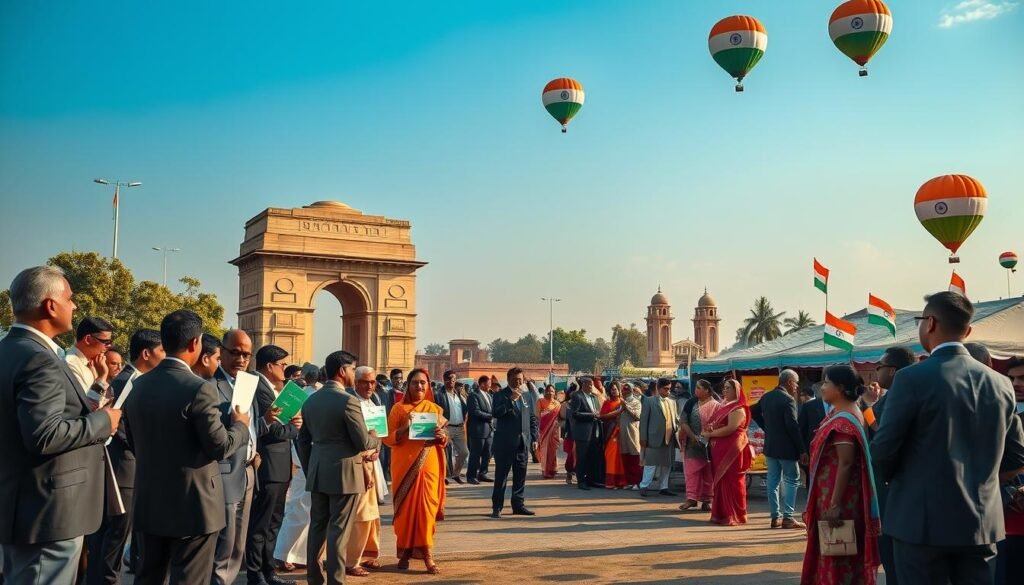
In 2025, India saw many national events that changed its politics and culture. Political events were key, showing how the government works and listens to people. Elections and important meetings made big changes, showing the complex nature of India’s democracy.
Key Political Developments in 2025
This year was big for politics in India. Elections set the stage for new policies on things like the economy, education, and health. These changes show how important it is for people to vote and get involved in national talks.
- Electoral outcomes reflecting public sentiment
- Policy shifts in response to economic challenges
- New legislation addressing social issues
Cultural Celebrations and Their Importance
Cultural events were also big in 2025. They brought people together, celebrating traditions and new art. These events help us understand our shared identity and values.
- Festivals showing off local traditions
- Art shows for local artists
- Community events for unity
Social Trends Influencing Indian Society
In 2025, we saw a big change in Indian society. New technologies quickly changed how we live, learn, and work. This made us think about keeping our cultural values in a changing world.
Emerging Technologies and Their Impact
New digital tools changed education, health care, and how we talk to each other. Online learning became very popular, helping people from all over connect. This made us look at old ways of learning and think about new ones that work for everyone.
Changing Perspectives on Tradition and Modernity
Debates about modernity vs tradition grew as we moved forward. People want to keep their cultural roots but also try new things. This mix of old and new makes our culture rich and diverse. Using new technologies helps us honor our past while moving forward.
Climate Impact: Lessons Learned from 2025
The climate impact in 2025 was a big learning moment for India. Businesses, governments, and communities came together. They worked on strategies to face climate change’s urgent issues. We’ll look at how sectors innovated and the role of community involvement.
Adaptation Strategies from Various Sectors
Adaptive measures showed creativity and resilience. In farming, growing different crops became a key strategy. This helped farmers adapt to changing weather, reducing reliance on one crop.
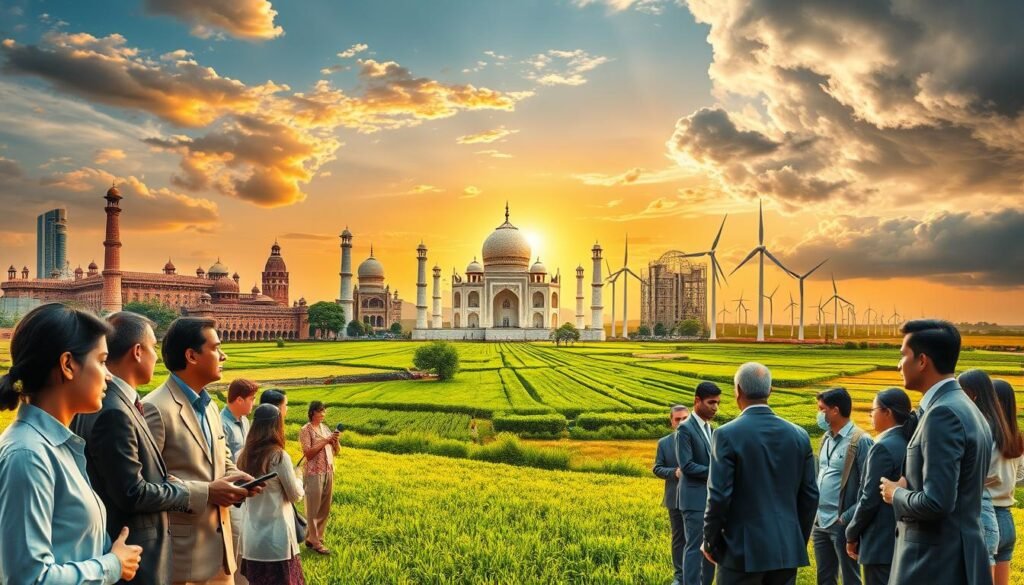
Urban planning focused on green spaces and smart water systems. These efforts helped reduce city heat. The renewable energy sector grew, with more solar and wind projects. This move towards green energy lowered emissions.
Community Involvement in Climate Actions
Community involvement was key in these efforts. Local groups led the charge, stressing everyone’s role in fighting climate change. They ran campaigns to teach people about living sustainably.
Projects brought people together, making them feel part of the solution. This approach built stronger communities and showed the power of working together. It showed how people can make a big difference in tackling climate issues.
| Sector | Adaptation Strategy | Community Involvement |
|---|---|---|
| Agriculture | Crop diversification | Local training workshops |
| Urban Planning | Development of green spaces | Community clean-up events |
| Renewable Energy | Investment in solar and wind | Community solar projects |

Economic Developments in 2025
In 2025, India is at a key moment as we move past COVID-19. The economy is growing strong, thanks to resilience and new ideas in many areas. This growth is good news for jobs, which is a big goal for those leading the country.
Recovery Post-COVID-19: Economic Outlook
After COVID-19, we’re looking at new ways to grow and stay stable. The government is putting money into things like roads and digital projects. These moves help us recover now and prepare for the future.
Working together, the government and businesses are making things better. They’re quick to adapt to changes in the economy.
Sectoral Growth and Job Creation
In 2025, different areas of the economy are growing, creating more jobs. The tech world is booming with new ideas that make things better and easier. This helps more people find work.
Manufacturing is also coming back, thanks to people wanting to buy more. This means more jobs for everyone. The goal is to make sure everyone gets a chance to work and feel secure.
India 2025 Year in Review
Looking back at India 2025, we see both big wins and tough challenges. Cultural, social, and economic changes have brought us forward. Yet, we also face hurdles that show our journey is not over.
Key Highlights and Achievements
- Expansion of digital infrastructure, making it easier to connect and learn.
- Steps forward in renewable energy, making India a green leader.
- Women empowerment programs have made strides, pushing for equality in all areas.
Challenges Faced Throughout the Year
- Dealing with social unrest, showing the need for open talks.
- Effects of climate change, hitting hard on farming and jobs.
- Health crises, calling for new ideas and better healthcare.
International Relations: India on the Global Stage
In 2025, India has become a key player in international relations. It has made important global partnerships. These focus on trade, the environment, and security.
These partnerships help solve big global problems. They also make India a respected leader worldwide.
Key Partnerships and Collaborations
This year, India has strengthened its bonds with many countries. These partnerships aim to boost the economy and share cultures. Some notable partnerships include:
- Trade Agreements: Expanding markets through bilateral and multilateral agreements that enhance trade volumes and economic interdependence.
- Environmental Initiatives: Collaborating with nations on climate action initiatives aimed at sustainable development.
- Security Measures: Joint military exercises and intelligence sharing to combat terrorism and ensure regional stability.
India’s Role in Global Forums
India is very active in global forums. It shows its commitment to solving international problems. Its role includes:
- Climate Action: Speaking at international summits about urgent climate issues and strategies for mitigation.
- Sustainable Development: Promoting development agendas during global discussions.
- Global Diplomacy: Strengthening multilateral frameworks to foster cooperation among nations.
| Partnership Focus | Countries Involved | Outcomes Achieved |
|---|---|---|
| Trade Agreements | United States, Australia, Japan | Increased trade volumes by 15% |
| Environmental Initiatives | France, Germany, UK | Joint projects leading to carbon emissions reduction |
| Security Collaborations | Russia, ASEAN Nations, Israel | Enhanced regional security cooperation and intel sharing |
India’s role in international relations shows its ability to handle complex challenges. It promotes peace and development for all.
Personal Stories: Voices from 2025
In 2025, the stories of everyday people in India are truly inspiring. They show the many ways the nation is shaped by its citizens. These tales of resilience and hope tell us how communities come together to face challenges.
Interviews with Everyday Citizens
We learn a lot from talking to people from all walks of life. From farmers in Punjab to tech workers in Bangalore, their stories are full of emotion and struggle. They show us how people can overcome big hurdles:
- Neelam, a small business owner in Delhi, shares her journey of rebuilding her shop after the pandemic.
- Amit, a teacher from Kerala, discusses his efforts to adapt to online education while supporting his students.
- Riya, a young entrepreneur, speaks about launching an eco-friendly startup, fueled by her passion for sustainable living.
Stories of Resilience and Hope
Every story is a beacon of hope, showing us how people keep going even when things are tough. These tales remind us that, no matter what, the human spirit can prevail. For example, during the heatwave, people came together to help each other, showing the power of community.
These personal stories touch our hearts, making us think about our own lives. They show us that hope never fades, even when things seem darkest. They teach us the importance of connection and working together.
Conclusion
As we wrap up our look at India’s journey in 2025, we see how faith, climate issues, and social changes have shaped the year. The Maha Kumbh united millions in a celebration of culture and belief. At the same time, climate change showed us the need for resilience and innovation in our daily lives.
Looking back at 2025, we see both successes and challenges. We’ve made progress in community involvement and government efforts. Yet, we face many hurdles, from violence to climate change. Each story adds to our society, showing our commitment to change.
Together, we must celebrate our achievements and learn from our struggles. Let’s use our shared experiences to find new ways forward. This journey is for all of us, calling on everyone to help shape a brighter future for India.