



Nearly half of India’s million-plus cities are growing outward, not upward. This trend changes daily life, budgets, and climate impacts.
As engineers, educators, and urban thinkers, we see a big change. Urban sprawl is growing fast in India. It brings jobs and homes but also strains transport and raises costs.
Our study looks at how cities are expanding. We use global models and real-world data. We see how more people and land needs are leading to more land use in India.
This section is for tech pros and students. We’ll look at the effects of sprawl and suggest ways to make cities better.
For more on city growth, check out this Mercatus perspective on urban order and.
If you have data or case studies, email us at info@indiavibes.today.
Understanding Urban Sprawl: A Definition
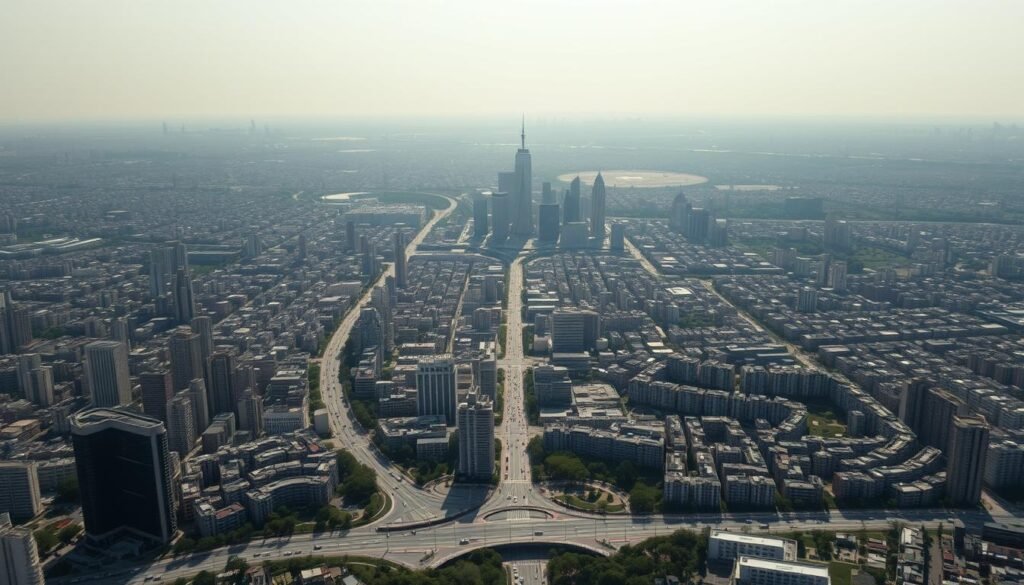
Urban sprawl is a key term for modern Indian cities. It describes how cities grow outward, covering more land. This happens as villages and farmland turn into homes, roads, and shops.
What Is Urban Sprawl?
Urban sprawl means cities spreading out into the countryside. We see homes scattered, areas for one use only, and roads connecting suburbs to the city center.
Reasons like rural problems and job needs in cities drive this growth. This leads to more buildings and roads, changing the land use over time. Tools like remote sensing help us see these changes.
Key Characteristics of Urban Sprawl
One key feature is low-density living. Homes are not close together but spread out. This leads to growth on the outskirts of cities, not in the center.
- Fragmented patterns that boost per-capita urban land use.
- Clear land use change: loss of cropland, vegetation, and water bodies as cities expand.
- Infrastructure leapfrogging: new roads and utility networks extend to connect distant suburbs.
- Environmental signatures: more impervious surfaces that intensify urban heat and alter hydrology.
- Measurable through nighttime lights, Landsat imagery, and cellular-automata urban growth models.
To understand these traits, we need to combine many factors. This includes population trends, economic growth, land use maps, and urban planning models. These tools help us track and plan for city growth in a sustainable way.
The Rise of Urbanization in India
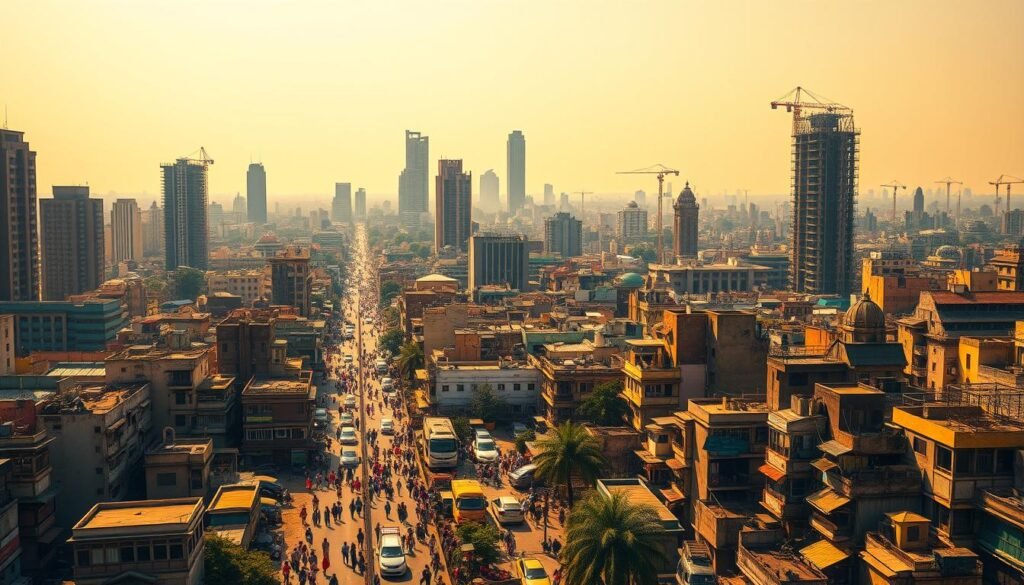
We study how cities in India are growing to help planners and engineers understand these changes. Fast urban growth changes land use, ecosystems, and what cities need. This section shows the numbers and highlights cities where growth is most seen.
Statistics on Urban Growth
Urban populations in developing countries, including India, grew a lot in the late 20th century. In India, some cities saw their populations grow five times. This growth was due to more people moving to cities and natural increase.
Studies predict cities will keep growing. Asia, with India leading, will see the biggest growth in cities after 2050. The scenario that shows the biggest increase in land per person is SSP5.
Studies of specific cities show big changes in land use. For example, Bhubaneswar–Cuttack’s built-up area grew by 145–152% from 1990 to 2020. This shows how cities expand due to more people and economic growth.
Major Cities Experiencing Sprawl
Mumbai is a prime example of fast growth. It attracts many people, leading to long suburbs and traffic problems. Mumbai’s growth shows the dangers of unchecked city expansion.
Bengaluru is growing fast because of IT jobs and investments. The city’s green areas and lakes are under threat. This growth puts a strain on water resources, leading to a need for new solutions.
Delhi faces heat island effects and land-use changes. The city’s temperature changes at night and vegetation loss show how growth affects climate and infrastructure.
Medium-sized cities like Bhubaneswar–Cuttack also grow quickly. This growth leads to a loss of open spaces and strains local ecosystems. It shows how India’s urban development continues to expand.
| City / Region | Reported Change (1990–2020) | Main Drivers | Notable Impacts |
|---|---|---|---|
| Mumbai Metropolitan Region | Substantial suburban spread; long-term population influx | Economic opportunity; coastal migration | Transport congestion; informal settlements; infrastructure stress |
| Bengaluru | Rapid peri-urban expansion; significant land-use conversion | IT sector growth; population migration | Loss of green belts; lake degradation; higher service demand |
| Delhi | Marked LU/LC shifts; rising urban thermal signatures | Administrative and economic centrality; migration | Urban Heat Island effects; altered microclimate; infrastructure load |
| Bhubaneswar–Cuttack | Built-up +145–152%; agriculture down up to 82.6% | Regional development; population migration | Open-space loss; ecosystem stress; waterbody shrinkage |
Causes of Urban Sprawl in Indian Cities
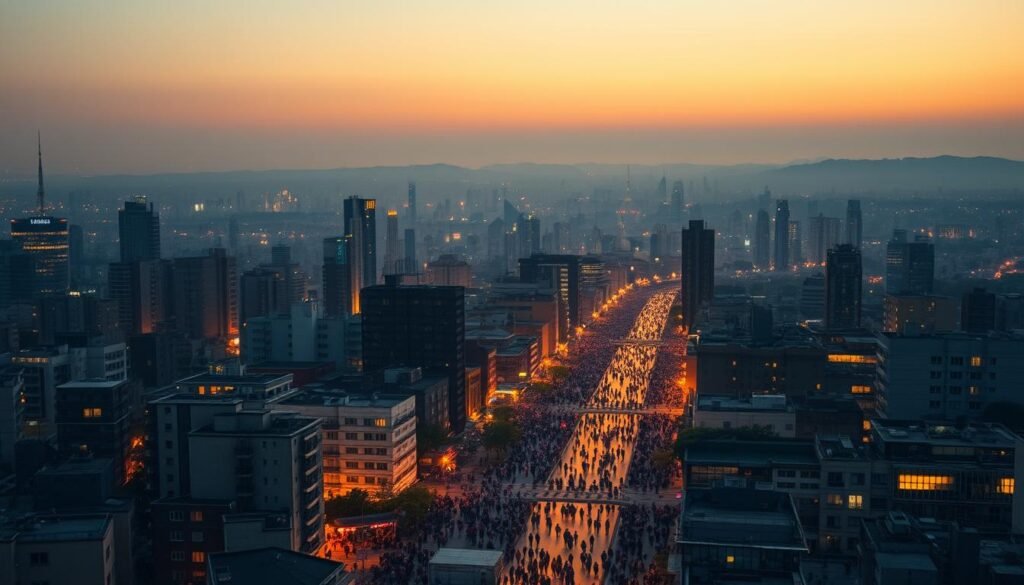
We look at why cities in India are growing bigger. It’s because of changes in population, economy, and planning. These changes lead to suburbs and complex urban sprawl patterns.
Fast population growth means more homes are needed in cities. Births outnumber deaths, adding to city populations. People moving from rural areas to cities also increases this demand.
These moves are often for better services or to escape hard farm work. They settle near city edges. Over time, these moves can make suburbs bigger.
Land markets play a role in this growth. As city centers fill up, builders look for cheaper land outside. This creates new suburbs along highways and transit lines.
Jobs draw people to cities. Places like Bengaluru’s IT hubs or Pune’s factories offer jobs. This attracts workers, increasing housing and transport needs outside the city center.
As people earn more, they want bigger homes and cars. This leads to bigger suburban areas. It’s a key reason for urban sprawl.
What governments decide also affects growth. Shortages of affordable homes and strict rules push new projects to the suburbs. Developers build on open land, making suburbs bigger.
Without good planning, growth can become a problem. But with the right planning and investments, we can change this. Yet, without action, the push for more space will keep cities growing outward.
| Driver | Mechanism | Typical Outcome |
|---|---|---|
| Population growth | Natural increase; household formation | Higher housing demand; denser cores or edge growth |
| Population migration | Rural-to-urban and circular migration | Peri-urban settlements; informal housing clusters |
| Economic factors | Industry concentration; sectoral shifts to services and IT | Expansion of employment corridors; suburban housing booms |
| Job opportunities | High-skill and mass employment hubs | Commuter flows; demand for transport and new suburbs |
| Policy and planning | Affordable housing gaps; regulatory constraints | Leapfrogging development; fragmented suburbanization |
The Environmental Impact of Urban Sprawl
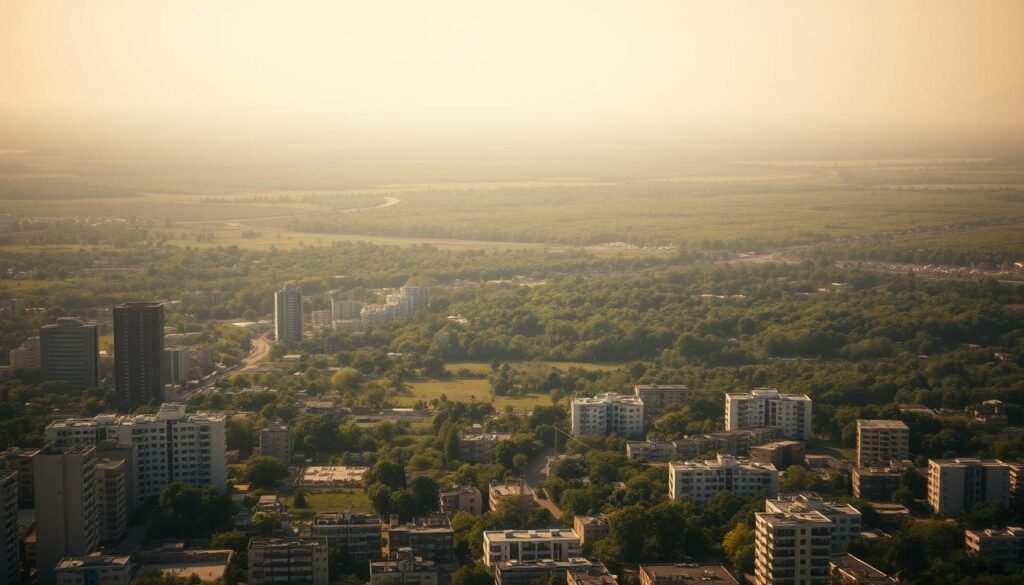
We look at how fast growth changes ecosystems and daily life in Indian cities. Cities grow outwards, changing land use and services. These changes affect the environment, and we need to act.
Loss of Green Spaces
Urban growth turns farms, wetlands, and parks into buildings. In places like Bhubaneswar and Cuttack, built areas grew a lot from 1990 to 2020. But green areas decreased by more than half.
This change makes cities hotter and less able to handle floods. Losing green spaces means less shade, less water absorption, and fewer homes for wildlife. It also means less local food and less ability to bounce back after disasters.
Increased Pollution Levels
More people and goods moving around means more pollution. Cities like Delhi already have warmer nights because of their dense buildings.
The urban heat island effect gets worse as natural areas are replaced by concrete. This makes summers hotter and increases the need for cooling.
| Impact Area | Primary Drivers | Observable Effect | Practical Response |
|---|---|---|---|
| Vegetation & Open Land | Peri-urban development, low-density housing | Loss of green spaces; reduced biodiversity | Protect urban greens, create linked green corridors |
| Air Quality | Increased vehicle kilometers, dispersed industry | Higher pollution levels; local health impacts | Promote transit-oriented development and cleaner fleets |
| Surface Water | Infill, sand mining, impermeable surfaces | Shrinking water bodies; declining water quality | Restore water bodies; use permeable pavements |
| Urban Climate | Extensive built surfaces, reduced vegetation | Stronger urban heat island effect; higher LST | Increase albedo-smart materials and urban tree canopy |
| Long-term Footprint | Unchecked growth scenarios and policy gaps | Permanent land use change; biodiversity loss | Integrate green infrastructure in regional planning |
We need to act: preserve green spaces, fix water bodies, and pick materials that don’t hold heat. These steps help fight the bad effects of sprawl and make cities better places to live.
Infrastructure Strain: Challenges of Urban Sprawl
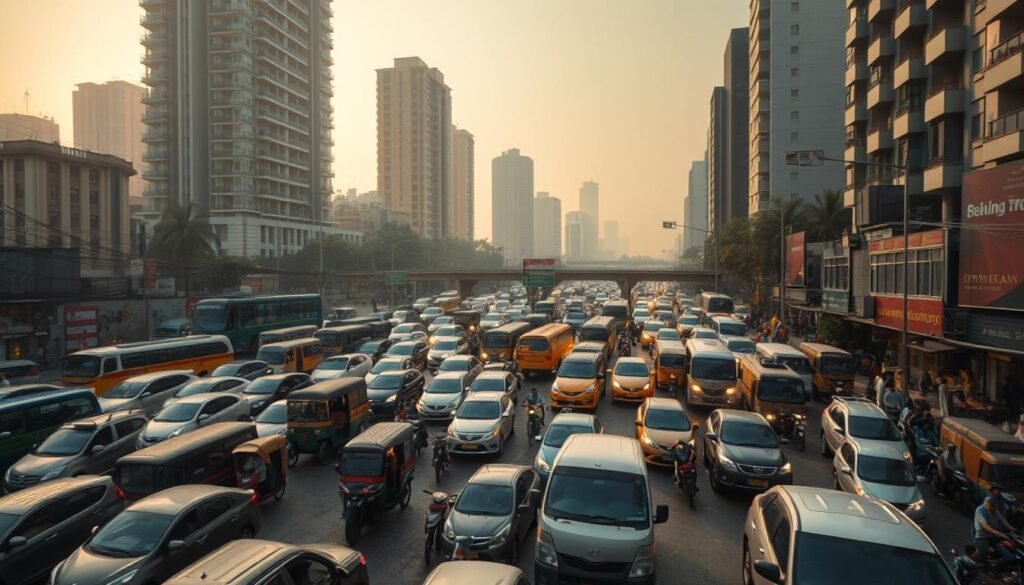
As cities grow, they put pressure on their systems. The cost of roads, sewers, power lines, and transit goes up. Planners face tough choices between quick fixes and long-term solutions.
Transport and Traffic Issues
Sprawl makes trips longer and car use more common. This leads to heavy traffic during busy times. Cities like Mumbai and Bengaluru struggle with traffic and public transport.
Building good transit in suburbs is expensive. Without enough riders, it’s hard to cover costs. This pushes people to use informal transport, making planning harder.
We need to plan routes that fit demand and manage roads well. Better planning of land use and transport can reduce car use and make travel faster.
Water and Sanitation Problems
Expanding water and sewer lines in suburbs is costly. New connections often come late, leading to poor water and sanitation. This poses health risks.
Groundwater levels are falling, and waterbodies are shrinking. Over 600 million people in India face water stress. The country extracts about 250 billion cubic meters of water each year. About 40% of the country is drought-affected. Read more about sustainable solutions at India.
Municipal budgets often can’t keep up. Deferred maintenance and limited funds lead to more repairs. We need better financing and planning to ensure water and sanitation reach new areas.
Social Implications of Expanding Cities
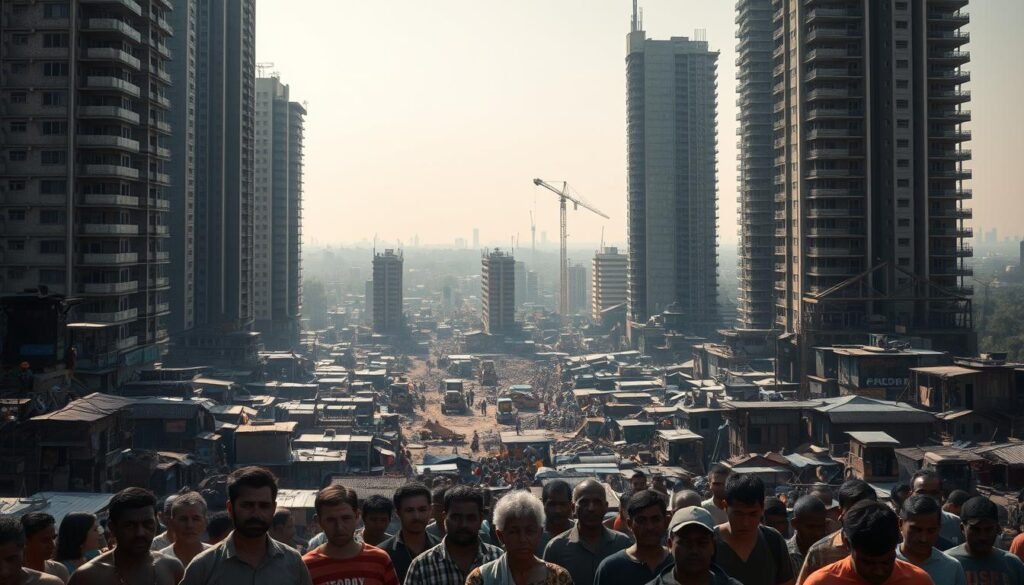
Urban growth changes our daily lives and brings risks when it grows too fast. Cities expand as more people move in, changing land, services, and community ties. This needs careful planning to manage these changes.
Community Displacement
As cities grow, land values rise, leading to redevelopment. In Kolkata, this led to land grabs, pushing out long-time residents. This shows how growth can harm communities.
Migrants often end up in informal settlements without stable homes. Evictions rise, and plans to help often fail. This hurts small farmers near Bhubaneswar–Cuttack, where new areas replace their land.
Displacement affects more than just homes. It breaks social networks, markets, and community groups. Without these, people become more vulnerable to economic shocks and social bonds weaken.
Unequal Access to Resources
Outer neighborhoods often get less water, sewage, and public transport. This creates health risks from poor sanitation and air pollution.
Heat-island effects are worse in dense areas. Lack of green spaces and cooling systems raises health risks. Low-income groups suffer the most from these problems.
Political tensions rise where services are scarce. Historical violence shows how stress and social issues can lead to crises in cities.
Experts say we need secure homes, planning that involves everyone, and fair services. Inclusive planning helps keep people in their homes, reduces displacement, and makes resources more equal.
| Challenge | Typical Impact | Planning Response |
|---|---|---|
| Land speculation | Forced relocations; loss of agricultural land | Land-value capture; regulated redevelopment with compensation |
| Informal settlement growth | Lack of services; tenure insecurity | Upgrading in place; legal recognition of land rights |
| Service gaps in peripheries | Unequal access to water, sanitation, transit | Targeted infrastructure funding; area-based investment |
| Health burdens from density | Higher heat exposure; air pollution impacts | Green corridors; heat mitigation measures; public health programs |
| Social fragmentation | Rising tensions and loss of social capital | Community engagement; inclusive governance mechanisms |
Solutions to Manage Urban Sprawl
We have practical ways to stop cities from growing too fast. Our methods combine smart planning, engineering, and good governance. They aim to grow cities in a way that’s good for people and the planet.
Smart design and rules change how cities expand. By building housing, shops, and services together, we reduce travel needs. This also helps keep farmland and green areas safe.
Setting urban growth boundaries and using coordinated zoning stops cities from spreading out too much. Planners should use data to test how different policies affect land use.
Keeping cities cool and green is key for health and the environment. Restoring wetlands and parks helps lower heat and keeps biodiversity. Using cool materials and surfaces also helps.
Building affordable housing in city centers helps stop sprawl. Working together with private companies and using special funds can make this happen faster.
Smart Urban Planning Strategies
We suggest focusing policy and investment on transit corridors and mixed-use areas. This makes cities more efficient and reduces the need to expand.
Creating job hubs in different parts of the city shortens commutes. Cities need to update their plans and zoning to match these changes.
Promoting Sustainable Transportation
Changing how we travel is key to reducing sprawl. By improving buses, trains, and walking and cycling paths, we make it easier to get around.
Tools like congestion pricing and parking reform help reduce traffic and pollution. Making public transport more accessible makes it a better choice for daily trips.
We also recommend using green materials and building capacity in local governments. This helps fund and implement sustainable development plans.
Case Studies of Indian Cities Facing Urban Sprawl
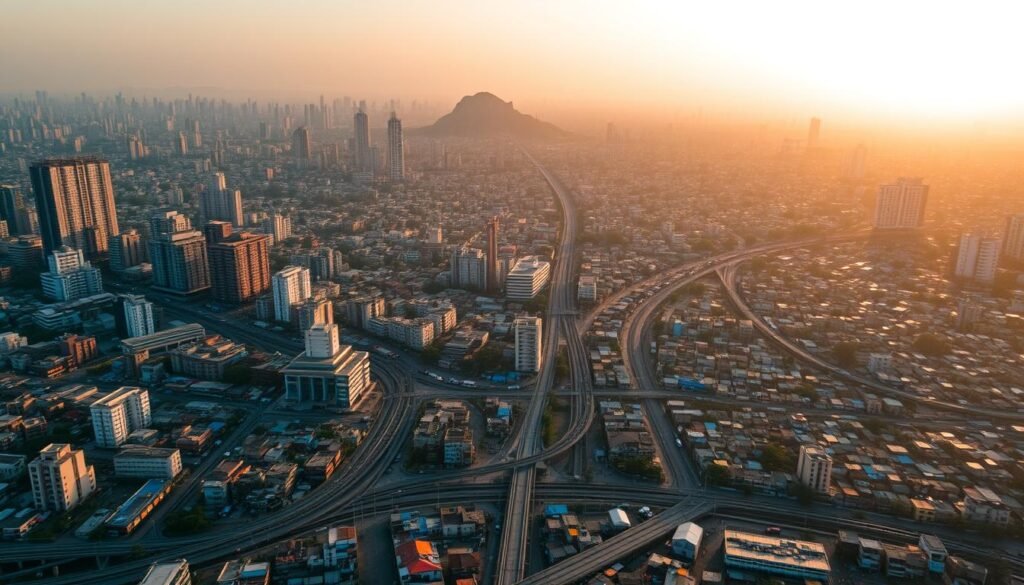
We look at two cities in India to see how they handle growth. Mumbai and Bengaluru show different ways to manage growth. They highlight the challenges and solutions for urban planning.
Mumbai: Challenges and Innovations
Mumbai is an island with a long coast. This limits its growth. Housing and businesses spread out, causing long commutes and more traffic.
The city’s transport is struggling. The suburban rail is key but is always crowded. Plans to improve the metro and rail face funding and coordination issues.
There’s a shortage of homes and many slums. Efforts to improve living conditions face legal and financial challenges. These efforts aim to help those living in informal settlements.
As the city grows, it loses natural areas. Mangroves and wetlands that protect against floods are being destroyed. It’s important to balance growth with saving these areas.
Bengaluru: Balancing Growth with Sustainability
Bengaluru grew fast because of IT jobs. This pushed the city outwards. Now, there are more green spaces, but they’re fragmented. Traffic is a big problem.
There are plans to manage growth better. These include new transport systems and planning for mixed-use areas. They aim to use land more efficiently and protect lakes.
To control growth, Bengaluru needs to protect its water bodies. It’s a team effort between the city, state, and private developers. This helps keep the ecosystem healthy while supporting the economy.
| Aspect | Mumbai | Bengaluru |
|---|---|---|
| Primary driver | High-density coastal urbanization and port-related economy | IT-led economic boom and peripheral tech parks |
| Transport response | Suburban rail upgrades, metro expansion, TOD proposals | Metro, BRT corridors, peri-urban ring planning |
| Housing strategy | Slum rehabilitation, incremental housing, mixed-use corridors | Mixed-use clusters, planned peri-urban developments |
| Environmental concern | Mangrove loss, flood risk from reduced natural buffers | Lake encroachment, groundwater depletion |
| Key challenge | Coordinating agencies and financing large transit projects | Enforcing land-use rules and protecting water systems |
| Relevance to urban development | Shows trade-offs between densification and suburbanization | Demonstrates need for integrated water-land planning |
These examples show how different factors lead to different growth patterns. Mumbai and Bengaluru need specific solutions for their unique challenges. This includes investing in infrastructure, managing land, and protecting the environment for fair urban growth.
The Role of Government in Urban Development
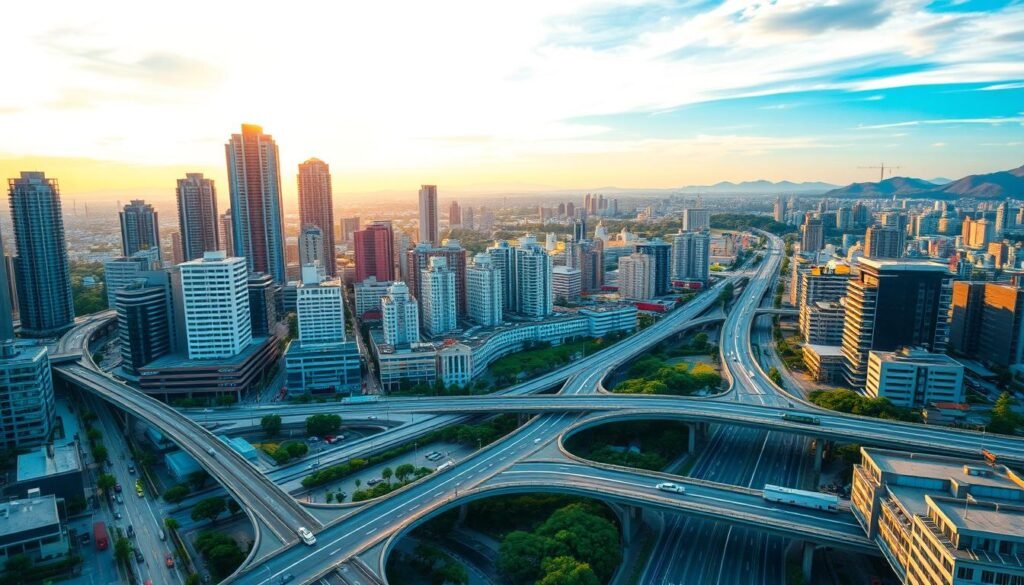
The government plays a key role in helping cities grow in a balanced way. Public agencies need to mix long-term plans with practical tools. This helps steer urban planning towards more compact and fair outcomes.
Good policies and rules can shape the market, lower costs, and protect public goods. This is important for city growth.
Policy Interventions and Regulations
We support using rules to stop sprawl. This includes setting urban growth boundaries and zoning that encourages denser living. Mixed-use codes and inclusionary housing mandates also help.
Environmental impact assessments for projects near cities protect nature. These steps are key to keeping ecosystems safe.
Municipal finance needs to match infrastructure growth needs. Tools like value capture and development charges help fund public transit and green projects. More on this can be found here.
We advocate for policies that can adapt to different futures. Plans should be resilient, fair, and flexible. It’s also important to strengthen state capacity. Municipal teams need training and tools to manage sprawl and avoid service gaps.
Collaboration with Local Communities
We believe in involving residents and local groups in planning. This approach reduces displacement and ensures plans meet real needs.
Community-led efforts to restore nature can have lasting benefits. Local groups can work on wetlands, lakes, and green spaces. Fair land acquisition and resettlement processes build trust.
Working together at all levels is essential. Central, state, and local governments need to coordinate on transport, housing, and land use. This ensures cities can grow without losing equity or ecology.
| Policy Element | Practical Tool | Primary Benefit |
|---|---|---|
| Urban growth control | Enforceable growth boundaries | Limits costly low-density expansion |
| Zoning reform | Higher density, mixed-use codes | Supports compact development and transit |
| Fiscal realignment | Value capture and development charges | Funds infrastructure growth and transit |
| Community engagement | Participatory planning and restoration | Reduces displacement and improves stewardship |
| Capacity building | Technical training and data systems | Improves delivery and resilience |
Future Perspectives: What Lies Ahead for Urban India
India’s cities will keep growing in size and complexity. By 2050, they will expand steadily, with some areas seeing more growth. This growth will be driven by more people living in cities and more land being used.
Global trends will also play a big role. Cities in Asia and Africa will see more growth, with India at the heart of these changes.
Predictions for Urban Growth
Some cities might slow down, while others will keep growing fast. Models show big increases in urban areas, so planners need to plan carefully. They must consider the unique needs of each city.
These predictions highlight the need for detailed data and long-term planning. This will help make informed decisions for the future.
The Need for Innovative Solutions
We need to combine modeling with real-world actions. Using detailed urban data, reducing heat island effects, and adding green spaces are key. These steps can make cities more sustainable.
Systems thinking is also important. It involves designing cities in a compact way, building affordable homes, and improving transportation. This approach can make cities better for everyone.
Innovation in how cities are governed and funded is critical. New ways to fund infrastructure can help manage growth. As experts, we must use our skills to design better cities and involve the community. For more information or to collaborate, email us at info@indiavibes.today.