



Nearly 70% of India’s electricity comes from coal. Yet, the nation aims for 500 GW of non-fossil fuel capacity by 2030. This shows the tension in our path to sustainable energy.
We stand at a critical juncture. Rapid urbanization, growing industry, and a booming digital economy are increasing power demand. At the same time, policymakers and engineers are working hard to scale up renewable energy and clean energy supply.
India is already third in the world in generation capacity. Our energy future depends on balancing growth with low-carbon choices. This means using rooftop solar, utility-scale wind, and smarter grids to make green energy the standard, not the exception.
The rise of data centers and AI will drive a huge demand for energy by 2030. To meet this challenge, academia and industry are working on the India Energy Stack and a Digital Energy Grid. These projects aim to enable peer-to-peer trading, demand flexibility, and AI-driven optimization.
Policy and incentives are also changing. Public grants, tax breaks, and support for carbon capture projects are speeding up deployment and research. Learn more about recent incentives and policy moves here.
As engineers, educators, and students, we see this as a systems challenge. We need to build robust grids, deploy green energy at scale, and make sustainable energy affordable and reliable for 1.4 billion people.
For collaboration or press inquiries, contact info@indiavibes.today.
An Overview of India’s Renewable Energy Landscape
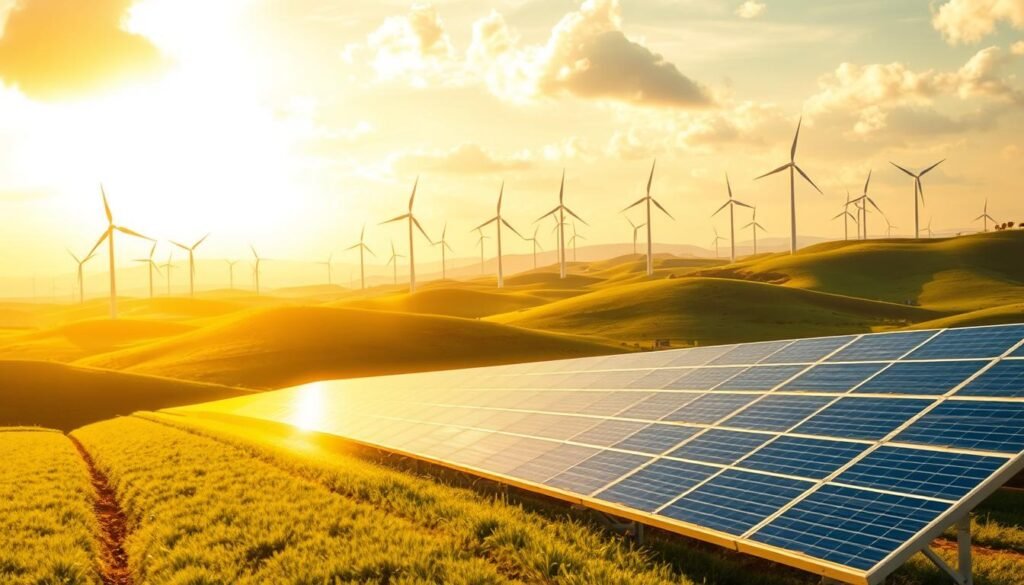
India’s power system is changing fast. Demand is growing, and there are new policies and more distributed resources. Engineers, planners, and educators must add more renewable energy to the grid. They need to keep the power supply reliable for businesses and data centers.
Current Energy Mix and Sources
India’s energy mix includes coal, gas, nuclear, and growing amounts of solar, wind, and bioenergy. Coal is the main source for steady power. Solar and wind farms add variable energy. Bioenergy offers flexible options with biomass and biogas.
Rooftop solar and big solar farms are growing in places like Gujarat and Rajasthan. Wind power is mainly in Tamil Nadu, Gujarat, and Maharashtra. Now, these resources are key to meeting demand and reducing emissions.
Future Projections and Goals
India wants 500 GW of non-fossil energy by 2030 and to be carbon neutral by 2070. This means a big increase in solar, wind, and bioenergy. These will come from solar, wind, and bioenergy systems linked to agriculture and waste.
To handle the ups and downs of renewable energy, we’ll see more batteries and digital platforms. These will help manage the mix of energy sources. This way, we can meet both steady and peak power needs.
| Category | Role Today | Near-Term Outlook (to 2030) |
|---|---|---|
| Solar power | Rapid deployment; utility and rooftop segments | Major expansion; cost declines; storage pairing |
| Wind power | Established coastal and inland capacity | Site diversification; offshore trials; hybrid projects |
| Bioenergy | Supplementary dispatchable resource | Scale-up via agritech linkages and waste valorization |
| Thermal / Nuclear | Baseload backbone | Operates for reliability while renewables grow |
| Digital platforms & storage | Emerging enablers | Central to integrating distributed alternative energy |
The Role of Government Policies in Solar Energy
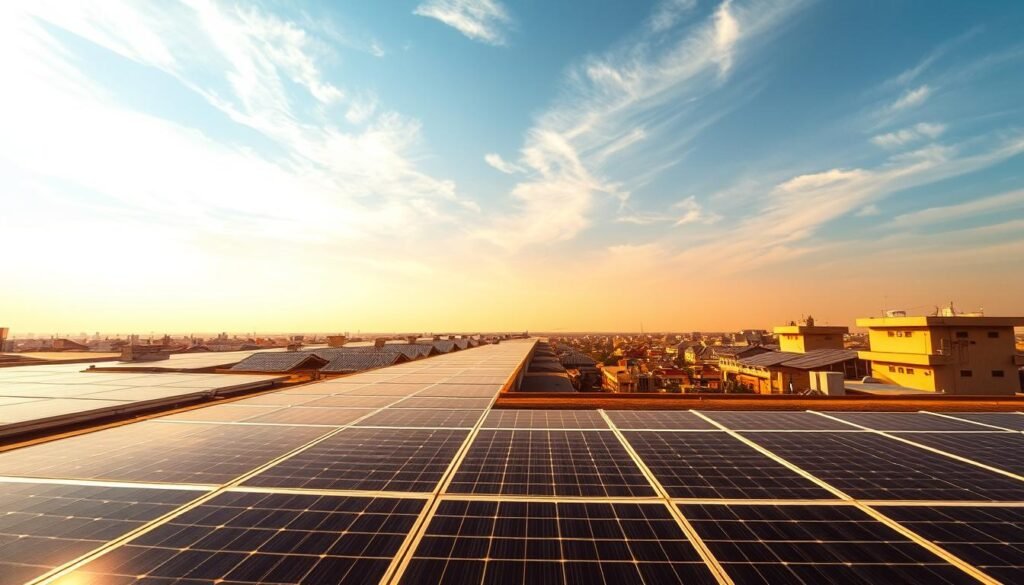
We explore how policies influence the shift to solar power and clean energy in India. The country aims to increase non-fossil energy sources. This includes both large solar parks and smaller systems on rooftops.
States are trying new approaches and using digital tools to lower costs. They also offer special incentives to speed up solar adoption.
Good policy design is key for solar to work well with the grid. Rooftop solar paired with storage and smart pricing helps match supply and demand. The India Energy Stack and Digital Energy Grid provide real-time data and automated settlements. These tools make it easier and cheaper to trade small solar assets.
Key Policies Boosting Solar Initiatives
In Karnataka, changes at the Karnataka Electricity Regulatory Commission have opened up rooftop solar. These reforms made it easier to connect to the grid and trade energy directly with neighbors. This has made it simpler for homes and businesses to participate in the market.
Nationally, large solar parks are a focus. Policies aim to speed up project approvals by simplifying land allotment and clearance. Giving data centers infrastructure status encourages them to use solar power for their growing needs.
Incentives for Solar Adoption
There are practical incentives for going solar. These include subsidies for commercial and residential installations. Also, special land tariffs and easier grid access reduce costs upfront.
Financial schemes from both the central and state governments help homeowners and small businesses. Market incentives like peer-to-peer trading and time-of-day pricing add to the financial benefits. These incentives make solar power more attractive by aligning it with peak demand times.
| Policy Type | Example Mechanism | Primary Benefit |
|---|---|---|
| Financial Incentives | Capital subsidies, concessional land, low-interest loans | Lower upfront cost for rooftop solar and large projects |
| Regulatory Incentives | Single-window clearance, infrastructure status for data centers | Faster approvals and easier access to grid services |
| Market Incentives | P2P trading, time-of-day tariffs, demand response | Improved revenue streams and grid alignment for solar power |
| Digital Infrastructure | India Energy Stack, Digital Energy Grid | Automated settlements and meter-level asset identification |
Wind Energy: Harnessing the Power of Nature
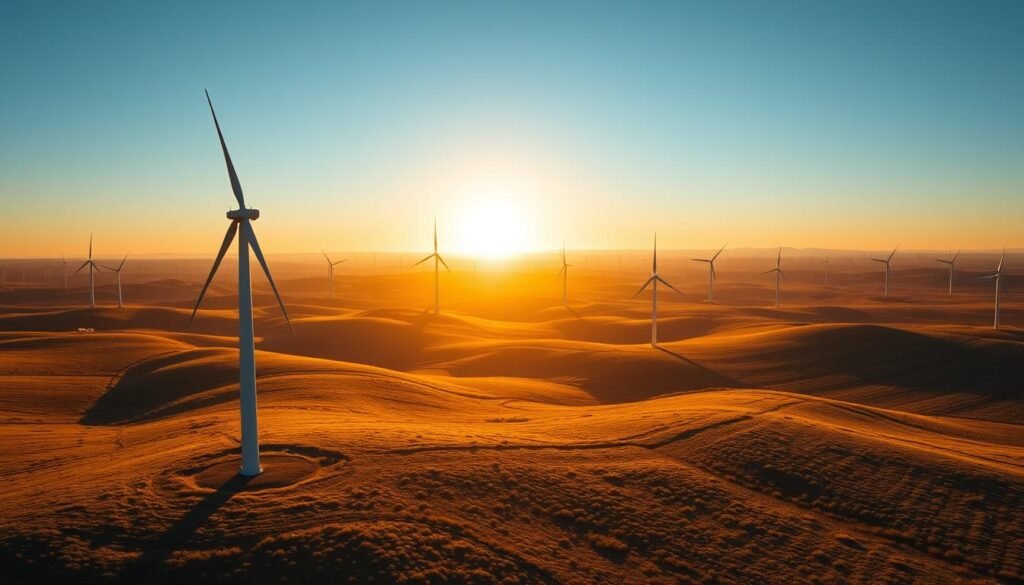
Wind turbines are popping up everywhere in India, showing the country’s move to green energy. These turbines are not just symbols of change; they also help win public support. They guide industrial planning and balance solar energy throughout the year.
India’s wind energy mix includes big farms, small turbines, and hybrid projects. Companies like Suzlon and Vestas are making turbines taller and bigger. This increases energy output. At the same time, they’re working with solar power to make energy delivery more reliable.
Wind energy can’t always be a steady source of power, mainly because of natural changes. This issue pushes for more investment in storage and new technologies. Digital tools like the India Energy Stack help manage energy better, making it available when needed.
New technologies are changing what wind energy can do. Better electronics and grid systems make energy flow smoother. Forecasting tools help manage energy, cut waste, and support local energy trading.
By placing turbines in the best spots and making them taller, more energy can be captured. This makes wind power a bigger part of India’s renewable energy mix. It also encourages more investment in green energy across the country.
Investment Trends in Renewable Energy Sector
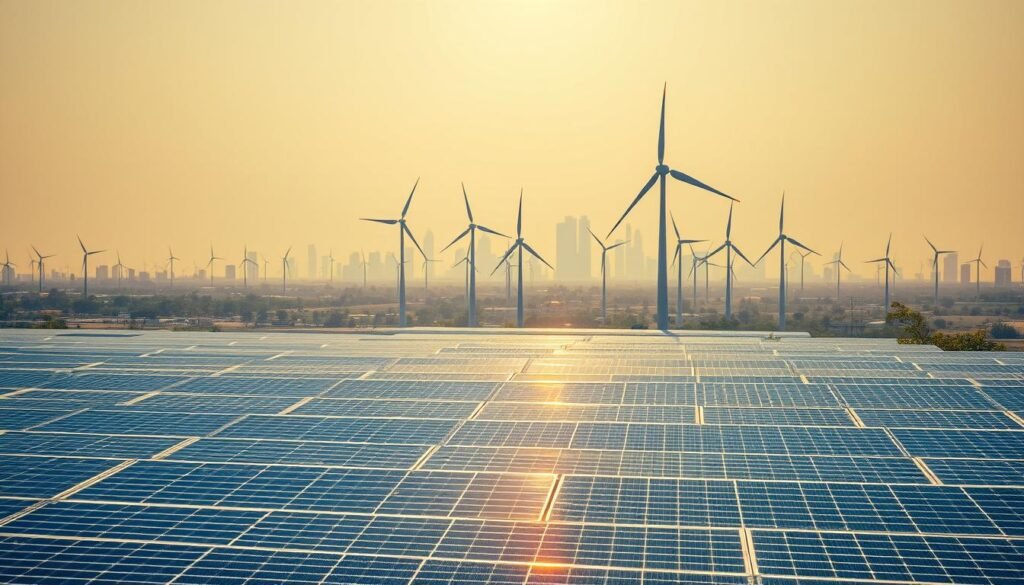
India’s capital markets are moving towards big clean projects. The government aims for 500 GW of non-fossil energy by 2030. This has attracted investors to solar parks, wind farms, and grid upgrades.
This shift is opening up new business models. These include merchant power, corporate PPAs, and green bonds.
Demand for big data centers is changing the energy supply. Major players are planning large data center power needs. This demand helps renewable energy projects by providing steady income.
Key Players and Their Contributions
Big companies and digital firms are leading the way. Adani group, through AdaniConneX, is expanding data center capacity fast. Reliance is also entering the hyperscale data center market with a big project in Jamnagar.
These moves are pushing power towards cleaner sources. Private developers and tech firms are providing expertise and solutions. Schneider Electric and others are working with universities and local agencies to make projects safer.
These collaborations are speeding up the deployment of projects. They make projects more bankable.
Impact of Foreign Investments
Foreign investment is filling capital gaps and bringing in new tech. International firms and financiers are backing projects from renewables to small modular reactors. This investment includes structured financing and tech transfer, speeding up grid-scale deployments.
Partnerships with hyperscale data center operators are significant. The expected $20–25 billion in data center builds is creating a steady demand for clean energy. These investments are linking global capital to India’s clean energy goals, boosting new PPAs and green project financing.
| Investor Type | Representative Names | Primary Contribution | Expected Impact by 2030 |
|---|---|---|---|
| Domestic Conglomerates | Adani, Reliance | Large-scale project development, data center power procurement | Accelerated demand for 1–5 GW of dedicated low-carbon capacity per firm |
| Digital Infrastructure Firms | AdaniConneX, Yotta, Nxtra, CtrlS, NTT | Hyperscale data centers driving long-term energy offtake | Hyperscale builds valued $20–25B; steady corporate PPAs |
| Foreign Strategic Investors | EDF, Rosatom, Holtec, global tech partners | Capital, technology transfer, SMR and grid solutions | Faster deployment of advanced generation and storage |
| Institutional Capital | Global funds, banks, green bond markets | Project financing, risk layering, long-dated debt | Lower cost of capital; scaled utility and commercial projects |
| Public-Private-Academic Consortia | Atria University partners, Schneider Electric, CEEW | Pilot validation, technical de-risking, workforce training | Higher project bankability; more replicable solutions |
The Challenges Facing India’s Renewable Transition

India’s shift to sustainable energy faces many hurdles. Fast city growth, more electric cars, and industrial needs put a strain on the power system. We need to plan and upgrade smartly to meet these challenges.
We’ll look at the main technical and policy hurdles. We can overcome these by planning better, setting clear rules, and investing wisely.
Grid flexibility and capacity
Adding lots of solar and wind power to the grid is tough. We need storage, quick responses, and better forecasts. Without these, the grid can get stressed and costs go up.
Data centers also add pressure. They use a lot of power and need cool systems. This makes the grid work harder and requires better planning and networks.
Regulatory fragmentation and interoperability
Different rules in each state make it hard to move power around. This slows down projects and makes things more expensive for developers and utilities.
To succeed, we need good data management, standard interfaces, and the right incentives. Experts say we should focus on flexibility, not strict rules.
Storage, transmission and repurposing sites
We don’t have enough storage and transmission yet. We need more batteries, long-term storage, and HVDC links to handle the ups and downs of renewables.
Old power plants can be reused. We can turn them into hybrid sites or hubs for the grid. This saves land and keeps the grid working well.
Land use and lifecycle impacts
Big solar and wind farms need a lot of space. This can harm nature and upset local communities. We must choose the right places carefully.
Nuclear and other options use less land, but we must think about their long-term effects. Good planning, recycling, and rules for shutting down plants are key.
Policy levers and state reforms
Karnataka’s changes show how clear rules and easier approvals can help. We need to apply these changes nationwide to reduce uncertainty for investors.
We need to make buying power easier, support storage, and share data openly. This will help solve grid problems and speed up the transition to clean energy.
| Challenge | Impact | Responsive Measures |
|---|---|---|
| Infrastructure challenges from urban and industrial load growth | Local overloads, deferred maintenance, higher outages | Targeted grid expansion, distributed generation, demand response |
| Grid issues from intermittent renewables and data center demand | Volatility, congestion, need for flexible capacity | Storage deployment, advanced forecasting, coordinated siting |
| Fragmented regulations and data barriers | Investment delays, limited interoperability | Standard APIs, unified market rules, data governance frameworks |
| Environmental concerns and land-use trade-offs | Habitat loss, community opposition, lifecycle impacts | Reuse of thermal sites, careful siting, lifecycle management |
| Storage and transmission shortfalls | Curtailment, reliability risks, constrained growth | Long-duration storage, HVDC links, incentives for batteries |
Community Involvement and Grassroots Movements

Big projects shape India’s energy story. But, grassroots efforts fill in the gaps. They build trust, get quick feedback, and learn by doing.
Community renewable projects bring people together. They include residents, startups, utilities, and colleges. Together, they test new ways to use energy.
Local pilots help engineers get real-world experience. They also lower the risk of using new technology. Universities and companies work together to create small-scale energy systems.
Startups like Fawkes Energy and Pulse Energy are making software for energy management. Viki AI and others work on managing energy and trading it between people. These efforts make renewable energy more practical and valuable.
Utilities and companies can help make renewable energy more common. Programs like Adani’s EV charger pilot make it easier for people to see and use green energy. When we see these efforts in our daily lives, we start to choose them more often.
Education and awareness are key. Centers of excellence and vocational training teach people about energy systems. Workshops for students, technicians, and policymakers help everyone understand how to work together.
Actions range from community solar gardens to microgrids and trading between people. We need to train local technicians and show off these projects. This builds a strong base for using energy in a way that’s good for the planet.
Case Studies: Successful Renewable Projects
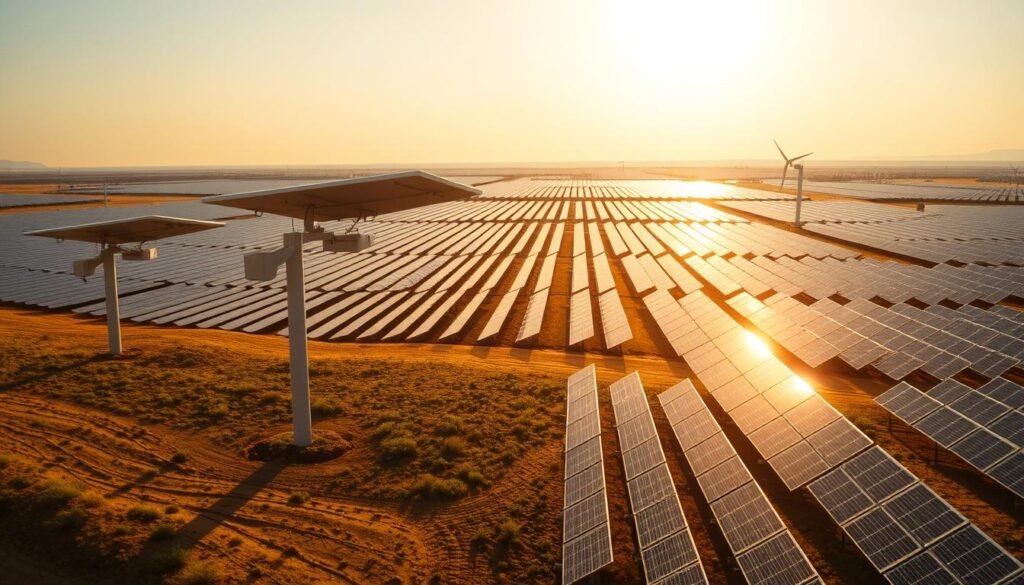
We share case studies that show India’s growth in renewable energy projects. These examples cover large solar parks, campus systems, and wind farms. Each case offers lessons for engineers, investors, and policy makers.
Solar Parks Across India
Large solar parks are key to India’s rapid growth in renewable energy. They aim to meet the 500 GW non-fossil target. Projects near industrial areas provide steady power for manufacturing and data centers.
Campus pilots show how to replicate success. Atria University’s system combines solar, batteries, and flexible loads. This teaches students about energy management. Adani Electricity’s EV charger pilots engage consumers and create energy credits.
Wind Farms Making a Difference
Wind farms offer high-capacity power with low land use. Vestas and Suzlon’s projects show how modern turbines and digital controls improve efficiency. These farms support hybrid systems with storage for stable output.
Industry models are emerging. RackBank’s 80 MW data center in Indore needs firm, low-carbon power. Hybrid solutions and repurposed sites reduce land use and speed up permits.
Key lessons include digital energy management, state incentives, and demonstration projects. These examples provide blueprints for scaling up across India.
| Project Type | Representative Example | Primary Benefit | Replication Tip |
|---|---|---|---|
| Large Solar Park | Utility-scale arrays supplying industrial load | Rapid capacity addition and low marginal cost | Centralize approvals and standardize PPA terms |
| Campus Integrated Pilot | Atria University: solar + batteries + flexible loads | Operational learning and community engagement | Document controls and share energy credit flows |
| Data Center-Aligned Hybrid | RackBank-style 80 MW facility near load | Matched low-carbon firm power for high-density racks | Co-locate storage and on-site generation |
| Repurposed Plant Site | Retired thermal to hybrid renewable-plus-storage | Reduced land footprint and faster permitting | Use existing grid interconnection points |
| Onshore Wind Farm | Modern turbines by Vestas/Suzlon | High capacity factor with improved controls | Integrate digital SCADA and predictive maintenance |
International Collaborations and Initiatives

We look at how global partnerships shape India’s clean energy path. These partnerships bring in new tech, money, and know-how. They help with big solar parks, small nuclear reactors, and local energy systems.
Working with big companies speeds up tech sharing and project setup. For example, Holtec from the US is talking to Larsen & Toubro and Tata Consulting Engineers about SMR tech. EDF from France wants to work on small and advanced reactors with India. Rosatom is also in talks about SMRs and floating designs for India’s nuclear plans.
Partnerships with Global Renewable Leaders
Companies are teaming up for more than just nuclear tech. Nvidia is working with Reliance, and data centre groups like NTT are investing. This creates a need for strong power and cooling systems.
India’s approach to energy management is being shared globally. The India Energy Stack and Digital Energy Grid are seen as models. They could lead to better energy systems worldwide.
Participation in Climate Agreements
India aims to be net zero by 2070, matching big climate goals. This goal boosts demand for renewable energy. It helps developers, makers, and investors know what to expect.
Global agreements help bring in new tech and funding. This makes big energy projects more possible. It also keeps foreign investment in clean energy coming.
| Collaboration Type | Key International Players | Primary Impact in India |
|---|---|---|
| Small Modular Reactors | Holtec (US), EDF (France), Rosatom (Russia) | Technology transfer, co-development, expanded nuclear capacity |
| Digital Energy & Data Centres | Nvidia, NTT, Reliance | Efficient cooling, demand-responsive supply, investment in microgrids |
| Renewable Project Finance | Multilateral funds, climate finance institutions | Lower-cost capital, scaled deployment of solar and wind projects |
| Distributed Energy Models | International standards bodies and tech vendors | Interoperable platforms, exportable India Energy Stack solutions |
| Policy & Climate Forums | UNFCCC partners, bilateral climate programs | Alignment with climate agreements, access to tech transfer and grants |
Government actions and market signals attract investors. For more on solar, wind, storage, and grid management, check out this summary: renewable energy opportunities in India.
Strong partnerships are key to reaching big energy goals. Working together is essential for India’s ambitious clean energy plans.
Looking Ahead: The Future of Renewable Energy in India
India is moving towards a clean energy future with big goals and practical steps. The aim is to reach 500 GW of non-fossil energy by 2030. This includes 280 GW of solar and 100 GW of wind power.
As renewable energy grows, we will see more nuclear, storage, and digital tools. These will work together to create a balanced energy mix.
By 2030, India’s energy system will be smarter and more connected. The India Energy Stack and Digital Energy Grid will allow for new trading and pricing models. They will also help manage hybrid renewable+storage systems and support data centers.
For more on India’s solar and renewable progress, check out this analysis: India’s renewable energy progress.
We need to make sustainable practices a part of everything we do. This means using bioenergy, wind, solar, storage, and low-footprint power. We also need to work together with research, industry, and other countries.
Small improvements, like better cooling and smarter grid control, can make a big difference. They help keep the power on and affordable.
We invite you to join us in making renewable energy a reality in India. Let’s work together to achieve our goals. For more information or to collaborate, email info@indiavibes.today.