


Did you know the 2011 census found about 19,500 mother tongues? After rationalization, this number dropped to 1,369. This shows the vast diversity of Indian languages in daily life.
We delve into the Indian linguistic landscape as a cultural gem and a technological hurdle. It’s crucial for digital inclusion, language policy, and preservation. This matters for policymakers, technologists, educators, and students.
The 2011 census shows Hindi as the most spoken language, with around 528 million native speakers. Bengali, Marathi, Telugu, and Tamil follow. India officially recognizes 22 languages and uses English at the Union level.
In this article, we explore India’s linguistic diversity. It’s not just about numbers, but how language ties to identity, governance, and technology. We see opportunities for innovation, from mother-tongue education to regional language NLP. The diversity of Indian languages is a valuable resource we must protect.
For editorial queries and partnerships, contact info@indiavibes.today.
Overview of India’s Linguistic Diversity
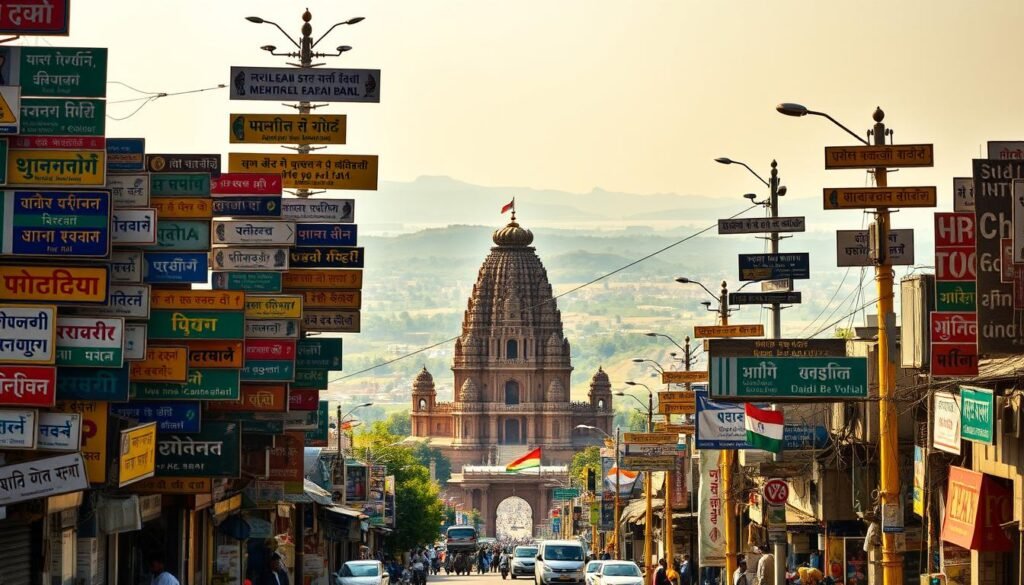
We offer a quick look at India’s language scene. This is for teachers, engineers, and those making policies. It shows how many languages are spoken and how they are classified. This affects what’s taught in school, how AI is trained, and what’s translated.
The way languages are counted matters a lot. In 2011, the Census found 19,569 different language groups. They were then grouped into 1,369 mother tongues and 121 languages with over 10,000 speakers. But, other groups like Ethnologue say there are about 435–456 languages.
The People’s Linguistic Survey of India found around 780 languages and 66+ scripts. From 1898 to 1928, a survey by Grierson found 179 languages and 544 dialects. But, its methods are not always easy to compare.
The Number of Languages Spoken Today
How many languages are spoken can vary. It depends on how you define a language. Some linguists might say a dialect is a language if people can’t understand each other. Others might group local dialects together.
This makes it hard to plan for all the languages in India. It’s like trying to count how many different flavors of ice cream there are.
Most people speak Indo-Aryan languages, making up about 78% of speakers. Dravidian languages are spoken by about 19.6%, and Austroasiatic and Sino-Tibetan languages by less than 2%. There are also small families and isolates like Andamanese.
Many people in India speak more than one language. Hindi is spoken by about 43.6% as their first language. English is also widely spoken, especially in education, law, and administration.
Importance of Regional Dialects
Many “mother tongues” counted in the census are actually local dialects. Whether these are considered separate languages affects how resources are allocated. This includes textbooks, teacher training, and speech data for voice assistants.
Dialects often blend together in areas. For example, there are gradual changes in Rajasthani-Marwari and in southern languages like Telugu, Kannada, Tamil, and Malayalam. Understanding these patterns helps decide which dialects need their own digital treatment.
We’ve put together a summary that’s useful for practical work. It shows which counts to trust, how languages are spread, and what dialect patterns mean for tech and education. The table below highlights key figures and their practical implications.
| Metric | Key Figures | Practical Implication |
|---|---|---|
| Raw affiliations (2011) | 19,569 recorded; 1,369 mother tongues | High granularity requires robust normalization in datasets |
| Reported languages (2011) | 121 with 10,000+ speakers | Targets for educational materials and localization |
| Alternate surveys | Ethnologue: ~435–456; PLSI: ~780 languages | Choose definitions to match project scope and budget |
| Family distribution | Indo-Aryan ~78%, Dravidian ~19.6%, Austroasiatic ~1.1%, Sino-Tibetan ~1.0% | Allocate linguists and resources according to speaker concentration |
| Multilingualism | Hindi L1 ~43.6%; English ~10.6% speakers | Design bilingual education and UI fallback strategies |
| Regional dialects | Many mother tongues are local dialects within continua | Include dialect mapping in corpus collection and policy planning |
Official Languages of India
We look at how laws and daily use shape language in India. This part talks about legal status, central and state policies, and their impact on fields like engineering and education.
The Eighth Schedule of the Constitution
The Eighth Schedule lists 22 languages that are officially recognized. These languages guide school choices, grants, and cultural events. Governments use this list when making textbooks and exams.
Being in the Eighth Schedule doesn’t mean a language is used every day. It gives a language status and support: media funding, translation, and research follow this list.
Role of Hindi and English
Article 343 makes Hindi the official language of the Union. The Official Languages Act (1963) lets English stay for official use forever. This makes Hindi and English key in India’s language policy.
English is a key language in courts, higher education, and government. The 2011 census shows about 10.6% of people use English. For tech teams, this mix affects how they work and who they hire.
States can choose their own official languages. For example, Tamil Nadu uses Tamil, and Maharashtra uses Marathi. This local choice shapes how services and digital platforms are made for different languages.
| Aspect | Central Position | State Implementation |
|---|---|---|
| Constitutional basis | Article 343 names Hindi; English permitted under Official Languages Act | States select official languages for local governance and education |
| Recognized list | Eighth Schedule lists 22 scheduled languages | States may promote additional regional varieties and dialects |
| Use in education | Central guidelines and exam options reflect scheduled languages | Medium of instruction often set by state policy |
| Administrative practice | Hindi and English govern central administration and courts | Local administration operates in state official language(s) |
| Impact on technology | Localization priorities follow national and scheduled lists | State choices determine regional UI/UX and language engineering focus |
There are debates on the three-language formula and the new NEP-2020. Some worry about Hindi getting too much attention. We suggest that tech teams match their work with the law and state choices to help everyone.
Major Indian Language Families
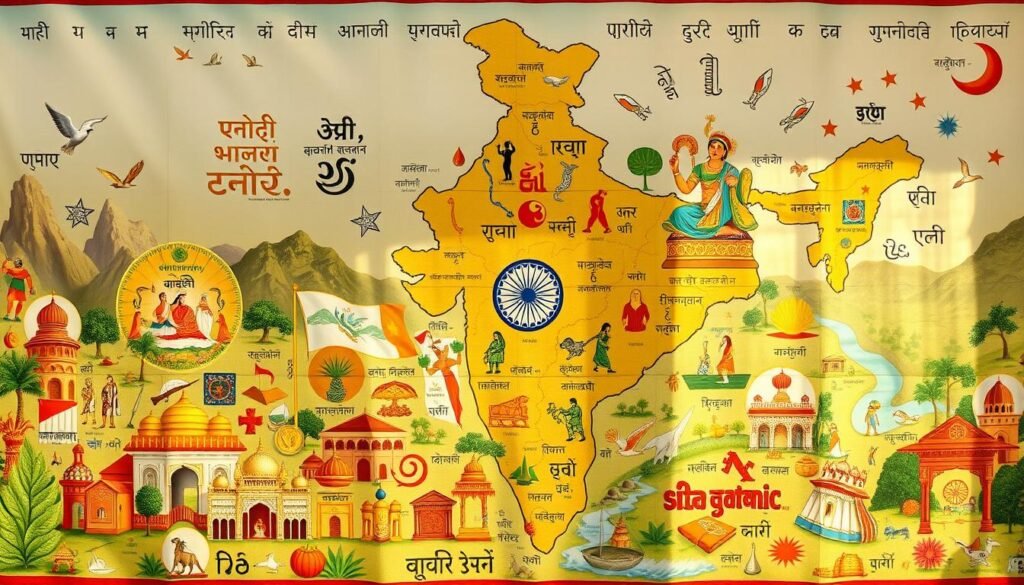
We explore the main families that shape India’s linguistic heritage. We list key languages, their speakers, and historical notes. This helps engineers, educators, and students understand the diversity and its impact on writing systems and NLP design.
Indo-Aryan
The Indo-Aryan branch is the largest, with about 78% of speakers. Hindi, Bengali, Marathi, Gujarati, and others are key languages. They evolved from Old Indo-Aryan and have diverse scripts.
Dravidian languages
Dravidian languages make up 19.6% of the population. Telugu, Tamil, Kannada, and Malayalam are major tongues. They have a long history and unique features that impact NLP.
Austroasiatic and Tibeto-Burman
Austroasiatic includes Munda and Khasi languages. Santali and Khasi are notable examples. Many are endangered. Tibeto-Burman languages are found in the Himalayas and Northeast. Meitei (Manipuri) is a notable example.
Other small families and isolates exist. The People’s Linguistic Survey lists over 780 languages and 66+ scripts. This diversity poses challenges for font rendering and multilingual model training.
| Family | Representative Languages | Approx. Speakers (2011) | Technical Considerations |
|---|---|---|---|
| Indo-Aryan | Hindi, Bengali, Marathi, Gujarati, Odia, Punjabi, Assamese | ~945 million (78%) | Multiple scripts; large corpora; dialectal variation; script normalization |
| Dravidian | Telugu, Tamil, Kannada, Malayalam | ~238 million (19.6%) | Agglutinative morphology; script-specific tokenizers; rich literary corpora |
| Austroasiatic | Santali, Khasi, Munda languages | Millions, many endangered | Low-resource; phonetic orthographies; urgent documentation needs |
| Tibeto-Burman | Meitei (Manipuri), numerous Northeast languages | Varies; many small communities | Diverse scripts and oral traditions; complex classification; resource scarcity |
| Others/Isolates | Andamanese, Tai–Kadai influences, isolates | Small populations | Specialized orthographies; fieldwork critical |
India’s linguistic heritage is complex. It has historical depth, script variety, and typological diversity. These factors influence corpus collection, annotation, and transfer learning in speech and language systems.
Regional Dialects Across States
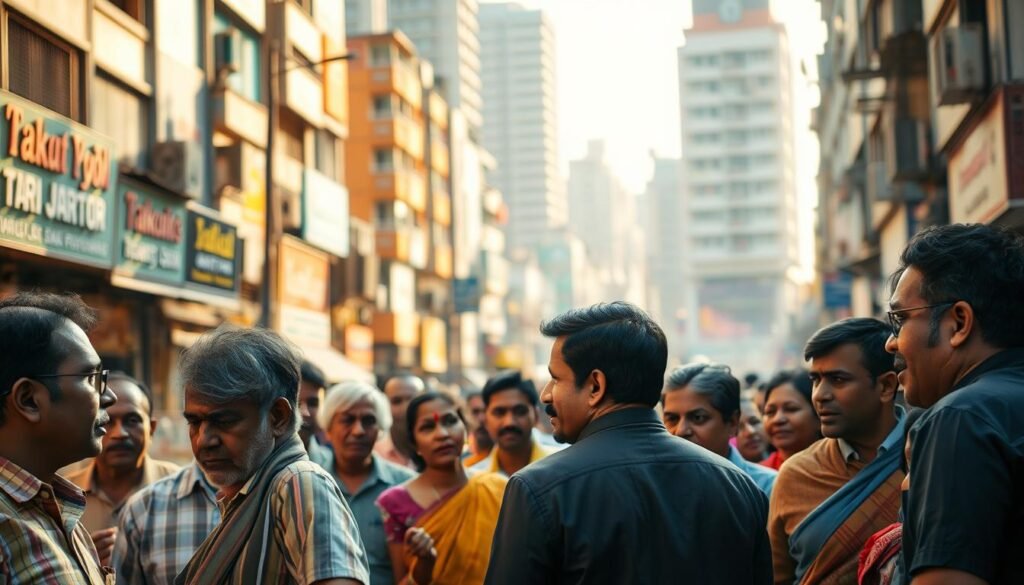
We look at how different languages shape life, policy, and engineering in India. Small changes in sound or words can be big barriers for tech, education, and sharing content. We share examples and what’s needed for systems that include everyone.
In India, different Hindi dialects affect how many people speak and how resources are used. The 2011 census groups many speech forms under “Hindi”. This includes Awadhi, Bhojpuri, and Bihari varieties, among others. This practice makes data for training AI and exams less accurate.
We explore engineering solutions: creating dialectal corpora, annotating carefully, and adding phonetic metadata. Without these, AI models struggle with regional words and sounds. Educational content must match real classroom speech to improve learning and fairness.
In South India, Dravidian languages show deep diversity. Telugu, Kannada, Tamil, and Malayalam have unique dialects and ways of speaking. Tamil Nadu’s history of resisting Hindi has shaped its policies and teaching methods. Some languages, like Kodava, mainly rely on oral tradition and lack a stable written form.
Script and orthography differences are key for digitizing languages. Manipuri used its own script, while Assamese and Bengali have related but different writing systems. These differences affect OCR accuracy, font design, and creating NLP datasets.
We see dialects of the Northeast as a mix of Tibeto-Burman clusters and long-established literatures. Meitei (Manipuri) has a rich written history. Arunachal Pradesh, Manipur, Meghalaya, Mizoram, and Assam have many small languages that are hard to classify. These dialects need special fieldwork and community-driven annotation.
We list actions for engineering and policy to improve coverage and fairness:
- Collect dialectal speech data with local consultants and standardized metadata.
- Create orthography mappings to ease OCR and unified indexing.
- Localize educational materials to reflect classroom registers.
- Deploy adaptive ASR/TTS that supports regional lexical variants.
| Area | Representative Varieties | Practical Impact | Recommended Action |
|---|---|---|---|
| Hindi belt | Awadhi, Bhojpuri, Western and Eastern Hindi | Speaker counts underreported; ASR errors on regional lexicon | Separate dialectal corpora; census-aware resource planning |
| South India | Telugu, Kannada, Tamil, Malayalam regional registers; Kodava (oral) | Orthography and register gaps hinder exam localization | Develop local curricula; document oral traditions |
| Northeast | Meitei, diverse Tibeto-Burman tongues across states | Script variants and small corpora limit digitization | Fund fieldwork; support community-script projects |
| All regions | Multiple script and phonetic variants | OCR/NLP and TTS quality varies widely | Standardize annotation; build inclusive language datasets |
Language and Culture
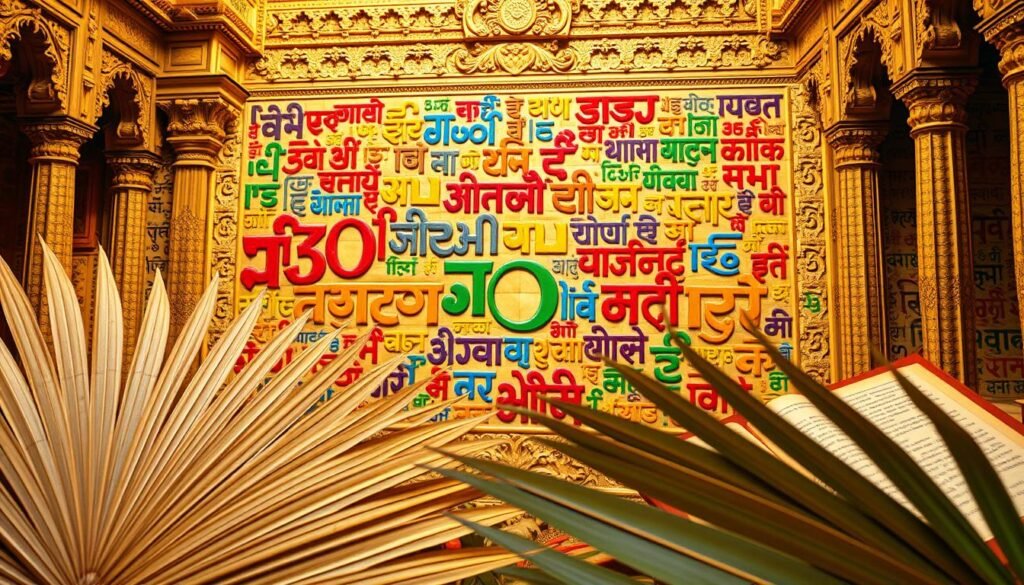
We look at how speech shapes identity and carries collective memory. The linguistic heritage of India is like a living archive. It maps out social life through words, idioms, and names.
Language is a key identity marker in daily life. In Maharashtra, Marathi speakers use their language in governance, media, and schools. Tamil institutions keep festivals and classical arts alive, boosting civic pride.
We see how literature and folklore carry tradition. Sanskrit epics and Tamil Sangam poetry have shaped public imagination. Modern Bengali prose and Persian-influenced Urdu have added to literary styles.
Oral traditions and tribal storytelling are also important. Stories in Santali, Munda, Khasi, and Meitei preserve myths and local law. Household speech keeps ecological knowledge and seasonal calendars alive.
For educators and technologists, there are practical steps. Adding literature and folklore to curricula boosts mother tongue education. Digital projects help analyze and preserve regional dialects.
Documenting and making access easier is crucial. Recording oral histories and annotating manuscripts is key. Universities, cultural organizations, and local speakers must work together to preserve India’s linguistic heritage.
Education and Language Policy
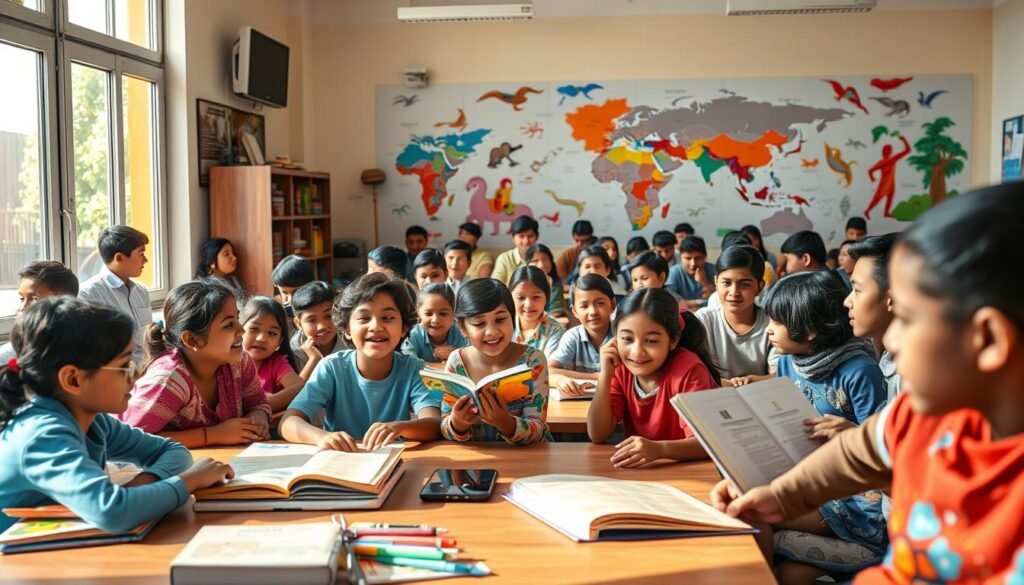
We explore how language impacts education in India. Policies like the Three-Language Formula and NEP 2020 shape teaching and learning. Teachers face challenges in translating accurately and aligning STEM subjects with local languages.
Mother Tongue Education Programs
India’s education policy has a long history of supporting mother tongue instruction. The Three-Language Formula from the 1960s aimed for balance. Now, NEP 2020 suggests starting with the mother tongue or regional language.
States can pick two Indian languages along with English. Bilingual textbooks are encouraged. This supports initiatives like PM e-Vidya, offering lessons in regional languages.
Creating content for these programs requires accurate translations and glossaries. Engineers and educators must ensure the content remains true to its concepts and useful in class.
Bilingualism in Indian Schools
Bilingualism is a key part of Indian education policy. Exams like SSC and JEE are offered in 13–15 languages. Plans are to include all 22 scheduled languages.
Materials for technical and medical courses are being translated into several languages. Resources need to allow students to switch between English and Indian languages.
Implementing bilingualism requires teamwork. Linguists, subject experts, and software engineers must work together. They need to standardize terms and ensure assessments are fair.
There are ongoing debates about language policy in India. Some states feel certain policies are too strict. We aim to translate policy into practical tools for diverse classrooms.
Teams should focus on creating bilingual validation processes and testing STEM modules. These steps help ensure quality learning across India.
Language and Technology
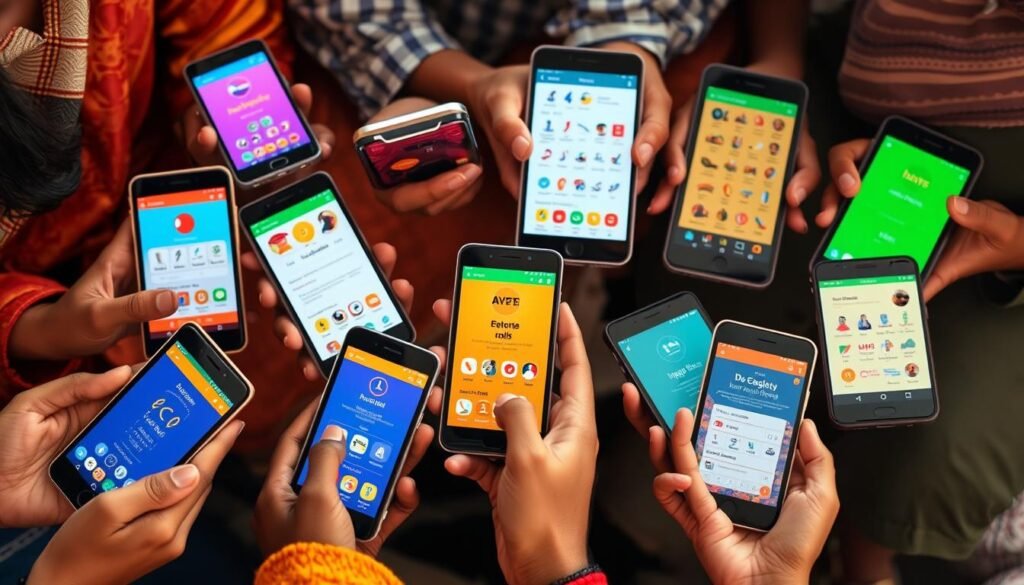
We look at how language and technology change how we talk in India. Digital tools now reach both rural towns and big cities. This change helps people get government services, learn, and enjoy entertainment.
It’s all about making sure everyone can use digital tools, no matter what language they speak.
The Rise of Regional Language Apps
Apps for local languages are growing fast. They offer news, learning, and streaming in many languages. The Bhashini project, started in 2022, helps with speech-to-text and real-time translation in 22 Indian languages.
Public efforts like PM e-Vidya broadcast lessons in local languages for students.
Engineers need to make datasets for many languages. They should use cross-lingual transfer for languages with less data. Script normalization and open-source corpora help with labeling.
Teachers can use these apps to teach STEM subjects and reach more students.
Social Media Impact on Indian Languages
Social media shows a lot of local content on YouTube, Facebook, and Instagram. Creators in Hindi, Bengali, and Telugu get lots of followers. Messaging apps let people mix languages and use Roman scripts, creating new ways of writing.
Handling script diversity, dialects, and limited data is a challenge for natural language processing. Ethnologue and the People’s Linguistic Survey highlight many languages that need help. We need datasets that show how people really talk.
To make progress, we should design interfaces that include everyone. Test models on local data and work with local creators. Small changes, like using local scripts, can make a big difference.
A guide to the languages of India helps developers understand the complexity they face.
Challenges Facing Indian Languages

We explore the challenges facing India’s languages. We see how social and economic changes affect language survival. These changes impact how languages are passed down through generations.
Language Endangerment
Many languages, including Austroasiatic and Tibeto-Burman tongues, are at risk. Sources like Ethnologue and the People’s Linguistic Survey list them as endangered. The way we group languages in the census can make it hard to see the real problem.
When we lose small languages, we lose important stories and knowledge. This loss affects our understanding of farming, medicine, and nature. Languages with fewer resources struggle to keep up with technology, making learning and using them harder.
Urbanization and Language Shift
People moving from rural to urban areas often choose Hindi, English, or state languages for work and school. Young people prefer these languages for better job chances and status. This makes it harder for native languages to be passed down to the next generation.
Education systems and the value of English make this problem worse. The National Education Policy 2020 aims to balance learning in mother tongues and other languages. But, there are still debates about how well it will work.
We need to understand the differences in languages to help. Better ways to count languages and consistent surveys are key. Working together, we can tackle these challenges and protect India’s languages.
Language Preservation Efforts
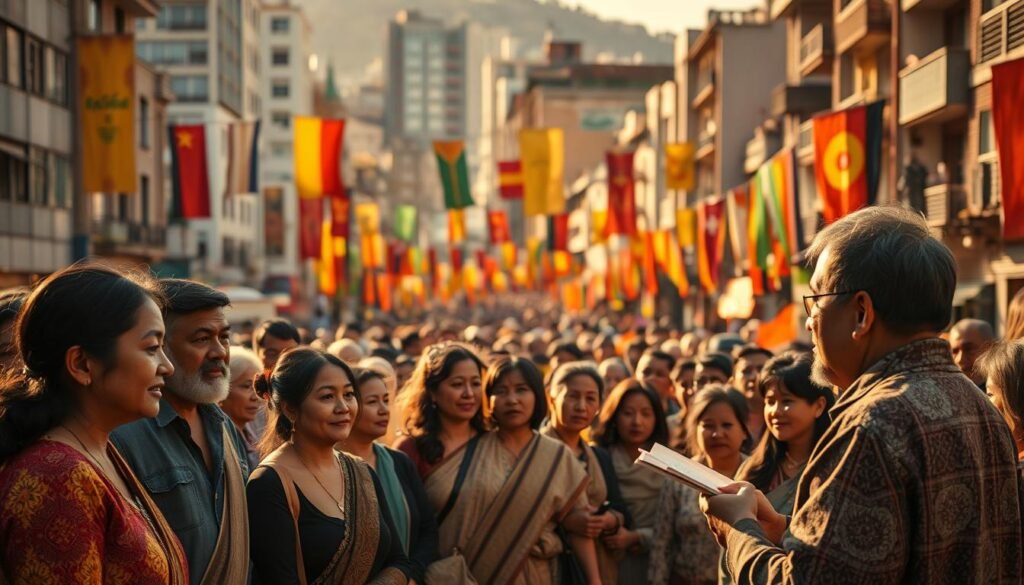
We look at programs that protect India’s languages and support community knowledge. Governments, universities, and civil society work together. They fund documentation, create curricula, and use technology to record traditions.
We explore government initiatives and policies that help this work. Languages like Telugu and Sanskrit get special funding. The Bhashini platform, launched in 2022, offers AI tools for languages.
NEP-2020 promotes teaching in mother tongues and wider exam language access. PM e-Vidya provides educational content in regional languages.
Government Initiatives
We list key programs that fund documentation and teacher training. These include grants for lexicon projects and support for university chairs. Practitioners use Bhashini to create digital resources for languages.
Role of NGOs and Cultural Organizations
NGOs play a big role in language preservation. They do fieldwork and engage with communities. Organizations like the Central Institute of Indian Languages publish important language resources.
Local cultural bodies run literacy drives and record oral histories. They also train community members in archiving.
We highlight community-led practices that keep endangered languages alive. Grassroots projects focus on recording oral histories and teaching literacy. These efforts are supported by funding and open-source tools.
| Actor | Primary Activity | Practical Output |
|---|---|---|
| Central Government | Policy, funding, platforms | Classical language grants, Bhashini, exam-language access |
| State Governments | Curriculum and school programs | Regional textbooks, teacher training, NEP-aligned materials |
| Academic Institutions | Research and documentation | Grammars, corpora, field studies |
| NGOs and Cultural Bodies | Community engagement, archiving | Oral-history projects, dictionaries, literacy campaigns |
| Community Groups | Local revival and teaching | Story recording, bilingual primers, digital archives |
We suggest collaboration with local communities and use of government initiatives and open-source tools. Linking projects to platforms like Bhashini can increase impact across languages.
For more information on India’s language diversity and preservation efforts, see Languages of India. It provides details on scheduled languages and multilingual patterns.
The Future of Indian Languages
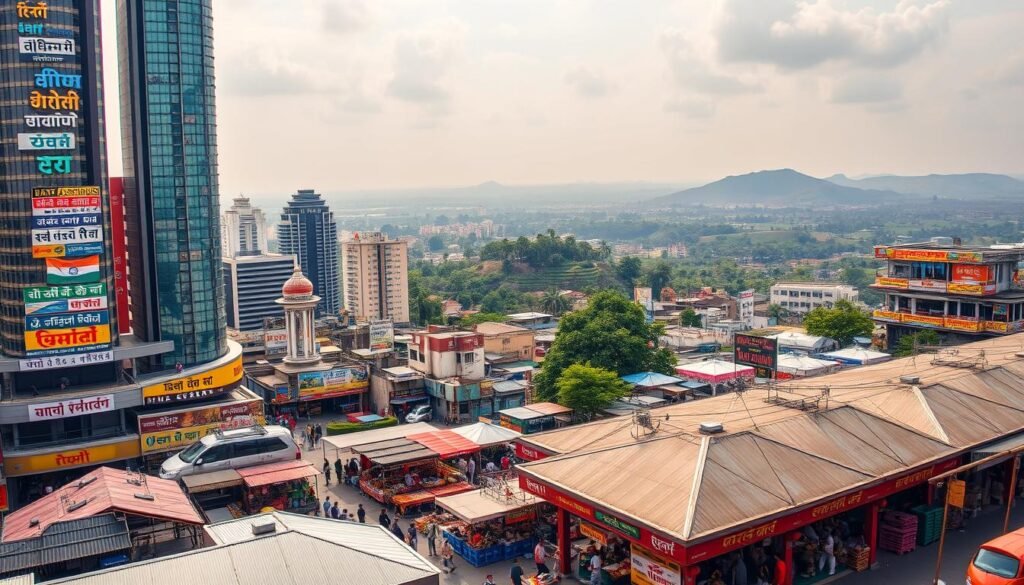
We explore possible futures for Indian languages. We suggest steps for engineers, educators, and communities. Technology, policy, and grassroots efforts will shape language use in cities and villages.
Understanding regional differences is key. This helps us know where to focus our efforts.
Emerging Trends in Language Use
Digital platforms are making local languages more visible. News apps, YouTube, and local interfaces are boosting exposure. This change is affecting how families consume media and access education.
New policies are opening doors for language use in exams and classrooms. The NEP-2020 and tools like Bhashini are expanding resources. These changes are reshaping language use in formal settings.
More companies are focusing on multilingual models. They’re investing in NLP, speech tech, and LLMs for Indian languages. Engineers working on open datasets will help make these systems a reality.
Revitalization Efforts
Community projects are documenting languages. Schools, cultural groups, and linguists are recording stories and creating lexicons. This effort is helping revive less common languages and strengthen local identity.
Introducing mother-tongue curricula in schools is crucial. Working with educators and speakers to create engaging materials boosts literacy. It also preserves regional language differences.
Digitizing manuscripts and folk literature is creating archives. Combining this with speech datasets and annotations makes these efforts sustainable. It benefits researchers and developers.
Here’s a practical guide for those involved:
- Focus on open, well-documented datasets for NLP and speech.
- Collaborate with linguists to establish standards for annotation and transcription.
- Work together to develop curricula that meet local language and cultural needs.
- Support community-led documentation and digital archiving projects.
We see these efforts as complementary. Technology increases visibility, while community programs ensure daily use. Together, they shape the future of Indian languages in education, media, and industry.
Influence of Colonial History
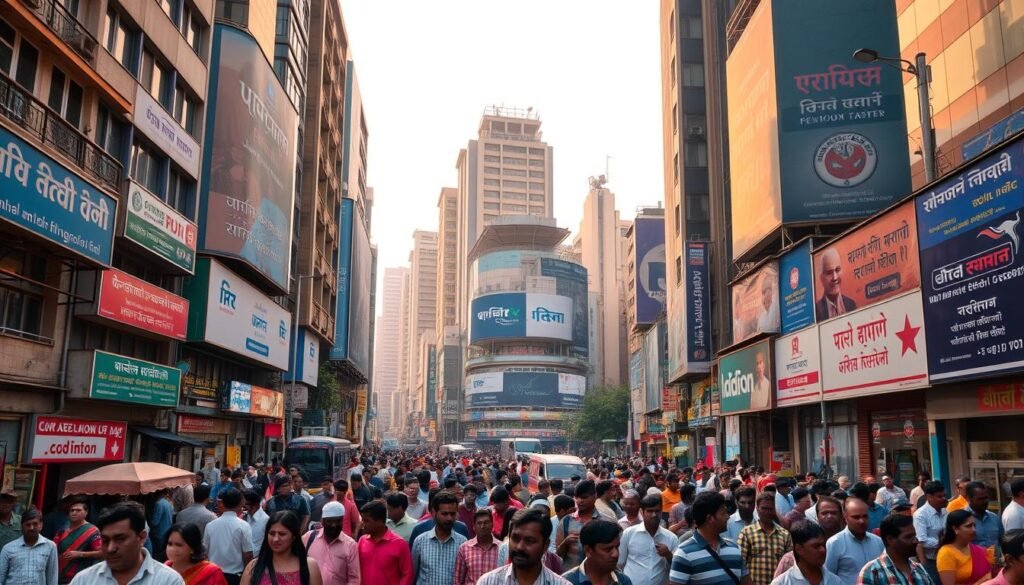
We explore how power has shaped language in India, affecting engineers, educators, and policymakers. The journey starts in Sanskrit courts, then moves to Persian chancelleries, and finally to British schooling and administration. Each phase left its mark on legal codes, curricula, and public life.
English in Modern India
English in modern India is both a legacy and a tool. The British made English a key part of courts, universities, and civil services. After independence, debates centered on Hindi and English, with English staying strong in education, law, and science.
This dominance offers global opportunities but also shapes elite circles. For language engineering, we face challenges like outdated English corpora and hybrid registers. We need to create specific terms in local languages for STEM and law to make them more accessible.
Historical Context of Regional Languages
Before the British came, Sanskrit and Persian were key languages for literature and administration. Persian thrived under the Mughals, while Hindustani and English became important in the 19th century. The 1956 reorganisation of states made political boundaries match mother tongues.
This history shows why people today want more use of regional languages. They want education and services in their languages to keep their culture alive and improve learning.
We need to create resources that honor this rich history. This includes corpus tools for Persian-influenced languages, digital dictionaries for various languages, and teaching methods that respect local cultures. These efforts help bridge the past with today’s need for inclusive services and education.
Linguistic Research and Documentation

We explore the Indian linguistic landscape through surveys, archives, and field studies. Our work includes creating grammars, audio collections, and orthography projects. These efforts help tech experts, teachers, and policymakers understand languages better.
Important institutions like the Central Institute of Indian Languages and Sahitya Akademi are key. They provide grammars, dictionaries, and maps. The People’s Linguistic Survey of India adds to census data and Ethnologue, documenting rare languages.
Fieldwork in linguistics is crucial for accurate documentation. Researchers gather data through interviews and audio recordings. This work helps create writing systems for unwritten languages and ensures community involvement.
Creating language corpora is vital for NLP tools. These resources help with speech recognition, translation, and text-to-speech systems. Engineers and linguists must collaborate to make these tools sustainable.
We compare research projects to guide future work:
| Project | Primary Output | Strength | Limitations |
|---|---|---|---|
| Grierson’s Linguistic Survey | Descriptive reports and classifications | Historical breadth across the subcontinent | Older methods, uneven field data quality |
| People’s Linguistic Survey of India | Contemporary profiles and community narratives | Emphasis on living practices and local voices | Variable coverage across regions |
| Anthropological Survey of India (People of India) | Ethnographic and linguistic inventories | Integrated social and linguistic context | Scope limits rapid updates |
| Central Institute of Indian Languages | Language teaching materials and grammars | Institutional support for preservation | Resource allocation varies by language |
| University language departments | Research theses, field reports, corpora | Academic rigor and training of students | Outputs depend on funding and collaboration |
We suggest partnerships with institutions and local communities for linguistic work. It’s important to follow ethical fieldwork practices and use open licenses. Long-term archiving is also crucial.
These steps ensure that language documentation is useful for both research and technology. They make linguistic work valuable for future generations.
Cross-Cultural Communication in India
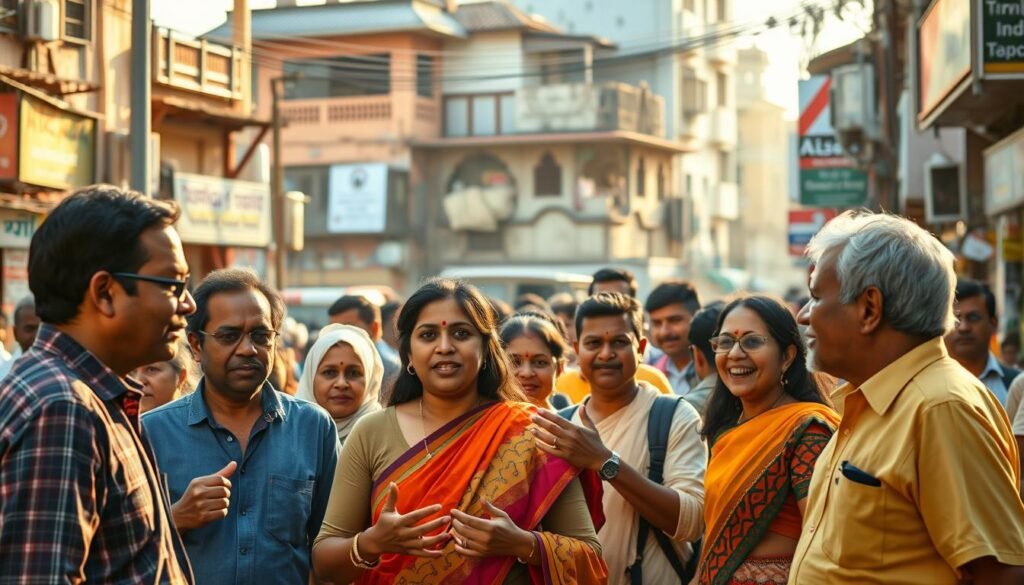
We look at how cross-cultural communication affects daily life in India. The country’s many languages lead to creative solutions. People mix languages, use common ones, and adjust to local dialects to communicate.
This is important for tech creators and teachers. They need to understand these practices to make tools and classrooms that work for everyone.
Multilingual Society Dynamics
In homes, markets, and media, we see a multilingual world. A child might hear Odia at home, use English for school, and watch Hindi TV. This flexibility helps communication but also presents challenges for tech and education.
Language choices have political meanings in many states. The debate over Hindi has led to protests in places like Tamil Nadu. Yet, English acts as a link to the world and helps people talk across states.
Teachers see code-switching as a plus for learning. Tech experts need to reflect this in their work, making tools that fit how people really speak.
Code-Switching Phenomena
Code-switching is common among all ages and on different platforms. Hinglish, regional-English mixes, and social media posts often use multiple languages. These are not mistakes but smart ways to communicate.
For tech, it’s key to model code-switching in AI systems. Training data should include mixed language examples. Teachers should see code-switching as a tool, not a problem.
| Context | Typical Mix | Design Implication |
|---|---|---|
| Home and Family | Local language + English (example: Odia + English) | Support mixed-script keyboards and phrase-level translation |
| Urban Street Speech | Hinglish and regional-English blends | Train speech recognition on code-switched audio samples |
| Social Media | Multilingual commentaries with slang and regional dialects | Use robust tokenization and slang dictionaries |
| Education | Mother tongue instruction with English support | Design curricula that leverage code-switching as scaffolding |
| Interstate Communication | English as lingua franca; Hindi in northern regions | Ensure cross-lingual resources and accessible translations |
Celebrating Linguistic Diversity
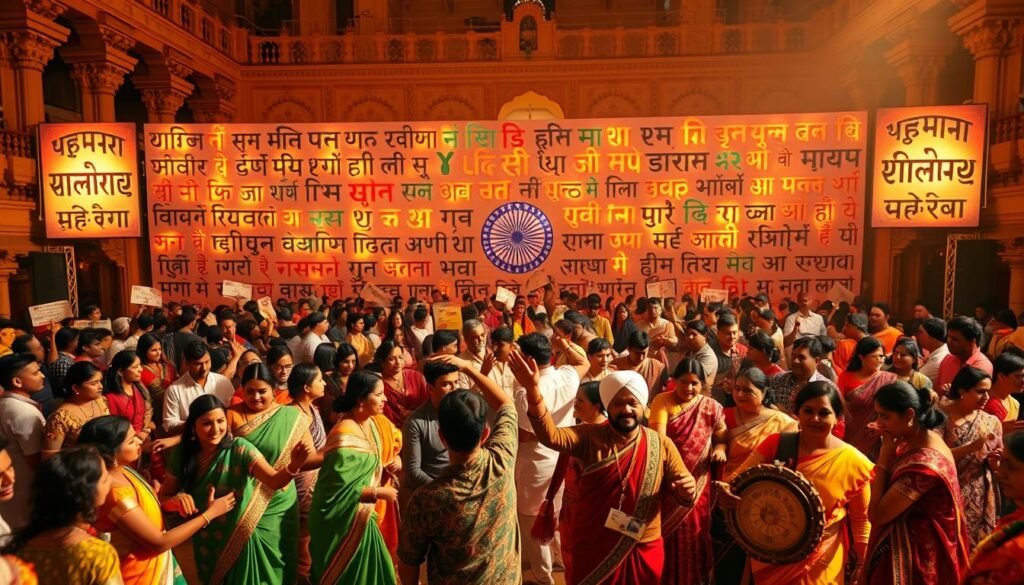
We celebrate linguistic diversity across India through public programs, education, and media partnerships. These efforts unite communities and keep India’s linguistic heritage alive. Engineers, educators, and cultural organizations work together to create digital tools for living languages.
Festivals and events showcase languages. State and national Sahitya Akademi programs offer poets and writers a platform in Telugu, Tamil, Marathi, Bengali, and more. Ek Bharat-Shreshtha Bharat initiatives sponsor dialogues that let learners explore different scripts and sounds.
Regional literary conferences, like state Sahitya Sabha meets and university festivals, support local publishing. Local book fairs, folk music gatherings, and film festivals highlight the importance of Indian languages. These events help schools and libraries use materials in mother tongues.
Media plays a big role in promoting languages. Regional newspapers, All India Radio broadcasts in many languages, and Doordarshan regional channels offer news, drama, and learning content. Over 200 PM e-Vidya channels deliver educational programs in regional languages to classrooms and homes.
Digital creators and film industries boost vernacular content. Tollywood, Kollywood, Marathi cinema, and regional music channels produce content that builds pride in mother tongues. Social media creators translate stories and create short-form content that engages younger audiences.
Government programs support classical languages and fund translations and educational resources. National leaders have recognized Tamil at international forums. Such recognition boosts the profile of regional tongues globally.
Technical teams can partner with cultural bodies to build archives, subtitling pipelines, and language tools. These collaborations expand reach and preserve language assets for future learners.
We believe that festivals and events, along with media’s role in language promotion, create strong ecosystems for Indian languages. This approach supports the long-term vitality of India’s linguistic heritage.
| Activity | Key Stakeholders | Impact on Languages |
|---|---|---|
| State Sahitya Akademi Programs | Writers, cultural ministries, universities | Strengthens regional publishing and teacher resources |
| Ek Bharat-Shreshtha Bharat Exchanges | State governments, schools, cultural NGOs | Promotes cross-regional learning and mutual respect |
| PM e-Vidya Educational Channels | Ministry of Education, broadcasters, teachers | Delivers curriculum in regional languages to remote areas |
| Regional Film and Music Industries | Producers, directors, musicians, streaming platforms | Popularizes vernacular narratives and modernizes tradition |
| Digital Archives and Language Tools | Engineers, linguists, cultural organizations | Preserves oral histories and enables searchable corpora |
Conclusion: Unity in Diversity
We’ve explored the rich tapestry of Indian languages. They belong to various families, including Indo-Aryan and Dravidian, Austroasiatic, and Tibeto-Burman. We also see many endangered tribal languages. This diversity shows that saving our languages requires teamwork.
The Importance of Respecting Language Differences
Respecting language differences goes beyond just words. It means creating inclusive education and technology. It also means funding language documentation.
Initiatives like NEP-2020 and platforms like Bhashini provide tools. But we must avoid forcing languages on others. Instead, we should follow the principle of pluralism.
Final Thoughts on India’s Linguistic Landscape
To make a difference, we need to take action. Tech experts should work on models that handle different languages. Teachers should create STEM materials in mother tongues and bilingual curricula.
Policymakers and cultural groups should support community-led language projects. This way, we can preserve the rich diversity of Indian languages. It’s a way to celebrate unity in diversity and a bright future for our languages.
We’re open to working together. If you have datasets, projects, or want to discuss partnerships, email info@indiavibes.today. Let’s move forward in this mission together.