



A recent detonator shortage has stopped underground coal mining in India. This problem affects big players like Coal India Limited. It’s not just about work stopping; it’s also a safety risk.
We’ll look into why there’s a detonator shortage. We’ll also see how it affects the coal industry. Knowing about this issue is key to facing the future of coal mining in India.
Understanding the Detonator Shortage in India
The detonator shortage in India is hitting the coal mining sector hard. Detonators are key for controlled explosions, needed to break rock and move minerals. The shortage comes from tough regulations and delays in making detonators, making it tough for mines to work well.
Government rules have made things worse, causing a block in the supply chain. Global issues have also added to the problem, causing big production setbacks. Coal mining companies are facing a big problem with detonator supply, risking their goals and the safety of their work.
It’s important to understand why there’s a detonator shortage in India’s coal mining. Fixing these issues can help make supply chains stronger. This is key for keeping coal mining going, which is vital for the country’s energy needs.
The Role of Detonators in Coal Mining Operations
Detonators are key in coal mining. They start the explosive reaction, breaking rock safely. The timing is critical for better work and safety. There are electric, non-electric, and electronic detonators, each with its own use.
Electric detonators use electricity to start the explosion. They are good for planned work. Non-electric detonators use shock waves from another explosive, safer in some cases. Electronic detonators offer the most precision, useful for complex mining tasks.
The shortage of detonators is a big problem. It hurts coal mining work in India, affecting production and safety.
Impact on Coal Mining Operations in India
The detonator shortage is causing big problems in coal mining across India. Mines can’t keep up production, affecting both big and small companies. This slowdown means higher costs for companies, making things even tougher.
This drop in productivity hurts companies’ finances right away. It also worries about their future. Companies might need to change how they work and manage their teams.
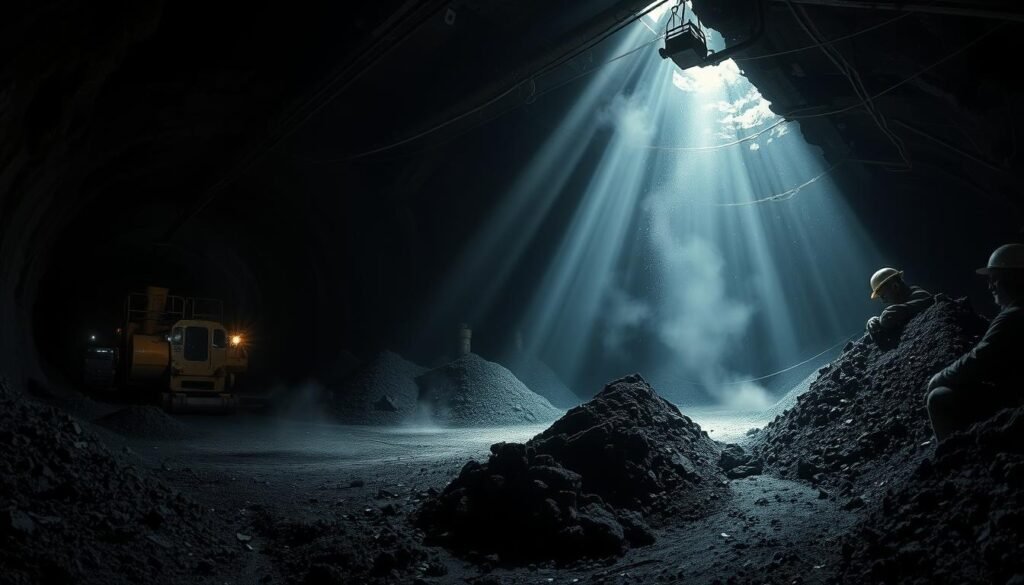
The shortage also threatens jobs and local economies that rely on mining. Keeping production levels up is a big challenge for companies. Those who can’t find new ways to work risk falling behind, showing the need for quick solutions.
| Company Type | Impact of Detonator Shortage | Potential Outcomes |
|---|---|---|
| Large Operators | Slowdown in production | Increased operational costs |
| Small Enterprises | Complete halt in operations | Revenue loss and job cuts |
| Local Communities | Decreased economic activity | Dependence on larger operators for jobs |
Coal Industry Dependency on Detonators
The coal industry in India heavily relies on detonators for extraction. This use of explosives makes operations efficient but also shows the risks in supply chains. Experts say that without enough detonators, mining operations could stop completely.
Recent studies show that up to 70% of mining operations face delays because of detonator shortages. This forces companies to change how they work to avoid these problems.
Looking closer at this issue, we see how critical a steady detonator supply is. To lessen these risks, companies might look into new explosives or make more locally.
| Aspect | Current Dependency Level (%) | Potential Risks |
|---|---|---|
| Operational Efficiency | 70 | Increased delays and costs |
| Supply Chain Stability | 65 | Frequent interruptions in operations |
| Technological Adaptation | 50 | Dependency on traditional methods |
Current State of Coal India Limited
Coal India Limited is the biggest coal producer in India. It faces many challenges. A big problem is the lack of detonators, which has slowed down mining.
This shortage has made it hard to keep up with production. Coal India Limited is now looking at new ways to work. It wants to find solutions to keep mining going.
Recently, Coal India Limited’s production has gone down. This change affects not just the company but the whole coal mining sector. Looking at the mining sites and their responses helps us understand the situation better.
Coal India Limited is trying to find new ways to deal with these problems. It’s focusing on finding solutions to keep production going. The company’s ability to adapt and find new solutions is key to its success.
The Economic Implications of the Detonator Crisis
The detonator crisis in the coal industry has big economic effects. It causes delays in mining, leading to higher costs. This hurts the profits of many involved.
Also, there’s a big risk of job losses. Workers who count on coal mining for their jobs face uncertainty. This affects not just them but also local businesses that depend on mining.
Other industries like transportation and manufacturing might also slow down. They need coal to keep running. The crisis shows how fragile the coal mining world is in India.

Mining Safety Concerns due to the Shortage
Mining safety is extremely important, even more so when there’s a shortage. In India, a detonator shortage is causing many risks. These risks affect the safety of workers in underground coal mines.
Without enough detonators, blasting can be dangerous. This increases the chance of accidents. Poor blasts can lead to rock falls or other hazards, putting workers at risk.
Keeping up with safety rules is key during this time. Companies must follow safety guidelines to protect their workers. Training and using the best mining practices can help. The industry needs to find ways to keep safety first, even when it’s hard.
Government Response to the Detonator Shortage
The Indian government has stepped up to tackle the detonator shortage. They’ve recognized the crisis and started several plans to help. Their main goal is to keep detonators flowing to keep mines running smoothly.
They’re looking at making rules easier for making detonators. This could help local factories make more and rely less on foreign supplies. It’s key to supporting the coal industry and getting mines back to work.
The government also wants to team up with private companies to improve detonator tech. This could lead to safer, better ways to mine coal. It’s important for India’s energy future.
| Initiative | Description | Expected Outcome |
|---|---|---|
| Regulatory Changes | Streamline approval processes for local detonator production | Increased domestic supply and reduced lead times |
| Public-Private Collaboration | Joint efforts to innovate in detonator technology | Improved safety and efficiency standards |
| Financial Support | Subsidies or incentives for local manufacturers | Stronger domestic industry and job creation |
The government’s plan shows their dedication to the coal industry. Their efforts will help now and make mining better for the future.
Alternatives to Traditional Detonators
With the detonator shortage ongoing, industries are looking for new ways to work efficiently and safely. Traditional detonators have been reliable for years. But now, new solutions are being considered that offer more flexibility.
One of these new methods is non-explosive demolition techniques. These techniques help solve the detonator shortage and also protect the environment. They are a big step forward in addressing the current challenges.
Many mining experts are now using water-soluble emulsions or other chemicals to start blasts. This move shows a big shift towards finding creative solutions. It’s exciting to think about how these new ideas will change mining in the future.
Coal Mining India: A Historical Perspective
To grasp the issues in coal mining India today, we must look back at its history. Coal mining in India started in the early 18th century. This period saw many changes that shape today’s mining practices.
In the beginning, coal mining was done by hand, mainly with manual labor. The first commercial coal mine opened in the 1770s. This was a big step forward for the Indian coal industry. Coal became key during the Industrial Revolution, powering steam engines and new industries.
By the 20th century, new technologies changed coal mining. Machines made mining faster and more efficient. But, these changes also made us rely more on tools like detonators for mining.
This journey shows the ups and downs of coal mining. Knowing this history helps us understand today’s problems, like the use of detonators. The history of coal mining is a story of technology and growth.
Future of the Coal Industry Amidst the Shortage
The detonator shortage is hitting the coal industry hard in India. Looking ahead, we must consider how production might recover and markets could change. With fewer detonators, mining slows down, cutting into coal output. This makes it hard to meet both local and global demand.
The industry might turn to sustainable methods. New mining tech could help reduce the need for traditional detonators. This shift could solve the current crisis and fit with the world’s move towards green practices.
As things change, everyone involved must work together. Partnerships between companies, governments, and researchers can help the industry stay strong. Keeping an eye on these changes will help us understand how India’s coal sector will face new challenges.
Stakeholder Reactions and Industry Feedback
The detonator shortage has caused a mix of reactions in the coal mining world. Workers are worried about safety and their jobs. They fear that the shortage could make mining more dangerous.
Many in the coal mining field say the government needs to act fast. They want to fix the supply chain problems quickly.
Coal mining company managers also share their concerns. They talk about how the shortage is affecting their work. They say it’s causing delays and hurting their profits.
They suggest finding new ways and technologies to solve the problem. This would help keep jobs safe.
Government officials are now talking about the issue too. They see how it could hurt the economy and the community. They want everyone to work together to find a solution.
They aim to listen to workers and managers. This way, they can find answers that help everyone in the coal mining world.
International Comparisons of Detonator Usage
Looking at how detonators are used around the world gives us important insights. Countries like Australia and the United States have their own rules for using detonators. This leads to different ways of managing the supply chain.
These international comparisons show how different countries deal with the need for reliable detonators. They also highlight the push for safer and more efficient mining methods.
In Australia, strict safety rules mean detonators must meet high quality standards. This affects how much they cost and how easy they are to get. The United States, on the other hand, uses many suppliers to avoid problems with getting detonators.
This strategy helps the United States deal with supply chain issues. It could also help India, which is facing a detonator shortage.
| Country | Regulatory Environment | Supply Chain Strategy | Impact on Detonator Usage |
|---|---|---|---|
| Australia | Strict Safety Standards | Single Supplier Preference | Higher Quality Control |
| United States | Flexible Regulations | Diversified Supplier Base | Reduced Risk of Shortages |
| South Africa | Moderate Regulation | Local and Import Sources | Cost-Effective Options |
Different countries face different challenges with detonators. By looking at how others handle these issues, India can learn. It can make changes to stay safe and efficient, even when facing shortages.
Long-term Solutions to Prevent Future Shortages
The coal mining industry is facing big challenges, like the ongoing detonator shortage. We need to focus on long-term fixes to make our supply chain stronger. This includes boosting local manufacturing. By acting now, we can lower the chance of future detonator shortages.
One good way is to use new coal mining strategies. These could include finding better ways to detonate materials. Also, training local makers can help them produce more quickly when demand goes up.
Creating partnerships between mining and tech companies is another idea. This could lead to new, better ways to detonate. Such partnerships could bring big changes, making our supplies more reliable for the future.
| Strategy | Description | Expected Outcome |
|---|---|---|
| Local Manufacturing | Building facilities for in-country production of detonators | Reduced reliance on imports |
| Alternative Technologies | Investing in new methods for detonation | Increased reliability and safety of mining operations |
| Collaboration | Partnering with tech firms for R&D | Innovation in detonation technology |
By using these long-term solutions, we can make India’s coal mining future better. With the right steps, we can avoid shortages and keep mining running smoothly across the country.
Technological Advances in Mining and Detonation
New technologies in mining and detonation are changing the coal industry. They make it more efficient and safer. Mining tech now helps extract resources better and hurts the environment less.
Also, digital blasting solutions are becoming popular. They make detonation better and cut down on old-fashioned detonators.
Automation in mining is another big step forward. Robots and AI help make mining safer and more reliable. This means less human mistakes and more precise blasts.
The table below shows some key tech changes in coal mining:
| Technology | Description | Benefits |
|---|---|---|
| Digital Blasting Solutions | Tools that assist in real-time monitoring and coordination of blasts | Increased accuracy, reduced waste, enhanced safety |
| Automation Systems | Robotic and AI systems for mining operations | Improved efficiency, lower labor costs, reduced risks |
| Smart Detonators | Advanced detonators that can be programmed for precise timing | Higher control over blasts, minimized environmental impact |
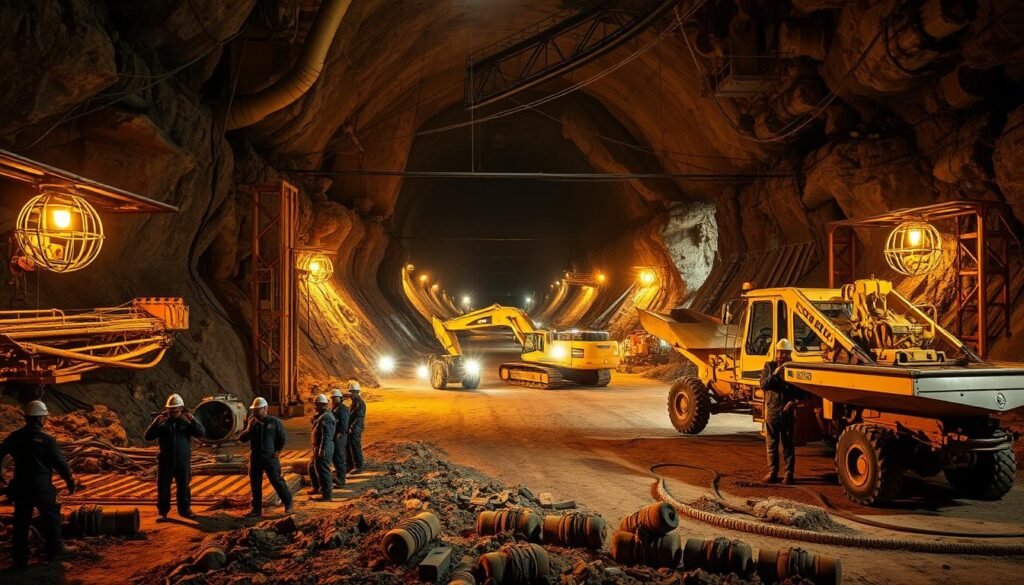
The coal industry is getting better with these new techs. It’s becoming more productive and less reliant on old ways. The future of mining looks bright with these innovations, leading to a safer and more efficient industry for everyone.
Public Awareness and Its Role in the Mining Sector
It’s key to raise awareness about mining sector challenges to build support and resilience. The current detonator shortage highlights big issues that need everyone’s focus. By educating stakeholders, we can build a community that supports sustainable mining.
Community engagement helps connect the mining industry with the public. Talking openly about challenges and safety builds trust and openness. This talk informs and empowers people to help shape mining discussions.
Boosting public awareness is vital for a stronger mining sector. Educational efforts can shed light on mining’s complexities and the need for responsible actions. Good communication encourages people to get involved in managing resources and caring for the environment.
A well-informed public can lead to positive changes. When people grasp the importance of mining and its effects, they can push for new solutions. Together, we can create a greener future for mining.
| Aspect | Description |
|---|---|
| Public Awareness | Understanding the challenges faced by the mining sector, including the detonator shortage. |
| Community Engagement | Getting the public involved in talks about mining and its effects. |
| Transparency | Open talks between mining companies and communities to build trust. |
| Sustainable Practices | Encouraging actions that protect the environment and ensure resources last. |
Conclusion
The detonator shortage has hit coal mining in India hard. It’s not just about safety; it’s also about keeping production going and the economy stable. These tools are key to keeping mines running smoothly and safely.
But, we can get through this tough time. By finding new ways to solve the problem, we can make coal mining better. Working together, investing in new tech, and making rules clearer can change things for the better.
As we deal with this crisis, we all have a role to play. We need to work together to make coal mining strong and lasting. This way, we can overcome today’s challenges and build a better future for coal mining in India.