



Exploring Kanchenjunga, the third-highest mountain, reveals more than just stunning views. It shows us a world full of life and color. This mountain, in the Sikkim range, is a key part of the ecosystem. It’s home to many plants and animals that make this place special.
We want to share the wonders of Kanchenjunga and its surroundings. We focus on why protecting the environment is so important. From the high peaks of Sikkim to the rich culture that lives with nature, we hope to inspire a love for this unique place.
Introduction to Kanchenjunga
Kanchenjunga is the crown jewel of Sikkim, blending natural beauty with rich culture. It stands at 8,586 meters, attracting climbers, trekkers, and nature lovers. The area around it is filled with lush valleys and diverse ecosystems, home to many plants and animals.
But Kanchenjunga is more than just a beautiful mountain. It’s vital to the local ecosystem and deeply rooted in Sikkimese culture. We’ll explore its geographical and cultural importance, deepening our respect for this iconic peak.
The Significance of Kanchenjunga
Kanchenjunga is more than a stunning mountain. It’s a natural landmark and a symbol of strength for Sikkim’s local communities. It holds deep spiritual meaning, often revered in rituals and legends. This shows how people and nature are deeply connected.
Looking into Kanchenjunga’s significance helps us understand its role in the Himalayas. It’s not just a pretty view; it’s home to many plants and animals. Seeing its value reminds us of our duty to protect it.
Sikkim Mountain and Its Majestic Peaks
The Sikkim Mountain region is a stunning sight. It has dramatic elevations and natural beauty. In the heart of the Himalayas, Sikkim Mountain is home to the world’s tallest peaks, like Kanchenjunga. This attracts adventurers and nature lovers.
Overview of Sikkim Mountain’s Geography
Sikkim’s geography is diverse, with climates from subtropical to alpine. The peaks stand out against the sky, each unique. The terrain, from steep ridges to calm valleys, is home to rich biodiversity. Travelers enjoy the flora and fauna amidst breathtaking views.
Adventure Opportunities on Sikkim Mountain
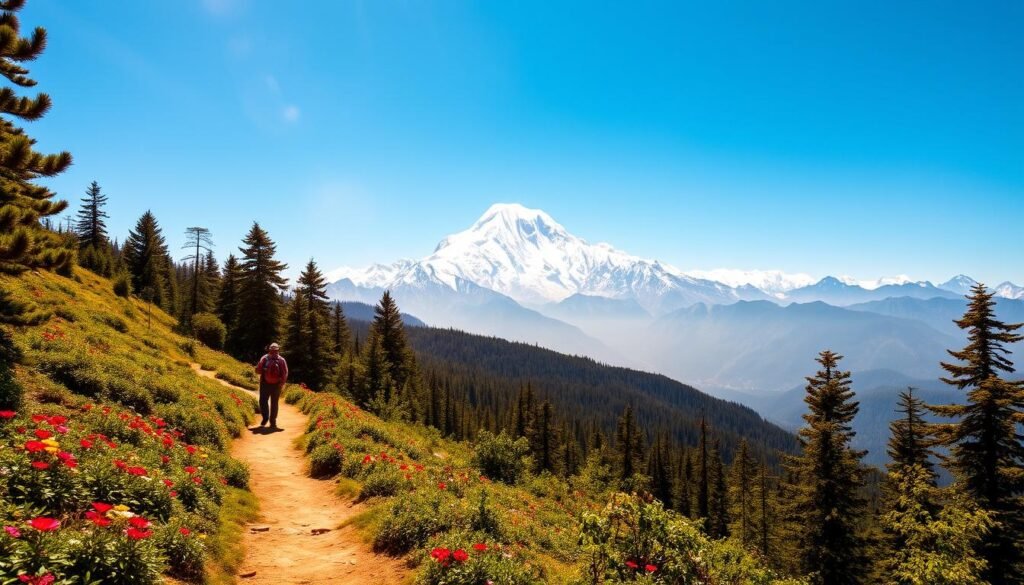
Thrill-seekers find many adventures in Sikkim Mountain. Trekking takes you through forests and meadows to stunning views. Mountaineering and rock climbing let adventurers reach the peaks. Eco-tourism promotes exploring this untouched environment sustainably. Each activity connects visitors with Sikkim’s stunning geography.
The Flora of the Himalayan Region
The Himalayan region is famous for its plant diversity. It has a wide range of plants that grow in different climates and places. From lush forests to alpine zones, each area has plants that can live there.
Diverse Plant Life Found in the Region
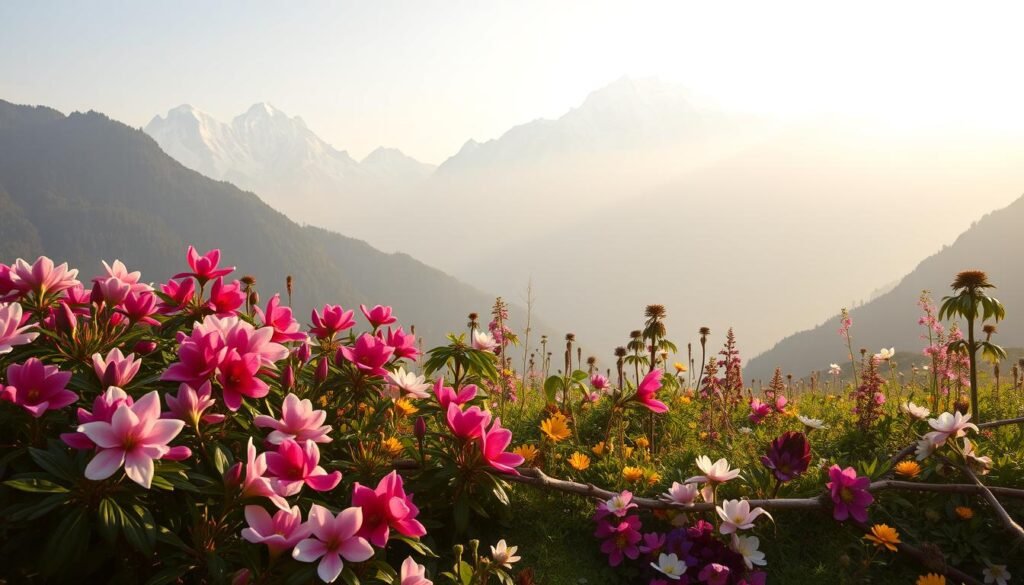
In the Himalayas, you can find tall conifers, colorful rhododendrons, and small alpine herbs. The different heights and climates help make the region’s plant diversity so rich. Plants like the Himalayan black juniper and the blue poppy show how well they can adapt to tough places.
Medicinal Plants Native to the Himalayas
The Himalayas are full of medicinal plants of Sikkim. For a long time, people have used these plants to heal. For example, *Aconitum* and *Saussurea costus* are important in local medicine. They help with many health problems. This shows how important it is to protect these plants.
The Fauna of Kanchenjunga
The Kanchenjunga region is home to a wide variety of wildlife. It has stunning landscapes and supports endangered species. These ecosystems are delicate and need to be protected.
Endangered Species in the Region
In Kanchenjunga, we find endangered species like the snow leopard and the red panda. The snow leopard is a symbol of a healthy ecosystem. But, its numbers are falling due to habitat loss and poaching.
The red panda is known for its beauty and gentle nature. It faces challenges that threaten its survival. Both species are important to the region’s wildlife.
Unique Wildlife Habitats
The Himalayan habitats around Kanchenjunga are diverse. They support different ecological communities. Alpine meadows and dense forests are key habitats for endangered wildlife.
The combination of altitude, climate, and vegetation makes these habitats fragile. Protecting them is essential for species like the snow leopard and red panda. They depend on these habitats for food and shelter.
Himalayan Biodiversity Hotspot
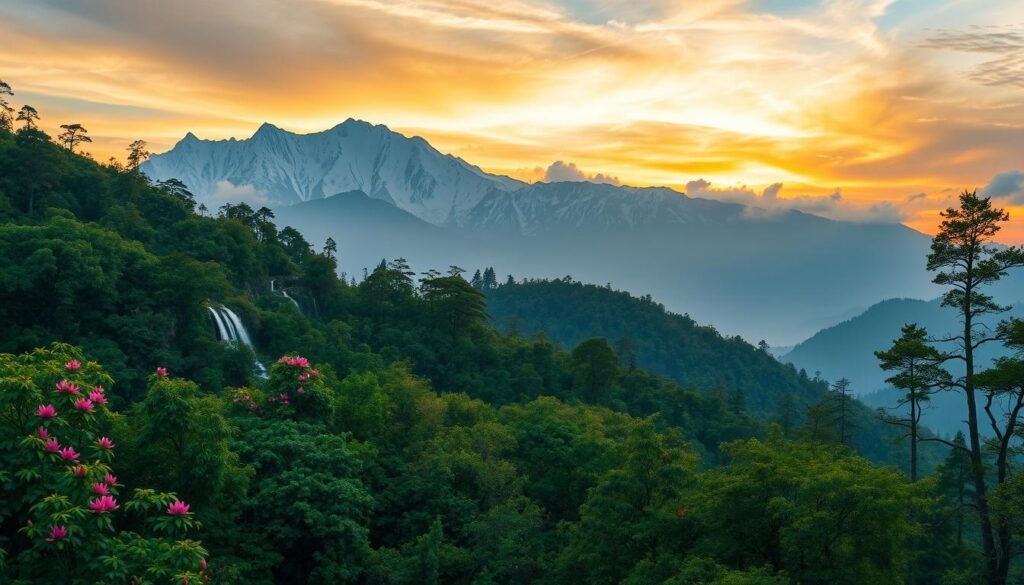
The Himalayan region is a key biodiversity hotspot globally. It’s home to a wide variety of plants and animals. The area’s unique ecosystems are both valuable and essential for our planet’s health.
In the Himalayas, different species live in their own special places. The region’s changing climates and heights create many habitats. These habitats are home to countless living things. This rich biodiversity is not just beautiful but also vital for our survival.
It’s important to act fast to save this biodiversity. We need to use sustainable ways to protect the Himalayas. Working together to keep these ecosystems safe will help our environment and future.
Climate and Its Impact on the Ecosystem
The Himalayan climate is diverse, shaped by altitude and weather. This variety is key to the region’s ecosystems. It shows how delicate the balance is for life to thrive.
Changes in temperature, humidity, and rain affect habitats. This can change where species live and how they interact. For example, some plants do well in warmer weather, while others might disappear if they can’t adapt fast enough.
Climate change in Sikkim brings big challenges. Glaciers melt faster, weather is more unpredictable, and extreme events happen more often. It’s urgent to act together to save the Himalayas’ unique ecosystems.
Understanding climate and ecosystems is vital. It highlights the need for conservation and sustainability in the face of climate change.
The Cultural Heritage of Sikkim
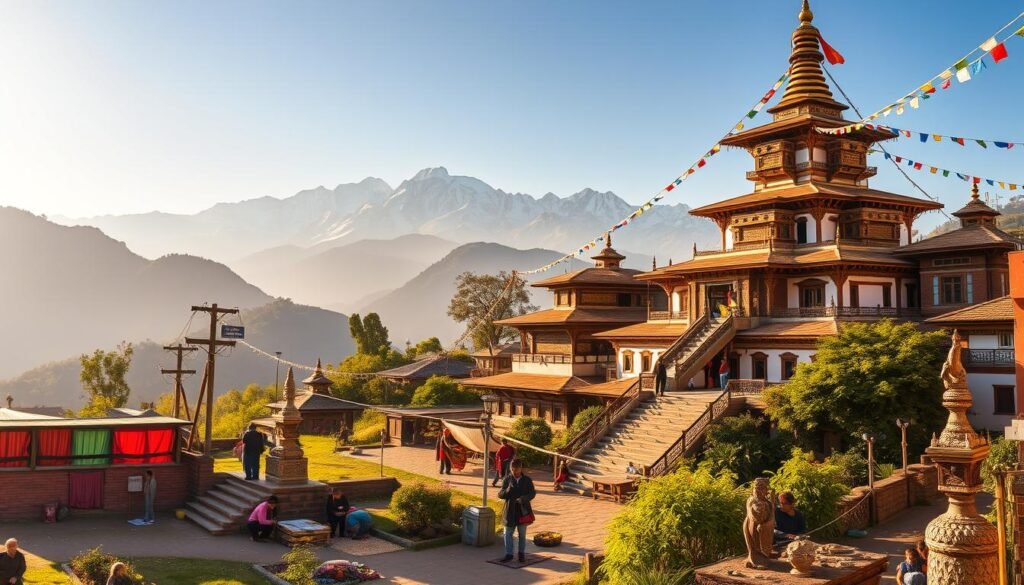
Sikkim’s rich cultural heritage shows a deep bond with nature. Local communities keep traditions alive. These traditions not only strengthen their identity but also help the environment. This shows how important it is to protect both culture and nature.
Local Communities and Their Connection to Nature
In Sikkim, people live in harmony with nature. Their lives are shaped by the mountains and valleys. Sustainable farming is key to this balance, keeping Sikkim’s culture alive for generations.
- Utilization of indigenous knowledge for agriculture
- Respect for local ecosystems through traditional land use
- Integration of festivals that celebrate the environment
Traditional Practices and Conservation
Traditional practices in Sikkim highlight the value of community conservation. Rituals and ceremonies show respect for nature. They teach us about the importance of protecting our land.
- Medicinal plant usage rooted in ancestral knowledge
- Community-led initiatives to restore natural habitats
- Collaboration with local organizations to enhance environmental awareness
Conservation Efforts in Kanchenjunga
Kanchenjunga’s conservation efforts are key to saving its stunning biodiversity. National parks and protected areas are essential for protecting the unique ecosystems. We will explore why these areas are vital and the challenges in conserving biodiversity.
National Parks and Protected Areas
The Khangchendzonga National Park is a key conservation site in Kanchenjunga. It protects a wide range of plants and animals. The park also supports sustainable tourism, letting visitors enjoy nature responsibly.
Efforts like habitat restoration and wildlife monitoring are underway. These show the success of well-planned conservation.
Challenges Facing Biodiversity Conservation
Even with protected areas, biodiversity faces many challenges. Habitat loss from urbanization, agriculture, and climate change is a big threat. Poaching also harms wildlife, making species more vulnerable.
Working together is essential. Local communities, governments, and conservation groups must join forces. They need to find effective ways to tackle these problems and protect Kanchenjunga’s ecosystems.
Visiting Kanchenjunga: What to Know
If you dream of seeing Kanchenjunga’s beauty, knowing a few things first is important. This place is known for its amazing views and special environments. We have some travel tips and advice on when to go to make your trip unforgettable.
Travel Tips for Exploring the Region
Getting ready for Kanchenjunga is key for a safe and fun trip. Here are some tips to help you:
- Research local regulations: Learn about any rules, like those for protecting nature.
- Pack wisely: Bring the right gear for hiking, like strong shoes and a waterproof jacket.
- Drink plenty of water: It’s important to stay hydrated, as water might be hard to find.
- Respect local customs: Be kind to the local people and their traditions.
Best Times to Visit for Nature Enthuasiasts
The best time to see Kanchenjunga changes the experience. Each season brings its own beauty:
- Spring (March to May): It’s a colorful time with flowers everywhere, and the weather is nice.
- Autumn (September to November): The skies are clear, and the mountains look amazing, great for photos and hikes.
Impact of Climate Change on Biodiversity
Climate change is a big problem for biodiversity, hitting the Himalayas hard. It brings rising temperatures, changes in rain, and faster glacier melting. These changes hurt the plants and animals living there and the people who rely on them.
Habitat loss is a big issue. As it gets warmer, animals move to cooler places. This messes up the balance of nature and can lead to more competition for food. Also, weather changes mess up the life cycles of many species, affecting when plants bloom and animals breed.
Looking at the bigger picture, we see how important it is to protect biodiversity. Working with local communities is key. It helps save ecosystems and supports people’s lives. By working together, we can find new ways to make nature and people more resilient against climate change.
Success Stories in Himalayan Conservation
The Himalayas are seeing a rise in hope, thanks to amazing conservation success stories. Local groups and national organizations are leading the way. They show how hard work can protect our environment. Community projects across the region are linking nature and people’s lives together.
Indigenous tribes are using traditional ways to save the wilderness. These methods protect nature and keep local culture alive. By working together, communities are making sure plants and animals have a good home.
Reforestation efforts by villagers are making a big difference. They plant trees that help many animals. Education programs also help, teaching people why the Himalayas need to be saved.
Working with environmental groups has made things even better. They bring in more resources and knowledge. These partnerships are setting new goals in conservation. They show us that we can have a future where nature and people thrive together.
Future of Kanchenjunga and Its Biodiversity
The future of Kanchenjunga is a shared responsibility for biodiversity sustainability. We must adopt new conservation methods to protect this unique ecosystem. Using technology can help us monitor and respond to environmental changes better.
Working together, local communities, scientists, and policymakers will shape Kanchenjunga’s future. We need to focus on saving habitats and protecting species. Community involvement is key to sustainable practices and a strong connection with nature.
We aim to find ways to balance human activities with nature’s needs. Success depends on our shared dedication to biodiversity sustainability. This way, Kanchenjunga will continue to flourish for future generations.
Conclusion
As we wrap up our journey through Kanchenjunga and the Himalayas, we see its great importance. This place is not just beautiful but also a home for many species. It shows how our environment, culture, and community are all connected.
We’ve learned the importance of taking care of our planet. By facing the challenges of Kanchenjunga and helping with conservation, we can live in harmony with nature. It’s key to keep this special place alive for those who come after us.
The true beauty of Kanchenjunga is in its stunning landscapes and the stories they tell. It’s our duty to protect these wonders. We must act on our love for Kanchenjunga, working towards a better future for all.