



We started with a 6-foot balcony in Pune and turned it into a mini garden. We used two clay pots, some seeds, and a water can. We grew cherry tomatoes and fresh coriander. This small victory made us see urban gardening as a smart choice for better living.
This guide is for engineers, students, and educators who want to garden on their balconies. We’ll teach you about the right pot sizes, how to check the light, and how to manage water. This way, you can grow vegetables on your balcony with ease.
Urban gardening offers more than just food. It boosts your mood, reduces stress, and gives you pesticide-free food. It also saves money. Whether you dream of a big rooftop garden or a small balcony one, we aim to make it easy and exciting.
We welcome your help and questions at info@indiavibes.today. Let’s explore urban gardens in India together.
The Importance of Urban Gardens in India
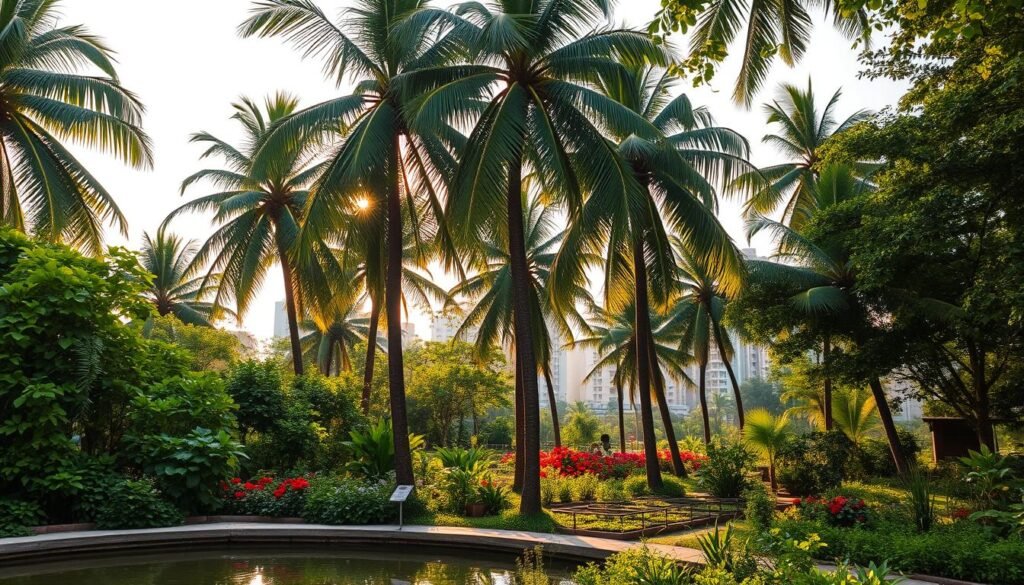
We think small green spaces can change city life. Urban Gardens in India are like living walls. They cool buildings, soften the heat, and bring nature back to cities.
From small balconies to big vertical gardens, they connect health, nature, and food. This makes cities better for everyone.
Enhancing Air Quality
Plants on balconies and terraces clean the air. Areca palm and money plant are good for indoor spaces. They help remove pollutants.
When people garden sustainably, it makes a big difference. It improves the air for everyone nearby.
Promoting Biodiversity
Even small containers can help pollinators. Flowers like marigolds and nasturtiums attract beneficial insects. Planting tomatoes with basil helps control pests naturally.
This supports bigger efforts to protect urban biodiversity. It helps the whole community.
Supporting Local Food Security
Balcony and rooftop gardens give fresh, clean food. You can grow cherry tomatoes, green chillies, and more. It’s a way to have food without relying on long supply chains.
When we garden sustainably, it helps more people. It grows green spaces and supports a healthier city life.
| Benefit | Examples for Small Spaces | Practical Impact |
|---|---|---|
| Air quality improvement | Areca palm, pothos, snake plant | Lower indoor-outdoor PM, cooler microclimates |
| Pollinator support | Marigold, nasturtium, bougainvillea | More bees and beneficial insects, better pollination |
| Food security | Cherry tomatoes, coriander, spinach, dwarf citrus | Fresh produce, reduced supply chain reliance |
| Community scale effects | Rooftop farms, community plots, balcony networks | Expanded green spaces in Indian cities, urban biodiversity conservation |
Selecting the Right Space for Your Balcony Garden
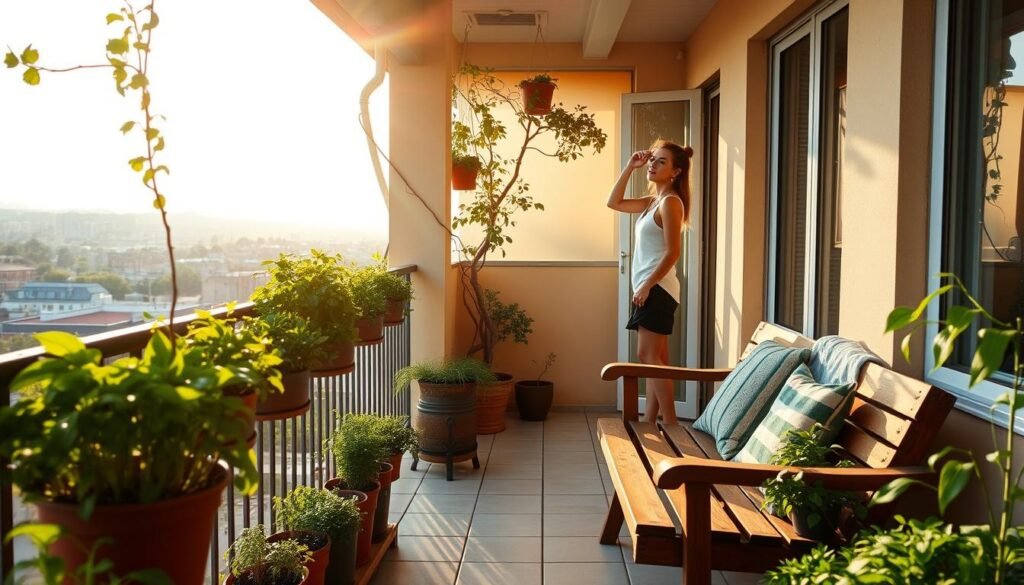
We start by matching the site to the plants’ needs. We look for sun, shelter from wind, and safe weight limits. Small changes, like moving a pot or adding a trellis, can make a big difference. These steps help make rooftop gardens in cities work well and support vertical gardening in urban areas.
Assessing Sunlight and Shade
First, watch the sun’s path on the balcony for a few days. South- and west-facing spots get 6–8 hours of direct sun. This is great for tomatoes and chillies.
North-facing spots get less sun, about 4 hours. They’re perfect for leafy greens and herbs.
Remember, the sun changes with the seasons. Monsoon clouds block light, summer sun can be too strong, and winter days are shorter. Morning sun is best for tender greens, while late afternoon sun is better for heat-tolerant plants.
Also, check the wind and shelter. High-rise winds can dry out plants. Use windbreaks, heavier soil, and strong supports for climbing plants.
Measuring Available Area
Do a quick count of the space: floor area, railing length, wall space, and any spots for hanging baskets. Measure in centimeters and note the safe weight limits. This helps decide between big pots or a vertical planter.
Match pot sizes to the plants: 30–45 cm pots for tomatoes and eggplants, and 15–20 cm pots for herbs. Choose lighter containers like plastic or resin for safety.
Here’s a quick guide for planning your garden:
| Item | What to Measure | Practical Target |
|---|---|---|
| Sun hours | Direct sunlight per day | 4 hrs for greens; 6–8 hrs for fruiting crops |
| Floor area | Square centimeters or meters available | Space for 6–8 large pots or vertical planter |
| Railing length | Linear centimeters for planter boxes | Choose railing planters to extend growing area |
| Wall space | Available vertical surface | Install modular vertical systems for herbs |
| Wind exposure | Average wind speed and gusts | Provide windbreaks or heavier pots |
| Load limit | Building or balcony weight capacity | Prefer lightweight pots for high floors |
Designing your garden is simple. Use floor pots for big veggies and hanging baskets or vertical systems for herbs and small greens. This way, you get the most out of your space, following urban gardening tips for Indian cities and rooftop gardens.
Choosing the Best Plants for Indian Climates
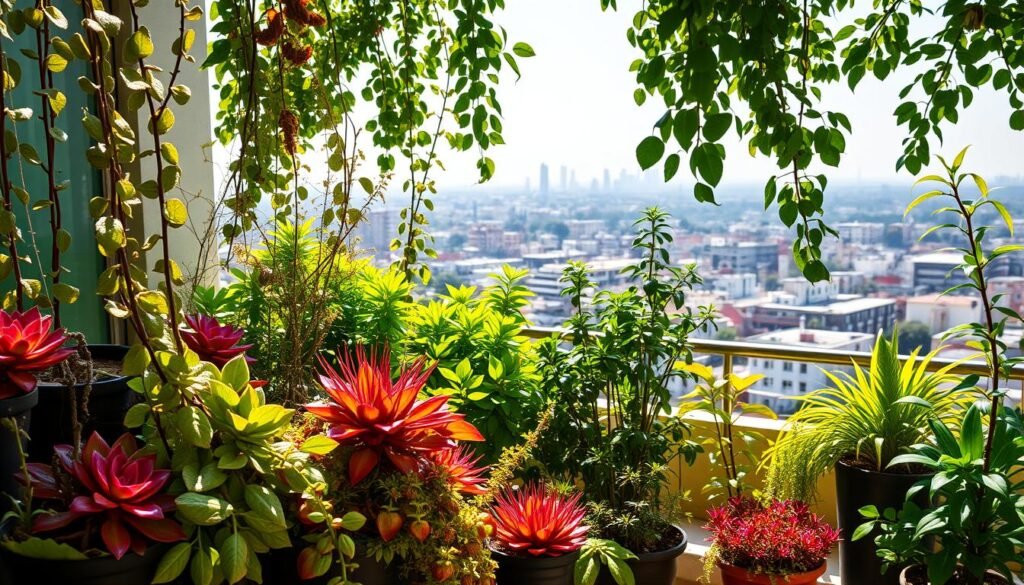
We match plants to balcony conditions like sun, shade, wind, and pot depth. The best plants for Indian balconies are compact and tough. They do well in small soil and changing city weather.
Native Indian Plants
Native Indian plants are strong and easy to care for. Tulsi (Holy Basil) is great for containers and has health benefits.
Neem in dwarf form keeps pests away when you have space. For bigger terraces, Ashoka and Kadamba are good in large planters or near the house. Choose bonsai or dwarf varieties for balconies.
Edible Herbs and Vegetables
Edible herbs and vegetables are key in urban gardening in India. They save trips to the market and boost food security at home. Start with cherry tomatoes, green chillies, and compact brinjal varieties for high yields in pots.
Seasonal choices are important. In summer, grow tomatoes, chillies, and okra. During monsoon, pick spinach, methi, and coriander. Winter is best for carrot, radish, beetroot, peas, and cabbage. Spring onions, lettuce, and quick-growing greens fill gaps between longer crops.
Culinary specialty plants add flavor depth. Curry leaf and Thai basil are great for Indian and Southeast Asian cooking. Dwarf guava or lemon trees give container fruits with deep pots and regular feeding.
Practical tips: use bush or dwarf cultivars for containers. Keep mint in its own pot to prevent it from taking over. Match plant choices to your sun exposure and pot depth for consistent success.
For winter-flowering companions, see this practical winter list from Urban Plant for planting windows and light requirements: winter flower plant guide.
| Category | Recommended Varieties | Container Notes |
|---|---|---|
| Native Indian Plants | Tulsi, Dwarf Neem, Ashoka (large pots) | Use deep pots for roots; choose dwarf forms for balconies |
| Edible Herbs | Coriander, Mint, Fenugreek, Thai Basil, Curry Leaf | Keep mint isolated; use 6–10 inch pots for most herbs |
| Vegetables | Cherry Tomato, Green Chilli, Brinjal (compact), Spinach, Carrot | Tomatoes need 10–15 inch pots; root crops need 8–12 inches depth |
| Container Fruits | Dwarf Guava, Patio Lemon | Use large, stable containers and regular fertilization |
Essential Gardening Tools for Beginners
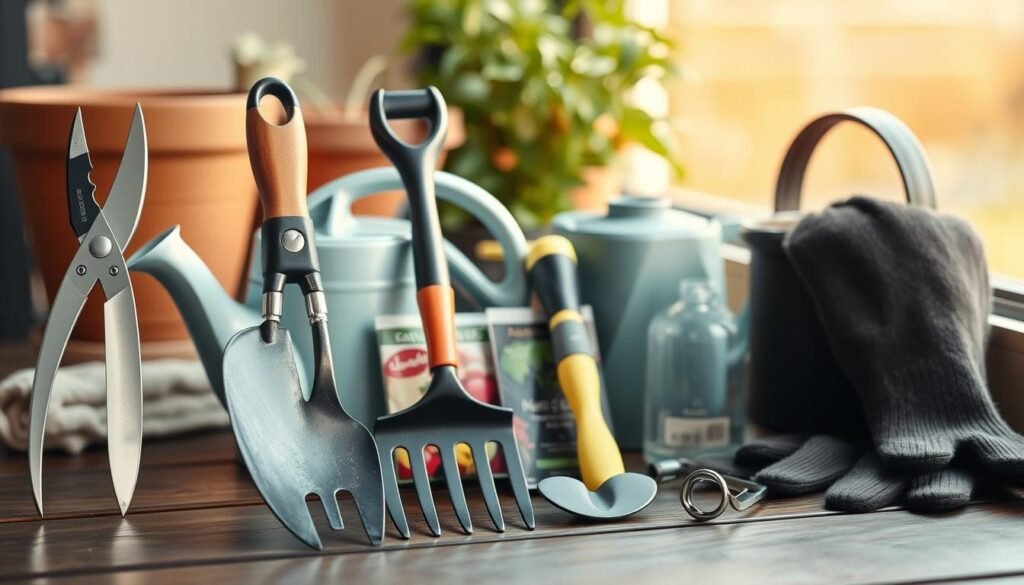
We start with a simple list that turns a small balcony into a garden. The right tools save time, ease strain, and help us garden sustainably from the start.
Basic tools you need
Get a hand trowel, transplanter, and small rake that fit in tight spots. Pruning shears from Fiskars or ARS are great for herbs and small shrubs. Choose stainless-steel or high-carbon steel for lasting quality. Don’t forget gardening gloves, seedling trays, and a soil scoop for easy planting.
Watering and maintenance equipment
Begin with a watering can that has a fine rose for seedlings. A light hose with an adjustable nozzle is handy for bigger pots. Use moisture meters or the finger test to avoid too much water. Self-watering pots and capillary mats help save water and are good for the planet.
Ergonomics and efficiency
Opt for lightweight plastic pots to ease strain on railings and backs. Vertical racks and railing-mounted boxes save floor space and make upkeep simpler. For those doing experiments, modular systems and labeled plant tags help keep things organized.
Maintenance supplies
Have organic compost and slow-release fertilizer ready to feed your plants. Use neem oil or biopesticides for pest control. Sturdy stakes or tomato cages support climbers and heavy plants, reducing damage.
These tools and watering gear make sustainable gardening easy and affordable. They’re key for busy city folks who want to garden.
Creative Container Ideas for Your Urban Garden
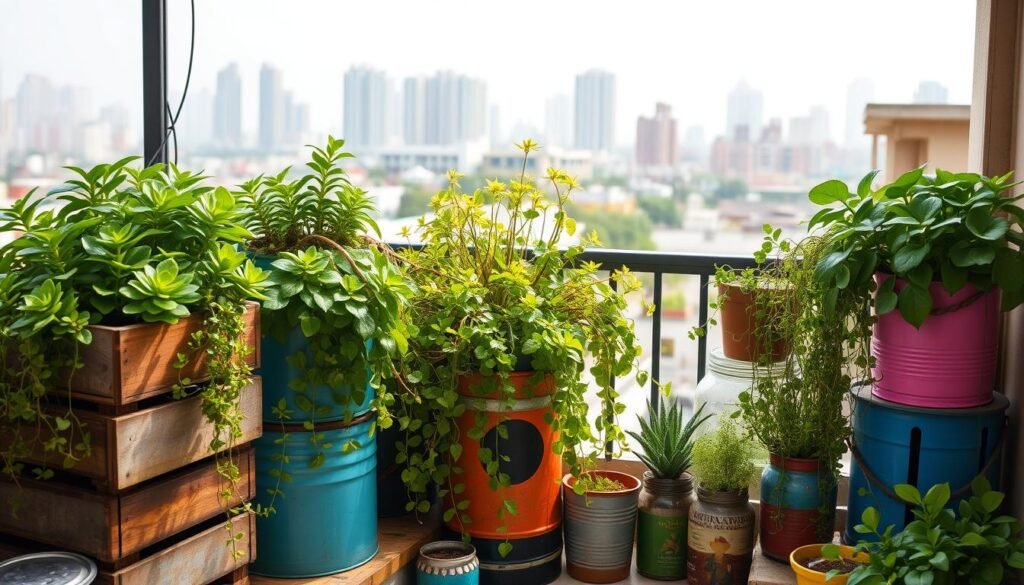
We design balcony layouts that blend usefulness with beauty. Small spaces in Urban Gardens in India demand clever choices. Containers should save weight, allow drainage, and fit a daily routine. Below we share practical container ideas for high-rise terraces, narrow ledges, and shared courtyard plots.
Repurposed Household Items
We turn common items into repurposed planters. Plastic buckets for chillies, tin cans for basil, and reclaimed wooden crates for mixed salad greens. Drill drainage holes and line wooden boxes with pond liner to protect balcony floors.
To cut weight, we recommend using coconut coir or perlite mixes. These are lighter than heavy garden soil. Stack foam sheets under containers to cushion surfaces and reduce water marks.
Stylish Planters and Pots
Choose terracotta where breathability matters and lightweight plastic when a railing carries limited load. Self-watering containers keep herbs thriving during busy weeks.
Railing planters and hanging baskets work well for coriander and mint. Use vertical gardening in urban areas with pocket systems for lettuce and small herbs. Keep deeper pots for carrots and beets to preserve root depth.
We mix flowering edibles—nasturtiums and marigolds—with vegetables. This deters pests and lifts the visual impact. Multi-tiered shelving helps layer sun needs: sun-loving pots on top, shade-tolerant ones below.
Safety matters: inspect rail attachments, spread weight evenly, and avoid heavy ceramic on high floors. When in doubt, prefer lightweight composites from brands like Ugaoo or Groweasy for balcony use.
| Container Type | Best Use | Weight | Maintenance |
|---|---|---|---|
| Recycled Plastic Buckets | Chillies, tomatoes, herbs | Low | Drill holes; use coir mix |
| Reclaimed Wooden Crates | Mixed salad greens, shallow roots | Medium | Line with waterproof liner; check for rot |
| Terracotta Pots | Tomatoes, peppers, ornamentals | High | Frequent watering; breathable soil |
| Lightweight Plastic Planters | Balconies with load limits | Very low | Choose UV-stable plastics; use self-watering inserts |
| Hanging Baskets & Railing Boxes | Herbs, trailing flowers | Low | Secure attachments; water more often |
| Vertical Pocket Systems | Herbs, lettuce, small greens | Low to Medium | Ensure even irrigation; rotate pockets seasonally |
Soil and Fertilization Tips for Thriving Plants
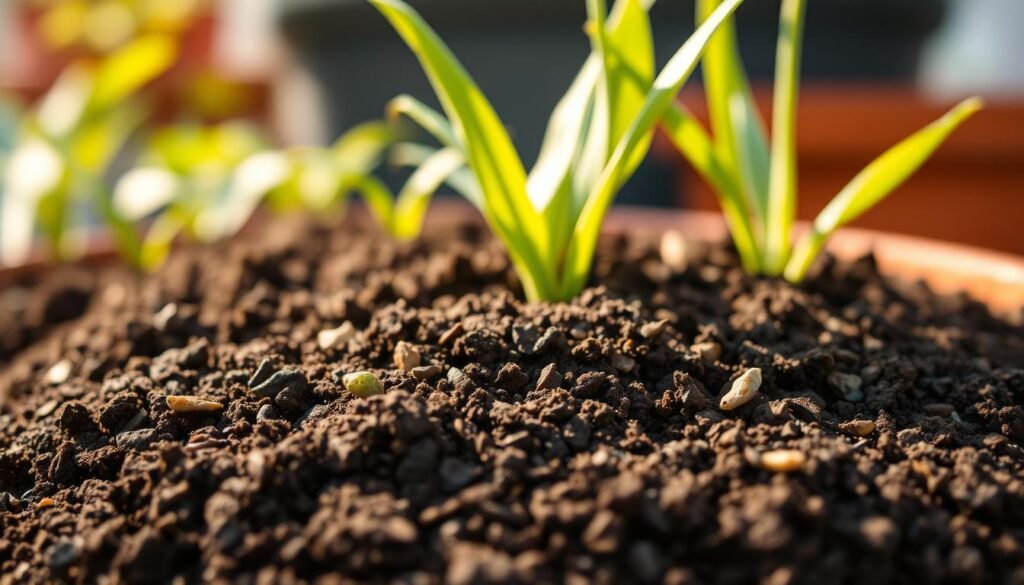
We focus on practical steps for soil and fertilization in balcony beds and small terraces in urban India. Choosing the right potting mix and regular feeding keeps plants healthy. This also reduces pests and boosts yields.
Choosing the Right Soil Mix
Opt for a lightweight, well-draining potting mix instead of heavy garden soil. Mix high-quality compost with cocopeat or perlite for moisture and air.
For vegetables, use a mix with more organic matter: 40% compost, 40% cocopeat, 20% perlite. For tomatoes and chillies, add more perlite or vermiculite: 30% compost, 50% cocopeat, 20% perlite.
Herbs do well in shallower trays with a lighter mix. Use equal parts compost and cocopeat, with a pinch of sand for firmness. Repot annually or refresh the top 2–3 inches with compost to keep nutrients flowing.
Organic Fertilizers and Amendments
We prefer organic fertilizers like compost, vermicompost, and farm-yard manure for steady nutrient release. Neem cake provides nitrogen and pest resistance; rock phosphate boosts root growth.
Use slow-release NPK granules for vegetables during planting. Apply liquid compost tea or diluted organic fertilizer every two to three weeks. This supports leaf and fruit growth.
Potted fruit trees need balanced feeds and micronutrients. A monthly dose of vermicompost and seaweed extract foliar spray helps with flowering and fruiting. Watch for yellowing leaves or poor fruit set and correct with iron chelate or magnesium sulfate as needed.
We practice sustainable gardening: recycle kitchen waste into compost, choose certified organic seeds and inputs, and avoid chemical pesticides. For pest control, use neem oil sprays and biological controls like Trichoderma or ladybird beetles.
Practical routine: top-dress with 1–2 cm compost every 4–6 weeks during the growing season. Monitor plants weekly and adjust feeding based on vigor, leaf color, and flowering.
Watering Techniques for Urban Environments
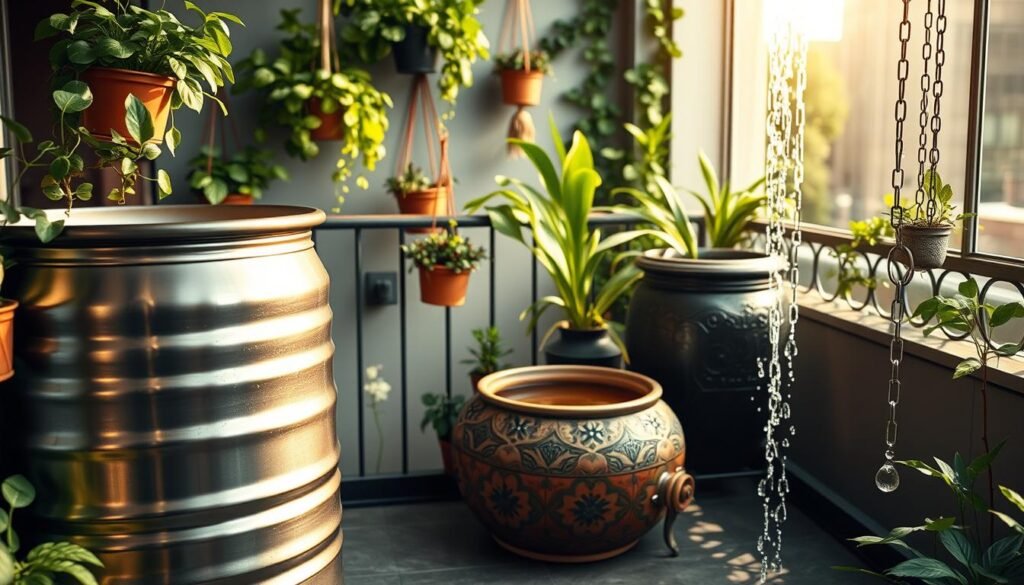
We take care of water for balcony beds and pots with smart steps for Urban Gardens in India. Small containers dry quickly. A good plan saves water, protects roots, and keeps plants healthy all year.
Efficient watering methods begin with simple checks. Use the finger test or a moisture meter. Water when the soil feels dry, not every day.
Water deeply and slowly to help roots grow strong. Stop when you see water coming out of the pot base.
Water in the early morning or late evening to reduce evaporation. For balconies, use drip lines, soaker hoses, or self-watering pots. These keep moisture steady. For rows of small pots, try capillary mats under trays.
Use mulch like cocopeat or dry leaves to lower evaporation. Mulch helps water last longer, keeps soil cool, and supports green gardening by saving moisture and organic matter.
Rainwater harvesting ideas fit any apartment. Add a small gutter or channel on your balcony to collect rainwater. Even a small barrel can help during dry times and cut down on city water use.
Keep rainwater in covered containers to stop mosquitoes. In the monsoon, watch for too much water. In summer, use stored water for thirsty plants. For flowers, use greywater if the water is clean and low in salt.
Use handy tools like small rain barrels, drip kits, and folding funnels. Pair these with mulching and timed watering for a greener balcony or terrace.
In Urban Gardens in India, mix deep watering, water-saving tools, and rain capture for healthy plants and water efficiency.
Overcoming Common Urban Gardening Challenges
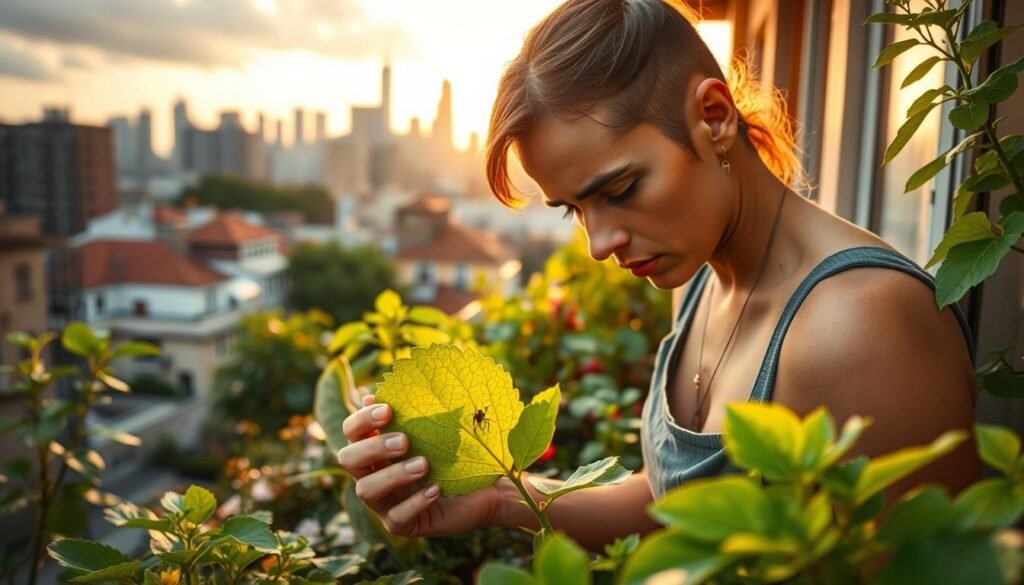
Urban gardens face many challenges like pests, small spaces, rules, and busy lives. We tackle these with smart solutions for Indian cities. Small steps lead to big results when we mix technique with creativity.
Practical pest control for balcony growers
Integrated pest management (IPM) is key. Start with simple steps: clean leaves, rotate crops, and remove debris. Watch for pests like aphids and fungal signs weekly.
For pests, use natural methods like neem oil and Bacillus thuringiensis. Plant marigolds and basil to keep insects away. For fungus, remove sick leaves, improve air, and water less to stop spores.
Designing for tight spaces and higher yields
Smart layouts and plant choices are essential for small spaces. Use vertical systems like trellises and stackable pots to save space.
Pick compact plants and multi-use varieties. Plan your crops to grow more in less space. For example, spinach and radish together are very productive.
Rules, loads, and low-effort care
Know the building’s weight and water limits before installing. Use light containers and safe fixings. For big projects, services like InterioForest in Pune can help.
Choose easy-to-care-for plants like snake plants and mint. Use self-watering systems and drip kits to care for plants when you’re busy.
- Monitoring: inspect weekly and act early.
- Prevention: clean culture, good airflow, correct watering.
- Optimization: vertical + compact cultivars for maximum yield.
- Support: consult building rules and hire installers when needed.
These steps make urban farming and community gardens stronger. We create systems that fit city life: efficient, compliant, and rewarding.
Inspiring Success Stories of Urban Gardening in India
In Mumbai, Bengaluru, and Delhi, small efforts have led to big changes. Starting with just two pots, people have grown their gardens to include basil and mint. These small beginnings have turned rooftops and balconies into green spaces.
Apartment dwellers have turned their spaces into productive farms. They’ve even set up vegetable patches on their terraces. Neighborhoods have joined in, using common areas for community gardens. Local businesses offer help, making these gardens sustainable.
These gardens have improved mental health and local food security. They’ve also increased urban biodiversity. One successful garden can inspire many more. We encourage you to start your own garden and share your story. Contact us at info@indiavibes.today for advice and to feature your garden.