



The global shrimp market is complex, with prices, trends, and economic factors changing in the US, China, and India. Knowing the latest prices in these key countries is vital for those in the seafood market. This article dives into the US, China, and India shrimp markets, looking at what shapes them.
We aim to give you the latest insights into the shrimp market. This will help you understand how it works, its impact, and its responses.
Overview of the Global Shrimp Market
The global shrimp market has grown a lot, changing the seafood trade. It’s a big part of the seafood industry, making over $40 billion. Countries in Southeast Asia, Central America, and South America play big roles. India and Vietnam are key players, affecting global demand and exports.
Our analysis shows demand and shrimp supplies are closely linked. Growing middle classes in some areas boost shrimp demand. Knowing these trends helps us understand the shrimp trade’s bigger picture.
Shrimp Market Trends in the United States
The US shrimp market sees prices change due to many factors. It’s important for both the industry and consumers to understand these trends. We’ll look at how different elements affect the market.
Current Pricing Dynamics
Shrimp prices have changed a lot in recent years. These changes are due to shifts in supply and demand. Prices also change with the seasons.
For example, prices might go down when there’s a lot of shrimp. But when there’s less, prices can go up.
Factors Influencing Prices
Many things affect shrimp prices in the US. One big factor is the cost of getting shrimp to market. This cost has gone up, making shrimp more expensive.
Pests and diseases in shrimp farms also play a big role. If there’s an outbreak, there’s less shrimp, and prices go up. Environmental rules and what people want to eat also affect prices.
China’s Shrimp Market: An Economic Perspective
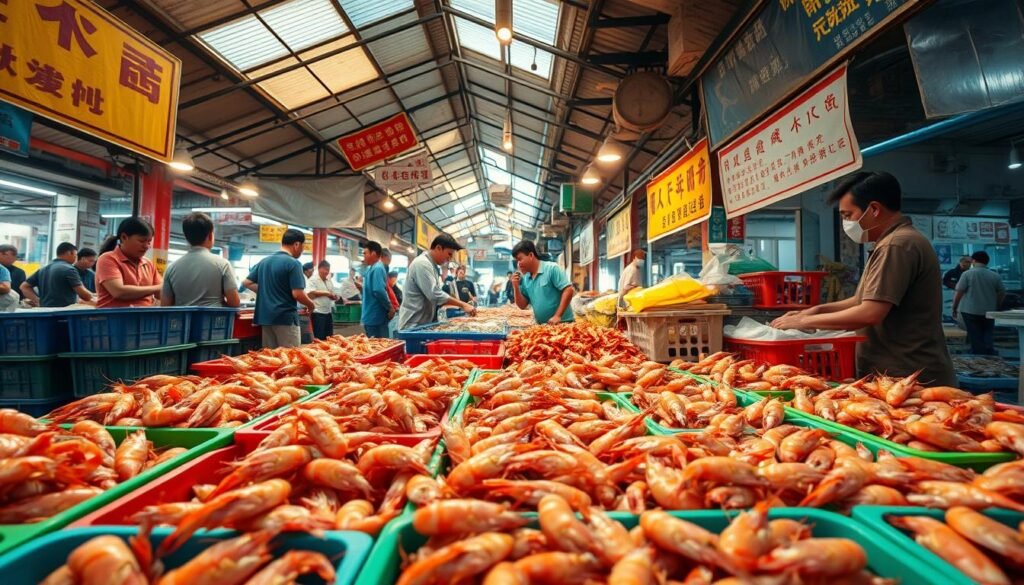
The China shrimp market is a big deal in the global seafood world. It affects prices and availability everywhere. China is key in international trade because of its shrimp imports and exports.
More people want shrimp, and they eat a lot of it at home. This shows how important shrimp is in China’s food culture.
Import and Export Statistics
Recently, shrimp imports and exports have grown a lot. China imports about 1.4 million tons of shrimp. It’s a major player in getting shrimp to markets all over the world.
This big number shows how Chinese people’s tastes are changing. They want more shrimp than ever before.
Market Influencers and Competition
Many companies are fighting for a piece of the shrimp market. Both local and international businesses shape prices and how shrimp gets to stores. Things like tariffs and export rules make it even harder.
But, local farmers and producers are finding ways to keep up. They’re working hard to meet the growing demand from both Chinese and global markets.
India’s Shrimp Market and Its Growing Influence
The India shrimp market is changing fast, thanks to its strong shrimp production. India is getting close to producing 700,000 tons of shrimp every year. This makes it a big player in the global shrimp market.
This growth shows India’s ability to meet seafood demands worldwide. It also shows how important India is becoming in the seafood industry.
Production Capabilities
India is getting better at producing shrimp. New ways of farming and technology are helping farmers get more shrimp. This ensures that Indian shrimp is of high quality.
More farmers are using new technologies. These technologies help protect the environment and the shrimp. This is good for everyone involved.
Pricing Trends and Challenges
The prices of shrimp in India are influenced by many factors. Local demand and export needs play a big role. Changes in global demand can affect shrimp prices in India.
India faces competition from other countries. This competition can make shrimp prices go up and down. It also affects how much shrimp is available for people in India to buy.
Impact of Government Policies
Government policies are very important for shrimp production in India. Policies like subsidies and training help farmers. They aim to make shrimp production better and more sustainable.
As policies change, they can affect shrimp prices. This shows how important it is for the government to support the shrimp industry.
Comparative Analysis of Shrimp Prices in the US, China, and India
To understand shrimp prices, we need to look at many factors. These include regional prices and how prices change with the seasons. By comparing shrimp prices, we learn a lot about how market changes affect prices.
Price Benchmarks Across Markets
Looking at shrimp prices in the US, China, and India shows big differences. Prices are shaped by local demand, tariffs, and how much is produced. In the US, prices are high because of strict quality rules and strong demand.
China, with its big aquaculture, offers lower prices. This makes it a key player in the global market. India is also growing, using its long coastlines and lower costs to impact prices.
Seasonal Variations and Their Impact
Seasonal changes have a big effect on shrimp prices. Prices go up during festivals or holidays when people want more seafood. For example, in India, prices rise during big festivals as people buy fresh seafood.
This not only changes local prices but also affects the global market. Changes in supply and demand send waves through the industry.
Economic Implications of Shrimp Pricing
Shrimp pricing has big effects on the seafood industry. Changes in shrimp prices affect profits and how businesses operate. These changes show how the seafood industry is impacted economically.
Effects on Seafood Industry as a Whole
When shrimp prices go up, it affects the whole seafood industry. Retailers might raise their prices to cover costs. This can lead to higher prices for shoppers.
Some people might choose cheaper options instead. This makes the market more complex. Businesses have to balance making money and keeping customers happy.
Consumer Buying Behavior Trends
How people buy seafood changes with shrimp prices. As prices rise, people look for sustainable and healthy options. This shift affects the seafood industry’s economic impact.
Customers compare value and price, and choose options that fit their values. This shows how important ethical choices are in seafood buying.
Impact of Supply Chain Issues on the Shrimp Market
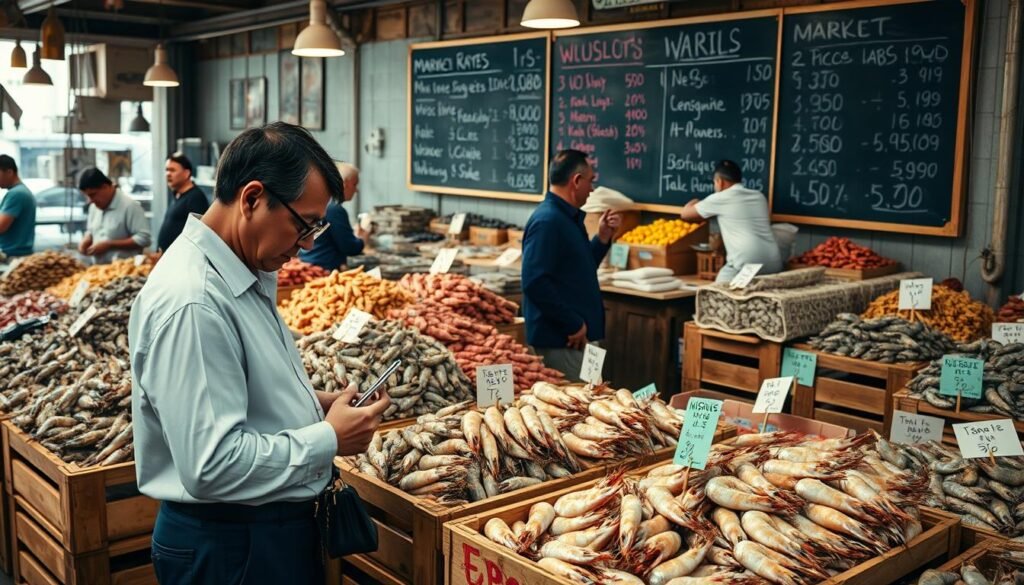
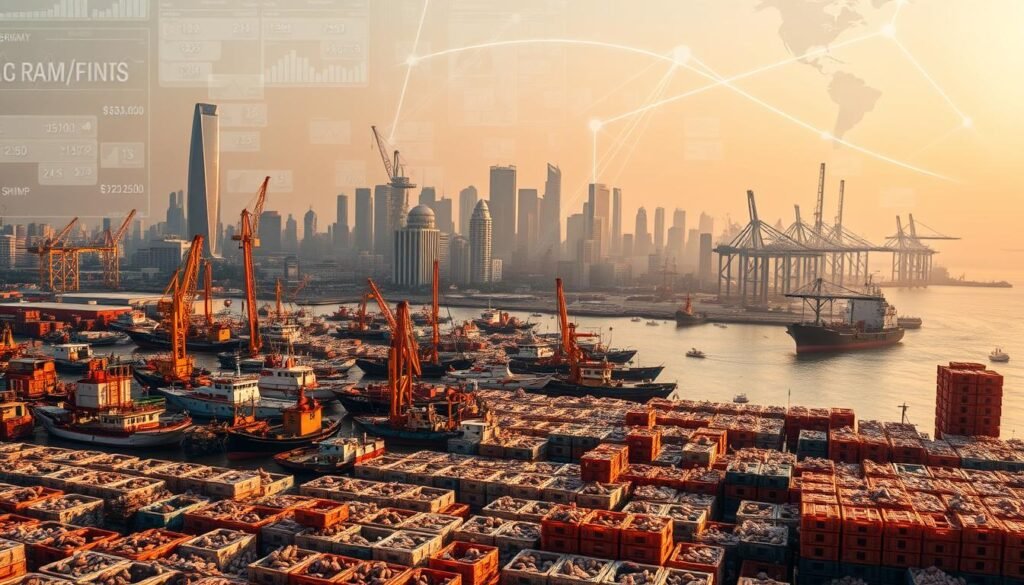
Shrimp supply chain challenges have grown more serious in recent years. Disruptions from global conflicts and natural disasters show the weaknesses in shrimp distribution. Any problem in the global trade can affect prices and how much is available.
Getting shrimp from farms to markets is a complex task. Issues like delays in shipping or crowded ports add to the problem. These problems can make costs go up, affecting everyone from suppliers to consumers.
There are also challenges in finding shrimp to sell. Weather changes and diseases can cut down on shrimp supply. This makes prices go up and limits what distributors can offer. To fix these issues, we need everyone involved to work together to make the market stronger.
Emerging Technologies in Shrimp Farming
Recent shrimp farming innovations are changing how we do aquaculture. These new methods aim to solve the industry’s big challenges. One key innovation is recirculating aquaculture systems (RAS).
Innovations Driving Efficiency
Recirculating aquaculture systems make farming more efficient. They use water over and over, saving a lot of water. This method boosts production and helps the environment.
It lets farmers keep shrimp healthy and supply them consistently. This is good for everyone involved.
Environmental Considerations in Production
New methods in shrimp farming focus on being green. Systems like RAS help farmers use resources wisely and cut down on waste. Working together is key to making farming both profitable and eco-friendly.
Consumer Preferences and Their Influence on Pricing
Looking at the shrimp market, we see big changes in what people want. These changes come from a growing interest in healthy food. People now look for lean proteins, which affects what they buy and how much they pay.
Health Trends Affecting Market Demand
Healthy eating is becoming more popular, and shrimp is a big hit. It’s low in fat and packed with nutrients, fitting into today’s wellness-focused diets. As people care more about their food, they want it to be sustainable and responsibly sourced.
This shift in what people want changes how suppliers price their shrimp. By keeping up with these changes, everyone in the shrimp industry can meet the needs of health-conscious buyers.
Future Projections for the Shrimp Market
Looking ahead, the shrimp market’s future is a topic of great interest. Forecasts combine statistical data, changing trends, and consumer tastes. This mix makes predicting the market’s path complex.
Technological advancements are set to change how shrimp are produced. New methods in aquaculture could boost yields and solve environmental issues. Keeping up with these changes is key as we look at the shrimp industry’s future.
Global demand also plays a big role in pricing. In new markets, tastes change fast, affecting prices. This is something to watch closely.
Trade policies could add more complexity. Changes in rules might help or hurt the market’s growth. As we explore these factors, the future of the shrimp market becomes clearer. It’s a time of change, but also of uncertainty.
Major Players in the Shrimp Industry
The shrimp market is always changing, thanks to many key players from Southeast Asia and Latin America. Top shrimp exporters help set prices and trade rules, affecting global supply and what we can buy. Knowing how these big players work helps us understand the shrimp market better.
Leading Exporters and Importers
Thai Union and Maruha Nichiro are big names in shrimp exports, known for their focus on the environment and new ideas. They make the industry more efficient and attract eco-friendly buyers. On the other side, Aldi and Walmart, as major importers, shape what we want to buy. Their choices influence the shrimp market, helping it grow and change.
Challenges Facing the Shrimp Market Today
The shrimp market faces many challenges today. Disease outbreaks harm shrimp populations, causing big economic losses for farmers. Regulatory pressures also add to the problem, making it harder to meet health and safety standards.
There are more issues than just these. Plant-based seafood products are gaining popularity, attracting health-conscious consumers. This change makes it tough for traditional shrimp producers to keep up.
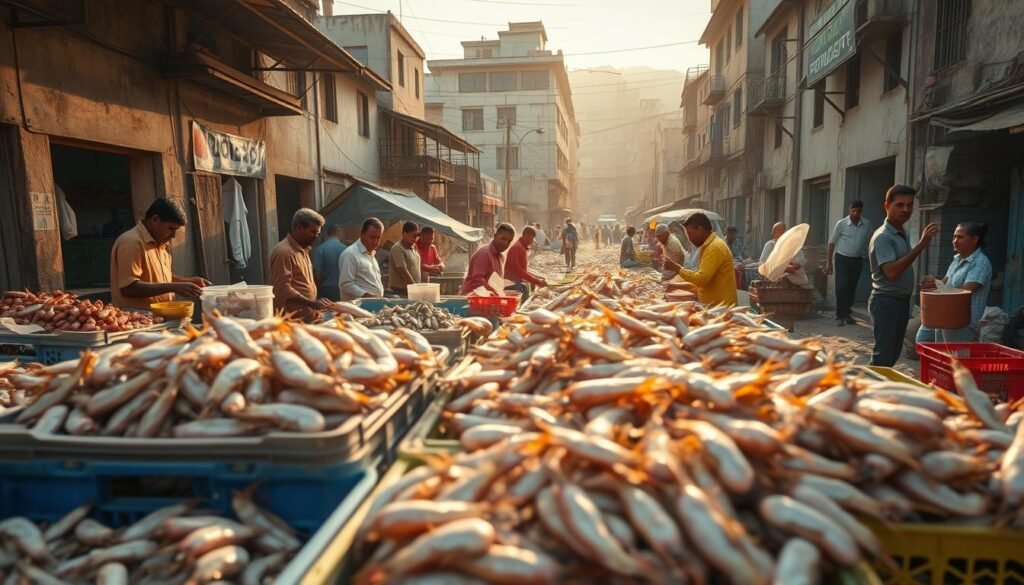
Innovation is key to overcoming these challenges. The shrimp market needs new ideas to stay relevant. By tackling these issues, we can ensure a strong future for shrimp farming.
The Role of Sustainability in Shrimp Production
Sustainability is a big deal in the shrimp industry, with a focus in India. People want seafood that’s not only good but also farmed right. We’ll look at how green farming leads to better shrimp production and less harm to the environment.
Eco-Friendly Practices in Agriculture
Sustainable shrimp farming aims to use eco-friendly methods all the way through. This means using natural food, keeping shrimp healthy, and saving water. Farmers are working hard to learn how to make their farms better for nature.
Some farms are using special systems to cut down on pollution and save water. These changes show the industry is moving towards better ways of farming. By doing this, we help the planet and meet what consumers want for ethical seafood.
Trade Policies and Their Impact on Shrimp Prices
The shrimp market is affected by many trade policies. These include tariffs, quotas, and import rules. They change how much shrimp is available and its price in different places. Each country’s rules on shrimp prices help them compete globally.
In India, trade deals can change how much shrimp is imported. Good deals with shrimp makers can lower tariffs. This means people in India can buy shrimp for less money. These deals also affect how shrimp is sold and priced worldwide.
Knowing about these trade policies helps everyone understand the market better. Rules to protect local industries can make imports more expensive. This can change how people buy and eat shrimp. Learning about these policies helps both businesses and shoppers make better choices.
The Influence of Global Events on the Shrimp Market
Global events greatly affect the shrimp market. Things like pandemics, natural disasters, and political tensions change how shrimp is supplied and demanded. This change leads to shrimp market fluctuations, affecting prices and how much shrimp is available. For example, recent international tensions have made it harder to get shrimp, raising costs for everyone.
Looking at how global events shrimp market impact varies around the world shows big differences. Some places run out of shrimp because of these issues, while others see more demand. Knowing these differences helps those in the shrimp business deal with the ups and downs.
Consumer Education and Awareness in the Shrimp Market
It’s important for consumers to know where their shrimp comes from. As more people want to buy sustainable seafood, education is key. It helps people make smart choices when they shop.
Transparency and Sourcing Practices
Knowing where shrimp comes from helps us buy better. Education shows us how shrimp is farmed and its impact on the environment. This knowledge encourages producers to be more sustainable.
This change is good for the planet and builds trust in the seafood industry. Supporting efforts for transparency is more important than ever.
Conclusion
We’ve explored the shrimp market’s complexities, giving you a detailed look at prices, trends, and the economy in the US, China, and India. These countries have their own strengths and challenges that affect shrimp prices worldwide.
Reflecting on shrimp prices today, it’s clear that knowing the market and what consumers want is key. This knowledge helps producers and exporters meet changing needs while keeping things sustainable.
With the insights we’ve shared, we’re ready to face future challenges in the global seafood market. By embracing new ideas and sustainable practices, we can ensure shrimp production’s future. This will help create a thriving shrimp market that benefits everyone involved.