

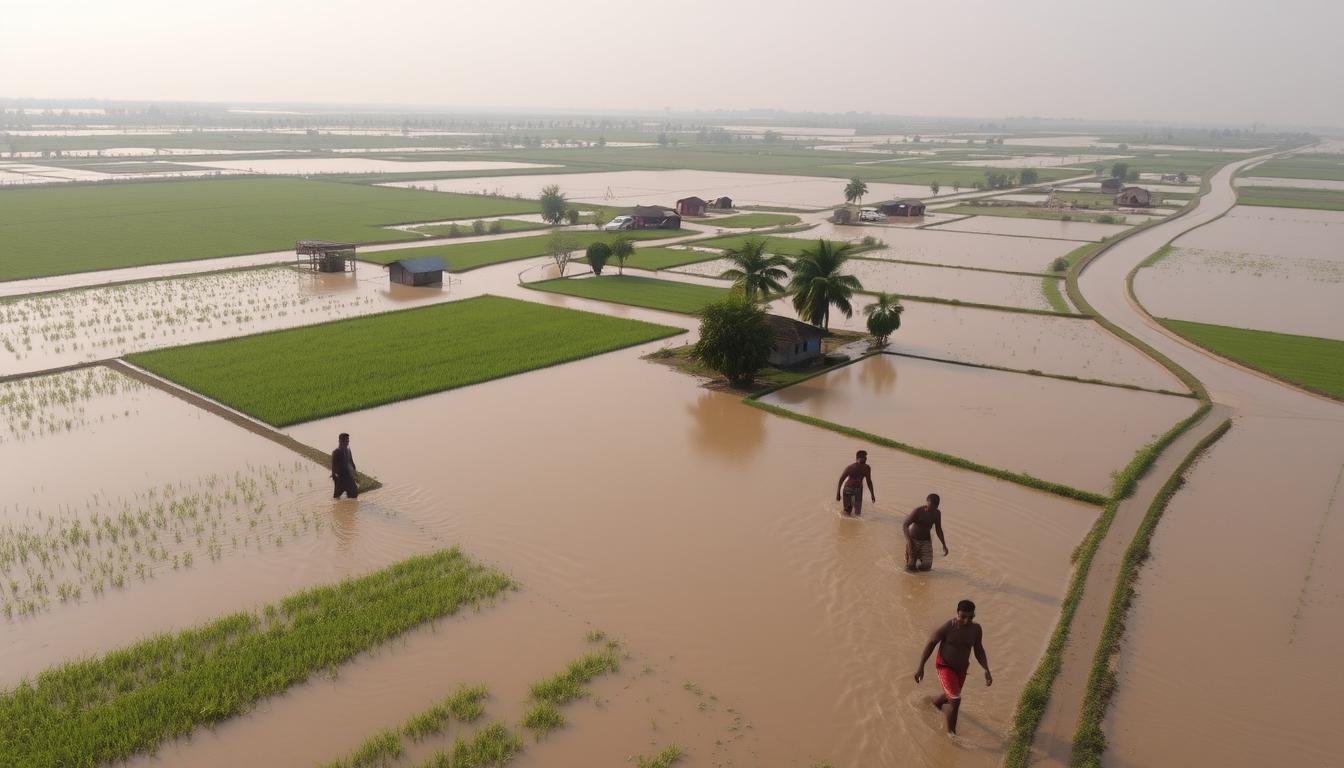
The recent monsoon rains have caused severe flooding in Punjab. This has displaced over 300,000 people. The crisis shows how important disaster preparedness is, as monsoon flooding in India is a big challenge.
Many displaced villagers in Punjab have found shelter in relief camps. This highlights the need for immediate flood relief efforts. In this article, we will explore the effects of this disaster on the community and the challenges in recovery.
Overview of the Punjab Flooding Situation
The Punjab floods of 2025 have turned into a major humanitarian crisis. Heavy rains started in late July and have not stopped. This has caused rivers to overflow and fields to flood, affecting many lives.
Villages are now like swamps, changing in just days. This has disrupted the daily lives of countless people. Roads are blocked, and homes are destroyed, making help urgent.
The government has declared a state of emergency. They are working hard to help those who have lost their homes. The geography and climate of the area make the situation even worse. It’s important to understand these factors to help those affected.
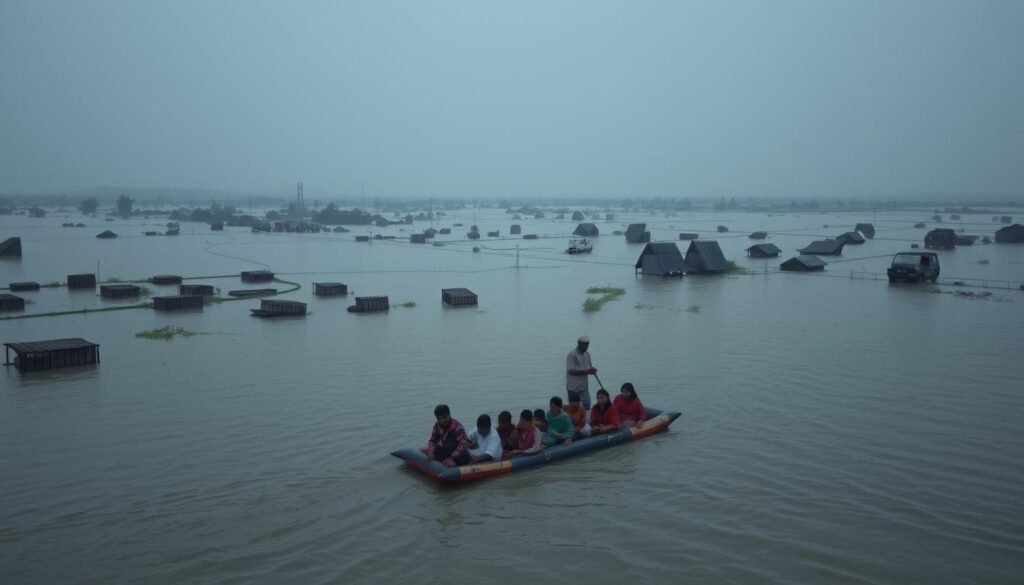
Causes of Monsoon Flooding in India
India’s monsoon season brings a lot of rain, leading to flooding. This happens because of the way the land and weather patterns work together. The rain is so much that it overflows the local drainage systems.
The rivers like the Sutlej and Beas can’t handle all the water. This makes them overflow. Studying these events helps us understand why flooding happens. It also helps us find ways to prevent it in the future.
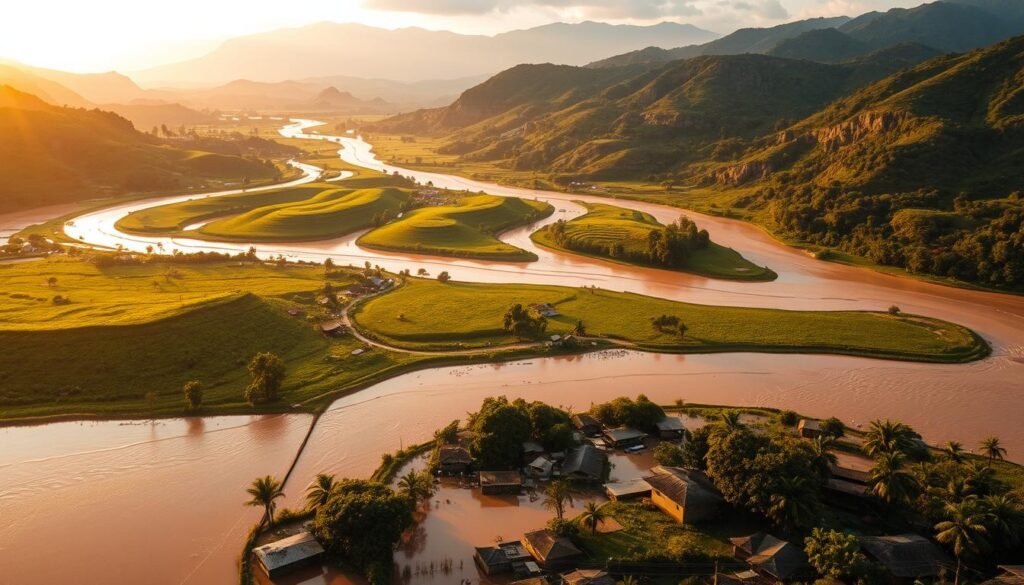
Impact on Displaced Villagers in Punjab
The severe flooding in Punjab has left a trail of destruction. It has affected many lives deeply. Families have lost their homes, and communities are underwater.
Personal Stories from the Affected
Many villagers share their heartbreaking stories. They talk about the emotional and psychological effects of losing their homes. One villager said,
“We lost everything overnight. Our home, our belongings, even our crops. It’s as if the land we lived on has vanished.”
These stories show the real impact of flooding. They highlight not just the loss of property but also the loss of dreams and connections.
Challenges Faced by Displaced Families
Displaced villagers in Punjab face many challenges. Finding food, clean water, and health services is hard. A displaced mother said,
“Finding safe shelter for my children has been my only priority. Each day is a struggle.”
The floods have brought great hardship. There is a need for community support and relief efforts. These are essential for helping these families recover and rebuild.
Punjab Flooding and Its Effect on Agriculture
The recent flooding in Punjab has hit agriculture hard, the backbone of Punjab farming. Experts say a lot of farmland is underwater. This has caused big problems for local crops and the economy.
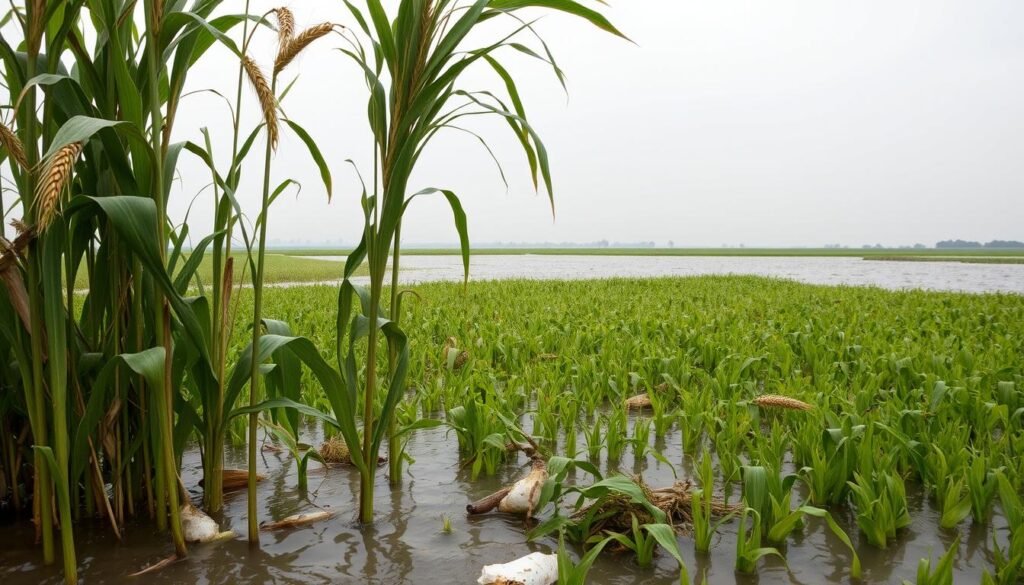
Extent of Agricultural Damage
The damage to crops like paddy and cotton is severe. Farmers are losing everything during the key growing season. Fields are flooded, making it hard for farmers to care for their crops. This is causing big financial problems and threatening jobs.
Impact on Local Economy and Food Security
The damage goes beyond farmers, affecting the whole local economy. With fewer crops, food prices are rising and supplies are getting tight. This shows how urgent it is to help Punjab farming recover quickly.
Government Response to the Flood Crisis
The government of Punjab quickly set up emergency plans to deal with the floods. This shows their effort to help communities right away. They sent the National Disaster Response Force to rescue people and give them what they need.
They also gave money to help rebuild homes and damaged areas. This shows they care about helping now and in the future. We should look at how well they did compared to past disasters.
Looking at how they managed the crisis now and planning for the future is important. It helps us see how to do better next time. A complete plan will make communities stronger against these disasters.

Role of NGOs and Volunteer Organizations
After the floods in Punjab, NGOs and local groups have become key helpers. They work hard to give immediate aid, showing how important community support is. These groups gather resources to help those in need, making sure they get the help they need.
Relief Operations on the Ground
NGOs are working hard to deliver food, clothes, and medical help to families hit by the floods. They use their connections and trust in the community to get aid to the most vulnerable. Volunteers are also helping out, giving their time and energy to support those in need.
This teamwork shows the strength of community action in tough times.
How Citizens Can Help
Citizens can help a lot by donating and volunteering. Giving to local NGOs or using your skills to help can make a big difference. Getting involved in community efforts shows we can all make a difference together.
We urge everyone to find ways to support local groups in their efforts to help the community recover.
Forecast and Future Predictions for Punjab Weather
Accurate weather forecasts are key for disaster management and planning. The India Meteorological Department’s climate monitoring shows a shift in rainfall patterns. This shift is linked to climate change, making monsoon rains more unpredictable and severe.
This unpredictability can lead to sudden floods. It’s important to have strategies to prepare for these events. Experts believe we’ll see more heavy rain, making recovery from floods harder. We need to stay alert and include these insights in our disaster plans.

Health Risks Associated with Flooding
Flooding can be very dangerous for our health. It spreads waterborne diseases that harm communities. These diseases come from contaminated water, causing big health problems.
Children and the elderly are at higher risk. They have weaker immune systems and may not have easy access to healthcare.
Waterborne Diseases and Public Health Challenges
After flooding, illnesses like cholera and typhoid often increase. These diseases come from drinking bad water. It’s very important to clean water sources quickly.
Health officials need to act fast to protect people. They should teach everyone about staying clean and healthy. This helps lower the number of sick people, even in places where many have had to leave their homes.
The Role of Climate Change in Monsoon Patterns
Climate change has a big impact on monsoon patterns. Rising global temperatures lead to changes in where and how much rain falls. This results in more intense and frequent floods, hitting places like India hard.
These changes affect the environment deeply. They make us rethink how we manage water and prepare for disasters. Scholars and policymakers are looking at new ways to handle these challenges.
Studies show that changes in the air affect monsoons. Warmer oceans and more evaporation mean more moisture in the air. This can cause heavy rain.
Communities face big challenges as these changes hit their farming and jobs. But, by adopting sustainable practices, they can become more resilient. This helps them deal with the unpredictable weather.
To tackle these issues, we need to work together. Governments, scientists, and local people must share their knowledge and resources. This way, we can better face the challenges of climate change and flooding.
By taking action now, we can help vulnerable communities survive and even thrive. They can adapt to the changing climate and keep growing strong.
Case Studies of Previous Floods in Punjab
Looking at past floods in Punjab helps us understand how to handle today’s crises. These studies show us key moments in history where floods hit hard. They also show how governments and communities reacted.
The 2010 floods are a key example. They showed us the need for early action and community involvement. This helps us learn from past mistakes and successes.
These studies also teach us about the importance of community awareness and good communication. When people are informed, they can better prepare for floods. Learning from the past is key to improving how we manage floods in Punjab.
Flood Relief Efforts During the Current Crisis
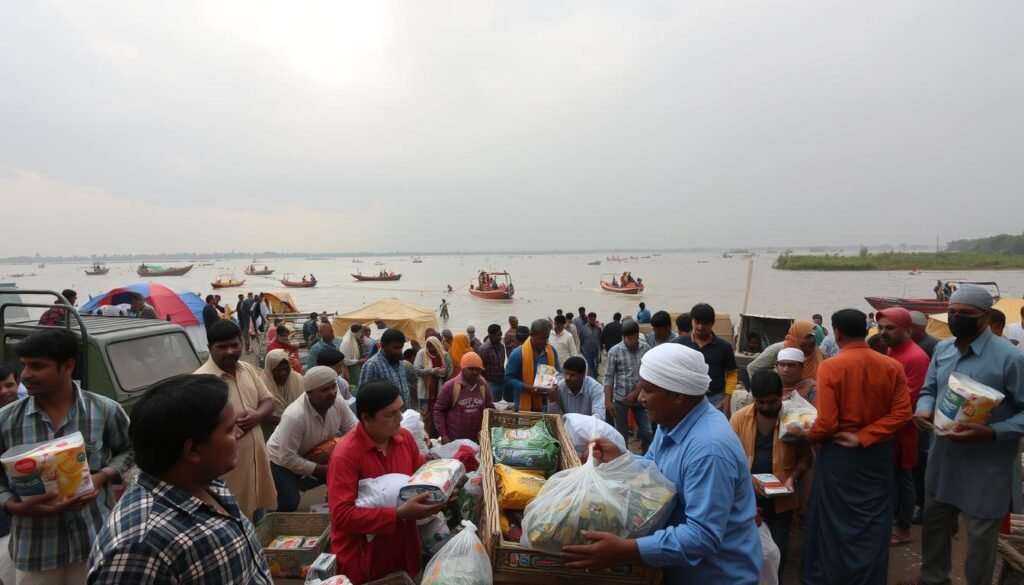
In Punjab, relief efforts are in full swing. Both government and non-government groups are working hard to help those affected. They focus on providing shelter, medical care, and food.
Community centers are now shelters for those without homes. Medical teams are treating injuries and health issues caused by the floods.
Working together is key in these efforts. Local authorities and NGOs are teaming up to get help where it’s needed most. Food distribution is making sure families have what they need.
Volunteers are playing a big role, packing and delivering meals to those in need. Their efforts are making a big difference.
The community’s strength is shown by everyone’s hard work. Volunteer groups are connecting people who want to help with those who need it. This unity is helping the area get through the tough times.
As we keep moving forward, these relief efforts will be essential. They will help stabilize the situation for thousands affected by the floods.
Community Resilience and Recovery Planning
Building community resilience is key for effective disaster recovery, like in Punjab. It helps local areas respond better to crises and adapt to climate changes. Successful strategies from around the world offer new ideas for local needs.
Building flood-resistant homes and improving drainage systems is important. Sustainable practices like reforestation and water retention help too. Training for disaster preparedness makes sure everyone knows their role in emergencies.
Effective disaster recovery needs a team effort. By focusing on community resilience, we can all work together. This readiness can save lives and jobs in the next emergency.
Conclusion
Our look into the recent flooding in Punjab shows a clear need for action. The flooding has put a big strain on local communities, economies, and farming. It shows that the damage goes beyond just physical harm.
The people who lost their homes and the economic losses show how connected we are to our environment. This disaster affects us all, showing the importance of taking care of our planet.
Looking ahead, we must prepare better for the future. We need new ways to protect ourselves from floods. Working together, we can make Punjab stronger and more resilient.
We urge everyone to get involved in local efforts and talk about how to prepare better. By working together, we can overcome the challenges of climate change and natural disasters. Let’s build a stronger Punjab together.