



Our team’s first taste of vada pav in Mumbai was unforgettable. Standing under a rain of steam and spices, we savored it at Dadar station. It was a moment that showed us the power of street food—it tells a story in one bite.
In Chennai, Amritsar, Dharamshala, and Delhi, we searched for that thrill again. At Novelty Tea House in Chennai, we found pav bhaji that was both comforting and new. In Amritsar, Makhan Fish and Chicken served tandoori chicken that was smoky and perfect.
Dharamshala surprised us with deep-fried potato momos and a tiny chai walla. He made the best masala chai we ever had.
This list includes must-try Indian street foods we’ve verified. We offer safety tips and regional context. This way, you can enjoy the best Indian street food with confidence.
Join us as we explore ten iconic snacks and drinks. These flavors are affordable, bold, and shareable. They define India’s street-food culture.
For editorial inquiries or partnerships: info@indiavibes.today
The Allure of Indian Street Food
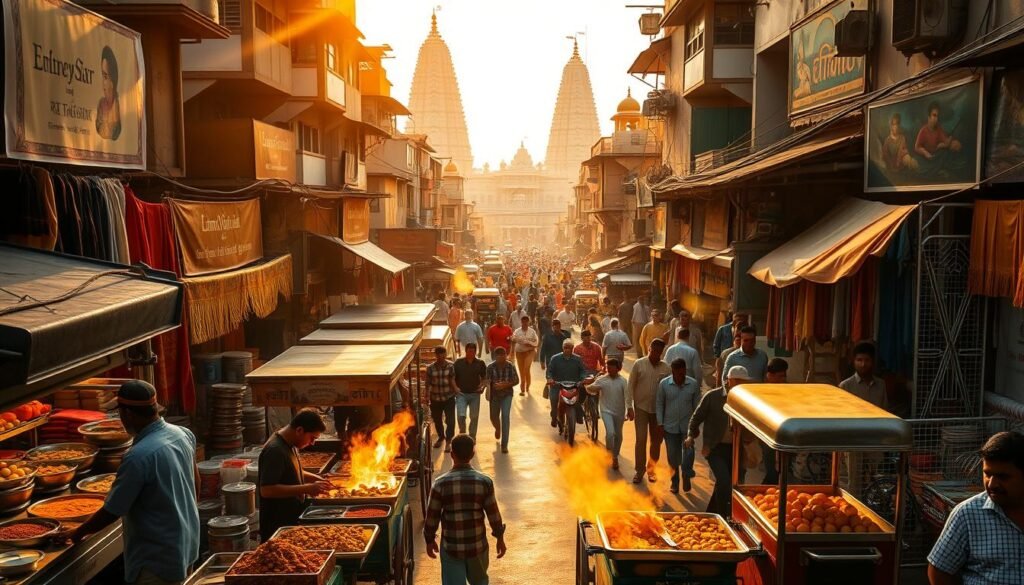
We explore markets and alleys where smells, sounds, and people meet. Here, simple ingredients become unforgettable memories. Crispy, tangy, spicy bites start conversations and shape our travels.
Low prices make it easy to share. Even those who worry about hygiene come back for more. They find the flavors worth the risk.
A Brief Overview of Indian Street Food Culture
Indian Street Food has a rich history. It started in markets and along caravan routes. Over time, flavors from Persia, Mughal, Portugal, and Britain mixed with local foods.
Every region has its own twist on dishes. From Mumbai to Chennai, flavors and textures change. Ten million vendors make urban life vibrant, feeding millions every day.
When eating street food, safety is key. Choose steamed and fresh items. Stay away from stalls near drains and be careful with dairy in hot weather.
Avoid eating during heavy rains. Monsoon conditions can harm sanitation.
Why Street Food is a Culinary Adventure
Eating street food in India is a sensory journey. Aromas attract you, textures surprise, and spices stay in your memory. It’s a social experience, with people gathering to share food.
For engineers and educators, street food is a living classroom. It shows how vendors manage logistics and food safety. It’s a chance to learn about urban planning and supply chains.
Chaat: The Quintessential Indian Snack
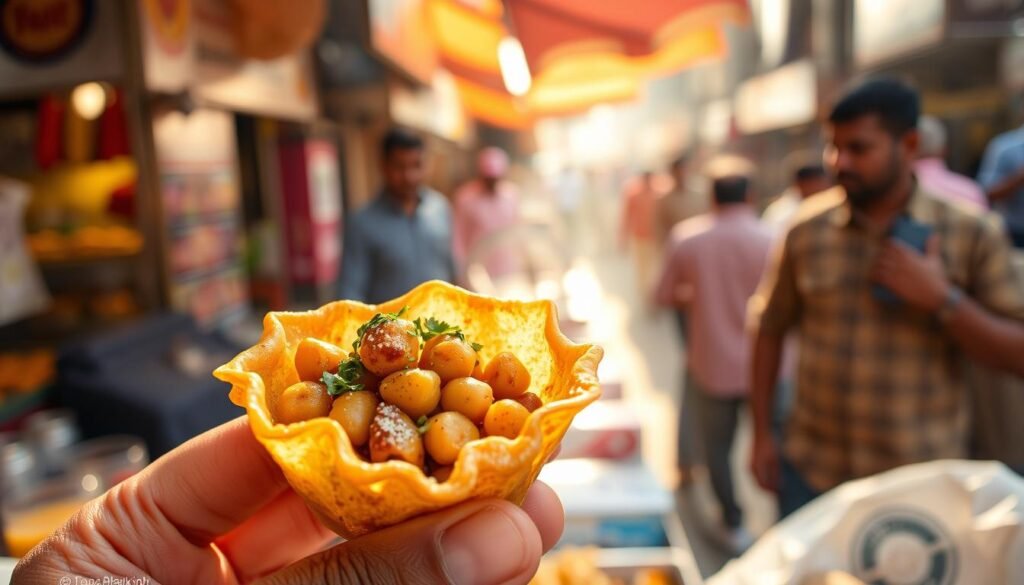
Chaat is a mix of textures and tastes. It combines crisp and tangy, sweet and spicy. These small bites are meant to be eaten right away for the best flavor.
Pani Puri: A Must-Try Delight
Pani puri is a puffed puri filled with chickpeas and spiced mashed potato. It’s dunked in tangy water and topped with tamarind chutney. In Mumbai and Delhi, vendors serve it fast, with customers eating eight to ten in a row.
It’s known as phuchka in Kolkata and golgappa in North India. Each version has its own spice and filling.
Bhel Puri: A Crunchy Snack with a Twist
Bhel puri is a mix of puffed rice, peanuts, onions, tomatoes, potatoes, mango, and coriander. It’s dressed with lemon juice and chutneys for a sweet, sour, and spicy taste. Vendors offer it dry or wet, but it’s best eaten right away.
Aloo Tikki Chaat: A Spiced Potato Treat
Aloo tikki chaat has a spiced potato patty topped with yogurt, chutneys, onions, and chaat masala. It’s a contrast of hot and cool, spicy and creamy. You can find different versions in Delhi and Kolkata, each with its own flavor.
| Dish | Core Ingredients | Texture Profile | Where to Try |
|---|---|---|---|
| Panipuri / Golgappa / Phuchka | Puffed puri, spiced potato, chickpeas, tangy pani, tamarind chutney | Crisp shell, liquid spice burst | Mumbai beachside stalls; Kolkata street corners; Delhi markets |
| Bhel Puri | Puffed rice, peanuts, onions, tomatoes, raw mango, chutneys | Light, crunchy, can be wet | Mumbai Chowpatty; Mumbai market vendors; Kolkata food stalls |
| Aloo Tikki Chaat | Spiced potato patty, yogurt, chutneys, onions, cilantro | Crisp outside, soft inside, creamy toppings | Delhi street markets; Kolkata sweet shops |
Choose busy stalls for fresh food. Look for puris and chutneys made on the spot. For sensitive stomachs, pick cooked items and eat wet chaat quickly.
Vada Pav: The Iconic Mumbai Burger
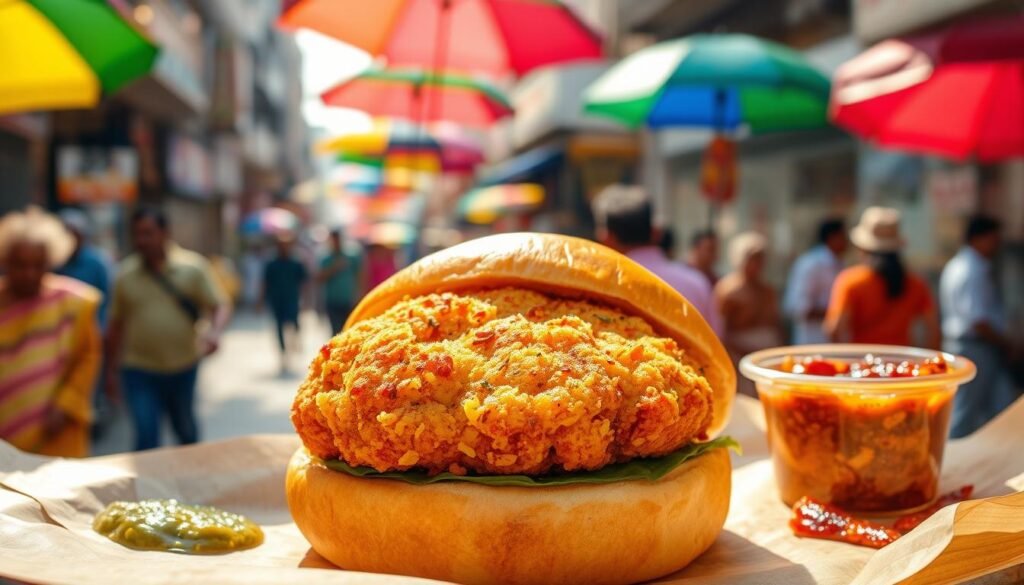
Vada Pav is a fried potato dumpling in a soft bun, with chutneys and a fried green chili. It’s known as the “Indian burger” in Mumbai. It’s a favorite snack across India.
The Story Behind Vada Pav
In 1966, Vada Pav became popular in Mumbai as a cheap, easy meal. It was sold by vendors near stations and markets. This kept the food fresh.
Over time, Vada Pav became a symbol of Mumbai. It’s a simple, tasty snack for busy people.
Best Places to Enjoy Vada Pav in Mumbai
Look for stalls near railway stations, markets, and business areas. These places have fresh food because of the high traffic. Dadar, Grant Road, and Chhatrapati Shivaji Terminus are great spots.
Choose vendors who fry to order. Enjoy it with a cup of chai and ask for medium spice if you’re not sure. Pay attention to how vendors handle bread and oil. This shows their cleanliness.
| Location | Why Visit | Tip |
|---|---|---|
| Dadar | Busy commuter hub with many legacy stalls and fast turnover | Order fresh vada and request chutney on the side for control of spice |
| Grant Road | Known for traditional vendors who have served generations | Try a fried green chili alongside the vada for a true Mumbai bite |
| Chhatrapati Shivaji Terminus (CST) | High-traffic area with quick, affordable snacks for travelers | Pair with chai and choose medium spice to ease into the flavor profile |
| Local markets (various) | Market stalls reflect regional twists on this popular Indian street food | Look for vendors frying to order and clean pav for best experience |
Dosa: A South Indian Staple
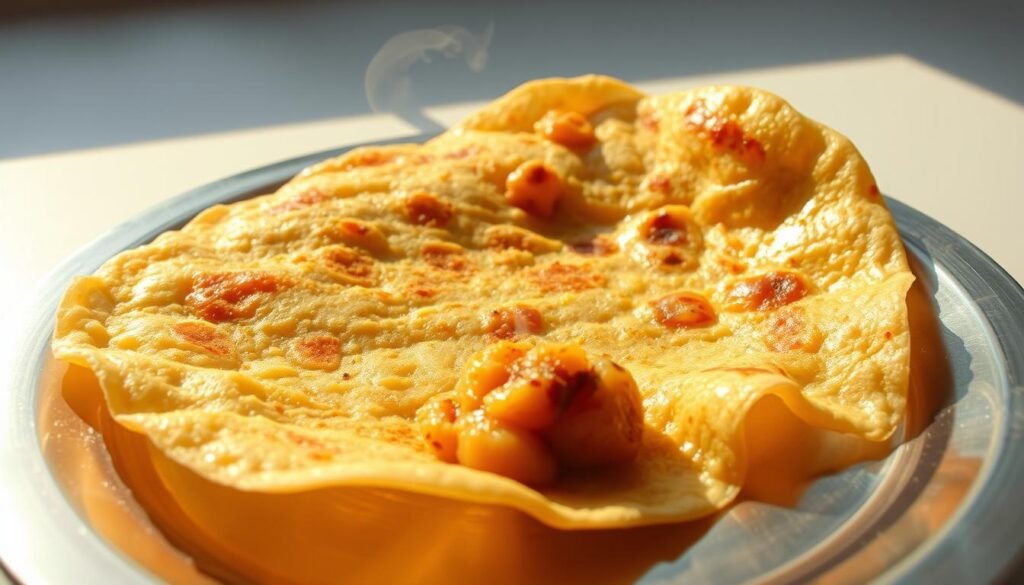
Dosa is a beloved South Indian dish. It’s a fermented rice and lentil crepe that’s crispy and tangy. People love it for breakfast, lunch, or a snack.
The fermentation process adds texture, flavor, and health benefits. It’s made by lactic acid bacteria and wild yeasts.
Different Varieties of Dosa
Masala dosa is a favorite, with a spiced potato filling inside. Plain dosa focuses on its crispness and sourness. Rava dosa has a lacy surface.
Paper dosa is very thin and fragile. Uttapam is thicker, topped with veggies. Pesarattu is rich in protein. Fusion dosas, like paneer dosa, show its versatility.
Preparing dosa involves soaking rice and black gram, then grinding and fermenting overnight. This process is key to its taste and health benefits.
Where to Find the Best Dosa in India
For the best dosa, visit busy filter-coffee shops and dosa joints in Bangalore, Chennai, and Hyderabad. Street stalls in South Indian markets offer authentic flavors. Hotel and restaurant dosas are good, but small counters with fresh chutneys are unforgettable.
Try different dosas and eat with your hands. Tear a piece, scoop chutney and sambar, and enjoy the textures. For a detailed history and fermentation background, see this dosa overview.
Pav Bhaji: A Spicy Vegetable Mash
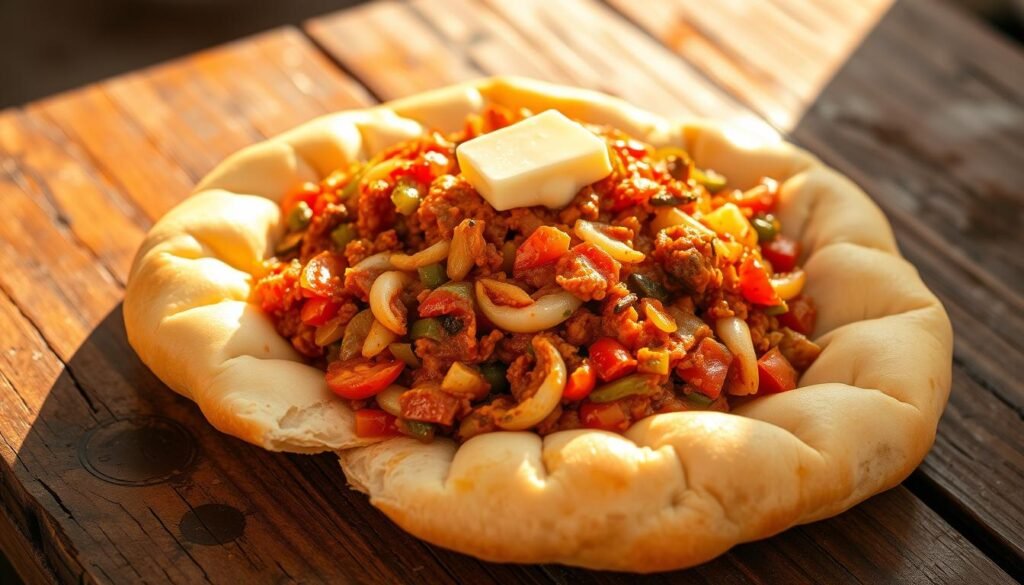
Pav Bhaji is a buttery spiced vegetable curry served with soft buns. It’s made by mashing and reducing the ingredients to create a rich gravy. The joy comes when the bread soaks up the flavors and a squeeze of lemon adds a bright touch.
The Origins of Pav Bhaji
Pav Bhaji started in Mumbai as a quick meal for textile workers. Chefs mixed potatoes, peas, carrots, and peppers into a spicy mash. Butter, lemon, and charred onions made it a beloved comfort food, spreading across cities.
At Novelty Tea House in Chennai, we found the same essence. Rich veg, bold butter, and toasted pav define this dish. It’s a favorite among travelers and locals for its authentic taste.
Top Spots to Try Pav Bhaji in Mumbai
Mumbai is the perfect place for authentic Pav Bhaji. Look for stalls in Bandra, Juhu, and Colaba. Vendors serve it in shallow plates with a generous pat of butter. Freshly toasted pav and a sizzle on the griddle are signs of quality.
For those wanting to make it at home, watch how cooks mash and reduce the mixture. This approach makes it one of the best street food recipes. The key is finding the right balance of spice, butter, and texture.
| Location | What to Look For | Why It Stands Out |
|---|---|---|
| Bandra | Bustling evening stalls, butter-heavy finish | Street-savvy vendors who time toasts and bhaji reduction precisely |
| Juhu | Beachside counters, large portions | Hearty, portable servings ideal for travelers exploring Mumbai |
| Colaba | Market lanes, garlic or buttered pav options | Classic combinations and strong local reputation for authenticity |
| Station Stalls | Quick-serve vendors near railway stations | Original utilitarian roots—fast, filling, and true to history |
Pani Puri: An Explosion of Flavors
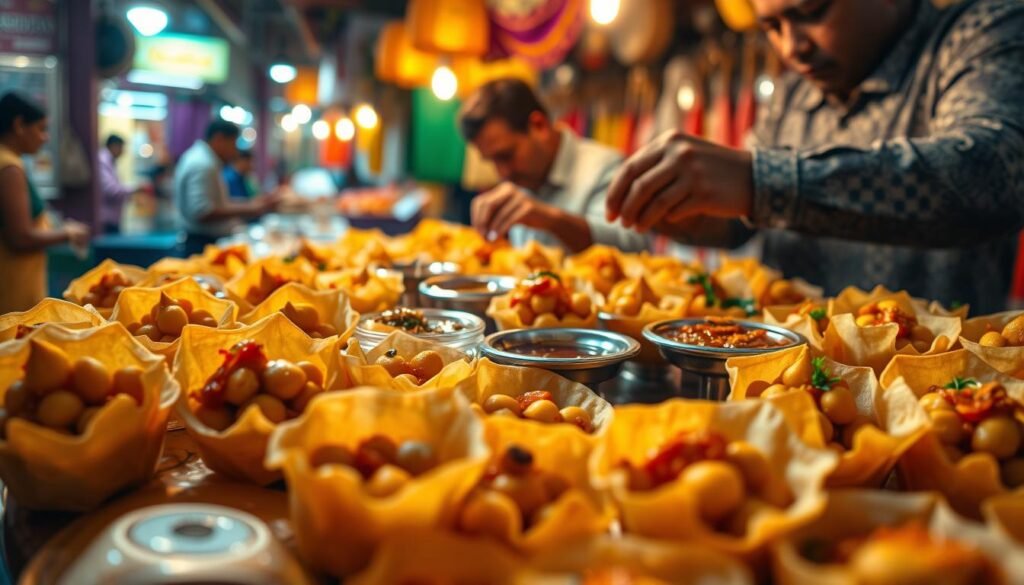
Pani Puri is a fun and social snack in famous Indian street food. It has hollow, crisp puris filled with spiced mashed potato and chickpeas. A splash of tangy, chilled pani adds sweet, sour, and savory flavors. It’s a thrilling experience that brings people together.
Eating Pani Puri is a special ritual. People share rounds and stories, and everyone reaches for the next puri. It’s best to eat each Pani Puri right away to keep it crunchy and flavorful. Choose stalls with long queues and clean practices for safety.
The regional shifts in taste show culinary creativity. In Kolkata, phuchka has tamarind-heavy pani and tangy fillings. North India’s golgappa has spicier, peppered water. Bengaluru and Pondicherry offer milder, herb-forward variants that highlight local produce.
For safety, pick vendors with fresh, chilled pani and avoid ice from unknown sources. If you’re sensitive, ask for less-spicy pani or cooked fillings only. These precautions ensure a safe and delicious experience.
Below we list cities known for authentic versions and typical price ranges to guide your tasting tour.
| City | Local Name | Flavor Profile | Typical Price (6 pieces) |
|---|---|---|---|
| Mumbai | Pani Puri | Tamarind-sweet, tangy and mildly spicy | ₹30–₹60 |
| Kolkata | Phuchka | Piquant tamarind, mashed potato with chaat masala | ₹20–₹40 |
| Delhi | Golgappa | Spicy, peppered pani with tangy chutneys | ₹25–₹50 |
| Bengaluru | Pani Puri | Herb-forward, mint-coriander notes | ₹20–₹35 |
| Pondicherry | Pani Puri | Milder, citrusy pani with local spices | ₹20–₹30 |
Pani Puri is more than just a snack; it’s a way to connect and share hospitality in India. It’s a delicious treat and a lesson in how local tastes adapt. Try different versions, ask questions, and enjoy the variety of flavors in each round.
Chole Bhature: A North Indian Comfort Food
We celebrate Chole Bhature as a hearty emblem of north Indian street food. It pairs a robust chickpea curry with crisp, puffed bhature. Many locals enjoy it as a filling breakfast or a midday feast.
The dish’s core ingredients are key. Chickpeas are simmered in a tomato-onion base with ginger, garlic, and garam masala. Bhature is a maida-based, lightly fermented dough that puffs when deep-fried. Fresh coriander and lemon add brightness and balance to the rich gravy.
Quick tips for choosing a great stall: look for bhature that are fully puffed and not greasy. The chole should show a harmony of spice and tang—neither too sour nor too flat. For a lighter option, many vendors offer boiled channa in place of deep-fried bhature.
We point readers to places that made this dish famous. Old markets in Delhi, such as Chandni Chowk, and eateries in Amritsar and Ludhiana are known for exemplary plates. These spots have turned Chole Bhature into famous Indian street food staples over decades.
Pairings matter: serve with pickled onions, green chilies, and a steaming cup of masala chai. These accents highlight textures and lift the savory profile of this popular Indian street food.
| Feature | What to Expect | Why It Matters |
|---|---|---|
| Chickpea Gravy | Tomato-onion base, garam masala, ginger, garlic, coriander | Provides spice depth and protein; signature flavor of Chole Bhature |
| Bhature | Maida dough, briefly fermented, deep-fried to puff | Gives contrast: soft interior, crisp exterior; defines the pairing |
| Serving Style | With pickled onions, lemon wedges, chilies, masala chai | Enhances balance: acid, heat, and warmth complement the rich curry |
| Best Locations | Chandni Chowk (Delhi), local dhabas in Punjab, old market bazaars | These are hubs where Chole Bhature evolved into a famous Indian street food |
| Health Note | High oil content in bhature; boiled channa available as lighter alternative | Helps diners manage calorie load while enjoying north Indian street food |
Samosa: The Perfect Snack for Any Occasion

The samosa is a beloved snack, known for its spiced fillings. It’s a favorite on Indian streets, enjoyed at any time. We explore its texture, spice, and serving traditions to understand its lasting appeal.
The Varieties of Samosa
Different regions in India make samosas in their own way. Delhi’s samosas are big and filled with dried fruits and spices. In Kolkata, they’re smaller and crisper. Gujarat and Maharashtra offer samosas with lentils or sweet fillings.
The samosa’s crispiness comes from how the dough is folded and fried. The right mix of spices like cumin and coriander makes the filling. Stalls that fry often serve the best samosas.
Recommended Places to Enjoy Samosas
Street vendors and market stalls are the best places for samosas. In Delhi, Chandni Chowk is known for its large samosas. Kolkata’s College Street has light, crunchy ones. Mumbai’s chai stalls offer samosas with tea.
When looking for great street food, watch for cleanliness and busy stalls. These signs mean good taste and safety. Try them at lunchtime for the freshest flavors.
For the best samosas, ask locals or visit well-known stalls. Trying samosas from different places shows how they adapt to local tastes and methods. This proves the samosa’s enduring popularity.
Kathi Rolls: A Wrap with a Twist
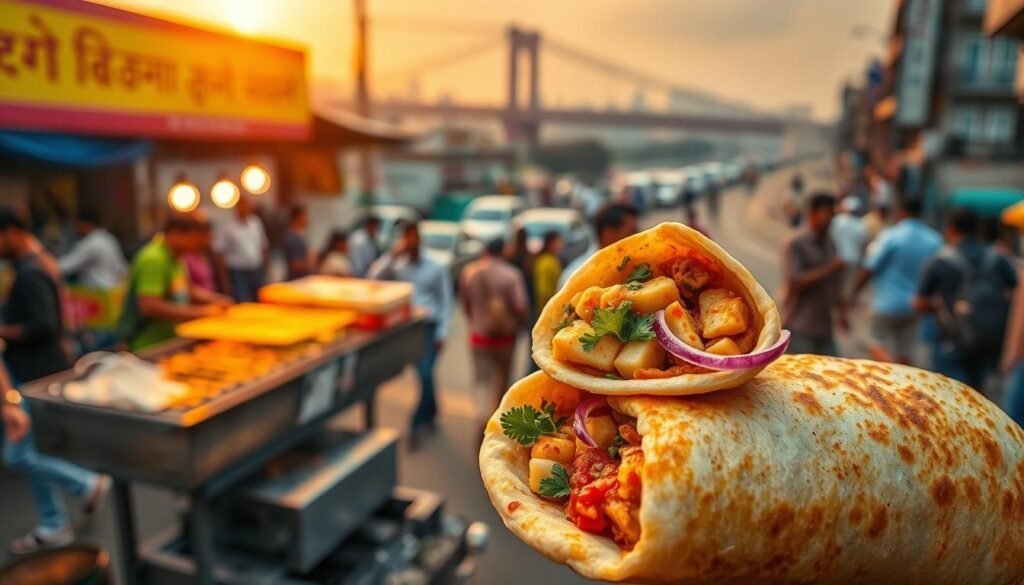
We explore the Kathi roll’s journey from Kolkata to India’s streets. It’s a small, tasty meal with a paratha, spiced fillings, and a tangy chutney. It’s loved for its portability, bold flavors, and variety.
History and Evolution of Kathi Rolls
The Kathi Roll started in Kolkata in the 1930s. It was a snack for busy workers: kebabs in a warm paratha with onions and sauces. It was a quick, satisfying meal.
Over time, the roll changed. New fillings like chicken and egg were added. But the paratha remained key: flaky, hot, and perfect for eating on the go. Fans of the roll prefer simple spices and fresh dough.
Best Spots to Grab Kathi Rolls
For a true Kolkata Kathi roll, visit Park Street and New Market. Here, vendors roll parathas on hot griddles. In Delhi, Mumbai, and Bangalore, look for stalls with sizzling kebabs and quick service.
Look for stalls with visible dough and sizzling kebabs. Ask for less spice if you prefer. This way, you can find the roll that suits your taste.
| City | Recommended Area | What to Look For |
|---|---|---|
| Kolkata | Park Street, New Market | Hand-rolled paratha, egg layer, charcoal-grilled kebab |
| Delhi | Connaught Place, Khan Market corridors | Fresh dough, bold chutneys, busy counters |
| Mumbai | Fort and Bandra street lanes | Hot tavas, varied fillings, quick service |
| Bangalore | Brigade Road, VV Puram food street | Contemporary twists, vegetarian options, balanced spice |
When trying Kathi Rolls, notice the paratha’s texture, the fillings’ freshness, and the spices’ clarity. These details help us find the best Kathi Rolls and enjoy the street food experience.
Pesarattu: A Nutrient-Rich Green Dosa
Pesarattu is a green dosa loved in Andhra Pradesh and Telangana. It’s made from soaked and ground green gram (moong). This gives it lots of protein and helps it digest quickly.
Street vendors and Andhra eateries serve it with upma, ginger chutney, or pesara pappu. This mix balances its crisp edges with a soft inside.
Pesarattu is unique in South Indian street food. It uses mung bean instead of rice and lentils. Adding rice or fenugreek changes its texture but keeps its bean taste.
What makes this batter special?
Pesarattu is special because of its green gram. It affects how the batter absorbs water and browns on a hot griddle. Adjusting the batter’s hydration and grind is key to its crispiness and softness.
Where to find the best bites
Look for vendors in Hyderabad, Visakhapatnam, and Vijayawada. They grind batter fresh and use cast-iron griddles. This makes the dosa crispy on the outside and soft inside.
For real Indian street food, pick places where locals eat. It means the batter is fresh and the cooking is consistent.
| Aspect | Characteristic | Why It Matters |
|---|---|---|
| Primary ingredient | Green gram (moong) | High protein, quick digestion, distinct legume flavor |
| Batter tweaks | Rice or fenugreek additions | Improves texture, aids slight fermentation-like lift |
| Typical accompaniments | Upma, ginger chutney, pesara pappu | Balances texture and adds complementary flavors |
| Best locations | Hyderabad, Visakhapatnam, Vijayawada | Regional mastery and high-quality street preparation |
| Relevance to professionals | Legume-based batter science | Useful case study for plant-protein processing and texture control |
Sweets and Desserts to Complement Street Food
Indian street food desserts add a special touch to the end of a meal. They bring brightness and warmth. Street stalls and sweet shops offer quick, comforting sweets that go well with spicy chaat or fried snacks. Choosing a busy vendor ensures freshness and authentic flavor.
Gulab jamun are deep-fried dough balls soaked in a sweet syrup. The syrup is flavored with cardamom, rose water, or saffron. These treats are popular at weddings, festivals, and roadside sweet counters. Try them warm for the best taste, and some shops serve them with rabri for extra richness.
Jalebi is a different story. It’s a crisp, coiled batter fried until golden and then soaked in syrup. Fresh jalebi is best enjoyed soon after frying. The exterior stays crunchy while the inside soaks up the syrup. Enjoy it with a cup of masala chai for a classic street-side treat.
Gulab jamun and jalebi are key parts of Indian street food. You’ll find regional twists, like saffron-infused jalebi and almond lassi. These variations show local tastes and craftsmanship.
Remember, these desserts are rich and meant to be shared. Try pairing one sweet item with savory snacks to balance your meal. Choose vendors with high turnover to keep the texture and syrup quality good.
Below, a compact comparison helps when choosing between these favorites:
| Item | Texture | When to Eat | Best Pairing | Notes |
|---|---|---|---|---|
| Gulab Jamun | Soft, syrup-soaked | Warm or room temperature | Rabri, masala chai | |
| Jalebi | Crisp exterior, syrupy interior | Immediately after frying | Masala chai, lassi | Best at busy sweet shops for crispness |
| Lassi (as complement) | Creamy, cooling | With spicy street snacks | Gulab jamun, spicy chaat | Badam lassi adds nutty depth |
Trying these treats makes any street-food tour better. We pair gulab jamun and jalebi with savory bites to enjoy a full range of Indian street food. For home cooks, many recipes for these sweets use simple ingredients and focus on syrup temperature and frying technique.
The Future of Indian Street Food
The future of Indian street food is exciting. It combines old traditions with new ideas. Vendors are trying new things while keeping recipes that everyone loves.
This mix makes street food affordable and fun. It attracts tourists and supports many jobs in India.
Fusion Trends in Street Food
Fusion street food in India is growing fast. You’ll find momos in spicy gravy, dosa wraps, and fancy chaat bars. These new dishes keep the flavors interesting but familiar.
Also, fancy versions of street food are popping up in malls and food courts. Vendors are getting better at keeping things clean and safe. They’re even using things like ceramic cups to serve food.
The Global Influence of Indian Street Snacks
Indian street snacks are loved around the world. You can find samosas, dosas, chaat, and butter chicken on menus everywhere. This shows how much people love Indian food and how it can change.
About 10 million street food vendors in India are making a big impact. They’re shaping street food trends globally and opening up new opportunities for collaboration.
For those in engineering, education, or studying, there are many chances to help. You could work on food safety, hygiene, or even design better ways for vendors and customers to interact. We’re open to partnerships, case studies, and recipes at info@indiavibes.today.