



In Pune, a schoolteacher used a government portal to apply for a scholarship. This used to take a week, but now it only takes twenty minutes on a smartphone. This change, thanks to Digital India, has made a big difference for the student and the teacher.
Digital India Initiatives are more than just policies. They are tools that help India grow digitally. Launched in 2015, Digital India aims to make India digitally connected and build a strong economy by 2047.
For engineers, educators, and students, Digital India is a big deal. It’s not just about technology; it’s about making a difference. It helps people access services easily, improves governance, and creates more tech jobs. As we look at how technology is changing India, we see Digital India as a way to learn, innovate, and make a big impact.
Understanding Digital India Initiatives

We explain the program’s goals and how it works. It was started in 2015 to bring digital services to all Indians. It aims to make digital services available to everyone, improve governance, and teach digital skills.
Overview of Digital India
The campaign brings together projects like Aadhaar and BharatNet. It makes services faster and more efficient. Now, there’s one place for all services, making things easier for users.
Key Goals and Objectives
The main goals are to offer services online, expand internet access, and teach digital skills. It also focuses on making money services available to more people. This includes growing UPI and digital payments.
Startups and the digital world get support from the government. They aim for systems that can grow, are secure, and focus on the user.
Importance for Future Development
Digital transformation is seen as a way to create jobs and innovation. It has led to more people using mobiles and UPI transactions. These show the program’s real impact.
For those interested, Digital India offers chances to learn and work on big projects. It’s a chance for students to improve their skills and for engineers to build systems that help millions.
Major Components of the Initiative

We looked at the key parts that made a policy vision real for people and engineers. Each part needed careful thought: networks to villages, training for confidence, and platforms for services on demand. Together, they helped make a big impact across India.
Infrastructure Development
Building a nationwide broadband and mobile network was a big step. It created a strong base for services. The focus was on making it affordable, reliable, and reaching remote areas.
Engineers had to design services that could handle a lot of traffic. They needed fast APIs and strong caching. This was key during the pandemic for telehealth and remote learning.
Digital Literacy Programs
India launched big digital literacy programs for everyone. Programs like PayNearby’s Digital Naari Program helped women entrepreneurs learn new skills. They learned about payments and keeping records online.
These efforts made services like DigiLocker and UMANG more popular. They helped people trust online services in India more.
E-Governance and Services
Governments put services on one platform for easy access. UMANG offers over 1,200 services, DigiLocker for documents, and mAadhaar for identity. BHIM for payments and mParivahan for vehicle info are also there.
These steps made things easier and faster. Engineers worked on making APIs work together, secure storage, and identity checks.
| Component | Primary Benefit | Technical Focus |
|---|---|---|
| Broadband & Mobile Networks | Wider reach; low-latency access | Edge computing, network redundancy, QoS |
| Digital Literacy Programs | Higher adoption of digital tools | User-centered training modules, multilingual UX |
| UMANG & Unified Apps | Single access point for multiple services | API orchestration, federated authentication |
| DigiLocker | Reduced forgery; paperless credentials | Secure cloud storage, document integrity |
| mAadhaar | Mobile identity verification | Biometric matching, secure tokens |
| BHIM / UPI | Financial inclusion; lower cash use | Payment rails, settlement security, scalability |
The Role of Technology in Everyday Life
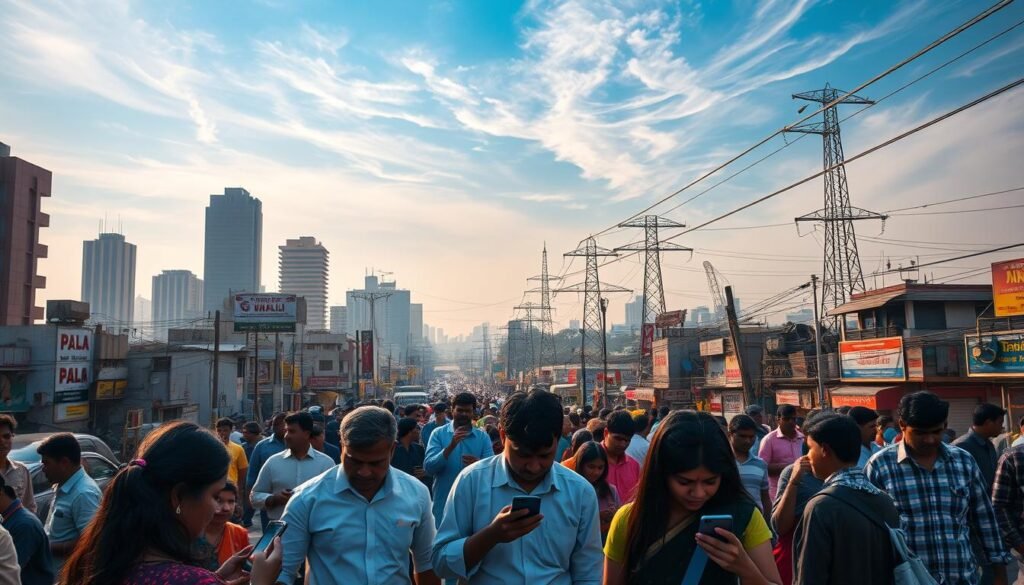
Technology is changing how we live in cities and villages. Mobile devices, apps for payments, and online classes are becoming common. They help us connect with services, learn new things, and manage money.
We focus on making technology work for everyone. This means it should work well even with slow internet, in many languages, and for all kinds of users.
Mobile Connectivity and Access
India has over a billion mobile users. Smartphones are key to accessing government and private services. Apps like mAadhaar and mParivahan make things easier by reducing paper work and visits.
Engineers need to make sure these apps work well even without internet. They should also support local languages to reach more people.
Digital Payments and Financial Inclusion
UPI, BHIM, and bank apps have changed how we pay. They make it easy to send money and pay bills instantly. This has helped small businesses and people in rural areas get into the formal banking system.
Good design and security are key to making people trust these systems. This trust is important for more people to use digital payments.
E-Learning Opportunities
During the pandemic, online learning platforms and government sites grew fast. They offer flexible ways to learn new skills. Teachers can now reach students in remote areas and help with vocational training.
It’s important to make sure these online classes work well even with slow internet. This means using videos that don’t take long to load and tests that can be taken offline.
- Design for intermittent networks and modest devices to boost mobile connectivity India.
- Integrate payment rails and simplified onboarding to support digital payments and financial inclusion.
- Provide multi-format learning: micro-lessons, transcripts, and assessments to improve e-learning opportunities.
Every choice we make in technology has a big impact. It can make it easier for people to get help, see doctors online, and keep learning. We need to design with care and technical skill to make sure everyone benefits.
Government Support and Collaboration

We think strong partnerships are key to India’s digital growth. The government uses policies, funding, and platforms to bring people together. This helps innovation grow and makes public services more accessible.
Public-Private Partnerships
Public-private partnerships in India are driving big changes. Companies like Reliance Jio and Tata Consultancy Services work with the government. They help bring broadband and e-governance tools to more people.
These partnerships help the government by sharing the risk. They also let private companies work fast to solve big problems.
Investments in Technology Startups
Investments in tech startups have grown a lot. This is thanks to government support and events like Digital India Week. The government makes it easier for startups to work with the public sector.
This helps startups in areas like machine learning and big data. They can test their ideas in real-world settings.
Global Collaborations
India is becoming a key player in technology, not just a market. It’s working with countries like the US, Israel, and Japan. This helps Indian startups and labs grow and reach new markets.
We urge engineers and entrepreneurs to explore government programs. Look for grants, join big events, and bid on projects. This will boost skills, create jobs, and bring new technologies to different sectors.
Case Studies: Success Stories from Digital India

We look at real examples that moved services online. These stories show how government, health, and education services changed. They offer lessons and tips for success.
E-Governance in Action
UMANG gives access to over 1,200 services from different levels of government. People can do things like apply for PAN, check EPF balances, and book gas cylinders online. They don’t have to go to offices.
mParivahan makes it easier to deal with vehicle and license issues. It offers digital driving licenses and RC checks, saving time. DigiLocker helps share and verify documents, making records safe and reliable for everyone.
Healthcare Innovations
Telemedicine grew fast during the COVID-19 pandemic. It allowed for remote doctor visits, digital health records, and better vaccine distribution. This helped keep people safe and reduced the need for face-to-face meetings.
These health projects showed how to reach many people. They cut costs, improved tracking, and helped public health teams work better.
Education Technology Breakthroughs
EdTech platforms opened up online classrooms and training. They focused on advanced skills like machine learning and quantum computing. This helped students and workers learn new things.
Education technology in India made learning flexible. It offered content in local languages and had mentor support. This helped overcome language and infrastructure barriers.
Measured Impact and Lessons for Practitioners
These platforms reduced paperwork and made things clearer. The Indian digital economy schemes provided the money and rules needed for growth.
Successful projects share common traits. They work well together, focus on users, use secure ways to log in, and offer content in local languages. These are key for future success.
| Area | Platform or Initiative | Primary Benefit | Key Design Feature |
|---|---|---|---|
| E-Governance | UMANG / DigiLocker / mParivahan | Faster citizen service access; fewer office visits | Centralized service catalog; secure digital IDs |
| Healthcare | Telemedicine networks & digital health records | Remote care at scale; real-time logistics | Interoperable records; scalable telehealth workflows |
| Education | National skilling initiatives & EdTech platforms | Wider access to learning; improved employability | Localized curriculum; modular upskilling paths |
| Policy & Funding | Indian digital economy schemes | Resource mobilization for tech infrastructure | Targeted grants; PPP frameworks |
Challenges and Obstacles

As Digital India grows, we face real challenges. Issues like connectivity gaps, uneven service, and trust problems slow down benefits for citizens. It’s essential for engineers, educators, and policymakers to work together for progress that includes everyone.
Technological Barriers
Rural and remote areas struggle with poor internet and mobile service. Devices vary in quality, and low bandwidth makes services hard to deliver. To boost technology use in India, we need solutions that work offline, are resilient, and focus on speed and scalability.
Socio-Economic Disparities
Many can’t use digital services due to lack of skills and cost. Women face extra barriers, despite efforts like Digital Naari to help small business owners. To tackle these issues, we need training, affordable devices, and outreach that respects local cultures.
Privacy and Security Concerns
Platforms like Aadhaar raise big security risks. We need strong checks, encryption, and fraud prevention to protect people. Clear rules and open policies help build trust and speed up adoption.
There are also risks in how we implement these systems. Differences between central and state levels, old processes, and uneven user experiences slow things down. We must align policies and tech standards, use common APIs, and set up security frameworks for lasting progress in India.
For engineers and educators, the main goal is to design systems that are secure and respect privacy. By focusing on inclusive design and setting clear goals for accessibility, we can overcome many barriers. This approach helps address both technological and socio-economic challenges while ensuring privacy and security.
How Citizens Can Engage with Digital India
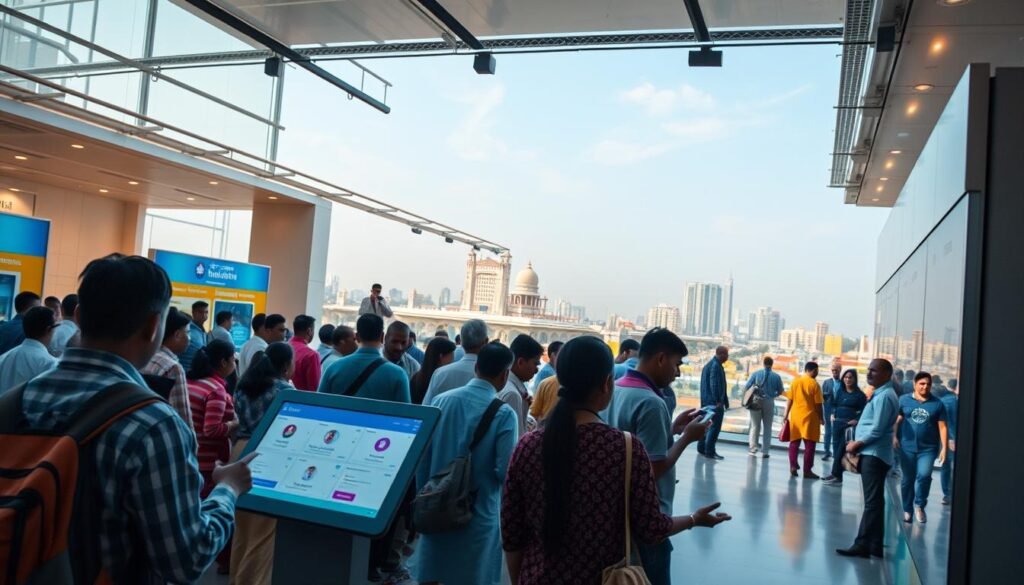
We can help build a digital nation by learning to use government platforms. We can join literacy efforts and support technology in our communities. Every small action helps speed up services, build local skills, and make innovation easier.
Utilizing government services online
Start with apps that millions trust. UMANG links to 1,200+ services from central and state departments. DigiLocker keeps your documents safe and reduces paperwork.
mAadhaar offers a portable ID for transactions. BHIM makes quick UPI payments easy. mParivahan helps with vehicle details and permits. These apps show how online services in India make life easier.
Participating in digital literacy workshops
Joining digital literacy programs boosts your confidence with technology. Look for workshops for women and rural folks. Programs like Digital Saksharta or Digital Naari offer training and help start small businesses.
Short classes and hands-on practice help learners use technology every day. Teachers and engineers can help by running labs and mentoring. They can also adapt curricula to include real-world tasks.
Becoming technology advocates
Be a local champion by sharing tips and helping neighbors with tech issues. Technology advocates in India often start peer groups and host demo days. They also give feedback to improve app design.
Attend events like Digital India Week or local hackathons. These events help connect with startups, government teams, and training centers. This builds trust and gives valuable feedback for app development.
For engineers and teachers, mentoring and embedding Digital India tools in courses are great steps. Partnering with startups or government projects also helps. These actions help scale learning and improve services in towns and schools.
Future of Digital India Initiatives

We’re heading towards a future where tech, policy, and people come together. The next ten years will see projects that change our daily lives and industries. Engineers and teachers will play big roles in shaping the country through their work.
Emerging Technologies and Trends
Machine learning and big data will make public services smarter. AI will help with learning, healthcare, and city planning. Edge computing will improve internet in rural areas, and secure identity systems will protect our data.
Quantum research and startups will bring big changes in computing and materials.
Sustainability and Innovation
Designing products that use less power will be key. Startups like Razorpay and Byju’s show how innovation can help society. Government support and contests will fund new ideas and products.
This mix of public and private efforts will make systems affordable and strong.
Long-term Vision for Development
The plan is to make India developed by 2047. It focuses on digital access, skills, and putting citizens first. The digital economy will boost entrepreneurship, jobs, and exports.
As we grow, we’ll focus on ethical AI, privacy, and helping regions improve.
Professionals and teachers can work on AI, privacy, and education that meets national goals. We can make innovation fair and advanced.
Conclusion: The Importance of Staying Informed
Staying informed is key as Digital India changes how we live and work. Programs like UMANG, DigiLocker, and BHIM show how technology is being used across India. By keeping up with updates and testing services, we make sure they work well for everyone.
The Role of Citizens in Shaping Policies
Citizens, including engineers and students, play a big role in improving policies. We can join pilot programs and give feedback on usability and privacy. This helps make policies better and ensures technology works for everyone.
Encouragement to Embrace Change
We urge everyone to use digital platforms and take courses. Using technology makes us more productive and involved in our communities. By helping with public projects, we can make a bigger difference in India.
Call to Action for Participation and Feedback
Join Digital India by attending workshops and events. Work with startups and the government. Give feedback on how services can be better. Together, we can create systems that are safe, open, and change lives for the better.