



We remember our first time at a small eatery in Chennai. A banana leaf was rolled out, and sambar steam was rising. There were tiny bowls that looked like a map of local tastes. That meal felt like a lesson in Indian Food Culture.
Every item was deliberate, and every flavor told a chapter in a larger story.
Regional thalis are key to traditional Indian cuisine. They are compact, balanced, and use local ingredients and techniques. A good thali has rice or roti, dal, vegetables, yogurt, pickles, and a sweet.
This mix delivers the six fundamental tastes. So, regional Indian dishes reflect India’s culinary traditions but stay local.
We’ll look at how regional thalis show history, climate, and plant-forward nutrition. They align with health benefits like better heart health and blood sugar control. If you face JavaScript or browser issues, check your connection or try a different browser. For more help, contact us at info@indiavibes.today.
Introduction to Indian Food Culture
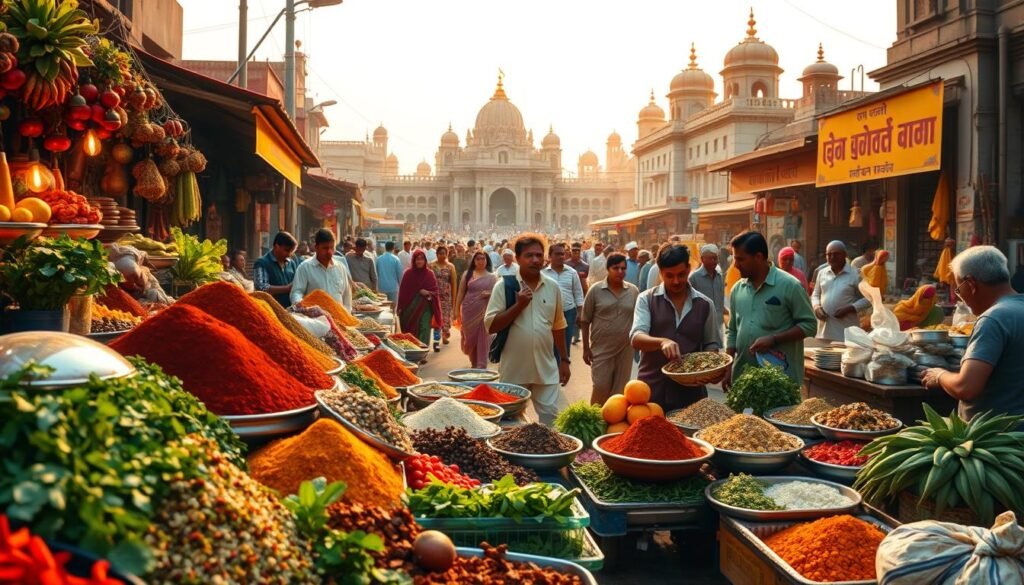
Indian Food Culture is a vibrant system. It uses local ingredients and follows seasonal cycles. These traditions shape meals and festival spreads.
This introduction shows the thali as more than just a dish. It’s a design pattern in food systems. It balances tastes, textures, and nutrition.
What is a thali?
A thali is a selection of dishes on one platter. It includes rice or roti, dal, and vegetable curries. You’ll also find yogurt or raita, pickles, chutneys, and a dessert.
Chefs arrange these items with care. Hot dishes are in the center, and cooling foods are at the edge. Condiments are placed to refresh the palate.
This arrangement is based on sensory and thermal logic. Savory gravies are next to plain rice for balance. Spiced chutneys offer contrast, while yogurt cools down strong flavors.
Significance of thalis in Indian Cuisine
Thalis hold cultural significance. They show hospitality, regional identity, and the sattvic ideal of purity and balance. Traditional Indian cuisine uses thalis to reflect seasonality and local terroir.
Thalis are often plant-centric, providing fiber, diverse phytochemicals, and balanced macronutrients. Fiber helps control blood sugar, while phytochemicals act as antioxidants. These benefits support heart health and a healthy gut microbiome.
For engineers and educators, thalis are like well-designed circuits. Each dish has a role—energy sources, regulatory elements, and protective components. Together, they create a stable and adaptable outcome.
| Thali Component | Function | Typical Example |
|---|---|---|
| Staple carbohydrate | Primary energy source; pairs with gravies to modulate texture | Rice, roti |
| Protein | Muscle maintenance, satiety, glycemic control | Dal, paneer, legumes |
| Vegetable curries (sabzis) | Micronutrients, fiber, phytochemicals | Seasonal mixed vegetables |
| Fermented/dairy | Probiotics, cooling action, digestive aid | Yogurt, raita |
| Pickles and chutneys | Flavor contrast, appetite stimulation, preservation | Mango pickle, coriander chutney |
| Dessert | Sweet balance, cultural ritual, energy refill | Halwa, kheer |
For interactive guides on regional thalis, ensure JavaScript is enabled for full functionality on related sites. If you encounter access issues, contact support at info@indiavibes.today for assistance.
The Diversity of Regional Thalis
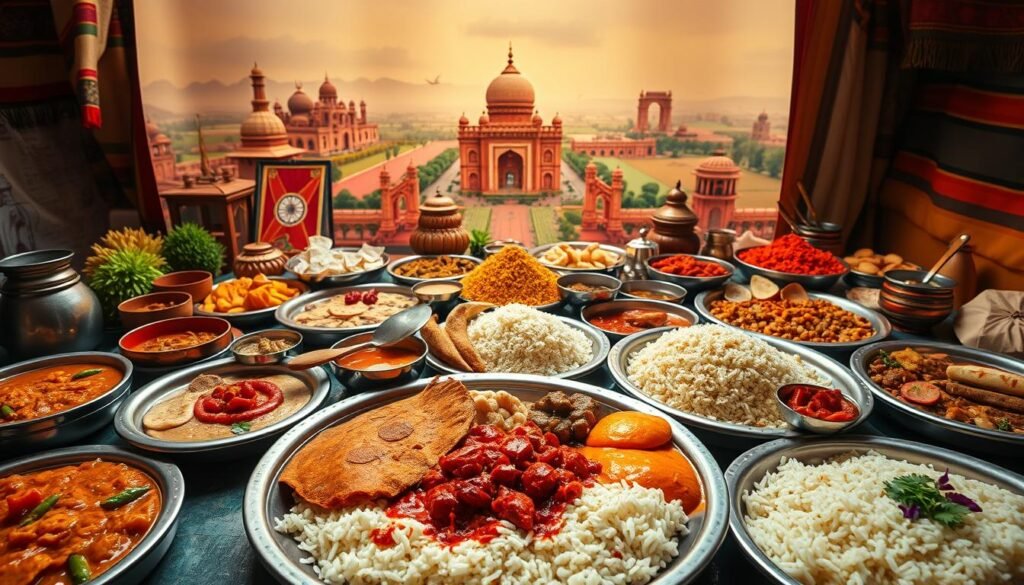
We explore how regional Indian dishes form a mosaic across states. Each thali reflects local crops, trade history, faith-driven diets, and climate. This brief sets the scene for mapping characteristic plates and for practical troubleshooting when readers consult online state-by-state thali maps that rely on JavaScript. If a map fails to load, please enable JavaScript, clear the browser cache, or contact support at info@indiavibes.today for assistance.
We summarize representative regional Indian dishes so readers can see patterns at a glance. Gujarat favors a sweet-savory balance: kadhi and dhokla are common on everyday thalis. Rajasthan leans into rich, spicy fare such as dal baati churma. South Indian thalis—Kerala and Tamil Nadu—center on rice, sambar, rasam, and coconut. Maharashtra blends spice with mild sweetness: pithla and bhakri appear alongside coastal fish or vegetarian breads. These examples show how culinary traditions of India vary yet share a logic.
Think of influencing factors as inputs in a system: local agriculture supplies the raw materials, spice availability tunes the palate, religious and cultural norms set dietary constraints, climate dictates preservation methods, and coastal access shapes seafood presence. Historical trade routes introduced new spices and grains; Ayurvedic and plant-based health traditions guided dish composition. This systems view helps us predict likely components of a regional plate.
We offer a concise guide to predict thali features: regions with abundant rice and coconut will have wet, tangy curries and coconut-based gravies. Arid zones with millet and ghee favor baked or roasted breads and concentrated spice blends. Areas with strong vegetarian traditions yield larger plant-based spreads. Understanding these drivers clarifies why spices and flavors show such distinct regional profiles.
Practical outcomes: by recognizing inputs—crop, climate, faith, trade—you can anticipate menu structure and spot authentic elements in a thali. This knowledge also illuminates how plant-based emphasis in many regional thalis aligns with modern health evidence supporting legumes, whole grains, and spice-driven phytochemicals.
Below is a compact comparison to visualize regional patterns and to reinforce the mapping between region, typical dishes, and dominant influences.
| Region | Representative Dishes | Primary Influences | Typical Profile |
|---|---|---|---|
| Gujarat | kadhi, dhokla, undhiyu, thepla | Vegetarian customs, local legumes, sweet-sour palate | Sweet-savory balance; light gravies |
| Rajasthan | dal baati churma, ker sangri, gatte ki sabzi | Arid agriculture, preserved foods, ghee use | Rich, hearty, spice-forward |
| Kerala / Tamil Nadu | rice, sambar, rasam, coconut chutneys, avial | Tropical crops, coconut, rice dominance | Tangy, coconut-forward, rice-based plates |
| Maharashtra | pithla bhakri, varan bhaat, misal pav | Grain diversity, coastal trade, spice blends | Spicy with mild sweet notes; regional breads |
| Bengal / Odisha | machh bhaja, shorshe ilish, dal with mustard | Riverine produce, mustard oil, fish culture | Fish-centric, mustard and warm spices |
Popular North Indian Thalis
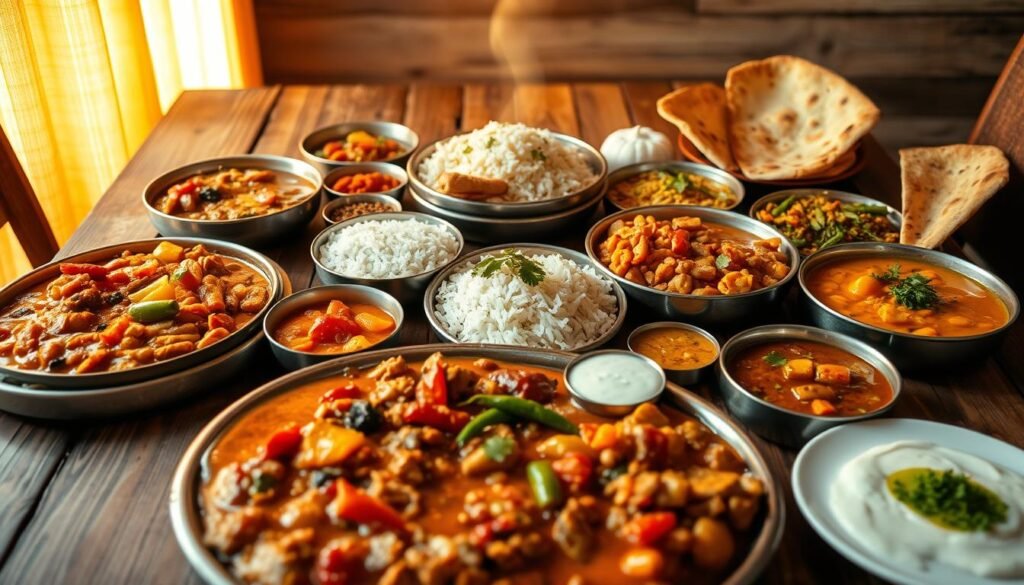
We look into how Northern kitchens mix flavors, textures, and nutrition into meals. These meals feed families and give them energy for long days. Dishes from Punjab, Delhi, and Rajasthan show how spices, planning, and plant-based foods can be delicious.
Punjab’s culinary profile focuses on dairy, ghee, and hearty breads. The Amritsari thali is a great example: it has buttery dals, chole, sarson ka saag with makki ki roti, and rich gravies. These elements balance calories with plant proteins like lentils and chickpeas, making them good for your heart.
We learn from food engineering: breads like naan and paratha add texture and make you feel full. Dals give you soluble fiber for better metabolism. The Amritsari thali is a top choice for its mix of comfort and protein-rich legumes.
Urban fusion in Delhi changes thali components. Kebabs, stuffed parathas, and chaat items move from street carts to plates. This change adds acidity, crunch, and variety to meals.
Designers in Delhi use spice layering and condiments to boost flavor without extra oil. Simple swaps can keep traditional taste while improving nutrition: more lentil starters, grilled kebabs, and yogurt-based raitas for better digestion.
Rajasthan’s roster was shaped for dry climates: dishes like dal baati churma and gatte curry gave energy on long trips. The Rajasthan thali keeps using durable ingredients and strong spices to preserve food and deepen flavors.
From a nutritional standpoint, these choices are strong in plants: legumes, millet breads, and preserved vegetables offer fiber and vitamins. Adapting classic Rajasthan thali items—like baked baatis instead of fried, and controlled churma portions—keeps cultural traditions while meeting modern health needs.
| Feature | Punjab / Amritsari thali | Delhi street food influence | Rajasthan thali |
|---|---|---|---|
| Typical components | Buttery dal, chole, sarson ka saag, makki ki roti | Stuffed parathas, kebabs, chaat items, raita | Dal baati churma, gatte curry, millet breads |
| Preservation strategy | High dairy, fresh cooking; perishable | Fast prep; street-shelf practices for quick service | Shelf-stable, dehydrated spices and baked breads |
| Nutritional strengths | High in plant proteins, calcium from dairy | Mixed: grilled proteins, legumes, fermented yogurt | Legumes, whole grains, energy-dense but adaptable |
| Plant-forward adaptations | Reduce ghee, increase lentils and leafy greens | Prioritize grilled options and chutney-based flavor | Use baked baati, limit churma portion size |
| Culinary engineering note | Balance of richness and protein for sustained energy | Urban fusion optimizes texture and acidity for appetite | Shelf stability plus spice concentration for long use |
If you’re looking for multimedia guides, like Amritsari thali videos, some pages need JavaScript. If you have trouble, try enabling scripts, updating your browser, or clearing your cache. For ongoing playback issues, contact info@indiavibes.today for help.
Exploring South Indian Thalis
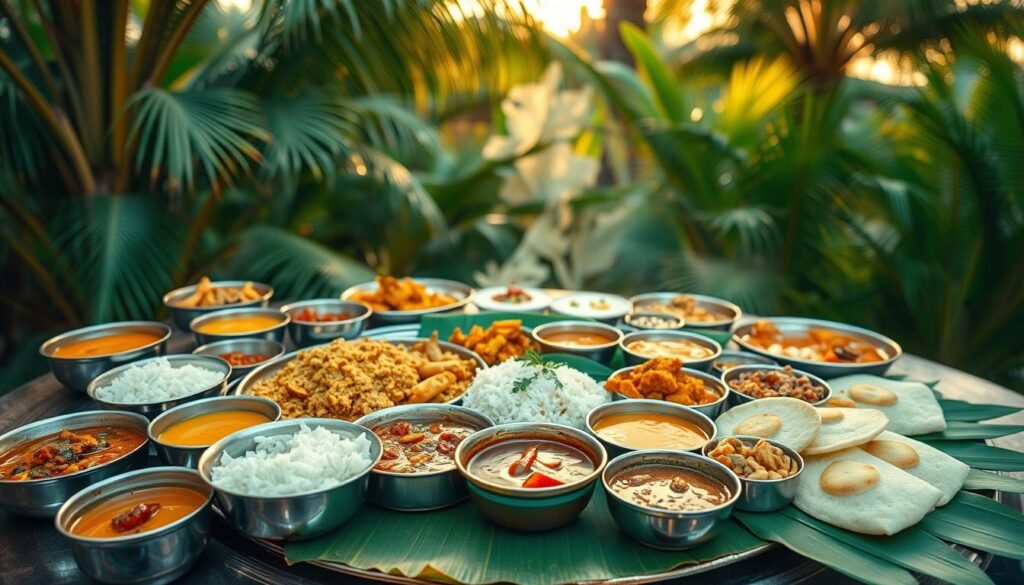
We invite readers to look at South Indian thalis through a practical lens. This includes sensory systems, ingredient modules, and cultural protocols. This region blends simplicity with precision, making meals repeatable assemblies of shared components and local innovations.
Kerala’s Sadya: A Festive Delight
Kerala sadya is a ceremonial banquet served on a banana leaf thali. It includes rice, sambar, avial, thoran, pachadi, and payasam. These elements create layered textures and tastes. Coconut adds creamy balance and a sense of place.
From an engineering viewpoint, sadya is a modular system. It has a base of rice and interchangeable vegetable and lentil modules. This design makes it scalable for large gatherings and ensures nutritional balance.
Tamil Nadu’s Banana Leaf Thali
The banana leaf thali from Tamil Nadu uses rice, sambar, rasam, poriyal, kootu, and pickles. It crafts contrasts of heat, tang, and umami. Serving on a banana leaf transfers aroma and mild flavor, and offers natural plating and eco-friendly disposal.
Interactive demonstrations of banana-leaf plating may require JavaScript for full effect. If scripts fail, clear the browser cache, enable scripts in the settings, or contact info@indiavibes.today for assistance.
Karnataka’s Special Thali Dishes
Karnataka thali styles vary widely. Coastal plates lean on seafood and tangy coconut gravies. Inland versions favor vegetarian combos with crispy fritters like bajji and sweet obbattu. Each local variant highlights distinct spices and flavors while keeping the thali concept intact.
Plant-based elements in many South Indian thalis deliver health benefits. Whole grains and legumes supply slow-release carbohydrates and sustained energy. Vegetables and coconut add fiber, prebiotic substrates, and healthy fats that support digestion and long-term well-being.
For educators and engineers, these meals offer a blueprint for modular design. Treat staples such as sambar and rasam as reusable components. Pair them with regional modules—avial, thoran, coastal fish curries—to prototype scalable, adaptable menus.
East Indian Thalis: A Taste of Tradition
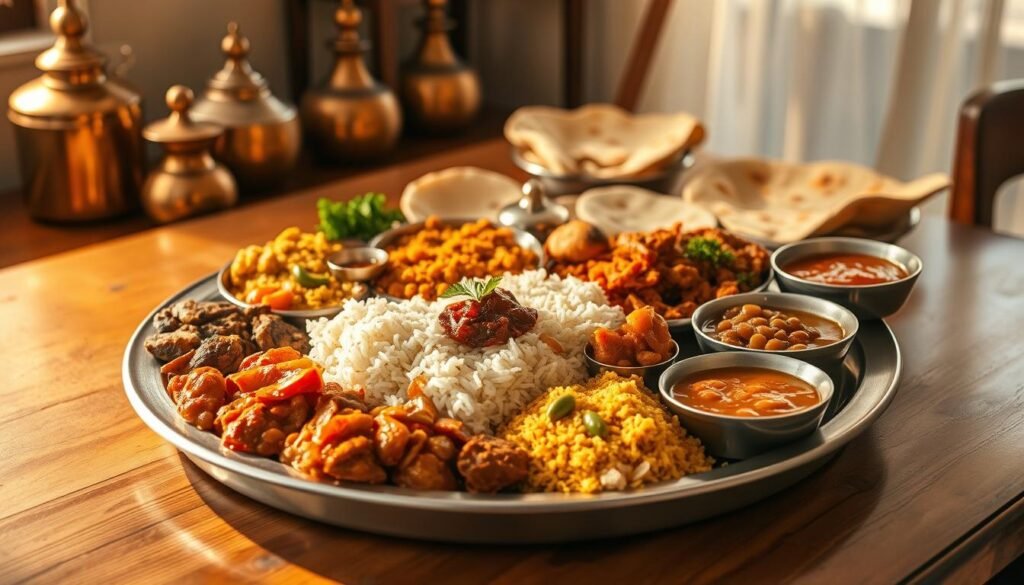
We look at how local environments shape meals that feel close and real. East Indian thalis show the impact of rivers, coasts, and hills on food. They use fresh fish, local grains, greens, and spices.
Bengali thali blends river riches with fine cooking. Fish like hilsa and rohu are key, often in mustard-based dishes. Mustard oil adds a unique flavor that pairs well with rice.
Odisha cuisine is simple yet rich. It focuses on fresh veggies, dals, and pithas. This approach highlights local grains and avoids heavy spices.
Assamese dishes are unique, using bamboo shoots and fermented fish. They also use local rice and millet for better nutrition. Light fermentation and oils are common to enhance digestion.
These regions offer many plant-based options. Whole grains, pulses, and fermented foods are good for the gut. Mustard oil is also beneficial for digestion.
Fermented chutneys and fish add probiotics and nutrients. Spices like cumin and turmeric improve taste and health. This mix makes East Indian thalis special in traditional Indian cuisine.
These dishes are deeply connected to their environment. They show how local conditions influence food and cooking. Exploring Bengali, Odisha, and Assamese cuisine teaches us about ecology, culture, and taste.
West Indian Thalis: A Fusion of Flavors
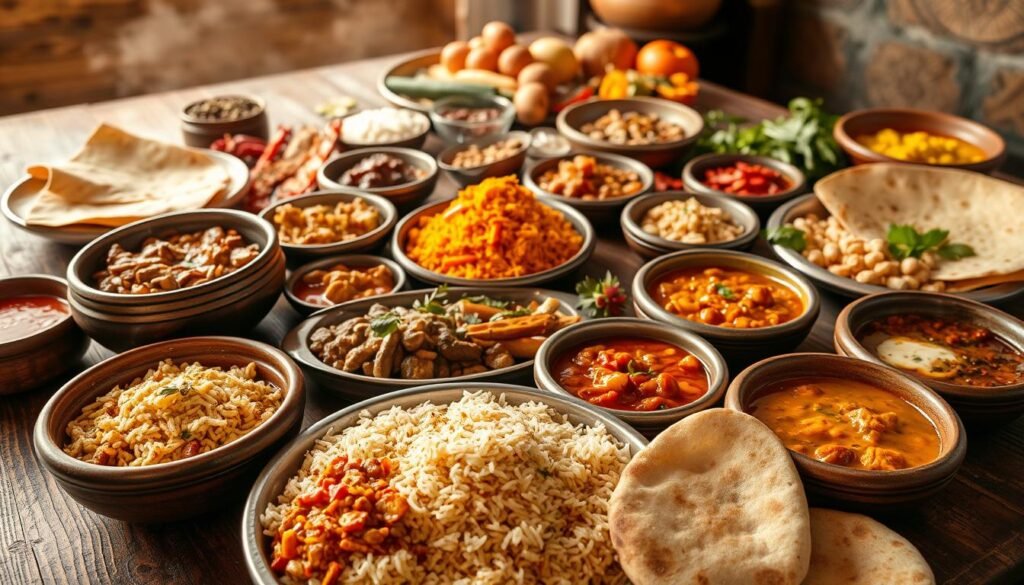
We explore how coastal and inland traditions come together. This creates vibrant plates that show history and innovation. West Indian thalis mix sweet-sour Gujarati flavors with spicy Maharashtra tangs. These dishes teach us about menu design, flavor layering, and nutrition.
There are practical limits. Some menu pages need JavaScript to show a full Gujarati thali spread. If you can’t see it, try another browser or email info@indiavibes.today for help.
Gujarati thali focuses on sweet-and-savory contrasts. Small dishes like kadhi and dhokla add texture. Each part of the plate is designed for flavor balance and plant-based nutrition.
Maharashtra cuisine offers both sea and land dishes. Coastal Konkani seafood meets inland misal, a spicy bean curry with pav. The misal pav mix shows how starch and spice create a lasting taste.
Both traditions support vegetarian Indian recipes. Gujarat’s vegetarian diet is rich in fiber and phytochemicals. Coastal Maharashtra adds plant-rich sides for heart health. Chefs and educators can use these examples to create menus or curricula that focus on variety and nutrition.
West Indian thalis teach us about micro-portioning and flavor contrast. These ideas apply to systems design and course design. They help break down complex problems and balance challenge with support.
| Feature | Gujarati Thali | Maharashtra Thali |
|---|---|---|
| Primary Flavor Profile | Sweet-savory balance with mild spices | Spicy heat with coastal umami and mild sweets |
| Typical Dishes | Kadhi, dhokla, farsan, dal, seasonal vegetables | Misal pav, bharli vangi, fish curry (coastal), puran poli |
| Dietary Focus | Predominantly vegetarian Indian recipes; high in legumes | Mixed: plant-forward sides; seafood on the coast; adaptable |
| Menu Design Principles | Micro-portioning, texture contrast, palate cleansing | Contrast of heat and sweetness, starch pairing like misal pav |
| Educational Analogy | Modular lesson units that balance theory and practice | Integration of domain-specific modules with cross-cutting skills |
Vegetarianism and Thalis
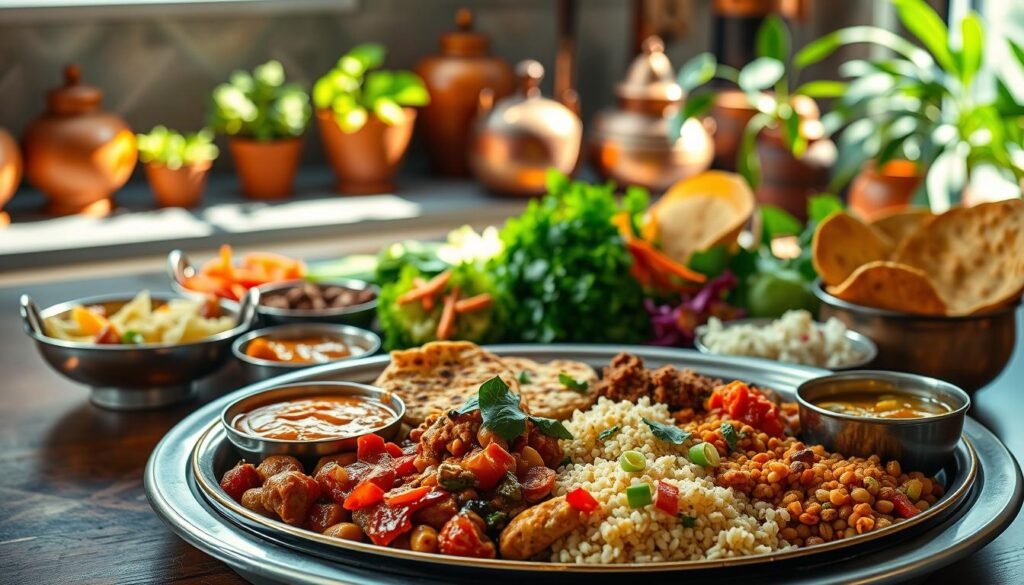
We look into how vegetarian traditions influence Indian dishes. The vegetarian thali is a guide to a balanced meal. It includes grains, dal, vegetables, yogurt, chutneys, and a sweet dish. These items aim to cover six tastes and meet nutritional needs.
The Role of Vegetarianism in Indian Food Culture
Vegetarianism is deeply rooted in Indian culture. It’s connected to religion, ecology, and health. Classic texts and modern chefs agree on the importance of sattvic meals. These meals are meant to calm the mind and nourish the body.
Regional vegetarian dishes vary based on local crops and storage needs. Gujarat likes sweet and salty flavors, while Rajasthan uses legumes and spices. South India adds coconut and tamarind for a tangy taste.
If you can’t load vegetarian thali resources, remember some need JavaScript. For help, email info@indiavibes.today.
Diverse Vegetarian Options in Regional Thalis
Regional veg-thalis offer a wide range of options. They include protein from lentils and legumes, carbs from millets and rice, and fats from seeds and coconut. Leafy greens and pickles add important nutrients.
Studies show plant-based diets are good for you. They lower heart disease risk, help with weight, and improve blood sugar control. They also reduce inflammation and boost gut health.
Here are some tips for a plant-based diet. Mix legumes, whole grains, nuts, and seeds for a complete protein. Balance your meal with dal, a grain, and roasted seeds. Vegans might need B12 supplements. Use spices like mustard seeds or lemon to enhance flavor and mineral absorption.
The Modern Twist on Traditional Thalis
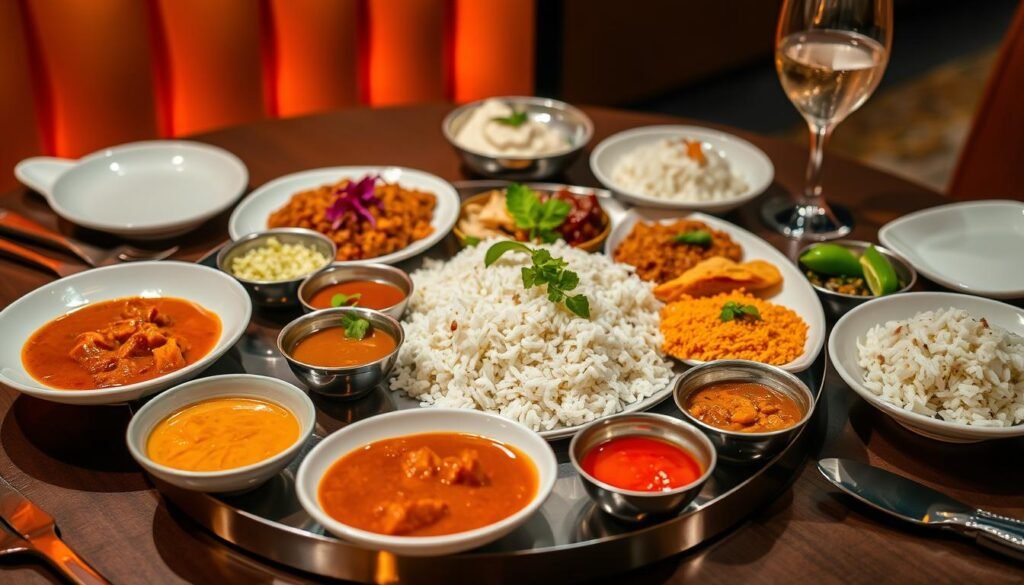
The thali has evolved from a simple meal to a creative dining experience. Chefs keep the essence of balance and taste. They experiment with new techniques and presentation styles. This results in modern thali presentations that celebrate regional Indian dishes while adding a twist.
Interactive menus and video showcases often use JavaScript. For help with these features, contact info@indiavibes.today. Restaurants like Adrak Yorkville have introduced shared thali experiences. They use metal thals with katoris for condiments and salads, along with special appetizers.
Fusion Cuisine in Thali Presentations
Modern chefs are reimagining traditional thalis through fusion cuisine. They deconstruct curries, swap proteins, and pair dishes from different cultures. This approach respects the six-taste principle while exploring new textures and colors.
Spices and flavors are at the heart of these reinterpretations. They keep dishes true to their roots. Chefs blend spices from various regions, like South Indian tamarind with Gujarati sweetness or Punjabi roasts with Japanese umami.
Popularity of Thali in the Global Food Scene
Thalis are becoming more popular worldwide as people embrace plant-based diets. These dishes are rich in nutrients and offer health benefits. Culinary educators teach about these benefits in their classes.
The thali is a great teaching tool for chefs and culinary engineers. It shows the importance of balance and experimentation. It’s recommended to use the thali in educational programs to teach menu engineering and sustainability.
Traditional thalis inspire chefs globally. A Globe and Mail feature explores the evolution of the sectional plate. It shows how Indian dishes influence chefs worldwide through shared techniques and goals. Read the profile of the thali.
Conclusion: The Enduring Legacy of Thalis in India
The thali is a key part of Indian food culture. It’s a balanced plate that shows off different flavors and textures. It also highlights the unique tastes of each region.
A thali is more than just food. It’s about hospitality and balance. It’s about choosing simple, fresh ingredients that are good for both body and mind.
Today, science backs up the benefits of thalis. They are good for your heart and help with digestion. They also support a healthy gut.
Thalis teach us about design and nutrition. They show how small parts work together to make something strong. This is important for engineers, students, and teachers.
To really get into Indian thali culture, try visiting local restaurants or festivals. Or, make your own thali at home. Choose dishes that match the season and local ingredients.
If you want to learn more, check out our multimedia resources. Or, if you have questions, enable JavaScript and disable ad blockers. Try a different browser if you have trouble. For more help or to work together, email us at info@indiavibes.today.