



Our team once gathered at IIT Madras, brainstorming on a whiteboard. We were mapping out receipts, invoices, and deadlines. A student asked, “How do we avoid chaos?” This question sparked our mission to simplify the Indian tax system.
This guide breaks down the basics of Indian taxes. It explains tax laws, income tax rules, and the difference between direct and indirect taxes. We aim to help engineering pros, students, and teachers understand and follow these rules easily.
We cover filing steps, deadlines, and deductions in simple terms. We also talk about business compliance and useful resources. Remember, keep records for at least six years and use e-invoicing for security.
As the world shifts to digital tax filing, we encourage you to prepare. Choose good tax software, set up secure systems, and stay updated on reporting changes. We’ll guide you through tax filing, planning, and compliance with a practical roadmap.
Understanding the Indian Tax System
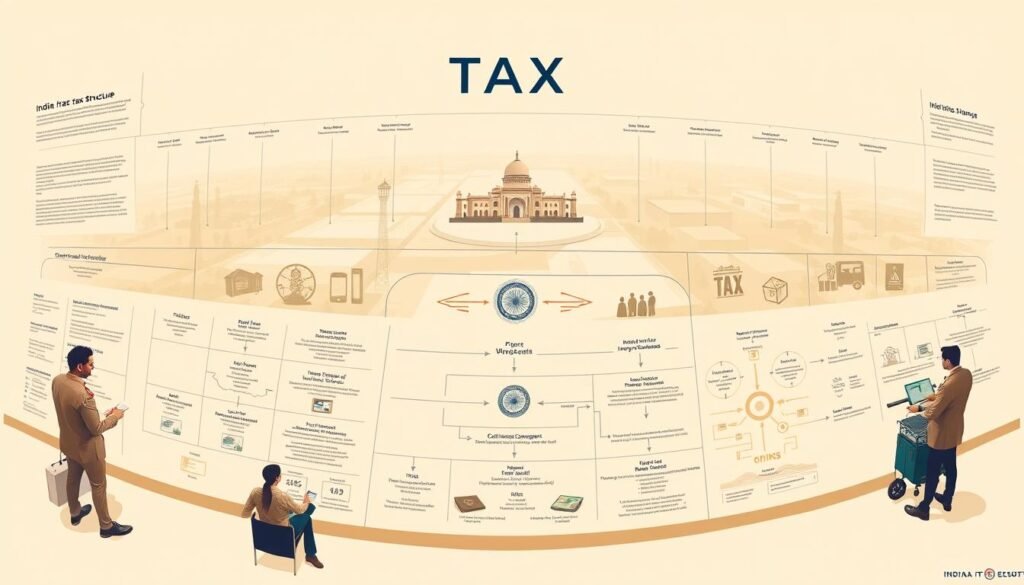
We explain how India collects taxes and why it’s important for engineers, educators, and entrepreneurs. Knowing the tax system helps teams plan budgets, set prices, and meet deadlines. Our explanations are short, clear, and focused on real-world impacts.
Overview of the Tax Structure
The system divides taxes between the central government and states. The center collects income tax and part of the goods and services tax. States get state GST and other local taxes that affect local sales.
India’s GST combined many indirect taxes while keeping state roles. This is similar to Canada’s GST/HST and PST harmonization. Knowing this helps understand compliance and rates across different areas.
It’s key to know the difference between direct and indirect taxes. Direct taxes are on individuals and companies. Indirect taxes are collected at sales points and given to the government.
Importance of Taxation in India
Taxes fund important areas like infrastructure, education, healthcare, and defense. These are critical for engineering and education. Good public spending supports campuses, research, roads, and digital networks.
Tax laws in India set rules for who must register and when to pay taxes. Knowing these rules helps avoid penalties and unexpected cash needs for startups and small businesses.
Global trends show a move towards electronic tax filing, like in Canada. We suggest using certified tax software, making electronic payments, and keeping digital records. This reduces risks and speeds up filing.
The main point is to understand who is considered a small supplier and when to register. These details affect reporting periods, how often to file, and who gets input tax credits.
| Aspect | Central Role | State Role |
|---|---|---|
| Major levies | Income tax, central GST components | State GST, state excise, local taxes |
| Who pays | Individuals, corporations (direct taxes) | Consumers via businesses (indirect taxes) |
| Compliance touchpoints | Annual returns, TDS, corporate filings | Periodic GST returns, state filings, local permits |
| Digital readiness | Electronic filing encouraged; certified software recommended | Real-time invoicing and secure records improve reconciliation |
| Practical decision factors | Tax planning, transfer pricing, statutory audits | Registration dates, turnover thresholds, filing frequency |
Types of Tax in India

We explain how taxes are divided in India. This helps businesses and people understand income tax rules. It’s important to know the basics of the Indian tax system.
Direct Taxes Explained
Direct taxes are paid directly by the taxpayer. Examples include income tax for individuals and corporate tax for companies. There’s also capital gains tax and taxes on wealth and estates.
People with jobs, freelancers, and businesses are the main taxpayers. Employers take out tax for employees, like in the U.S. Freelancers and businesses must pay taxes in advance. Companies have their own rules for filing and audits.
Capital gains tax is for selling assets like property and stocks. Wealth and estate taxes are less common but affect the rich. Keeping good records and following tax withholding rules helps avoid problems.
Indirect Taxes Explained
Indirect taxes are on what we buy and can be passed on. The Goods and Services Tax (GST) is India’s main indirect tax. It replaced many old taxes to make things simpler.
Rules decide which state gets the tax money. This can be tricky for businesses to manage. They need to track their sales to apply the right tax rates.
There are rules for when a business must register for GST. Like Canada, India has a certain sales amount before you need to register. Businesses must watch their sales to know when they need to start following GST rules.
Direct and indirect taxes have different rules for invoices. GST has special rules for invoices, affecting tax credits. Keeping accurate records and filing on time is key for tax credits and avoiding problems.
We suggest keeping detailed records and checking tax laws often. This helps with cash flow and keeps you in line with Indian tax rules.
Income Tax: The Basics

We cover the key points about income tax in India that every professional should know. This guide explains income tax regulations, tax rates, and filing requirements. It offers clear definitions and practical steps for engineers, educators, and small business owners.
Who must pay
Who pays income tax depends on residency. Residents pay on all income, while non-residents only on income from India. Residency is based on days spent in India and previous years. Taxpayers include individuals, HUFs, firms, companies, and more.
Employers deduct tax from salaries. Self-employed and business owners pay advance tax in instalments if their tax liability is high. This helps spread out the tax burden and avoids surprises at filing time.
How slabs and rates work
Income tax for individuals uses a progressive slab system. Income is split into bands, each taxed at a different rate. Lower bands have lower rates, and higher income goes into higher bands. This system aims for fairness and revenue.
Corporate tax rules are different. Companies face set rates and special rules for incentives. Slab thresholds and rates change with each Finance Act. Always check current notifications before planning or filing.
Administrative and compliance notes
Important administrative details include filing deadlines, penalties, and interest for late payments. Penalties and interest work like in Canada, with fixed penalties and interest on unpaid amounts. Missing deadlines can lead to both penalties and interest.
Advance tax is needed when estimated annual tax is high. Timely instalment payments avoid interest. Using certified tax software and auto-fill services can make compliance easier and reduce errors.
Practical tips
- Keep records of salary slips, bank interest, capital gains, and business income to meet income tax regulations.
- Reconcile TDS credits early to avoid shortfalls at filing.
- Use licensed tax software and electronic payment channels to simplify tax filing requirements and reduce manual mistakes.
Goods and Services Tax (GST)

We explore the Goods and Services Tax as a key part of India’s tax system. It’s an indirect tax on goods and services, replacing many old taxes. It helps businesses understand different types of supplies: zero-rated, exempt, and taxable.
What is GST?
GST is India’s single tax on goods and services. It combines taxes like excise duty and service tax into one. Zero-rated supplies help with refunds on exports. Exempt supplies don’t have GST and no credit is allowed. Taxable supplies are the main part of business and have standard rates.
How GST Works in India
Registration rules depend on how much you sell. Small sellers might not need to register until they hit certain sales levels. Rules about where taxes are applied help decide if it’s central or state GST.
Input tax credit helps businesses pay less tax on what they sell. You need to keep invoices with PAN and GSTIN to claim this credit.
Non-resident digital service providers must register and collect GST. Keeping invoices for a long time is important for audits and claiming credits.
GST Rates and Compliance
There are different GST rates for various goods and services. Filing frequency changes based on how much you sell. Most need to file annually, but big businesses file monthly.
It’s best to file and pay online. Big payments must be made electronically. If you’re late, you’ll face penalties and interest.
Good tax practices include using GST-compliant invoices and keeping records for a long time. Also, watch out for changes in rules for online marketplaces.
| Topic | Key Points | Practical Action |
|---|---|---|
| Registration | Turnover thresholds; mandatory for interstate trade; special rules for non-residents | Assess turnover annually; register promptly when limits are exceeded |
| Place of Supply | Determines CGST/SGST or IGST treatment; based on location of supplier, recipient, or service performance | Verify supply location on each invoice; maintain delivery evidence |
| Input Tax Credit (ITC) | Offset mechanism for tax paid on inputs; requires valid tax invoices and GSTIN on documents | Reconcile vendor invoices monthly; retain originals for audits |
| Rates & Filings | Multiple rate bands; monthly/quarterly/annual returns; strict deadlines | Set calendar reminders; use compliance software to automate filings |
| Digital Services | Non-resident suppliers may need to register and remit GST; similar to international digital tax rules | Review cross-border digital sales; register where required and collect GST at point of sale |
| Penalties & Interest | Daily interest on unpaid tax; fines for late or incorrect returns | Prioritize timely payments; correct errors via amendment returns |
Filing Your Income Tax Return
We help professionals and students with the steps to file on time. Knowing the tax filing rules and deadlines is key. This keeps you in line with income tax laws. By following a set process, you can avoid mistakes and get your refund faster.
Who Needs to File?
If your income is over a certain limit, you must file a return. This includes those who want refunds, have certain incomes, or report foreign assets. These rules are set by income tax laws.
Self-employed people and freelancers with tax to pay also need to file. They might have to pay tax in advance. Filing on time helps avoid penalties and keeps your record clean.
Steps to File a Return
First, collect all important documents. This includes your salary statements, Form 16 or Form 26AS, bank interest, TDS certificates, and records of capital gains. Keep these documents safe for at least six years.
Then, use certified e-filing sites or approved tax software to prepare your return. E-filing is quicker and can auto-fill data from the tax authority.
If you must file a paper return, keep your documents safe and expect longer processing times. Always save your submission confirmation numbers and acknowledgments.
Important Deadlines
Individual returns are usually due by a specific date after the tax year. Self-employed taxpayers have later deadlines. Quarterly instalment dates are March 15, June 15, September 15, and December 15 for advance tax payments.
Late filing can lead to penalties based on the amount you owe. It also slows down refunds and may attract extra scrutiny under income tax laws.
| Filing Item | Who It Affects | Typical Deadline | Notes |
|---|---|---|---|
| Individual Salaried Returns | Salaried employees | April 30 (example) | Use Form 16 and bank statements; e-filing recommended |
| Self-Employed Returns | Business owners, freelancers | June 15 (example) | May require advance tax instalments; maintain books |
| Advance Tax Instalments | Taxpayers with tax liability | Mar 15, Jun 15, Sep 15, Dec 15 | Missing dates leads to interest and penalties |
| Returns Claiming Refunds | Any taxpayer with excess TDS | Same as filing deadline | Late filing delays refunds and reconciliation |
| Foreign Asset Reporting | Residents with overseas holdings | Aligned with return due date | Non-reporting may trigger compliance notices |
Keep your records safe, use secure e-filing, and answer notices quickly. Meeting tax deadlines and following the rules helps avoid problems. It keeps your practice in line with current income tax laws.
Deductions and Exemptions
We explore ways to lower your tax bill and income that doesn’t get taxed. This guide offers practical tips and technical details for smart tax planning. It also helps keep your records clear and defendable.
Common Deductions Available
Contributions to retirement savings under Sections like 80C are key for reducing your taxable income. EPF, PPF, and NPS qualify if you meet the rules.
Life and health insurance premiums can be deducted if allowed by law. Keep receipts and policy documents as proof. You can also deduct education loan interest, approved investments, and medical expenses.
Self-employed folks need to document business expenses. This includes office rent, work-related travel, and professional fees. Keep invoices and logs to support your deductions.
Understanding Exemptions
Exempt income is not taxed from the start. Examples include some agricultural income and government social benefits. These are listed as non-taxable by law.
In indirect tax, supplies can be zero-rated or exempt. Zero-rated supplies allow you to claim input tax credit. Exempt supplies don’t allow ITC claims, so you must account for the tax on inputs.
Technical Notes on Credits and Change of Use
Input tax credit time limits are important. There are rules for claiming ITC and strict rules for recapture when assets change use. Proper accounting and documented decisions reduce recapture risks.
If an asset changes from taxable to exempt use, calculate the reversal according to tax law. Keep supporting schedules. Timely reconciliations between books and tax returns lower audit risk.
Practical Tax Planning Strategies
We suggest a balanced approach to tax planning. Choose investments that offer real tax benefits and fit your financial goals. Keep organized digital records for easy verification of claims.
Avoid aggressive tax positions without solid legal backing. Conservative, well-documented choices reduce reassessment and penalty risks. They also protect your cash flow during disputes.
Quick Compliance Checklist
- Save receipts for premiums, medical bills, and education loan statements.
- Keep investment proofs for Section 80C and similar claims.
- Document business purpose for expenses: bills, logs, and contracts.
- Reconcile ITC claims monthly and note any change-in-use events.
- Review choices annually as part of broader tax planning strategies.
Tax Compliance for Businesses
We help businesses follow the Indian tax system basics. Both small teams and large firms need to know their taxes, filing dates, and accounting tools. Following these steps helps avoid risks and allows for growth.
Business Tax Types
Companies must deal with corporate income tax, GST, TDS, and payroll taxes. There are also sector-specific taxes for telecom, petroleum, and banking. Export and import rules affect customs duty and GST on cross-border sales.
There are special rules for small taxpayers and professionals. Marketplace operators and digital economy businesses have their own rules. Non-resident digital service providers face new registration and collection rules.
Importance of Regular Compliance
Filing frequency depends on revenue. Big firms file monthly, while smaller ones may file quarterly or annually. Most filings need to be done online and on time to avoid penalties.
Non-compliance can lead to daily interest, fines, and even criminal charges. Quick responses to notices and clear rectification can help avoid these issues. This keeps your business in good standing with tax authorities.
Tax compliance tips include keeping good records and using certified software. Also, keep records for at least six years, unless told to do differently.
Be ready for audits by keeping records of authorized reps and reconciling balances. Marketplace platforms may need to collect tax for sellers. Large electronic payments require electronic methods and detailed reports.
We also focus on tax planning. This includes structuring transactions, claiming input tax credits, and using incentives. Good planning helps avoid surprises and supports business growth in line with Indian tax laws.
Tax Identification Numbers

We explain the role of tax identification numbers in the Indian tax system. This helps readers understand and act confidently. These numbers make filing easier, speed up refunds, and track transactions across banks, employers, and tax authorities.
Importance of PAN in India
The Permanent Account Number (PAN) is key for taxpayers. It links income tax filings, TDS records, and financial transactions into one record.
PAN makes tax filing accurate by matching income, deductions, and refunds. Banks, employers, and mutual fund houses use it to report payments and investments to the Income Tax Department.
Keep your PAN details correct in all accounts. Wrong information can delay refunds and lead to audits. Update your PAN when your address or authorized signatories change.
Other Relevant Tax IDs
The Goods and Services Tax Identification Number (GSTIN) is for businesses registered for GST. It’s important for input tax credits and invoice compliance.
The Tax Deduction and Collection Account Number (TAN) is for tax deduction at source administration. Employers and deductors must use TAN on TDS returns.
Digital suppliers or cross-border vendors might need extra registration numbers. These numbers help with e-invoicing, TCS collection, and foreign remittance reporting.
Use all identifiers correctly on invoices and returns. This prevents errors, keeps input tax credits, and speeds up refunds.
We provide a checklist for using identifiers correctly:
| Identifier | Purpose | Format | When to Update |
|---|---|---|---|
| PAN | Primary taxpayer ID for income tax, TDS tracking, refunds | 10-character alphanumeric (e.g., ABCDE1234F) | On change of name, constitution, or errors in record |
| GSTIN | Register for GST, claim input tax credit, display on invoices | 15-character state plus PAN-based code | When business address or proprietorship/partnership details change |
| TAN | Quote on TDS/TCS returns and certificates | 10-character alphanumeric | On change of deductor name or responsible person |
| Program/Account IDs | Special digital reporting, e-invoicing, cross-border registrations | Varies by scheme or portal | When enrollment details or banking details change |
We suggest checking PAN, GSTIN, and TAN in payroll, accounting software, and tax portals before filing. This ensures you meet tax filing requirements and keeps records in line with the Indian tax system.
Taxpayer Rights and Responsibilities

We offer clear guidance on navigating the Indian tax system. Knowing your rights and duties can reduce stress. It also improves outcomes when dealing with tax authorities.
The goal is to protect privacy, meet deadlines, and use dispute channels effectively.
Understanding Your Rights
Every taxpayer has the right to clear information about assessments and notices. We can expect timely processing of refunds and privacy protections for personal and financial data. Tax offices and digital portals provide guidance and helplines to clarify queries.
When documents are needed in alternate formats, authorities usually accommodate reasonable requests.
Dispute-resolution channels exist for objections and appeals. Voluntary disclosure programs give a structured way to correct past errors. We may enroll authorized representatives to act on our behalf when required.
These remedies help maintain trust in the tax administration.
Taxpayer Responsibilities
Accurate and timely filing is key. Honest reporting of income and retention of supporting documents are essential. Employers and businesses must remit withheld taxes (TDS) and file returns according to reporting periods.
Electronic filing and remittance mandates apply in many cases. Professionals and companies should use certified software and keep records to support voluntary disclosures if errors surface. Rules for director’s liability and corporate compliance mean boards and accountants must ensure records are complete.
Practical Tax Compliance Tips
When in doubt, engage a qualified chartered accountant or tax advisor. Respond quickly to notices and document all communications. Keep proof of payments and filings in organized folders for statutory retention periods.
| Area | Right | Responsibility |
|---|---|---|
| Information & Notices | Clear explanations and timely notices | Review notices promptly and respond within deadlines |
| Refunds & Payments | Timely processing of refunds | Pay taxes and instalments on time; retain proof of payment |
| Privacy | Protection of personal and financial data | Securely store documents and limit access |
| Dispute Resolution | Access to objections, appeals, and voluntary disclosure | File appeals within prescribed periods; maintain supporting evidence |
| Representation | Authorize representatives and advisors | Engage certified professionals and keep authorization records |
Common Taxation Challenges
Many taxpayers face issues due to the Indian Tax System Basics. These problems include simple mistakes to complex digital service questions. Knowing these challenges helps us find solutions and share tips on tax compliance.
Issues Faced by Taxpayers
Many miss important registrations, like digital suppliers and sellers. They might not meet GST and PAN rules. This leads to errors in returns and mismatches in credits and invoices.
Another big problem is late refunds and audit notices. These cause delays and penalties, hurting cash flow. Also, issues with e-invoices and data from tax portals add to the trouble.
Cross-border digital services add more complexity. Rules on where services are taxed, withholding, and registering foreign suppliers are unclear. This makes tax planning for both individuals and businesses very important.
Solutions to Common Problems
Keep all documents in order. Store invoices and receipts digitally and keep them for a long time. This helps avoid disputes and makes it easier to match credits.
Use tax software and auto-fill services to reduce errors. Check invoices monthly to avoid mismatches and ensure accurate returns. Also, watch your business’s growth to update your tax reporting.
Pay bills on time using electronic methods. Consider schemes to fix mistakes and avoid big penalties. Train your team and keep a calendar for tax deadlines.
Combine these tips with tax planning for the future. Review your tax situation often, plan for international sales, and have a plan for delayed refunds. These steps help make tax rules easier and reduce hassle over time.
Resources for Learning More
Tax systems can be tough to understand. That’s why we recommend checking out reliable sources. Start with the official government websites: the Income Tax Department e-filing portal and the GST portal. They have forms, notifications, manuals, and FAQs that explain tax laws and filing requirements.
These portals also offer helplines, progress trackers for business accounts, and accessible formats for notices and receipts.
Government portals and support
Use the official e-filing service for registration, return submission, and viewing notices. The GST portal has guides on invoicing and input tax credit reconciliation. These government resources are as detailed as those from other international tax agencies.
They host circulars, compliance checklists, and step-by-step guides for updates and forms.
Apps, software, and learning tools
Choose certified tax software and accounting platforms that support e-filing. They should also auto-fill imports, GST-compliant invoicing, and electronic archiving. Helpful tax apps and websites help reduce errors, speed up processing, and simplify ITC claims.
Marketplaces and platform operators also publish guidance for e-commerce sellers. This guidance aligns with tax filing requirements.
For ongoing learning, enroll in structured tutorials. They cover required documents, TDS, and invoices. You can also join free tax clinics and volunteer programs where available.
Practical next steps include setting up digital accounts on official portals. Choose certified software that fits your workflow. And, build a compliance calendar with filing and instalment dates to stay on track.