



Recent studies show that automation could change nearly 40% of Indian jobs in the next decade. This is as big as past industrial changes.
The future of work in India will see AI and automation in banking, manufacturing, and healthcare. This will bring big gains in productivity. But, it also brings risks like job mismatches, sector changes, and unequal chances.
Public policy and industry actions are key. NITI Aayog’s AI strategy, Skill India, and efforts from MeitY and NASSCOM show good intentions. But, success depends on scale. We believe in a workforce transformation through targeted reskilling and inclusive programs to benefit everyone.
In this article, we look at AI in the workplace from different angles. We see where automation helps and where it disrupts. We also talk about how to use technology for job creation and fair growth.
For questions or to work together, email info@indiavibes.today.
Understanding the Future of Work and AI

Work is changing as machines become more than tools. They are now partners in our work. This change brings together human insight and machine speed. It’s reshaping jobs and creating new roles in many fields.
Defining the Future of Work
The future of work is about combining human and machine efforts. AI, IoT, and cloud technology are making daily tasks easier. This is the next step after mechanization, mass production, and digital automation.
Work 4.0 adds AI and connected devices to change how we work. It’s creating new job designs that need both technical skills and creativity. Employers are looking for people who can use technology well and think creatively.
The Role of AI in the Workplace
AI is making a big impact in the workplace. It helps with decision-making, recognizing patterns, and predicting outcomes. In healthcare, AI helps doctors diagnose faster. In customer service, chatbots handle simple questions so staff can focus on harder issues.
In finance, AI helps with risk models and trading signals. This frees up humans to focus on strategy and making ethical decisions. But AI needs good data and clear rules to work well.
There are challenges, like needing lots of data and dealing with privacy and bias. We need to teach people about data and how to keep learning. Training in critical thinking and being able to adapt will help us use AI wisely.
| Aspect | What Changes | Skills Needed |
|---|---|---|
| Job Design | Hybrid roles combining human judgment with automation | Domain expertise, data literacy, collaboration |
| Decision Making | Augmented by predictive analytics and pattern recognition | Critical thinking, model interpretation, ethics |
| Work Tools | AI platforms, cloud services, IoT-enabled equipment | Digital skills, platform management, cybersecurity basics |
| Workforce Composition | Rise of a flexible, digitally enabled workforce | Continuous learning, adaptability, cross-functional fluency |
Current Job Landscape in India
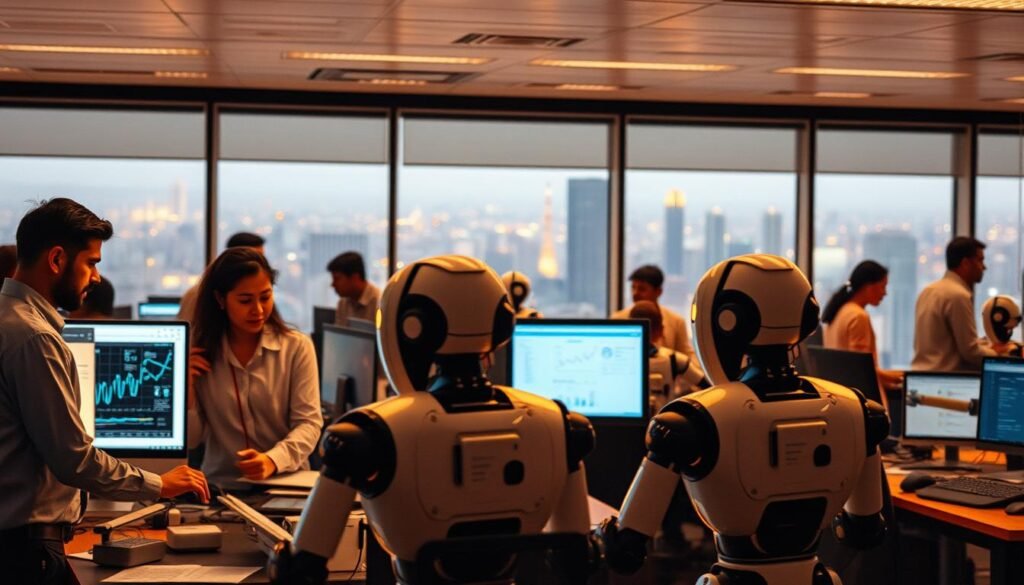
Jobs in India are changing fast with the rise of automation and AI. Old job patterns are fading away. Now, we need more tech-smart and creative workers.
Big industries like manufacturing, healthcare, and finance are leading the way with AI. Companies like Tata Motors and Larsen & Toubro are using smart tools. Startups are also playing a big role by introducing new technologies.
Automation is making work more efficient and reducing boring tasks. In banking and retail, it handles simple jobs. This frees up people to focus on more important tasks.
Major industries and employment trends
Five key areas are changing jobs: factory automation, telemedicine, fintech, retail, and IT. These changes bring both new jobs and challenges. It’s important for companies and governments to make sure everyone has a chance to work.
Emerging job roles and skills required
New jobs are popping up, like machine learning engineers and AI ethicists. Companies like Wipro and Infosys are looking for these skills. They want to use AI more in their work.
Skills needed include AI, cloud computing, and soft skills like creativity and problem-solving. Schools are starting to teach coding from a young age. This helps prepare the next generation for these jobs.
| Industry | Typical Automation Use | High-demand Roles | Key Skills |
|---|---|---|---|
| Manufacturing | Smart factories, predictive maintenance, digital twins | Predictive maintenance specialist, digital twin engineer | IoT, control systems, data analytics, PLC programming |
| Healthcare | Telemedicine, diagnostic AI, workflow automation | Clinical data scientist, health informatics analyst | Data science, medical domain knowledge, privacy compliance |
| Banking & Finance | Robotic process automation, fraud detection models | ML engineer, risk analytics specialist | Machine learning, statistics, regulatory understanding |
| Retail | Inventory automation, personalized recommendation engines | AI operations manager, customer data analyst | Recommendation systems, SQL, customer empathy |
| Information Technology | Enterprise AI platforms, cloud-native services | Data scientist, MLOps engineer | Cloud, CI/CD, model deployment, collaboration |
Automation: Friend or Foe?
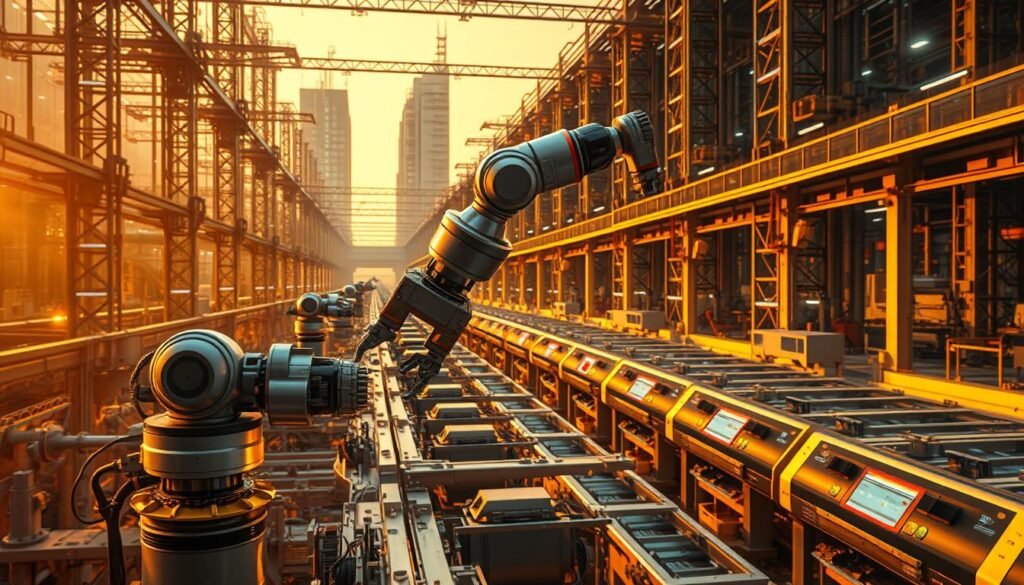
We explore how automation changes jobs and daily life in India. It’s not just a yes or no question. Automation can boost industries but also shake up some jobs. We see the benefits and the challenges that need policy and training fixes.
Automation and robotics bring big productivity wins. In factories, smart sensors can cut downtime by half. This is thanks to real-time analytics.
Robots and AI help make things better in car and electronics making. They also improve quality in medicines and textiles.
AI also helps in healthcare and education. It makes diagnosis faster and learning more personalized. This boosts innovation and helps workers move to more complex tasks.
Challenges and displacement concerns
Jobs in logistics, retail, and simple manufacturing are at risk. Self-checkouts and robots need fewer people. Self-driving cars could also lose jobs for drivers.
Those with less skill often face the biggest job losses. This can make income gaps wider without the right training. High costs, data needs, and uneven tech spread are big barriers to using automation everywhere.
We need to match automation with plans to help workers. This includes training, investing in areas, and policies to avoid leaving some behind.
AI Technologies Revolutionizing Work

We look at how AI is changing Indian industries. It includes smart models that find trends in data, robots working alongside humans, and virtual factories for testing. These changes affect how teams plan, how plants operate, and how companies reduce waste.
Machine learning has grown from small tests to big uses. Banks use it to spot fraud and make trades, hospitals for imaging, and retailers to predict demand. This helps them manage better.
Machine Learning and Data Analysis
We use models that learn from big data and spot oddities early. This leads to quicker decisions and clearer warnings for teams.
But, there are challenges: models need good data and careful checks. Groups like NITI Aayog and Tata Consultancy Services focus on making sure models are fair and accurate.
In India, AI is making a big difference. Predictive maintenance can cut downtime by half in heavy industries. Textile mills use robots to find defects and improve quality.
Robotics and Automation in Manufacturing
Now, manufacturing combines heavy automation with robots that work with humans. Cars and electronics plants use robots for tasks like welding and painting.
These robots help reduce strain and errors, freeing up people for better tasks. Companies like Mahindra and Tata Motors use them to increase efficiency and safety.
Digital twin technology combines sensors, IoT, and simulations. It lets us test scenarios, save energy, and predict failures before they happen.
| Capability | Typical Benefit | Representative Users in India |
|---|---|---|
| Machine learning integration | Faster insights and reduced false positives | HDFC Bank, Apollo Hospitals, BigBasket |
| Robotics in manufacturing | Improved precision and worker safety | Tata Motors, Bosch India, TVS Motor |
| Digital twin technology | Scenario testing and lower unscheduled downtime | Steel plants, Larsen & Toubro, GE Aviation India |
| Predictive maintenance (AI-driven) | Up to 50% downtime reduction | Steel mills, power plants, textile factories |
| Quality inspection with vision AI | Less waste, higher yield | Textile clusters, electronics manufacturers |
Using AI well needs teams from different fields. Data scientists, engineers, and managers must work together. We suggest starting small, using good data, and keeping an eye on things to get the most from AI.
Re-skilling and Upskilling the Workforce

We are at a turning point. The Fourth Industrial Revolution demands digital skills, adaptability, and lifelong learning. Our approach must mix technical training with human skills to keep professionals relevant.
Re-skilling is an ongoing process. Short bootcamps, online micro-credentials, and blended programs help engineers and technicians adapt to AI, cloud, and IoT. Lifelong learning makes career paths flexible and reduces disruption from automation.
We support partnerships between industry and academia. National initiatives like Skill India and MeitY’s AI for Youth work with corporate programs from Tata Consultancy Services and Infosys. These efforts help transform the workforce in cities and smaller towns.
We value models that combine soft skills with technical modules. Skills like creativity, emotional intelligence, and communication boost employability when paired with machine learning or data science training.
We must tackle barriers: skill shortages, rural–urban divides, and uneven funding. Public–private centres of excellence and targeted policy support widen access to quality re-skilling programs.
Below is a compact comparison of prominent training pathways and what they deliver in practice.
| Program Type | Typical Providers | Core Focus | Ideal Candidate |
|---|---|---|---|
| Bootcamps (ML & Data) | Jigsaw Academy, AIM Research, private academies | Practical projects, coding, model building | Early-career engineers, career changers |
| Corporate Academies | Tata Consultancy Services, Infosys | Company-specific platforms, human-centric automation | Existing employees needing role shifts |
| Government Schemes | Skill India, MeitY initiatives, NASSCOM | Mass upskilling, digital literacy, foundational AI | Students, rural workforce, displaced workers |
| Industry–Academia PPPs | Universities with corporate partners, CoE for IoT/AI | Research-led curriculum, internships, certifications | Students seeking applied learning and placements |
| Micro-credentials & MOOCs | Online platforms, university extension programs | Modular courses, stackable certificates | Working professionals seeking flexible upskilling |
The Gig Economy in India

The gig economy is changing how Indians work. It offers flexible hours and task-based pay. People find jobs on platforms like Upwork and Freelancer.
Apps and data connect workers with jobs. This cuts down on idle time. It also helps couriers earn more during busy times.
Tools for remote work let teams work together from anywhere. This saves on costs and boosts productivity.
Rise of Freelance and Contract Work
More people are working on contract. Tech, creative services, and logistics see a rise in contract roles. Companies like Tata Consultancy Services and Infosys use freelancers for short-term projects.
Freelancers enjoy flexibility but face income ups and downs. To succeed, they need to know how to use platforms and manage their online presence. Skills like negotiation and client management are just as important as technical skills.
Impact of AI on Gig Workers
AI brings tools that make work more efficient. It helps predict demand and cut down delivery times. These tools can increase earnings for couriers and freelancers.
But AI also raises concerns. Automated ratings and pricing can reduce workers’ bargaining power. Jobs in logistics and retail might be at risk with the rise of autonomous vehicles and kiosks.
Platforms and governments need to work together. We need social protection, reskilling programs, and clear rules for AI. This will help the digital workforce adapt while keeping the benefits of remote work.
The Role of Education in Future Job Preparedness
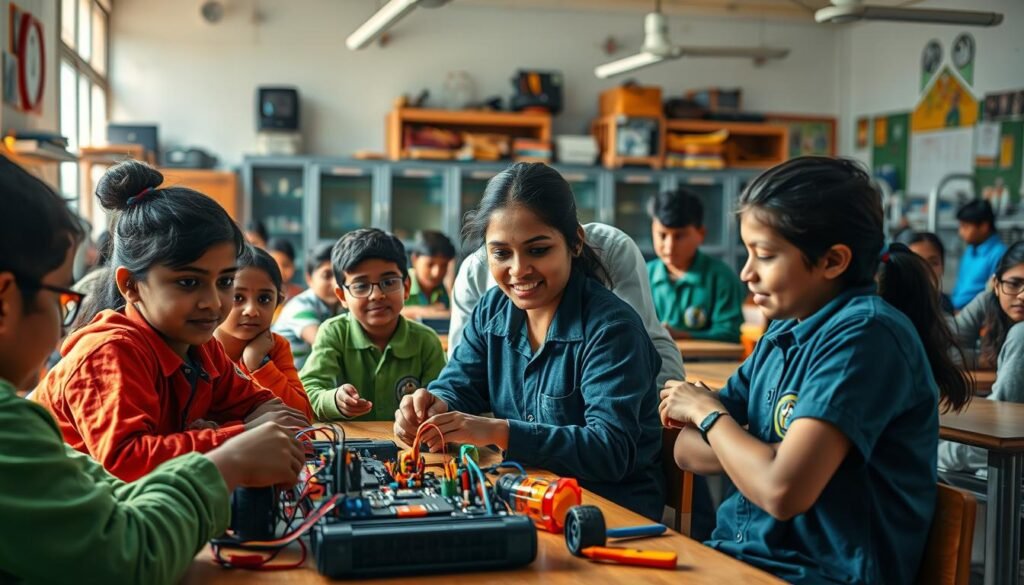
Education is key for a strong workforce. As jobs change, schools need to teach both skills and thinking. Starting with computing and problem-solving is important.
Curriculum changes are needed. New policies add coding and project-based learning from middle school. This helps students adapt to changing job needs.
Working with industries helps students learn more. Companies like Tata Consultancy Services and Infosys work with schools. They help design courses and train teachers.
Changes in Curriculum
Modular courses are a good idea. They mix Machine learning into regular subjects. This lets students try out ideas without needing a degree.
Project work is also important. It combines data skills with creativity. This makes students better at solving problems and communicating.
Partnerships Between Industry and Educational Institutions
We suggest formal partnerships. These include NASSCOM, academic centers, and state universities. They help students move from school to work.
Teachers need training too. When they learn from industry experts, they can teach better. This makes learning more relevant to the job world.
| Focus Area | Practical Steps | Expected Outcome |
|---|---|---|
| Curriculum Design | Embed AI education modules from Class 6; add hands-on labs and capstone projects | Early literacy in AI; smoother transition to advanced studies |
| Industry Collaboration | Co-created syllabi, sponsored internships by TCS, Infosys, and mid-size firms | Higher job-readiness; reduced skill gaps |
| Reskilling Pathways | Micro-credentials, online bootcamps, lifelong learning credits | Continuous employability for mid-career engineers |
| Assessment & Certification | Competency-based exams and portfolio reviews | Transparent skill verification for employers |
| Soft Skill Integration | Team projects, communication labs, ethics modules | Better collaboration and ethical AI practice |
We need to measure how well education works. Look at job placement, employer satisfaction, and skill growth. This helps improve education as Machine learning becomes more common in India.
Diversity and Inclusion in AI-driven Workplaces
We believe that growth and technology should go hand in hand. Companies like Tata Consultancy Services and Infosys are using AI. They should make sure everyone gets a chance to join, no matter their background.
This means setting up programs like scholarships and mentorship for women and others who are underrepresented. It’s all about making sure everyone has a fair shot.
Promoting Gender Equality in Tech Fields
In India, women are not as common in STEM fields. To fix this, companies and schools need to work together. They should offer training and clear paths into AI and data science.
Groups like NITI Aayog and Jigsaw Academy are already doing this. They help bridge the skill gap and encourage women to come back to work.
It’s important to have mentorship, internships, and flexible work hours. These help keep talent and grow leaders in tech.
Addressing Bias in AI Systems
AI needs to be fair for people to trust it. To fix bias, we need good data, diverse datasets, and tools that explain how AI works. NITI Aayog has guidelines for this.
Engineers should check for bias, log decisions, and get feedback from different people. This makes AI more trustworthy and fair.
We also need to think about workers in the informal sector who might lose their jobs to automation. Training, support, and fair hiring practices can help. This way, everyone benefits from technology.
| Focus Area | Practical Steps | Expected Outcome |
|---|---|---|
| Talent Inclusion | Scholarships for women, returnship programs, mentorship by senior engineers | Higher female representation in AI roles; stronger leadership pipeline |
| AI Ethics & Governance | Bias audits, explainability standards, transparent reporting | Reduced discriminatory outcomes; improved public trust |
| Education & Literacy | Integrate AI literacy in curricula; industry-academia apprenticeships | Workforce transformation with critical thinking and autonomy |
| Social Equity | Targeted training for informal sector, inclusive procurement, wage support | Equitable distribution of AI benefits; reduced economic concentration |
Remote Work and AI: A New Normal

Remote work is becoming a permanent part of our jobs. AI tools help teams work better from anywhere. This change is changing how we hire, organize teams, and work every day in India.
AI brings services like scheduling and translation to make work smoother. It also helps summarize meetings and shows where teams can improve. This makes teams more productive.
AI lets companies find talent from all over, not just big cities. This opens up jobs for skilled people in smaller towns. It also helps create a more diverse digital workforce.
How AI facilitates remote collaboration
Smart assistants manage our schedules and platforms create quick meeting notes. Real-time translation helps teams work together, no matter where they are. AI also automates routine tasks, so people can focus on creative work.
AI helps new hires get up to speed with virtual training and mentorship. Companies like Tata Consultancy Services and Infosys are testing these methods. They aim to improve learning for remote workers.
Balancing work-life integration in a virtual world
Working from home can be flexible but also mixes work and personal life. AI can track work but might also invade privacy. We need tools and policies that protect our mental health.
Companies should set clear rules for work hours and when to respond. Regular meetings and career paths help remote workers feel connected and grow. This keeps them engaged and motivated.
In India, better internet and digital skills are key. With good internet, more people can access better jobs. Investing in training and support for remote workers is important for their growth and happiness.
There are real benefits: engineers save time, teachers create better content, and teams grow without moving. This shows a bright future for work.
Policymaking: Government’s Role in Future Employment
We see public policy as a key driver for a fair workforce change. Governments can link training, social protections, and market incentives. This helps workers and businesses adjust smoothly to new changes.
Strategies for Supporting Workforce Transition
We suggest growing national upskilling programs like Skill India. Also, expand the Future Skills Initiative to reach more workers and towns. Short, easy courses help people get back to work faster.
Public–private partnerships can create special centres for learning and apprenticeships. These places can test new jobs in areas like green energy, education tech, and logistics.
It’s important to have safety nets and training together. Offer income support and benefits that workers can take with them. Use AI in policymaking to help find jobs and keep data safe.
Incentives for Businesses Embracing AI
We push for special incentives for companies to use AI in a human-friendly way. Offer Production-Linked Incentive schemes and Make in India credits to lower costs. This encourages local AI solutions for making things and services.
Help small businesses use IoT and AI for better maintenance and managing fleets. Public centres can offer support and share knowledge across different areas.
Financial help works best when it’s based on real results. Reward companies for keeping jobs, training workers, and using AI ethically. Incentives should show that workers are getting better and companies are hiring more.
We encourage policymakers to follow the National Strategy for AI. Share good ideas across states. A united effort helps grow, saves time, and boosts investor trust in changing the workforce.
For more on growing sectors, check out trends in renewables, edtech, and fintech on emerging high-growth sectors in India.
Looking Ahead: Predictions for Job Market in India
The future of work in India looks promising. Automation and AI will change jobs, not eliminate them. In manufacturing, AI will help with maintenance and digital models. Healthcare and renewable energy will need experts who know their field and tech.
Long-term Effects of Automation on Employment
Machine learning will boost productivity and create new jobs. It might cut down on simple tasks but will grow careers in tech and management. For instance, jobs like autonomous vehicle engineers and AI in healthcare analysts will rise. But, we must watch out for job losses and growing inequality.
Future Job Opportunities and Challenges
New jobs will come in machine learning, predictive maintenance, and digital twins. Roles in AI ethics and augmented reality for remote work will also grow. Indian manufacturing can compete globally with AI.
But, we face challenges like skill gaps, digital divides, high costs, and ethical issues. India can thrive in Work 4.0 with the right education, policies, and AI ethics. AI can enhance human abilities if used wisely. For more info or to collaborate: info@indiavibes.today.