



The Uttarakhand avalanche 2025 struck the Mana region in early 2025, causing devastating loss and destruction. Eight dedicated BRO workers lost their lives while constructing vital roads and infrastructure in this harsh terrain.
Working in such a dangerous place is very hard. It takes a big toll on people’s bodies and minds.
Key Takeaways
- Eight BRO workers confirmed deceased in the Uttarakhand avalanche 2025.
- Rescue operations faced significant challenges in the Mana region.
- The tragedy emphasizes the sacrifices made by local infrastructure workers.
- Community mourning reflects the deep impact of this disaster.
- Calls for improvements in disaster response underline the need for change.
Overview of the Uttarakhand Avalanche Tragedy
The Uttarakhand avalanche hit in early 2025. It caused huge damage in the Mana region. This area is known for its stunning beauty but is now at risk because of the weather.
Before the disaster, people in Mana loved their community and nature. They lived among the mountains, which gave them work and fun. The avalanche changed everything, hurting the land and the people’s way of life.
We want to learn more about avalanches and how they affect people. The Uttarakhand avalanche shows us how unpredictable nature can be. It also teaches us the importance of being ready for disasters.
The Rescue Operations in Mana Region
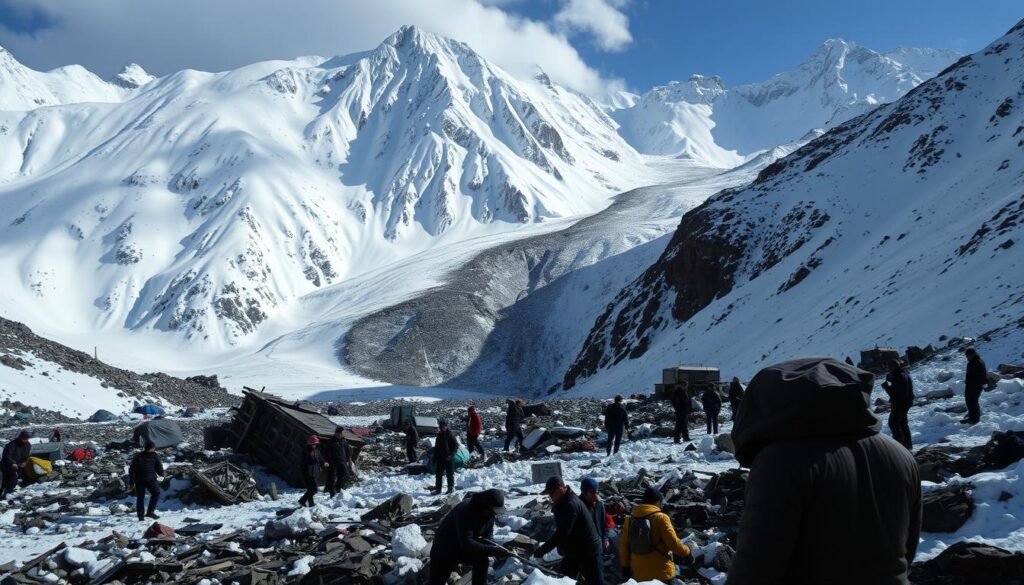
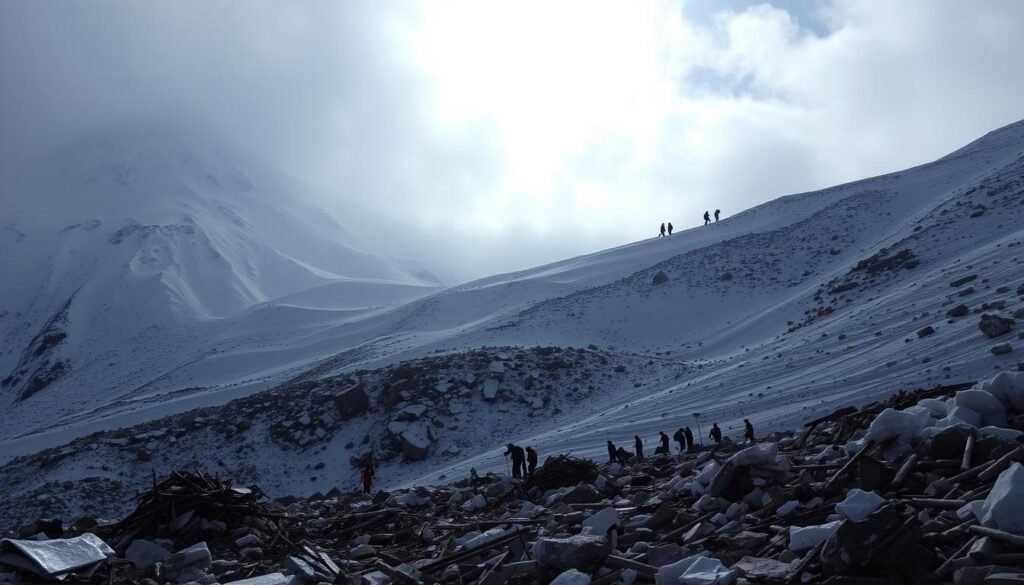
The Mana region faced a big challenge with the recent avalanche. Many groups worked together for the rescue. They used drones with special cameras to find people under the snow.
Teams on the ground were very skilled. They worked hard to find the missing workers. They faced tough physical and emotional challenges.
The terrain was very hard to navigate. But the teams kept going, risking their lives to save others. They knew the emotional pain was as big as the physical challenges.
The rescue efforts showed both success and sadness. The teams kept going, hoping to bring people home. Their work showed our strength and resilience.
Uttarakhand Avalanche 2025: Key Details
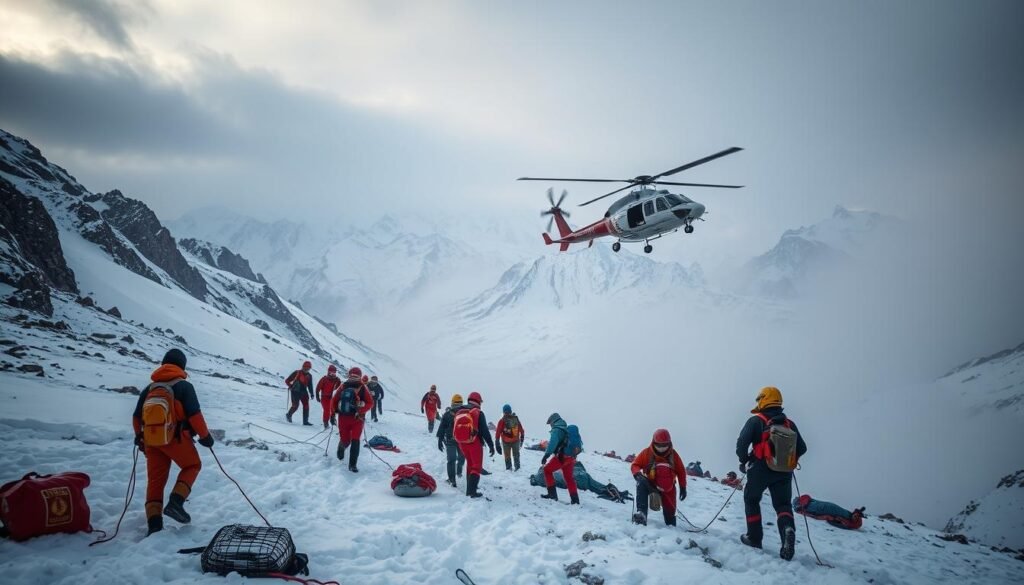
The Uttarakhand avalanche 2025 was a sad event. It happened because of bad weather and hard terrain. On that day, the weather changed and snow fell heavily, causing big problems.
People heard a loud noise as snow fell. It covered everything in its way. Knowing why these events happen helps us get ready for the future.
What Happened During the Avalanche
The avalanche came without warning. It hit not just nearby but also far-off places because of the huge amount of snow. The weather was very bad, with strong winds and hard to see.
Rescue teams had a hard time getting to people. They faced big challenges that showed we need strong plans for emergencies.
The Immediate Response by Rescue Teams
Rescue teams quickly got to work. They worked with local groups to find a way through the tough terrain. Despite tough conditions like blocked roads and bad weather, they kept going.
They worked hard to find and help those hurt by the avalanche. Their quick actions and careful planning were key to keeping people safe.
Impact on BRO Workers and Local Community
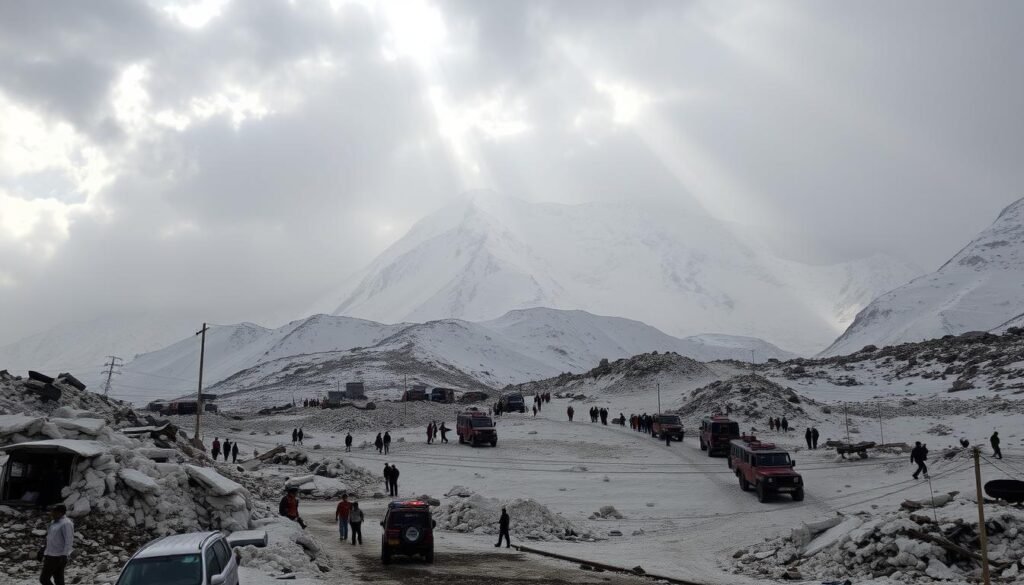
The avalanche in Uttarakhand hit the local community hard. It affected BRO workers who lost their lives. They helped connect remote areas with their work.
Their work improved transport links and raised living standards. Now, their absence is deeply felt by the community.
Profiles of the Victims
Each BRO worker who died had a special story. They were fathers, brothers, and friends. They worked hard for their community for years.
Their skills and commitment were essential in many projects. Their loss is deeply felt by those who knew them. The community remembers them with stories of bravery and dedication.
Community Response and Mourning
The community’s response to the tragedy has been strong. People mourned with candlelight vigils and memorial services. Local leaders are helping the families of the workers.
They make sure no one faces this hardship alone. The avalanche’s impact is felt by everyone, creating a sense of shared grief and resilience.
Geographical and Climatic Factors Contributing to the Avalanche
The Uttarakhand region has unique geography and weather. Its steep mountains and narrow valleys affect snow. This makes snow unstable and prone to avalanches.
Seasonal snowfall quickly builds up. Warm then cold weather weakens the snow. This mix is key to understanding avalanches.
Climate change also plays a part. It changes weather and snow, making avalanches more likely. Heavy snow and strong winds are dangerous on steep slopes. We must understand these factors to know about avalanches in Uttarakhand.
| Factor | Description | Impact on Avalanche Susceptibility |
|---|---|---|
| Geographical Factors | Rugged terrain with steep slopes | Increases snow accumulation and instability |
| Climatic Conditions | Seasonal snowfall varying in intensity | Rapid accumulation and melting phases can weaken snowpack |
| Climate Change Effects | Altered weather patterns leading to unpredictable conditions | Increases likelihood of heavy snowfall and wind-driven events |
Government and Agency Response to the Disaster
The government has worked hard to help after the Uttarakhand avalanche. Many agencies have joined forces to support those affected. They are focused on safety and helping the community recover.
Statements from Officials
Many officials have shown their support and promised to act quickly. They talked about providing health services, shelter, and help for families. They also said they will keep everyone updated on their plans.
Plans for Future Support and Recovery
The government is making plans to be better prepared for disasters. They want to improve training and infrastructure. They are working with local groups to make the community stronger.
They also plan to help with mental health and community projects. We can learn from this disaster to be ready for the future.

| Agency | Immediate Actions | Future Recovery Plans |
|---|---|---|
| National Disaster Management Authority | Rescue coordination, health service deployment | Enhanced training for rescue teams, emergency drills |
| Local Government | Establishment of temporary shelters | Community workshops on disaster preparedness |
| Health Ministry | Medical camps for affected individuals | Mental health support initiatives |
Analysis of Avalanche Rescue Procedures in India
The recent avalanche in Uttarakhand has highlighted the need for better avalanche rescue procedures in India. We aim to look at what works well and what needs to change. Quick and effective disaster management is key to saving lives in emergencies.
Today, we have many ways to rescue people, like fast teams and drones for the sky. But, the Uttarakhand avalanche showed us big problems. Things like bad communication and not enough resources make it hard to act fast.
Rescue teams had to deal with tough terrain and bad weather. They need more training to move safely in these conditions. Also, working with the community is important. Their local knowledge helps spot dangers and send out warnings.
New ideas are coming up in emergency management, like using AI to predict avalanches. These new tools could help make our avalanche rescue procedures even better. Every disaster teaches us something new, helping us get ready for the next one.

Lessons Learned from the Uttarakhand Avalanche
The Uttarakhand avalanche taught us a lot. It shows how we can do better in the future. We learned what works and what doesn’t in our disaster plans.
One big lesson is the importance of training for rescue teams. They need the best tools and skills to save people fast. Also, learning together as a community helps us all stay strong.
Working together with governments, NGOs, and locals was key. We learned to talk better during emergencies. This way, everyone can help and work together better.
These lessons will help us get better at preventing disasters. By using what we learned, we can make our communities safer and stronger against natural disasters.
Global Perspectives on Avalanche Preparedness
Countries like Switzerland and Canada have strict plans for avalanche safety. They use advanced technology and teach people about safety. This makes them very good at staying safe during avalanches.
Working together is key. Governments and local people team up to learn about avalanches. They hold training sessions and drills. This helps everyone know what to do in case of an avalanche.
New tools help predict avalanches better. These tools give alerts and updates quickly. Places like Uttarakhand can learn from these tools to stay safer.
Looking at how others do things can teach us a lot. We can use these ideas to make our own plans better. This way, we can all be more ready for avalanches.
Conclusion
The Uttarakhand avalanche shows us how big the impact of such tragedies can be. It’s very sad to lose lives. But it also shows how important it is to be strong together.
When people work together, like authorities and rescue teams, amazing things happen. They help each other and make a strong support system. This is very important in hard times.
We need new ways to handle emergencies. We must learn from past events and get better at being ready for disasters. Working together, we can make safer places for everyone.
The bravery shown in the rescue efforts is truly inspiring. If we all work together and think creatively, we can do better. We can make our communities safer from natural disasters.
Let’s keep moving forward with hope and determination. By working together, we can create a safer world for all. We can do it by sharing our knowledge and working as a team.