


Did you know over 1,500 Hindi films came out in just one decade? Yet, many secrets behind these movies are unknown, even to big fans.
We’re a team of researchers and storytellers. We’re here to share five true Bollywood Facts. These stories show how the industry grew in tech and culture. We focus on the Hindi film world in Mumbai.
We use real evidence, not rumors. We look at how dubbing and sound engineering started early. We also explore hidden studio secrets from the 1940s–50s. Plus, we see how Hollywood and regional cinemas have shaped today’s films.
These stories are more than just fun facts. They teach us about systems design, process improvement, and solving problems creatively. You’ll find clear explanations and how these insights apply to many fields.
Get ready for five short stories that mix history, innovation, and personal tales. Each one is designed to help you learn and apply in your own work. Discover how these Bollywood stories change our view of cinema and engineering.
The Evolution of Bollywood: A Brief History
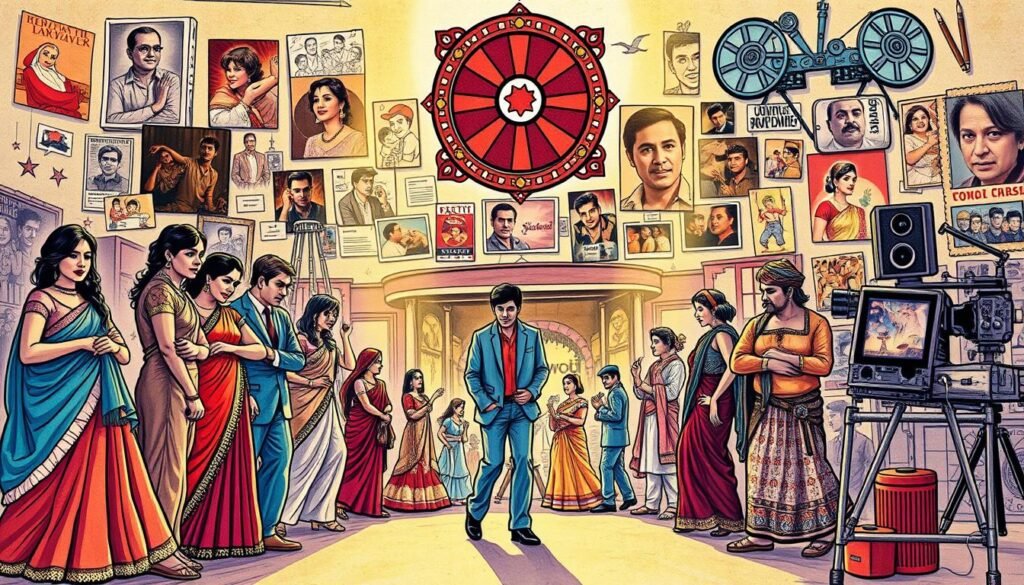
We explore how Bollywood grew from a small silent film to a global force. This brief history covers key moments, studio systems, and social changes. It shows how stories reach us today, with interesting facts for engineers, educators, and curious readers.
The Birth of Indian Cinema
Dadasaheb Phalke’s Raja Harishchandra (1913) started Indian narrative films. Early shows were in itinerant halls. The need for quick shots came from these early days.
Alam Ara (1931) brought sound to films. It needed new tech: better recording and studios. Mumbai’s trade hub helped studios like Bombay Talkies and Prabhat Studios grow.
Major Milestones in Bollywood History
The studio system (1930s–1950s) made filming more stable. It trained many technicians. The Golden Age (1950s–1960s) saw great directors like Guru Dutt and stars like Raj Kapoor.
The 1970s–1980s saw the masala formula: action, romance, and drama. This needed more special rigs and safety.
In the 1990s, economic changes brought new ways of making and sharing films. Today, streaming has made films more diverse and short.
Firsts like playback singing and color films changed filmmaking. Digital tech in the 2000s changed how films are made and stored.
More people watching films changed how they are made and sold. Rules and standards for films were set. For engineers, these changes offer useful lessons.
| Era | Technical Shift | Industry Impact |
|---|---|---|
| Silent to Talkies (1910s–1930s) | Introduction of synchronized sound; early dubbing | New studio acoustics; collaboration with foreign technicians |
| Studio System (1930s–1950s) | Centralized sets and contracts | Predictable output; training pathways for crews |
| Golden Age (1950s–1960s) | Music-driven narratives; refined cinematography | Enduring storytelling templates and soundtrack markets |
| Masala Era (1970s–1980s) | Stunt rigs; larger action unit setups | Commercial scaling; specialized technical crews |
| Liberalization & Globalization (1990s–2010s) | Multiplex distribution; international co-productions | Corporate financing; wider global reach |
| Digital & OTT (2015–present) | Digital cameras; cloud post-production; streaming codecs | Format diversity; new audience metrics and content models |
Iconic Film Industries: Bollywood vs. Hollywood
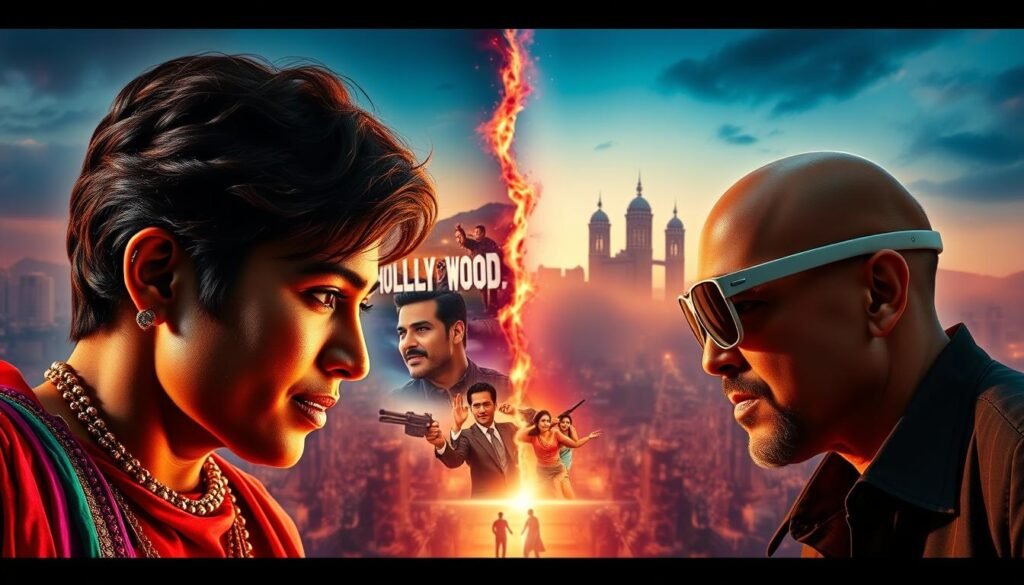
We look at two big film worlds to learn about production, management, and creativity. We focus on budget, revenue, workforce, and storytelling. These things shape what audiences expect in different markets.
Box office numbers show Hollywood films often have bigger budgets and global reach. Bollywood makes more films each year, focusing on local success and extra income from music and TV rights.
Recently, Indian films have done well overseas, in places like the UK, US, and Middle East. Hollywood is now teaming up with Indian producers and distributors. This shows how both sides can grow and share risks.
Box Office Comparison: Revenue and Trends
- Budget and scale: Hollywood goes for big-budget blockbusters. Bollywood budgets vary, with some films matching Hollywood’s and others staying small.
- Revenue mix: Hollywood focuses on movie theaters worldwide. Bollywood mixes theater, music, and streaming rights in its financial plans.
- Distribution: Hollywood uses big studio networks. Bollywood relies on local theaters but is growing its global reach.
Production and Process Differences
Hollywood works in a unionized, department-based system. Bollywood often has director-led teams with flexible plans. Indian films are now using more international tools and methods.
For engineering teams, this change is important. New project management methods and tools are being used in film production. Camera and editing systems are shared, helping both industries work together better.
Cultural Differences and Similarities
- Narrative styles: Hollywood focuses on specific genres. Bollywood is known for melodrama and song-dance numbers that help with music sales.
- Shared mechanics: Both use star power, franchises, and new tech to reach more people.
- Cross-pollination: Talent moves between Mumbai and Los Angeles. Indian stories are remade in Hollywood, enriching both industries.
We see how these differences apply to engineering. Risk handling and production methods vary. Standardized roles help, while flexible teams speed up creativity. These lessons help producers and technical leaders improve their work.
For quick insights, this comparison is useful. It helps decide when to use top tech, outsource VFX, and plan movie releases. This turns Bollywood and Hollywood facts into practical advice.
Unseen Challenges: The Struggles Behind Stardom
We look at the pressures that don’t always make headlines but shape careers in the Hindi film industry. Public scrutiny, box-office expectations, and endless schedules create a system. Small setbacks can lead to big changes.
We dive into specific issues and solutions. Our goal is to make these solutions clear to creative teams and engineers. We keep the human aspect at the heart of our approach.
The Dark Side of Fame
Intense media cycles make every mistake big. Celebrity scandals and sudden casting changes often come from contract pressure and the need for box-office success. Fan culture turns scrutiny into constant evaluation, with social metrics driving choices.
Careers can change overnight after a big flop or public issue. Production timelines and marketing demands add to the stress. These are lesser-known facts that many newcomers learn the hard way.
Mental Health Issues Among Actors
High-profile disclosures have changed the conversation. When Deepika Padukone spoke about depression, awareness rose. This led to action: support groups, NGO partnerships, and calls for resources on set.
Irregular sleep, long travel, stunt injuries, and erratic call times increase anxiety and burnout risk. Medical officers and unions in Mumbai are pushing for better protocols to protect cast and crew.
Efforts to reduce stigma focus on open discussion and accessible care. These shifts help create sustainable careers and reveal fascinating tidbits that contrast with the glamour fans see.
We suggest engineering practices for production teams. Structured shoot schedules and fatigue management protocols can help. Safety standards for stunts reduce injury rates.
Production managers and on-set medical officers are key in risk management. Data-driven scheduling tools balance creative needs with human factors. This improves outcomes.
Stigma reduction, policy advocacy, and safety gains form a combined approach. These are fun trivia for engineers who want to apply systems thinking to film sets. Small technical changes can lead to big human benefits.
Lesser-Known Celebrity Facts
We look into how unexpected backgrounds and real-world skills shape acting and making movies. These brief profiles show surprising facts about Bollywood that often surprise fans and creators. Our goal is to link a star’s life story with their movie choices and offer learning chances for engineers and teachers.
Surprising Origins of Popular Actors
R. Madhavan studied engineering before starting in TV and regional cinema. He then moved to mainstream Hindi films. His engineering background helps him prepare for roles with discipline.
Many actors come from different backgrounds: athletes, theatre artists, and specialists in other fields. Their journeys impact their acting and career planning. Actors with prior careers often bring problem-solving skills that help in rehearsals.
We see how these experiences make actors more adaptable and reliable on set. This knowledge helps casting directors make better choices.
Real-Life Skills of Bollywood Stars
Madhuri Dixit trained in classical dance, which helps her learn choreography faster. Tiger Shroff’s martial arts skills allow him to do complex stunts with fewer doubles. Shreya Ghoshal’s formal singing training helps her work closely with actors.
These skills lead to cost savings: actors singing live, doing stunts themselves, and being multilingual. Each skill has a direct impact on production costs.
Implications for Production Engineering and Education
Choosing actors with specific skills changes how productions are planned and budgeted. Actors with dance or stunt skills need less rehearsal time. This means shorter shoot days and less need for visual effects.
Casting becomes a way to optimize resources. It’s about finding the right balance between talent, training, and technical needs. We suggest exercises for engineering and film students to practice this.
These exercises help students see casting as a resource-allocation problem. They learn to weigh rehearsal time against efficiency and VFX costs. This turns interesting Bollywood facts into learning tools.
Researchers should study biographies and production notes to understand how skills transfer in filmmaking. This will help us learn more about talent pipelines, interdisciplinary education, and the value of Bollywood Facts.
Hidden Gems: Underrated Bollywood Films
We explore lesser-known works that reveal the craft behind Indian cinema. These films offer lessons in storytelling, sound, and production design. They are rich with Bollywood Facts that reward viewers and students alike.
Movies You Might Have Missed
1. Aakrosh (1980) — director: Govind Nihalani. Known for its stark cinematography and powerful performances by Naseeruddin Shah and Smita Patil. The film used minimal sets and documentary-style lighting. It underperformed at the box office yet earned critical acclaim for tackling social injustice.
2. Nishant (1975) — director: Shyam Benegal. Creative use of ensemble acting and rural soundscapes gave the film a textured realism. Editing paced tension slowly, a choice that made it less popular with mainstream audiences at release.
3. Masaan (2015) — director: Neeraj Ghaywan. Notable technical achievement: naturalistic sound design and a restrained camera that amplified performance nuance. Festival success did not translate into wide commercial reach despite strong reviews.
4. Ship of Theseus (2012) — directors: Anand Gandhi. Innovative narrative structure and philosophical themes pushed the film into arthouse circles. Its limited marketing and complex ideas limited mass appeal at release.
5. Court (2014) — director: Chaitanya Tamhane. Praised for its procedural realism and long takes, the film highlighted systemic issues. The slow-burn style made it a festival favorite, not a box-office hit.
Innovative Storytelling in Lesser-Known Films
Many of these titles pioneered techniques later adopted by mainstream productions. Nonlinear editing in indie dramas showed editors how time shifts can deepen character. Practical effects and on-location shoots taught crews to work within tight budgets.
Soundscapes in films like Masaan changed how directors used ambient noise to build mood. Minimalist production design in Court demonstrated that narrative clarity can outshine spectacle. These approaches influenced cinematographers and sound designers in later commercial releases.
Educational Takeaways for Engineers and Educators
We view these films as laboratories for constrained design. Students can reverse-engineer a film’s production credits to see resource allocation: crew size, equipment lists, and post-production timelines.
Classroom activities: deconstruct a scene to map shot lists and lighting setups. Propose modernization pathways: how might a micro-budget film scale with modern VFX or streaming distribution? These exercises translate film craft into engineering problem-solving.
Archival Exploration and Access
Festivals such as the Mumbai Film Festival and the International Film Festival of India curate many hidden gems. Streaming platforms—often regional or arthouse-focused—host restored prints and subtitles. Archival research uncovers production notes and interviews that enrich understanding of Bollywood film trivia and interesting Bollywood facts.
We encourage hands-on study: watch, analyze credits, and test adaptations of low-cost techniques. This approach turns appreciation of underrated Bollywood films into actionable learning for filmmakers and engineers alike.
Behind the Scenes: The Art of Filmmaking
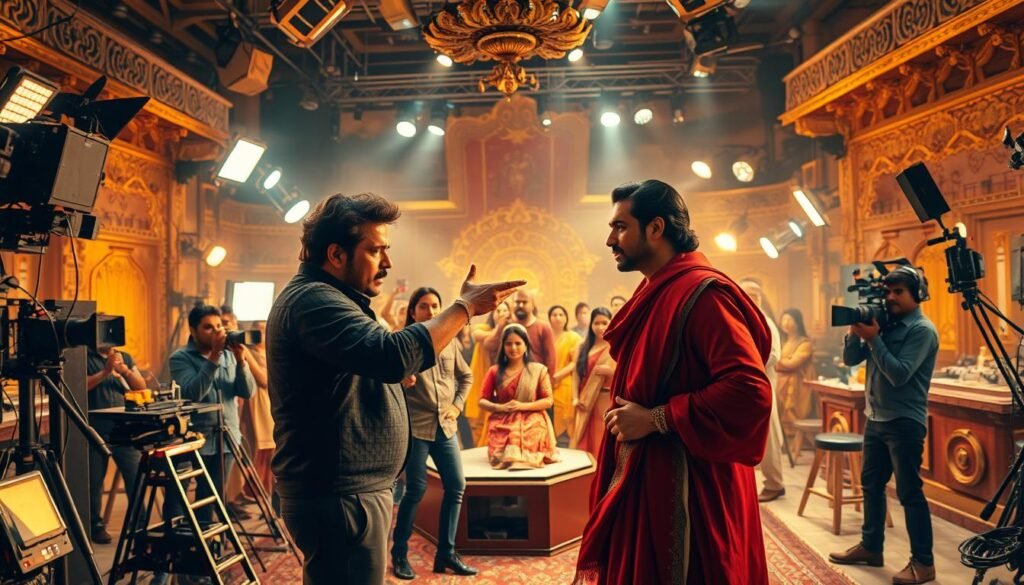
We look into how creativity and technical skill come together on a film set. This introduction highlights the roles, tools, and processes that shape Indian cinema today. It offers practical advice and hands-on tips for educators and engineers interested in filmmaking.
The Role of Directors and Cinematographers
The director is like a systems architect, setting the story, look, and performance. The cinematographer is the systems engineer, picking cameras, lenses, and lights to bring the vision to life. Together, they balance beauty with technical details like exposure and color.
Historic teams like Satyajit Ray and Subrata Mitra changed how we see Indian films. They used natural light and special effects to create a unique look. Today, directors and cinematographers use modern cameras to achieve even more.
Before filming starts, teams plan with storyboards and shotlists. These plans are like blueprints, guiding the shoot and helping avoid mistakes. They are updated and tested before filming begins.
Innovative Technologies in Productions
In the 1990s, Bollywood started using steadicams and complex rigs for smoother shots. The 2000s brought digital cameras like ARRI Alexa and RED for high-quality films. Visual effects companies like Red Chillies VFX also grew, adding to the spectacle.
Now, tools let directors and cinematographers see how scenes will look in real-time. This helps avoid costly changes later. It also makes sure the camera work and visual effects match.
Sound design has also improved with Dolby Atmos in Indian cinemas. This technology changes how sound is recorded and mixed. It ensures that films sound great whether they’re shown in theaters or streamed online.
Production Pipelines and Workflow
Producing a film is like developing software: from idea to delivery. Each step, from planning to final release, is important. Using tools and tracking assets helps manage the process and avoid problems.
Key steps include planning, visual effects, color grading, and final delivery. Each step has its own goals, like the right format and subtitles. By planning these steps carefully, teams can avoid last-minute issues.
Practical Recommendations for Educators
- Build a mini production pipeline: assign roles, draft storyboards, and run a short shoot to practice handoffs.
- Experiment with camera sensors and lens choices: compare footage from different sensors to teach exposure and dynamic range concepts.
- Analyze data flows between departments: trace how footage moves from set to VFX to grade and delivery to teach systems thinking.
| Topic | Practical Detail | Engineering Parallel |
|---|---|---|
| Previsualization | Storyboards, animatics, shotlists versioned for shoot day | Requirements spec and mockups |
| Camera Systems | ARRI Alexa, RED choices; lens mounts and sensor characteristics | Hardware selection and benchmarking |
| VFX Pipeline | Asset naming, version control, compositing passes | Source control and CI/CD for assets |
| Sound Mixing | Location recording, ADR, Dolby Atmos stems | Multi-channel data integration and playback testing |
| Delivery | Theatrical DCP specs vs. streaming codecs and subtitles | Deployment targets and acceptance testing |
These insights show how filmmaking combines creativity with engineering. For tech-savvy readers, we provide detailed notes on making creative choices measurable. Educators can use these tidbits to create labs and exercises that teach both art and engineering.
Bollywood’s Influence on Global Culture
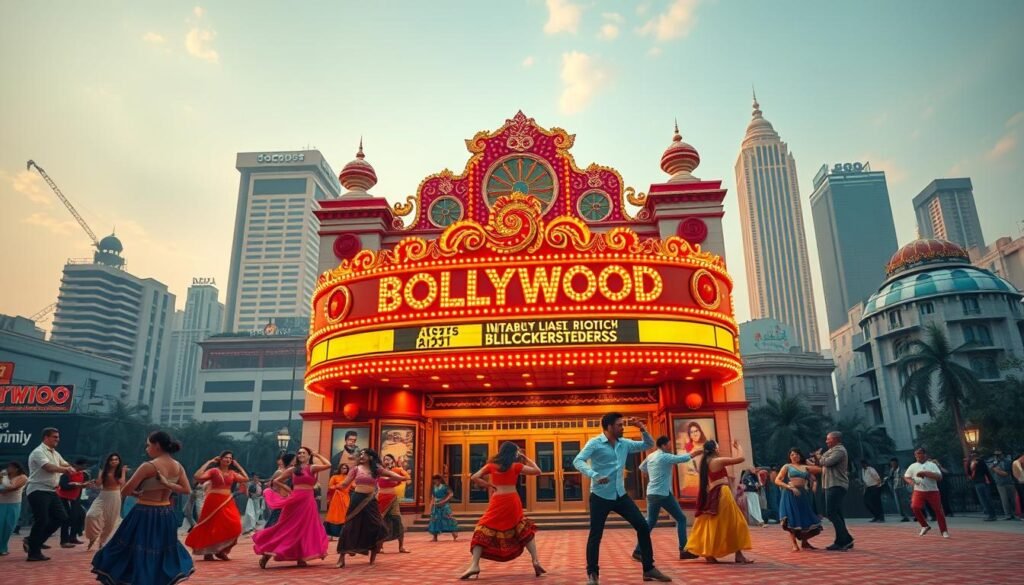
Indian cinema has spread far beyond Mumbai, shaping tastes, technology, and dance worldwide. This brief explores two key areas: cross-border creative work and the spread of choreography. We also look at practical shifts in distribution and engineering that made this reach possible.
Cross-Cultural Collaborations
We look at collaborative projects that have blurred industry lines. Co-productions with UK and U.S. studios have led to shared financing and joint VFX houses. Cinematographers trained abroad have brought new lighting and camera workflows to Bollywood sets.
Talent exchanges have moved technicians and actors across borders. Indian sound mixers have worked on international sets, while British editors have contributed to Indian post-production. Festivals like Cannes and Toronto have introduced filmmakers to global distributors, sparking narrative cross-pollination.
Technical learnings have traveled with people and projects. Joint VFX ventures have improved compositing standards. These shifts have influenced sound mixing norms and metadata practices used by streaming platforms targeting diaspora audiences.
The Spread of Bollywood Dance Worldwide
Bollywood choreography has found new homes through diaspora communities, social media, and workshops. College teams in North America and Europe stage competitions that fuse Kathak or Bhangra with contemporary hip-hop. Fitness programs have adapted Bollywood moves into Zumba-style classes to reach wider audiences.
International dance troupes teach localized versions of popular routines, changing formations and tempos to match local tastes. This adaptation encourages cultural exchange while keeping signature moves recognizably Bollywood.
Social platforms accelerate discovery: short-form videos featuring a few signature steps go viral and prompt global learners to search for fun Bollywood trivia and tutorials. The ripple effect strengthens interest in films, music, and live tours.
Cultural technology transfer and engineering implications
We examine how content delivery and localization made global reach practical. Diaspora markets drove subtitle standards and language tagging that streaming services adopted. Content delivery networks and regional caching reduced latency for large video files, improving viewer retention.
Localization engineering—covering subtitle timing, metadata schemas, and language variants—became a core competency for distributors. These practices let producers scale content efficiently while protecting creative intent.
| Area | Example | Impact |
|---|---|---|
| Co-productions | Joint financing and VFX projects with UK and US studios | Higher production values; shared technical standards |
| Talent exchange | Cinematographers trained abroad; Indian mixers on global sets | New workflows; faster adoption of cinematic techniques |
| Dance dissemination | College competitions and Bollywood-style fitness classes | Broader cultural adoption; sustained interest in choreography |
| Streaming & localization | Advanced subtitle standards and CDN strategies | Improved access for diaspora audiences; higher viewership |
| Audience metrics | Large diaspora communities in UK, UAE, US, Canada | Informed distribution engineering and content strategy |
We share some fascinating Bollywood tidbits that highlight the breadth of this influence. Small technical changes—like consistent metadata—can increase discoverability in overseas catalogs. Fun Bollywood trivia about viral dance clips or cross-border crew credits often points to deeper shifts in how content travels.
These Bollywood Facts show that influence works on many layers: creative, technical, and social. For educators and engineers, the story is a case study in how media ecosystems scale across cultures and networks.
Notable Controversies in Bollywood History
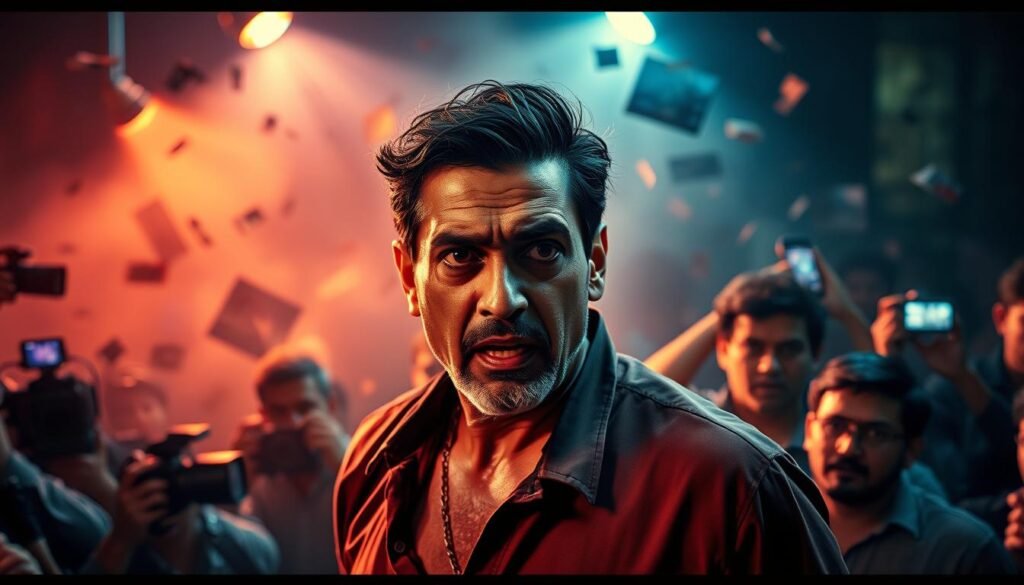
We look at times when movies and stars sparked big debates and changes in rules. These examples show how lessons from Bollywood can help in creative fields. They mix fun facts and trivia to teach us about drama beyond the headlines.
First, we talk about films that caused protests, lawsuits, and fights over ratings. These cases changed how films get rated and how they are sold.
Films That Sparked Outrage
In 1975, a film sparked protests and calls for a ban. People said it showed leaders in a bad light. Courts had to balance free speech with keeping the peace. This led to stricter rules during film ratings and early legal checks.
In 1993, a religious group protested a film for showing rituals wrong. The film had to be cut and had disclaimers added. This made filmmakers more careful about cultural checks and script reviews.
In 2015, a film faced boycotts over a local legend’s portrayal. Lawsuits delayed the film’s release. Studios then planned their releases better and worked with local leaders.
Celebrity Scandals That Shook the Industry
Money issues have led to public disputes. In 2009, a producer sued a studio over money. The court said clear accounting and profit sharing were key. Now, producers keep detailed records and have third-party audits.
Safety issues on sets have also led to changes. A 2011 accident made the industry review stunt safety and medical care. Now, there are safety checklists and certified stunt coordinators.
Legal battles over rights and defamation in 2018 made everyone want to be more careful. Talent agents and production houses updated contracts and dispute rules. This helps limit risks and speed up solving problems.
These incidents teach us about managing risks and governance in film. We share steps to reduce risks in film projects.
- Legal due diligence: keep contracts, clear IP rights, and clear terms for ending projects.
- Stakeholder analysis: know what community, distributors, and regulators might think before making content.
- Crisis communication: have media plans ready and teams to handle crises quickly.
- Safety controls: use checklists, have certified safety officers, and report incidents.
- Financial transparency: have clear accounting, escrow, and audits.
| Issue | Typical Impact | Control Measures |
|---|---|---|
| Censorship and certification disputes | Delayed release, edits, legal costs | Script vetting, legal clearance, stakeholder consultations |
| On-set safety incidents | Production halt, liability claims, reputation loss | Safety checklists, certified staff, insurance protocols |
| Financial and accounting disputes | Audits, litigations, partner exits | Transparent ledgers, escrow, third-party audits |
These issues hurt audience trust and how films are sold. After these problems, rules got clearer. Now, film ratings are more set, contracts are clearer, and sales plans are based on data.
For those interested in Bollywood trivia, these stories show how controversy can lead to change. We share these lessons to help teams make films safely and legally, while keeping creative freedom.
The Impact of Music in Bollywood Films
We look into how music shapes Indian cinema. It sets the mood, shows characters’ inner lives, and creates lasting memories. This makes music a key part of film studies.
Evolution of sound recording and composition
Early films used live music and single takes. Playback singing changed the game, thanks to composers like S.D. Burman and A.R. Rahman.
Recording moved from mono to multi-track. Today, we mix and master using DAWs. Engineers use special tools to capture detailed performances.
Technical practices in contemporary production
Multi-track recording lets us control each sound separately. We use vintage effects to get that classic sound. Students learn by analyzing mixes and rebuilding analog chains.
Playback systems changed how we film songs. Now, songs are made before filming, guiding choreography and editing. This makes scenes fit the music perfectly.
How soundtracks shape popular culture
Hit songs influence fashion, dance, and tourism. Songs from films like Dilwale Dulhania Le Jayenge and Roja made stars and designers famous. Soundtracks also bring in extra money through music rights and concerts.
Music does more than entertain; it tells us about characters and plot. Editors and choreographers work with the music to create the right mood.
Distribution, monetization, and metadata
Music sales moved from vinyl to streaming on platforms like Spotify. Satellite rights and licenses are also big earners.
For audio engineers, knowing about metadata and rights is key. This helps track royalties. Platforms need specific audio files and metadata for streaming and broadcast.
Practical modules for audio engineering students
- Analyze classic Bollywood mixes: isolate orchestral elements and vocal layering.
- Recreate vintage recording chains: tape emulation, plate reverb, analog compression.
- Build DAW-based workflows: multi-track session setup, stem exports, and loudness compliance.
- Study production timelines: pre-pro song development, on-set playback integration, and post-production mixing schedules.
These modules help students connect technical skills with real-world scenarios. They learn how Bollywood soundtracks affect production, audience, and the industry.
Studying music in film reveals many interesting facts about Bollywood. It shows how technical skills meet cultural impact.
Future Trends: What Lies Ahead for Bollywood
Streaming platforms have changed Bollywood in big ways. Netflix, Amazon Prime Video, Disney+ Hotstar, and others have made OTT adoption fast in India. This shift has changed how films are made, financed, and released.
Now, production teams plan for different formats and subtitles for each platform. This change affects budgets and how long it takes to make a film. It also means more room for long series and unique films that were hard to make before.
Streaming brings new voices and stories to the screen. Shows like Delhi Crime and Panchayat have reached viewers worldwide. They show that people want real stories and new ideas, not just the usual.
New tech will change how films are made. AI, LED stages, and remote tools make making movies faster and easier. Schools should teach about cloud VFX, data analysis, and ethics in media.
Students need to learn about making movies for streaming. This means learning about scalability, localization, and quick delivery. This prepares them for the challenges of the Bollywood world.
We need to teach students from different fields together. This way, they can understand the whole process of making movies. By using real examples, schools in India can prepare the next generation for Bollywood’s future.