



Every hour, at least one life is lost to suicide in India—a stark reminder that mental health is not a private struggle but a national emergency.
Mental wellness is critical infrastructure. Software engineers and students often hide their struggles behind a mask of normalcy. This silent epidemic harms productivity, creativity, and our social fabric.
Ignoring mental health could cost India over $1 trillion in a decade. This loss comes from absenteeism, reduced innovation, and burnout. With over 380 million young people, our future is at risk if we don’t prioritize their mental well-being.
Efforts from the Indian Psychiatric Society and WHO have shown that mental health matters. Yet, services are scarce outside cities, stigma prevents care, and many lack awareness.
We are educators, engineers, and advocates united in our call for action. Mental health is key to national development. For collaboration or to learn more, contact us at info@indiavibes.today. Read more about mental health in India here: mental health research.
Understanding Mental Health and Its Importance

We start by defining mental health clearly: it’s more than just being disease-free. The World Health Organization defined health in 1948 as being physically, mentally, and socially well. Indian thought adds to this, linking mental wellness to living in harmony and purpose, aligned with values like Dharma and self-realization.
This broad view helps us understand psychological and emotional well-being better. Psychological well-being includes happiness, optimism, and a sense of purpose. Emotional well-being is about how we manage our feelings every day, like being resilient and joyful.
Defining Mental Health: A Broad Perspective
Mental wellness and mental illness are different, yet connected. Wellness is about growth and purpose. Mental illness is about clinical conditions that harm these areas. For example, depression is a disorder with persistent sadness, while normal sadness is a short-term reaction.
Anxiety disorders are different from normal stress. Normal stress helps us solve problems, but anxiety disorders cause worry and physical symptoms that disrupt daily life. Knowing this helps us understand when to seek help and how to support others.
Common Mental Health Issues in India
In India, common mental health issues include anxiety disorders and depression. Young adults and IT professionals often face these problems. They report feeling anxious, depressed, and overwhelmed.
Studies show that one in four people may develop a mental illness. Yet, many don’t get help due to lack of services and stigma. This is a big problem in India.
Mental health affects how we think, make decisions, and interact with others. It also impacts our physical health, like increasing the risk of diabetes. Early treatment can prevent long-term damage.
To learn more about mental health awareness in India, read Breaking the Silence. It talks about efforts to raise awareness and change policies.
The Current State of Mental Health in India
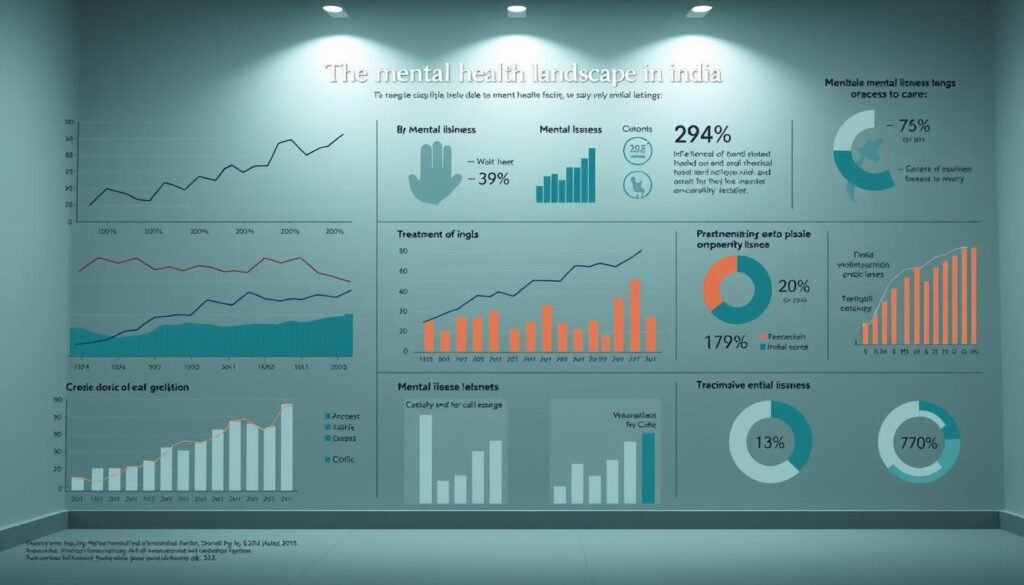
We look at the numbers and everyday challenges to help professionals and educators understand the future. Data and real-life obstacles guide us in creating mental health resources and services. This snapshot shows the urgency without judgment.
Statistics Highlighting the Crisis
Suicide rates are rising: the NCRB reported 9.9 per lakh in 2017 and 12.4 per lakh in 2022. The World Health Organization said the 2021 rate was around 12.6 per 100,000. Student suicides are alarming — over 13,000 in 2022, a 65% increase in a decade.
A 2024 study in several cities found seven out of ten college students have moderate-to-severe anxiety. Six out of ten show depression symptoms. Yet, most students don’t seek help, showing a big gap in treatment.
Ignoring mental health can lead to huge losses. The WHO estimated over $1 trillion in lost productivity over a decade if services aren’t scaled. The COVID-19 pandemic made things worse, with spikes in anxiety, depression, and PTSD overwhelming services.
Barriers to Seeking Help
Stigma is a big barrier. In many places, seeing someone as distressed is seen as moral failure or spiritual weakness. Young people often believe this, with only 41% of Indian youth thinking it’s okay to seek professional help.
Getting help is hard because of cost, uneven access to clinicians, and not enough diagnosis. Most trained professionals are in cities, leaving rural areas without enough help. Telehealth is promising, but there are gaps in infrastructure and trust.
Not knowing enough about mental health makes things worse. Low health literacy, little education in schools, and scarce community outreach mean many don’t recognize treatable conditions. This leads to delays in care and missed chances to connect people with resources.
We show figures to highlight the need, access, and outcomes. This table shows the scope and points to areas where we need to focus on scaling mental health support and services.
| Indicator | Recent Value | Implication for Care |
|---|---|---|
| Suicide rate (NCRB, 2017–2022) | 9.9 → 12.4 per lakh | Rising demand for crisis intervention and prevention programs |
| Suicide rate (WHO, 2021) | 12.6 per 100,000 | Aligns with global burden; need for national strategy |
| Student suicides (2022) | 13,000+; 65% decade rise | Urgent expansion of campus mental health support |
| College student mental health (2024 study) | 70% anxiety; 60% depression | Targeted screening and early intervention required |
| Treatment gap | 70%–90% untreated | Scale community services and workforce training |
| Youth acceptance of professional help (UNICEF) | 41% acceptability | Reduce stigma, boost mental health resources in youth settings |
| Economic impact (WHO estimate) | >$1 trillion lost over a decade | Investment in mental health services yields macroeconomic benefits |
Cultural Attitudes Toward Mental Health

We look at how culture affects how people deal with mental health issues in India. Cultural values, family expectations, and community norms play a big role. They decide if people seek help, how they talk about their problems, and what kind of support they need.
The Stigma Surrounding Mental Illness
Stigma is a big obstacle to getting help: people often tell others to “be strong” or pray instead. This shame can stop people from seeking help and makes them keep their problems hidden.
Families worry about being shunned, so they hide symptoms. This makes it harder to get help early and can make mental health problems worse.
There are also racial, ethnic, and economic barriers: many first go to primary care, clergy, or traditional healers. Studies show minorities and those in rural areas often wait longer to get formal treatment.
Changing Perspectives in Urban vs. Rural Areas
In cities, like tech hubs and college towns, more people say they’re anxious or depressed. Young adults face a lot of stress from school, work, and relationships.
In rural areas, there are even more challenges: fewer services, stronger beliefs in fate, and less awareness of mental health. People might see problems as fate or imbalance, changing how they seek help.
But, there are signs of change: digital campaigns, telepsychiatry, and NGO efforts are making a difference. They’re helping to start conversations in schools and workplaces. Acceptance is growing, but it’s not even yet.
| Domain | Urban Trends | Rural Trends |
|---|---|---|
| Primary help-seeking routes | Primary care, counselors, online therapy | Clergy, traditional healers, family |
| Common drivers of distress | Academic pressure, job stress, social media | Economic insecurity, family honor, limited opportunities |
| Service availability | Higher density of specialists, telehealth access | Scarce specialists, longer travel, less telehealth use |
| Stigma level | High but shifting among youth | High and often reinforced by tradition |
| Impact on help delay | Moderate delay; many seek informal support first | Longer delay; formal care sought at later stages |
For more on mental health and culture, check out this review: global patterns and cultural context. It shows how family issues, marriage pressure, and social expectations lead to young adult suicides and other serious problems.
We need to fight stigma with education, community work, and services that respect different cultures. This will help improve mental health and awareness in various settings.
Impact of Mental Health on Society

Mental health affects lives, industries, and institutions in India. It impacts families, hospitals, schools, and companies. Understanding these connections helps us create better solutions.
The World Health Organization says mental health costs over $1 trillion in lost productivity over 10 years. This loss comes from being absent or present but not fully working, lower education, and less innovation. These issues hurt household incomes and national growth.
Mental illness can make physical health worse. Studies show untreated mental health issues lead to higher death rates and more complex care needs. This increases the need for mental health services in primary care and hospitals.
Economic Consequences of Ignoring Mental Health
Ignoring mental health costs a lot. It includes sick leave payouts, hiring new staff, and higher insurance claims. Companies face delays in hiring and damage to their reputation. Cities and states lose tax money when young people drop out or die by suicide.
Youth mental illness is a big problem. Suicide is a leading cause of death for 15- to 29-year-olds. Untreated conditions cut into years of productive life, hurting the talent pool for tech and manufacturing.
Mental Health and Productivity in the Workplace
Workplaces face hidden productivity losses. For example, anxious software engineers, tired teams, and burned-out managers. These issues slow down creativity and product cycles at big companies like Infosys and Tata Consultancy Services.
Investing in workplace mental wellness pays off. It leads to lower turnover, higher engagement, and better problem solving. Programs that offer timely mental health support and easy access to services reduce presenteeism and protect brand value.
| Area | Problem | Organizational Impact | Action |
|---|---|---|---|
| Workforce | Hidden anxiety, burnout, sleep loss | Lower creativity, higher turnover, missed deadlines | Employee assistance, manager training, flexible schedules |
| Healthcare | Longer hospital stays, comorbid conditions | Higher costs, bed shortages, complex care pathways | Integrated primary care, training for clinicians, referral networks |
| Youth & Education | Untreated depression, school dropouts | Loss of human capital, reduced innovation | School counselling, early screening, community outreach |
| Economy | Absenteeism, presenteeism, reduced productivity | Lower GDP growth, decreased investor confidence | National mental health services scale-up, employer incentives |
We suggest scalable solutions. Integrate mental health support into workplace policies, expand access to services, and fund prevention in schools. These steps protect people, reduce the economic cost of mental health, and build resilience in communities.
The Role of Education in Mental Health Awareness

Schools do more than teach math and reading. They help shape our emotional habits and teach us how to cope. By adding mental health lessons to the curriculum, we can build resilience and catch problems early.
Integrating practical skills:
Start teaching mental health basics, like stress management and how to spot warning signs. Train teachers to handle these situations calmly. Also, make sure there are counselors on campus and clear ways to get help.
Studies show that too much schoolwork can really stress out students. Between 2019 and 2023, there were too many suicides at top schools. Surveys showed that 61% of IIT students said school stress was their biggest worry.
Implementation roadmap:
- Curriculum integration: add short lessons on coping and emotional health to regular classes.
- Teacher training: give teachers special training and support from mental health experts.
- Onsite support: have counselors available, support groups, and clear emergency plans.
- Measurement: keep track of how many students seek help, their attitudes towards it, and signs of stress.
Parental engagement:
Parents play a big role too. They should learn to recognize signs of trouble and talk openly with their kids. UNICEF found that only 41% of young people feel okay asking for help, so family support is key.
Run workshops and offer helplines for parents. Help them learn how to talk about mental health at home. Work with mental health experts to spread awareness and support.
Evaluation and quality checks:
| Metric | What to Measure | Why It Matters |
|---|---|---|
| Referral Rates | Number and source of referrals to counseling | Shows recognition and use of support systems |
| Help-Seeking Attitudes | Student surveys on willingness to seek help | Tracks stigma reduction and service acceptance |
| Self-Harm Incidents | Reported cases and severity | Direct indicator of crisis prevention effectiveness |
| Academic Resilience | Attendance, completion rates, stress coping scores | Links well-being with sustained learning outcomes |
Start small, test school mental health programs, and then grow them based on what works. Use public campaigns to help talk about mental health and support schools.
When schools focus on both learning and well-being, students can handle stress better. This change needs a team effort: good teaching, trained staff, and involved parents to improve mental health awareness everywhere.
The Importance of Accessible Mental Health Services

In India, there’s a big gap between the need for mental health care and the care available. Most people with mental health issues don’t get any treatment. This is because there aren’t enough mental health professionals, and they are not spread out evenly.
There’s a shortage of psychiatrists, psychologists, and counselors. Most of these specialists work in cities, leaving villages without access. For students and families who work, the cost and distance to get to these services are too high.
Telehealth is seen as a good solution. The Indian Psychiatric Society and NIMHANS have set guidelines for virtual mental health care. This helps make mental health services available online.
We also need to build local mental health teams. Training community counselors and funding outreach programs are key. This way, online consultations can lead to in-person care when needed.
Helplines offer immediate support. Services like KIRAN, Tele-MANAS, NIMHANS hotlines, and We Care are available 24/7 in many languages. But, not enough young people know about them, so we need to spread the word.
Telehealth helps by making it easier to get help without feeling ashamed. It also makes it easier to keep up with treatment and take medication. But, we need to make sure these services are private and easy to use for everyone.
We suggest taking action in three areas:
- Expand telepsychiatry training for more professionals.
- Support community counselors to increase local mental health services.
- Set up funded networks to connect primary care, teleconsultation, and hospitals.
| Challenge | Telehealth Benefit | Needed Policy Action |
|---|---|---|
| Shortage of specialists in rural areas | Remote consultations bridge distance and increase access | Fund telepsychiatry training and rural clinician incentives |
| High cost and travel time for low-income patients | Lower out-of-pocket costs and reduced need to travel | Subsidize virtual visits and include services in public insurance |
| Low awareness of crisis helplines among youth | 24/7 helplines provide immediate mental health support | Run targeted campaigns in schools and colleges |
| Digital literacy and privacy concerns | User-friendly platforms with encryption improve trust | Set national privacy standards and fund user training |
Government Initiatives and Policies

We look at how national plans, clinical guidelines, and helplines affect mental health care in India. New policies have opened up telepsychiatry, crisis response, and awareness efforts. These steps aim to boost public mental health and highlight areas needing quick action.
Overview of Current Frameworks and Programs
India follows global efforts like WHO campaigns and uses advice from the Indian Psychiatric Society and NIMHANS. The Mental Healthcare Act and guidelines for telemedicine/telepsychiatry have made care more accessible. National helplines, like Tele-MANAS (14416), provide 24/7 support, showing a focus on mental health services.
There are special programs for schools, workplaces, and online platforms. These efforts take mental health policies to communities. WHO points out that investing in prevention and early help saves money and improves results.
Gaps in Implementation and Reach
Even with new policies, not everyone knows about helplines and digital services, mainly in rural areas. Lack of funds and not enough trained staff slow down mental health programs.
Tracking systems are weak: we need better reporting on suicides, monitoring youth mental health, and sharing data across sectors. Accountability is scattered among health, education, and labor departments.
- Low helpline awareness reduces uptake of mental health services in remote areas.
- Workforce shortages slow rollout of school and community programs.
- Funding gaps constrain sustained anti-stigma campaigns and infrastructure build-out.
To make policies work better, governments should grow telehealth, encourage specialist training, and expand school programs. These actions will help more people get mental health support and make public mental health services available everywhere in India.
Non-Governmental Organizations Making a Difference
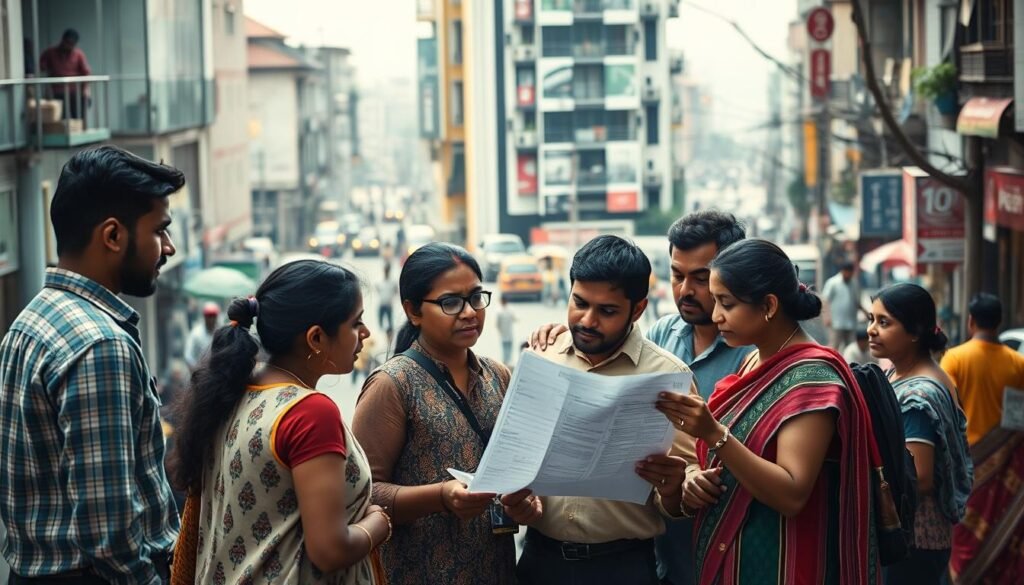
We team up with many partners to fill care gaps. Non-governmental groups are key in raising mental health awareness. They also provide support and shape community mental health models where services are scarce.
They use helplines, school programs, telepsychiatry pilots, and local outreach. This mix helps a lot.
Notable NGOs and Institutional Partnerships
Organizations like Sangath, The Live Love Laugh Foundation, The Banyan, and SNEHA bring effective programs to more people. NIMHANS works with police and civic bodies to run helplines and offer clinical support. These partnerships show how groups can work together to support mental health.
In 2020, professional societies like the Indian Psychiatric Society quickly moved online. They started online training and advisories. This led to tele-CMEs and early telepsychiatry frameworks used by NGOs and hospitals to reach distant areas.
Grassroots Success Stories
In some areas, teams trained non-specialists to offer low-cost interventions. This task-sharing reduced wait times and made counseling more accepted. Local volunteers ran awareness drives in schools and markets, helping people seek help more easily.
A helpline in Bengaluru is a great example. It pairs police outreach with clinical support from NIMHANS and local NGOs. This shows how institutions can work together for a quick response, triage, and referral.
Scaling, Funding, and Future Possibilities
NGOs often test new ideas that governments can then expand. They’ve shown that telehealth, community worker training, and culturally tailored campaigns work well and are affordable. But, they need steady funding, partnerships, and to be part of public health plans to keep going.
We think that working together with the government can turn small projects into big programs. This would help spread mental health awareness, strengthen community mental health, and provide reliable support all over India.
| Role | Example Initiative | Impact |
|---|---|---|
| Helplines and crisis response | SNEHA suicide prevention helpline; Bengaluru helpline with NIMHANS | Immediate triage, reduced crisis escalation, referrals to local services |
| Community-based care | Sangath’s task-sharing programs in rural districts | Increased access, reduced stigma, greater adherence to care plans |
| Awareness and school programs | The Live Love Laugh Foundation campaigns in urban schools | Improved recognition of distress, early help-seeking among youth |
| Clinical partnerships and training | NIMHANS collaborations with NGOs and police | Capacity building, telepsychiatry adoption, integrated referral networks |
Promoting Community Support Systems
Strong community networks are key to getting care and building resilience. Local efforts connect clinical services to daily life. They make help more accessible and improve mental wellness through shared experiences and advice.
Groups in schools, workplaces, temples, and local centers offer safe spaces. Led by peers, these forums share coping strategies and spot early signs. They fight isolation, boost coping, and connect people to mental health resources.
Community health workers and lay counselors are empowered to provide basic care. Low-cost methods like group problem-solving and brief counseling are effective. Digital platforms extend reach, hosting forums, training, and directories that connect communities to formal care.
Programs must respect local languages, customs, and faiths to gain trust. Working with teachers, religious leaders, and NGOs helps tailor messages. This approach increases the use of mental health resources and supports long-term wellness.
Being ready for crises is important. Communities should know helpline numbers and how to get to local clinics. Clear paths and public campaigns raise helpline use and quicken responses for those in crisis.
We need to track progress with indicators like helpline calls and self-reported help-seeking. Measuring these outcomes helps guide investment in community mental health. It shows which local models are most effective.
Key components of effective community approaches include:
- Accessible peer-led support groups for students, caregivers, and those with lived experience.
- Task-sharing with trained lay counselors and community health workers.
- Culturally adapted outreach through schools, faith groups, and NGOs.
- Digital tools that connect communities to mental health resources and referrals.
| Approach | Main Benefit | Typical Setting |
|---|---|---|
| Peer support groups | Reduced isolation and early detection of concerns | Schools, workplaces, community centers |
| Task-sharing models | Expanded access to low-cost psychosocial care | Primary health clinics, outreach programs |
| Digital platforms | Scaled access to resources and referrals | Mobile apps, moderated online groups |
| Culturally tailored outreach | Higher trust and increased help-seeking | Religious institutions, local NGOs, schools |
| Crisis linkage and helplines | Faster emergency response and decreased harm | Community campaigns, youth programs |
Personal Stories that Inspire Change
We believe that personal stories about mental health can change the world. When someone talks about burnout and despair, it shows us where we need to improve. It makes us think about how to support each other’s mental health.
Firsthand Accounts of Overcoming Mental Health Challenges
We gather real stories from students, families, and workers to show that recovery is real. A student in Bangalore overcame anxiety and now helps others. A software engineer in Mumbai beat depression with the help of a therapist.
These stories tell us how to get better: by asking for help early, using proven treatments, and having a supportive community. They show us that emotional well-being is something we can all work towards.
How Personal Narratives Can Drive Awareness
We use stories to change how people think and talk about mental health. By sharing personal experiences in college and at tech events, we make it okay to talk about our feelings.
Media and campus events help by showing that treatment works. When people in positions of power share their struggles, they encourage others to do the same.
We want everyone to share their stories with care. Small actions like sharing a story or starting a support group can make a big difference. They help us all take care of our emotional health and hold each other accountable.
| Type of Story | Typical Setting | Primary Impact | Practical Outcome |
|---|---|---|---|
| Student testimony | College campus | Reduces stigma among peers | Peer counseling groups and referral pathways |
| Professional recovery | Workplace, tech firms | Prompts policy review | Mental health leave and manager training |
| Family caregiver account | Community forums | Increases empathy and resource use | Local support networks and helplines |
| First-person essay in media | National and local press | Shapes public dialogue | Greater mental health awareness and funding |
Future Directions for Mental Health in India
We dream of a future where technology, policy, and community work together. This will help fill the gaps in mental health care. By using telepsychiatry and AI, we can reach more people. Digital CBT apps and blended care will keep the focus on mental health.
Innovative Approaches to Mental Health Care
Task-sharing and training non-specialists will grow the mental health team fast. This is like how the Indian Psychiatric Society helped with online CMEs during COVID-19. By investing in telepsychiatry and primary care, we can improve mental health services everywhere.
Building a Mental Health-Friendly Society
Big mental health awareness campaigns and family programs can change how we think. We need to encourage using helplines and teaching mental health in schools. Success will be seen in fewer suicides, more helpline calls, and better mental health for young people.
We need to work together to make India’s young people strong and resilient. For partnerships or to share ideas, email info@indiavibes.today.